Adhyaya 15
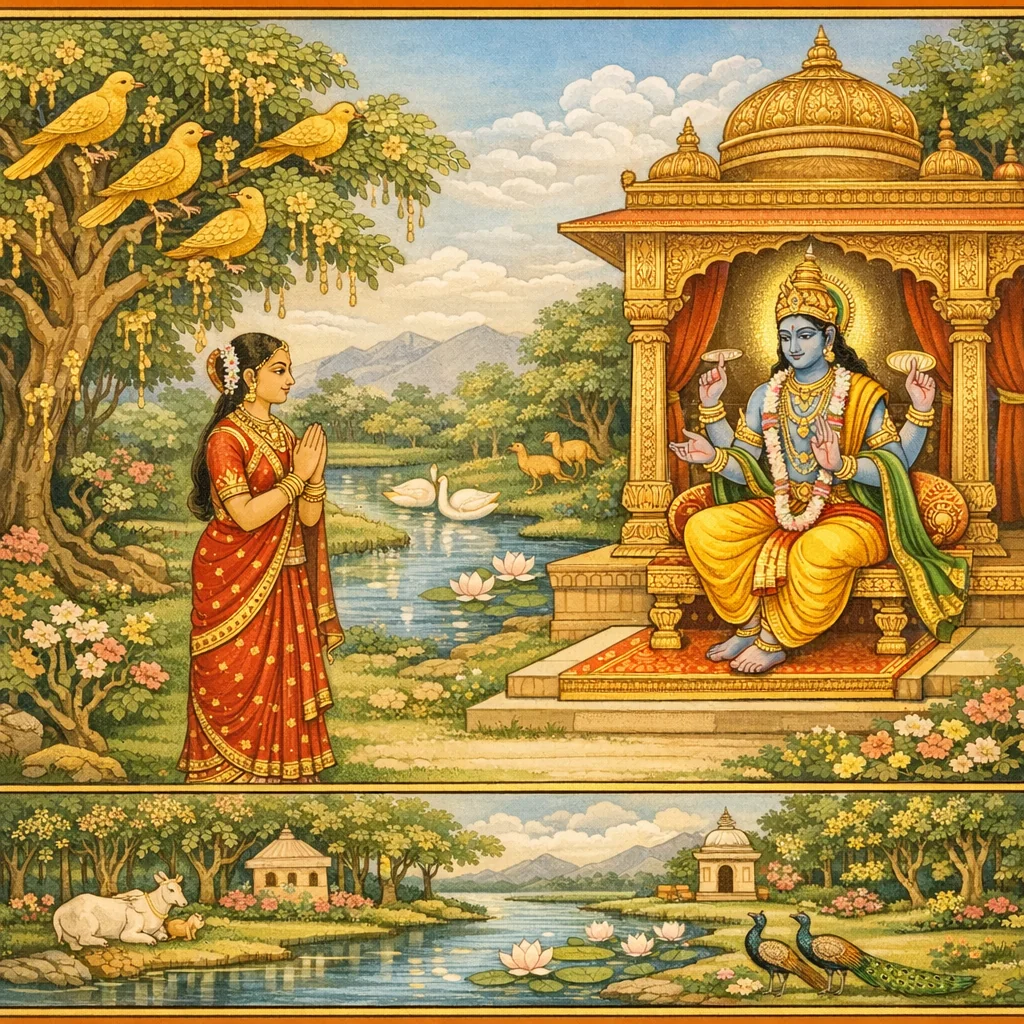
This chapter (as transmitted by Nārada) unfolds a chain of protection, māyā-born deception, curse, and sacral transformation. Hari/Nārāyaṇa appears bearing the marks of an ascetic, confronts a rākṣasa, and rescues the distressed woman Vṛndā/Vṛndārikā. The journey then passes through a perilous forest into a wondrous āśrama, portrayed in extravagant abundance—golden-bodied birds, nectar-like rivers, and honey-flowing trees—heightening the tīrtha sense of marvel. The decisive turn comes in a “citraśālā,” where, by divine māyā, Vṛndā is led to meet a figure resembling her husband, and intimacy follows. Hari then discloses his identity, announces Jālandhara’s death, and declares that in the highest truth Śiva and Hari are non-different. Vṛndā answers with ethical reproach and pronounces a curse: as she was deluded by a tapasvin’s māyā, so too will Hari be subject to a similar delusion. At the close, Vṛndā resolves upon severe austerity, withdraws through yoga, mortifies herself, and dies. Her remains are ritually treated, and the text ends with an origin account: the place where she relinquished her body becomes Vṛndāvana near Govardhana, and her transformation is bound to the sanctity of that region.
Shlokas
Verse 1
। पञ्चदशोऽध्यायः । नारद उवाच । नारायणस्तदा देवो जटावल्कलधार्यथ । द्वितीयोऽनुचरस्तस्य ह्याययौ फलहस्तवान्
Chapter Fifteen. Nārada said: “At that time the god Nārāyaṇa, wearing matted jata locks and bark-garments, and his second attendant came there, carrying fruits in his hands.”
Verse 2
तौ दृष्ट्वा स्मरदूती सा विललाप मृगेक्षणा । तच्छ्रुत्वा वचनं तस्याः प्रोचतुस्तां च तावुभौ
Seeing those two, the doe‑eyed maiden—like a messenger of Kāma, the Lord of Love—broke into lamentation. Hearing her words, both of them spoke to her.
Verse 3
भयं मा गच्छ कल्याणि त्वामावां त्रातुमागतौ । वने घोरे प्रविष्टासि कथं दुष्टनिषेविते
“Do not be afraid, auspicious one. We have come to protect you. How have you entered this dreadful forest, a place frequented by the wicked?”
Verse 4
एवमाश्वास्य तां तन्वीं राक्षसं प्राह माधवः । मुंचेमामधमाचार मृद्वंगीं चारुहासिनीम्
Thus comforting the slender maiden, Mādhava said to the rākṣasa: “Release her, O vile‑mannered one—this tender‑limbed woman of sweet and lovely smile.”
Verse 5
रेरे मूर्ख दुराचार किं कर्तुं त्वं व्यवस्थितः । सर्वस्वं लोकनेत्राणामाहारं कर्तुमुद्यतः
“Hey, fool of wicked conduct—what are you set upon doing? Are you preparing to devour the very treasure that is the food of the world’s eyes?”
Verse 6
भव पुण्यप्रभावेयं हंस्येतां मंडनं भुवः । अद्यलोकं निरालोकं कंदर्पं दर्पवर्जितम्
“By the power of her merit, this ornament of the earth would destroy you—today she would make the world joyless, and even Kāma (Love) bereft of pride.”
Verse 7
करिष्यस्यधुना त्वं च हत्वा वृंदारिकां वने । तस्मादिमां विमुंचाशु सुखप्रासाददेवताम्
“And now you would commit the deed of killing Vṛndārikā in the forest! Therefore release her at once—she is a deity-like lady, a palace of auspiciousness and joy.”
Verse 8
इति श्रुत्वा हरेर्वाक्यं राक्षसः कुपितोऽब्रवीत् । समर्थस्त्वं यदि तदा मोचयाद्यैव मत्करात्
Hearing Hari’s words, the rākṣasa angrily replied: “If you are truly capable, then free her right now from my hand!”
Verse 9
इत्युक्तमात्रे वचने माधवेन क्रुधेक्षितः । पपात भस्मसाद्भूतस्त्यक्त्वा वृंदां सुदूरतः
No sooner were those words spoken than Mādhava cast an angry glance; the rākṣasa fell, reduced to ashes, and Vṛndā was freed—cast far away from him.
Verse 10
अथोवाच प्रमुग्धा सा मायया जगदीशितुः । कस्त्वं कारुण्यजलधिर्येनाहमिह रक्षिता
Then, bewildered by the wondrous power of the Lord of the world, she said: “Who are you—an ocean of compassion—by whom I have been protected here?”
Verse 11
शारीरं मानसं दुःखं सतापं तपसां निधे । त्वया मधुरया वाचा हृतं राक्षसनाशनात्
“O treasure of austerity, my bodily and mental suffering—together with its burning torment—has been taken away by your gentle words and by the destruction of the rākṣasa.”
Verse 12
तवाश्रमे तपः सौम्य करिष्यामि तपोधन
“O gentle one, in your hermitage I shall undertake austerity, O treasure of ascetic power.”
Verse 13
तापस उवाच । भरद्वाजात्मजश्चाहं देवशर्मेति विश्रुतः । विहाय भोगानखिलान्वनं घोरमुपागतः
The ascetic said: “I am the son of Bharadvāja, renowned by the name Devaśarmā. Abandoning every enjoyment, I have come to this dreadful forest.”
Verse 14
अनेन बटुनासार्धं मम शिष्येण कामगाः । बहुशः संति चान्येऽपि मच्छिष्याः कामरूपिणः
“Along with this young disciple of mine there are wish-moving (supernaturally swift) beings; and many others too—my disciples—are able to assume forms at will.”
Verse 15
त्वं चेन्ममाश्रमे स्थित्वा चिकीर्षसि तपः शुभे । एहि राज्ञ्यपरं यामो वनं दूरस्थितं यतः
“If you wish, O auspicious queen, to remain in my hermitage and perform sacred austerity, then come—let us go farther, to a forest that lies at a distance.”
Verse 16
इत्युक्त्वा राजपत्नीं तां ययौ प्राचीं दिशं हरिः । वनं प्रेतपिशाचाढ्यं मंदगत्या नराधिप
Having spoken thus to the king’s wife, Hari went toward the eastern quarter—slowly, O lord of men—into a forest crowded with pretas and piśācas.
Verse 17
वृंदारिकाश्रुपूर्णाक्षी तस्य पृष्ठानुगा ययौ । स्मरदूती च तत्पृष्ठे मां प्रतीक्षेति वादिनी
Vṛṃdārikā, her eyes brimming with tears, followed close behind him. And Smaradūtī too came behind, calling out, “Wait for me!”
Verse 18
अत्रांतरे दुराचारः कोपि पापाकृतिर्वने । जालं प्रसारयामास तद्यदा जीवपूरितम्
Meanwhile, in that forest, a certain wicked man—sin itself made form—spread out a net; and when it became filled with living creatures—
Verse 19
ततः संकोचयामास तज्जालं पापनायकः । जालस्थांस्तु तदा जीवानुपाहृत्य मुमोच ह
Then that leader of sinners drew the net tight; and having taken the creatures caught in it, he let the net go again.
Verse 20
स च व्याधः स्त्रियौ दृष्ट्वा स्मरदूती जगाद ताम् । देवि मामत्तुमायाति करे गृह्णातु मां सखी
That hunter, seeing the two women, said to Smaradūtī: “O Lady, he is coming to devour me—let your friend take me into her hand!”
Verse 21
वृंदा तयोक्तं श्रुत्वैनं विकृतास्यं व्यलोकयत् । वीक्ष्यतं भयवातेन निर्धूता सिंधुजप्रिया
Hearing their words, Vṛṃdā looked at him and saw his face distorted with terror. At the sight, the beloved of the Sindhu-born one was shaken by a wind of fear.
Verse 22
दुद्राव विकलं शुभ्रं स्मरदूत्या समं वने । विद्रवंती समं सख्या तापसाश्रममागता
Distraught and trembling, the radiant lady fled through the forest together with Kāma’s messenger. Running on with her companion, she reached the hermitage of the ascetics.
Verse 23
सा तापसवने तस्मिन्ददर्शात्यंतमद्भुतम् । पक्षिणः कांचनीयांगान्नानाशब्दसमाकुलान्
There, within that ascetics’ grove, she beheld something utterly wondrous—birds with golden limbs, filling the place with a chorus of many kinds of sounds.
Verse 24
सापश्यद्धेमपद्माढ्यां वापीं तु स्वर्णभूमिकाम् । क्षीरं वहंति सरितः स्रवंति मधु भूरुहः
She saw a pond rich with golden lotuses, its banks like gold. Rivers there flowed with milk, and the trees themselves dripped honey.
Verse 25
शर्कराराशयस्तत्र मोदकानां च संचयाः । भक्ष्याणि स्वादुसर्वाणि बहून्याभरणानि च
There were heaps of sugar and stores of sweet modakas—every kind of delicious food—and many ornaments as well.
Verse 26
बहुशस्त्राणि दिव्यानि नभसः संपतंति च । क्रीडंति हरयस्तृप्ता उत्पतंति पतंति च
Many divine weapons also descended from the sky. Sated lions played about—leaping up and dropping down again.
Verse 27
मठेति सुंदरं वृंदा तं ददर्श तपस्विनम् । व्याघ्रचर्मासनगतं भासयंतं जगत्त्रयम्
Calling out, “O beautiful one of the hermitage!”, Vṛndā saw that ascetic—seated upon a tiger-skin—radiant as though illumining the three worlds.
Verse 28
तमुवाच विभो पाहि पाहि पापर्द्धिकादथ । तपसा किं च धर्मेण मौनेन च जपेन च
She said to him: “O Lord, protect me—protect me from this sinful calamity! Of what use are austerity, righteousness, silence, or mantra-recitation, if one cannot give refuge to the frightened?”
Verse 29
भीतत्राणात्परं नान्यत्पुण्यमस्ति तपोधन । एवमुक्तवती भीता सालसांगी तपस्विनम्
“O treasure of austerity, there is no merit higher than saving the frightened.” Thus spoke the fearful lady, clinging close, to the ascetic.
Verse 30
तावत्प्राप्तः सदुष्टात्मा सर्वजीवप्रबंधकः । वृंदादेवी भयत्रस्ता हरिकंठे समाश्लिषत्
Just then arrived a thoroughly wicked one—an oppressor of all living beings. Vṛndādevī, terrified, embraced Hari about the neck.
Verse 31
सुखस्पर्शं भुजाभ्यां सा शोकवल्लीव लिंगिता । तवालिंगनभावेन पुनरेव भविष्यति
Embracing him with her arms, soothed by the gentle touch, she clung like a creeper of sorrow. Yet by the power of your embrace, she shall become herself again.
Verse 32
शिरः सर्वांगसंपन्नं त्वद्भर्तुरधिकं गुणैः । अथ त्वं प्रमदे गच्छ पत्यर्थे चित्रशालिकाम्
“This head is complete in every part and even surpasses your husband in excellence. Therefore, O fair lady, go at once to the Citraśālā, for the sake of your husband.”
Verse 33
सा चित्रशालामित्युक्ता विवेश मुनिना तदा । दिव्यपर्यंकमारूढा गृह्य कांतस्य तच्छिरः
Thus instructed by the sage, she entered the Citraśālā. Mounting a divine couch, she took up the head of her beloved.
Verse 34
चकाराधरपानं सा मीलिताक्ष्यतिलोलुपा । यावत्तावदभूद्राजन्रूपं जालंधराकृति
With eyes closed and overcome by longing, she drank the nectar of his lips. In that very interval, O King, a form arose—bearing the appearance of Jālandhara.
Verse 35
तत्कांतसदृशाकारस्तद्वक्षस्तद्वदुन्नतिः । तद्वाक्यस्तन्मनोभावस्तदासीज्जगदीश्वरः
Thus the Lord of the world appeared in the likeness of her beloved—his chest, his stature, his speech, and even his very disposition the same.
Verse 36
अथ संपूर्णकायं तं प्रियं वीक्ष्य जगाद सा । तव कुर्वे प्रियं स्वामिन्ब्रूहि त्वं स्वरणं च मे
Seeing her beloved now whole in body, she spoke: “My lord, I shall do what pleases you—tell me also what I should remember as my guiding vow.”
Verse 37
वृंदावचनमाकर्ण्य प्राह मायासमुद्रजः । शृणु देवि यथा युद्धं वृत्तं शंभोर्मया सह
Hearing Vṛndā’s words, Māyā’s son spoke: “Goddess, listen—how the battle occurred between Śambhu and me.”
Verse 38
प्रिये रुद्रेण रौद्रेण छिन्नं चक्रेण मे शिरः । तावत्वत्सिद्धियोगाच्च त्वद्गतेन ममात्मना
“Beloved, fierce Rudra severed my head with his terrible discus. Yet, by the power of your accomplished siddhi-yoga, my very self remained directed toward you and sustained.”
Verse 39
छिन्नं तदत्र चानीतं जीवितं तेंगसंगतः । प्रिये त्वं मद्वियोगेन बाले जातासि दुःखिता
“That severed head was brought here, and life was rejoined to the body. Beloved girl, through separation from me you have become sorrowful.”
Verse 40
क्षंतव्यं विप्रियं मह्यं यत्त्वां त्यक्त्वा रणं गतः । इत्यादि वचनैस्तेन वृंदा संस्मारिता तदा
“Forgive what was displeasing on my part—that I left you and went to battle.” With these words and others, Vṛndā was then consoled and brought back to remembrance.
Verse 41
तांबूलैश्च विनोदैश्च वस्त्रालंकरणैः शुभैः । अथ वृंदारिका देवी सर्वभोगसमन्विता
With betel, amusements, and auspicious garments and ornaments, Vṛndā-devī then became endowed with every comfort and enjoyment.
Verse 42
प्रियं गाढं समालिंग्य चुचुंब रतिलोलुपा । मोक्षादप्यधिकं सौख्यं वृंदा मोहनसंभवम्
Passionately enamored, Vṛndā tightly embraced her beloved and kissed him. From that bewildering union she experienced a pleasure that she deemed even greater than liberation itself.
Verse 43
मेने नारायणो देवो लक्ष्मीप्रेमरसाधिकम् । वृंदां वियोगजं दुःखं विनोदयति माधवे
Nārāyaṇa thought, “This sweetness surpasses even the love-rasa of Lakṣmī.” Thus, as Mādhava, he set about dispelling Vṛndā’s sorrow born of separation.
Verse 44
तत्क्रीडाचारुविलसद्वापिका राजहंसके । तद्रूपभावात्कृष्णोऽसौ पद्मायां विगतस्पृहः
At that charming pond where their play shone beautifully—like a royal haṃsa’s haunt—Kṛṣṇa, absorbed in her form and mood, became indifferent toward Padmā (Lakṣmī).
Verse 45
अभूद्वृंदावने तस्मिंस्तुलसीरूप धारिणी । वृंदांगस्वेदतो भूम्यां प्रादुर्भूताति पावनी
In that Vṛndāvana she assumed the form of Tulasī. From the perspiration of Vṛndā’s body, upon the earth, there manifested Tulasī, supremely purifying.
Verse 46
वृंदांग संगजं चेदमनुभूय सुंखं हरिः । दिनानि कतिचिन्मेने शिवकार्यं जगत्पतिः
Having experienced the pleasure born of contact with Vṛndā’s body, Hari—the Lord of the worlds—spent several days, as it were, postponing the task to be done for Śiva.
Verse 47
एकदा सुरतस्यांते सा स्वकंठे तपस्विनम् । वृंदा ददर्श संलग्नं द्विभुजं पुरुषोत्तमम्
Once, at the end of their lovemaking, Vṛndā saw, clinging to her own neck, a two-armed supreme Person—appearing in the guise of an ascetic.
Verse 48
तं दृष्ट्वा प्राह सा कंठाद्विमुच्य भुजबंधनम् । कथं तापसरूपेण त्वं मां मोहितुमागतः
Seeing him, she released the clasp of her arms from his neck and said: “How have you come to delude me, wearing the form of an ascetic?”
Verse 49
निशम्य वचनं तस्याः सांत्वयन्प्राह तां हरिः । शृणु वृंदारिके त्वं मां विद्धि लक्ष्मीमनोहरम्
Hearing her words, Hari sought to soothe her and said: “Listen, O Vṛndārikā—know me as the one who captivates even Lakṣmī.”
Verse 50
तव भर्ता हरं जेतुं गौरीमानयितुं गतः । अहं शिवः शिवश्चाहं पृथक्त्वे न व्यवस्थितौ
“Your husband has gone to conquer Hara and bring back Gaurī. I am Śiva—and Śiva is I; in truth, we are not established as separate.”
Verse 51
जालंधरो हतः संख्ये भज मामधुनानघे । नारद उवाच । इति विष्णोर्वचः श्रुत्वा विषण्णवदनाभवत् । ततो वृंदारिका राजन्कुपिता प्रत्युवाच ह
“Jālaṃdhara has been slain in battle; now, O blameless one, accept me.” Nārada said: Hearing these words of Viṣṇu, her face fell in sorrow. Then, O King, Vṛndārikā, angered, replied.
Verse 52
रणे बद्धोऽसि येन त्वं जीवन्मुक्तः पितुर्गिरा । विविधैः सत्कृतो रत्नैर्युक्तं तस्य हृता वधूः
He by whom you were bound in battle—though you were released alive by your father’s command—was later honored with many kinds of jewels; yet even his wedded wife was taken away.
Verse 53
पतिर्धर्मस्य यो नित्यं परदाररतः कथम् । ईश्वरोऽपि कृतं भुंक्ते कर्मेत्याहुर्मनीषिणः
How can one who is ever devoted to Dharma become intent on another man’s wife? The wise declare that even the Lord must partake of the fruit of deeds—such is the law of karma.
Verse 54
अहं मोहं यथानीता त्वया माया तपस्विना । तथा तव वधूं माया तपस्वीकोऽपि नेष्यति
As I was led into delusion by you—by Māyā, though you wear the guise of an ascetic—so too shall Māyā lead away your own wife, even if she be a woman of austerity.
Verse 55
इति शप्तस्तथा विष्णुर्जगामादृश्यतां क्षणात् । सा चित्रशालापर्यंकः स च तेऽथप्लवंगमाः
Thus cursed, Viṣṇu vanished from sight in a moment. And that ornate hall with its couch—along with those attendants—also disappeared thereafter.
Verse 56
नष्टं सर्वं हरौ याते वनं शून्यं विलोक्य सा । वृंदा प्राह सखीं प्राप्य जिह्मं तद्विष्णुना कृतम्
When Hari had gone, everything was lost. Seeing the forest empty, Vṛndā, meeting her friend, said: “This crooked deed was done by Viṣṇu.”
Verse 57
त्यक्तं पुरं गतं राज्यं कांतः संदेहतां गतः । अहं वने विदित्वैतत्क्व यामि विधिनिर्मिता
The city is abandoned, the kingdom is gone, and my beloved has fallen into doubt and ruin. Knowing this in the forest, where shall I go—I who am fashioned by fate?
Verse 58
मनोरथानां विषयमभून्मे प्रियदर्शनम् । प्राह निःश्वस्य चैवोष्णं राज्ञी वृंदातिदुःखिता
The sight of my beloved—once the very object of my heart’s desires—has become a cause of torment. Queen Vṛndā, overwhelmed with sorrow, spoke while heaving hot sighs.
Verse 59
मम प्राप्तं हि मरणं त्वया हि स्मरदूतिके । इत्युक्ता सा तया प्राह मम त्वं प्राणरूपिणी
“Death has surely come upon me because of you, O messenger of desire,” she said. Thus addressed, the other replied: “You are my very life-breath.”
Verse 60
तस्यास्तथोक्तमाकर्ण्य इतिकर्त्तव्यतां ततः । वने निश्चित्य सा वृंदा गत्वा तत्र महत्सरः
Hearing her words, Vṛndā then resolved what must be done. Determining it in the forest, she went to that great lake there.
Verse 61
विहाय दुःखमकरोद्गात्रक्षालनमंबुना । तीरे पद्मासनं बद्ध्वा कृत्वा निर्विषयं मनः
Casting aside grief, she washed her limbs with water. On the bank she assumed the lotus posture, making the mind free from sense-objects.
Verse 62
शोषयामास देहं स्वं विष्णुसंगेन दूषितम् । तपश्चचारसात्युग्रं निराहारा सखीसमम्
She made her own body waste away, deeming it defiled by association with Viṣṇu; and she undertook exceedingly fierce austerities—living without food—together with her companion.
Verse 63
गंधर्वलोकतो वृंदामथागत्याप्सरोगणः । प्राह याहीति कल्याणि स्वर्गं मा त्यज विग्रहम्
Then a host of Apsarases came to Vṛndā from the world of the Gandharvas and said, “Come, auspicious one—go to heaven; do not abandon your embodied form.”
Verse 64
गांधर्वं शस्त्रमेतत्त्रिभुवनविजयं श्रीपतिस्तोषमग्र्यं । नीतो येनेह वृंदे त्यजसि कथमिदं तद्वपुः प्राप्तकामम् । कांतं ते विद्धि शूलिप्रवरशरहतं पुण्यलाभस्य भूषास्वर्गस्य त्वं । भवाद्य द्रुतममरवनं चंडिभद्रे भज त्वम्
“This Gandharva-spell is a conqueror of the three worlds and a foremost means of pleasing Śrīpati. By it you were led here, O Vṛnde—how can you abandon this body that has attained its purpose? Know your beloved to have been struck down by the excellent arrows of the Trident-bearing Lord; you are an ornament of merit and of heaven. Therefore, O Caṇḍibhadre, swiftly resort to the grove of the immortals.”
Verse 65
श्रुत्वा शास्त्रं वधूनां जलधिजदयिता वाक्यमाह प्रहस्य । स्वर्गादाहृत्य मुक्तात्रिदशपति वधूश्चातिवीरेण पत्या । आदौ पात्रं सुखानामहममरजिता प्रेयसा तद्वियुक्तानिर्दुष्टा तद्य । तिष्ये प्रियममृतगतं प्राप्नुयां येन चैव
Hearing the counsel of those celestial women, the beloved of the ocean-born Lord spoke with a smile: “Even the wives of the Lord of the gods, though brought down from heaven, were set free by a most heroic husband. Once I was a vessel of joy, unconquered by the immortals; yet, though parted from my beloved, I remain stainless. Thus will I abide, that I may attain my dear one who has gone to immortality.”
Verse 66
इत्युक्त्वा ससखी वृंदा विससर्जाप्सरोगणान् । तत्प्रीतिपाशबद्धास्ता नित्यमायांति यांति च
Having spoken thus, Vṛndā, together with her companion, dismissed the host of Apsarases. Bound by the noose of affection for her, they would continually come and go.
Verse 67
योगाभ्यासेन वृंदाथ दग्ध्वा ज्ञानाग्निना गुणान् । विषयेभ्यः समाहृत्य मनः प्राप ततः परम्
Then Vṛndā, through the practice of yoga, burned up the guṇas with the fire of knowledge; withdrawing her mind from sense-objects, she attained the Supreme beyond.
Verse 68
दृष्ट्वा वृंदारिकां तत्र महांतश्चाप्सरोगणाः । तुष्टुवुर्नभसस्तुष्टा ववृषुः पुष्पवृष्टिभिः
Seeing Vṛndā there, the noble hosts of Apsarases praised her; and, delighted in the sky, they showered flowers in torrents.
Verse 69
शुष्ककाष्ठचयं कृत्वा तत्र वृंदाकलेवरम् । निधायाग्निं च प्रज्वाल्य स्मरदूती विवेश तम्
Making a pile of dry wood there and placing Vṛndā’s body upon it, she kindled the fire; then the messenger of Smara entered that blaze.
Verse 70
दग्धं वृंदांगरजसां बिंबं तद्गोलकात्मकम् । कृत्वा तद्भस्मनः शेषं मंदाकिन्यां विचिक्षिपुः
From the burnt dust of Vṛndā’s limbs they shaped a rounded orb; and the remaining ashes they cast into the Mandākinī.
Verse 71
यत्र वृंदा परित्यज्य देहं ब्रह्मपथं गता । आसीद्वृंदावनं तत्र गोवर्द्धनसमीपतः
Where Vṛndā, abandoning her body, went upon the path to Brahman—there, near Govardhana, Vṛndāvana came to be.
Verse 72
देव्योऽथ स्वर्गमेत्य त्रिदशपतिवधूसत्त्वसंपत्तिमाहुर्देवीभ्यस्तन्निशम्य प्रमुदितमनसो निर्जराद्याश्च सर्वे । शत्रोर्दैत्यस्य हित्वा प्रबलतरभयं भीमभेर्यो निजघ्नुः श्रुत्वा तत्रासनस्थः । परिजननिवहोवापशोभां शुभस्य
Then the goddesses went up to heaven and told Indra’s divine ladies the full tale of their valor and success. Hearing it, all the immortals and the rest rejoiced at heart. Casting off their fierce fear of the enemy Daitya, they sounded the dreadful war-drums. At that uproar, he—seated there—beheld the auspicious splendor of the attendants’ assembly and the shining pond in that place.