Adhyaya 146
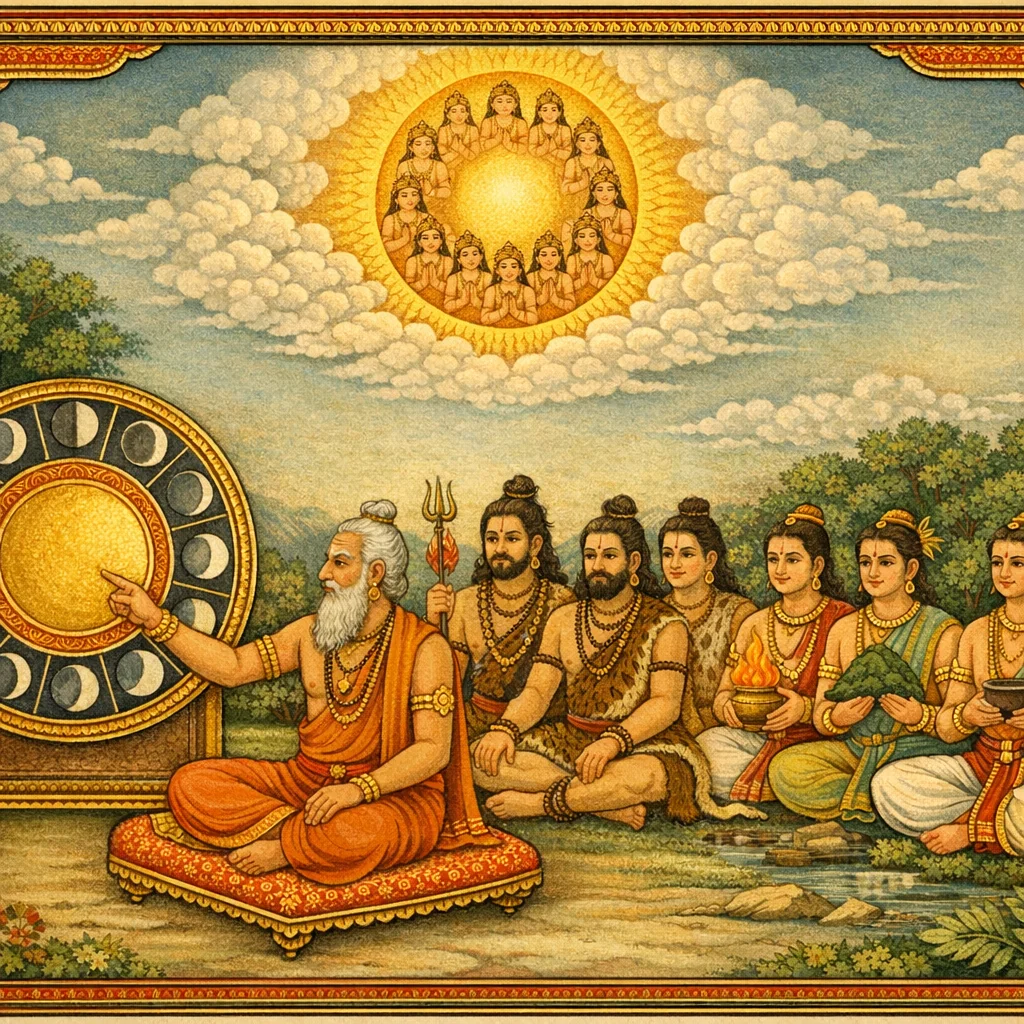
This chapter unfolds as a question-and-answer dialogue: the sages ask for an exact enumeration of the divine names—the Ādityas, Vasus, Rudras, and Aśvins—and then for a practical ritual calendar for worship within the appointed kṣetra. Sūta replies by listing the Rudra group (including Vṛṣadhvaja, Śarva, and Tryambaka), the eight Vasus (Dhruva, Soma, Anila, Anala, Prabhāsa, and others), the twelve Ādityas/solar deities (Varuṇa, Sūrya, Indra, Aryaman, Dhātā, Bhaga, Mitra, and others), and the twin Aśvins—Nāsatya and Dasra—praised as divine physicians. The discourse declares that these thirty-three divine leaders are ever-present in the sacred field to safeguard cosmic order and dharma. It assigns worship-days: Rudras on Aṣṭamī and Caturdaśī; Vasus on Daśamī (and especially Aṣṭamī); solar deities on Ṣaṣṭhī and Saptamī; and the Aśvins on Dvādaśī for the relief of illness. The promised fruits are avoidance of untimely death (apamṛtyu), attainment of heaven or higher states, and benefits of health—presented as a disciplined program of devotion rather than mere recitation.
Shlokas
Verse 1
ऋषय ऊचुः । आदित्यानां च सर्वेषां वसुरुद्रादिकाश्विनाम् । प्रत्येकशः समाचक्ष्व नामानि त्वं महामते
The sages said: “O great-minded one, tell us one by one the names of all the Ādityas, the Vasus, the Rudras, and the Aśvins.”
Verse 2
सूत उवाच । वृषध्वजश्च शर्वश्च मृगव्याधस्तृतीयकः । अजैकपादहिर्बुध्न्यः पिनाकी षष्ठ एव हि
Sūta said: “Vṛṣadhvaja, Śarva, Mṛgavyādha (the third), Ajaikapād, Ahirbudhnya, and Pinākī—these indeed are the first six named here.”
Verse 3
दहनश्चेश्वरश्चैव कपाली नवमस्तथा । वृषाकपिस्तु दशमो रुद्रस्त्र्यंबक एव च
“Dahana and Īśvara; Kapālī as the ninth; Vṛṣākapi as the tenth; and also Rudra and Tryambaka.”
Verse 4
धुरो ध्रुवश्च सोमश्च मखश्चैवानिलोऽनलः । प्रत्यूषश्च प्रभासश्च वसवोऽष्टौ प्रकीर्तिताः
“Dhura, Dhruva, Soma, Makha, Anila, Anala, Pratyūṣa, and Prabhāsa—these eight are proclaimed as the Vasus.”
Verse 5
वरुणश्च तथा सूर्यो भानुः ख्यातश्च तापनः । इंद्रश्चैवार्यमा चैव धाता चैव भगस्तथा
“Varuṇa; likewise Sūrya, Bhānu, and the famed Tāpana; Indra; Aryaman; Dhātṛ; and Bhaga as well.”
Verse 6
गभस्तिर्धर्मराजश्च स्वर्णरेता दिवाकरः । मित्रश्च वासुदेवश्च द्वादशैते च भास्कराः
“Gabhasti, Dharmarāja, Svarṇaretā, Divākara, Mitra, and Vāsudeva—these are the twelve solar deities (Bhāskaras).”
Verse 7
नासत्यश्चैव दस्रश्च ख्यातावेतौ तथाश्विनौ । देववैद्यौ महाभागौ त्वाष्ट्रीगर्भसमुद्भवौ
“Nāsatya and Dasra—these two are famed as the Aśvins: the divine physicians, greatly fortunate, born from the womb of Tvāṣṭrī.”
Verse 8
त्रयस्त्रिंशत्समाख्याता एते ये सुरनायकाः । क्षेत्रेऽत्रैवास्थिता नित्यं दानवानां वधाय च
“These are the divine leaders known as the Thirty-Three gods. They abide here in this very sacred field always, also for the destruction of the Dānavas.”
Verse 9
यस्तान्संपूजयेद्भक्त्या पुरुषः संयतेंद्रियः । यथोक्तदिवसे प्राप्ते नापमृत्युः प्रजायते
“That self-controlled person who worships them with devotion—when the stated day arrives—does not suffer an untimely death.”
Verse 10
अष्टम्यां च चतुर्दश्यां रुद्राः पूज्या विचक्षणैः । तस्मिन्क्षेत्रे विशेषेण वांछद्भिः परमं पदम्
“On the eighth and the fourteenth lunar days, the Rudras should be worshiped by the discerning—especially in that sacred field—by those who seek the supreme state.”
Verse 11
दशम्यां वसवः पूज्यास्तथाष्टम्यां विशेषतः । स्वर्गं समीहमानैश्च विलासैर्विविधैस्तथा
On the tenth tithi the Vasus are to be worshiped, and especially also on the eighth—by those who seek heaven, with diverse offerings and various festive observances.
Verse 12
सप्तम्यामथ षष्ठ्यां च पूजनीया दिवाकराः । ये वांछन्ति नराः सत्त्वं परिपंथिविवर्जितम्
On the seventh tithi, and also on the sixth, the Sun-gods (Divākara) should be worshiped by those who desire steadfast vitality and a life free from hostile obstacles.
Verse 13
देववैद्यौ तथा पूज्यौ द्वादश्यां व्याधिसंक्षयम् । ये वांछन्ति सदा मर्त्या नीरुजा सम्भवंति ते
Likewise, on the twelfth tithi the two divine physicians (the Aśvins) should be worshiped for the destruction of diseases; mortals who continually seek this become free from illness.
Verse 146
इति श्रीस्कांदे महापुराण एकाशीतिसाहस्र्यां संहितायां षष्ठे नागरखण्डे हाटकेश्वरक्षेत्रमाहात्म्येऽमरेश्वरकुण्डमाहात्म्यवर्णनं नाम षट्चत्वारिंशदधिकशततमोऽध्यायः
Thus, in the glorious Skanda Mahāpurāṇa, in the Saṃhitā of eighty-one thousand verses, in the sixth Nāgara-khaṇḍa, within the Māhātmya of the sacred region of Hāṭakeśvara, concludes the chapter entitled “The Description of the Greatness of Amareśvara Pond,” being Chapter 146.