Adhyaya 145
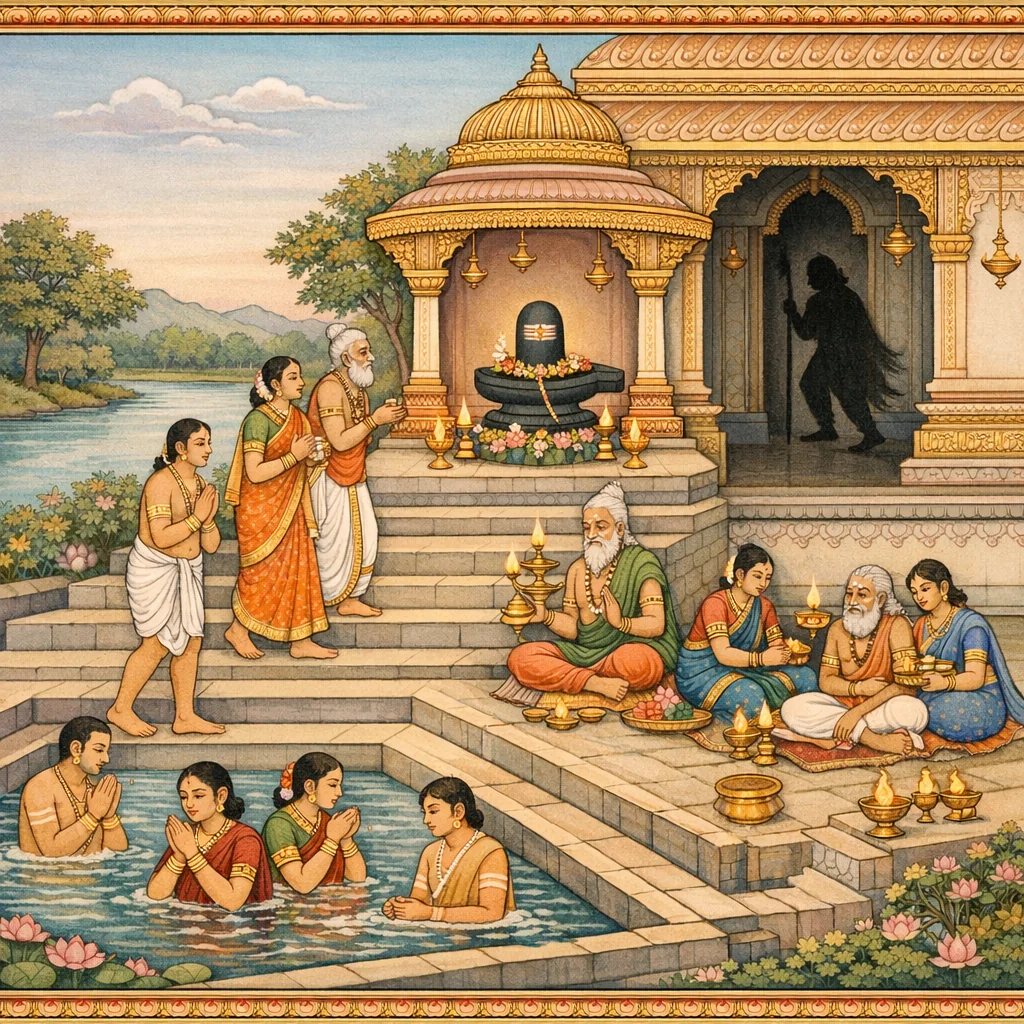
The chapter is framed as a dialogue between the ṛṣis and Sūta about an earlier incident: a young woman is struck down yet does not die, prompting inquiry into the hidden cause. Sūta explains that the matter is tied to the shrine of Amareśvara, a sacred precinct where death is said to be held at bay, especially on the Māgha month’s kṛṣṇa-caturdaśī. Aditi—named along with Diti as a daughter of Prajāpati and a wife of Kaśyapa—undertakes prolonged tapas after the devas are defeated through rivalry with the daityas. After long austerities, a Śiva-liṅga manifests from the earth, and a bodiless divine voice grants boons: whoever touches the liṅga in battle becomes “unassailable” for a year; and any human who keeps the night-vigil (jāgaraṇa) on Māgha kṛṣṇa-caturdaśī gains a year free from illness and protection from untimely death, for Death itself withdraws from the shrine’s bounds. Aditi then reveals the liṅga’s māhātmya to the devas; they regain strength and defeat the daityas. Foreseeing daitya imitation, the devas establish protective measures around the liṅga on the same tithi. The liṅga is called “Amara” because mere sight of it is said to negate death for embodied beings. The chapter ends with a phalaśruti for recitation near the liṅga and mentions a nearby kuṇḍa created by Aditi for ritual bathing. Snāna, liṅga-darśana, and jāgaraṇa together are reaffirmed as the effective observance.
Shlokas
Verse 1
ऋषय ऊचुः । यत्त्वया कथितं सूत न मृता सा कुमारिका । हता रौद्रप्रहारैश्च कौतुकं तन्महत्तरम्
The sages said: “O Sūta, as you have told it, that maiden did not truly die, though she was struck down by fierce blows. This is a matter of even greater wonder—explain it.”
Verse 2
यतो भूयः प्रसंजाता योगिनी हरतुष्टिदा । यत्त्वार्थं सर्वमाचक्ष्व कारणं च तदद्भुतम्
“For she was born again as a yoginī who grants delight and satisfaction. Tell us fully the meaning of this and the astonishing cause behind it.”
Verse 3
सूत उवाच । सा प्रविष्टा समं तेन सुपुण्यममरेश्वरम् । माघकृष्णचतुर्दश्यां न मृत्युर्यत्र विद्यते
Sūta said: “She entered, together with him, the supremely meritorious shrine of Amareśvara. On the fourteenth day of the dark fortnight of Māgha, death does not prevail there.”
Verse 4
ततोऽष्टौ वसवस्तत्र द्वादशार्कास्तथैव च । एकादशापरे रुद्रा नासत्यौ द्वौ च सुन्दरौ
Then, there were present the eight Vasus, the twelve Ādityas (Suns) as well, and the eleven other Rudras; and the two beautiful Nāsatyas (Aśvins).
Verse 5
ऋषय ऊचुः । अमरेश्वर इत्युक्तो यो देवो ह्यमरत्वदः । केन संस्थापितो ह्यत्र किंप्रभावश्च कीर्तय
The sages said: “The deity here is called Amareśvara, the giver of immortality to the immortals. By whom was He established in this place, and what is His sacred power? Please proclaim it.”
Verse 6
सूत उवाच । अदितिश्च दितिश्चैव प्रजापतिसुते शुभे । कृते पुरातिरूपाढ्ये कश्यपेन महात्मना
Sūta said: “Aditi and Diti—auspicious daughters of Prajāpati—were formerly taken in marriage by the great-souled Kaśyapa, in those ancient times rich in wondrous forms.”
Verse 8
अदित्यां विबुधा जाता दितेश्चैव तु दैत्यपाः । तेषां सापत्न्यभावेन महद्वैरमुपस्थितम् । अथ दैत्यैः सुरा ध्वस्ताः कृताश्चान्ये पराङ्मुखाः । अन्ये तु भयसंत्रस्ता दिशो जग्मुः क्षतांगकाः
From Aditi were born the gods, and from Diti, indeed, the lords of the Dānavas (Daityas). Because of rivalry between co-wives, a great enmity arose between them. Then the gods were shattered by the Daityas; some were driven to turn back in defeat, and others—terrified—fled to the quarters, their bodies wounded.
Verse 9
ततो दुःखसमायुक्ता देवमातात्र संस्थिता । तपश्चक्रे दिवानक्तं शिवध्यानपरायणा
Thereupon, the Mother of the gods, filled with sorrow, stayed there and performed austerities day and night, wholly devoted to meditation upon Śiva.
Verse 10
एवं तस्यास्तपःस्थाया गते युगचतुष्टये । निर्भिद्य धरणीपृष्ठं शिवलिंगं समुत्थितम्
Thus, while she remained steadfast in austerity, when four yugas had passed, a Śiva-liṅga burst forth, splitting open the surface of the earth.
Verse 11
ततस्तस्मै कृतानन्दा स्तुत्वा स्तोत्रैः पृथग्विधैः । अष्टांगप्रणिपातेन नमश्चक्रे समाहिता
Then, filled with joy, she praised Him with various hymns, and with concentrated mind she bowed in the eight-limbed prostration, offering her reverent salutations.
Verse 12
एतस्मिन्नंतरे वाणी संजाता गगनांगणे । शरीररहिता दिव्या मेघगम्भीरनिःस्वना
Meanwhile, a voice arose in the expanse of the sky—bodiless, divine, and deep-sounding like thunderclouds.
Verse 13
वरं प्रार्थय कल्याणि यस्ते हृदि व्यवस्थितः । प्रसन्नोऽहं प्रदास्यामि तवाद्य शशिशेखरः
“Ask for a boon, O blessed one. The One who abides in your heart—I, Śaśiśekhara (Śiva), am pleased and will grant it to you today.”
Verse 14
अदितिरुवाच । मम पुत्राः सुरश्रेष्ठ हन्यन्ते युधि दानवैः । तत्कुरुष्व गतायासानवध्यान्रणमूर्धनि
Aditi said: “O best among the gods, my sons are being slain in battle by the Dānavas. Therefore, make them free from weariness and invincible at the forefront of war.”
Verse 15
श्रीभगवानुवाच । एतल्लिंगं मदीयं ये स्पृष्ट्वा यास्यंति संयुगे । अवध्यास्ते भविष्यन्ति यावत्संवत्सरं शुभे
The Blessed Lord said: “Those who touch this liṅga of Mine and then go into battle will be invincible, O auspicious one, for as long as a year.”
Verse 16
अन्योऽपि मानवो योऽत्र चतुर्दश्यां समाहितः । माघमासस्य कृष्णायां प्रकरिष्यति जागरम्
Any other person too, who here on the fourteenth lunar day, with a collected mind, will undertake a night-long vigil in the dark fortnight of the month of Māgha—
Verse 17
सोऽपि संवत्सरं यावद्भविष्यति निरामयः । अपि मृत्युदिने प्राप्ते योऽस्मिन्नायतने शुभे
That person too will remain free from illness for as long as a year. Even when the day of death has arrived, for one who is in this auspicious sanctuary—
Verse 18
आगमिष्यति तं मृत्युर्दूरात्परिहरिष्यति । एवमुक्त्वाथ सा वाणी विरराम ततः परम्
Death, though it may come, will keep far away from him and avoid him from a distance. Having spoken thus, that divine voice then fell silent thereafter.
Verse 19
अदितिश्चापि सन्तुष्टा हतशेषान्सुतांस्ततः । समानीयाथ तल्लिंगं तेषामेव न्यदर्शयत् । कथयामास तत्सर्वं माहात्म्यं यद्वरोदितम्
Aditi too, being satisfied, then gathered her sons who had survived the slaughter. Bringing them together, she showed them that very liṅga, and she recounted to them in full the sacred greatness (māhātmya) spoken by the boon-granting voice.
Verse 20
ततस्ते विबुधाः सर्वे तल्लिंगं प्रणिपत्य च । प्रतिजग्मुस्तुष्टियुक्ताः शस्त्राण्यादाय तान्प्रति
Then all those gods, having bowed down to that liṅga, set out again with hearts filled with satisfaction, taking up their weapons against those foes.
Verse 21
यत्र ते दानवा हृष्टाः स्थिताः शक्रपदे शुभे । स्वर्गभोगसमायुक्ता नन्दनांतर्व्यवस्थिताः
There, the Dānavas, delighted, were stationed in the auspicious realm of Śakra’s sovereignty—enjoying heavenly pleasures and settled within Nandana, the celestial grove.
Verse 22
अथ ते दानवा दृष्ट्वा संप्राप्तांस्त्रिदिवौकसः । सहसा संगरार्थाय नानाशस्त्रधरान्बहून्
Then the Dānavas, seeing the inhabitants of heaven arriving, suddenly prepared for battle—many of them bearing weapons of various kinds.
Verse 23
रथवर्यान्समारुह्य धृतशस्त्रास्त्रवर्मणः । युद्धार्थं सम्मुखा जग्मुर्गर्जमाना घना इव
Mounting excellent chariots, bearing weapons, missiles, and armor, they advanced face-to-face for battle, roaring like thunderclouds.
Verse 24
ततः समभवद्युद्धं देवानां दानवैः सह । रोषप्रेरितचित्तानां मृत्युं कृत्वा निवर्तनम्
Then a battle arose between the gods and the Dānavas. Their minds driven by fury, they turned back only after dealing out death.
Verse 25
ततस्ते विबुधाः सर्वे हरलब्धवरास्तदा । जघ्नुर्दैत्यानसंख्याताच्छितैः शस्त्रैरनेकधा
Then all those gods, having at that time obtained boons from Hara (Śiva), slew countless Daityas with sharp weapons in many ways.
Verse 26
हतशेषाश्च ये तेषां ते त्यक्त्वा त्रिदशालयम् । पलायनकृतोत्साहाः प्रविष्टा मकरालयम्
And those among them who survived, abandoning the abode of the Thirty-three gods, fled in desperate haste and entered the ocean—the dwelling-place of the Makara.
Verse 27
ततः शक्रः समापेदे स्वराज्यं दानवैर्हृतम् । यदासीत्पूर्वकाले तत्समग्रं हतकण्टकम्
Then Śakra regained his own sovereignty that had been seized by the Dānavas—restored wholly, as it had been in former times, free from all thorns of obstruction.
Verse 28
ततस्ते दानवाः शेषा ज्ञात्वा तल्लिंगसंभवम् । माहात्म्यं वृषनाथस्य क्षेत्रस्यास्योद्भवस्य च
Then the remaining Dānavas, learning of the origin of that Liṅga, came to know the greatness of Vṛṣanātha and also the sacred manifestation of this holy kṣetra.
Verse 29
शुक्रेण कथितं सर्वं माघकृष्णे निशागमे । चतुर्दश्यां शुचिर्भूत्वा यस्तल्लिंगं प्रपूजयेत् । कालाघ्रातोऽपि न प्राणैः स पुमांस्त्यज्यते क्वचित्
All this was proclaimed by Śukra on the night that ends the dark fortnight of Māgha. Whoever, becoming pure on the fourteenth lunar day, worships that Liṅga with full reverence—though touched by Time itself (death)—is never forsaken by the life-breath.
Verse 30
तस्माद्यूयं समासाद्य तल्लिंगं तद्दिने निशि । पूजयध्वं महाभागा येन स्युर्मृत्युवर्जिताः
Therefore, O fortunate ones, approach that Liṅga on that very night and worship it; by this you may become free from the affliction of death.
Verse 31
यावत्संवत्सरस्यातं सत्यमेतन्मयोदितम् । यथा ते देवसंघाश्च तत्प्रभावादसंशयम्
This is true—thus have I spoken—throughout the course of the year; and indeed, by the power of that (Liṅga and sacred kṣetra), the hosts of gods become secure and successful, without doubt.
Verse 32
अथ तं दानवेन्द्राणां मंत्रं ज्ञात्वा सुरेश्वरः । नारदाद्ब्राह्मणः पुत्राद्भयत्रस्तमनास्ततः
Then the Lord of the gods, learning from Nārada’s son—the brāhmaṇa—the secret counsel of the Dānava chiefs, became fearful at heart.
Verse 33
मंत्रं चक्रे समं देवैस्तत्र देवस्य रक्षणे । यथा स्यादुद्यमः सम्यक्तस्मिन्नहनि सर्वदा
He then devised a plan together with the gods for the protection of that Deity, so that on that particular day their effort would be rightly set in motion, ever without fail.
Verse 34
कोटयस्तु त्रयस्त्रिंशद्देवानां सायुधास्ततः । रक्षार्थं तस्य लिंगस्य तस्मिन्क्षेत्रे व्यवस्थिताः । माघकृष्णचतुर्दश्यां सुसंनद्धाः प्रहारिणः
Thereupon, thirty-three crores of gods, armed, took their stations in that kṣetra to guard that Liṅga. On the fourteenth day of Māgha’s dark fortnight, they stood fully arrayed, ready to strike.
Verse 35
अथ ते दानवा दृष्ट्वा तान्देवांस्तत्र संस्थितान् । भयसंत्रस्तमनसो दुद्रुवुः सर्वतो दिशम्
Then the Dānavas, seeing those gods stationed there, their minds shaken with fear, fled in every direction.
Verse 36
अथ प्रभाते विमले प्रोद्गते रविमण्डले । भूय एव सुराः सर्वे मंत्रं चक्रुः परस्परम्
Then, at the pure dawn, when the orb of the Sun had risen, all the gods once again held counsel among themselves.
Verse 37
यद्येतत्क्षेत्रमुत्सृज्य गमिष्यामः सुरालयम् । लिंगमेतत्समभ्येत्य पूजयिष्यंति दानवाः
They said: “If we abandon this sacred field and depart for the abode of the gods, the Dānavas will come here and worship this liṅga.”
Verse 38
ततोऽवध्या भविष्यंति तेऽपि सर्वे यथा वयम् । तस्मादत्रैव तिष्ठामस्त्रयस्त्रिंशत्प्रनायकाः
“Then they too will all become unassailable, just as we are. Therefore, let us remain right here—the leaders of the Thirty-three (gods).”
Verse 39
कोटीनामेव सर्वेषां शेषा गच्छन्तु तत्र च । सहस्राक्षेण संयुक्ताः स्वर्गे स्वपररक्षकाः
Of all these crores, let the remainder go there (to heaven), united with the Thousand-eyed One; in Svarga, let them guard their own realm.
Verse 41
एते तल्लिंगरक्षार्थं तस्मिन्क्षेत्रे व्यवस्थिताः । शेषाः शक्रसमायुक्ताः प्रजग्मुस्त्रिदशालयम्
These remained stationed in that sacred region for the protection of that liṅga; the rest, accompanied by Śakra (Indra), went to the abode of the gods.
Verse 42
सूत उवाच । एवं प्रभावं लिंगं तु देवदेवस्य शूलिनः । भवद्भिः परिपृष्टं यददित्या स्थापितं पुरा
Sūta said: “Thus is the mighty power of the liṅga of Śūlin, the God of gods—about which you have asked—the liṅga that was formerly established by Aditi.”
Verse 43
यस्मान्न विद्यते मृत्युस्तेन दृष्टेन देहिनाम् । अमराख्यं ततो लिंगं विख्यातं भुवनत्रये
Because, for embodied beings, there is no death upon beholding it, that liṅga became famed in the three worlds by the name “Amara” (the Deathless).
Verse 44
यस्मिन्देशेऽपि सा कन्या हता तेन द्विजन्मना । जाबालिना सुक्रुद्धेन तस्य देवस्य मंदिरे
In that very region, within the temple of that God, a maiden was slain by that twice-born man—Jābāli—who was fiercely enraged.
Verse 45
आसीत्तत्र दिने कृष्णा माघमास चतुर्दशी । तेन नो निधनं प्राप्ता सुहताऽपि तपस्विनी
That day was the Caturdaśī, the fourteenth of the dark fortnight in the month of Māgha; therefore, though grievously struck down, the ascetic woman did not meet with death.
Verse 46
एतद्वः सर्वमाख्यातं तस्य लिंगस्य सम्भवम् । माहात्म्यं ब्राह्मणश्रेष्ठाः सर्वपातकनाशनम्
O best of brāhmaṇas, I have now told you fully the origin and the greatness of that liṅga—its greatness that destroys all sins.
Verse 47
यश्चैतत्पठते भक्त्या तस्य लिंगस्य संनिधौ । अपमृत्युभयं तस्य कथंचिन्नैव जायते
Whoever recites this with devotion in the presence of that Śiva-liṅga—fear of untimely death (apamṛtyu) does not arise for him in any way.
Verse 48
तस्याग्रेऽस्ति शुभं कुण्डं पूरितं स्वच्छवारिणा । अदित्या निर्मितं देव्या स्नानार्थं चात्मनः कृते
In front of it there is an auspicious sacred pond (kuṇḍa), filled with clear water—constructed by the goddess Aditi for her own bathing.
Verse 49
स्नानं कृत्वा नरस्तस्मिन्यस्तल्लिंगं प्रपश्यति । करोति जागरं रात्रौ तस्मिन्नेव दिनेदिने । सोऽद्यापि वत्सरं यावन्नापमृत्युमवाप्नुयात्
Having bathed there, the man who beholds that liṅga and keeps night-vigil (jāgara) there day after day—even for a full year—does not meet with untimely death (apamṛtyu).