Adhyaya 14
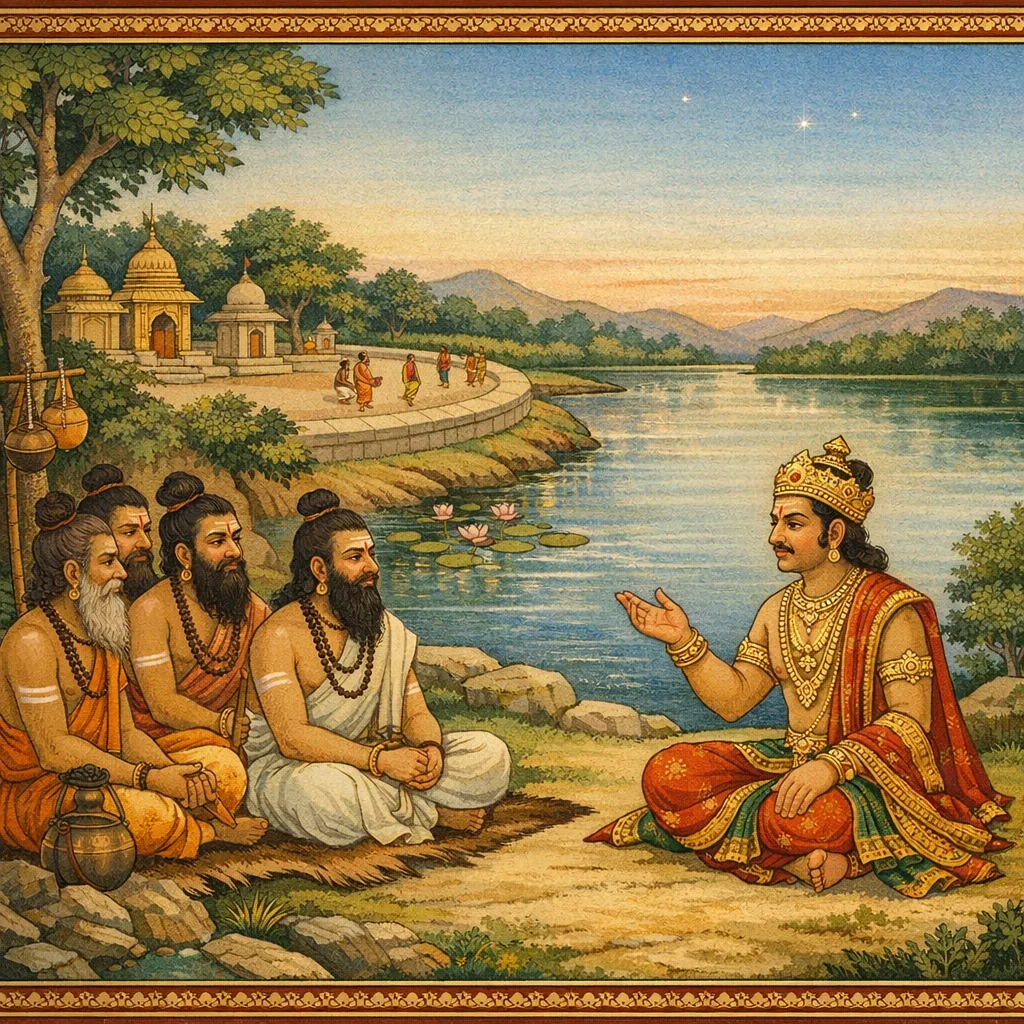
Chapter 14, as taught by Sūta, relates a didactic account proclaiming the greatness of circumambulation (pradakṣiṇā) at Cāmatkārapura. A poor, mute man of vaiśya birth lives as a cowherd. In the month of Caitra, on kṛṣṇapakṣa caturdaśī, one animal strays unnoticed; the owner accuses him and demands its immediate return. Fearful, the cowherd goes into the forest without food, staff in hand, and while following hoofprints he unknowingly circles the entire boundary of Cāmatkārapura—thus performing an inadvertent pradakṣiṇā. By the end of the night he finds the animal and restores it. The text marks that calendrical moment as a time when devas gather at sacred places, thereby magnifying the merit of such acts. In due course the cowherd (fasting, silent, unbathed) and the animal die; the cowherd is reborn as the son of the Daśārṇa ruler, retaining memory of his former life. As king, he returns each year with a minister to perform the circumambulation intentionally—on foot, fasting, and observing mauna. Sages arrive at a pāpa-haraṇa tīrtha associated with Viśvāmitra and question his singular devotion to this rite amid many tīrthas and temples. The king discloses his prior-life story; the sages praise him, then themselves perform pradakṣiṇā and attain an exceptional siddhi, said to be difficult even through japa, yajña, dāna, and other tīrtha services. Ultimately the king and minister become celestial beings, visible as star-like forms in the sky, concluding with a phala-centered validation of the practice.
Shlokas
Verse 1
। सूत उवाच । यदन्यत्तत्र सञ्जातमाश्चर्यं द्विजसत्तमाः । तदहं कीर्तयिष्यामि रहस्यं हृदि संस्थितम्
Sūta said: O best of the twice-born, whatever other marvel arose there—I shall now proclaim it, a secret long abiding within my heart.
Verse 2
चमत्कारपुरे कश्चिद्वैश्यजातिसमुद्भवः । बभूव पुरुषो मूको दरिद्रेण समन्वितः
In Camatkārapura there lived a man, born among the Vaiśyas—mute, and burdened by poverty.
Verse 3
यो दौःस्थ्यात्सर्वलोकानां करोति पशुरक्षणम् । कुटुम्बभरणार्थाय संतुष्टो येनकेनचित्
Pressed by poverty, he served the people by guarding their cattle; and to sustain his household, he was content with whatever little came to him.
Verse 4
कदाचिद्रक्षतस्तस्य पशूंस्तान्वनभूमिषु । पशुरेको विनिष्क्रांतः स्वयूथात्तृणलोभतः
Once, as he guarded those animals in the forest tracts, one beast, greedy for grass, strayed away from its own herd.
Verse 5
कृष्ण पक्षे चतुर्दश्यां चैत्रमासे द्विजोत्तमाः । न तदा लक्षितस्तेन गच्छमानो यदृच्छया
O best of the twice-born, on the fourteenth day of the dark fortnight in the month of Caitra, that animal wandered off by chance, and he did not notice it then.
Verse 6
अथ यावद्गृहं प्राप्तः स मूकः पशुपालकः । तावत्तस्य च गोः स्वामी भर्त्सयन्समुपागतः
Then, as soon as the mute cowherd reached home, the owner of the cow came up to him, scolding him.
Verse 7
किं पाप न समायातः पशुरेकोऽद्य नो यथा । नूनं त्वया हतः सोऽपि विक्रीतोऽपिहितोऽथवा । तस्मा दानय मे क्षिप्रं निराहारोऽपि गां त्वरात्
“Why, you sinner—has not one of my animals returned today? Surely you have either killed it, or sold it, or hidden it away. Therefore, quickly give me a cow at once—fasting or not, hurry!”
Verse 8
तच्छ्रुत्वा भयसंत्रस्तः स मूकः पशुपालकः । निष्क्रांतो यष्टिमादाय निराहारोऽपि मन्दिरात्
Hearing that, the mute cowherd, terrified with fear, went out of the house taking his staff—without even eating.
Verse 9
ततोऽरण्यं समासाद्य वीक्षांचक्रे समंततः । सूक्ष्मदृष्ट्या स दुर्गाणि गहनानि वनानि च
Then, reaching the forest, he searched all around with keen attention, scanning difficult passes and dense woods.
Verse 10
अथ तेन क्वचिद्दृष्टं पदं तस्य पशोः स्फुटम् । अटव्यां भ्रममाणेन परिज्ञातं च कृत्स्नशः
Then, somewhere he clearly saw the footprints of that animal; and while roaming through the woodland, he came to understand the track fully.
Verse 11
ततश्च तत्पदान्वेषी स जगाम वनाद्वनम् । चमत्कारपुरस्यास्य समंताद्द्विजसत्त माः
Then, seeking those footprints, he went from forest to forest, all around the place called Cāmatkārapura, O best of the twice-born.
Verse 12
एवं प्रदक्षिणा तस्य जाता पशुदिदृक्षया । स्थानस्य चैव निर्वेशे पशोश्चापिद्विजोत्तमाः
Thus, in his desire to see (recover) the animal, he ended up making a circumambulation, surveying the whole extent of the place and also the whereabouts of the beast, O best of the twice-born.
Verse 13
प्रदक्षिणावसाने च पशुर्लब्धो हि तेन सः । निशांतेऽथ गृहं नीत्वा स्वामिने विनिवेदितः
And when the circumambulation was completed, he indeed found the animal. Then, at the end of the night, he took it home and presented it to its owner.
Verse 14
चैत्रे पुण्यतमे मासि कृष्णपक्षे चतुर्दशीम् । क्षेत्रे पुण्यतमे देवास्तीर्थान्या यांति सर्वशः
In the supremely meritorious month of Caitra, on the fourteenth day of the dark fortnight, in that most holy sacred field, the gods from all directions come to the tīrthas.
Verse 15
एवमज्ञानभावेन कृता ताभ्यां प्रदक्षिणा । पशुपालपशुभ्यां वै सुपुण्ये तत्र वासरे
Thus, even without conscious understanding, the shepherd and the animal indeed performed that circumambulation on that exceedingly meritorious day there.
Verse 16
निराहारस्य मूकस्य साहारस्य पशोस्तथा
—of the mute one who was fasting, and likewise of the animal that had been fed—
Verse 17
विना स्नानेन भक्षाच्च दैवाद्द्विजवरोत्तमाः । ततः काले व्यतिक्रांते कियन्मात्रे स्वकर्मतः । उभौ पंचत्वमापन्नौ पृथक्त्वेनायुषः क्षये
O best of the twice-born, without bathing and without eating—by fate—when some time had passed, according to their own karma, both of them met the fivefold end, death, separately, when their lifespans were exhausted.
Verse 18
ततश्च पशुपालस्तु दशार्णाधिपतेः सुतः । संजातस्तत्प्रभावेन पूर्वजातिमनुस्मरन्
Then that shepherd, by the power of that tīrtha and rite, was born as the son of the ruler of Daśārṇa, remembering his former birth.
Verse 20
अथागत्य स राजेंद्रस्तेनैव सह मंत्रिणा । कृष्णपक्षे चतुर्दश्यां पुरस्तस्याः प्रदक्षिणाम्
Then that lord of kings came there with that very minister, and on the fourteenth day of the dark fortnight he performed pradakṣiṇā—devotional circumambulation—before her sacred presence.
Verse 21
चक्रे संवत्सरस्यांते श्रद्धया परया युतः । निराहारश्च मौनेन पदातिर्द्विजसत्तमाः
O best of brāhmaṇas, at the end of the year he performed it with supreme faith—fasting, observing mauna (holy silence), and going on foot.
Verse 22
एकदा तत्र चाऽयाता मुनयः शंसितव्रताः । तीर्थे पापहरे पुण्ये विश्वामित्रसमुद्भवे
Once, sages renowned for their vows came there—to that holy tīrtha, sin-destroying and meritorious, sprung from Viśvāmitra.
Verse 23
याज्ञवल्क्यो भरद्वाजः शुनःशेपोऽथ गालवः । देवलो भागुरिर्धौम्यः कश्य पश्च्यवनो भृगुः
Yājñavalkya, Bharadvāja, Śunaḥśepa, and Gālava; Devala, Bhāguri, Dhaumya, Kaśyapa, Cyavana, and Bhṛgu—these sages arrived there.
Verse 24
तथान्ये शंसिताऽत्मानो ब्रह्मचर्यपरायणाः । तीर्थयात्राप्रसंगेन तस्मिन्क्षेत्रे समागताः
Likewise, other self-disciplined men—praised for their conduct and devoted to brahmacarya—gathered in that sacred kṣetra, drawn there in the course of their tīrtha pilgrimage.
Verse 25
तान्दृष्ट्वा स महीपालः प्रणिपत्य कृतांजलिः । यथाज्येष्ठं यथाश्रेष्ठं पूजयामास भक्तितः
Seeing them, the king bowed down with joined palms and, honoring each according to seniority and excellence, worshipped them with devotion.
Verse 26
ततस्तेषां स मध्ये च संनिविष्टो महीपतिः । तथागतः स भूपालः सर्वै स्तैश्चाभिनंदितः
Then the king sat down in their midst; and having thus come among them, that ruler was welcomed and praised by them all.
Verse 27
ततश्चक्रुः कथा दिव्या मुनयस्ते महीपतेः । पुरतो मुनिमुख्यानां चरितानि महात्मनाम्
Then those sages spoke to the king sacred, divine narratives—accounts of the lives and deeds of great souls, foremost among ascetics.
Verse 28
राजर्षीणां पुराणानां धर्मशास्त्रसमुद्भवाः । आनंदं तस्य राजर्षेर्जनयंतो द्विजोत्तमाः
Those best of the twice-born, drawing upon the Purāṇas and the dharma-śāstras concerning royal sages, delighted that royal sage with their teachings.
Verse 29
अथ क्वाऽपि कथांते स पार्थिवस्तैर्महर्षिभिः । पृष्टः कौतूहलाविष्टैर्दत्त्वा श्रौतीस्तदाशिषः
And then, at some point when the discourse had ended, the king—after offering them blessings in the Vedic manner—was questioned by those great seers, who were filled with curiosity.
Verse 30
ऋषय ऊचुः । वर्षेवर्षे महीपाल त्वमत्राऽगत्य यत्नतः । करोषि मंत्रिणा सार्धं पुरस्याऽस्य प्रदक्षिणाम्
The sages said: “O king, year after year you come here with care and, together with your minister, you perform the circumambulation (pradakṣiṇā) of this city.”
Verse 31
अस्मिन्क्षेत्रे सुतीर्थानि संति पार्थिवसत्तम । तथाऽन्यानि प्रसिद्धानि देवतायतनानि च
“O best of kings, within this sacred region there are excellent tīrthas; and there are also other renowned shrines—temples that are abodes of the deities.”
Verse 32
आदरस्तेषु वै राजन्नास्ति स्वल्पो ऽपि कर्हिचित् । एतन्नः कौतुकं जातं न चेद्गुह्यं प्रकीर्तय
O king, your reverence toward them is never, at any time, even in the least diminished. This has stirred our curiosity—if it is not a secret, explain it to us.
Verse 33
सूत उवाच । तेषां तद्वचनं श्रुत्वा विनयाऽवनतः स्थितः । स प्रोवाच वचो भूपः किंचिद्व्रीडासमन्वितः
Sūta said: Hearing their words, the king stood in humility, bowed down in modesty, and then replied, speaking with a touch of bashful restraint.
Verse 34
यत्पृष्टोऽस्मि द्विजश्रेष्ठा युष्माभिः सांप्रतं मम । तद्गुह्यं न मयाऽख्यातं कस्यचिद्धरणीतले
“O best of the twice-born, what you have just asked of me—this secret I have not disclosed to anyone upon the earth.”
Verse 35
तथाऽपि हि प्रकर्तव्यं युष्माकं सत्यमेव हि । अपि गुह्यतमं चेत्स्याच्छृण्वंतु मुनिसत्तमाः
“Even so, your request must be fulfilled, for it is true and proper. Even if it is most secret, let the best of sages listen.”
Verse 36
सूत उवाच । ततः स कथयामास पूर्वजातिसमुद्भवम् । वृत्तांतं तन्मुनींद्राणां तेषां ब्राह्मणसत्तमाः
Sūta said: Then he narrated, O best of Brāhmaṇas, the account arising from a former birth—the full episode concerning those lordly sages.
Verse 37
यथा नष्टः पशुस्तस्य कृता यद्वदवेक्षणा । यथा प्रदक्षिणा जाता चमत्कारपुरस्य तु
How his lost animal was found, how the search was undertaken; and how the sacred circumambulation of Camatkārapura came to pass.
Verse 38
जातिस्मृतिर्यथा जाता प्राक्तनी तत्प्रभावतः । राज्यप्राप्तिर्विभूतिश्च तथेष्टाप्तिः पदेपदे
How, by its power, remembrance of a former birth arose; how kingship and prosperity were attained; and likewise how desired gains came at every step.
Verse 39
तच्छ्रुत्वा मुनयः सर्वे प्रहृष्टाः पृथिवीपतेः । आशीर्वादान्बहून्दत्त्वा साधुसाध्विति चाऽब्रुवन्
Hearing this, all the sages rejoiced for the lord of the earth; bestowing many blessings, they cried, “Well done! Well done!”
Verse 40
समुत्थाय ततश्चक्रुः पुरस्तस्याः प्रदक्षिणाम् । यथोक्तविधिना सर्वे श्रद्धया परया युताः
Then they rose, and all performed circumambulation before her according to the stated rite, each endowed with the highest faith.
Verse 41
गताश्च परमां सिद्धिं तत्प्रभावात्सुदुर्लभाम् । जपयज्ञप्रदानैर्या तीर्थसेवादिकैरपि
And by its power they attained the supreme accomplishment, hard to obtain even through japa, sacrifice, gifts, or other forms of service to holy places.
Verse 42
सोऽपि राजा स मन्त्री च जातौ वैमानिकौ सुरौ । अद्याऽपि तौ हि दृश्येते तारारूपौ नभस्तले
That king and his minister too were reborn as celestial gods who journey in aerial chariots; even today they are seen in the sky, appearing in the form of stars.