Adhyaya 135
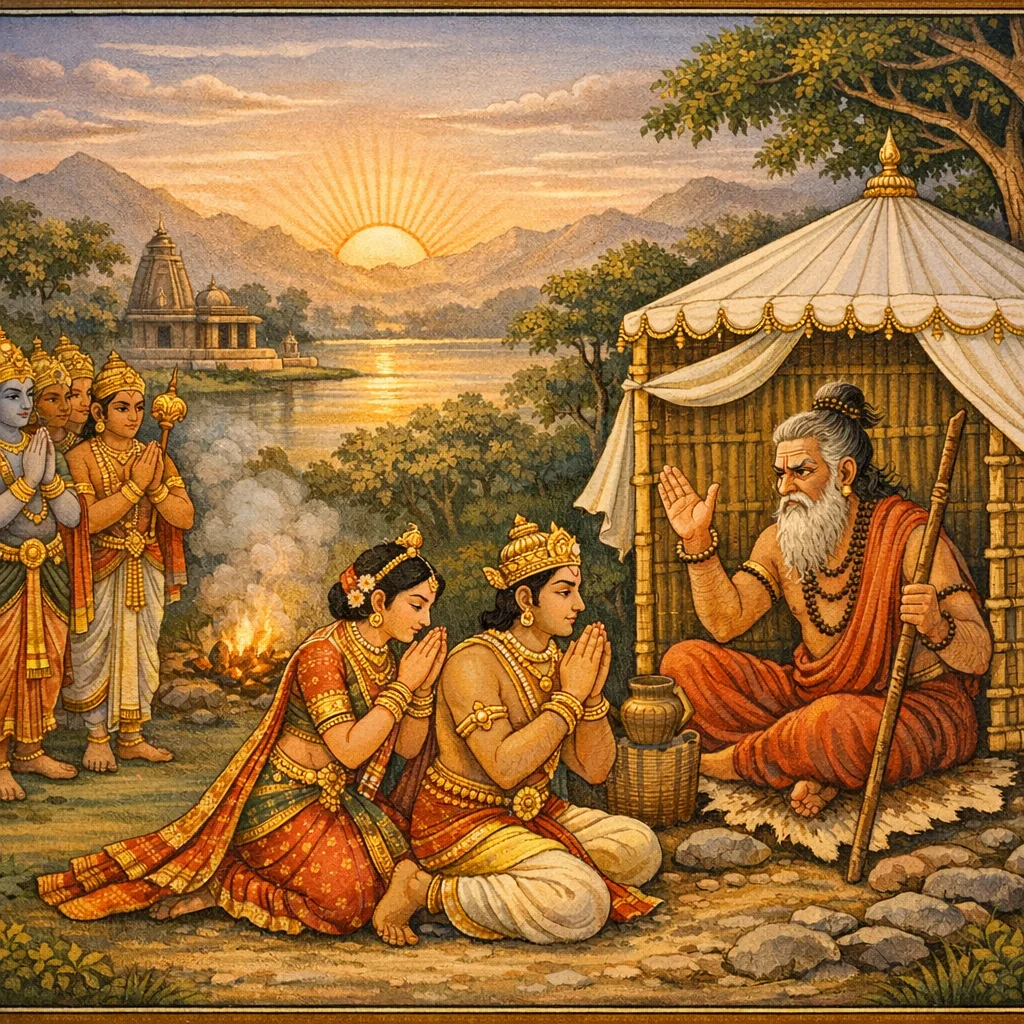
Sūta extols the famed lake Dīrghikā, celebrated as a destroyer of sins. Bathing there at sunrise on the bright-fortnight caturdaśī of Jyeṣṭha is declared especially potent for the removal of sin and the attainment of release. An exemplum follows. The learned brāhmaṇa Vīraśarman has a daughter with unusual bodily proportions and is therefore socially rejected, amid fears about marriage and ritual propriety. She undertakes severe austerities and regularly attends Indra’s assembly; when her seat is sprinkled for purification, she asks why. Indra explains that remaining unmarried despite maturity is regarded as a ritual blemish, and advises marriage to restore acceptability. She publicly seeks a husband; a brāhmaṇa afflicted with leprosy agrees to marry her on the condition of lifelong obedience. After marriage he asks to bathe in sixty-eight tīrthas; she builds a portable hut and carries him upon her head through pilgrimage sites, and his body gradually regains radiance. One night near the Hāṭakeśvara region, exhausted, she accidentally disturbs the impaled sage Māṇḍavya, who curses that her husband will die at sunrise. She counters with a satya-act: if her husband must die, the sun will not rise. Sunrise is halted, bringing cosmic and social disruption—wrongdoers rejoice, while ritualists and devas suffer as yajñas and dharmic routines cease. The devas appeal to Sūrya, who admits fear of the pativratā’s power; they negotiate with the woman and offer boons. She permits sunrise; her husband dies upon contact with the sun but is revived by the devas and restored to youthful form, and she too is transformed into an ideal youthful figure. Māṇḍavya is released from suffering. The chapter thus demonstrates tīrtha-merit, the potency of truth, and the exalted status of pativratā-dharma within a sacred-geographic frame.
Shlokas
Verse 1
सूत उवाच । तथान्यापि च तत्रास्ति दीर्घिकाख्या सुशोभना । सरसी लोकविख्याता सर्वपातकनाशनी
Sūta said: There too is another splendid lake named Dīrghikā, renowned throughout the world—a sacred pond that destroys all sins.
Verse 2
यस्यां स्नातो नरः सम्यग्भास्करस्योदयं प्रति । ज्येष्ठशुक्लचतुर्दश्यां मुच्यते सर्वपातकैः
A man who bathes properly in it, facing the sunrise, on the bright fourteenth of Jyeṣṭha, is released from all sins.
Verse 3
आसीत्पूर्वं द्विजो वीरशर्मनामातिविश्रुतः । वेदविद्याव्रतस्नातो वर्धमाने पुरोत्तमे
Formerly there lived a twice-born man, famed as Vīraśarman—accomplished in Vedic learning and observances—dwelling in the excellent city of Vardhamāna.
Verse 4
तस्य कन्या समुत्पन्ना कदाचिल्लक्षणाच्च्युता । अतिदीर्घा प्रमाणेन जनहास्यविवर्द्धिनी
To him a daughter was born, but at some point she fell short of auspicious marks; exceedingly tall in stature, she became a cause for people’s ridicule.
Verse 5
ततः सा यौवनं प्राप्ता तद्रूपापि कुमारिका । न कश्चिद्वरयामास शास्त्रवाक्यमनुस्मरन्
When she reached youth, though she possessed that appearance, no one chose her in marriage—remembering the injunctions of the śāstras.
Verse 6
अतिसंक्षिप्तकेशा या अतिदीर्घातिवामना । उद्वाहयति यः कन्यां पुरुषः काममोहितः
A maiden whose hair is exceedingly short, or who is overly tall or overly dwarfish—if a man, deluded by desire, marries such a girl,
Verse 7
षण्मासाभ्यंतरे मृत्युं स प्राप्नोति नरो ध्रुवम् । एतस्मात्कारणात्सर्वे तां त्यजंति कुमारिकाम्
Within six months that man surely meets death; for this reason, everyone rejects that maiden.
Verse 8
पुरुषा अतिदीर्घत्वयुक्तां वीक्ष्य समंततः । ततो वैराग्यमापन्ना तपस्तेपेऽतिदारुणम्
Seeing men everywhere endowed with extraordinary longevity, she became filled with dispassion, and then undertook exceedingly severe austerities.
Verse 9
चांद्रायणानि कृच्छ्राणि तया चीर्णान्यनेकशः । पाराकाणि यथोक्तानि तथा सांतपनानि च
She repeatedly observed the Cāndrāyaṇa and Kṛcchra penances; and likewise, as prescribed, she performed the Pārāka and Sāṃtapana expiations.
Verse 10
व्रतं यद्विद्यते किंचिन्नियमः संयमस्तथा । अन्यच्चापि शुभं कृत्यं तत्सर्वं च तया कृतम्
Whatever vow there was, whatever observance and self-restraint—indeed every other auspicious duty as well—all of that was performed by her.
Verse 11
एवं तस्या व्रतस्थाया जरा सम्यगुपस्थिता । तथापि तेजसो वृद्धिर्ववृधे तपसा कृता
Thus, though old age duly came upon her as she remained steadfast in her vows, still her radiance increased—grown by the power of her austerity (tapas).
Verse 12
सा च नित्यं महेन्द्रस्य सभां यात्यतिकौतुकात् । देवर्षीणां मतं श्रोतुं देवतानां विशेषतः
And out of great curiosity she would daily go to Mahendra’s assembly, especially to hear the opinions and counsel of the divine seers (devarṣis) and the gods.
Verse 13
यदा सा स्वासनं त्यक्त्वा प्रयाति स्वगृहोन्मुखी । तदैवाभ्युक्षणं चक्रुस्तत्र शक्रस्य किंकराः
Whenever she left her own seat and set out facing toward her home, at that very moment Śakra’s (Indra’s) attendants there would perform the sprinkling rite (abhyukṣaṇa).
Verse 14
तथान्यदिवसे दृष्टं क्रियमाणं तया हि तत् । अभ्युक्षणं स्वकीये च आसने द्विजसत्तमाः
Then, on another day, she indeed saw that sprinkling being performed upon her own seat—O best of the twice-born.
Verse 15
ततः कोपपरीतांगी दीर्घिका सा कुमारिका । त्रिशाखां भृकुटीं कृत्वा ततः प्राह पुरंदरम्
Then that long-lived maiden, her body seized by anger, knitted her brows into a triple furrow and spoke to Purandara (Indra).
Verse 16
किं दोषं वीक्ष्य मे शक्र प्रोक्षितं चासनं त्वया । परद्वा रकृतं दोषं किं मयैतत्कृतं क्वचित्
O Śakra, what fault did you perceive in me that you sprinkled my seat with purifying water? Is this a blemish wrought by another at the threshold, or have I ever done anything here at all?
Verse 17
तस्मान्मे पातकं ब्रूहि नो चेच्छापं सुदारुणम् । त्वयि दास्याम्यसंदिग्धं सत्ये नात्मानमालभे
Therefore tell me what sin is mine; otherwise I shall surely lay upon you a most dreadful curse. In truth I will do it without doubt; I will not restrain myself.
Verse 18
इन्द्र उवाच । न ते दीर्घेऽस्तिदोषोत्र कश्चिदेकं विना शुभे । तेनाथ क्रियते चैतदासनस्याभिषेचनम्
Indra said: “O auspicious one, O Dīrghā, there is no fault in you here, except for one. Therefore this consecration of the seat is being performed.”
Verse 19
त्वं कुमार्यपि संप्राप्ता ऋतुकालं विगर्हिता । तेन दोषं त्वमापन्ना नान्यदस्तीह कारणम्
“Though still an unmarried maiden, you have reached the time of menses and have been left unprovided for; by that you have incurred a fault. There is no other cause here.”
Verse 20
तस्मादद्यापि त्वां कश्चिदुद्वाहयति तापसः । त्वं तं वरय भर्त्तारं येन गच्छसि मेध्यताम्
“Therefore, even today, some ascetic may yet marry you. Choose him as your husband, by whom you may attain purity and ritual fitness.”
Verse 21
ततश्च लज्जया युक्ता सा तदा दीर्घकन्यका । गत्वा भूमितले तूर्णं वर्धमाने पुरोत्तमे
Then Dīrghakanyā, filled with shame, quickly went down to the ground in Vardhamāna, the most excellent city.
Verse 22
ततः फूत्कर्तुमारब्धा चत्वरेषु त्रिकेषु च । उच्छ्रित्य दक्षिणं पाणिं भ्रममाणा इतस्ततः
Then she began to call out in the squares and at the three-way crossings; raising her right hand, she wandered here and there.
Verse 23
यदि कश्चिद्द्विजो जात्या करोति मम सांप्रतम् । पाणिग्राहं तपोऽर्द्धस्य श्रेयो यच्छामि तस्य च
“If any twice-born man by birth will now take my hand in marriage, I shall grant him the merit and spiritual good of half my austerity as well.”
Verse 24
एवं तां प्रविजल्पन्तीं श्रुत्वा लोका दिवानिशम् । उन्मत्तामिति मन्वाना हास्यं चक्रुः परस्परम्
Hearing her speak thus day and night, people thought, “She is mad,” and they laughed among themselves.
Verse 25
ततः कतिपयाहस्य प्रकुर्वंती च दीर्घिका । कुष्ठव्याधिगृहीतेन ब्राह्मणेन परिश्रुता
After some days, as Dīrghikā continued her actions, she became known to a Brahmin afflicted with the disease of leprosy.
Verse 26
ततः प्रोवाच मन्दं स समाहूय सुदुःखिताम्
Then, having called the deeply sorrowful woman to him, he spoke to her gently.
Verse 27
अहं त्वामुद्वहाम्यद्य कृत्वा पाणिग्रहं तव । यदि मद्वचनं सर्वं सर्वदैवानुतिष्ठसि
“Today I will marry you, taking your hand in the rite of pāṇigraha—if you will always carry out all my instructions.”
Verse 28
कुमारिकोवाच । करिष्यामि न संदेहस्तव वाक्यं द्विजाधिप । कुरु पाणिग्रहं मेऽद्य विधिदृष्टेन कर्मणा
The maiden said: “I will do as you say, without any doubt, O foremost of brāhmaṇas. Perform today the taking of my hand, according to the rite enjoined by proper rule.”
Verse 29
सूत उवाच । ततस्तस्याः कुमार्याः स पाणिं जग्राह दक्षिणम् । गृह्योक्तेन विधानेन देवाग्निगुरुसंनिधौ
Sūta said: Then he took the maiden’s right hand, following the procedure taught in the gṛhya rites, in the presence of the gods, the sacred fire, and the teacher.
Verse 30
अथ सा प्राह भूयोऽपि विवाहकृतमंगला । आदेशं देहि मे नाथ यं करोमि तवाधुना
Then she spoke again, made auspicious by the marriage rite: “Give me your command, my lord—what shall I do for you now?”
Verse 31
पतिरुवाच । अष्टषष्टिषु तीर्थेषु स्नातुमिच्छामि सुन्दरि । साहाय्येन त्वदीयेन यदि शक्नोषि तत्कुरु
The husband said: “O fair one, I long to bathe in the sixty-eight sacred tīrthas. If you are able, then do this—aid me with your help.”
Verse 32
बाढमित्येव सा प्रोच्य ततस्तूर्णं पतिव्रता । तत्प्रमाणं दृढं कृत्वा रम्यं वंशकुटीरकम्
Saying, “So be it,” that devoted wife at once set to work; making it firm and of proper measure, she fashioned a lovely little hut of bamboo.
Verse 33
मृदु तूलसमायुक्तं ततः प्राह निजं पतिम् । कृतांजलिपुटा भूत्वा प्रहृष्टेनान्तरात्मना
Then, having lined it with soft cotton padding, she spoke to her own husband—hands joined in reverence, her inner being filled with joy.
Verse 34
एतत्तव कृते रम्यं कृतं वंशकुटीरकम् । मम नाथारुहाशु त्वं येन कृत्वाथ मूर्धनि । नयामि सर्वतीर्थेषु क्षेत्रेषु सुशुभेषु च
“My lord, for your sake I have made this lovely little bamboo hut. Mount it quickly; setting it upon my head, I will carry you to all the sacred tīrthas and to the splendid holy kṣetras as well.”
Verse 35
ततः कुष्ठी प्रहृष्टात्मा शनैरुत्थाय भूतलात् । तया चोद्धृतदेहः सन्सुप्तो वंशकुटीरके
Then the leper, his heart delighted, slowly rose from the ground. Lifted up by her, he lay down within the bamboo hut.
Verse 36
ततस्तं मस्तके कृत्वा सर्वतीर्थे यथासुखम् । सर्वक्षेत्रेषु बभ्राम स्नापयन्ती निजं पतिम्
Then, placing him upon her head, she wandered at ease through all the tīrthas and all the holy kṣetras, bathing her own husband at each sacred place.
Verse 37
यथा यथा स चक्रेऽथ स्नानं तीर्थेषु कुष्ठभाक् । तथातथास्य गात्रेषु तेजो वृद्धिं प्रगच्छति
And as that leprosy-stricken man bathed again and again at the sacred tīrthas, so too did radiance and vigor steadily increase in his limbs.
Verse 38
ततः क्रमेण सा साध्वी भ्रममाणा महीतले । हाटकेश्वरजे क्षेत्रे संप्राप्ता रजनी मुखे
Then, in due course, that virtuous woman, wandering upon the earth, reached the sacred field of Hāṭakeśvara at the very opening of night.
Verse 39
क्लान्ता वैक्लव्यमापन्ना भाराक्रान्ता पतिव्रता । निद्रान्धा निश्वसन्ती च प्रस्खलन्ती पदेपदे
Exhausted and overcome with weakness, that devoted wife—crushed by the burden—was blinded by drowsiness, breathing heavily and stumbling at every step.
Verse 40
अथ तत्र प्रदेशे तु माण्डव्यो मुनिपुंगवः । शूलारोपितगात्रस्तु संतिष्ठति सुदुःखितः
Now, in that very region stood Māṇḍavya, bull among sages—his body impaled upon a stake—remaining there in extreme agony.
Verse 41
अथ सा तं समासाद्य शूलं रात्रौ पतिव्रता । निजगात्रेण भारार्त्ता गच्छमाना महासती
Then that great chaste woman, faithful to her husband, moved through the night, tormented by the burden upon her own body, and came upon that stake.
Verse 42
तया संचालितः सोऽथ मांडव्यो मुनिपुंगवः । परां पीडां समासाद्य ततः प्राह सुदुःखितः
Jostled by her, the sage Māṇḍavya—foremost among ascetics—fell into even greater torment, and in deep distress spoke out.
Verse 43
केनेदं पाप्मना शल्यं ममांतः परिचालितम् । येनाहं दुःखयुक्तोऽपि भूयो दुःखास्पदीकृतः
By what sinful one has this tormenting ‘dart’ within me been disturbed—so that, though already in pain, I have been made the abode of still greater suffering?
Verse 44
दीर्घिकोवाच । न मया त्वं महाभाग निद्रोपहतया दृशा । दृष्टस्तेन परिस्पृष्टो ह्यस्पृश्यः पापकृत्तमः
Dīrghikā said: “O noble one, I did not see you—my sight was overcome by sleep. Therefore you have been touched by that most sinful one, an untouchable.”
Verse 45
न त्वया सदृशश्चान्यः पापात्मास्ति धरातले । शिरस्युद्भूतशूलोऽपि यो मृत्युं नाधिगच्छति
“On this earth there is no other sinner like you—one who, even with a stake rising from his head, still does not attain death.”
Verse 46
अहं पतिव्रता मूढ वहामि शिरसा धृतम् । तीर्थयात्राकृते कांतं विकलांगं सुवल्लभम्
I, a wife steadfast in my vow—though foolish—bear upon my head my beloved husband, crippled in his limbs, for the sake of pilgrimage to the sacred tīrthas.
Verse 47
कस्मात्तस्यास्तिरस्कारं मम यच्छसि निष्ठुरम् । अज्ञातां मूढबुद्धिः सन्विशेषान्मानुषोद्भवाम्
Why do you, so harshly, heap contempt upon me? You do not even know me, and you, of foolish mind, fail to discern the distinctions proper to human conduct.
Verse 48
माण्डव्य उवाच । अहं यादृक्त्वया प्रोक्तस्तादृगेव न संशयः । पापात्मा मूढबुद्धिश्च अस्पृश्यः सर्वदेहिनाम्
Māṇḍavya said: “Just as you have spoken of me, so indeed am I—there is no doubt. I am sinful in nature, of deluded understanding, and untouchable (aspṛśya) to all embodied beings.”
Verse 49
यदि प्रातस्तवायं च भर्त्ता जीवति निष्ठुरे । येन मे जनिता पीडा प्राणांतकरणी दृढा
If, cruel one, your husband still lives until morning—he by whom a firm torment, ending in death, has been caused to me—
Verse 50
तस्मादेष तवाभीष्टः स्पृष्टः सूर्यस्य रश्मिभिः । मया शप्तः परित्यागं जीवितस्य करिष्यति
Therefore this beloved one of yours, once touched by the Sun’s rays, being cursed by me, will abandon his life.
Verse 51
दीर्घिकोवाच । यद्येवं मरणं पत्युः प्रभाते संभविष्यति । मदीयस्य ततः प्रातर्नोद्गमिष्यति भास्करः
Dīrghikā said: “If my husband’s death is to occur at dawn, then because of me the Sun shall not rise in the morning.”
Verse 52
एवमुक्त्वा ततः साथ निषसाद धरातले । भूमौ तद्भर्तृसंयुक्तं मुक्त्वा वंशकुटीरकम्
Having spoken thus, she then sat down upon the ground, leaving behind the little bamboo hut together with her husband, and remained there upon the earth.
Verse 53
अथ तां प्राह कुष्ठी स पिपासा संप्रवर्तते । तस्मात्तोयं समानेहि पानार्थमतिशीतलम्
Then the leprous man said to her: “Thirst has arisen in me. Therefore bring water for drinking—very cool water.”
Verse 54
तथैव सा समाकर्ण्य भर्तुरादेशमुत्सुका । इतस्ततश्च बभ्राम जलार्थं न प्रपश्यति । न च निर्याति दूरं सा त्यक्त्वारण्ये तथाविधम्
Hearing her husband’s command, she eagerly wandered here and there seeking water, but could not find any. Nor did she go far away, unwilling to leave him in that condition in the wilderness.
Verse 55
भर्तारं श्वापदोत्थं च भयं हृदि वितन्वती । उपविश्य ततो भूमौ स्पृष्ट्वा पादौ पतेस्तदा । प्रोवाच दीर्घिका वाक्यं तारवाक्येन दुःखिता
With fear in her heart—both for her husband and of wild beasts—she sat upon the ground. Then, touching her husband’s feet, Dīrghikā, distressed by harsh words, spoke.
Verse 56
पतिव्रता त्वमाचीर्णं यदि सम्यङ्मया स्फुटम् । तेन सत्येन भूपृष्ठान्निर्गच्छतु जलं शुभम्
“If I have clearly and rightly practiced the vow of a faithful wife, then by that truth, let auspicious water spring forth from the surface of the earth.”
Verse 57
एवमुक्त्वा जघानाथ पादाघातेन मेदिनीम् । कान्तभक्तिं पुरस्कृत्य तस्य जीवितवांछया
Having spoken thus, she struck the earth with a blow of her foot, placing devotion to her beloved foremost, desiring his life.
Verse 58
एतस्मिन्नन्तरे तोयं पादाघातादनन्ततरम् । निष्क्रांतं निर्मलं स्वादु माण्डव्यस्य च पश्यतः
Just then, from the strike of a foot, abundant water burst forth—clear and sweet—while Māṇḍavya looked on.
Verse 59
ततस्तं स्नापयामास तस्मिंस्तोये श्रमातुरम् । अपाययत्ततः पश्चात्स्वयं स्नात्वा पपौ जलम्
Then she bathed the weary one in that water, and afterward gave him to drink; then, having bathed herself, she too drank the water.
Verse 60
एतस्मिन्नंतरे सूर्यः पतिव्रतकृताद्भयात् । नाभ्युदेति समुत्पन्नस्ततः कालात्ययो महान्
Meanwhile, out of fear caused by the power of the devoted chaste wife (pativratā), the Sun did not rise; from this there arose a great disruption of time.
Verse 61
अथ रात्रिं समालोक्य दीर्घां ये कामुका जनाः । ते सर्वे तुष्टिमापन्नास्तथा च कुल स्त्रियः
Seeing the night drawn out long, all those people devoted to pleasure were filled with delight—along with the women of the households as well.
Verse 62
कौशिका राक्षसाश्चापि चोरा जाराश्च ये नराः । ते सर्वे प्रोचुः संहृष्टाः समालिंग्य परस्परम्
Kauśikas—and even rākṣasas, thieves, and adulterous lovers—those men all cried out in joy, embracing one another.
Verse 63
अद्यास्माकं विधिस्तुष्टो भगवान्मन्मथस्तथा । येन दीर्घा कृता रात्रिर्नाशं नीतश्च भास्करः
They said: “Today our fate is favorable, and Lord Manmatha too is pleased—for by him the night has been made long and the Sun has been driven to disappearance.”
Verse 64
ये पुनर्ब्राह्मणाः शांता यज्ञकर्मसमुद्यताः । ते सर्वे दुःखमापन्नाः सूर्योदयविनाकृताः
But the peaceful brāhmaṇas, intent on sacrificial rites, all fell into distress—deprived of sunrise.
Verse 65
न कश्चिद्यजनं चक्रे याजनं न च सद्द्विजः । न श्राद्धं न च संकल्पं न स्वाध्यायं कथंचन
No one performed sacrifice; no worthy twice-born conducted priestly rites. There was no śrāddha, no solemn saṅkalpa, and no recitation of svādhyāya at all.
Verse 66
न स्नानं न च दानं च लोकयात्रां विशेषतः । व्यवहारं न कृत्यं च किंचिद्धर्मसमुद्भवम्
There was no ritual bathing, no charity, and above all no ordinary course of public life; no dealings, no duties—nothing arising from dharma was carried out.
Verse 67
एतस्मिन्नन्तरे देवाः सर्वे शक्रपुरोगमाः । परं दौःस्थ्यं समापन्ना यज्ञभागविवर्जिताः
Meanwhile, all the gods—led by Śakra—fell into great hardship, being deprived of their shares in sacrifice.
Verse 68
ततो भास्करमासाद्य ऊचुर्दुःखसमन्विताः । कस्मान्नोद्गमनं देव प्रकरोषि दिवाकर
Then, approaching Bhāskara (the Sun), they spoke in distress: “O God, O Day-maker—why do you not cause your rising?”
Verse 69
एतत्त्वया विना सर्वं जगद्व्याकुलतां गतम्
“Without you, all this world has fallen into turmoil.”
Verse 70
तस्माल्लोकहितार्थाय त्वमुद्गच्छ यथापुरा । अग्निष्टोमादिका यज्ञा वर्तंते येन भूतले
“Therefore, for the welfare of the world, rise again as before—so that Agniṣṭoma and other sacrifices may proceed upon the earth.”
Verse 71
सूर्य उवाच पतिव्रतासमादेशात्त्यक्तश्चाभ्युदयो मया । तस्माद्गत्वा सुराः सर्वे तां वदंतु कृते मम
Sūrya said: “By the command of that devoted wife (pativratā), I have abandoned my rising. Therefore, let all you gods go and speak to her on my behalf.”
Verse 72
येन तद्वाक्यमासाद्य प्रवर्त्तामि यथासुखम् । अन्यथा मां शपेत्क्रुद्धा नूनं सा हि पतिव्रता
“Only by receiving her word can I resume my course in peace; otherwise, angered, she would surely curse me—for she truly is a pativratā.”
Verse 73
एवं सा तपसा युक्ता प्रोत्कृष्टं हि सुरोत्तमाः । पतिव्रतात्वमाधत्ते तथान्यदपरं महत्
“Thus, endowed with austerity (tapas), she is truly exalted, O best of the gods; she possesses the state of a pativratā—and also other great virtues besides.”
Verse 74
कस्तस्या वचनं शक्तः कर्तुमेवमतोऽन्यथा । एतस्मात्कारणाद्भीतो नोद्गच्छामि कथंचन
“Who could possibly act otherwise than according to her word? For this reason, afraid, I do not rise in any way.”
Verse 76
ततस्ते विबुधाः सर्वे गत्वा तत्क्षेत्रमुत्तमम् । प्रोचुस्तां दीर्घिकां वाक्यैर्मृदुभिः पुरतः स्थिताः
Then all those gods went to that excellent sacred field, and standing before her, they addressed that lady Dīrghikā with gentle words.
Verse 77
त्वया पतिव्रते सूर्यो यन्निषिद्धो न तत्कृतम् । शुभं यतो हताः सर्वा भूतले शोभनाः क्रियाः
O devoted wife, because you forbade the Sun, it has not occurred (the Sun has not risen). Therefore, all auspicious and beautiful rites upon the earth have been destroyed.
Verse 78
तस्मादुद्गच्छतु प्राज्ञे त्वद्वाक्यात्तीक्ष्णदीधितिः । यज्ञक्रिया विशेषेण येन वर्तंति भूतले
Therefore, O wise lady, let the sharp-rayed Sun rise by your word, so that sacrificial rites—especially the yajña—may continue upon the earth.
Verse 79
न तत्क्रतुसहस्रेण यजंतः प्राप्नुयुः फलम् । पतिव्रतात्वमापन्ना यत्स्त्री विंदति केवलम्
The fruit that a woman attains solely by entering the dharma of pativratā—devoted fidelity to her husband—cannot be gained by men even through a thousand sacrificial rites.
Verse 80
शप्तश्चानेन दुष्टेन मांडव्येन सुपाप्मना । कार्यं विनापि निर्दिष्टस्तद्ब्रूयां भास्करं कथम्
I have been cursed by that wicked Māṇḍavya, a great sinner; and even without cause I have been constrained by his decree. How then can I speak or comply regarding Bhāskara, the Sun?
Verse 81
उदयार्थं न मे यज्ञैः कार्यं किंचिन्न चापरैः । श्राद्धदानादिकैः कृत्यैः संजातैर्दर्यितं विना
For my rising (udaya), I have no need at all of sacrifices, nor of other rites—such as śrāddha and gifts—performed in the world; my course proceeds without being compelled by such acts.
Verse 82
सूत उवाच । ततस्ते विबुधाः सर्वे समालोक्य परस्परम् । चिरकालं सुदुःखार्तास्तामूचुर्विनयान्विताः
Sūta said: Then all those divine beings, looking at one another, long afflicted by intense sorrow, addressed her with humility.
Verse 83
उद्गच्छतु रविर्भद्रे तवायं दयितः पतिः । प्रयातु निधनं सद्यो भूयादेष मुनीश्वरः
“O auspicious lady, let the Sun rise; this is your beloved husband. Let this lordly sage go to death at once—then he shall be restored again.”
Verse 84
पुनर्जीवापयिष्यामो वयमेनमपि द्रुतम् । मृत्युमार्गमनुप्राप्तं त्वत्कृते पतिवत्सले
“We shall quickly bring him back to life as well—though he has entered the path of death—on your account, O you who are devoted to your husband.”
Verse 85
पञ्चविंशतिवर्षीयं कामदेवमिवापरम् । त्वं द्रक्ष्यसि सुदीप्तांगं सर्वलक्षणलक्षितम्
“You shall see him restored as a youth of twenty-five years—like another Kāma-deva—radiant in body and marked with every auspicious sign.”
Verse 86
भूत्वा पंचदशाब्दीया पद्मपत्रायतेक्षणा । मर्त्यलोके सुखं सम्यक्त्वेच्छया साधयिष्यसि
“And you, becoming fifteen years of age, lotus-petal-eyed, will perfectly accomplish happiness in the world of mortals according to your own wish.”
Verse 87
एषोऽपि मुनिशार्दूलो विपाप्मा सांप्रतं शुभे । शूलवेधेन निर्मुक्तः सुखभागी भवत्क्लम
This tiger among sages too is now free from sin, O auspicious one; released from the spear’s piercing, he shall partake of happiness—and your hardship will cease.
Verse 88
सूत उवाच । बाढमित्येव च प्रोक्ते तया स द्विजसत्तमाः । उद्गतो भगवान्सूर्यस्तत्क्षणादेव वेगतः
Sūta said: When she had said, “So be it,” O best of the twice-born, the blessed Sun rose at that very moment, swiftly.
Verse 89
ततः सूर्यांशुसंस्पृष्टः स मृतश्च सुकुष्ठभाक् । विबुधानां करैः स्पृष्टः पुनरेव समुत्थितः
Then, touched by the Sun’s rays, that man—though dead and afflicted with leprosy—was touched by the hands of the gods and rose up again to life.
Verse 90
पंचविंशतिवर्षीयः कामदेव इवापरः । संस्मरन्पूर्विकां जातिं सर्वा हर्ष समन्वितः
He became twenty-five years old, like another Kāma-deva himself; remembering his former life, he was filled on all sides with joy.
Verse 91
दीर्घिकापि परिस्पृष्टा स्वयं देवेन शंभुना । संजाता यौवनोपेता दिव्यलक्षणलक्षिता
And Dīrghikā too—touched all around by the god Śambhu himself—became youthful, marked by auspicious and divine signs.
Verse 92
पद्मपत्रेक्षणा रम्या चन्द्रबिम्बसमानना । मध्ये क्षामा सुगौरांगी पीनोन्नतपयोधरा
Lovely, with lotus-petal eyes and a face like the moon’s orb; slender at the waist, fair-limbed, with full and uplifted breasts—she appeared in radiant youth.
Verse 93
ततस्तं मुनिशार्दूलं शूलाग्रादवतार्य च । प्रोचुश्च विबुधश्रेष्ठाः सादरं हर्षसंयुताः
Then the foremost of the gods, joyfully and with reverence, brought down that tiger among sages from the tip of the trident and addressed him.
Verse 94
एतत्सत्यं कृतं वाक्यं मुने तव यथोदितम् । मृतोऽपि ब्राह्मणः कुष्ठी संस्पृष्टो रविरश्मिभिः
“O sage, your statement has been made true, exactly as you declared: even the leprous brāhmaṇa, though dead, when touched by the Sun’s rays….”
Verse 95
पुनरुत्थापितोऽस्माभिः कृतश्च तरुणः पुनः । अनया भार्यया सार्धं तस्मात्त्वं स्वाश्रमं व्रज
“He has been raised up again by us, and made young once more. Therefore, go to your own hermitage together with this wife.”
Verse 96
नास्माकं दर्शनं व्यर्थं कथंचिदपि जायते । तस्मात्प्रार्थय यच्चित्ते तव नित्यं समाश्रितम्
“Our appearance is never in any way fruitless. Therefore, ask for whatever your heart continually holds as its cherished desire.”