Adhyaya 134
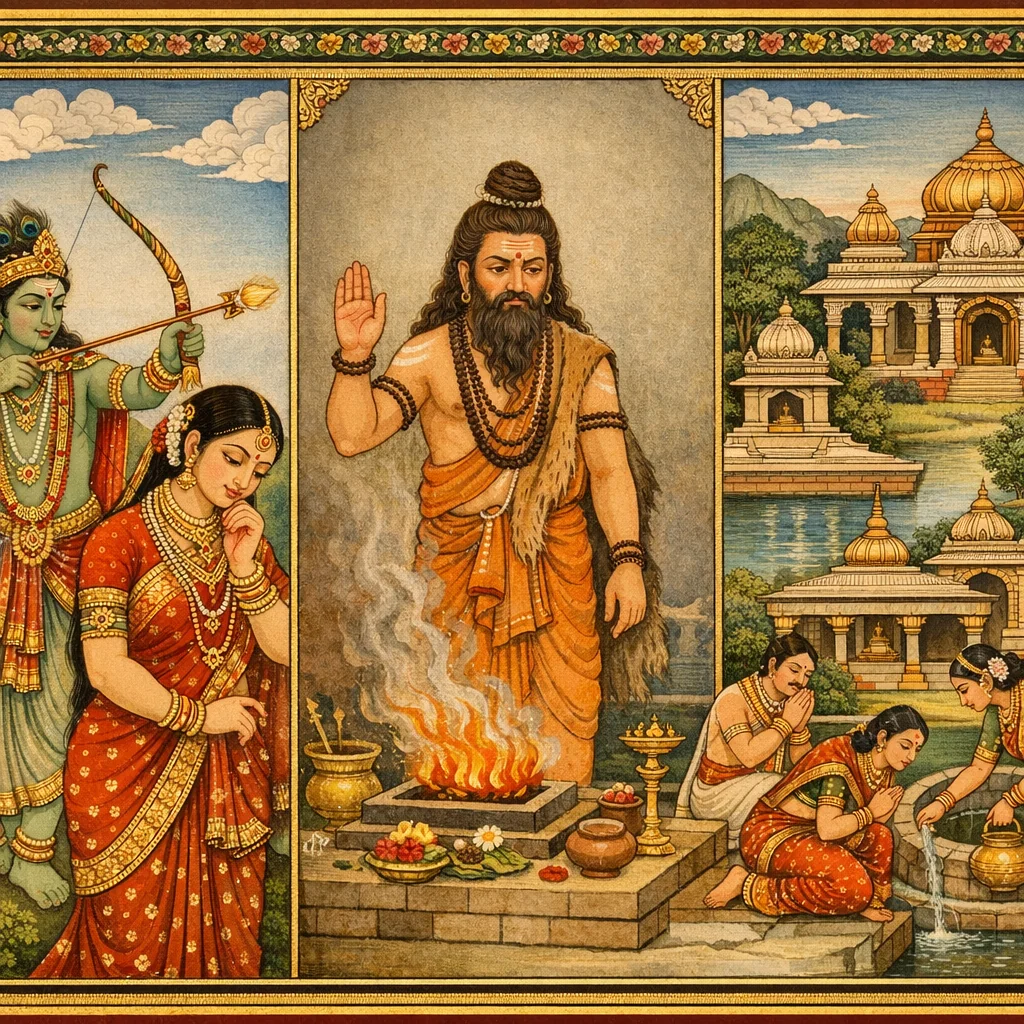
Chapter 134 unfolds as a dialogue between Sūta and the ṛṣis in the sacred realm of Śrīhāṭakeśvara-kṣetra / Kāmeśvara-pura. The ṛṣis ask about Kāma’s affliction with kuṣṭha (a skin disease/leprosy) and the origin of two local holy markers: the stone-formed goddess Śilākhaṇḍā / Khaṇḍaśilā and the auspicious well Saubhāgya-kūpikā. Sūta recounts the tale of the brahmin ascetic Harīta and his exceptionally virtuous wife. Struck by Kāma’s arrows of desire, she becomes—unintentionally—the object of Kāma’s longing. When Harīta learns of it, he pronounces a dharma-grounded, moral-legal curse: Kāma is afflicted with kuṣṭha and social revulsion, while the wife—because her intention wavered for a moment in the mind—turns to stone. The chapter then teaches a threefold ethic of sin—mental, verbal, and bodily—declaring the mind to be the root of accountability. Kāma’s weakness disrupts procreation and worldly continuity, so the gods seek a remedy. Worship of the stone-form, ritual bathing, and contact rites at the associated water-site are prescribed, establishing it as a healing tīrtha famed for relieving skin ailments and granting saubhāgya (good fortune and marital blessedness). It concludes with vrata-like observances: on Trayodaśī one should worship Khaṇḍaśilā and Kāmeśvara, gaining protection from scandal, restoration of beauty and prosperity, and well-being in the household.
Shlokas
Verse 1
ऋषय ऊचुः । यदा दक्षेण क्रुद्धेन पुरा शप्तो हिमद्युतिः । तत्सर्वं भवता प्रोक्तं सोमनाथकथानकम्
The sages said: “When, in ancient times, the enraged Dakṣa cursed the radiant Soma—you have already told all of that, the sacred account of Somanātha.”
Verse 2
सांप्रतं वद कामस्य यथा कुष्ठोऽभवत्पुरा । येन दोषेण शापश्च केन तस्य नियोजितः
Now tell us of Kāma: how, in former times, he came to suffer leprosy—through what fault, and by whom was that curse laid upon him?
Verse 3
शिलाखंडा च या देवी तथा सौभाग्यकूपिका । यथा तत्र समुत्पन्ना तथाऽस्माकं प्रकीर्तय
And tell us also how the goddess Śilākhaṇḍā, and the well called Saubhāgya-kūpikā, arose there—recount it to us just so, in that very manner.
Verse 4
सूत उवाच । पुरासीद्ब्राह्मणो नाम हारीत इति विश्रुतः । स तपस्तत्र संतेपे वानप्रस्थाश्रमे वसन्
Sūta said: Long ago there was a brāhmaṇa renowned by the name Hārīta. Dwelling there in the vānaprastha stage, he practiced austerities in that place.
Verse 5
तस्य भार्याऽभवत्साध्वी रूपौदार्यसमन्विता । त्रैलोक्यसुन्दरी साक्षाल्लक्ष्मीरिव मधुद्विषः
His wife was a virtuous lady, endowed with beauty and noble generosity—lovely in the three worlds, like Lakṣmī herself beside the slayer of Madhu (Viṣṇu).
Verse 6
ख्याता पूणकलानाम सर्वैः समुदितागुणैः । तां दृष्ट्वा पद्मजोऽप्याशु कामस्य वशगोऽभवत्
She was famed as Pūṇakalā, endowed with every gathered excellence. Seeing her, even Padmaja (Brahmā) swiftly came under the sway of Kāma.
Verse 7
कदाचिदपि स प्राप्तस्तस्मिन्क्षेत्रे मनोभवः । सह रत्या तथा प्रीत्या कामेश्वरदिदृक्षया
At one time, Manobhava (Kāma) came to that sacred region, accompanied by Rati and also by Prīti, desiring to behold Kāmeśvara.
Verse 8
एतस्मिन्नंतरे सापि स्नानार्थं तत्र चागता । कृत्वा वस्त्रपरित्यागं विवेश जलाशयम्
Meanwhile, she too arrived there to bathe; setting aside her garments, she entered the water-reservoir.
Verse 9
अथ तां कामदेवोपि समालोक्य शुभाननाम् । आत्मीयैरपि निर्विद्धो हृदये पुष्पसायकैः
Then Kāma-deva too, seeing her lovely, auspicious face, was himself pierced in the heart by his own flower-arrows.
Verse 10
ततो रतिं परित्यक्त्वा प्रीतिं च शरपीडितः । विजनं कंचिदासाद्य प्रसुप्तः स तरोरधः
Thereupon, tormented by the arrows, he abandoned even Rati and Prīti; reaching a lonely spot, he fell asleep beneath a tree.
Verse 11
गात्रैः पुलकितैः सर्वैर्निःश्वासान्निःश्वसन्मुहुः । अग्निवर्णान्सुदीर्घांश्च बाष्प पूर्णविलोचनः
With all his limbs covered in horripilation, he repeatedly sighed; his eyes were filled with tears, and he let out long, fire-hot breaths.
Verse 12
तिष्ठन्स दर्शने तस्या एकदृष्ट्या व्यलोकयत् । योगीव सुसमाधिस्थो ध्यायंस्तद्ब्रह्म संस्थितम्
Standing within her sight, he gazed at her with an unblinking look—like a yogin settled in deep samādhi, contemplating the Brahman fixed in his mind.
Verse 13
सापि कामं समालोक्य सानुरागं पुरः स्थितम् । जृंभाभंगकृतास्यं च वेपमानशरीरकम्
She too, seeing Kāma standing before her with longing, noticed his mouth distorted as if mid-yawn, and his body trembling.
Verse 14
सापि तद्बाणनिर्भिन्ना साभिलाषा बभूव ह । कामं प्रति विशेषेण तस्य रूपेण मोहिता
She too, pierced by those arrows, became filled with longing—especially toward Kāma—bewildered by his form.
Verse 15
अथ तस्माज्जलात्कृच्छ्राद्विनिष्क्रम्य शुचिस्मिता । तीरोपांतं समासाद्य स्थिता तद्दृष्टिगोचरे
Then, with difficulty, she came out of that water; smiling softly, she reached the bank and stood within the range of his gaze.
Verse 16
ततः कामः समुत्थाय शनैस्तदंतिकं ययौ । कृतांजलिपुटो भूत्वा ततः प्रोवाच सादरम्
Then Kāma rose, slowly approached her, and with palms joined in reverence, spoke to her respectfully.
Verse 17
का त्वमत्र विशालाक्षि प्राप्ता स्नातुं जलाशये । मम नाशाय चार्वंगि तस्माच्छृणु वचो मम
“Who are you here, wide-eyed one, come to bathe in this pond? O fair-limbed lady—since you have become the cause of my undoing—therefore listen to my words.”
Verse 18
अहं पुष्पशरो लोके प्रसिद्धश्चारुहासिनि । विडंबनां मया नीता देवा अपि निजैः शरैः
“I am famed in the world as the Flower-arrow (Kāma), O fair-smiling one. By my own arrows even the gods have been led into humiliation and folly.”
Verse 19
मद्बाणेनाहतो रुद्रः स्वशरीरे नितंबिनीम् । अर्द्धेन धारयामास त्यक्त्वा लज्जां सुदूरतः
“Struck by my arrow, Rudra held the shapely-hipped one upon his own body—bearing her as one half—casting modesty far away.”
Verse 20
ब्रह्मा मच्छरनिर्भिन्नः स्वसुतां चकमे ततः । जनयामास तान्विप्रान्वालखिल्यांस्तथाविधान्
“Brahmā, pierced by my arrow, then desired his own daughter; and thereafter he brought forth those brahmin sages such as the Vālakhilyas and others of that kind.”
Verse 21
अहिल्यां चकमे शक्रो गौतमस्य प्रियां सतीम् । मद्बाणैः पीडितोऽतीव स्वर्गादेत्य धरातलम्
Śakra (Indra) desired Ahalyā, the virtuous and beloved wife of Gautama. Greatly tormented by my arrows, he descended from heaven to the earth.
Verse 22
एवं देवा अपि क्षुण्णा मच्छरैर्ये महत्तराः । किं पुनर्मानवाः सुभ्रूः कृमिप्रायाः सुचंचलाः
Thus even the greater gods are crushed by my arrows. How much more then, O fair-browed one, are human beings—worm-like and fickle by nature!
Verse 23
आकीटांतं जगत्सर्वमाब्रह्मांतं तथैव च । विडंबनां परां प्राप्तं मच्छरैश्चारुहासिनि
All the world—from the level of insects up to Brahmā—has likewise fallen into the utmost derision through my arrows, O fair-smiling one.
Verse 24
अहं पुनस्त्वया भीरु नीतोऽवस्थामिमां शुभे
But I, O timid one—O auspicious lady—have been brought by you into this very condition.
Verse 25
तस्माद्देहि महाभागे ममाद्य रतदक्षिणाम् । यावन्न यांति संत्यज्य मम प्राणाः कलेवरात्
Therefore, O greatly fortunate lady, grant me today the “dakṣiṇā” (offering-fee) of lovemaking, before my life-breaths depart—abandoning this body.
Verse 26
सूत उवाच । सापि तद्वचनं श्रुत्वा पतिव्रतपरायणा । हन्यमाना विशेषेण तद्बाणैर्हृदये भृशम्
Sūta said: Hearing his words, she—wholly devoted to the vow of wifely fidelity—was struck fiercely by those arrows, most of all within her heart.
Verse 27
अनभिज्ञा च सा साध्वी कामधर्मस्य केवलम् । तापसैः सह संवृद्धा नान्यं जानाति किंचन
And that virtuous woman was wholly unacquainted with the ways of desire; raised among ascetics, she knew nothing else at all.
Verse 28
वक्तुं तद्विषये यच्च प्रोच्यते कामपीडितैः । अधोमुखाऽलिखद्भूमिमंगुष्ठेन स्थिता चिरम्
And whatever those tormented by desire might say on that matter, she, with her face cast down, stood for a long while, tracing the ground with her thumb.
Verse 29
एतस्मिन्नन्तरे भानुः प्राप्तश्चास्तं गिरिं प्रति । विहारसमये प्राप्त आहिताग्निर्निवेशने
Meanwhile the sun reached the mountain of setting; and at the hour of evening repose, the Āhitāgni—the householder who maintains the sacred fires—arrived at his dwelling.
Verse 30
हारीतोऽपि चिरं वीक्ष्य तन्मार्गं चाकृताशनः । ततः स चिंतयामास कस्मात्सा चात्र नागता
Hārīta too, having long watched that path without even taking food, then began to wonder: “Why has she not come here?”
Verse 31
स्नात्वा तीर्थवरे तस्मिन्दृष्ट्वा तां चन्द्रकूपिकाम् । कामेश्वरं च देवेशं कामदं सुखदं नृणाम्
Having bathed at that most excellent tīrtha and having beheld Candrakūpikā, he saw Kāmeśvara, Lord of the gods—bestower of desired attainments and giver of happiness to humankind.
Verse 32
ततः शिष्यसमायुक्तो वीक्षमाण इतस्ततः । तं देशं समनुप्राप्तो यत्र तौ द्वावपि स्थितौ
Then, accompanied by his disciples and looking about here and there, he reached the place where those two were standing together.
Verse 33
आलपन्बहुधा कामो हन्यमानो निजैः शरैः । सापि चैव विशेषेण व्रीडयाऽधोमुखी स्थिता
Kāma spoke in many ways, even as he was being struck by his own arrows; and she too, overcome especially by modest shame, stood with her face lowered.
Verse 34
स गुल्मांतरितः सर्वं तच्छ्रुत्वा कामजल्पितम् । तस्याश्च तद्गतं भावं ततः कोपादुवाच सः
Hidden within a thicket, he heard all that Kāma was saying; and noticing her mind fixed upon it, he then spoke in anger.
Verse 35
यस्मात्पाप त्वया पत्नी ममैवं शरपीडिता । अनभिज्ञा तथा साध्वी पतिधर्मपरायणा । कुष्ठव्याधिसमायुक्तस्तस्माद्विप्रियदर्शनः
“Since, O sinner, you have thus afflicted my wife with your arrows—though she is innocent, virtuous, and devoted to a husband’s dharma—therefore you shall be stricken with leprosy and become a sight unpleasant to behold.”
Verse 36
त्वं भविष्यसि पापात्मन्मुक्तो दारैः स्वकैरपि । साऽपि चैव विशेषेण व्रीडयाऽधोमुखी स्थिता
“You, wicked-souled one, shall be separated even from your own wives.” And she too, especially overcome by shame, stood with her face lowered.
Verse 37
एषापि च शिलाप्राया भविष्यति विचेतना । त्वां दृष्ट्वा या सरागाऽभून्निजधर्मबहिष्कृता
“And she too shall become almost like a stone, senseless—for upon seeing you she became impassioned and fell away from her own dharma.”
Verse 38
ततः प्रसादयामास तं कामः प्रणिपत्य च । न ज्ञातेयं मया विप्र तव भार्येति सुन्दरी
Then Kāma bowed down and sought to appease him, saying: “O brāhmaṇa, I did not know that this beautiful woman was your wife.”
Verse 39
तेन प्रोक्ता विरुद्धानि वाक्यानि विविधानि च । एतस्या नास्ति दोषोऽत्र मद्बाणैः पीडिता भृशम्
“By me, many conflicting and improper words were spoken. In this matter she bears no fault—she has been sorely afflicted by my arrows.”
Verse 40
सानुरागा परं जाता नोक्तं किंचिद्वचो मुने । तस्मान्नार्हसि शापं त्वं दातुमस्याः कथंचन
“Though she became deeply enamored, she spoke not a single word, O sage. Therefore you ought not to give her any curse in any way.”
Verse 41
ममास्त्येषो ऽपराधोऽत्र तस्मान्मे निग्रहं कुरु । भूयोऽपि ब्राह्मणश्रेष्ठ अस्याः शापसमुद्भवम्
Here, this offense is mine; therefore restrain and punish me. O best of brāhmaṇas, let the consequence born of the curse fall upon me instead.
Verse 42
अपि रुद्रादयो देवा मद्बाणेभ्यो द्विजोत्तम । सोढुं शक्ता न ते यस्मात्तत्कथं स्यादियं शिला
O best of twice-born, even the gods headed by Rudra are not able to withstand my arrows; how then could this woman become a mere stone?
Verse 43
तथात्र त्रिविधं पापं प्रवदंति मनीषिणः । मानसं वाचिकं चैव कर्मजं च तृतीयकम् । तदस्माकं द्विधा जातमेकं चास्या मुनीश्वर
Moreover, the wise declare sin to be threefold: mental, verbal, and as the third, bodily action. Of these, two have arisen in me, while only one has arisen in her, O lordly sage.
Verse 44
भार्यायास्ते सुरूपायास्तस्मात्संपूर्णनिग्रहम् । करिष्यसि न ते भीतिः काचिदस्ति परत्रजा
Therefore you shall fully restrain (the curse’s force) with regard to your beautiful wife; have no fear—no danger awaits you in the other world because of this.
Verse 45
मनस्तापाद्व्रजेत्पापं मानसं वाचिकं च यत् । तस्य प्रसादनेनैव यस्योपरि विजल्पितम्
Sin that is mental and verbal departs through remorse of mind; and it is removed precisely by appeasing the person against whom one has spoken improperly.
Verse 46
प्रायश्चित्तैर्यथोक्तैश्च कर्मजं पातकं व्रजेत् । धर्मशास्त्रैः परिप्रोक्तं यतः सर्वैर्महामुने
But sin born of action is removed by the prescribed expiations, as has been fully taught in all the Dharmaśāstras, O great sage.
Verse 47
हारीत उवाच । अन्यत्र विषये तस्याः पातकं कामदेवते । एतस्य तव धर्मस्य प्राधान्यं मनसः स्मृतम्
Hārīta said: “In another respect, O Kāmadeva, there is fault on her part; yet in this dharma you have stated, the primacy of the mind is remembered as decisive.”
Verse 48
तस्मादेवंविधा चेयं सदा स्थास्यति चाधम । किं पुनः कुरु यत्कृत्यं नाहं वक्ष्यामि किंचन
Therefore, O vile one, she will remain forever in just such a state. What more is there to do? Do what must be done; I shall say nothing further.
Verse 49
प्रथमं मनसा सर्वं चिंत्यते तदनंतरम् । ततः प्रजल्पते वाचा क्रियते कर्मणा ततः
First, everything is conceived in the mind; thereafter it is spoken with the voice; and after that it is carried out through action.
Verse 50
प्रमाणं हि मनस्तस्मात्सर्वकृत्येषु सर्वदा । एतस्मात्कारणात्पूर्णो मयाऽस्या निग्रहः कृतः
Therefore the mind is always the decisive measure in every undertaking. For this reason, I have imposed complete restraint upon her.
Verse 51
सूत उवाच । एवमुक्त्वा मुनिश्रेष्ठो हारीतः स्वाश्रमं ययौ । सापि पूर्णकला जाता शिलारूपा च तत्क्षणात्
Sūta said: “Having spoken thus, the best of sages, Hārīta, returned to his own hermitage. And she too, in that very instant, became fully complete and took the form of stone.”
Verse 52
कामदेवोऽपि कुष्ठेन ग्रस्तो रौद्रेण च द्विजाः । शीर्णनासांघ्रिपाणिश्च नेत्राणामप्रियोऽभवत्
“Kāmadeva too, O twice-born ones, was seized by dreadful leprosy; his nose, feet, and hands decayed, and he became unpleasant to behold.”
Verse 53
अथ कामे निरुत्साहे संजाते द्विजसत्तमाः । व्याधिग्रस्ते जगत्यस्मिन्सृष्टिरोधो व्यजायत
“Then, when desire became powerless, O best of the twice-born, and this world was struck by disease, a stoppage of creation came to pass.”
Verse 54
केवलं क्षीयते लोको नैव वृद्धिं प्रगच्छति । स्वेदजा येऽपि जीवाः स्युस्तेपि याताः परिक्षयम्
“The world only diminished and did not grow at all. Even beings born of sweat came to complete decline.”
Verse 55
एतस्मिन्नंतरे देवाः सर्वे चिंतासमाकुलाः । किमिदं क्षीयते लोको जलस्थैः स्थलजैः सह
“Meanwhile, all the gods, overwhelmed with concern (cintā), wondered: ‘Why is the world wasting away like this, along with the beings of the waters and the land?’”}]}
Verse 56
न दृश्यते क्वचिद्बालः कोऽपि कश्चित्कथंचन । न च गर्भवती नारी कच्चित्क्षेमं स्मरस्य च
No child is seen anywhere—no one at all, in any manner. Nor is any woman with child. Is all well with Smara (Kāmadeva)?
Verse 57
ततस्तं व्याधिना ग्रस्तं ज्ञात्वात्र क्षेत्रसंश्रयम् । आजग्मुस्त्वरिताः सर्वे व्याकुलेनांतरात्मना
Then, learning that he had been seized by disease and had taken refuge in this sacred kṣetra, they all hurried there, inwardly distressed.
Verse 58
कामेश्वरपुरस्थं च तं दृष्ट्वा कुसुमायुधम् । अत्यंतविकृताकारं चिंतयानं महेश्वरम्
Seeing Kusumāyudha (Kāma) present in Kāmeśvarapura, and beholding Maheśvara in a most distorted form, plunged in anxious thought, they were struck with grief and wonder.
Verse 59
ततः प्रोचुः सुदुःखार्ताः किमिदं कुसुमायुध । निरुत्साहः समुत्पन्नः कुष्ठव्याधिसमाकुलः
Then, afflicted with great sorrow, they said: “What is this, O Kusumāyudha? A loss of vigor has arisen, and you are beset by the disease of leprosy (kuṣṭha).”
Verse 60
ततश्चाधोमुखो जातो लज्जया परया वृतः । प्रोवाच शापजं सर्वं हारीतस्य विचेष्टितम्
Then, with face cast down, covered by deep shame, he disclosed that all of it had arisen from a curse—brought about through the misconduct connected with Hārīta.
Verse 61
तत्तस्याराधनात्सर्वं संक्षयं यात्यसंशयम्
By worship of that divine Presence, all of this is brought to dissolution—without doubt.
Verse 62
तस्मादेतां शिलारूपां त्वमाराधय चित्तज । येन कुष्ठः क्षयं याति ततस्तेजोऽभिवर्धते
Therefore, O Cittaja (Kāma), worship with a devoted mind this Holy One who has assumed the form of a stone; thereby leprosy will be destroyed, and then your radiance will increase again.
Verse 63
जगति स्यान्महासृष्टिर्देवकृत्यं कृतं भवेत् । न तेऽस्ति कायजं पापं यतो मुक्त्वा प्रवाचिकम्
Then there will be great generation in the world, and the duty of the gods will be fulfilled. For you bear no sin born of the body, since you have abandoned the fault of speech (having confessed it).
Verse 64
अत्र कुण्डे त्वदीयेऽन्यो यः स्नात्वा श्रद्धयान्वितः । एनां पापविनिर्मुक्तां शिलां वै मानवः स्पृशेत्
In this kuṇḍa of yours, any other person who bathes with faith and then touches this stone—purified and freed from sin—
Verse 65
कुष्ठव्याधिसमोपेतः कायोत्थेनापि कर्मणा । सोऽपि व्याधिविनिर्मुक्तो भविष्यति गतज्वरः
—even if afflicted with leprosy due to deeds arising from the body, he too will be freed from disease, and the fever will depart.
Verse 66
एतत्सौभाग्यकूपं च लोके ख्यातं जलाशयम् । भविष्यति न संदेहः सर्वरोगक्षयावहम्
This reservoir of water will become renowned in the world as the “Saubhāgya-kūpa”; without doubt, it brings about the destruction of all diseases.
Verse 67
दद्रूणि दुर्विभूतानि तथान्याश्च विचर्चिकाः । अत्र स्नातस्य यास्यंति दृष्ट्वैतां सद्य एव हि
Ringworm, stubborn eruptions, and other afflictions of the skin as well depart from one who bathes here—indeed, upon beholding this tīrtha, at once.
Verse 68
एवमुक्त्वाथ ते देवाः प्रजग्मुस्त्रिदशालयम् । कामदेवोऽपि तत्रस्थस्तस्याः पूजामथ व्यधात्
Having spoken thus, the gods departed to the abode of the Thirty-Three. Kāmadeva too, being present there, then performed worship of her.
Verse 69
ततश्च समतिक्रांते मासमात्रे द्विजोत्तमाः । तादृग्रूपः स संजातो यादृगासीत्पुरा स्मरः
Then, when just one month had passed, O best of the twice-born, he came to possess the very same form as Smara (Kāma) had in former times.
Verse 70
ततश्चायतनं तस्याः कृत्वा श्रद्धासमन्वितः । जगाम वांछितं देशं सृष्ट्यर्थं यत्नमास्थितः
Then, having established a shrine for her with faith, he went to the desired land, undertaking effort for the purpose of creation.
Verse 71
सापि नम्रमुखी तादृक्तेन शप्ता तथैव च । संजाता खण्डकाकारा तेन खण्डशिला स्मृता
She too, her face cast down, was cursed by him in that very manner; and she became fragment-like in form. Therefore she is remembered as “Khaṇḍaśilā,” the broken stone.
Verse 72
यस्तां पूजयते भक्त्या त्रयोदश्यां तथैव च । नापवादो भवेत्तस्य परदारसमुद्भवः
Whoever worships her with devotion, especially on Trayodaśī, the thirteenth lunar day, incurs no slander arising from association with another’s spouse.
Verse 73
कामिन्याश्च विशेषेण प्राहैतच्छंकरात्मजः । कार्तिकेयो द्विजश्रेष्ठाः सत्यमेतन्मयोदितम्
This, in particular for women of desire and longing, was declared by Kārttikeya, the son of Śaṅkara. O best of the twice-born, what I have spoken is true.
Verse 74
तथा कामेश्वरं देवं कामदेवप्रतिष्ठितम् । त्रयोदश्यां समाराध्य सर्वान्कामानवाप्नुयात्
Likewise, by duly propitiating Lord Kāmeśvara—installed by Kāmadeva—on Trayodaśī, one attains every desired aim.
Verse 75
रतिप्रीतिसमायुक्तः स्थितस्तत्र स्मरस्तथा । मूर्तो ब्राह्मणशार्दूलाः श्रेष्ठं प्रासादमाश्रितः
There too Smara remained, united with Rati and Prīti; and, embodied, he dwelt in that excellent temple-palace, O tigers among brāhmaṇas.
Verse 76
विरूपो दुर्भगो यो वा त्रयोदश्यां समाहितः । यस्तं कुंकुमजैः पुष्पैः संपूजयति मानवः
Whether one is ill-formed or unfortunate—if, on Trayodaśī, he is composed, and a person worships that deity fully with flowers made fragrant by kuṅkuma,
Verse 77
स सौभाग्यसमायुक्तो रूपवांश्च प्रजायते । या नारी पतिना त्यक्ता सपत्नीजनसंवृता
he is born endowed with good fortune and beauty. And the woman who has been abandoned by her husband, surrounded by co-wives—
Verse 78
तं देवं सुकलत्राढ्यं तथैव परिपूजयेत् । त्रयोदश्यां द्विजश्रेष्ठाः केसरैः कुंकुमोद्भवैः
O best of the twice-born, one should likewise worship that deity—endowed with an auspicious consort—on Trayodaśī, offering saffron and the fragrant powders born of kuṅkuma.
Verse 79
सा सौभाग्यवती विप्रा जायते च प्रजावती । धनधान्यसमृद्धा च दुःखशोकविवर्जिता । दोषैः सर्वैर्विनिर्मुक्ता शंसिता धरणीतले
That brāhmaṇa woman becomes blessed with marital good fortune and also with children; she abounds in wealth and grain, is free from sorrow and grief, released from every fault, and is praised upon the earth.
Verse 134
इति श्रीस्कांदे महापुराण एकाशीतिसाहस्र्यां संहितायां षष्ठे नागरखण्डे श्रीहाटकेश्वरक्षेत्रमाहात्म्ये खंडशिलासौभाग्यकूपिकोत्पत्तिमाहात्म्यवर्णनं नाम चतुस्त्रिंशदुत्तरशततमोध्यायः
Thus ends, in the holy Skanda Mahāpurāṇa—within the eighty-one-thousand-verse Saṃhitā—within the sixth, the Nāgara Khaṇḍa, in the Māhātmya of the sacred region of Śrīhāṭakeśvara, the chapter entitled “The Glorifying Account of the Origin of the Khaṇḍaśilā and the Saubhāgya-kūpikā,” being Chapter 134.