Adhyaya 131
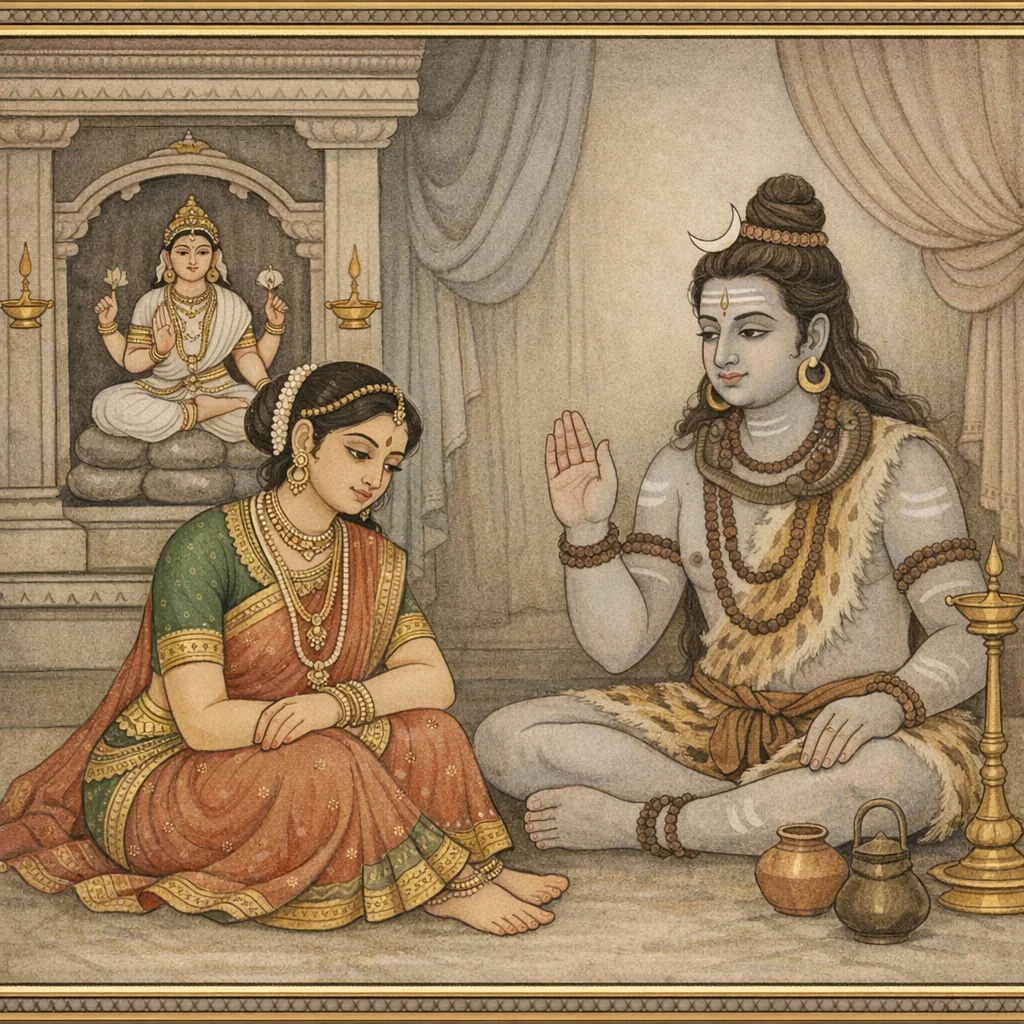
This chapter joins a theological account of saṅdhyā with a local vrata tradition. Śiva explains that at twilight hostile beings obstruct the sun, and that water offered with the Sāvitrī mantra becomes a subtle celestial weapon that drives them away—thus grounding the ethical and ritual rationale of saṅdhyā-jala. A domestic-divine tension then arises: Pārvatī is pained to see Śiva revere “Saṅdhyā” as a person, and the matter escalates into a vow. Through Śiva’s refined mantra-knowledge and Īśāna-oriented worship, reconciliation is finally achieved. The chapter prescribes a devotional observance: worship Gaurī in the Pañcapīṇḍamaya form (five sacred lumps), especially on the third lunar day (tṛtīyā), for up to a year. It promises marital harmony, the desired spouse, and progeny; and when performed without desire, it yields higher spiritual attainment. The teaching is transmitted through Nārada, Śāṇḍilya, and Sūta, and culminates in a local exemplum: Kātyāyanī’s year-long vow leads to marriage with Yājñavalkya and the birth of an accomplished son. The chapter also links educational welfare to Vararuci’s स्थापना of a Gaṇapati whose worship supports learning and Vedic proficiency.
Shlokas
Verse 1
देव उवाच । एषा रात्रिः समादिष्टा दानवानां सुरेश्वरि । पिशाचानां च भूतानां राक्षसानां विशेषतः
The God said: O Queen of the gods, this night has been allotted to the Dānavas—and especially to Piśācas, Bhūtas, and Rākṣasas.
Verse 2
यत्किंचित्क्रियते कर्म तत्र स्नानादिकं शुभम् । तत्सर्वं जायते तेषां पुरा दत्तं स्वयंभुवा
Whatever act is performed then—even auspicious acts beginning with bathing—all of it becomes effective for them, because long ago it was granted to them by the Self-born (Brahmā).
Verse 3
मर्यादा तैः समं येन देवानां च यदा कृता । अर्हाणां यज्ञभागस्य काश्यपानामथाग्रजाम्
And when an agreed boundary/compact was made with them concerning the gods—regarding those entitled to the sacrificial share, namely the foremost among the Kāśyapas—
Verse 4
तदर्थं दशसाहस्रा दानवा युद्ध दुर्मदाः । कुंतप्रासकरा भानुं रुंधन्त्युद्गतकार्मुकाः
For that very purpose, ten thousand Dānavas—maddened for battle—bearing spears and javelins, with bows raised, obstruct the Sun.
Verse 5
तमुद्दिश्य सहस्रांशुं यज्जलं परिक्षिप्यते । सावित्रेण च मन्त्रेण तेषां तज्जायते फलम्
Whatever water is cast forth directed toward that thousand-rayed Sun, together with the Sāvitrī mantra—its fruit accrues to them.
Verse 6
ते हतास्तेन तोयेन वज्रतुल्येन तत्क्षणात् । प्रमुंचंति सहस्रांशुं नित्यमेव सुरेश्वरि
Struck by that water—instantaneously as forceful as a thunderbolt—they are slain at once, O Queen of the Gods; and the thousand-rayed Sun is ever released to proceed again.
Verse 7
एतस्मात्कारणात्तोयमस्त्ररूपं क्षिपाम्यहम् । संध्या कालं समुद्दिश्य भानुं संध्यां न पार्वति
For this reason I cast this water in the form of a weapon, aiming at the Sandhyā time—O Pārvatī, it is not a salutation to Sandhyā as a woman, but a protective act for the Sun.
Verse 8
यद्यदाचरति श्रेष्ठस्तत्तदुत्तरतः स्थितः । उदयार्थं रविं यान्तं निरुन्धन्ति च दारुणाः
Whatever the best person practices, those who stand behind follow that very conduct; and fierce beings obstruct the Sun as he goes forth to rise.
Verse 9
तेऽपि संध्याजलैर्देवि निहता ब्राह्मणोत्तमैः । मया च तं विमुञ्चंति मूर्च्छिता निपतन्ति च
They too, O Goddess, are struck down by the Sandhyā-water wielded by the most excellent brāhmaṇas; and by my power as well they release him, then faint and fall.
Verse 10
एतस्मात्कारणाद्देवि सन्ध्ययोरुभयोरपि । अहं चान्ये च विप्रा ये ते नमंति दिवाकरम्
For this reason, O Goddess, at both Sandhyās—dawn and dusk—I and the other brāhmaṇas bow to the Maker of Day, the Sun.
Verse 11
तस्मात्त्वं गृहमागच्छ त्यक्त्वेर्ष्यां पर्वतात्मजे । प्रशस्यां त्वां परित्यक्त्वा नान्यास्ति हृदये मम
Therefore, come home, O daughter of the Mountain, having abandoned jealousy. Leaving you—so worthy of praise—there is no other in my heart.
Verse 12
देव्युवाच । निष्कामो वा सकामो वा संध्यां स्त्रीसंज्ञितामिमाम् । यत्त्वं नमसि देवेश तन्मे दुःखं प्रजायते
The Goddess said: Whether without desire or with desire, when you bow to this Sandhyā who is spoken of as a woman, O Lord of Gods, sorrow arises in me.
Verse 13
तस्माद्गङ्गापरित्यागं सन्ध्यायाश्च विशेषतः । यावन्न कुरुषे देव तावत्तुष्टिर्न मे भवेत्
Therefore, O God, unless you renounce Gaṅgā—and especially Sandhyā—until then I shall not be satisfied.
Verse 14
एवमुक्त्वाऽथ सा देवी विशेषव्रतमास्थिता । अवमन्य महादेवं प्रार्थयानमपि स्वयम्
Having spoken thus, the Goddess undertook a special vow; disregarding Mahādeva, even though he himself was entreating her.
Verse 16
न च साम्ना व्रजेत्तुष्टिं कथंचिदपि पार्वती । मृषेर्ष्यांधारिणी देवी नैतत्स्वल्पं हि कारणम्
And Pārvatī would not attain satisfaction by conciliation in any way; the Goddess, bearing even unreasonable jealousy, felt this was certainly no small cause.
Verse 17
ततो मन्त्रप्रभावं तं विज्ञाय परमेश्वरः । ध्यानं धृत्वा सुसूक्ष्मेण ज्ञानेनाथ स्वयं ततः
Then Parameśvara, understanding the power of that mantra, entered deep meditation and, with exceedingly subtle spiritual knowledge, proceeded of his own accord.
Verse 18
तमेव मन्त्रं मन्त्रेण न्यासेन च विशेषतः । सम्यगाराधयामास संपूज्यात्मानमात्मना
He worshipped that very mantra by mantra-practice, and especially through nyāsa, duly propitiating it—honouring the Self by the Self.
Verse 19
ततः स चिन्तयामास किमेतत्कारणं स्थितम् । विरक्ताऽपि ममोत्कण्ठां येनैषा प्रकरोति न
Then he reflected: “What cause is at work here, by which she—even though detached—does not kindle longing in me?”
Verse 21
तस्मान्नास्ति परः कश्चित्पूज्यपूज्यः स एव च । ऐश्वर्यात्सर्वदेवानामीशानस्तेन निर्मितः
Therefore none is higher; he alone is supremely worthy of worship. By his sovereign power, Īśāna is established as lord over all the gods.
Verse 22
एवं यावत्स ईशानः समाराधयति प्रभुः । तावद्देवी समायाता मन्त्राकृष्टा च यत्र सः
While the Lord Īśāna thus continued his worship, the Devī came to the very place where he was—drawn by the mantra.
Verse 23
ततः प्रोवाच तं देवं प्रणिपत्यकृतांजलिः । ज्ञातं मया विभो सर्वं न मां त्यज तव प्रियाम्
Then she addressed that God, bowing down with folded hands: “O Lord, I have understood everything. Do not abandon me—your beloved.”
Verse 24
तस्मादागच्छ गच्छावो यत्र त्वं वाञ्छसि प्रभो । क्षम्यतां देव मे सर्वं न कृतं यद्वचस्तव
“So come—let us go wherever you wish, O Lord. O God, forgive me for everything, for I did not do what you had spoken.”
Verse 25
ततस्तुष्टो महादेवस्तामालिङ्ग्य शुचिस्मिताम् । इदमूचे विहस्योच्चैर्मेघगम्भीरया गिरा
Then Mahādeva, pleased, embraced her who smiled pure and gently, and spoke these words aloud, laughing, in a voice deep as thunderclouds.
Verse 26
यैषा त्वयाऽत्मभूतोत्था निर्मिता परमा तनुः । एतां या कामिनी काचित्पूजयिष्यति भक्तितः । अनेनैव विधानेन तस्या भर्ता भविष्यति
“This supreme form, brought forth from your own being and fashioned by you—any woman who worships this with devotion, following this very procedure, will obtain a husband.”
Verse 27
तृतीयायां विशेषेण यावत्संवत्सरं शुभे । सा लभिष्यति सत्कान्तं पुत्रदं सर्वकामदम्
“Especially on the Tṛtīyā (third lunar day), for a full year, O auspicious one—she will obtain a noble husband, a giver of sons, and a fulfiller of all desires.”
Verse 28
तथैतां मामकीं मूर्तिमीशानाख्यां च ये नराः । तेषां दुष्टापि या कान्ता सौम्या चैव भविष्यति
“Likewise, those men who worship this form of Mine known as Īśānā—even if their beloved is ill-tempered, she will surely become gentle and gracious.”
Verse 29
ये पुनः कन्यकाहेतोः पूजयिष्यंति भक्तितः । यां कन्यां मनसि स्थाप्य तां लभिष्यन्त्यसंशयम्
“And those who, desiring a maiden (as a bride), worship with devotion—fixing in their mind the particular maiden they seek—will obtain her, without doubt.”
Verse 30
निष्कामाश्चापि ये मर्त्या पूजयिष्यंति सर्वदा । ते यास्यंति परां सिद्धिं जरामरणवर्जिताम्
“And those mortals who worship always, free from selfish desire, will attain the supreme accomplishment—beyond old age and death.”
Verse 31
एवमुक्त्वा महादेवो वृषमारोप्य तां प्रियाम् । स्वयमारुह्य पश्चाच्च कैलासं पर्वतं गतः
Thus having spoken, Mahādeva seated His beloved upon the bull; then, mounting it Himself, He went to Mount Kailāsa.
Verse 32
नारद उवाच तस्मात्तव सुतेयं या तामाराधयतु द्रुतम् । पञ्चपिण्डमया गौरीं यावत्संवत्सरं शुभाम्
Nārada said: Therefore, let your daughter quickly propitiate that (Gaurī). Let her worship auspicious Gaurī fashioned from five sacred piṇḍas, for a full year.
Verse 33
तृतीयायां विशेषेण ततः प्राप्स्यति सत्पतिम् । मुखप्रेक्षमतिप्रीतं रूपादिभिर्गुणैर्युतम्
Then, especially on the third lunar day (Tṛtīyā), she will obtain a worthy husband—one whose very countenance delights the beholder, endowed with beauty and other virtues.
Verse 34
शांडिल्युवाच । एवमुक्त्वा मुनिश्रेष्ठो नारदः प्रययौ ततः । तीर्थयात्रां प्रति प्रीत्या मम मात्रा विसर्जितः
Śāṇḍilya said: Having spoken thus, the best of sages, Nārada, then departed—sent off with affection by my mother—toward a pilgrimage to sacred fords (tīrthas).
Verse 35
मयापि च तदादेशात्कौमार्येपि च संस्थया । पूजया वत्सरं यावत्पूजिता पतिकाम्यया
And I too, following that instruction—while still in maidenhood and with due observance—worshipped (Gaurī) with pūjā for a full year, desiring a husband.
Verse 36
तृतीयायां विशेषेण मार्गमासादितः शुभे । नैवेद्यैर्विविधैर्दानैर्गंधमाल्यानुलेपनैः
Especially on Tṛtīyā, beginning in the auspicious month of Mārga (Mārgaśīrṣa), the worship was performed with varied naivedya (food-offerings), acts of dāna, fragrances, garlands, and sacred unguents.
Verse 37
तत्प्रभावादयं प्राप्तो जैमिनिर्नाम सद्द्विजः । कात्यायनि यथा दृष्टस्त्वया किं कीर्तितैः परैः
By the power of that observance, this noble brāhmaṇa named Jaimini has come. O Kātyāyanī, since you have seen it yourself, what need is there for others’ accounts?
Verse 38
तस्मात्त्वमपि कल्याणि पूजयैनां समाहिता । संप्राप्स्यसि सुसौभाग्यं मैत्रेय्या सदृशं शुभे
Therefore, O auspicious lady, you too—composed and attentive—should worship this Goddess. O good one, you will attain excellent marital fortune, equal to that of Maitreyyā.
Verse 39
त्वया न पूजिता चेयं कौमार्ये वर्तमानया । यावत्संवत्सरं गौरी तृतीयायां न चाधिकम्
Because you, while still in maidenhood, did not worship this Gaurī on Tṛtīyā for a full year—nor did you do more than that—
Verse 40
सापत्न्यं तेन संजातं सौभाग्येपि निरर्गले । यथोक्तविधिना देवी सत्यमेतन्मयोदितम्
From that neglect arose the state of having a co-wife (sāpatnya), even though your good fortune was otherwise unobstructed. O lady like a Goddess, this is truly what I have spoken, according to the stated procedure.
Verse 41
सूत उवाच । श्रुत्वा कात्यायनी सर्वं शांडिल्या यत्प्रकीर्तितम् । ततः प्रणम्य तां पृष्ट्वा स्वमेव भवनं ययौ
Sūta said: Having heard all that Śāṇḍilyā had proclaimed, Kātyāyanī bowed to her, asked further, and then returned to her own home.
Verse 42
मार्गशीर्षेऽथ संप्राप्ते तृतीयादिवसे सिते । तां देवीं पूजयामास वर्षं यावकृतक्षणा
Then, when Mārgaśīrṣa arrived—on the third day of the bright fortnight—she began worship of that Goddess and continued for a full year, observing the vow at its appointed times.
Verse 43
गौरिणीर्भोजयामास मृष्टान्नैर्भोजनै रसैः । तैलक्षारपरित्यक्तैर्गन्धैः कुंकुमपूर्वकैः
She fed the women devoted to Gaurī with refined foods, nourishing dishes, and flavorful preparations; and she used fragrances free from oil and alkaline substances, beginning with offerings of kuṅkuma.
Verse 44
ततस्तु वत्सरे पूर्णे याज्ञवल्क्यस्तदन्तिकम् । गत्वा प्रोवाच किं कष्टं त्वं करोषि शुचिस्मिते
Then, when the year was completed, Yājñavalkya went to her and said, “O you of pure smile, what hardship of austerity are you undertaking?”
Verse 45
मया कांतेन रक्तेन कामदेन सदैव तु । तस्मादागच्छ गच्छाव स्वमेव भवनं शुभे
“I—your beloved, ever devoted to you and the granter of your desires—am here. Therefore come; let us go to our own home, O auspicious one.”
Verse 46
एवमुक्त्वा तु तां हृष्टां गृहीत्वा दक्षिणे करे । जगाम भवनं पश्चात्पुलकांकितगात्रजाम्
Having spoken thus, he took her—joyful—by her right hand and then went to the house, while her body was marked with horripilation from delight.
Verse 47
ततः परं तया सार्धं वर्तते हर्षिताननः । मैत्रेय्या सहितो यद्वदविशेषेण सर्वदा
Thereafter he lived with her, his face ever joyful—always treating her without distinction, just as he did with Maitreyyā.
Verse 48
ततः संजनयामास तस्यां पुत्रं गुणान्वितम् । कात्यायनाभिधानं च यज्ञ विद्याविचक्षणम्
Thereafter he begot upon her a virtuous son, named Kātyāyana, who was skilled and discerning in the knowledge of Vedic sacrifice.
Verse 49
पुत्रो वररुचिर्यस्य बभूव गुणसागरः । सर्वज्ञः सर्वकृत्येषु वेदवेदांगपारगः
His son was Vararuci—an ocean of virtues—omniscient in the duties of life, and one who had mastered the Vedas along with their auxiliaries.
Verse 50
स्थापितोऽत्र शुभे क्षेत्रे येन विद्यार्थिनां कृते । समाराध्य विशेषेण चतुर्थ्यां शुक्लवासरे
Here, in this auspicious sacred region, he installed (the deity) especially for the sake of students—having worshipped with particular devotion on the bright fortnight’s Caturthī day.
Verse 51
महागणपतिर्भक्त्या सर्वविद्याप्रदायकः । यस्तस्य पुरतो विप्राः शांतिपाठविधानतः
That Mahāgaṇapati, when worshipped with devotion, bestows all branches of knowledge; and before Him the brāhmaṇas, according to the prescribed rite, perform the śānti-pāṭha—recitations for peace.
Verse 52
गृह्णाति पुष्पमालां यः पठेच्छक्त्या द्विजोत्तमाः । वेदांतकृत्स विप्रः स्यात्सदा जन्मनिजन्मनि
O best of the twice-born, whoever takes up the flower garland and recites these praises with earnest strength becomes, birth after birth, a brāhmaṇa accomplished in Vedānta.
Verse 53
अशक्त्या चाथ पाठस्य यो गृह्णाति धनेन च । स विशेषाद्भवेद्विप्रो वेदवेदांगपारगः
And if someone, unable to recite, instead accomplishes it through monetary support, he too—most especially—becomes a brāhmaṇa who has mastered the Vedas and the Vedāṅgas.
Verse 54
विदुषां स गृहे जन्म याज्ञिकानां सदा लभेत् । न कदाचित्तु मूर्खार्णां निन्दितानां कथञ्चन
He will always obtain birth in the homes of the learned and of those devoted to sacrifice (yajña); never, at any time, will he be born among the foolish and the blameworthy.
Verse 131
इति श्रीस्कांदे महापुराण एकाशीतिसाहस्र्यां संहितायां षष्ठे नागरखण्डे हाटकेश्वरक्षेत्रमाहात्म्य ईशानोत्पत्तिपंचपिंडिकागौरीमाहात्म्य वररुचिस्थापितगणपतिमाहात्म्यवर्णनं नामैकत्रिंशदुत्तरशततमोऽध्यायः
Thus, in the Śrī Skanda Mahāpurāṇa, in the Saṃhitā of eighty-one thousand verses, within the sixth division—Nāgara-khaṇḍa—concludes the one-hundred-and-thirty-first chapter, entitled: “The Greatness of Hāṭakeśvara-kṣetra; the Greatness of Pañcapiṇḍikā-Gaurī arising from Īśāna; and the narration of the Greatness of Gaṇapati installed by Vararuci.”