Adhyaya 126
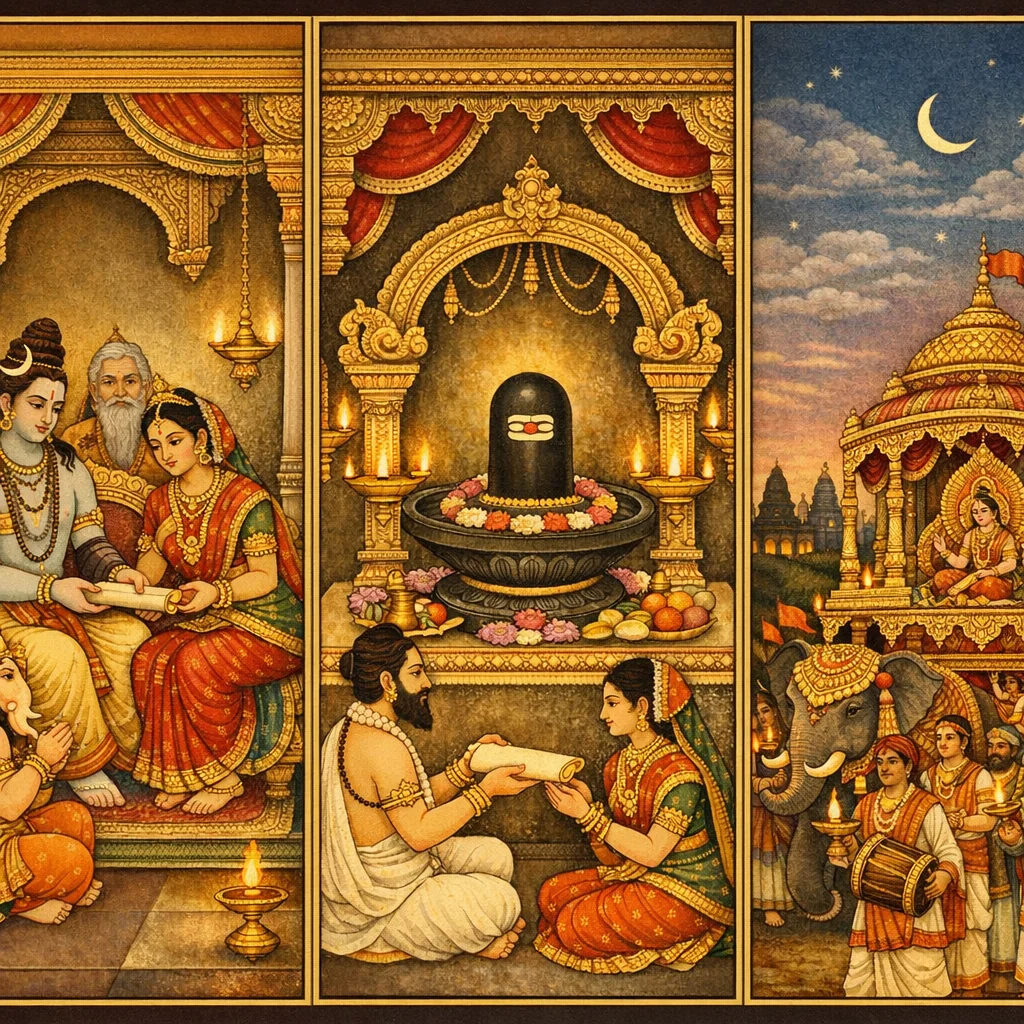
Sūta recounts how Brahmins connected with Chamatkārapura approach a king who has renounced martial force and now faces defeat amid doubts and disputes. They lament that social order has decayed through pride and misguided claims to status, and they seek protection for their customary livelihood endowments (vṛtti) and the restoration of stable norms. After reflection, the king appoints learned, lineage-linked Brahmins from Gartātīrtha as disciplined administrators and arbiters. Charged with upholding maryādā, settling doubts and quarrels, and issuing determinations in royal affairs—while being supported without jealousy for the community’s growth—they establish dharma-strengthening boundaries in the city, and prosperity increases. Later the king announces his impending ascent to heaven through austerity and reveals a liṅga tied to his lineage, requesting its worship and especially a ratha-yātrā. The Brahmins agree, naming it the twenty-eighth liṅga after twenty-seven already worshiped, and prescribe annual Kārttika observance with offerings, bali, music, and ritual provisions. The chapter ends with a phalaśruti: those who, with faith, bathe and worship throughout Kārttika—or properly worship on Soma’s day over a year—attain liberation.
Shlokas
Verse 1
सूत उवाच । एवं तस्य तपस्थस्य पुत्र्या सह द्विजोत्तमाः । आजग्मुर्ब्राह्मणाः सर्वे चमत्कारपुरोद्भवाः
Sūta said: “Thus, while he was engaged in austerity, all the brāhmaṇas—most excellent among the twice-born—came to him along with his daughter, arriving from the city called Camatkāra.”
Verse 2
ब्राह्मणा ऊचुः । सन्देहेषु च सर्वेषु विवादेषु विशेषतः । अभावात्पार्थिवेन्द्रस्य संजातश्च पराभवः
The brāhmaṇas said: “In all matters of doubt—and especially in disputes—because of the absence of the sovereign king, defeat and disorder have arisen.”
Verse 3
ततश्च द्विजवर्यैः स संन्यस्तः पृथिवीपतिः । पृष्टश्च प्रार्थितश्चैव निजराज्यस्य रक्षणे । अन्यस्मिन्दिवसे प्राह कृतांजलिपुटः स्थितः
Then that renounced lord of the earth was questioned and earnestly entreated by the best of brāhmaṇas to protect his own kingdom. On another day, standing with hands folded in reverence, he spoke.
Verse 4
राजोवाच । अनर्होऽहं द्विजश्रेष्ठाः संदेहं हर्तुमेव वः । रक्षां कर्तुं विशेषेण त्यक्तशस्त्रोऽस्मि चाधुना
The king said: “O best of brāhmaṇas, I am not fit to dispel your doubts, and still less fit to grant protection—for now I have laid aside my weapons.”
Verse 5
ब्राह्मणा ऊचुः । सर्वे वयं महाराज भूपस्याप्यधिका यतः । अहंकारेण दर्पेण निजं स्थानं समाश्रिताः
The brāhmaṇas said: “O great king, we all presumed ourselves superior even to the ruler; through ego and pride we clung to our own position.”
Verse 6
न कस्यचिन्महाराज कदापि च कथंचन । वर्तनायाश्च सन्देहः स्थानकृत्येऽपि संस्थितः
“O great king, for no one—at any time, in any manner—should any doubt remain regarding livelihood and sustenance, even while established in the duties of one’s appointed station.”
Verse 7
असंख्याता कृता वृत्तिः पुराऽस्माकं महात्मना । ततः सा वृद्धिमानीता तत्परैः पार्थिवोत्तमैः
“Formerly, an immeasurable endowment for our maintenance was established by a great-souled patron; thereafter it was increased by excellent kings devoted to that very purpose.”
Verse 8
त्वया चैव विशेषेण यावद्राजा बृहद्बलः । आनर्तविषये राजा यो यः स्यात्स प्रयच्छति
“And by you in particular—so long as you, the mighty king, reign—in the land of Ānarta, whatever ruler there may be, each one contributes and grants support.”
Verse 9
सर्वां वृत्तिं गृहस्थानां यथायोग्यं प्रयत्नतः । तवाग्रे किं वयं ब्रूमस्त्वं वेत्सि सकलं यतः
With fitting effort, you grant to all householders the proper sustenance according to their need and worthiness. What can we say before you? For you already know everything.
Verse 10
यथा वृत्तिः पुरा दत्ता यथा संरक्षिता त्वया । तस्माच्चिन्तय राजेन्द्र स्थानं वर्तनसंभवम् । उपायं येन मर्यादा वृत्तिस्तस्मात्सुखेन तु
Just as sustenance was granted in former times, and just as it has been protected by you, therefore, O lord of kings, consider the proper place and arrangement by which support may continue. Devise the means by which the boundary-law and the endowment may endure from that source, with ease and without disruption.
Verse 11
ततः स सुचिरं ध्यात्वा गर्तातीर्थसमुद्भवान् । आकार्योपमन्युवंशस्य संभवान्वेदपारगान्
Then he pondered for a long time and summoned those eminent men—learned in the Vedas—who had arisen from the Gartā-tīrtha and belonged to the lineage of Upamanyu.
Verse 12
प्रणिपातं प्रकृत्वाथ ततः प्रोवाच सादरम् । मदीयस्थान संस्थानां ब्राह्मणानां विशेषतः
Having offered obeisance, he then addressed with respect—especially the brāhmaṇas established within his own domain and appointed to their seats of service.
Verse 13
सर्वकृत्यानि कार्याणि भृत्यवद्विनयान्वितैः । नित्यं रक्षा विधातव्या युष्मदीयं वचोखिलम्
All necessary duties should be carried out with humility, as by devoted servants. And your entire word and instruction must be safeguarded and upheld continually.
Verse 14
एते संपालयिष्यन्ति मर्यादाकारमुत्तमम् । सन्देहेषु च सर्वेषु विवादेषु विशेषतः
These men will uphold the supreme maryādā—the keeper of boundaries, right order and regulation—especially in all matters of doubt, and most particularly in disputes.
Verse 15
राजकार्येषु चान्येषु एते दास्यन्ति निर्णयम् । युष्मदीयं वचः श्रुत्वा शुभं वा यदि वाऽशुभम्
And in royal affairs and in other matters as well, these men will render decisions after hearing your command, whether the outcome be auspicious or inauspicious.
Verse 16
एते पाल्याः प्रसादेन पुष्टिं नेयाश्च शक्तितः । ईर्ष्यां सर्वां परित्यज्य मदीयस्थानवृद्धये
“Care for these men with goodwill and, to the best of your ability, lead them to prosperity. Casting aside every trace of jealousy, act for the increase and flourishing of my own sacred abode.”
Verse 17
बाढमित्येव तैः प्रोक्तः स राजा ब्राह्मणोत्तमान् । चमत्कापुरोद्भूतान्भूयः प्रोवाच सादरम्
When they replied, “So be it,” the king again addressed with reverence those foremost brāhmaṇas—men who had arisen from the wondrous city.
Verse 18
युष्माकं वर्तनार्थाय सर्वकृत्येषु सर्वदा । एते विप्रा मया दत्ता गर्तातीर्थसमुद्भवाः
“For your sustenance and proper functioning—always, in all duties, religious and civic—I have assigned these brāhmaṇas to you, brāhmaṇas who have arisen from Garttātīrtha.”
Verse 19
एतेषां वचनात्सर्वं युष्मदीयं प्रजायताम् । प्रतिष्ठा जायते नूनं चातुश्चरणसूचिता
By the counsel of these men, may all that concerns you come to fulfillment. Then surely firm establishment and renown will arise, as indicated by the fourfold foundation.
Verse 20
नान्यथा ब्राह्मणश्रेष्ठाः स्वल्पं वा यदि वा बहु । प्रोक्तं लक्षमितैरन्यैर्युष्मदीयपुरोद्भवैः
It is not otherwise, O best of brāhmaṇas, whether the matter be small or great. The same has been stated by many others as well, those who have arisen from your own city.
Verse 21
सूत उवाच । ततस्ते ब्राह्मणा हृष्टास्तानादाय द्विजोत्तमान् । तेषां मतेन चक्रुश्च सर्वकृत्यानि सर्वदा
Sūta said: Then those brāhmaṇas, delighted, accepted those foremost twice-born men, and thereafter they performed all duties continually in accordance with their counsel.
Verse 22
ततस्तत्र पुरे जाता मर्यादा धर्मवर्द्धिनी । सर्वकृत्येषु सर्वेषां तथा वृद्धिः पुरस्य च
Then, in that city, a proper sacred order and boundary arose, one that increased dharma. In all duties, all people prospered, and the city itself likewise grew.
Verse 23
तेऽपि तेषां प्रसादेन गर्त्तातीर्थभवा द्विजाः । परां विभूतिमास्थाय मोदन्ते सुखसंयुताः
And by their favor, those twice-born men who originated from Garttātīrtha attained supreme prosperity and rejoiced, endowed with happiness.
Verse 24
कस्यचित्त्वथ कालस्य स राजा तत्पुरोत्तमम् । समभ्येत्य द्विजान्सर्वांस्ततः प्रोवाच सादरम्
After some time had passed, that king approached the foremost men of that city; then, standing before all the twice-born, he spoke with reverence.
Verse 25
युष्मदीयप्रसादेन क्षेत्रेऽत्र सुमहत्तपः । कृतं स्वर्गं प्रयास्यामि सांप्रतं तु द्विजोत्तमाः
“By your favor, in this sacred field I have performed great austerity. Now, O foremost twice-born, I shall depart for heaven.”
Verse 26
नास्माकमन्वये कश्चित्सांप्रतं वर्तते नृपः । तस्याहं लिंगमेतद्वै दर्शयामि द्विजोत्तमाः
“In our royal lineage, at present there is no king. Therefore, O best of twice-born ones, I show you this very liṅga in his stead.”
Verse 27
पूजार्थं चापि वृत्त्यर्थं भोगार्थं च विशेषतः । तस्माद्युष्माभिरेवास्य पूजा कार्या प्रयत्नतः । रथयात्रा विशेषेण दयां कृत्वा ममोपरि
“For the sake of worship, for livelihood-support, and especially for sacred ritual prosperity, therefore you yourselves must perform his worship with effort—particularly the chariot-procession—showing compassion toward me.”
Verse 28
ब्राह्मणा ऊचुः । सप्त विंशतिलिंगानि यथेष्टानि महीतले । चमत्कारसुतानां च पूज्यंते सर्वदैव तु
The brāhmaṇas said: “Twenty-seven liṅgas, as desired, exist upon the earth; and those belonging to the sons of Cāmatkāra too are indeed worshipped at all times.”
Verse 29
अष्टाविंशतिमं तद्वदेतल्लिंगं तवोद्भवम् । सर्वदा पूजयिष्यामो निश्चिन्तो भव पार्थिव
Likewise, this liṅga—born of you—is the twenty-eighth. We shall worship it always; be free from anxiety, O king.
Verse 30
अस्य यात्रां करिष्यामः कार्तिके मासि सर्वदा । बलिपूजोपहारांश्च गीतवाद्यानि शक्तितः
We shall always undertake this deity’s procession in the month of Kārtika, offering bali, worship, and gifts, along with songs and musical instruments, according to our capacity.
Verse 31
एवमुक्तः स तैर्हृष्टो गत्वात्मीयं तदाश्रमम् । स्नापयित्वाथ तल्लिंगं पूजां चक्रे प्रभक्तितः
Thus addressed, he became delighted; going to his own hermitage, he bathed that liṅga and then performed worship with deep devotion.
Verse 32
सूत उवाच । एवं समर्पितं लिंगं तेन तद्धरसंभवम् । सर्वेषां ब्राह्मणेंद्राणां वंशोच्छेदे स्थिते द्विजाः
Sūta said: “Thus that liṅga—born from the bearer—was entrusted by him. O twice-born ones, when the lineages of all those foremost brāhmaṇas had come to the point of extinction…”
Verse 33
सकलं कार्तिकं मर्त्यो यस्तच्छ्रद्धासमन्वितः । स्नापयेत्पूजयेच्चापि स नूनं मुक्तिमाप्नुयात्
Any mortal who, endowed with faith, bathes and worships (the liṅga) throughout the entire month of Kārtika surely attains liberation.
Verse 34
सोमस्य दिवसे प्राप्ते वर्षं यावत्कृतक्षणः । तस्य पूजां करोत्येवं स्नापयित्वा विधानतः । सोऽपि मुक्तिं व्रजेन्मर्त्य एतत्तातान्मया श्रुतम्
When Monday arrives, if a person keeps this observance for a full year—bathing the liṅga according to the prescribed rite and worshipping in due order—then that mortal too attains liberation. This, dear ones, I have heard from tradition.