Adhyaya 112
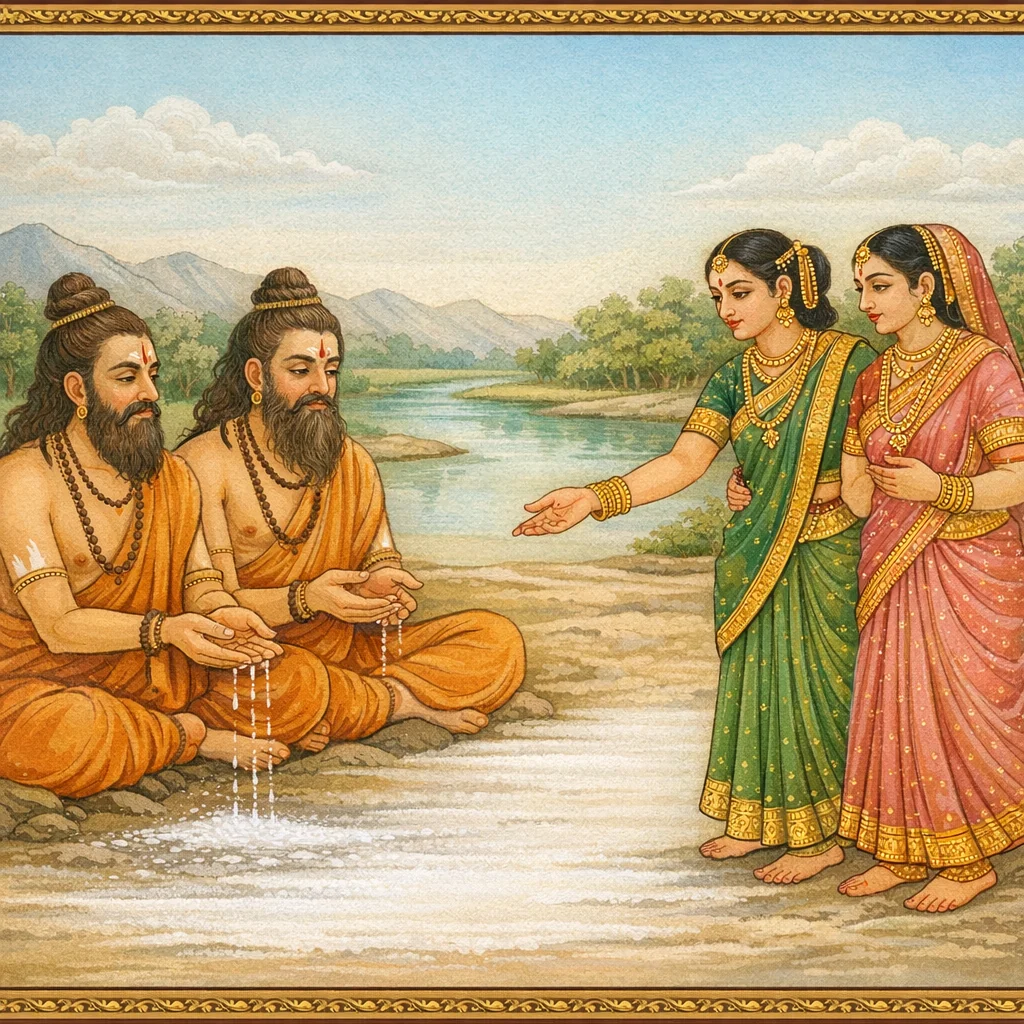
This chapter, narrated by Sūta, sets forth a tightly ordered ethical and theological debate. Sixty-eight brāhmaṇa ascetics return on foot, weary and hungry, and are startled to find their wives adorned with divine garments and ornaments. Suspecting a breach of ascetic decorum, they question them; the women explain that Queen Damayantī arrived like a royal patron and bestowed these gifts. The ascetics denounce acceptance of royal gifts (rāja-pratigraha) as especially blameworthy for tapasvins and, in anger, take water in their hands to prepare a curse against the king and his realm. The wives intervene with a counter-teaching: they uphold householdership (gṛhasthāśrama) as an “uttama” path that can secure both worldly welfare and otherworldly merit, recall their long poverty in the sages’ homes, and demand land and livelihood from the king—threatening self-harm, whose moral burden would fall upon the sages. Hearing this, the sages cast the curse-water onto the ground; the spilled water burns a portion of the earth and brings forth a lasting saline, barren tract (ūṣara) where crops do not grow and even birth is said not to occur. The chapter ends with a stated phala: a śrāddha performed there in Phālguna, on a full-moon day that falls on a Sunday, is said to uplift one’s ancestors, even if they have reached severe hellish states through their own deeds.
Shlokas
Verse 1
सूत उवाच । ततः कतिपयाहस्य गते तस्मिन्महीपतौ । स्वगृहं प्रति दुःखार्ते परिवारसमन्विते
Sūta said: Then, when some days had passed, that king—afflicted with sorrow and accompanied by his retinue—set out toward his own home.
Verse 2
पद्भ्यामेव समायाता ह्यष्टषष्टिर्द्विजोत्तमाः । परिश्रांताः कृशांगाश्च धूलिधूसरिताननाः
Sixty-eight eminent brāhmaṇas arrived on foot—exhausted, thin-limbed, and with faces greyed by dust.
Verse 3
यावत्पश्यति दाराः स्वा दिव्याभरण भूषिताः । दिव्यवस्त्रैः सुसंवीता राजपत्न्य इवापराः
When they saw their own wives—adorned with splendid ornaments and well-clad in fine garments, like other queens—they were struck with astonishment.
Verse 4
ततश्च विस्मयाविष्टाः पप्रच्छुस्ते क्षुधान्विताः । किमिदं किमिदं पापा विरुद्धं विहितं वपुः
Then, overwhelmed with wonder and tormented by hunger, they questioned them: “What is this, what is this, O sinful ones—this appearance so contrary to what is proper by dharma?”
Verse 5
कथं प्राप्तानि वस्त्राणि भूषणानि वराणि च । नूनमस्मद्गतेर्भ्रंशः खे जातो नाऽन्यथा भवेत्
“How did you obtain these fine garments and excellent ornaments? Surely our own course has fallen from its path—some lapse has arisen in our state; it cannot be otherwise.”
Verse 6
विकारमेनं संत्यक्त्वा युष्मदीयं सुगर्हिताः । अथ ताः सर्ववृत्तांतमूचुस्तापसयोषितः
Having abandoned this unbecoming change—so blameworthy for you—those ascetics’ wives then told the entire account of what had happened.
Verse 7
यथा राज्ञी समायाता दमयन्ती नृपप्रिया । भूषणानि च दत्तानि तया चैव यथा द्विजाः
They related how Queen Damayantī—beloved of the king—had come, and how she herself had bestowed ornaments, as it occurred, O brāhmaṇas.
Verse 8
यथा शापश्च सञ्जातो ब्राह्मणानां महात्मनाम् । अथ ते मुनयः क्रुद्धास्तच्छ्रुत्वा गर्हितं वचः । राजप्रतिग्रहो निंद्यस्तापसानां विशेषतः
They told how a curse then arose from those great-souled brāhmaṇas. Hearing that reprehensible speech, the sages became angry, declaring: “Accepting gifts from a king is blameworthy—especially for ascetics.”
Verse 9
ततो भूपस्य राष्ट्रस्य नाशार्थं जगृहुर्जलम् । क्रोधेन महताविष्टा वेपमाना निरर्गलम्
Then, to bring about the destruction of the king’s realm, they took up water for the rite of cursing; seized by immense wrath, they trembled without restraint.
Verse 10
अनेन पाप्मनाऽस्माकं कुभूपेन प्रणाशिता । खे गतिर्लोभयित्वा तु पत्न्योऽस्माकमकृत्रिमाः । सरलास्तद्गणाः सर्वे येनेदृग्व्यसनं स्थितम्
“By this sinful deed, that wicked king has brought ruin upon us. Having beguiled our course and resolve, he lured our guileless wives; and all his simple folk—through him—have caused this grievous calamity to arise.”
Verse 11
सूत उवाच । एवं ते मुनयो यावच्छापं तस्य महीपतेः । प्रयच्छंति च तास्तावदूचुर्भार्या रुषान्विताः
Sūta said: As the sages were about to pronounce a curse upon that king, at that very moment the wives, filled with indignation, spoke out.
Verse 12
न देयो भूपतेस्तस्य शापो ब्राह्मणसत्तमाः । अस्मदीयं वचस्तावच्छ्रोतव्यमविशंकितैः
“O best of Brāhmaṇas, lay no curse upon that king. First, hear our words without suspicion.”
Verse 13
वयं सर्वा नरेन्द्रस्य भार्यया समलंकृताः । सुवस्त्रैर्भूषणैर्दिव्यैः श्रद्धापूतेन चेतसा
“All of us were adorned as the king’s wives—with fine garments and divine ornaments—our minds made pure through faith.”
Verse 14
वयं दरिद्रदोषेण सदा युष्मद्गृहे स्थिताः । कर्शिता न च संप्राप्तं सुखं मर्त्यसमु द्भवम्
Yet, through the fault of poverty, we have ever remained in your house, dependent upon you. Worn down by hardship, we have not attained even the ordinary happiness that arises in human life.
Verse 15
एतेषां परलोकोऽत्र विद्यते ये तपोरताः । न च मर्त्यफलं किंचिदपि स्वल्पतरं भवेत्
For those devoted to austerity, the ‘other world’ alone is what truly matters here; for them, no reward of the human realm—even the smallest—has any significance.
Verse 16
अन्येषां विषयस्थानामिह लोकः प्रकीर्तितः । भोगप्रसक्तचित्तानां नीचानां सुदुरात्मनाम्
But for others—those fixed upon sense-objects—this world alone is spoken of as their ‘realm’: minds clinging to enjoyment, base in character, and of exceedingly wicked disposition.
Verse 17
गृहस्थाश्रमिणां चैव स्वधर्मरतचेतसाम् । इह लोकः परश्चैव जायते नाऽत्र संशयः
But for householders devoted in mind to their own prescribed duty (svadharma), both this world and the next arise as attainments—of this there is no doubt.
Verse 18
ता वयं नात्र सन्देहो गृहस्थाश्रममुत्तमम् । संसेव्य साधयिष्यामो लोकद्वयमनुत्तमम्
Therefore we—without any doubt—will duly embrace the excellent householder stage and accomplish the supreme benefit of both worlds.
Verse 19
तस्माद्गृहाणि रम्याणि प्रवदंति समाहिताः । भूपालाद्भूमिमादाय वृत्तिं चैवाभिवांछिताम्
So, composed in mind, they declared: ‘Therefore, grant us pleasant homes; and, receiving land from the king, (grant us) also the livelihood we desire.’
Verse 20
ततश्चैवाथ वीक्षध्वं पुत्रपौत्रसमुद्भवम् । सौख्यं चापि कुमारीणां बांधवानां विशेषतः
And then you shall indeed behold the rise of sons and grandsons, and also the happiness of your daughters and, especially, of your kinsmen.
Verse 21
न करिष्यथ चेद्वाक्यमेतदस्मदुदीरितम् । सर्वाः प्राणपरित्यागं करिष्यामो न संशयः
If you do not carry out this instruction spoken by us, then all of us will abandon our lives—of this there is no doubt.
Verse 22
यूयं स्त्रीवधपापेन युक्ताः सन्तस्ततः परम् । नरकं रौरवं दुर्गं गमिष्यथ सुनिश्चितम्
You, being stained with the sin of killing a woman, will thereafter certainly go to the dreadful Raurava hell—this is assured.
Verse 23
एवं ते मुनयः श्रुत्वा तासां वाक्यानि तानि वै । भूपृष्ठे तत्यजुस्तोयं शापार्थं यत्करैर्धृतम्
Hearing those words of the women, the sages then poured onto the earth the water they had held in their hands for the purpose of a curse.
Verse 24
ततस्तत्तोयनिर्दग्धं तद्विभागं क्षितेस्तदा । ऊषरत्वमनुप्राप्तमद्यापि द्विजसत्तमाः
Then that portion of the earth, scorched by that water, became a saline wasteland—and it remains so even today, O best of the twice-born.
Verse 25
आस्तामन्नादिकं तत्र यदुत्पं न प्ररोहति । न जन्म चाप्नुयाद्भूयः पक्षी वा कीट एव वा
There, even grain and the like—though sown—do not sprout. One would not obtain birth there again, whether as a bird or even as an insect.
Verse 26
तृणं वाथ मृगस्तत्र किं पुनर्भक्तिमान्नरः । यस्तत्र कुरुते श्राद्धं श्रद्धया फाल्गुने नरः
If even grass or a deer is affected there, what then of a devoted human? The man who performs Śrāddha there with faith in the month of Phālguna—
Verse 27
पौर्णमास्यां रवैर्वारे स पितॄनुद्धरेन्निजान् । अपि स्वकर्मणा प्राप्तान्नरके दारुणाकृतौ
On the full-moon day, when it falls on a Sunday, he would uplift his own ancestors—even those who, through their own deeds, have reached a dreadful hell.
Verse 112
इति श्रीस्कांदे महापुराण एकाशीतिसाहस्र्यां संहितायां षष्ठे नागरखण्डे हाटकेश्वरक्षेत्रमाहात्म्ये दमयन्त्युपाख्यान ऊषरोत्पत्तिमाहात्म्यकथनंनाम द्वादशोत्तरशततमोऽध्यायः
Thus ends the one-hundred-and-twelfth chapter, entitled “The Account of the Greatness of the Origin of the Ūṣara (Saline Wasteland),” in the Damayantī episode of the Hāṭakeśvara-kṣetra Māhātmya, within the sixth book, the Nāgara Khaṇḍa, of the Śrī Skanda Mahāpurāṇa, in the Ekāśīti-sāhasrī Saṃhitā.