Adhyaya 108
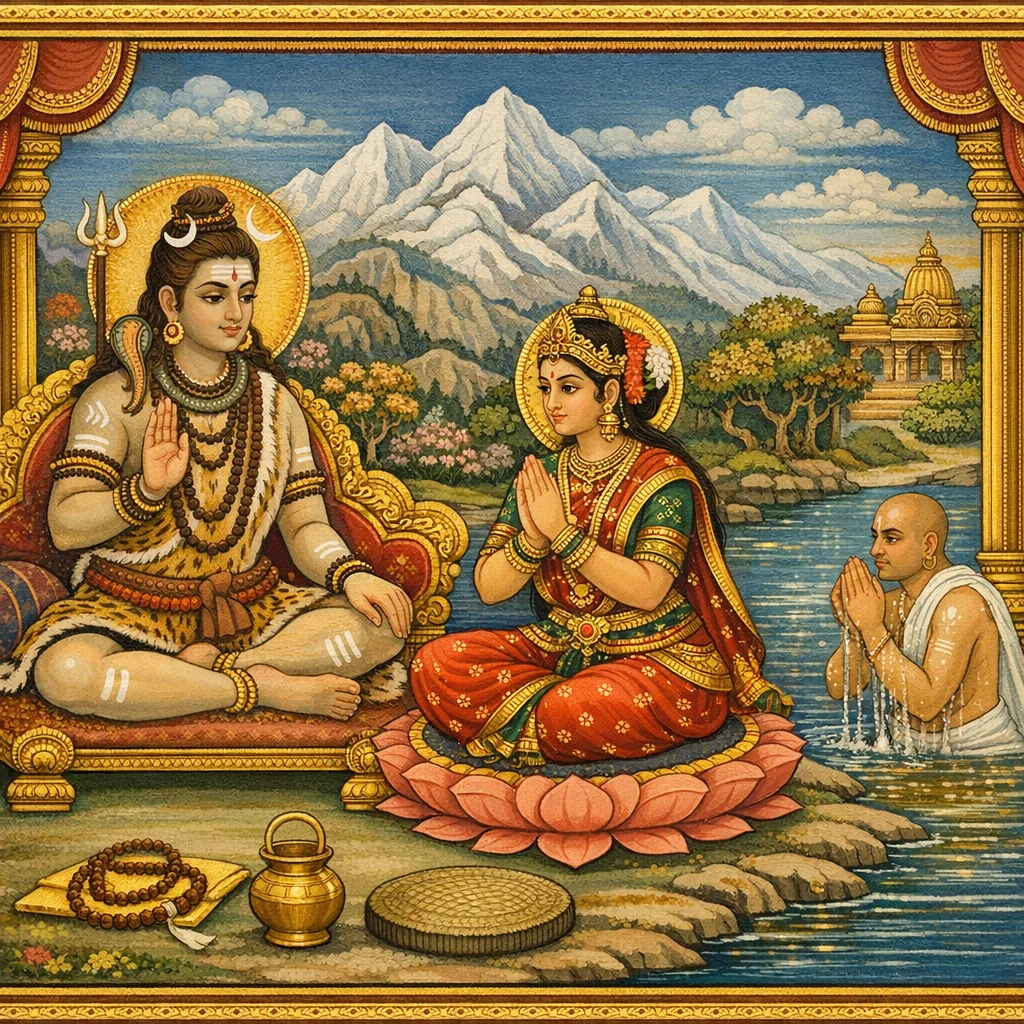
Chapter 108 begins with the ṛṣis asking Sūta to restate, by name, the previously mentioned “sixty-eight” sacred fields (kṣetra) and other tīrthas, out of curiosity and the need for a practical index. Sūta replies with a theological explanation grounded in an earlier Śiva–Pārvatī dialogue on Kailāsa: in the Kali age, tīrthas are said to withdraw into the nether regions because wrongdoing has become widespread, raising the question of how sanctity is to be understood and approached. Śiva then gives a technical definition of “tīrtha” that goes beyond geography: mother, father, association with the saintly, reflection on dharma, the disciplines of yama and niyama, and sacred narratives are all treated as tīrthas. He further teaches that mere contact—seeing, remembering, or bathing—has purifying power even for grave transgressions. The chapter emphasizes intention: bathing should be done with devotion, an undistracted mind, and oriented toward worship of Maheśvara. It concludes with an enumerative catalogue of prominent tīrthas/kṣetras across India, as a foundation for later explanations “separately and at length.”
Shlokas
Verse 1
ऋषय ऊचुः । अष्टषष्टिप्रमाणानि यानि क्षेत्राणि सूतज । त्वयोक्तानि च तान्येव नामतो नः प्रकीर्तय
The sages said: “O son of Sūta, you have spoken of the sacred kṣetras numbering sixty-eight. Now recite to us those very kṣetras again, clearly by their names.”
Verse 2
तथान्यानि च तीर्थानि यानि संति धरातले । तानि कीर्तय कार्त्स्न्येन परं कौतूहलं हि नः
“And likewise, whatever other holy tīrthas exist upon the earth—recount them in full, for our curiosity and longing to know are great.”
Verse 3
सूत उवाच । यानि प्रोक्तानि तीर्थानि भवद्भिर्द्विजसत्तमाः । अष्टषष्टिप्रमाणानि तथा क्षेत्राणि भूतले
Sūta said: “O best of the twice-born, the tīrthas that have been spoken by you—and likewise the sacred regions upon the earth, numbering sixty-eight—”
Verse 4
तानि सर्वाणि भीतानि प्रविष्टानि रसातलम् । तीर्थानि मुनिशार्दूलाः पापे ह्यत्र कलौ युगे
“All those tīrthas, frightened, have entered Rasātala, O tiger-like sages, for in this Kali age sin has become dominant here.”
Verse 5
एतदेव पुरा पृष्टः पार्वत्या परमेश्वरः । यद्भवद्भिरहं पृष्टस्तीर्थयात्राकृते द्विजाः
“This very matter was once asked of Parameśvara by Pārvatī—just as you now ask me, O twice-born ones, concerning pilgrimage to the tīrthas.”
Verse 6
कैलासशिखरासीनः पुरा देवो महेश्वरः । सर्वैर्गणगणैः सार्धमुपविष्टो वरासने
“Formerly, the god Maheśvara, seated upon the peak of Kailāsa, sat upon an excellent throne together with all the hosts of his gaṇas.”
Verse 7
प्रणाम करणार्थाय ह्यागतेष्वमरेषु च । गतेषु तेषु विप्रेंद्रा सर्वेषु त्रिदिवालयम् । अर्धासनगता देवी वाक्यमेतदुवाच ह
“And when the immortals had come to receive obeisance, and then all had departed to their heavenly abodes—O best of brāhmaṇas—the Devī, seated half upon the seat, spoke these words.”
Verse 8
देव्युवाच । देवदेव महादेव गंगाक्षालितशेखर । वद मे तीर्थमाहात्म्यं यद्यहं वल्लभा तव
The Devī said: “O God of gods, O Mahādeva, whose crest is washed by the Gaṅgā—tell me the greatness of the tīrthas, if indeed I am dear to you.”
Verse 9
तिस्रः कोट्योऽर्धकोटी च तीर्थानामिह भूतले । संख्यया नामतो देव मह्यं कीर्तय सांप्रतम्
“On this earth there are three crores and a half-crore of tīrthas. O Lord, proclaim them to me now—both by their count and by their names.”
Verse 10
यानि तीर्थान्यनेकानि क्षेत्राणि चैव मे प्रभो । तानि कीर्तय देवेश सुगम्यं चैव देहिनाम् । कीर्तनाच्च समग्राणां तीर्थानां लभ्यते फलम्
O Lord, whatever many sacred tīrthas and holy fields (kṣetras) are mine—declare them, O Lord of gods, so that embodied beings may approach them with ease. For by the very act of praising them all, the full fruit of all those tīrthas is obtained.
Verse 11
ईश्वर उवाच । तीर्थशब्दो वरारोहे धर्मकृत्येषु वर्तते । धर्मस्थानेषु सर्वेषु तत्त्वं शृणु समाहिता
Īśvara said: “O fair-hipped one, the word ‘tīrtha’ is applied to acts of dharma. In all seats of dharma, listen—steadfast in attention—to its true principle.”
Verse 12
माता तीर्थं पिता तीर्थं तीर्थ साधुसमागमः । धर्मानुचिंतनं चैव तथैव नियमो यमः
Mother is a tīrtha; father is a tīrtha; the meeting with sādhus is a tīrtha. So too are reflection upon dharma, and likewise restraint and observance—yama and niyama.
Verse 13
पुण्याः कथा वरारोहे देवर्षीणां कृतास्तथा । आश्रयाः सन्मुनींद्राणां देवानां च तथा प्रिये
O fair-hipped one, sacred and meritorious narratives—especially those composed by the devarṣis—are also tīrthas. Likewise, the abodes and refuges of holy lordly sages, and of the gods as well, O beloved.
Verse 14
भूमिभागाः पवित्राः स्युः कीर्त्यते तीर्थमित्युत । तेषां संदर्शनादेव स्मरणाच्चावगाहनात् । मुच्यंते जन्तवः पापैरपि जन्मशतोद्भवैः
Certain portions of the earth are truly pure; they are proclaimed to be ‘tīrthas’. By merely beholding them, remembering them, and bathing or immersing there, beings are released from sins—even those accumulated over hundreds of births.
Verse 15
तथा पातकिनो ये च ये च विश्वासघातकाः । तेऽपि सर्वे तथा मुक्तास्तेषां चैवावगाहनात्
Likewise, even grievous sinners and those who betray trust—all of them too are released by bathing and immersion in those tīrthas.
Verse 16
एवं पापानि संयांति नाशं सर्वांगसुन्दरि । अपि ब्रह्मवधात्पापं यद्भवेदिह देहिनाम् । तच्चापि तीर्थसंसर्गात्प्रलयं यात्यसंशयम्
Thus do sins come to destruction, O you of lovely limbs. Even the sin that arises here for embodied beings from the slaying of a brāhmaṇa (brahma-vadha)—this too, by contact with a tīrtha, goes to dissolution without doubt.
Verse 17
ममापि करसंलग्नं कपालं ब्रह्मणः पुरा । पतितं तीर्थसंसर्गात्तेषां चैवावगाहनात्
Formerly, even the skull of Brahmā that had remained attached to my hand fell away—through contact with a tīrtha and through bathing and immersion there.
Verse 18
एवं सर्वेषु तीर्थेषु तथा ह्यायतनेषु च । स्नातव्यं भक्तियुक्तेन चेतसा नान्यगामिना
Thus, in all tīrthas—and likewise in sacred shrines—one should bathe with a mind joined to devotion, not wandering elsewhere.
Verse 19
यत्र स्नातैर्नरैः सम्यक्सर्वेषां लभ्यते फलम् । ममाश्रयं विशालाक्षि सर्वपातकनाशनम् । कामदं च तथा नॄणां नारीणां च विशेषतः
Where, by people bathing properly, the fruit for all is attained—(that place is) my refuge, O large-eyed one: the destroyer of all sins, and also the giver of desired boons to men and, especially, to women.
Verse 20
एतद्गुह्यतमं देवि मम नित्यव्यवस्थितम् । न कस्याऽपि मयाख्यातं देवेंद्रस्यापि पृच्छतः
O Goddess, this is my most secret teaching, ever firmly established as a constant truth. I have not disclosed it to anyone—not even when Indra, lord of the gods, asked me.
Verse 21
वाल्लभ्यात्तव मे भद्रे कथितं वै वरानने । अष्टषष्टिः प्रगम्यानि भक्त्या तीर्थानि मानवैः
O auspicious one, O fair-faced lady—out of affection for you I indeed declare it: there are sixty-eight sacred tīrthas that human beings should visit with devotion.
Verse 22
ममाश्रयाणि तान्येव सर्वपापहराणि च । कामदानि वरारोहे मत्प्रभावादसंशयम्
Those very tīrthas rest in my protection; they remove all sins and grant desired aims. O fair-thighed one, by my power—without doubt—this is so.
Verse 23
यं यं कामं समाधाय तत्र तीर्थे पुमान्यदि । कृत्वा स्नानं ततो देवमर्चयेच्च महेश्वरम्
Whatever desire a person forms, if at that tīrtha he bathes and then worships the Lord—Maheśvara—he attains the intended aim.
Verse 24
सुकृतं मनसि ध्यात्वा यैर्नरैः पूजितो हरिः । आस्तां तेषां वरारोहे दर्शनं स्पर्शनं तथा । स्मरणादपि मुच्यंते नराः पापैः पुराकृतैः
Those people who, meditating on righteous merit within the mind, worship Hari—O fair-limbed one—need not even rely on direct sight or touch: even by remembrance alone, people are freed from sins committed long ago.
Verse 25
एते शक्रादयो देवास्तेषु तीर्थेषु सुन्दरि । मां पूज्य त्रिदिवं प्राप्तास्तथान्ये नारदादयः
O lovely one, these gods—Indra and the rest—worshipped me at those tīrthas and attained heaven; so too did others, such as Nārada and the like.
Verse 26
तान्यहं ते प्रवक्ष्यामि विस्तरेण पृथक्पृथक् । नामतः शृणु देवेशि समाहितमनाः स्थिता
I shall tell you about those (tīrthas) in detail, one by one. O Lady of the Lord, listen to their names, standing with a collected and attentive mind.
Verse 27
वाराणसी प्रयागं च नैमिषं चापरं तथा । गयाशिरः सुपुण्यं च पवित्रं कुरुजांगलम्
Vārāṇasī, and Prayāga; Naimiṣa also, and likewise other holy grounds—Gayāśiras, supremely meritorious; and the pure land of Kuru-jāṅgala.
Verse 28
प्रभासं पुष्करं चैव विश्वेश्वरमथापरम । अट्टहासं महेन्द्रं च तथैवोज्जयनी च या
Prabhāsa and Puṣkara; and also Viśveśvara, and yet another holy seat; Aṭṭahāsa and Mahendra as well—likewise Ujjayanī too.
Verse 29
मरुकोटिः शंकुकर्णं गोकर्णं क्षेत्रमुत्तमम् । रुद्रकोटिः स्थलेशं च हर्षितं वृषभध्वजम्
Maru-koṭi; Śaṅku-karṇa; Gokarṇa—the excellent holy region; Rudra-koṭi; Sthaleśa; Harṣita; and Vṛṣabha-dhvaja (the Bull-bannered Lord, Śiva).
Verse 30
केदारं च तथा क्षेत्रं क्षेत्रं मध्यमकेश्वरम् । सहस्राक्षं तथा क्षेत्रं तथान्यत्कार्तिकेश्वरम्
And there are Kedāra; likewise the sacred kṣetra of Madhyamakeśvara; the holy site of Sahasrākṣa; and also another revered place called Kārtikeśvara.
Verse 31
तथैव वस्त्रमार्गं च तथा कनखलं स्मृतम् । भद्रकर्णं च विख्यातं दण्डकाख्यं तथैव च
Likewise (there are the holy places called) Vastramārga; and Kanakhala, so remembered; also the renowned Bhadrakarṇa; and similarly the site known as Daṇḍaka.
Verse 32
त्रिदण्डाख्यं तथा क्षेत्रं तथैव कृमिजांगलम् । एकाम्रं च तथा क्षेत्रं क्षेत्रं छागलकं तथा
Likewise (there is) the sacred region called Tridaṇḍa; and also Kṛmijāṅgala; and the kṣetra known as Ekāmra; and likewise the holy field called Chāgalaka.
Verse 33
कालिंजरं च देवेशि तथान्यन्मण्डलेश्वरम् । काश्मीरं मरुकेशं च हरिश्चंद्रं सुशोभनम्
O Goddess, there is the sacred Kāliñjara; and also another holy place called Maṇḍaleśvara; Kāśmīra; Marukeśa; and the splendid shrine of Hariścandra.
Verse 34
पुरश्चंद्रं च वामेशं कुकुटेश्वरमेव च । भस्मगात्रमथोकारं त्रिसंध्या विरजा तथा
And there are the holy places called Puraścandra and Vāmeśa, and also Kukuṭeśvara; then Bhasmagātra, Athokāra, Trisandhyā, and likewise Virajā.
Verse 35
अर्केश्वरं च नेपालं दुष्कर्णं करवीरकम् । जागेश्वरं तथा देवि श्रीशैलं पर्वतोत्तमम्
And there are Arkeśvara; Nepāla; Duṣkarṇa; Karavīraka; likewise, O Goddess, Jāgeśvara; and Śrīśaila, the foremost of mountains.
Verse 36
अयोध्या चैव पातालं तथा कारोहणं महत् । देविका च नदी पुण्या भैरवं पूर्वसागरः
And also there are Ayodhyā; Pātāla; and the great Kārohaṇa; the holy river Devikā; the sacred site of Bhairava; and the Eastern Ocean.
Verse 37
सप्तगोदावरीतीर्थं तथैव समुदाहृतम् । निर्मलेशं तथान्यच्च कर्णिकारं सुशोभनम्
Likewise the Saptagodāvarī Tīrtha is proclaimed; also Nirmaleśa; and another holy place, the beautiful Karṇikāra.
Verse 38
कैलासं जाह्नवीतीरं जललिंगं च वाडवम् । बदरीतीर्थवर्यं च कोटितीर्थं तथैव च
And there are Kailāsa; the bank of the Jāhnavī (Gaṅgā); Jalaliṅga; Vāḍava; the excellent Badarī-tīrtha; and likewise Koṭitīrtha.
Verse 39
विंध्याचलो हेमकूटं गन्धमादनमेव च । लिंगेश्वरं तथा क्षेत्रं लंकाद्वारं तथैव च
And there are the Vindhya mountain; Hemakūṭa; and also Gandhamādana; likewise the sacred region of Liṅgeśvara; and also Laṅkādvāra.
Verse 40
नलेश्वरं तु मध्येशं केदारं रुद्रजालकम् । सुवर्णाख्यं च वामोरु तथान्यत्षष्टिकापथम्
“(There are) Naleśvara, and also Madhyeśa, Kedāra, and Rudrajālaka; and Suvarṇākhya as well, O fair-thighed Goddess—along with another (tīrtha) known as Ṣaṣṭikāpatha.”
Verse 108
इति श्रीस्कांदे महापुराण एकाशीतिसाहस्र्यां संहितायां षष्ठे नागरखण्डे हाटकेशवरक्षेत्रमाहात्म्ये ऽष्टषष्टितीर्थवर्णनंनामाष्टोत्तरशततमोऽध्यायः
Thus ends the one-hundred-and-eighth chapter, called “The Description of the Sixty-Eight Tīrthas,” in the Hāṭakeśvara-kṣetra Māhātmya, within the sixth Nāgara-khaṇḍa of the Śrī Skanda Mahāpurāṇa, in the Ekāśīti-sāhasrī Saṃhitā.