Adhyaya 1
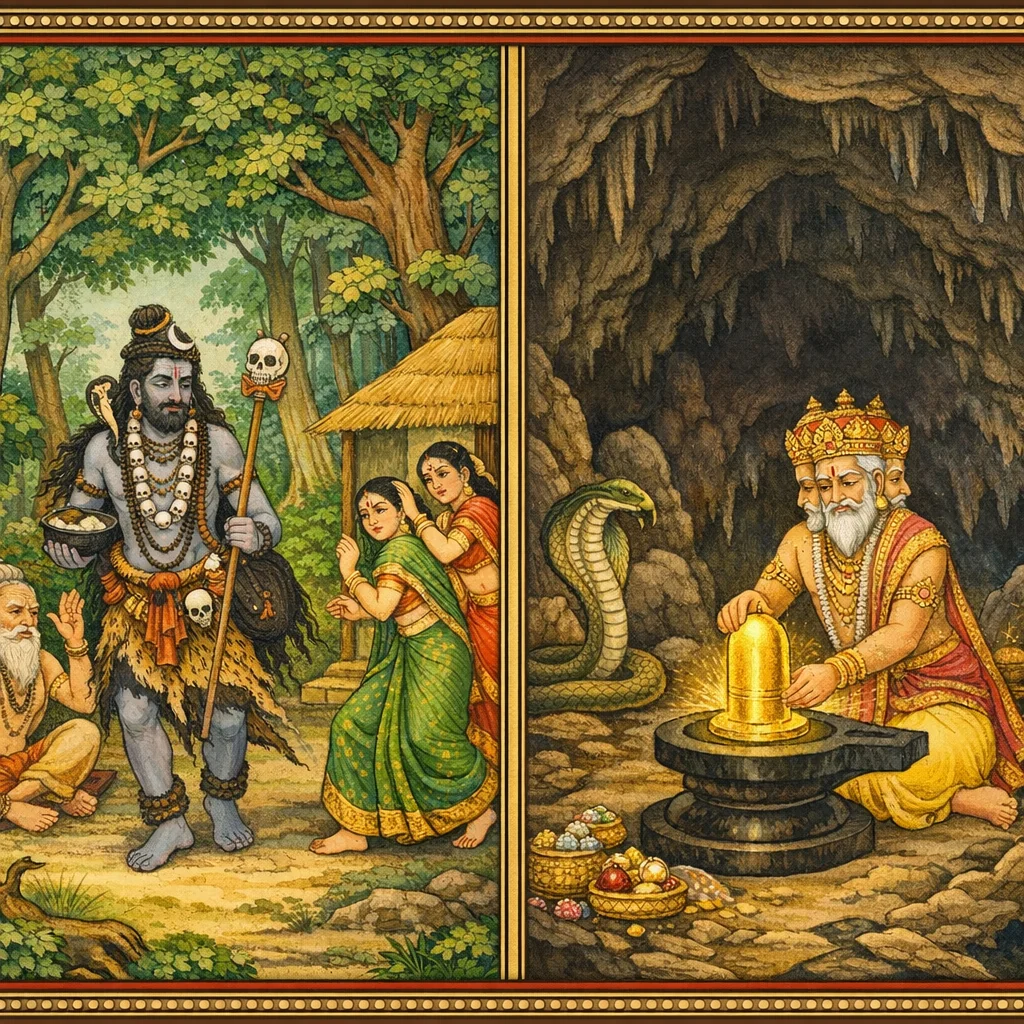
Chapter 1 begins with a framing question: the sages ask why Śiva’s liṅga is worshipped in a uniquely special way, even above other divine forms or “limbs.” Sūta answers by recounting an episode in the Ānarta forest: Śiva (Tripurāntaka), grieving after separation from Satī, enters an ascetics’ settlement in a transgressive guise—naked, carrying a skull-bowl—seeking alms. The ascetics’ women, captivated, abandon their routines; the male ascetics deem this a breach of hermitage order and curse Śiva so that his liṅga falls. The liṅga pierces the earth and descends to Pātāla, throwing the three worlds into instability and ominous portents. The devas appeal to Brahmā, who identifies the cause and leads them to Śiva; Śiva refuses to restore the liṅga unless it is worshipped with earnest effort by the devas and the twice-born (dvija) communities. The devas console him that Satī will be reborn as Gaurī, daughter of Himālaya. Brahmā then performs worship in Pātāla, followed by Viṣṇu and the other devas. Pleased, Śiva grants a boon and re-establishes the liṅga; Brahmā fashions and installs a golden liṅga, proclaiming it renowned in Pātāla as Hāṭakeśvara. The chapter ends with a directive: regular, faith-filled liṅga worship—touching, beholding, and praising—constitutes a comprehensive honoring of the great divine principles and yields auspicious spiritual fruits.
Shlokas
Verse 1
। ओंनमः पुरुषोत्तमाय । अथ स्कान्दे महापुराणे षष्ठनागरखण्डप्रारम्भः । व्यास उवाच । स धूर्जटि जटाजूटो जायतां विजयाय वः । यत्रैकपलितभ्रांतिं करोत्यद्यापि जाह्नवी
Om—salutations to Puruṣottama. Now begins, in the Skanda Mahāpurāṇa, the sixth section, the Nāgara-khaṇḍa. Vyāsa said: May Dhūrjaṭi, bearer of the matted locks (jaṭā-jūṭa), be for your victory; in whose presence even today Jāhnavī (Gaṅgā) brings forth the wondrous illusion of a single grey hair.
Verse 2
ऋषय ऊचुः । हरस्य पूज्यते लिंगं कस्मादतन्महामते । विशेषात्संपरित्यज्य शेषांगानि सुरासुरैः
The sages said: O great-minded one, why is Hara’s liṅga worshipped—especially by gods and asuras—while his other limbs are set aside?
Verse 3
तस्मादेतन्महाबाहो यथावद्वक्तुमर्हसि । सांप्रतं सूत कार्त्स्न्येन परं कौतूहलं हि नः
Therefore, O mighty-armed one, you should explain this properly. Just now, O Sūta, we are seized with intense curiosity to hear it in full.
Verse 4
सूत उवाच । प्रश्नभारो महानेष यो भवद्भिरुदाहृतः । कीर्तयिष्ये तथाप्येनं नमस्कृत्य स्वयंभुवे
Sūta said: Great indeed is the weight of this question you have raised. Even so, I shall recount it—after bowing in reverence to Svayambhū, the Self-born Lord.
Verse 5
आनर्तविषये चास्ति वनं मुनिजनाश्रयम् । मनोज्ञं सर्वसत्त्वानां सर्वर्तुफलितद्रुमम्
In the land of Ānarta there is a forest that shelters the sages—delightful to all beings, with trees bearing fruit in every season.
Verse 6
तत्राश्रमपदं रम्यं सौम्यसत्त्वनिषेवितम् । अस्ति तापससंकीर्णं वेदध्वनिविराजितम्
There, a lovely hermitage-site exists, frequented by gentle beings; filled with ascetics and resplendent with the sound of Vedic recitation.
Verse 7
अब्भक्षैर्वायुभक्षैश्च शीर्णपर्णाशिभिस्तथा । दन्तोलूखलिभिर्विप्रैः सेवितं चाश्मकुट्टकैः
That sacred woodland was frequented by brahmins of severe vows—some living on water alone, some on air alone, others eating only fallen leaves; some grinding with their teeth as with a mortar, and others subsisting on grains pounded upon stone—thus was the place served by austere ascetics.
Verse 8
स्नानहोमपरैश्चैव जपस्वाध्यायतत्परैः । वानप्रस्थैस्त्रिदण्डैश्च हंसैश्चापि कुटीचरैः
It was also inhabited by those devoted to sacred bathing and fire-offerings, intent on japa and Vedic recitation—by forest-dwelling vānaprasthas, by tridaṇḍin renunciants, by haṃsa-sages, and by hut-dwelling recluses as well.
Verse 9
स्नातकैर्यतिभिर्दान्तैस्तथा पंचाग्निसाधकैः । कस्यचित्त्वथ कालस्य भगवांस्त्रिपुरांतकः
It was filled with graduated snātakas, self-controlled renunciants (yatis), and practitioners of the five fires; and then, after some time had passed, the Blessed One—Tripurāntaka, the destroyer of the three cities—appeared.
Verse 10
सतीवियोगसंतप्तो भ्रममाण इतस्ततः । तस्मिन्वने समायातः सौम्यसत्त्वनिषेविते
Scorched by the anguish of separation from Satī, wandering here and there, he came to that forest, frequented by gentle and peaceful beings.
Verse 11
क्रीडंति नकुला यत्र सार्धं सर्पैःप्रहर्षिताः । पञ्चाननाश्च मातंगैर्वृषदंशास्तथाखुभिः । काकाः कौशिकसंघैश्च वैरभावविवर्जिताः
There, mongooses played joyfully with serpents; lions with elephants; creatures that normally bite and harm with mice; and even crows with flocks of owls—all entirely free from enmity.
Verse 12
ततश्च भगवान्रुद्रो दृष्ट्वाश्रमपदं तदा । नग्नः कपालमादाय भिक्षार्थं प्रविवेश सः
Then the Lord Rudra, seeing the hermitage-ground, entered it to seek alms—naked, bearing a skull-bowl in his hand.
Verse 13
अथ तस्य समालोक्य रूपं गात्रसमुद्भवम् । अदृष्टपूर्वं तापस्यः सर्वाः कामवशं गताः
Then, beholding his bodily beauty—unseen before—the women ascetics all fell under the sway of desire.
Verse 14
गृहकर्म परित्यज्य गुरुशुश्रूषणानि च । मिथः संभाषणं चक्रुः स्थानेस्थाने च ताः स्थिताः
Abandoning their household tasks and even their service to the elders and teachers, they began conversing among themselves, standing about here and there.
Verse 15
एका सा कापि धन्या या चक्रे तस्यावगूहनम् । विश्रब्धा सर्वगात्रेषु तापसस्य महात्मनः
One woman among them—deeming herself most blessed—embraced that great ascetic, boldly pressing close to all his limbs.
Verse 16
तथान्याः कौतुकाविष्टा धावंत्यः सर्वतोदिशम् । दृश्यंते तं समुद्दिश्य विस्तारितविलोचनाः
The others too, seized by curiosity, ran in every direction; they were seen hurrying toward him, their eyes widened in eager gaze.
Verse 17
काश्चिदर्द्धानुलिप्तांग्यः काश्चिदेकांजितेक्षणाः । अर्धसंयमितैः कैशैस्तथान्यास्त्यक्तबालकाः
Some women had only half their bodies anointed; some had lined only one eye with collyrium. Some had their hair only partly tied, while others—startled—left their children behind and rushed out.
Verse 18
एवमालोक्यमानः स कामिनीभिर्महेश्वरः । बभ्राम राजमार्गेण भिक्षां देहीति कीर्तयन्
Thus, gazed upon by the women, Maheśvara wandered along the royal road, calling out, “Give me alms!”
Verse 19
अथ ते मुनयो दृष्ट्वा तं तथा विगतांबरम् । कामोद्भवकरंस्त्रीणां प्रोचुः कोपारुणेक्षणाः
Then the sages, seeing him thus unclothed—one who stirred desire in women—spoke with eyes reddened in anger.
Verse 20
यस्मात्पाप त्वयास्माकमाश्रमोऽयं विडंबितः । तस्माल्लिंगं पतत्वाशु तवैव वसुधातले
“O sinner, since you have mocked and disgraced our hermitage, therefore let your liṅga fall at once—here upon the surface of the earth!”
Verse 21
एतस्मिन्नंतरे भूमौ लिंगं तस्य पपात तत् । भित्त्वाथ धरणीपृष्ठं पातालं प्रविवेश ह
At that very moment his liṅga fell upon the ground; splitting the surface of the earth, it entered into Pātāla, the netherworld.
Verse 22
सोऽपि लिंगपरित्यक्तो लज्जायुक्तो महेश्वरः । गर्तां गुर्वीं समाश्रित्य भ्रूणरूपः समाविशत्
And Maheśvara too—deprived of his liṅga and filled with shame—took refuge in a deep pit and entered it, assuming the form of an embryo.
Verse 23
अथ लिंगस्य पातेन त्रैलोक्यभयशंसिनः । उत्पाता दारुणास्तस्थुः सर्वत्र द्विजसत्तमाः
Then, because of the fall of the liṅga, dreadful portents arose everywhere, foretelling fear for the three worlds, O best of the twice-born.
Verse 24
शीर्यते गिरिशृङ्गाणि पतंत्युल्का दिवापि च । त्यजंति सागराः सर्वे मर्यादां च शनैः शनैः
Mountain peaks crumbled; meteors fell even in daytime. All the oceans, little by little, began to abandon their boundaries.
Verse 25
अथ देवगणाः सर्वे भयसंत्रस्तमानसाः । शक्रविष्णुमुखा जग्मुर्यत्र देवः पितामहः
Then all the hosts of gods, their minds shaken with fear—led by Śakra and Viṣṇu—went to where the divine Pitāmaha (Brahmā) was.
Verse 26
प्रोचुश्च प्रणताः स्तुत्वा स्तोत्रैः सुश्रुतिसंभवैः । त्रैलोक्ये सृष्टिरूपं यत्कमलासनसंस्थितम्
Bowing down, they praised him with hymns born of the sacred Vedas and then spoke—to that One who is the very form of creation in the three worlds, seated upon the lotus-throne (Brahmā).
Verse 27
किमिदं किमिदं देव वर्तते ह्यधरोत्तरम् । त्रैलोक्यं सकलं येन व्याकुलत्वमुपागतम्
“What is this—what indeed is this, O Lord, that is occurring in such an unnatural, topsy-turvy way? By it the entire three worlds have been thrown into agitation.”
Verse 28
प्रलयस्येव चिह्नानि दृश्यंते पद्मसंभव । किं सांप्रतमकालेऽपि भविष्यति परिक्षयः
“O Padmasaṃbhava (Lotus-born Brahmā), signs like those of dissolution are being seen. Will there be destruction even now—out of season and before its time?”
Verse 29
सर्वेषां सुरमर्त्यानां दैत्यानां मन्त्रकोविदः । गतिर्भयार्तदेहानां सर्वलोकपितामहः
“For all—gods and mortals, even the Daityas—he is the knower of sacred counsel; and for bodies afflicted by fear, the Grandfather of all worlds (Brahmā) is their refuge and recourse.”
Verse 30
तेषां तद्वचनं श्रुत्वा देवानां चतुराननः । उवाच सुचिरं ध्यात्वा ज्ञात्वा दिव्येन चक्षुषा
Having heard those words of the gods, the Four-faced One (Brahmā) spoke—after meditating for a long while and perceiving the matter with divine sight.
Verse 31
प्रलयस्य न कालोऽयं सांप्रतं सुरसत्तमाः । शृणुध्वं यन्निमित्तोत्था महोत्पाता भवन्त्यमी
This is not the time of dissolution, O best of the gods. Listen: these great portents have arisen from a specific cause.
Verse 32
ऋषिभिः पातितं लिंगं देवदेवस्य शूलिनः । शापेनानर्तके देशे कलत्रार्थे महात्मभिः
The liṅga of Śūlin—of the God of gods—has been cast down by ṛṣis; by a curse of great-souled sages, in the land of Anartaka, on account of a matter concerning a wife.
Verse 33
तेनैतद्व्याकुलीभूतं त्रैलोक्यं सचराचरम् । तस्माद्गच्छामहे तत्र यत्र देवो महेश्वरः
Because of that, the entire threefold world—moving and unmoving—has become distressed. Therefore let us go there, to the place where the Lord Maheśvara is.
Verse 34
येनास्मद्वचनाच्छीघ्रं तल्लिंगं निदधाति सः । नो चेद्भविष्यति व्यक्तमकाले चापि संक्षयः । त्रैलोक्यस्यापि कृत्स्नस्य सत्यमेतन्मयोदितम्
Whoever, heeding our word, quickly re-establishes that liṅga will avert the danger. Otherwise, destruction will plainly occur, even before its due time, for the whole of the three worlds. This is the truth I declare.
Verse 35
अथ देवगणाः सर्वे ब्रह्मविष्णुपुरःसराः । आदित्या वसवो रुद्रा विश्वेदेवास्तथाश्विनौ
Then all the hosts of the gods—led by Brahmā and Viṣṇu—(including) the Ādityas, the Vasus, the Rudras, the Viśvedevas, and the twin Aśvins…
Verse 36
प्रजग्मुस्त्वरितास्तत्र यत्र देवो महेश्वरः । गर्तामध्यगतः सुप्तो लज्जया परया वृतः
They hurriedly went to that place where Lord Maheśvara was—lying asleep within the midst of a pit, veiled by profound shame.
Verse 37
देवा ऊचुः । नमस्ते देवदेवेश भक्तानामभयप्रद । नमस्ते जगदाधार शशिराजितशेखर
The Devas said: Salutations to you, O Lord of the lords of gods, bestower of fearlessness to devotees. Salutations to you, the support of the world, whose crest is adorned by the Moon-king.
Verse 38
त्वं यज्ञस्त्वं वषट्कारस्त्वमापस्त्वं मही विभो । त्वया सृष्टमिदं सर्वं त्रैलोक्यं सचराचरम्
You are the sacrifice; you are the vaṣaṭ-call; you are the waters; you are the earth, O all-pervading Lord. By you has all this been created—the three worlds, with everything moving and unmoving.
Verse 39
त्वं पासि च सुरश्रेष्ठ तथा नाशं नयिष्यसि । त्वं विष्णुस्त्वं चतुर्वक्त्रस्त्वं चंद्रस्त्वं दिवाकरः
You protect, O best among the gods, and you also lead (all) to dissolution. You are Viṣṇu; you are the Four-faced (Brahmā); you are the Moon; you are the Sun.
Verse 40
त्वया विना महादेव न किंचिदिह विद्यते । अपि कृत्वा महत्पापं नरो देव धरातले
Without you, O Mahādeva, nothing whatsoever exists here. Even if a man upon the earth, O Lord, has committed a great sin—
Verse 41
तव नामापि संकीर्त्य प्रयाति त्रिदिवालयम् । महादेव महादेव महादेवेति कीर्तनात्
Even by singing your Name, one attains the abode of the threefold heaven. By chanting, “Mahādeva, Mahādeva, Mahādeva,”—through such kīrtana of the Name.
Verse 42
कोटयो ब्रह्महत्यानामगम्यागमकोटयः । सद्यः प्रलयमायांति महादेवेति कीर्तनात्
Crores of sins as grave as brahmahatyā, and crores upon crores of other unspeakably terrible sins, perish at once through chanting “Mahādeva”.
Verse 43
विप्रो यथा मनुष्याणां नदीनां वा महार्णवः । तथा त्वं सर्वदेवानामाधिपत्ये व्यवस्थितः
As a brāhmaṇa is foremost among men, and as the great ocean is foremost among rivers, so are you established in sovereignty over all the gods.
Verse 44
नक्षत्राणां यथा चंद्रः प्रदीप्तानां दिवाकरः । तथा त्वं सर्वदेवानामाधिपत्ये व्यवस्थितः
As the Moon is foremost among the stars, and the Sun among the shining lights, so are you established in sovereignty over all the gods.
Verse 45
धातूनां कांचनं यद्वद्गंधर्वाणां च नारदः । तथा त्वं सर्वदेवानामाधिपत्ये व्यवस्थितः
As gold is foremost among metals, and Nārada among the Gandharvas, so are you established in sovereignty over all the gods.
Verse 46
ओषधीनां यथा सस्यं नगानां हेमपर्वतः । तथा त्वं सर्वदेवानामाधिपत्ये व्यवस्थितः
As grain is foremost among plants, and the golden mountain among mountains, so are you established in sovereignty over all the gods.
Verse 47
तस्मात्कुरु प्रसादं नः सर्वेषां च नृणां विभो । संधारय पुनर्लिंगं स्वकीयं सुरसत्तम
Therefore, O Lord, be gracious to us—and to all humankind. O best of the gods, take up once more your own sacred Liṅga and sustain it again.
Verse 48
नोचेज्जगत्त्रयं देव नूनं नाशममुपेष्यति । यद्येतद्भूतले लिङ्गं पतति स्थास्यति प्रभो
Otherwise, O God, the three worlds will surely fall into ruin, O Lord—if this Liṅga should fall to the earth and remain there.
Verse 49
सूत उवाच । तेषां तद्वचनं श्रुत्वा भगवान्बृषभध्वजः । प्रोवाच प्रणतान्सर्वांस्तान्देवान्व्रीडयान्वितः
Sūta said: Hearing those words of theirs, the Blessed Lord—he whose banner is the bull—spoke to those gods, all bowed down before him, with a sense of modest reluctance.
Verse 50
मया सतीवियोगार्तियुक्तेन सुरसत्तम । लिंगमेतत्परित्यक्तं शापव्याजाद्द्विजन्मनाम्
O best of the gods, afflicted by the anguish of separation from Satī, I abandoned this Liṅga—on the pretext of a curse pronounced by the twice-born.
Verse 51
कोऽलं पातयितुं लिंगं ममैतद्भुवनत्रये । देवो वा ब्राह्मणो वापि वेत्थ यूयमपि स्फुटम्
Who in the three worlds could make this Liṅga of mine fall—be he a god or even a brāhmaṇa? You yourselves know this clearly.
Verse 52
तस्मान्नैव धरिष्यामि लिंगमेतद्धरातलात् । किमनेन करिष्यामि भार्यया परिवर्जितः
Therefore I will no longer uphold this Liṅga upon the earth’s surface. What shall I do with it, bereft of my wife?
Verse 53
देवा ऊचुः । तव कांता सती नाम या मृता प्राक्सुरोत्तम । सा जाता मेनकागर्भे गौरी नाम हिमाचलात्
The gods said: O best of the gods, your beloved Satī, who formerly died, has been born again in Menakā’s womb—as Gaurī, the daughter of Himācala.
Verse 54
भविष्यति पुनर्भार्या तवैव त्रिपुरांतक । तस्माल्लिंगं समादाय कुरु क्षेमं दिवौकसाम्
She will again become your very wife, O slayer of Tripura. Therefore, taking up the Liṅga, secure the welfare of the dwellers in heaven.
Verse 55
देवदेव उवाच । अद्यप्रभृति मे लिंगं यदि देवा द्विजातयः । पूजयंति प्रयत्नेन तर्हीदं धारयाम्यहम्
Devadeva said: From this day onward, if the gods and the twice-born worship My Liṅga with earnest striving, then I shall uphold and preserve it.
Verse 56
ब्रह्मोवाच । अहं तव स्वयं लिंगं पूजयिष्यामि शंकर । तथान्ये विबुधाः सर्वे किं पुनर्भुवि मानवाः
Brahmā said: O Śaṅkara, I myself shall worship your very Liṅga; so too shall all the other gods—how much more, then, will human beings upon the earth!
Verse 57
ततः प्रविश्य पातालं देवैः सार्धं पितामहः । स्वयमेवाकरोत्पूजां तस्य लिंगस्य भक्तितः
Then Pitāmaha (Brahmā), entering Pātāla together with the gods, himself performed worship of that sacred Liṅga, out of devotion.
Verse 58
तस्मादनंतरं विष्णुः श्रद्धापूतेन चेतसा । तथान्ये विबुधाः सर्वे शक्राद्याः श्रद्धयान्विताः
Immediately after that, Viṣṇu—his mind purified by faith (śraddhā)—worshipped; and likewise all the other gods, beginning with Śakra (Indra), filled with śraddhā.
Verse 59
ततस्तुष्टो महादेवः पितामहमिदं वचः । प्रोवाच वासुदेवं च विनयावनतं स्थितम्
Then Mahādeva, being pleased, spoke these words to Pitāmaha (Brahmā), and also to Vāsudeva (Viṣṇu), who stood bowed in humility.
Verse 60
भवद्भ्यां परितुष्टोऽस्मि तस्मान्मत्तः प्रगृह्यताम् । वरमिष्टं महाभागौ यद्यपि स्यात्सुदुर्लभम्
I am wholly pleased with you both; therefore receive from me the boon you desire, O fortunate ones—even if it be exceedingly hard to obtain.
Verse 61
तावूचतुः । यदि तुष्टोसि देवेश त्रिभागेन समाश्रयम् । आवाभ्यां देहि लिंगेन येनैकत्राश्रयो भवेत्
They both said: “If you are pleased, O Lord of the gods, grant us—through the liṅga—a shared abode in three portions, so that we may have one united refuge.”
Verse 62
सूत उवाच । स तथेति प्रतिज्ञाय लिंगमादाय च प्रभुः । स्थाने नियोजयामास सर्वदेवाधिपूजितम्
Sūta said: “The Lord assented, saying ‘So be it’; and taking up the liṅga, he installed it in its proper place—worshipped by the rulers of all the gods.”
Verse 63
ततो हाटकमादाय तदाकारं पितामहः । कृत्वा लिंगं स्वयं तत्र स्थापयामास हर्षितः
Then Pitāmaha (Brahmā) took gold and, fashioning a liṅga in that very form, joyfully installed it there with his own hands.
Verse 64
प्रोवाच चाथ भो विप्राः साधुनादेन नादयन् । लोकत्रयं समस्तानां शृण्वतां त्रिदिवौकसाम्
And then he proclaimed, “O brāhmaṇas!”, sounding the cry of “Sādhu!”, so that all the three worlds resounded as the dwellers of heaven listened.
Verse 65
मया ह्याद्यं त्विदं लिंगं हाटकेन विनिर्मितम् । ख्यातिं यास्यति सर्वत्र पाताले हाटकेश्वरम्
Today I have fashioned this liṅga out of gold; throughout Pātāla it shall be renowned as Hāṭakeśvara.
Verse 66
तथान्ये मनुजा ये च हाटकादीनि भक्तितः । मणिमुक्तासुरत्नैश्च कृत्वा लिंगानि कृत्स्नशः
Likewise, other people too, in devotion, using gold and other materials—together with jewels, pearls, and precious gems—fashion liṅgas in their full and proper form.
Verse 67
त्रिकालं पूजयिष्यंति ते यास्यंति परां गतिम् । मृन्मयं संपरित्यज्य नीचधातुमयं तथा
Those who worship (this sacred emblem) at the three times of day attain the supreme state. Casting aside the earthen liṅga, and likewise that made of base metals, they devote themselves here to the worthiest form of worship.
Verse 68
एवमुक्त्वा चतुर्वक्त्रः सह सर्वैर्दिवालयैः । जगाम त्रिदिवं सोऽपि कैलासं शशिशेखरः
Having spoken thus, four-faced Brahmā, together with all the celestial beings, departed for heaven; and the Moon-crested Lord (Śiva) too went to Kailāsa.
Verse 69
एतस्मात्कारणाल्लिंगं पूज्यतेऽत्र सुरासुरैः । हरस्य चोत्तमांगानि परित्यज्य विशेषतः
For this very reason, the liṅga here is worshipped by both gods and asuras—especially setting aside other supreme aspects and limbs of Hara (Śiva).
Verse 70
ततः प्रभृति तल्लिंगं स्वयं ब्रह्मा व्यवस्थितः । भगवान्वासुदेवश्च तेन पूज्यं शिवं हि तत्
From that time onward, Brahmā himself became established there in connection with that liṅga; and Bhagavān Vāsudeva (Viṣṇu) as well—therefore that liṅga is indeed to be worshipped as Śiva.
Verse 71
यस्तु पूजयते नित्यं श्रद्धायुक्तेन चेतसा । त्र्यंबकाच्युतब्रह्माद्यास्तेन स्युः पूजितास्त्रयः
But whoever worships daily with a mind endowed with faith—by him the three, Tryambaka (Śiva), Acyuta (Viṣṇu), and Brahmā, are thereby worshipped.
Verse 72
तस्मात्सर्वप्रयत्नेन शिवलिंगं प्रपूजयेत् । स्पर्शयेदीक्षयेन्नित्यं कीर्तयेच्च द्विजोत्तमाः
Therefore, with every effort one should worship the Śiva-liṅga. O best of the twice-born, one should daily touch it, behold it, and also praise it aloud.