Adhyaya 30
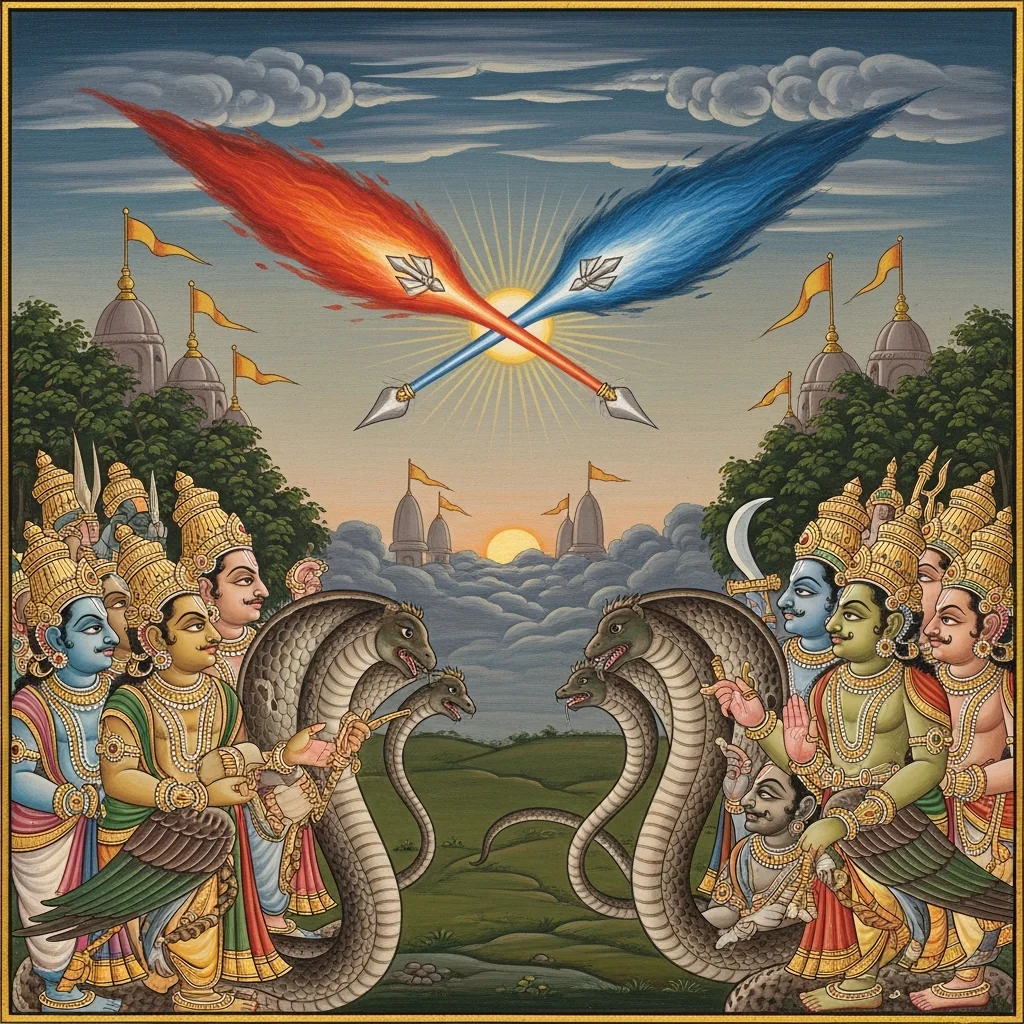
Chapter 30 depicts a deliberate escalation of the war as Tāraka confronts the devas, until Śiva’s martial lineage intervenes decisively. Lomasha recounts Indra striking Tāraka with the vajra and Tāraka’s fierce counterattack, which throws the celestial onlookers into panic. Vīrabhadra then enters, wounds Tāraka with a blazing triśūla, yet is himself felled by Tāraka’s śakti; devas, gandharvas, nāgas, and other beings cry out repeatedly, marking the battle’s cosmic scope. The focus shifts as Kārttikeya (Kumāra) restrains Vīrabhadra from a final blow and engages Tāraka in an intense śakti-duel of feints, aerial maneuvers, and mutual wounding. Mountains and ranges, named as fearful witnesses, converge, and Kumāra reassures them that the end is near. The climax comes when Kumāra severs Tāraka’s head, followed by universal celebration—praise, music, dance, flower-rain, and Pārvatī’s embrace of her son—while Śiva is honored among the sages. The chapter closes with a clear phalāśruti: reciting or hearing this “Kumāra-vijaya” and the Tāraka narrative is said to remove sins and fulfill desires.
Shlokas
Verse 1
लोमश उवाच । वल्गमानं तमायांतं तारका सुरमोजसा । आजघान च वज्रेण इंद्रो मतिमतां वरः
Lomaśa said: “As Tāraka came leaping forward with the might of a god, Indra—best among the discerning—struck him with the thunderbolt (vajra).”
Verse 2
तेन वज्रप्रहारेण तारको विह्वलीकृतः । पतितोऽपि समुत्थाय शक्त्या तं प्राहरद्द्विपम्
By that blow of the thunderbolt, Tāraka was stunned. Yet, though fallen, he rose again and struck that elephant with his spear (śakti).
Verse 3
पुरंदरं गजस्थं हि अपातया भूतले । हाहाकारो महानासीत्पतिते च पुरंदरे
Indeed, he cast down Purandara (Indra), seated upon his elephant, onto the earth; and when Purandara fell, a great cry of alarm arose.
Verse 4
तारकेणापि तत्रैव यत्कृतं तच्छृणु प्रभो । पतितं च पदाक्रम्य हस्ताद्वज्रं प्रगृह्य च
“Hear, O lord, what Tāraka did right there: stepping upon the fallen one, he seized the thunderbolt (vajra) from his hand.”},{
Verse 5
हतं देवेंद्रमालोक्य तारको रिपुसूदनः । वज्रघातेन महताऽताडयत्तु पुरंदरम्
Seeing Devendra (Indra) struck down, Tāraka—slayer of enemies—then beat Purandara with a mighty blow of the thunderbolt (vajra).
Verse 6
त्रिशूलमुद्यम्य महाबलस्तदा स वीरभद्रो रुषितः पुरंदरम् । संरक्षमाणो हि जघान तारकं शूलेन दैत्यं च महाप्रभेण
Then mighty Vīrabhadra, enraged, raised his trident; protecting Purandara, he struck down Tāraka—the daitya—with that trident of great splendor.
Verse 7
शूलप्रहाराभिहतो निपपात महीतले । पतितोऽपि महातेजास्तारकः पुनरुत्थितः
Struck by the blow of the trident, Tāraka fell upon the surface of the earth; yet, though fallen, that mighty, radiant one rose up again.
Verse 8
जघान परया शक्त्या वीरभद्रं तदोरसि । वीरभद्रोपि पतितः शक्तिघातेन तस्य वै
With his supreme spear he struck Vīrabhadra upon the chest; and Vīrabhadra too fell, truly felled by the force of that spear’s blow.
Verse 9
सगणाश्चैव देवाश्च गंधर्वोरगराक्षसाः । हाहाकारेण महता चुक्रुशुश्च पुनःपुनः
The gods with their hosts—together with Gandharvas, Nāgas, and Rākṣasas—cried out again and again with a great wail of “hā hā!”
Verse 10
तदोत्थितः सहसा महाबलः स वीरभद्रो द्विषतां निहंता । त्रिशूलमुद्यम्य तडित्प्रकाशं जाज्वल्यमानं प्रभया निरंतरम् । स्वरोचिषा भासितदिग्वितानं सूयदुबिंबाग्न्युडुमण्डलाभम्
Then Vīrabhadra—the mighty slayer of foes—rose up at once. Lifting his trident, lightning-bright and blazing with unbroken radiance, he illumined the vault of the directions with his own splendor—like the orb of the sun, like fire, like a circle of stars.
Verse 11
त्रिशूलेन तदा यावद्धंतुकामो महाबलः । निवारितः कुमारेण मावधीस्त्वं महामते
Just as that mighty one, intent on slaying with the trident, was about to strike, he was restrained by the Kumāra: “Do not kill him, O great-minded one.”
Verse 12
जगर्ज च महातेजाः कार्त्तिकेयो महाबलः
And Kārttikeya—mighty and radiant—roared aloud.
Verse 13
तदा जयेत्यभिहितो भूतैराकाशसंस्थितैः । शक्त्या परमया वीरस्तारकं हंतुमुद्यतः
Then, hailed with cries of “Victory!” by the beings stationed in the sky, the hero readied his supreme spear to slay Tāraka.
Verse 14
तारकस्य कुमारस्य संग्रामस्तत्र दुःसहः । जातस्ततो महाघोरः सर्वभूतभयंकरः
There the battle between Tāraka and the Kumāra became unbearable; from it arose a most dreadful conflict, terrifying to all beings.
Verse 15
शक्तिहस्तौ च तौ वीरौ युयुधाते परस्परम् । शक्तिभ्यां भिन्नहस्तौ तौ महासाहससंयुतौ
Those two heroes, each holding a spear, fought one another; and with their spears they shattered each other’s hands—both possessed of tremendous daring.
Verse 16
परस्परं वंचयंतौ सिंहाविव महाबलौ । वैतालिकीं समाश्रित्य तथा वै खेचरीं गतिम्
Deceiving and outmaneuvering one another like two powerful lions, they adopted the vaitālikī mode of movement, and also the khecarī—ranging through the sky.
Verse 17
पार्वतं मतमाश्रित्य शक्त्या शक्तिं निजघ्नतुः । एभिर्मतैर्महावीरौ चक्रतुर्युद्धमुत्तमम्
Relying on the mountain-born strategy, the two great heroes struck spear against spear. Thus, with these battle-manoeuvres, they waged an excellent and mighty combat.
Verse 18
अन्योन्यसाधकौ भूत्वा महाबलपराक्रमौ । जघ्नतुः शक्तिधाराभी रणे रणविशारदौ
Becoming matched opponents, mighty in strength and prowess, those two—skilled in war—struck one another in battle with showers of spears.
Verse 19
मूर्ध्नि कण्ठे तथा बाह्वोर्जान्वोश्चैव कटीतटे । वक्षस्युरसि पृष्ठे च चिच्छिदतुः परस्परम्
On the head, the throat, the arms, the knees, the waist, the chest, and the back—thus they struck and wounded each other again and again.
Verse 20
तदा तौ युध्यमानौ च हन्तुकामौ महाबलौ । प्रेक्षका ह्यभवन्सर्वे देवगन्धर्वगुह्यकाः
As those two mighty ones fought, intent on slaying, all the Devas, Gandharvas, and Guhyakas became spectators of the battle.
Verse 21
ऊचुः परस्परं सर्वे कोऽस्मिन्युद्धे विजेष्यते । तदा नभोगता वाणी उवाच परिसांत्व्य वै
All of them said to one another, “Who will be victorious in this battle?” Then a voice from the sky spoke, truly, to reassure them.
Verse 22
तारकं हि सुराश्चाद्य कुमारोऽयं हनिष्यति । मा शोच्यतां सुराः सर्वैः सुखेन स्थीयतां दिवि
“This Kumāra will indeed slay Tāraka today. Do not grieve, O Devas; remain at ease, all of you, in heaven.”
Verse 23
श्रुत्वा तदा तां गगने समीरितां तदैव वाचं प्रमथैः परीतः । कुमारकस्तं प्रति हंतुकामो दैत्याधिपं तारकमुग्ररूपम्
Then, hearing that very voice proclaimed in the sky, and surrounded by the Pramathas, the youthful Kumāra—intent on slaying—advanced against Tāraka, the fierce lord of the Daityas.
Verse 24
शक्त्या तया महाबाहुराजघान स्तनांतरे । तारकं ह्यसुरश्रेष्ठं कुमारो बलवत्तरः
With that spear, mighty-armed Kumāra struck Tāraka—the foremost of the Asuras—between the breasts. For Kumāra, stronger still, smote down the chief of the Asuras.
Verse 25
तं प्रहारमना दृत्य तारको दैत्यपुंगवः । कुमारं चाऽपि संक्रुद्धः स्वशक्त्या चाजघान वै
Disregarding that blow, Tāraka—the bull among the Daityas—grew enraged and struck Kumāra in return with his own spear.
Verse 26
तेन शक्तिप्रहारेण शांकरिर्मूर्च्छितोऽभवत् । मुहूर्ताच्चेतनां प्राप्तः स्तूयमानो महर्षिभिः
By that spear-strike, Śāṃkari (Kumāra, the son of Śaṅkara) fell unconscious. After a moment he regained awareness, while the great sages praised him.
Verse 27
यथा सिंहो मदोन्मत्तो हंतुकामस्तथैव च । कुमारस्तारकं दैत्यमाजघान प्रतापवान्
Just as an intoxicated lion, intent on killing, so the mighty and valorous Kumāra struck the Daitya-demon Tāraka with overpowering force.
Verse 28
एवं परस्परेणैव कुमारश्चैव तारकः । युयुधातेऽतिसंरब्धौ शक्तियुद्धपरायणौ
Thus, facing one another, Kumāra and Tāraka fought—both fiercely enraged, wholly intent on combat with their spears.
Verse 29
अभ्यासपरमावास्तामन्योन्यविजिगीषया । तथा तौ युध्यमानौ च चित्ररूपौ तपस्विनौ
Driven by practiced mastery of arms and by the desire to conquer one another, those two—still fighting—appeared wondrous in form, like mighty ascetics in their fierce discipline.
Verse 30
धाराभिश्च अणीभीश्च सुप्रयुक्तौ च जघ्नतुः । अवलोकपराः सर्वे देवगन्धर्वकिन्नराः
With showers of weapons and sharp missiles, expertly hurled, the two struck at each other; and all the devas, gandharvas, and kinnaras stood intent only on watching.
Verse 31
विस्मयं परमं प्राप्ता नोचुः किंचन तस्य वै । न ववौ च तदावायुर्निष्प्रभोऽभूद्दिवाकरः
Seized by the utmost amazement, they spoke nothing at all. Then the wind did not blow, and the sun became dim—its splendor eclipsed.
Verse 32
हिमालयोऽथ मेरुश्च श्वेतकूटश्च दर्दुरः । मलयोऽथ महाशैलो मैनाको विंध्यपर्वतः
Himālaya and Meru, Śvetakūṭa and Dardura; Malaya, the great mountain, Maināka, and Vindhya—
Verse 33
लोकालोकौ महाशैलौ मानसोत्तरपर्वतः । कैलासो मन्दरो माल्यो गन्धमादन एव च
Lokāloka, the great mountain, and Mānasottara; Kailāsa, Mandara, Mālya, and also Gandhamādana—
Verse 34
उदयाद्रिर्महेंद्रश्च तथैवास्तगिरिर्महान्
Udayādri and Mahendra, and likewise the great Astagiri—
Verse 35
एते चान्ये च बहवः पर्वताश्च महाप्रभाः । स्नेहार्द्दितास्तदाजग्मुः कुमारं च परीप्सवः
These and many other mountains of great splendor, stirred by affection, came there—seeking to protect and stand by Kumāra.
Verse 36
ततः स दृष्ट्वा तान्सर्वान्भयभीतांश्च शांकरिः । पर्वतान्गिरिजापुत्रो बभाषे प्रतिबोधयन्
Then Śaṅkara’s son—Girijā’s child—seeing all those mountains fearful and alarmed, spoke to them, instructing and reassuring them.
Verse 37
कुमार उवाच । मा खिद्यत महाभागा मा चिंता क्रियतां नगाः । घातयाम्यद्य पापिष्ठं सर्वेषामिह पश्यताम्
Kumāra said: “Do not grieve, O fortunate ones; do not be anxious, O mountains. Today, before the eyes of everyone gathered here, I shall slay that most sinful one.”
Verse 38
एवं समाश्वास्य तदा मनस्वी तान्पर्वतान्देवगणैः समेतान् । प्रणम्य शंभुं मनसा हरिप्रियः स्वां मातरं चैव नतः कुमारः
Thus, having reassured those mountains gathered with the hosts of gods, the steadfast Kumāra—beloved of Hari—bowed within his heart to Śambhu (Śiva) and also bowed down to his own mother.
Verse 39
कार्त्तिकेयस्ततः शक्त्या निचकर्त रिपोः शिरः । तच्छिरो निपपातोर्व्यां तारकस्य च तत्क्षणात् । एवं स जयमापेदे कार्त्तिकेयो महाप्रभुः
Then Kārttikeya, with his śakti—his divine spear—severed the enemy’s head; in that very instant Tāraka’s head fell upon the earth. Thus the mighty Lord Kārttikeya attained victory.
Verse 40
ददृशुस्तं सुरगणा ऋषयो गुह्यकाः खगाः । किंनराश्चारणाः सर्पास्तथा चैवाप्सरो गणाः
The hosts of gods beheld him, as did the seers, the Guhyakas, the birds, the Kiṃnaras, the Cāraṇas, the serpents, and the companies of Apsarases.
Verse 41
हर्षेण महताविष्टास्तुष्टुवुस्तं कुमारकम् । विद्याधर्यश्च ननृतुर्गायकाश्च जगुस्तदा
Filled with great joy, they praised that youthful Kumāra. The Vidyādharī maidens danced, and the singers sang at that time.
Verse 42
एवं विजयमापन्नं दृष्ट्वा सर्वे मुदा युताः । ततो हर्षात्समागम्य स्वांकमारोप्य चात्मजम्
Seeing him thus victorious, all were filled with delight. Then, in joy, the Mother came forward, lifted her son onto her lap, and held him close in an embrace.
Verse 43
परिष्वज्य तु गाढेन गिरिजापि तुतोष वै । स्वोत्संगे च समारोप्य कुमारं सूर्यवर्चसम्
Embracing him tightly, Girijā (Pārvatī) was indeed content. Lifting Kumāra—radiant like the sun—onto her own lap, she rejoiced.
Verse 44
लालयामास तन्वंगी पार्वती रुचिरेक्षणा । ऋषीभिः सत्कृतः शंभुः पार्वत्या सहितस्तदा
The slender-limbed Pārvatī, with charming eyes, fondly caressed her son. Then Śambhu (Śiva) too was honored by the sages, together with Pārvatī.
Verse 45
आर्यासनगता साध्वी शुशुभे मितभाषिणी । संस्तूयमाना मुनिभिः सिद्धचारणपन्नगैः
Seated upon a noble seat, the virtuous lady—measured in speech—shone forth, praised by sages, Siddhas, Cāraṇas, and Nāgas.
Verse 46
नीराजिता तदा देवैः पार्वती शंभुना सह । कुमारेण सहैवाथ शोममाना तदा सती
Then Pārvatī—together with Śambhu, and with Kumāra as well—was honored by the gods with nīrājana, the auspicious waving of lights; and the noble Satī shone resplendent.
Verse 47
हिमालयस्तदागत्य पुत्रैश्च परिवारितः । मेर्वाद्यैः पर्वतैश्चैव स्तूयमानः परोऽभवत्
Then Himālaya arrived, surrounded by his sons. Praised by Meru and the other mountains, he became supremely radiant and exalted.
Verse 48
तदा देवगणाः सर्व इन्द्राद्य ऋषिभिः सह । पुष्पवर्षेण महात ववर्षुरमितद्युतिम् । कुमारमग्रतः कृत्वा नीराजनपरा बभुः
Then all the hosts of gods—led by Indra—together with the sages, poured down a mighty shower of flowers upon the One of immeasurable splendour. Placing Kumāra before them, they became intent on offering ārati (ceremonial honour).
Verse 49
गीतवादित्रघोषेण ब्रह्मघोषेण भूयसा । संस्तूयमानो विविधैः सूक्तैर्वेदविदां वरैः
Amid the loud resonance of songs and instruments—and even more with the mighty recitation of sacred formulas—he was praised with many kinds of hymns by the foremost knowers of the Vedas.
Verse 50
कुमारविजयंनाम चरित्रं परमाद्भुतम् । सर्वपापहरं दिव्यं सर्वकामप्रदं नृणाम्
This wondrous sacred narrative, called “Kumāra’s Victory”, is divine: it removes all sins and grants all worthy desires to human beings.
Verse 51
ये कीर्त्तयंति शुचयोऽमितभाग्ययुक्ताश्चानंत्यरूपमजरामरमादधानाः । कौमारविक्रममहात्म्यमुदारमेतदानंददायकमनोर्थकरं नृणां हि
Those who are pure and endowed with immeasurable good fortune, and who take up contemplation of the endless-form—deathless and undecaying—when they proclaim this noble greatness of Kumāra’s valour, it grants joy and fulfils the desired aims of human beings.
Verse 52
यः पठेच्छृणुयाद्वापि कुमारस्य महात्मनः । चरितं तारकाख्यं च सर्वपापैः समुच्यते
Whoever recites—or even hears—the sacred deeds of the great-souled Kumāra, especially the account called “Tāraka”, is completely released from all sins.