Adhyaya 26
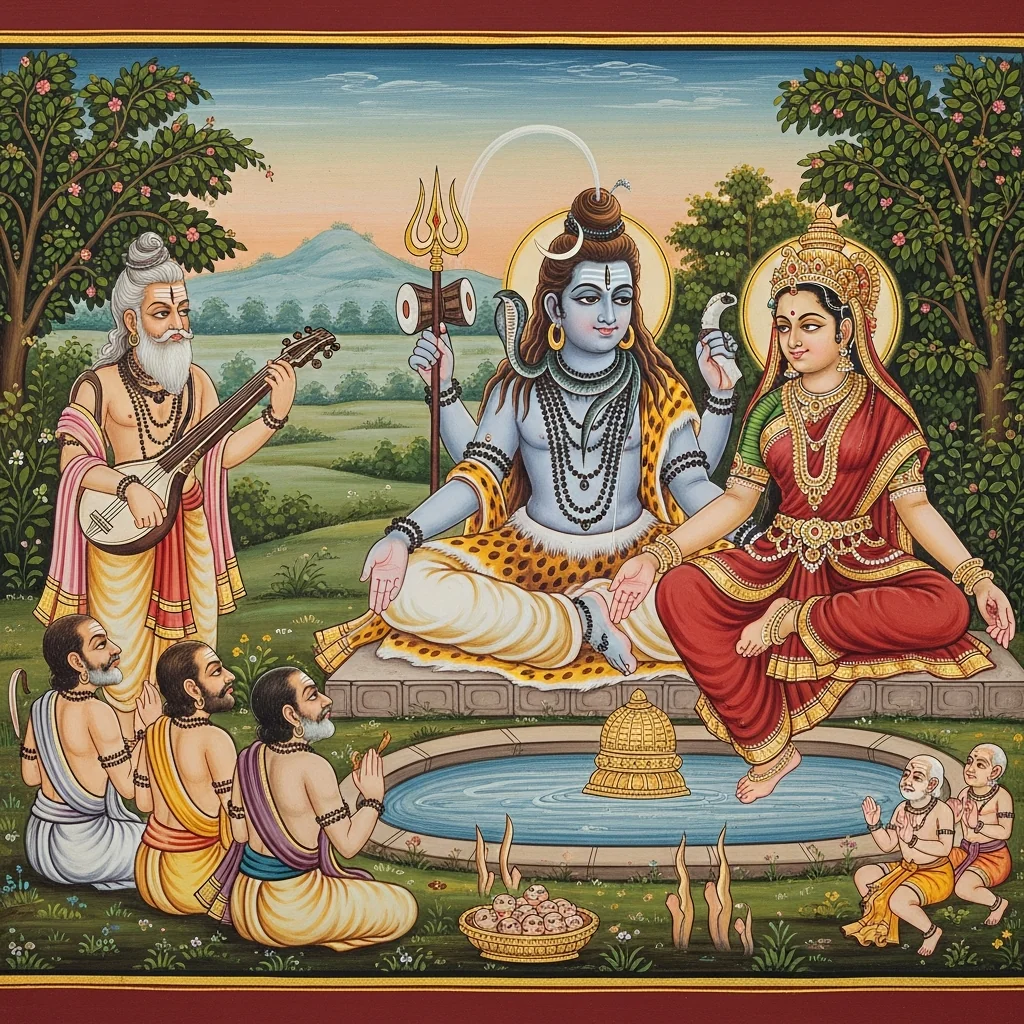
Chapter 26, as reported by Lomasha, recounts the ceremonial sequence that culminates in Himālaya’s formal kanyādāna—giving Pārvatī in marriage to Maheśvara (Śiva). Urged by the lords of the mountains to hesitate no longer, Himālaya resolves to offer his daughter to Śiva with a dedicatory mantra. The divine couple is led into the ritual arena and seated; Kaśyapa serves as officiant, invoking Agni and conducting the havan. Brahmā arrives, and the yajña proceeds amid a learned assembly of ṛṣis who dispute with opposing Vedic interpretations. Nārada counsels silence, inward recollection, and recognition of Sadāśiva as the inner ground of all. Another episode tells of Brahmā’s momentary disturbance on seeing the Devī’s feet, from which the Vālakhilya sages emerge; at Nārada’s direction they depart for Gandhamādana. The rite concludes with extensive śānti recitations, nīrājana, and shared honoring: devas, ṛṣis, and their consorts worship Śiva; Himālaya distributes gifts; and gaṇas, yoginīs, bhūtas, vetālas, and protective beings join the festivities. Viṣṇu asks that the intoxicated gaṇas be restrained; Śiva commands Vīrabhadra, who restores order. The chapter closes by stressing the auspicious grandeur of the udvāha and the four-day cycle of worship in which Himālaya honors Śiva, Viṣṇu with Lakṣmī, Brahmā, Indra, the lokapālas, Caṇḍī, and all assembled beings.
Shlokas
Verse 1
लोमश उवाच । अथ ते पर्वतश्रेष्ठा मेर्वाद्या जातसंभ्रमाः । ऊचुस्ते चैकपद्येन हिमवंतं महागिरिम्
Lomaśa said: Then those foremost of mountains—beginning with Meru—stirred with excitement, addressed in brief the great mountain Himavat.
Verse 2
पर्वता ऊचुः । कन्यादानं क्रियतां चाद्य शैल श्रीमाञ्छम्भुर्भाग्यतस्तेऽद्य लब्धः । हृन्मध्ये वै नात्र कार्यो विमर्शस्तस्मादेषा दीयतामीश्वराय
The Mountains said: “O Himalaya, perform today the sacred gift of your daughter. By your good fortune, the illustrious Śambhu has been obtained today. Let there be no hesitation in your heart; therefore, give her to the Lord.”
Verse 3
तच्छ्रुत्वा वचनं तेषां सुहृदां वै हिमालयः । सम्यक्संकल्पमकरोद्ब्रह्ममा नोदितस्तदा । इमां कन्यां तुभ्यमहं ददामि परमेश्वर
Hearing the words of those well-wishing friends, Himalaya—prompted by Brahmā—formed a firm resolve and said: “O Parameśvara, this maiden I give to You.”
Verse 4
भार्यार्थं प्रतिगृह्णीष्वमंत्रेणानेन दत्तवान् । अस्मै रुद्राय महते देवदवाय शंभव । कन्या दत्ता महेशाय गिरींद्रेण महात्मना
With this mantra he gave her, saying: “Accept her as your wife—given to the great Rudra, to Śambhu, the God of gods.” Thus the great-souled lord of mountains gave the maiden to Maheśa.
Verse 5
वेद्यां च बहिरानीतौ दंपतीव कमलेक्षणौ । उपवेशितौ बहिर्वेद्यां पार्वतीपरमेश्वरौ
Then Pārvatī and Parameśvara—lotus-eyed like a wedded pair—were brought outside to the altar and seated on the ground beside the sacrificial platform.
Verse 6
आचार्येणाथ तत्रैव कश्यपेन महात्मना । आह्वानं हवनार्थाय कृतमग्नेस्तदा द्विजाः
Then, right there, the great-souled teacher Kaśyapa performed the invocation of Agni for the sake of the havana oblation; and the twice-born were present for the rite.
Verse 7
ब्रह्मा ब्रह्मासनगतो बभूव शिवसन्निधौ । प्रवर्तमाने हवन ऋषयश्च विचक्षणाः
Brahmā, seated upon his Brahmā-seat, was present near Śiva; and as the havana began, the discerning sages too assembled.
Verse 8
ऊचुः परस्परं तत्र नानादर्शनवेदिनः । वेदवादरताः केचिदवदन्संमतेन वै
There, those versed in many viewpoints spoke among themselves; and some, devoted to disputation on the Vedas, argued according to what each held to be “agreed” and authoritative.
Verse 9
एवमेव न चाप्येवमेवमेव न चान्यथा । कार्यमेव न वा कार्यं कार्याकार्यं तथा परे
“Just so!”—“Not so!”—“Only so!”—“Not otherwise!” Thus some debated, “It must be done,” or “It need not be done,” while others disputed what is to be done and what is not to be done.
Verse 10
इत्येवं ब्रुवतां शब्दः श्रूयते शिवसन्निधौ । स्वकीयं मतमास्थाय ह्यब्रुवंस्ते परस्परम् । तत्त्वज्ञानविहीनास्ते केवलं वेदबुद्धयः
As they spoke in this way, their clamor was heard in Śiva’s very presence. Clinging to their own opinions, they argued with one another. They lacked knowledge of Reality (tattva), possessing only a merely Veda-directed intellect.
Verse 11
तेषां तद्वचनं श्रुत्वा परस्परजयैषिणाम् । प्रहस्य नारदो वाक्यमुवाच शिवसन्निधौ
Hearing the words of those eager to defeat one another, Nārada laughed and spoke in Śiva’s presence.
Verse 12
यूयं सर्वे वादिनश्च वेदवादरतास्तथा । मौनमास्थाय भोविप्रा हृदि कृत्य सदाशिवम्
“You are all disputants, and you are also devoted to Vedic debate. Therefore, O brāhmaṇas, adopt silence; and having established Sadāśiva within your heart as your inner focus, abide thus.”
Verse 13
आत्मानं परमात्मानं पराणां परमं च तत् । येनेदं कारितं विश्वं यतः सर्वं प्रवर्त्तते । यस्मिन्निलीयते विश्वं तस्मै सर्वात्मने नमः
Salutations to that All-Self—who is the Self and the Supreme Self, the highest of the high; by whom this universe is fashioned, from whom all proceeds, and into whom the universe finally dissolves.
Verse 14
सोऽयमास्तेऽधुना गेहे पर्वतेंद्रस्य भो द्विजाः । मुखादस्यैव संजाताः सर्वे यूयं विचक्षणाः
That very one now dwells in the house of the Lord of Mountains. O twice-born ones, all of you—wise as you are—have indeed arisen from his very mouth.
Verse 15
एवमुक्तास्तदा तेन नारदेन द्विजोत्तमाः । उपदेशकरैर्वाक्यैर्बोधितास्ते द्विजोत्तमाः
Thus addressed at that time by Nārada, those foremost brāhmaṇas were instructed—awakened by his words that served as spiritual counsel.
Verse 16
वर्त्तमाने च यज्ञे च ब्रह्मा लोकपितामहः । ददर्श चरणौ देव्या नखेंदुं च मनोहरम्
While the sacrifice was in progress, Brahmā, the grandsire of the worlds, beheld the Goddess’s feet—and the lovely moon-like sheen of her nails.
Verse 17
दर्शनात्स्खलितः सद्यो बभूवांबुजसंभवः । मदनेन समाविष्टो वीर्यं च प्राच्यवद्भुवि
At that sight, the Lotus-born (Brahmā) at once faltered; overtaken by desire, he spilled his vital seed upon the earth.
Verse 18
रेतसा क्षरमाणेन लज्जितोऽभूत्पितामहः । चरणाभ्यां ममर्द्दाथ महद्गोप्यं दुरत्ययम्
As his semen flowed, the Grandsire (Brahmā) was overcome with shame; then he pressed it down with his feet, guarding a great secret, hard to conceal.
Verse 19
बहवश्चर्षयो जाता वालखिल्याः सहस्रशः । उपतस्थुस्तदा सर्वेताततातेति चाब्रुवन्
Then many seers were born—Vālakhilyas by the thousand. All of them approached and cried out, “Father! Father!”
Verse 20
नारदेन तदोक्तास्ते वालखिल्याः प्रकोपिना । गच्छंतु बटवो यूयं पर्वतं गंधमादनम्
Then Nārada, in anger, spoke to those Vālakhilyas: “Go forth, you mere boys—depart to Mount Gandhamādana!”
Verse 21
न स्थातव्यं भवद्भिश्च भवतां न प्रयोजनम् । इत्येवमुक्तास्ते सर्वे वालखिल्याश्च पर्वतम् । नारदेन समादिष्टा ययुः सर्वे त्वरान्विताः
“You should not remain here; there is no purpose for you in this place.” Thus addressed, all those Vālakhilyas, commanded by Nārada, went swiftly to the mountain.
Verse 22
नारदेन ततो ब्रह्माऽश्वासितो वचनैः शुभैः । तावच्च हवनं पूर्णं जातं तस्य महात्मनः
Then Nārada consoled Brahmā with auspicious words; and by that time the havana, the sacred fire-offering of that great-souled one, had been completed.
Verse 23
महेशस्य तथा विप्राः शांतिपाठपरा बभुः । ब्रह्मघोषेण महता व्याप्त मासीद्दिगंतरम्
Likewise, the brāhmaṇas became intent on reciting the peace-invocations (śānti-pāṭha) for Maheśa; and with the mighty Vedic chant (brahma-ghoṣa), the whole expanse of the directions was filled.
Verse 24
ततो नीराजितो देवो देवपत्नीभिरुत्तमः । तथैव ऋषिपत्नीभिरर्चितः पूजितस्तथा
Then that supreme Deity was honored with nīrājana by the wives of the gods; likewise, he was worshipped and reverently adored by the wives of the sages as well.
Verse 25
तथा गिरीन्द्रस्य मनोरमाः शुभा नीराजयामासुरथैव योषितः । गीतैः सुगीतज्ञविशारदाश्च तथैव चान्ये स्तुतिभिर्महर्षयः
So too, auspicious and charming women performed nīrājana for the Lord of Mountains; and those skilled in the art of sweet song praised him with hymns, while other great sages likewise extolled the Lord with eulogies.
Verse 26
रत्नानि च महार्हाणि ददौ तेभ्यो महामनाः । हिमालयो महाशैलः संहृष्टः परितोषयन्
And the great-minded Himālaya, the mighty mountain, delightedly bestowed upon them precious and most valuable gems, seeking to honor and satisfy them.
Verse 27
बभौ तदानीं सुरसिद्धसंघैर्वेद्यां स्थितोऽसौ सकलत्रको विभुः । सर्वैरुपेती निजपार्षदैर्गणैः प्रहृष्टचेता जगदेकसुन्दराः
At that time the all-powerful Lord shone forth, standing upon the altar, accompanied by hosts of gods and siddhas; attended on all sides by his own attendant-gaṇas, joyful at heart—he appeared as the unique beauty of the universe.
Verse 28
एतस्मिन्नंतरे तत्र ब्रह्मविष्णुपुरोगमाः । ऋषिगंधर्वयक्षाश्च येन्ये तत्र समागताः
Meanwhile, there arrived there those led by Brahmā and Viṣṇu, along with sages, gandharvas, yakṣas, and others who had assembled at that place.
Verse 29
सर्वान्समभ्यर्च्य तदा महात्मा महान्गिरीशः परमेण वर्चसा । सद्रत्नवस्त्राभरणानि सम्यग्ददौ च ताम्बूलसुगन्धवार्यपि
Then the great-souled, radiant Girīśa duly honored them all, and properly bestowed fine gems, garments, and ornaments—along with betel and fragrant, perfumed water as well.
Verse 30
तदा शिवं पुरस्कृत्याभ्यव जह्रुः सुरेश्वराः । तथा सर्वे मिलित्वा तु ऐकपद्येन मोदिताः
Then the lords of the gods, placing Śiva at the forefront, offered reverent salutations; and all of them, gathering together, rejoiced with one accord in unified praise.
Verse 31
पंक्तीभूताश्च बुभुर्लिंगिना श्रृंगिणा सह । केचिद्गणाः पृथग्भूता नानाहास्यरसैर्विभुम्
And forming themselves into rows, they feasted together with the ascetic bearing the liṅga (liṅgin) and the horned one (śṛṅgin); while some gaṇas, separating into groups, delighted the Lord with many kinds of humorous amusements.
Verse 32
अतोषयन्नारदाद्या अनेकालीकसंयुताः । तथा चण्डीगणाः सर्वे बभुजुः कृतभाजनाः
Nārada and the others were delighted, along with the many groups of Kālīkā. Likewise, all the hosts of Caṇḍī, having their portions duly served, partook of the offering.
Verse 33
वैतालाः क्षेत्रपालाश्च बुभुजुः कृतभाजनाः । शाकिनी डाकिनी चैव यक्षिण्यो मातृकादयः
The Vaitālas and the guardians of the sacred precinct (kṣetrapālas) also partook, duly served. So too did the Śākinīs, Ḍākinīs, Yakṣiṇīs, and the Mothers (Mātṛkās) and the rest.
Verse 34
योगिन्योऽथ चतुः षष्टिर्योगिनो हि तथा परे । दश कोट्यो गणानां च कोट्येका च महात्मनाम्
Then there were sixty-four Yoginīs, and likewise other Yogins besides. Of the gaṇas there were ten koṭis, and of the great-souled ones (mahātmās), one koṭi.
Verse 35
एवं तु ऋषयः सर्वे तथानये विबुधादयः । योगिनो हि मया चान्ये कथिताः पूर्वमेव हि
Thus, all the sages, and likewise in this very manner the gods and others (were present/served). As for the other Yogins, they have indeed already been described by me earlier.
Verse 36
योगिन्यश्चैव कथितास्तासां भक्ष्यं वदामि वः । खड्गानां केचिदानीय क्रव्यं पवित्रमेव च
The Yoginīs too have been mentioned; now I shall tell you their food. Some, bringing it with swords, partook of flesh—regarded by them as indeed ‘pure’—as well.
Verse 37
भुंजंति चास्थिसंयुक्तं तथांत्राणि बुभुक्षिताः । आनीय केचिच्छीर्षाणि महिषाणां गुरूणि च
Hungry, they ate meat together with bones, and likewise entrails. Some, bringing them, ate the heavy heads of buffaloes as well.
Verse 38
तथा केचिन्नृत्यमानास्तदानीं रोरूय्यमाणाः प्रमथाश्चैव चान्ये । केचित्तूष्णीमास्थिता रुद्ररूपाः परेचान्यांल्लोकमानास्तथैव
Some were dancing then, while others—Pramathas and more—were howling aloud. Some stood in silence, bearing Rudra-like forms; others likewise kept gazing toward another world.
Verse 39
योगिनीचक्रमध्यस्थो भैरवो हि ननर्त च । तथान्ये भूतवेताला मामेत्येवं प्रलापिनः
Bhairava, stationed in the midst of the Yoginī-circle, indeed danced. And other Bhūtas and Vetālas, coming up to me, babbled on in this manner.
Verse 40
एवं तेषामुद्धवं हि निरिक्ष्य मधुसूदनः । उवाच प्रहसन्वाक्यं शंकरं लोकशंकरम्
Seeing their tumult in this way, Madhusūdana spoke with a smile to Śaṅkara, the benefactor of the worlds.
Verse 41
एतान्गणान्वारय भो अत्र मत्तांश्च संप्रति । अस्मिन्काले च यत्कार्यं सर्वैस्तत्कार्यमे व च
“Restrain these gaṇas, O Lord, for they are intoxicated here at present. And whatever must be done at this time—let that very task be carried out by all.”
Verse 42
पांडित्येन महादेव तस्मादेतान्निवारय । तच्छ्रुत्वा भगवान्रुद्रो वीरभद्रमुवाच ह
“O Mahādeva, therefore restrain them with wise counsel.” Hearing these words, the blessed Rudra spoke to Vīrabhadra.
Verse 43
रुद्र उवाच । वारयस्व प्रमत्तांश्च क्षीबांश्चैव विशेषतः । तेनोक्तो वीरभद्रश्च शंभुना परमेष्ठिना
Rudra said: “Restrain the reckless—and especially the intoxicated.” Thus instructed by Śambhu, the Supreme Lord, Vīrabhadra complied.
Verse 44
आज्ञापिताः प्रमत्ताश्च वीरभद्रेण धीमता । प्रमथा वारितास्तेन तूष्णीमाश्रित्य ते स्थिताः
The reckless ones were commanded by the wise Vīrabhadra; and the Pramathas, restrained by him, stood still in silence.
Verse 45
निश्चला योगिनीमध्ये भूतप्रमथगुह्यकाः । शाकिन्यो यातुधानाश्च कूष्मांडाः कोपिकर्पटाः
Motionless amid the Yoginīs stood the Bhūtas, Pramathas, and Guhyakas—also the Śākinīs, Yātudhānas, Kūṣmāṇḍas, and other fierce bands.
Verse 46
तथान्ये भूतवेतालाः क्षेत्रपालाश्च भैरवाः । सर्वे शांताः प्रमत्ताश्च बभूवुः प्रमथादयः
So too the other Bhūtas and Vetālas, the Kṣetrapālas and Bhairavas—indeed all the Pramathas and the rest became calm, their frenzy quelled.
Verse 47
एवं विस्तारसंयुक्तं कृतमुद्वहनं तदा । हिमाद्रिणा परं विप्राः सुमंगल्यं सुशोभनम्
Thus, O brāhmaṇas, that ceremonial ‘udvahana’ was then performed by Himādri with full grandeur—supremely auspicious and splendid to behold.
Verse 48
चत्वारो दिवसा जाताः परिपूर्णेन चेतसा । हिमाद्रिणा कृता पूजा देवदेवस्य शूलिनः
Four days passed, his heart wholly intent; and Himādri performed worship of the God of gods, the trident-bearing Lord Śūlin.
Verse 49
वस्त्रालंकाराभरणै रत्नैरुच्चावचैस्ततः । पूजयित्वा महादेवं विष्णोर्वचनपरोऽभवत्
Then, having worshiped Mahādeva with garments, ornaments, adornments, and precious jewels of many kinds, Himādri became attentive to Viṣṇu’s words.
Verse 50
लक्ष्मीसमेतं विष्णुं च वस्त्रालंकरणैः शुभैः । पूजयामास हिमवांस्तथा ब्रह्माणमेव च
Himavān also worshiped Viṣṇu together with Lakṣmī, with auspicious garments and adornments; and likewise he worshiped Brahmā as well.
Verse 51
इंद्रं पुरोधसा सार्द्धमिंद्राण्या सहितं विभुम् । तथैव लोकपालांश्च पूजयित्वा पृथक्पृथक्
He worshiped mighty Indra together with his priest and in the company of Indrāṇī; and likewise he worshiped the Lokapālas, each separately.
Verse 52
तथैव पूजिता चंडी भूतप्रमथगुह्यकैः । वस्त्रालंकरणैश्चैव रत्नैर्नानाविधैरपि । ये चान्य आगतास्तत्र ते च सर्वे प्रपूजिताः
In the same manner, Caṇḍī too was worshiped by the Bhūtas, the Pramathas, and the Guhyakas—offered garments, ornaments, and jewels of many kinds. And all others who arrived there were likewise duly honored and worshiped.
Verse 53
एवं तदानीं प्रतिपूजिताश्च देवाश्च सर्वे ऋषयश्च यक्षाः । गंधर्वविद्याधरसिद्धचारणास्तथैव मर्त्त्याप्सरसां गणाश्च
Thus, at that time, all the Devas were honoured in return; so too the Ṛṣis and the Yakṣas—likewise the Gandharvas, Vidyādharas, Siddhas, and Cāraṇas, and the companies of mortals and Apsarases as well.