Adhyaya 24
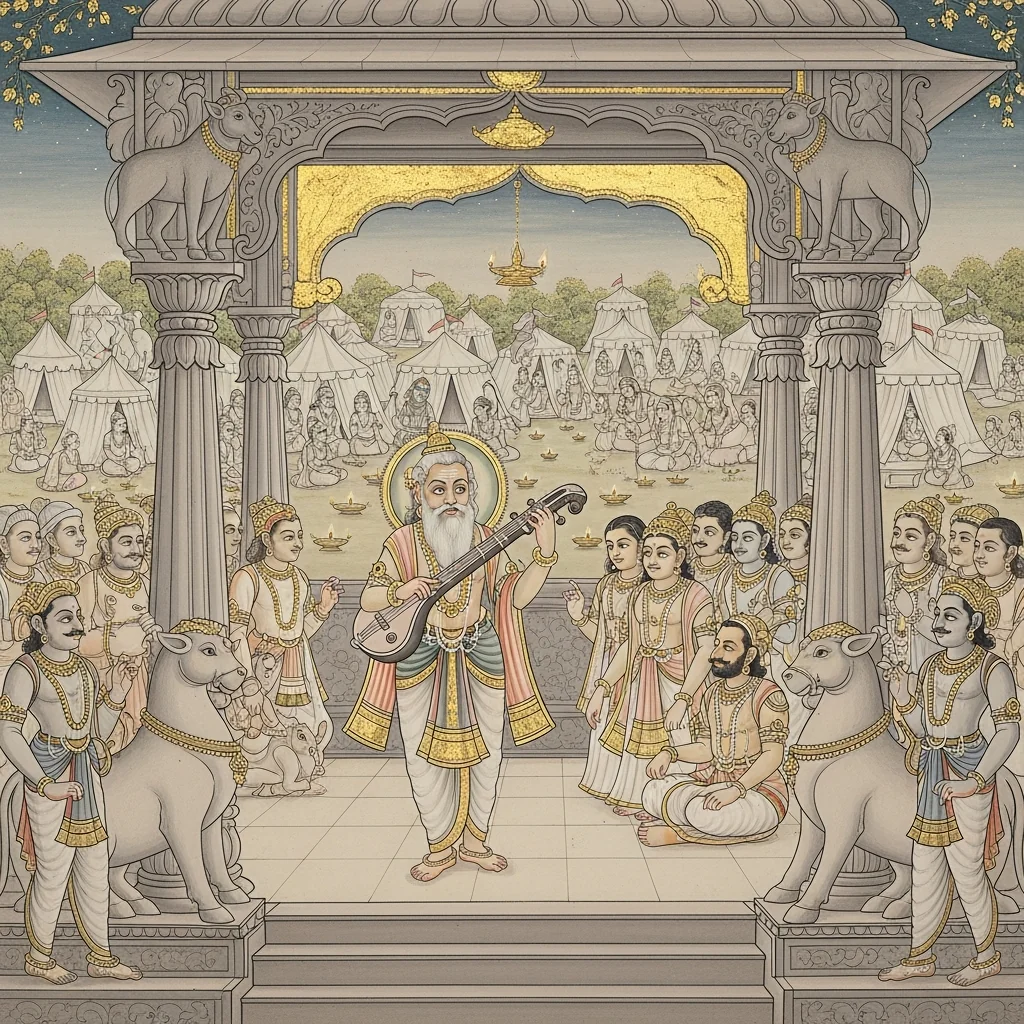
Lomāśa recounts that Himavān, seeking an auspicious place for his daughter’s marriage, summons Viśvakarmā to raise a vast, richly adorned maṇḍapa and a yajña precinct. The pavilion becomes a wonder of lifelike craft, māyā-like in its power: fashioned beings and creatures—lions, swans, sārasas, peacocks—along with nāgas, horses, elephants, chariots, banners, doorkeepers, and courtly assemblies appear so real that onlookers cannot tell water from land, or the moving from the still. Iconic figures are set in place—Nandī at the great gate and Lakṣmī at the doorway—while jeweled canopies heighten the splendor. Prompted by Brahmā, Nārada arrives, is briefly bewildered by the illusion-like workmanship, and reports to the gathered devas and ṛṣis that a grand structure has been made that can delude perception. Indra, Viṣṇu, and Śiva then speak of the situation and the wedding’s purpose, and the devas, led by Nārada, proceed toward Himavān’s extraordinary residence and the prepared yajña-vāṭa. The chapter ends with diverse beings—devas, siddhas, gandharvas, yakṣas, and others—being accommodated in specially built dwellings across the land.
Shlokas
Verse 1
लोमश उवाच । तथैव सर्वं परया मुदान्वितश्चक्रे गिरींद्रः स्वसुतार्थमेव । गर्गं पुरस्कृत्य महानुभावो मंगल्यभूमिं परया विभूत्या
Lomaśa said: Even so, Himālaya, lord of mountains, filled with supreme joy, arranged everything for the sake of his daughter. With Garga placed at the fore, that great one prepared the auspicious marriage-ground in splendid magnificence.
Verse 2
आहूय विश्वकर्माणं कारयामास सादरम् । मंडपं च सुविस्तीर्णं वेदिकाभिर्मनोरमम्
Summoning Viśvakarmā, he reverently had a spacious pavilion built, delightful with its many vedikās—ritual altars.
Verse 3
अयुतेनैव विस्तारं योजनानां द्विजोत्तमाः । मंडपं च गुणोपेतं नानाश्चर्यसमन्विततम्
O best of the twice-born, the pavilion extended for a full ten thousand yojanas, endowed with every excellence and filled with many astonishing marvels.
Verse 4
स्थावरं जंगमं चैव सदृशं च मनोहरम् । जंगमं च जितं तत्र स्थावरेण तथैव च
There were forms both stationary and moving, alike in appearance and utterly enchanting. There, the moving seemed surpassed by the stationary—and likewise the stationary by the moving.
Verse 5
जंगमेन च तत्रैव जितं स्थावरमेव च । पयसा च जिता तत्र स्थलभूमिरभूत्तदा
There indeed the stationary was outdone by the moving, and the moving by the stationary. Even dry land was overcome by water—so that place became as though transformed.
Verse 6
जलं किं नु स्थलं तत्र न विदुस्तत्त्वतो जनाः । क्वचित्सिंहाः क्वचिद्धंसाः सारसाश्च महाप्रभाः
People there could not truly discern whether it was water or land. In some places were lions; in others, swans; and elsewhere, radiant sārasas (cranes).
Verse 7
क्वचिच्छिखंडिनस्तत्र कृत्रिमाः सुमनोहराः । तथा नागाः कृत्रिमाश्च हयाश्चैव तथा मृगाः
In some places there were artificial peacocks, exquisitely charming; likewise artificial serpents, and also horses—and so too deer.
Verse 8
के सत्याः के असत्याश्च संस्कृता विश्वकर्मणा । तथैव चैवं विधिना द्वारपाः अद्भुताः कृताः
Which were real and which unreal—none could tell, for all had been fashioned by Viśvakarman. And in the same manner, by that very method, wondrous gatekeepers were made.
Verse 9
पुंसो धनूंषि चोत्कृष्य स्थावरा जंगमोपमाः । तथाश्वाः सादिभिश्चैव गजाश्च गजसादिभिः
Men’s bows were lifted aloft, and even the unmoving figures seemed like living, moving beings. Horses appeared with riders, and elephants too with their elephant-riders.
Verse 10
चामरैर्वीज्यमानाश्च केचित्पुष्पांकुरान्विताः । केचिच्च पुरुषास्तत्र विरेजुः स्रग्विणस्तथा
Some were fanned with cāmara-whisks; some were adorned with budding flowers. And some men there shone splendidly, garlanded as well.
Verse 11
कृत्रिमाश्च तथा बह्व्यः पताकाः कल्पितास्तथा । द्वारि स्थिता महालक्ष्मीः क्षीरोदधिसमुद्भवा
Many artificial banners were also arranged there. At the gateway stood Mahālakṣmī, born of the Ocean of Milk.
Verse 12
गजाः स्वलंकृता ह्यासन्कृत्रिमा ह्यकृतोपमाः । तथाश्वाः सादिभिश्चैव गजाश्च गजसादिभिः
The elephants were richly ornamented—artificial, yet resembling the natural ones. Likewise there were horses with riders, and elephants with elephant-riders.
Verse 13
रथा रथियुता ह्यासन्कृत्रिमा ह्यकृतोपमाः । सर्वेषां मोहनार्थाय तथा च संसदः कृताः
There were chariots complete with charioteers—artfully fashioned, yet beyond compare with anything man-made. And for the delight and wonder of all, assemblies like royal courts were also created.
Verse 14
महाद्वारि स्थितो नंदी कृतस्तेन हि मंडपे । शुद्धस्फटिकसंकाशो यथा नंदी तथैव सः
At the great gateway of that pavilion, he fashioned Nandī standing guard—gleaming like flawless crystal, exactly as Nandī truly is.
Verse 15
तस्योपरि महद्दिव्यं पुष्पकं रत्नभूषितम् । राजितं पल्लवाच्छत्रैश्चामरैश्च सुशोभितम्
Above it was a vast, divine Puṣpaka (celestial conveyance), adorned with jewels—resplendent with leaf-formed parasols and beautifully fanned with cāmaras.
Verse 16
वामपार्श्वे गजौ द्वौ च शुद्धकाश्मीरसन्निभौ । चतुर्दतौ षष्टिवर्षौ महात्मानौ महाप्रभौ
On the left side were two elephants, gleaming like pure Kashmir-white; four-tusked, sixty years of age—noble-souled and greatly radiant.
Verse 17
तथैव दक्षिणे पार्श्वे द्वावश्वौ दंशितौ कृतौ । रत्नालंकारसंयुक्तांल्लोकपालांस्तथैव च
Likewise, on the right side he made two bridled horses; and in the same way the Lokapālas too—adorned with jeweled ornaments.
Verse 18
षोडशप्रकृतीस्तेन याथातथ्येन धीमता । सर्वे देवा यथार्थेन कृता वै विश्वकर्मणा
The wise one fashioned the sixteen constituents of creation with perfect accuracy; indeed, all the gods were made by Viśvakarman exactly as they truly are.
Verse 19
तथैव ऋषयः सर्वे भृग्वाद्यश्च तपोधनाः । विश्वे च पार्षदैः साकमिंद्रो हि परमार्थतः
In the same manner, all the sages—Bhṛgu and the rest, rich in austerity—were fashioned; and likewise the Viśvedevas with their attendants, and Indra too, in their true form.
Verse 20
कृताः सर्वे महात्मानो याथातथ्येन धीमता । एवंभूतः कृतस्तेन मंडपो दिव्यरूपवान्
Thus all those great beings were made with perfect fidelity by that wise craftsman; in this way the pavilion was constructed—radiant with a truly divine form.
Verse 21
अनेकाश्चर्यसंभूतो दिव्यो दिव्यविमोहनः । एतस्मिन्नंतरे तत्र आगतो नारदोग्रतः
Born of many wonders, that pavilion was divine—divinely enchanting. Meanwhile, at that very time, Nārada arrived there, coming swiftly to the fore.
Verse 22
ब्रह्मणा नोदितस्तत्र हिमालयगृहं प्रति । नारदोथ ददर्शाग्रे आत्मानं विनयान्वितम्
Urged by Brahmā, Nārada then proceeded there toward the abode of Himālaya; and ahead he beheld—himself, endowed with humility and proper conduct.
Verse 23
भ्रांतो हि नारदस्तेन कृत्रिमेण महायशाः । अवलोकपरस्तत्र चरितं विश्वकर्मणः
Famed Nārada, bewildered by that wondrous artificial creation, stood there absorbed in looking about, contemplating the marvelous workmanship of Viśvakarmā.
Verse 24
प्रविष्टो मंडपं तस्य हिमाद्रे रत्नचित्रितम् । सुवर्णकलशैर्जुष्टं रंभाद्यैरुपशोभितम्
He entered that pavilion upon the Himālaya, inlaid with gemstones, adorned with golden kalaśas, and beautified by Rambhā and other celestial nymphs.
Verse 25
सहस३स्तम्भसंयुक्तं ततोऽद्रिः स्वगणैर्वृतः । तमृषिं पूजयामास किं कार्यमिति पृष्टवान्
Then the Mountain, surrounded by his own attendants, in a hall furnished with a thousand pillars, honored that ṛṣi and asked: “What is your purpose here?”
Verse 26
नारद उवाच । आगतास्ते महात्मानो देवा इन्द्रपुरोगमाः । तथा महर्षयः सर्वे गणैश्च परिवारिताः । महादेवो वृषारूढो ह्यागतोद्वहनं प्रति
Nārada said: “Those great-souled gods, led by Indra, have arrived; and so too all the great ṛṣis, accompanied by their gaṇas. Mahādeva himself, mounted upon the Bull, has come, proceeding toward the marriage.”
Verse 27
ततस्तद्वचनं श्रुत्वा हिमवान्गिरिसत्तमः । उवाच नारदं वाक्यं प्रशस्तमधुरं महत्
Hearing those words, Himavān, best of mountains, addressed Nārada with a lofty speech—praiseworthy and sweet.
Verse 28
पूजयित्वा यथान्यायं गच्छ त्वं शंकरं प्रति
“Having offered worship according to proper rule, go—go to Śaṅkara.”
Verse 29
ततस्तद्वचनं श्रुत्वा मुनिर्हिमवतो गिरेः । तथैव मत्वा वचनं शैलराजानब्रवीत् । मेनाकेन च सह्येन मेरुणा गिरिणा सह
Then the sage, having heard Himavān’s words and deeming them fitting, spoke to the king of mountains—together with Menākā, with Sahya, and with Mount Meru.
Verse 30
एभिः समेतो ह्यधुनामहामते यतस्व शीघ्रं शिवमत्र चानय । देवैः समेतं च महर्षिवर्यैः सुरासुरैर्चितपादपंकजम्
“O great wise one, now accompanied by these, make haste and strive—bring Śiva here, together with the gods and the foremost great sages—him whose lotus-feet are worshipped by devas and asuras alike.”
Verse 31
तथेति मत्वा स जगाम तूर्णां सहै व तैः पर्वतराजभिश्च । त्वरागतश्चैकपदेन शंभुं प्राप्नोदृषीणां प्रवरो महात्मा
Thinking, “So be it,” that great-souled foremost of sages went swiftly with those kings of mountains; arriving in haste, he reached Śambhu in but a single stride.
Verse 32
तावद्दृष्टो महादेवो देवैश्च परिवारितः । तदा ब्रह्मा च विष्णुश्च रुद्रश्चैव सुरैः सह
Just then Mahādeva was seen, surrounded by the gods; and there were Brahmā and Viṣṇu, and Rudra as well, together with the celestial hosts.
Verse 33
पप्रचछुर्नारदं सर्वे येऽन्ये रुद्रचरा भृशम् । कथ्यतां पृच्छमानानामस्माकं कथ्यते न हि
Then all the other attendants of Rudra earnestly questioned Nārada: “Tell us—since we are asking—why is it not being explained to us?”
Verse 34
एकैकस्यात्मजाः स्वाः स्वाः सह्यमैनाकमेरवः । कन्यां दास्यंति वा शंभोः किं त्विदानीं प्रवर्तते
“Sahya, Maināka, and Meru—each has daughters of his own. Will they give a maiden to Śambhu (Śiva) in marriage? Then what is happening now?”
Verse 35
ततोऽवोचन्महातेजा नारदश्चर्षिसत्तमः । ब्रह्माणं पुरतः कृत्वा विष्णुं प्रति सहेतुकम्
Then the radiant Nārada, best among sages, spoke—placing Brahmā in the forefront—and addressed Viṣṇu, setting forth the matter with its reasons.
Verse 36
एकांतमाश्रित्य तदा सुरेन्द्रं स नारदो वाक्यमिदं बभाषे । त्वष्ट्रा कृतं वै भवनं महत्तरं येनैव सर्वे च विमोहिता वयम्
Then, taking Indra aside in private, Nārada spoke: “Indeed, Tvaṣṭṛ fashioned a most splendid and vast mansion; by that very marvel we all have been deluded.”
Verse 37
पुरा कृतं तस्य महात्मनस्त्वया किं विस्मृतं तत्सकलं शचीपते । तस्मादसौ त्वां विजिगीषुकामो गृहे वसंस्तस्यगिरेर्महात्मनः
“O lord of Śacī (Indra), have you forgotten all that you once did to that great being? Therefore he, longing to conquer you, dwells in the house of that noble mountain.”
Verse 38
अहो विमोहितस्तेन प्रतिरूपेण भास्वता । तथा विष्णुः कृतस्तेन शंखचक्रगदादिभृत्
“Alas! By that radiant counterfeit form you have been deluded. Likewise, by him Viṣṇu too was made to appear bearing the conch, discus, mace, and the rest.”
Verse 39
ब्रह्मा चैव तथाभूतस्तं चैव कृतवानसौ
And Brahmā too became just so; that very one indeed made him likewise.
Verse 40
मायामयो वृषभस्तेन वेषात्कृतो हि नागोश्वतरस्तथैव । तथा चान्यान्याप्यनेनामरेन्द्र सर्वाण्येवोल्लिखितान्यत्र विद्धि
By him, through a guise of disguise, a bull made of māyā was fashioned—so too a serpent and a mule. And likewise, O lord of the gods, know that many other things here have all been contrived by him.
Verse 41
तच्छ्रुत्वा वचनं तस्य देवेंद्रो वाक्यमब्रवीत्
Hearing his words, Indra, the lord of the gods, spoke in reply.
Verse 42
विष्णुं प्रति तदा शीघ्रं दृष्ट्वा यामि वसात्र भोः । पुत्रशोकेन तप्तोऽसौ व्याजेनान्येन वाऽकरोत्
Indra said: “Then I shall quickly go to see Viṣṇu—stay here, friend. That one, scorched by grief for his son, has done this, perhaps by some pretext or by another device.”
Verse 43
तस्य तद्वचनं श्रुत्वा देवदेवो जनार्द्दनः । उवाच प्रहसन्वाक्यं शक्रमाप्तभयं तदा
Hearing those words, Janārdana—the God of gods—spoke with a smile, addressing Śakra (Indra), who at that moment had become afraid.
Verse 44
निवातकवचैः पूर्वं मोहितोऽसि शचीपते । विद्याऽमृता तत्र मया समानीतोपसत्तये
O lord of Śacī (Indra), earlier you were deluded by the Nivātakavaca demons; therefore I brought there the sacred vidyā, nectar-like and life-giving, so that you might draw near and accomplish the task.
Verse 45
महाविद्याबलेनैव प्रविश्य मण्डपेऽधुना । पर्वतो हिमवानेष तथान्ये पर्वतोत्तमाः
By the power of that great vidyā alone, enter the pavilion (maṇḍapa) now: here is Himavān, the Himalaya, and also other excellent, foremost mountains.
Verse 46
विपक्षा हि कृताः सर्वे मम वाक्याच्च वासव । हेतुं स्मृत्वाथ वै त्वष्टा मायया ह्यकरोदिदम्
O Vāsava (Indra), indeed all of them have been made into opponents because of my words. Then, recalling the motive, Tvaṣṭṛ fashioned this by means of māyā.
Verse 47
जयमिच्छंति वै मूढा न च भेतव्यमण्वपि
The deluded seek victory; yet one should not fear even in the slightest.
Verse 48
एवं विवदमानांस्तान्देवाञ्छक्रपुरोगमान् । सांत्वयामास वै विष्णुर्नारदं ते ततोऽब्रुवन्
As those gods—led by Śakra (Indra)—argued in this way, Viṣṇu soothed and reassured them; then they spoke to Nārada.
Verse 49
ददाति वा न ददाति कन्यां गिरीन्द्रः स्वां वै कथ्यतां शीघ्रमेव । किं तेन दृष्टां किं कृतं चाद्य शंस तत्सर्वं भो नारद ते नमोऽस्तु
Does the lord of mountains give his own daughter, or does he not? Tell us at once. What he has seen and what has been done today—declare all of it, O Nārada; salutations to you.
Verse 50
तच्छ्रुत्वा प्रहसञ्छंभुरुवाच वचनं तदा । कन्यां दास्यति चेन्मह्यं पर्वतो हि हिमालयः । मायया मम किं कार्यं वद विष्णो यथातथम्
Hearing that, Śambhu smiled and spoke: “If the mountain Himālaya gives me his daughter, what need have I of māyā? Tell me, O Viṣṇu, exactly as it is.”
Verse 51
केनाप्वुपायेन फलं हि साध्यमित्युच्यते पंडितैर्न्यायविद्भिः । तस्मात्सर्वैर्गम्यतां शीघ्रमेव कार्यार्थोभिश्चेन्द्रपुरोगमैश्च
“By what means is the desired result to be accomplished?”—so speak the learned, the knowers of right reasoning. Therefore let everyone go at once—those intent on the task, with Indra at the forefront.
Verse 52
तदा शिवोऽपि विश्वात्मा पंचबाणेन मोहितः । महाभूतेन भूतेशस्त्वन्येषां चैव का कथा
Then even Śiva—the Soul of the universe—was bewildered by the Five Arrows; when the Lord of beings is overcome by that mighty force, what need is there to speak of others?
Verse 53
एवं च विद्यमानेऽसौ शंभुः परमशोभनः । कृतो ह्यनंगेन वशे यथान्यः प्राकृतो जनः
Thus, in that very situation, even the supremely radiant Śambhu was brought under the sway of Anaṅga (Kāma), just as an ordinary worldly person is overcome.
Verse 54
मदनो हि बली लोके येन सर्वमिदं जगत् । जितमस्ति निजप्रौढ्या सदेवर्षिसमन्वितम्
Madana (Kāmadeva) is mighty in the world; by his bold prowess this entire universe is conquered, even together with the gods and the divine seers.
Verse 55
सर्वेषामेव भूतानां देवानां च विशेषतः । राजा ह्यनंगो बलवान्यस्य चाज्ञा बलीयसी
For all beings—and especially for the gods—Anaṅga (Kāmadeva) is a mighty king, and his command is yet more overpowering.
Verse 56
पार्वतीस्त्रीस्वरूपेण अजेयो भुवनत्रये । तां दृष्ट्वा हि स्त्रियं सर्वे ऋषयोऽपि विचक्षणाः
In the form of a woman—Pārvatī—she is unconquerable in the three worlds. Seeing that woman, even all the discerning sages were deeply affected.
Verse 57
देवा मनुष्या गन्धर्वाः पिशाचोरगराक्षसाः । आज्ञानुल्लंघिनः सर्वे मदनस्य महात्मनः
Gods, humans, Gandharvas, Piśācas, Nāgas, and Rākṣasas—all of them do not transgress the command of the great-souled Madana.
Verse 58
तपोबलेन महता तथा दानबलेन च । वेत्तुं न शक्यो मदंनो विनयेन विना द्विजाः
Neither by great ascetic power nor by the power of charity can Madana be truly understood—without humility, O twice-born.
Verse 59
तस्मादनंगस्य महान्क्रोधो हि बलवत्तरः । ईश्वरं मदनेनैवं मोहितं वीक्ष्य माधवः
Therefore Anaṅga’s mighty wrath grew even more forceful. Seeing the Lord thus deluded by Madana, Mādhava (Viṣṇu) …
Verse 60
उवाच वाक्यं वाक्यज्ञो मा चिंतां कुरु वै प्रभो । यदुक्तं नारदेनैव मंडपं प्रति सर्वशः
The eloquent one spoke these words: “Do not worry, O Lord. What Nārada himself said concerning the maṇḍapa—fully, in every respect—will be taken care of.”
Verse 61
त्वष्ट्रा कृतं विचित्रं च तत्सर्वं मदनात्प्रभोः । तदानीं शंकरो वाक्यमुवाच मधुसूदनम्
“That wondrous creation made by Tvaṣṭṛ—all of it arose because of Madana, O Lord.” Then Śaṅkara spoke words to Madhusūdana (Viṣṇu).
Verse 62
अविद्यया वृतं तेन कृतं त्वष्ट्रा हि मण्डपम् । किं तु वक्ष्यामहे विष्णो मण्डपः केवलेन हि
Enveloped by ignorance, that maṇḍapa was indeed fashioned by Tvaṣṭṛ. But what can we truly say of it, O Viṣṇu? A mere pavilion, after all, is only a pavilion.
Verse 63
विवाहो हि महाभाग अविद्यामूल एव च । तस्मात्सर्वे वयं याम उद्वाहार्थं च संप्रति
O fortunate one, marriage indeed has its root in ignorance (worldly delusion). Therefore, let us all now proceed for the purpose of the wedding rites.
Verse 64
नारदं च पुरस्कृत्य सर्वे देवाः सवासवाः । हिमाद्रिसहिता जग्मुर्मन्दिरं परमाद्भुतम् । अनेकाश्चर्यसंयुक्तं विचित्रं विश्वकर्मणा
Placing Nārada at their head, all the gods—together with Indra—went with Himādri to a supremely wondrous palace, filled with marvels and exquisitely fashioned by Viśvakarmā.
Verse 65
कृतं च तेनाद्य पवित्रमुत्तमं तं यज्ञवाटं बहुभिः पुरस्कृतम् । विचित्रचित्रं मनसो हरं च तं यज्ञवाटं स चकार बुद्धिमान्
And that wise one (Viśvakarmā) then created an excellent, supremely pure sacrificial enclosure, honoured by many, adorned with wondrous designs and captivating to the mind.
Verse 66
प्रवेक्ष्यमाणास्ते सर्वे सुरेन्द्रा ऋषिभिः सह । दृष्टा हिमाद्रिणा तत्र अभ्युत्थानगतोऽभवत्
As all those lords of the gods entered, accompanied by the sages, Himādri saw them there and at once rose in respectful welcome.
Verse 67
तथैव तेषां च मनोहराणि हर्म्याणि तेन प्रतिकल्पितानि । गन्धर्वयक्षाः प्रमथाश्च सिद्धा देवाश्च नागाप्सरसां गणाश्च । वसंति यत्रैव सुखेन तेभ्यः स तत्रतत्रोपवनं चकार
Likewise, for them he designed enchanting mansions. Wherever Gandharvas, Yakṣas, Pramathas, Siddhas, gods, and the hosts of Nāgas and Apsarases dwelt in comfort, there and there he also created pleasure-groves.
Verse 68
तेषामर्थे महार्हाणि धाराजिरगृहाणि च । अत्यद्भुतानि शोभंते कृतान्येव महात्मना
For their sake, precious and highly esteemed residences—extraordinarily marvellous—shone forth, having been made by that great-souled one.
Verse 69
निवासार्थे कल्पितानि सावकाशानि तत्र वै । देवानां चैव सर्वेषामृषीणां भावितात्मनाम्
There, indeed, spacious lodgings were prepared for dwelling—for all the gods, and likewise for the sages (ṛṣis) whose souls were disciplined and refined.
Verse 70
एवं विस्तारयामास विश्वकर्मा बहून्यपि । मन्दिराणि यथायोग्यं यत्र तत्रैव तिष्ठताम्
Thus Viśvakarmā expanded and set in order many more temples and dwellings, as was fitting, so that whoever was stationed anywhere might abide right there.
Verse 71
भैरवाः क्षेत्रपालाश्च येऽन्ये च क्षेत्रवासिनः । श्मशानवासिनश्चान्ये येऽन्ये न्यग्रोधवासिनः
Bhairavas and the guardians of the sacred precinct (kṣetrapālas), along with other dwellers of that holy place—those who abide in cremation grounds, and others who dwell by the nyagrodha (banyan) tree—
Verse 72
अश्वत्थसेविनश्चान्ये खेचराश्च तथा परे । येये यत्रोपविष्टाश्च तत्रतत्रैव तेन वै
And others who attended the aśvattha (sacred fig), and also the sky-going beings (khecaras)—wherever each was seated, there and there indeed he (Viśvakarmā) made fitting arrangements.
Verse 73
कृतानि च मनोज्ञानि भवनानि महांतिवै । तेषामेवानुकूलानि भूतानां विश्वकर्मणा
And indeed, vast and delightful mansions were built, pleasing to the mind. Viśvakarmā fashioned them suitably, in harmony with the nature and needs of the many kinds of beings.
Verse 74
तत्रैव ते सर्वगणैः समेता निवासितास्तेन हिमाद्रिणा स्वयम् । सेंद्राः सुरा यक्षपिशाचरक्षसां गन्धर्वविद्याप्सरसां समूहाः
There itself, those hosts—assembled with all their retinues—were settled by Himādri (the Himalaya) himself: the gods with Indra, and multitudes of Yakṣas, Piśācas, Rākṣasas, Gandharvas, Vidyādharas, and Apsarases.