Adhyaya 23
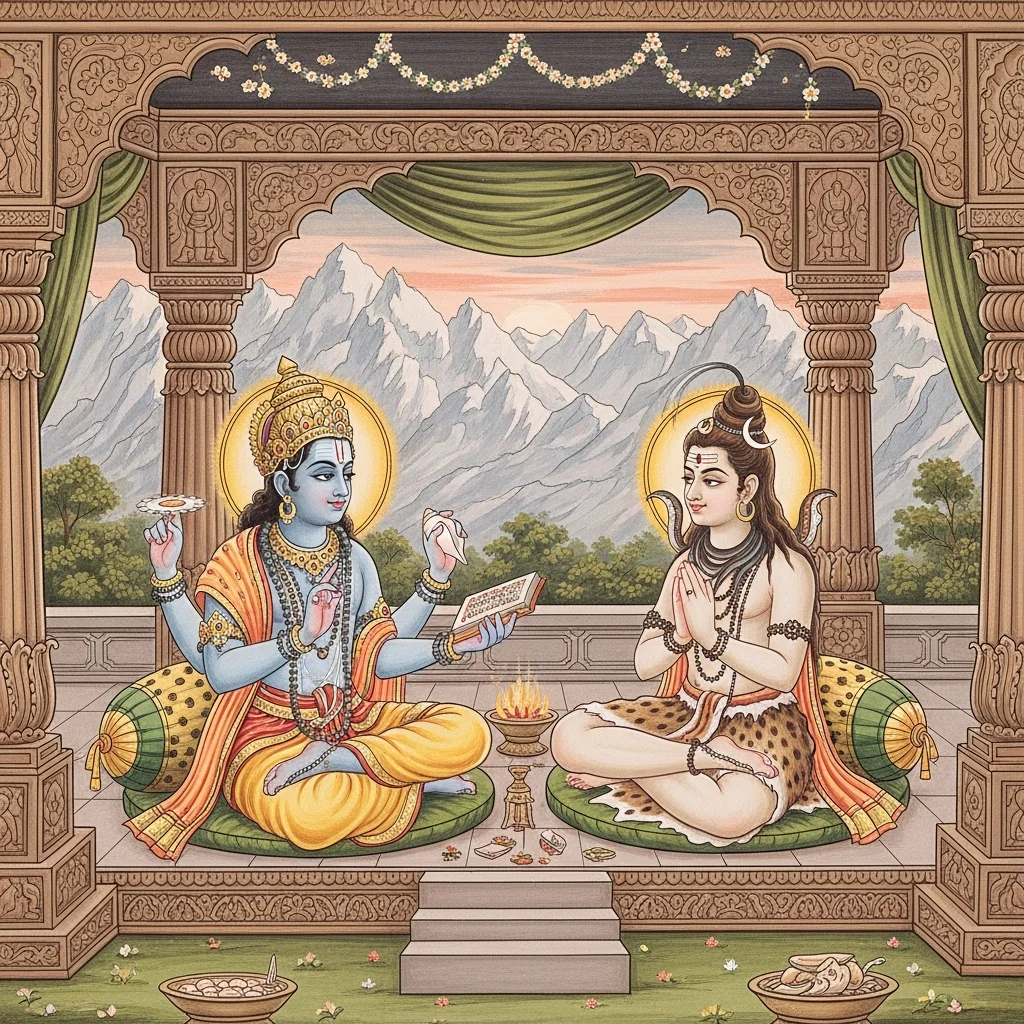
This chapter marks a formal shift from divine intention forged through tapas to a socially recognized ritual process. At Mahesha’s prompting, sages arrive at Himālaya and ask to see the mountain-king’s daughter. Himavān presents Pārvatī and sets out deliberative norms for kanyādāna, naming disqualifying traits—imprudence, instability, lack of livelihood, or improper detachment—to affirm marriage as an ethical institution rather than mere desire. The sages reply by praising Pārvatī’s tapas and Śiva’s satisfaction, urging that she be given to Śiva. With Menā’s assent—declaring Pārvatī’s birth to be for a divine purpose—consent is secured. The narrative then turns to preparations: Śiva is instructed to invite Viṣṇu, Brahmā, Indra, and many orders of beings. Nārada serves as envoy to Viṣṇu; Viṣṇu and Śiva confer on proper wedding rites, including the maṇḍapa and auspicious preliminaries. A great assembly of ṛṣis performs Vedic protections and auspicious acts; Śiva is adorned, and the procession with Caṇḍī, attendant gaṇas, devas, and cosmic beings advances to Himālaya for the pāṇigrahaṇa (hand-taking) ceremony.
Shlokas
Verse 1
लोमश उवाच । एतस्मिन्नंतरे तत्र महेशेन प्रणोदिताः । आजग्मुः सहसा सद्य ऋषयोऽपि हिमालयम्
Lomaśa said: “Meanwhile, at that very time, the sages—urged on by Maheśa (Śiva)—came swiftly and at once to the Himālaya.”
Verse 2
तान्दृष्ट्वा सहसोत्थाय हिमाद्रिः प्रतिमानसः । पूजयामास तान्सर्वानुवाच नतकंधरः
Seeing them, Himādri (Himālaya) at once rose up with reverence. Bowing his head, he worshipped them all and addressed them.
Verse 3
किमर्थमागता यूयं ब्रूतागमनकारणम् । तदोचुः सप्त ऋषयो महेशप्रेरिता वयम्
“For what purpose have you come? Tell me the reason for your arrival.” Then the seven sages replied, “We have been sent by Maheśa (Śiva).”
Verse 4
समागतास्त्वत्सकाशं कन्यायाश्च विलोकने । तानस्मान्विद्धि भोः शैल स्वां कन्यां दर्शयाशु वै
“We have come into your presence to behold the maiden. Know us as those who have arrived for that purpose, O Mountain—show us your daughter without delay.”
Verse 5
तथेत्युक्त्वा ऋषिगणानानीता तत्र पार्वती । स्वोत्संगे परिगृह्याशु गिरीन्द्रः पुत्रवत्सलः । हिमवान्गिरिराजोऽथ उवाच प्रहसन्निव
Saying, “So be it,” he brought Pārvatī there before the assembly of sages. The lord of mountains, tender as a parent, swiftly took her upon his lap; then Himavān, king of mountains, spoke as though smiling.
Verse 6
इयं सुता मदीया हि वाक्यं श्रुणुत मे पुनः । तपस्विनां वरिष्ठऽसौ विरक्तो मदनांतकः
“This indeed is my daughter—hear my words further. That Madanāntaka (Śiva, the slayer of Kāma) is the foremost among ascetics and is detached.”
Verse 7
कथमुद्वहनार्थी च येनानंगः कृत स्मरः । अत्यासन्नेचातिदूरे आढ्ये धनविवर्जिते । वृत्तिहीने च मूर्खे च कन्यादानं न शस्यते
“How could one seek marriage with him by whom Smara (Kāma), the bodiless Ananga, was made thus? Moreover, giving a daughter in marriage is not commended when the match is too near or too far, when the man is wealthy or destitute, when he is without livelihood, or when he is foolish.”
Verse 8
मूढाय च विरक्ताय आत्मसंभाविताय च । आतुराय प्रमत्ताय कन्यादानं न कारयेत्
“One should not arrange the gift of a daughter in marriage to a fool, to one detached (from worldly responsibility), to one who is self-conceited, to one who is afflicted, or to one who is reckless.”
Verse 9
तस्मान्मया विचार्यैव भवद्भिरृषिसत्तमाः । प्रदातव्या महेशाय एतन्मे व्रतमुत्तमम्
“Therefore, after due reflection, O best of sages, I have resolved this: she must be given to Maheśa (Lord Śiva). This is my supreme vow.”
Verse 10
तच्छ्रुत्वा गिरिराजस्य वचनं ते महर्षयः । एकपद्येन ऊचुस्ते प्रहस्य च हिमालयम्
Hearing the words of the king of mountains, those great sages replied in a single sentence, smiling at Himālaya.
Verse 11
यया कृतं तपस्तीव्रं यया चाराधितः शिवः । तपसा तेन संतुष्टः प्रसन्नोद्य सदाशिवः
By her intense austerity and by her worship of Śiva, Sadāśiva has been satisfied by that tapas and is now graciously pleased.
Verse 12
अस्यास्तस्य च भोः शैल न जानासि च किंचन । महिमानं परं चैव तस्मादेनां प्रयच्छ वै
O mountain, you do not truly know her supreme greatness. Therefore, indeed, give her to Śiva.
Verse 13
शिवाय गिरिजामेनां कुरुष्य वचनं हि नः । तच्छ्रुत्वा वचनं तेषामृषीणां भावितात्मनाम्
Give this Girijā to Śiva—do carry out our word. Hearing the statement of those sages of disciplined spirit, …
Verse 14
उवाच त्वरया युक्तः पर्वतान्पर्वतेश्वरः । हे मेरो हे निषधकिं गन्धमादन मन्दर । मैनाक क्रियतामद्य शंसध्वं च यथातथम्
Then the lord of mountains, stirred with urgency, addressed the mountains: “O Meru, O Niṣadha, O Gandhamādana, O Mandara, O Maināka—let it be done today; announce and arrange everything as is proper.”
Verse 15
मेना तदा उवाचेदं वाक्यं वाक्यविशारदा । अधुना किं विमशन कृतं कार्यं तदैव हि
Then Menā, eloquent in speech, said: “What is there to deliberate now? The needful deed was already accomplished at that very time.”
Verse 16
उत्पन्नेयं महाभागा देवकार्यार्थमेव च । प्रदातव्या शिवायेति शिवस्यार्थेऽवतारिता
This greatly blessed one was born solely for the gods’ purpose; she is to be given to Śiva—she has descended for Śiva’s own intent.
Verse 17
अनयाराधितो रुद्रो रुद्रेण परिभाविता । इयं महाभागा शिवाय प्रतिदीयताम्
By her Rudra has been worshipped, and by Rudra she has been sanctified. Let this noble lady be duly given to Śiva.
Verse 18
निमित्तमात्रं च कृतं तया वै शिवपूजने । एतच्छ्रुत्वा वचस्तस्यामेनायाः परिभाषितम्
In Śiva’s worship she truly acted only as an instrument. Hearing these words spoken by Menā, …
Verse 19
परितुष्टो हिमाद्रिश्च वाक्यं चेदमुवाच ह । ऋषीन्प्रति निरीक्षंस्तां कन्येयं मम संप्रति
Pleased at heart, Himādri, Lord of Mountains, spoke while looking toward the sages: “This maiden is now indeed my daughter.”
Verse 20
ततः समानीय सुलोचनां तां श्यामां नितंबार्षितमेखलां शुभाम् । वैडूर्यमुक्तावलयान्दधानां भास्वत्प्रभां चांद्रमसीं व रेखम्
Then, bringing forward that auspicious doe-eyed maiden—dark-hued, her hips adorned with a graceful girdle—he presented her wearing bracelets of vaidūrya (cat’s-eye) gems and pearls, radiant like a moonlit streak of light.
Verse 21
लावण्यामृतवापिकां सुवदनां गौरीं सुवासां शुभां दृष्ट्वा ते ह्यृषयोऽपि मोहमगन्भ्रांतास्तदा संभ्रमात् । नोचुः किंचना वाक्यमेव सुधियो ह्यासन्प्रमत्ता इव स्तब्धाः कान्तिमतीमतीव रुचिरां त्रैलोक्यनाथप्रियाम्
Beholding Gaurī—an ambrosial pond of loveliness, fair-faced, well-clad, and auspicious—even the sages were struck with wonder and, in their astonishment, became as if bewildered. Those wise ones spoke not a single word, standing stunned like men intoxicated, gazing upon the supremely radiant, exquisite beloved of the Lord of the Three Worlds.
Verse 22
एवं तदा ते ह्यृषयोऽपि मोहिता रूपेण तस्याः किमुताथ देवताः । तथैव सर्वे च निरीक्ष्य तन्वीं सतीं गिरिन्द्रस्य सुतां शिवप्रियाम्
Thus, if even the sages were enchanted by her form, what then need be said of the gods? Seeing that slender Satī—daughter of the Lord of Mountains and beloved of Śiva—all alike were captivated.
Verse 23
ततः पुनश्चैत्य शिवं शिवप्रियाः शशंसुरस्मा ऋषयस्तदानीम्
Then again, those devotees dear to Śiva—the sages—praised Śiva there and then.
Verse 24
ऋषय ऊचुः । भूषिता हि गिरीन्द्रेण स्वसुता नास्ति संशयः । उद्वोढुं गच्छ देवेश देवैश्च परिवारितः
The sages said: “Indeed, the Mountain-Lord has adorned his own daughter—there is no doubt of it. O Lord of the gods, go to wed her, accompanied by the gods.”
Verse 25
गच्छ शीघ्रं महादेव पार्वतीमात्मजन्मने । तच्छ्रुत्वा वचनं तेषां प्रहस्येदमुवाच ह
“Go quickly, O Mahādeva, to Pārvatī—your destined counterpart.” Hearing their words, he smiled and spoke as follows.
Verse 26
विवाहो हि महाभागा न दृष्टो न श्रुतोऽपि वा । मया पुरा च ऋषयः कथ्यतां च विशेषतः
“O fortunate sages, such a wedding has neither been seen nor even heard of. Therefore, O sages, describe it to me—especially in detail.”
Verse 27
तदोचुरृषयः सर्वे प्रहसंतः सदाशिवम् । विष्णुमाह्वय वै देव ब्रह्मणं च शतक्रतुम्
Then all the sages, smiling, said to Sadāśiva: “O Deva, do summon Viṣṇu, and also Brahmā and Śatakratu (Indra).”
Verse 28
तथा ऋषिगणांश्चैव यक्षगन्धर्वपन्नगान् । सिद्धविद्याधरांश्चैव किंनरांश्चाप्सरोगणान्
“Likewise, summon the hosts of sages, the Yakṣas, Gandharvas, and Nāgas; and also the Siddhas and Vidyādharas, the Kiṃnaras, and the companies of Apsarases.”
Verse 29
एतांश्चान्यांश्च सुबहूनानयस्वेति सत्वरम् । तदाकर्ण्य ऋषिप्रोक्तं वाक्यं वाक्यविशारदः
“Bring these and many others as well—quickly!” Hearing the sage’s words, the eloquent one, skilled in speech, took the message to heart.
Verse 30
उवाच नारदं देवो विष्णुमानय सत्वरम् । ब्रह्माणं च महेन्द्रं च अन्यांश्चैव समानय
The Lord said to Nārada, “Bring Viṣṇu at once; bring Brahmā and great Indra as well—summon the others too.”
Verse 31
शंभोर्वचनमादाय शिरसा लोकपावनः । जगाम त्वरितो भूत्वा वैकुण्ठं विष्णुवल्लभः
Receiving Śambhu’s command with bowed head, the purifier of the worlds hastened to Vaikuṇṭha—the beloved of Viṣṇu.
Verse 32
ददर्श देवं परमासने स्थितं श्रिया च देव्या परिसेव्यमानम् । चतुर्भुजं देववरं महाप्रभं नीलोत्पलश्यामतनुं वरेण्यम्
He beheld the Lord seated upon the highest throne, attended by the Goddess Śrī; four-armed, the best among gods, of great splendor—his body dark as a blue lotus, supremely worthy of adoration.
Verse 33
महार्हरत्नावृतचारुकुण्डलं महाकिरीटोत्तमरत्नभास्वतम् । सुवैजयंत्या वनमालया वृतं स नारदस्तं भुवनैकसुन्दरम्
Nārada saw him—the unique beauty of the worlds—adorned with exquisite earrings set with priceless gems, crowned with a great diadem blazing with the finest jewels, and garlanded with the splendid Vaijayantī forest-wreath.
Verse 34
उवाच नारदोऽभ्येत्य शंभोर्वाक्यमथादरात् । ब्रह्मवीणां वाद्यवीणां वाद्यमानः सर्वज्ञ ऋषिसत्तमः
Approaching, Nārada spoke with reverence the message of Śambhu—while playing the divine vīṇā, the master-musician; all-knowing, the best among sages.
Verse 35
एह्येहि त्वं महाविष्णो महादेवं त्वरान्वितः । उद्वाहनार्थं शंभोश्च त्वमेकः कार्यसाधकः
“Come, come, O Mahāviṣṇu—go swiftly to Mahādeva. For Śambhu’s marriage purpose, you alone can accomplish this task.”
Verse 36
प्रहस्य भगवान्प्राह नारदं प्रति वै तदा । कथमुद्वहने बुद्धिरुत्पन्ना तस्य शूलिनः । विज्ञातार्थोऽपि भगवान्नारदं परिपृष्टवान्
Smiling, the Blessed Lord then said to Nārada: “How did the thought of marriage arise for that Trident-bearer?” Though he already knew the matter, the Lord questioned Nārada further.
Verse 37
नारद उवाच । तपसा महता रुद्रः पार्वत्या परितोषितः । स्वयमेवागतस्तत्र यत्रास्ते गिरिजा सती
Nārada said: “By great austerity, Rudra was fully pleased by Pārvatī. He came there of his own accord, to the place where the virtuous Girijā was dwelling.”
Verse 38
दासोऽहमवदच्छंभुः पार्वत्या परितोषितः । पार्वतीं च समभ्यर्थ्य वरयस्व च भामिनि
Pleased by Pārvatī, Śambhu said, “I am your servant.” And, having respectfully entreated Pārvatī, he said, “Choose (me) in marriage, O radiant lady.”
Verse 39
त्वरितेनावदच्छंभुस्त्वामाह्वयति संप्रति । तस्य तद्वचनं श्रुत्वा देवदेवो जनार्दनः । नारदेन समायुक्तः पार्षदैः परिवारितः
“Śambhu summons you at once,” the messenger said. Hearing those words, Janārdana, the God of gods, accompanied by Nārada and surrounded by his attendants, set forth.
Verse 40
सुपर्णमारुह्य तदा महात्मा योगीश्वराणां प्रभुरच्युतो महान् । ययौ तदाऽकाशपथा हरिः स्वयं सनारदो देववरैः समेतः
Then the great-souled Acyuta, the mighty Lord of the lords of yogins, mounted Suparṇa (Garuḍa). Hari himself journeyed along the path of the sky, accompanied by Nārada and joined by the foremost of the gods.
Verse 41
तं दृष्ट्वा त्वरितं देवो योगिध्येयांघ्रिपंकजः । अभ्युत्थाय मुदा युक्तः परिष्वज्य च शार्ङ्गिणम्
Seeing him arrive swiftly, the god whose lotus-feet are contemplated by yogins rose up in joy and embraced Śārṅgin (Viṣṇu, bearer of the Śārṅga bow).
Verse 42
तदा हरिहरौ देवावैकपद्येन तिष्ठतः । ऊचुतुः स्म तदान्योन्यं क्षेमं कुशलमेव च
Then the two gods, Hari and Hara, stood together in perfect accord and asked one another about welfare, safety, and well-being.
Verse 43
ईश्वर उवाच । गिरिजातपसा विष्णो जितोऽहं नात्र संशयः । पाणिग्रहार्थमेवाद्य गंतुकामो हिमालयम्
Īśvara said: “O Viṣṇu, by Girijā’s austerity I have been conquered—of this there is no doubt. Today I desire to go to the Himālaya to take her hand in marriage.”
Verse 44
यथार्थेन च भो विष्णो कथयामि तवाग्रतः । यदा दक्षेण भो विष्णो प्रदत्ता च पुरा सती
“And, O Viṣṇu, I shall speak truthfully before you: formerly, O Viṣṇu, when Satī was given by Dakṣa (in marriage)…”
Verse 45
न च संकल्पविधिना मया पाणिग्रहः कृतः । अधुनैव मया कार्यं कर्मविस्तारणं बहु
And I did not perform the hand-taking rite (pāṇigraha) according to the prescribed procedure of solemn saṅkalpa. Now indeed, much remains for me to do—many acts must be duly set in proper order.
Verse 46
यत्कार्यं तन्न जानामि सर्वं पाणिग्रहोचितम् । शंभोस्तद्वचनं श्रुत्वा प्रहस्य मधुसूदनः
(Viṣṇu implied:) “I do not yet know all that should be done, as is proper for the hand-taking rite.” Hearing Śambhu’s words, Madhusūdana (Viṣṇu) smiled.
Verse 47
यावद्वक्तुं समारेभे तावद्ब्रह्मा समागतः । इंद्रेण सह सर्वैश्च लोकपालैस्त्वरान्वितः
Just as (Viṣṇu) began to speak, Brahmā arrived—together with Indra and all the guardians of the worlds—hastening to the scene.
Verse 48
तथैव देवासुरयक्षदानवा नागाः पतंगाप्सरसो महर्षयः । समेत्य सर्वे परिवक्तुमीशमूचुस्तदानीं शिरसा प्रणम्य
Likewise, devas, asuras, yakṣas, dānavas, nāgas, birds, apsarases, and great sages all assembled. Bowing their heads in reverence, they then addressed Īśa (Śiva) together.
Verse 49
गच्छगच्छ महादेव अस्माभिः सहितः प्रभो । ततो विष्णुरुवाचेदं प्रस्तावसदृशंवचः
“Go on, go on, O Mahādeva—O Lord—together with us.” Then Viṣṇu spoke words fitting to the occasion.
Verse 50
गृह्योक्तविधिना शंभो कर्म कर्तुमिहार्हसि
O Śambhu, you should perform the rite here according to the procedure taught in the Gṛhya (domestic ritual) tradition.
Verse 51
नांदीमुखं मण्डपस्थापनं च तथा चैतत्कुरु धर्मेण युक्तम् । महानदीसंगमं वर्जयित्वा कुर्वंति केचिद्वेदमनीषिणश्च
Perform the Nāndīmukha rite and the setting up of the pavilion as well—do all this in a manner joined to dharma. Some, though learned in the Veda, perform these rites while avoiding the confluence of great rivers.
Verse 52
मण्डपस्थापनं चैव क्रियतां ह्यधुना विभो । तथोक्तो विष्णुना शंभुश्चकारात्महिताय वै
“Let the pavilion be set up now, O mighty one.” Thus addressed by Viṣṇu, Śambhu indeed did so—for his own purpose and welfare, to fulfill the sacred undertaking.
Verse 53
ब्रह्मादिभिः कृतं तेन सर्वमभ्युदयोचितम् । ग्रहाणां पूजनं चक्रे कश्यपो ब्रह्मणा युतः
Done by Brahmā and the others, everything was arranged as befitted prosperity and auspicious success. Then Kaśyapa—together with Brahmā—performed the worship of the Grahas (planetary deities).
Verse 54
तथात्रिश्च वशिष्ठश्च गौतमोथ गुरुर्भृगुः । कण्वो बृहस्पतिः शक्तिर्जमदग्निः पराशरः
Likewise came Atri and Vasiṣṭha, Gautama, and the venerable Bhṛgu; also Kaṇva, Bṛhaspati, Śakti, Jamadagni, and Parāśara.
Verse 55
मार्कंडेयः शिलावाकः शून्यपालोऽक्षतश्रमः । अगस्त्यश्च्यवनो गर्गः शिलादोऽथ महामुनिः
Mārkaṇḍeya, Śilāvāka, Śūnyapāla, and Akṣataśrama; Agastya, Cyavana, Garga, and Śilāda—these great sages too were present.
Verse 56
एते चान्ये च बहवो ह्यागताः शिवसन्निधौ । ब्रह्मणा नोदितास्तत्र चक्रुस्ते विधिवत्क्रियाम्
These and many other sages came into Śiva’s presence. Urged on there by Brahmā, they performed the rites according to proper rule.
Verse 57
वेदोक्तविधिना सर्वे वेदवेदांगपारगाः । चक्रू रक्षां महेशस्य कृतकौतुकमंगलाम्
All those masters of the Vedas and Vedāṅgas, following the Veda-prescribed procedure, performed a protective rite for Maheśa—complete with auspicious tokens and blessings.
Verse 58
ऋग्यजुःसामसहितैः सूक्तैर्नानाविधैस्तथा । मंगलानि च भूरीणि ऋषयस्तत्त्ववेदिनः
Those sages, knowers of truth, recited many kinds of hymns together with Ṛg, Yajus, and Sāman, and brought forth abundant auspicious blessings.
Verse 59
अभ्यंजनादिकं सर्वं चक्रुस्तस्य परात्मनः । ख्यातः कपर्द्दस्तस्यैव शिवस्य परमात्मनः
They performed every rite of anointing and adornment for that Supreme Self. From that very act, that Supreme Śiva became renowned as Kapardda, the One whose matted hair is coiled and bound.
Verse 60
अनेकैर्मौक्तिकैर्युक्ता मुण्डमालाऽभवत्तदा । ये सर्पा ह्यंगभूताश्च ते सर्वे तत्क्षणादिव । बभूवुर्मडनान्येव जातरूपमयानि च
Then the garland of skulls became studded with many pearls. And the serpents that were his very ornaments, in that very instant, turned into adornments of gold as well.
Verse 61
सर्वभूषणसंपन्नो देवदेवो महेश्वरः । ययौ देवैः परिवृतः शैलराजपुरं प्रति
Thus adorned with every ornament, Maheśvara—the God of gods—set forth, surrounded by the devas, toward the city of the Lord of Mountains.
Verse 62
चंडिका वरभगिनी तदा जाता भयावहा । प्रेतासना गता चण्डी सर्पाभरणभूषिता
Then Caṇḍikā—the blessed sister, graced with a boon—manifested, inspiring dread. That Caṇḍī advanced, seated upon a corpse, adorned with serpent-ornaments.
Verse 63
हैमं कलशमादाय पूर्णं मूर्ध्ना महाप्रभा । परिवारैर्महाचंडी दीप्तास्या ह्युग्रलोचना
Taking a full golden pot upon her head, the radiant Mahācaṇḍī—surrounded by her attendants—moved forth, her face blazing and her eyes fierce.
Verse 64
तत्र भूतान्यनेकानि विरूपाणि सहस्रशः । तैः समेताग्रतश्चंडी जगाम विकृतानना
There, thousands upon thousands of misshapen spirits appeared. Accompanied by them in the vanguard, Caṇḍī—of dreadful visage—went forward.
Verse 65
तस्याः सर्वे पृष्ठतश्च गणाः परमदारुणाः । कोट्येकादशसंख्याका रौद्रा रुद्र प्रियाश्च ये
Behind her came all the gaṇas, exceedingly fearsome—Rudra-like and dear to Rudra—numbering eleven koṭis.
Verse 66
तदा डमरुनिर्घोषव्याप्तमासीज्जगत्त्रयम् । भेरीभांकारशब्देन शंखानां निनदेन च
Then the three worlds were filled with the roar of the ḍamaru, with the booming of bherī-drums, and with the resounding blare of conches.
Verse 67
तथा दुंदुभिनिर्घोषैः शब्दः कोलाहलोऽभवत् । गणानां पृष्ठतो भूत्वा सर्वे देवाः समुत्सुकाः । अन्वयुः सर्वसिद्धाश्च लोकपालैः समन्विताः
And with the thunder of dundubhi-drums, the sound became a great tumult. Taking their place behind the gaṇas, all the eager devas followed—along with all the siddhas, accompanied by the guardians of the worlds (Lokapālas).
Verse 68
मध्ये व्रजन्महेंद्रोऽथ ऐरावतमुपास्थितः । शुभ्रेणो च्छ्रियमाणेन छत्रेण परमेण हि
In the midst of that procession, Mahendra (Indra) moved along, attended by Airāvata, and shaded by a supreme white parasol held aloft.
Verse 69
चामरैर्वीज्यमानोऽसौ सुरैर्बहुभिरावृतः । तदा तु व्रजमानास्त ऋषयो बहवो ह्यमी
Fanned with cāmara whisks and surrounded by many devas, he proceeded onward. At that very time, many sages (ṛṣis) too were moving along in that procession.
Verse 70
भरद्वाजादयो विप्राः शिवस्योद्वहनं प्रति । शाकिन्यो यातुधानाश्च वेताला ब्रह्मराक्षसाः
Sages such as Bharadvāja and other brāhmaṇas moved in attendance upon Śiva’s ceremonial bearing. Along with them came śākinīs, yātudhānas, vetālas, and brahma-rākṣasas.
Verse 71
भूतप्रेतपिशाचाश्च तथान्ये प्रमथादयः । पृच्छमानास्तदा चंडीं पृष्ठतोऽन्वगमंस्तदा
Bhūtas, pretas, and piśācas—along with other pramathas—kept questioning Caṇḍī, and at that time they followed close behind her.
Verse 72
क्व गता साऽधुना चंडी धावमानास्तदा भृशम् । प्राप्ता गता व्रजंतीं तां प्रणिपत्य महाप्रभाम्
“Where has Caṇḍī gone now?”—thus, running swiftly, they reached her as she was proceeding; and having arrived, they bowed down to that greatly radiant one.
Verse 73
अथ प्रोचुस्तदा सर्वे चंडीं भैरवसंयुताम् । विनास्माभिः कुतो यासि वद चंडि यथा तथा
Then all of them addressed Caṇḍī, who was accompanied by Bhairava: “Without us, where are you going? Tell us, O Caṇḍī, exactly as it is.”
Verse 74
प्रहस्योवाच सा चंडी भूतानां तत्र श्रृण्वताम् । शंभोरुद्वहनार्थाय प्रेतारूढा व्रजाम्यहम्
Smiling, Caṇḍī spoke—while the bhūtas there listened—“For the sake of Śambhu’s ceremonial bearing, I am going forth, mounted upon a preta.”
Verse 75
हैमं कलशमादाय शिरसा बिभ्रती स्वयम् । करवालीस्वरूपेण चंडी जाता ततः स्वयम्
Taking a golden kalaśa and bearing it upon her head, Caṇḍī herself then assumed the form of Karavālī.
Verse 76
भूतैः परिवृता सर्वैः सर्वेषामग्रतोऽव्रजत् । गणास्तामनुजग्मुस्ते गणानां पृष्ठतः सुराः
Surrounded by all the bhūtas, she went ahead of everyone. The gaṇas followed her, and behind the gaṇas came the devas.
Verse 77
इंद्रादयो लोकपाला ऋषयस्तेऽग्रपृष्ठतः । ऋषीणां पृष्ठतो भूत्वा पार्षदाश्च महाप्रभाः
Indra and the other guardians of the worlds, together with the sages, were positioned at the fore and the rear. Behind the sages came the greatly radiant attendants (pārṣadas).
Verse 78
विष्णोरमितभावज्ञा मुकुंदाच्च मनोरमाः । सर्वे पयोदसंकाशाः स्रग्विणो वनमालिनः । श्रीवत्सांकधराः सर्वे पीतवासोन्विताश्च ते
They were knowers of Viṣṇu’s immeasurable nature, and pleasing like Mukunda himself—cloud-hued, garlanded, adorned with the forest-garland; all bore the mark of Śrīvatsa and were clad in yellow garments.
Verse 79
चतुर्भुजाः कुंडलिनः किरीटकटकांगदैः । हारनूपुरसूत्रैश्च कटिसूत्राङ्गुलीयकैः । शोभिताः सर्व एवैते महापुरुषलक्षणाः
All of them—four-armed and wearing earrings—were resplendent with crowns, bracelets, armlets, necklaces, anklets, sacred threads, waist-bands, and rings; each bore the auspicious marks of a great divine Person.
Verse 80
तेषां मध्ये गतो विष्णुः श्रियोपेतः सुरारिहा
In their midst moved Viṣṇu—attended by Śrī (Lakṣmī), the slayer of the foes of the gods.
Verse 81
बभौ त्रिलोकीकृतविश्वमंगलो महानुभावैर्हृदि कृत्य धिष्ठितः । शिवेन साकं परमार्थदस्तदा हरिः परात्मा जगदेकबंधुः
Hari shone forth, making the three worlds auspicious—enthroned in the hearts of the great-souled. Together with Śiva, he then bestowed the highest truth: the Paramātman, the Supreme Self, the one true kinsman of the world.
Verse 82
स तार्क्ष्यपुत्रोपरि संस्थितो महांल्लक्ष्म्या समेतो भुवनैकभर्ता । स चामरैर्वीज्यमानो मुनींद्रैः सर्वैः समेतो हरिरीश्वरो महान्
Seated upon the son of Tārkṣya (Garuḍa), the great Lord—accompanied by Lakṣmī, sole sustainer of the worlds—he was fanned with cāmara whisks and surrounded by all the lordly sages: Hari, the mighty Īśvara.
Verse 83
तथा विरिंचिर्निजवाहनस्थो वेदैः समेतः सह षड्भिरंगैः । तथागमैः सेतिहासैः पुराणैः स संवृतो हेमगर्भो बभूव
Likewise Viriñci (Brahmā), seated upon his own vehicle, appeared encompassed by the Vedas with their six auxiliaries, and also by the Āgamas, the Itihāsas, and the Purāṇas—he, the golden-embryoned one, stood surrounded by sacred revelation.
Verse 84
वेधोहरिभ्यां च तदा सुरेद्रैः समावृतश्चर्षिभिः संपरीतः । वृषारूढो वृषकेतुर्दुरापोयोगीश्वरैरपि सर्वैरगम्यः
Then, surrounded by Brahmā and Hari, by the lords of the gods, and encircled by the seers, there appeared the Bull-mounted One, whose banner bears the bull—hard to attain, unreachable even to all the greatest yogic masters.
Verse 85
शुद्धस्फटिकसंकाशं वृषभं धर्मवत्सलम् । समेतो मातृभिश्चैव गोभिश्च कृतलक्षणम्
The bull—shining like pure crystal and devoted to dharma—stood bearing auspicious marks, accompanied by the Mother-goddesses and by the sacred cows.
Verse 86
एभिस्समेतोऽसुरदानवैः सह ययौ महेशो विबुदैरलंकृतः । हिमालयं गिरिवर्यं तदानीं पाणिग्रहार्थं प्रमदोत्तमायाः
Accompanied by them—and even by asuras and dānavas—Maheśa, adorned by the gods, then set forth to the Himalaya, best of mountains, to take the hand of the most excellent maiden in marriage.