Adhyaya 16
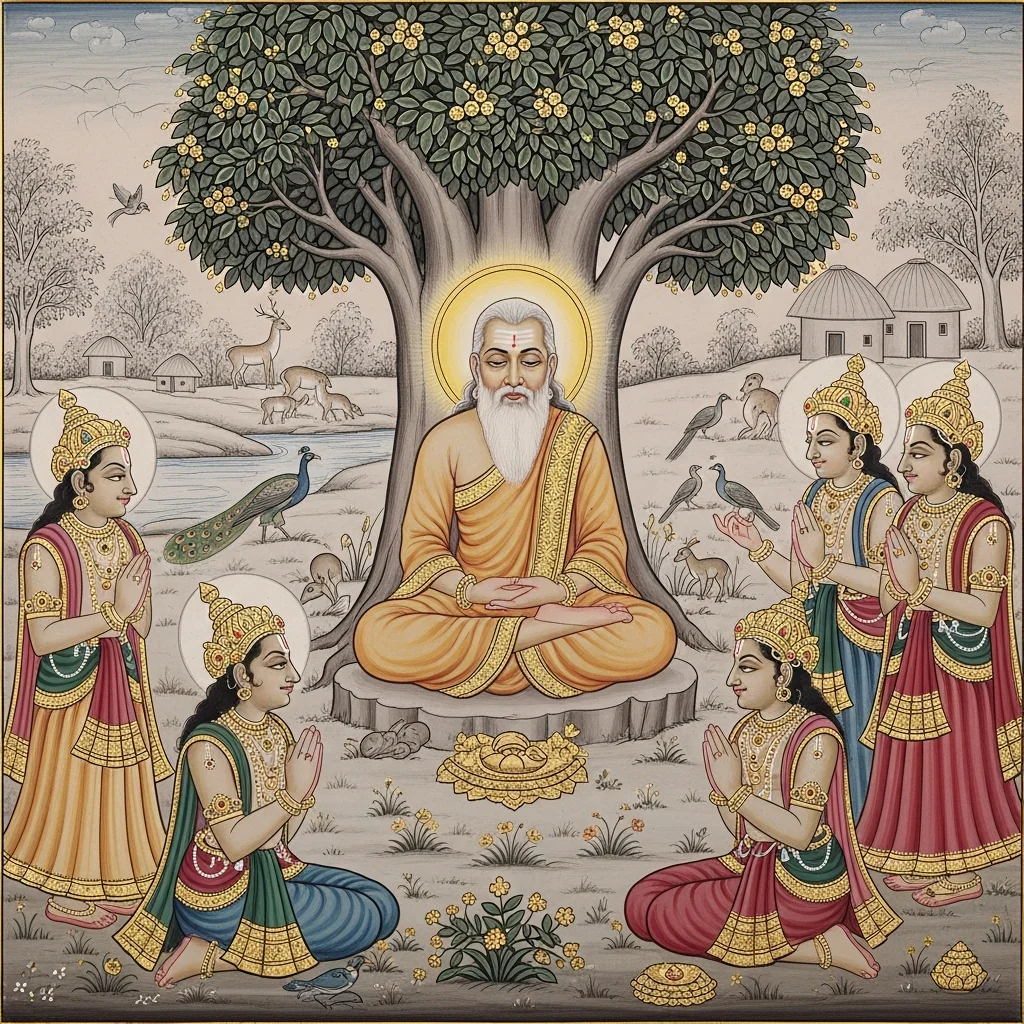
This chapter unfolds in three closely linked movements. (1) Śacī urges the gods to approach Indra, who is stricken with brahmahatyā after killing Viśvarūpa; the devas find him hidden in the waters, practicing austerity in solitary penance. (2) A theological and ethical settlement follows: brahmahatyā is personified and, under Bṛhaspati’s guidance, its burden is pragmatically divided into four shares and assigned to earth (kṣamā/pṛthivī), trees, waters, and women. Indra is thereby restored in ritual and royal authority, and cosmic balance returns, bringing auspiciousness to the elements, crops, and minds. (3) The narrative then turns to Tvāṣṭṛ’s grief and tapas; Brahmā grants a boon, and Vṛtra is born as a world‑threatening foe. Lacking weapons, the devas are directed to seek the bones of the sage Dadhīci for weapon‑making; concern about harming a brāhmaṇa is resolved through dharma reasoning (the ātātāyin principle), and Dadhīci willingly enters samādhi and relinquishes his body for the welfare of all worlds.
Shlokas
Verse 1
। लोमश उवाच । ततः शची तान्प्रोवाच वाचं धर्मार्थसंयुताम् । मा चिंता क्रियतां देवा बृहस्पतिपुरोगमः
Lomaśa said: Then Śacī addressed them with words grounded in dharma and practical good: “Let no worry be made, O gods—go forward with Bṛhaspati leading.”
Verse 2
गच्छत त्वरिताः सर्वे शक्रं द्रष्टुं विचक्षणाः । ब्रह्महत्याभिभूतोऽसौ यत्रास्ते सुरसत्तमः
Go swiftly, all you discerning sages, to behold Śakra (Indra). That best of the gods is overwhelmed by the sin of brahmahatyā and abides in that place.
Verse 3
बहूनां कारणेनैव विश्वरूपे हि मंदधीः । हतस्तेन महेंद्रेण सर्वैः सोऽपि निराकृतः
For many reasons indeed, Viśvarūpa—slow in discernment—was slain by that Mahendra (Indra), and he too was rejected by all.
Verse 4
तस्मात्सर्वैर्भवद्भिश्च गंतव्यं यत्र स प्रभुः । अवज्ञा हि कृता पूर्वं महेंद्रेण तवानघ
Therefore, all of you must go to where that Lord abides. For earlier, O blameless one, Mahendra (Indra) indeed showed contempt.
Verse 5
अवज्ञामात्रक्षुबंधेन त्वया शप्तः पुरंदरः । तथैव शापितश्चासि मया त्वं हि बृहस्पते
By a mere bond of resentment born of disrespect, you cursed Purandara (Indra); and in the same way, O Bṛhaspati, you too have been cursed by me.
Verse 6
निरस्तोऽपि हि तस्मात्त्वमवसानपरो भव
Therefore, even if you have been cast out, remain steadfast until the end and bring this matter to its full completion.
Verse 7
यथा मदर्थमानीतौ शक्रे जीवति तावुभौ । त्वयि जीवति भो ब्रहमन्कार्यं तव करिष्यति
Just as those two are kept safe for my sake while Śakra (Indra) yet lives, so too—so long as you live, O Brahmin—your purpose shall be fulfilled.
Verse 8
कोऽपि सौभाग्यवांल्लोके तव क्षेत्रे जनिष्यति । पुत्रं विख्यातनामानमत्रनैवास्ति संशयः
In this world, some fortunate soul shall be born in your sacred region; and here indeed a son of renowned name shall be born—of this there is no doubt at all.
Verse 9
गच्छ शीघ्रं सुरैःसार्द्धं शक्रमानय म चिरम् । प्रयासि त्वरितो नो चेत्पुनः शापं ददामि ते
Go quickly with the gods and bring Śakra (Indra) without delay. If you do not depart at once, I shall again pronounce a curse upon you.
Verse 10
शच्योक्तं वचनं श्रुत्वा सुरैः सार्द्धं जगाम सः । पुरंदरं गताः सर्वे ब्रह्महत्याभिपीडितम्
Having heard the words spoken by Śacī, he went together with the gods. All of them approached Purandara (Indra), who was afflicted by the sin of brahmin-slaying.
Verse 11
सरसस्तीरमासाद्य ते शक्रं चाभ्यवादयन् । दृष्टाः शक्रेम ते सर्वे तदा ह्यप्सु स्थितेन वै
Reaching the shore of the lake, they offered salutations to Śakra. Then Śakra, who was indeed staying in the waters, beheld them all.
Verse 12
उवाच देवानेदेवेशः कस्माद्यूयमिहागताः । अहं हि पातकग्रस्तो ब्रह्महत्यापरिप्सुतः । अप्सु तिष्ठामि भो देवा एकाकी तपसान्वितः
The Lord of the gods said to the gods: “Why have you come here? I am seized by sin, pursued by the guilt of brahmin-slaying. O gods, I remain in the waters, alone, engaged in austerity (tapas).”
Verse 13
तच्छ्रुत्वा वचनं तस्य सर्वे देवाः शतक्रतोः । ऊचुर्विह्वलिता एनं देवराजानमद्भुतम्
Hearing his words, all the gods of Śatakratu (Indra), distressed and shaken, spoke to that wondrous king of the gods.
Verse 14
एतादृशं न वाच्यं ते परेषामुपकारतः । कृतं त्वयैव यत्कर्म विश्वरूपवधादिकम्
“You should not speak in this manner, for the welfare of others. For the deed that was done—such as the slaying of Viśvarūpa—was indeed done by you.”
Verse 15
विश्वकर्मसुतेनैव कृतं याजनमद्भुतम् । येन देवाः क्षयं यांति ऋषयोऽपि महाप्रभाः
An astonishing sacrificial rite (yajña) was performed by the son of Viśvakarman—by which even the gods come to ruin, and even the mighty sages are affected.
Verse 16
तस्माद्वतस्त्वया देव परेषामुपकारतः । ततः सर्वे वयं प्राप्तास्त्वां नेतुममरावतीम्
Therefore, O God, you were chosen for the welfare and support of others. Hence all of us have come here to lead you to Amarāvatī, the city of the immortals.
Verse 17
एवं विवदमानेषु देवेषु च तदाऽब्रवीत् । ब्रह्महत्या त्वरायुक्ता देवेंद्रं वरयाम्यहम्
As the gods thus disputed, Brahmahatyā, driven by urgency, spoke: “I choose Devendra (Indra) as my target.”
Verse 18
तदा बृहस्पतिर्वाक्यमुवाच सहसैव तु
Then Bṛhaspati spoke at once.
Verse 19
बृहस्पतिरुवाच । वासार्थं च करिष्यामः स्थानानि तव सांप्रतम् । प्रसांत्विता तदा हत्या देवैस्तत्कार्यगौरवात्
Bṛhaspati said: “We shall now arrange abodes for you, fit for your dwelling.” Then Brahmahatyā was pacified by the gods, mindful of the gravity of the task to be done.
Verse 20
विमृश्य सर्वे विभजुश्चतुर्द्धा हत्यां सुरास्ते ऋषयो मनीषिणः । यक्षाः पिशाचा उरगाः पतंगास्तथा च सर्वे सुरसिद्धचारणाः
After deliberation, they all divided Brahmahatyā into four parts—the gods and the wise seers, together with yakṣas, piśācas, serpents, birds, and all the suras, siddhas, and cāraṇas.
Verse 21
आदौ क्षमां प्रति तदा ऊचुः सर्वे दिवौकसः । हे क्षमेंऽशस्त्वया ग्राह्यो हत्यायाः कार्यसिद्धये
First, all the dwellers of heaven addressed Kṣamā: “O Kṣamā, accept a share of Brahmahatyā, so that this necessary work may be accomplished.”
Verse 22
सुराणां तद्वचः श्रुत्वा धरित्री कंपिताऽवदत् । कथं ग्राह्ये मया ह्यंशो हत्यायास्तद्विमृश्यताम्
Hearing the words of the gods, Dharitrī (Earth), trembling, replied: “How can I accept a share of Brahmahatyā? Let this be rightly considered.”
Verse 23
अहं हि सर्वभूतानां धात्री विश्वं धराम्यहम् । अपवित्रा भविष्यामि एनसा संवृता भृशम्
“For I am the sustainer of all beings; I bear the entire world. If I take this upon myself, I shall become impure—thickly covered by sin.”
Verse 24
पृथ्वयास्तद्वचनं श्रुत्वा बृहस्पतिरुवाच ताम् । मा भौषीश्चारुसर्वांगि निष्पापासि न चान्यथा
Hearing Earth’s words, Bṛhaspati said to her: “Do not fear, O fair-limbed one. You are sinless—indeed, it is not otherwise.”
Verse 25
यदा यदुकुले श्रीमान्वासुदेवो भविष्यति । तदा तत्पदविन्यासान्नष्पापा त्वं भविष्यसि
“When the glorious Vāsudeva is born in the Yadu lineage, then by the placing of his feet upon you, you will be freed from sin.”
Verse 26
कुरु वाक्यं त्वमस्माकं नात्र कार्या विचारणा
“Carry out our command; in this matter there should be no deliberation.”
Verse 27
इत्युक्ता पृथिवी तेषां निष्पापा साकरोद्वचः । ततो वृक्षान्समाहूय सर्वे देवाऽब्रुवन्वचः
Thus addressed by them, Earth—freed from sin—assented to their words. Then all the Devas summoned the trees and spoke to them.
Verse 28
हत्यांशो हि ग्रहीतव्यो भवद्भिः कार्यसिद्धये । एवमुक्ताऽब्रुवन्वबृक्षा देवान्सर्वे समागताः
“For the purpose to be fulfilled, you must indeed take a share of ‘hatyā’—the sin of slaying.” Thus addressed, all the trees that had assembled spoke to the Devas.
Verse 29
वयं सर्वे तथा भूतास्तापसानां फलप्रदाः । तदा हत्यान्विताः सर्वे भविष्यंति तपस्विनः
“We all are beings who grant fruits to ascetics. If we become connected with ‘hatyā’, then all practitioners of austerity will become tainted.”
Verse 30
पापिनो हि महाभागास्तस्मात्सर्वं विमृश्यताम् । तदा पुरोधसा चोक्ताः सर्वे वृक्षाः समागताः
“For then, O fortunate ones, you would become sinful; therefore let everything be carefully considered.” At that time, at the priest’s instruction, all the trees assembled.
Verse 31
मा चिंता क्रियतां सर्वैः प्रसादाच्च शतक्रतोः । छेदिताश्चैव सर्वे वै ह्यनेकांशत्वमागताः
“Let none of you be anxious; by the favor of Śatakratu (Indra) you will be safe. Though cut, all of you indeed will come to have many parts, becoming many-branched.”
Verse 32
ततो विटपिनो नित्यं यूयं सर्वे भविष्यथ । इत्युक्तास्ते तदा सर्वेगृह्णन्हत्यां विभागशः
“Thereafter, all of you shall forever become branching trees.” Thus addressed, they all then accepted the ‘hatyā’ in allotted portions.
Verse 33
ततो ह्यपः समाहूय ऊचुः सर्वे दिवौकसः । अद्भिश्च गृह्यतामद्य हत्यांशः कार्यसिद्धये
Then the celestials summoned the Waters and said: “For the accomplishment of the purpose, let the waters also take a share of the ‘hatyā’ today.”
Verse 34
तदा ह्यापो मिलित्वाथ ऊचुः सर्वाः पुरोधसम् । यानि कानि च पापानि तथा दुश्चरितानि च
Then the Waters, gathering together, said to the priest: “Whatever sins there may be, and whatever evil deeds as well…”
Verse 35
अस्मत्संपर्कसंबंधात्स्नानशौचाशनादिभिः । पुनंति प्राणिनः सर्वे पापेन परिवेष्टिताः
“Through contact and association with us—by bathing, cleansing, drinking, and the like—all living beings, though enveloped by sin, become purified.”
Verse 36
तासां वचनमाकर्ण्य बृहस्पतिरुवाच ह । मा भयं क्रियतामाप एनसा दुस्तरेण हि
Hearing their words, Bṛhaspati said: “Do not be afraid, O Waters; for you are connected with a sin that is indeed hard to overcome.”
Verse 37
आपः पुनंतु सर्वेषां चराचरनिवासिनाम् । तदा स्त्रियः समाहूय बृहस्पतिरुवाच ह
“May the Waters purify all beings—those that move and those that do not.” Then, having summoned the women, Bṛhaspati spoke.
Verse 38
अद्यैव ग्राह्ये हत्यांशः सर्वकार्यार्थसिद्धये । निशम्य तद्गुरोर्वाक्यमूचुः सर्वाश्चयोपितः
“Let the portion of the sin of killing be accepted even today, so that all intended aims may be accomplished.” Hearing the words of that revered teacher, they all replied, filled with wonder.
Verse 39
पापमाचरते योषा तेन पापेन नान्यथा । लिप्यंते बहवः पक्षा इति वेदानुशासनम्
“A woman who commits sin is tainted by that sin alone and not otherwise; many ‘sides’ become stained.” This is declared as the instruction of the Veda.
Verse 40
श्रुतमस्ति न ते किंचिद्धेपुरोधो विमृश्यताम् । योषिद्भिः प्रोच्यमानोऽपि उवाचाथ बृहस्पतिः
“Surely you have heard something of this—O priest; reflect upon it.” Even while being addressed by the women, Bṛhaspati then spoke.
Verse 41
मा भयं क्रियतां सर्वाः पापादस्मात्सुलोचनाः । भविष्याणां तथान्येषां भविष्यति फलप्रदः । हत्यांशो यो हि सर्वासां यथाकामित्वमेव च
“Let none of you fear, O fair-eyed ones, because of this sin. In times to come, for you and for others too, it will become a giver of results. For this portion of the sin of killing borne by you all will also yield the boon of wish-fulfilment.”
Verse 42
एवमंशाश्च त्यायाश्चत्वारः कल्पिताः सुरैः । निवासमकरोत्सद्यस्तेषुतेषु द्विजोत्तमाः
Thus the gods devised four portions with their corresponding allotments; and at once, O best of the twice-born, they took up residence in those respective abodes.
Verse 43
निष्पापो हि तदा जातो महेंद्रो ह्यभिषेचितः । देवपुर्यां सुरगणैस्तथैव ऋषभिः सह
Then Mahendra (Indra) became free of sin, and he was consecrated in the city of the gods by the hosts of deities, together with the sages.
Verse 44
शच्या समेतो हि तदा पुरंदरो बभूव विश्वाधिपतिर्महात्मा । देवैः समेतो हि महानुभावैर्मुनीश्वरैः सिद्धगणैस्तदानीम्
Then Purandara (Indra), accompanied by Śacī, became the great-souled lord of the universe—surrounded at that time by the mighty gods, the foremost sages, and the hosts of Siddhas.
Verse 45
तदाग्नयः शोभना वायवश्च सर्वे ग्रहाः सुप्रभाः शांतियुक्ताः । जाताः सद्यः पृथिवी शोभमाना तथाद्रयो मणिप्रभवा बभूवुः
Then the fires became auspicious and the winds gentle; all the planets shone with splendor, endowed with peace. At once the earth became radiant, and the mountains too became as though sources of jewel-like brilliance.
Verse 46
प्रसन्नानि तथा ह्यासन्मनांसि च मनस्विनाम्
Thus, the minds of the noble and high-souled became serene and filled with gladness.
Verse 47
नद्यश्चामृतवाहिन्यो वृक्षा ह्यासन्सदाफलाः । अकृष्टपच्यौषधयो बभूवुश्चमृतोपमाः
The rivers flowed as though bearing amṛta; the trees were ever laden with fruit. Even herbs that ripened without cultivation became as if equal to ambrosia.
Verse 48
ऐकपद्येन सर्वेषामिंद्रलोकनिवासिनाम् । बभूव परमोत्साहो महामोदकरस्तथा
By that single utterance alone, all who dwelt in Indra’s world were seized by supreme enthusiasm, and great delight arose.
Verse 49
लोमश उवाच । एतस्मिन्नंतरे त्वष्टा दृष्ट्वा चेंद्रमहोत्सवम् । बभूव रुषि तोऽतीव पुत्रशोकप्रपीडितः
Lomaśa said: Meanwhile, Tvaṣṭṛ, seeing Indra’s great festival, became exceedingly enraged, tormented by grief for his son.
Verse 50
जगाम निर्वेदपरस्तपस्तप्तुं सुदारुणम् । तपसा तेन संतुष्टो ब्रह्मा लोकपितामहः
Overcome with despair, he went to perform a most severe austerity. By that tapas, Brahmā—the grandsire of the worlds—was pleased.
Verse 51
त्वष्टारमब्रवीत्तुष्टो वरं वरय सुव्रत । तदा वव्रे वरं त्वष्टा सर्वलोकभयावहम् । वरं पुत्रो हि दात्वोय देवानां हि भयावहः
Pleased, Brahmā said to Tvaṣṭṛ, “O man of excellent vows, choose a boon.” Then Tvaṣṭṛ chose a boon that would strike fear into all worlds: “Grant me a son who shall be a terror to the gods.”
Verse 52
तथेति च वरो दत्तो ब्रह्मणा परमेष्ठिना । वरदानात्सद्य एव बभूव पुरुषस्तदा
“So be it,” said Brahmā, the Supreme Lord, granting the boon. By that gift, a male being came into existence at once.
Verse 53
वृत्रनामांकितस्तत्र दैत्यो हि परमाद्भुतः । धनुषां शतमात्रं हि प्रत्यहं ववृधेऽसुरः
There appeared a wondrous Daitya marked by the name Vṛtra. That asura grew each day by a hundred bow-lengths.
Verse 54
पातालान्निर्गता दैत्या ये पुराऽमृतमंथने । घातिताः सुरसंघैश्च भृगुणा जीवितास्त्वरात्
Those Daityas who had earlier emerged from Pātāla during the churning for nectar—though slain by the hosts of gods—were swiftly restored to life by Bhṛgu.
Verse 55
सर्वं महीतलं व्याप्तं तेनैकेन महात्मना
By that single mighty being, the entire surface of the earth was pervaded and overwhelmed.
Verse 56
तदा सर्वेऽपि ऋषयो वध्यमानास्तपस्विनः । ब्रह्माणं त्वरिताः सर्वे ऊचुर्व्यसनमागतम्
Then all the ascetic sages, being assailed and slain, hurried together to Brahmā and reported that a great calamity had befallen them.
Verse 57
तथा चेंद्रादयो देवा गंधर्वाः समरुद्गणाः । ब्रह्मणा कथितं सर्वं त्वष्टुश्चैतच्चिकीर्षितम्
So too Indra and the other gods—together with the Gandharvas and the hosts of the Maruts—were told by Brahmā everything, including what Tvaṣṭṛ intended to accomplish.
Verse 58
भवद्वधार्थं जनितस्तपसा परमेण तु । वृत्त्रोनाम महातेजाः सर्वदैत्यापिधो महान्
For your destruction, through supreme austerity, there was born a mighty being named Vṛtra—of great splendor—who became a vast refuge and shelter for all the Daityas.
Verse 59
तथापि यत्नः क्रियतां यथा वध्यो भवेदसौ । निशम्य ब्रह्मणो वाक्यमूचुर्द्देवाः सवासवाः
“Even so, let an effort be made by which he may become slayable.” Hearing Brahmā’s words, the gods—together with Indra—spoke in reply.
Verse 60
देवा ऊचुः । यदा इंद्रो हि हत्याया विमुक्तः स्थापितो दिवि । तदास्माभिरकार्यं वै कृतमस्ति दुरासदम्
The gods said: “When Indra was freed from the sin of slaying and was restored to heaven, then we, indeed, committed a wrongful act—one difficult to undo.”
Verse 61
शस्त्राण्यस्त्राण्यनेकानि संक्षिप्तानि ह्यबुद्धितः । दधीच स्याश्रमे ब्रह्मन्किं कार्यं करवामहे
“Many weapons and missiles were heedlessly deposited in the hermitage of Dadhīci. O Brahmā, what should we do now?”
Verse 62
तच्छ्रुत्वा प्रहसन्वाक्यं देवान्ब्रह्मा तदाऽब्रवीत् । चिरं स्थितानि विज्ञायागच्छध्वं तानि वै सुराः
Hearing these words, Brahmā, smiling, said to the gods: “Knowing that those weapons have long remained there, go and retrieve them, O Suras.”
Verse 63
गत्वा देवास्तदा सर्वे नापश्यन्स्वं स्वमायुधम् । पप्रच्छुश्च दधीचिं ते सोऽवादीन्नैव वेद्भयहम्
When all the gods went there, they did not see their own weapons. They questioned Dadhīci, and he replied, “I do not know (where they are).”
Verse 64
पुनर्ब्रह्माणमागात्य ऊचुः सर्वे मुनेर्वचः
Returning again to Brahmā, they all reported the words of the sage.
Verse 65
ब्रह्मोवाच तदा देवान्सर्वेषां कार्यसिद्धये । तस्यास्थीन्येव याचध्वं प्रदास्यति न संशयः
Brahmā said to the gods then: “For the accomplishment of everyone’s purpose, ask only for his bones—he will give them, without doubt.”
Verse 66
तच्छ्रुत्वा ब्राह्मणो वाक्यं शक्रो वचनमब्रवीत्
Having heard the brāhmaṇa’s words, Śakra (Indra) then spoke in reply.
Verse 67
विश्वरूपो हतो देव देवानां कार्यसिद्धये । एक एव तदा ब्रह्मन्पापिष्ठोऽहं कृतः सुरैः
O God, Viśvarūpa was slain to fulfill the gods’ purpose; yet, O Brahman, at that time the gods made me alone bear the gravest sin.
Verse 68
तथा पुरोधसा चैव निःश्रीकस्तत्क्षणात्कृतः । दिष्ट्या परमया चाहं प्रविष्टो निजमंदिरम्
Likewise, by my own priest I was stripped of splendor that very moment; yet by supreme good fortune I managed to enter my own palace.
Verse 69
दधीचं घातयित्वा वै तस्यास्थीनि बहून्यपि । अस्त्राणि तानि भगवन्कृतानि ह्यशुभानि वै
After causing Dadhīca to be slain and taking many of his bones, those weapons were fashioned, O Lord—and indeed they were tainted with inauspiciousness.
Verse 70
त्वष्ट्रा हि जनितो यो वै वृत्रो नामैष दैत्यराट् । कथं तं घातयाम्येवं सततं पापभीरुणा । शक्रेणोक्तं निशम्याथ ब्रह्मा वाक्यमुवाच ह
This Vṛtra—king among the Dānavas—was indeed begotten by Tvaṣṭṛ. How can I slay him, I who am ever fearful of sin? Having heard Śakra’s words, Brahmā then replied.
Verse 71
अर्थशास्त्रपरेणैव विधिना तमबोधयत् । आततायिनमायांतं ब्राह्मणं वा तपस्विनम् । हंतुकामं जिघांसीयान्न तेन ब्रह्महा भवेत्
By a rule grounded in statecraft and law, he instructed him: “Even if an aggressor comes—be he a brāhmaṇa or an ascetic—intent on killing, one should strike to kill; by that act one does not become a slayer of a brāhmaṇa.”
Verse 72
इन्द्र उवाच । दधीचस्य वधाद्ब्रह्मन्नहं भीतो न संशयः । तस्माद्ब्रह्मवधात्सत्यं महदेनो भविष्यति
Indra said: “O Brahman, I am afraid because of the killing of Dadhīci—there is no doubt. Therefore, from the slaying of a brāhmaṇa, truly, a great sin will arise.”
Verse 73
अतो न कार्यमस्माभिर्ब्राह्मणानां तु हेलनम् । हेलनाद्बहवो दोषा भविष्यंति न चान्यथा
“Therefore we must never treat brāhmaṇas with contempt; from contempt many faults will surely arise—there is no other outcome.”
Verse 74
अदृष्टं परमं धर्म्यं विधिना परमेण हि । कर्तव्यं मनसा चैवं पुरुषेण विजानता
“Indeed, the highest dharmic course—though its results are unseen—must be undertaken according to the supreme rule; thus should a discerning person resolve in mind and act.”
Verse 75
निःस्पृहं तस्य तद्वाक्यं श्रुत्वा ब्रह्मा ह्युवाच तम् । शक्रस्वबुद्ध्यावर्तस्व दधीचिं गच्छ सत्वरम्
Hearing his words, spoken without selfish motive, Brahmā addressed him: “O Śakra, return with your own resolve; go quickly to Dadhīci.”
Verse 76
याचस्व तस्य चास्थीनि दधीचेः कार्यगौरवात् । गुरुणा सहितः शक्रो देवैः सह समन्वितः
“For the weightiness of the task, go and request the bones of Dadhīci.” Thus Śakra (Indra), accompanied by his preceptor and attended by the devas, set out together.
Verse 77
तथेति गत्वा ते सर्वे दधीचस्याश्रमं शुभम् । नानासत्त्वसमायुक्तं वैरबावविवर्जितम्
Saying, “So be it,” they all went to the auspicious hermitage of Dadhīci—filled with many kinds of living beings, yet free from any spirit of hostility.
Verse 78
मार्जारमूषकाश्चैव परस्परमुदान्विताः । ऐकपद्येन सिंहाश्च गजिन्यः कलभैः सह
There even cats and mice were together in mutual friendliness; lions too moved without hostility, and she-elephants with their calves lived at ease.
Verse 79
तथा जात्यश्च विविधाः क्रीडायुक्ताः परस्परम् । नकुलैः सह सर्पाश्च क्रीडायुक्ताः परस्परम्
Likewise, many different species played together with one another; even serpents, along with mongooses, engaged in play among themselves.
Verse 80
एवंविधान्यनेकानि ह्यश्चर्याणि तदाश्रमे । पश्यंतो विबुधाः सर्वे विस्मयं परमं ययुः
Many wonders of this kind were present in that hermitage; seeing them, all the celestial beings were carried into the highest astonishment.
Verse 81
अथासने मुनिश्रेष्ठं ददृशुः परमास्थितम् । तेजसा परमेणैव भ्राजमानं यथा रविम्
Then they beheld the foremost of sages seated upon his seat, established in supreme steadiness—shining with highest radiance, like the sun.
Verse 82
विभावसुं द्वितीयं वा सुवर्चसहितं तदा । यथा ब्रह्मा हि सावित्र्या तथासौ मुनिसत्तमः
At that time the foremost sage appeared like a second Vibhāvasu, the Fire-god, attended by splendid radiance—just as Brahmā is accompanied by Sāvitrī, so too was he.
Verse 83
तं प्रणम्य ततो देवा वचनं चेदमब्रुवन् । त्वं दाता त्रिषु लोकेषु त्वत्सकाशमिहगताः
After bowing to him, the devas spoke: “You are famed as a giver in the three worlds; therefore we have come here into your presence.”
Verse 84
निशम्य वचनं तेषां देवानां भुनिरब्रवीत् । किमर्थ मागताः सर्वे वदध्वं तत्सुरोत्तमाः
Hearing the devas’ words, the sage said: “For what purpose have you all come? Tell me, O best among the gods.”
Verse 85
प्रयच्छामि न संदेहो नान्यथा मम भाषितम् । तदोचुः सहिताः सर्वे दधीचिं स्वार्थकामुकाः
“I shall give—there is no doubt; my word will not be otherwise.” Then all of them together spoke to Dadhīci, seeking their intended aim.
Verse 86
भयभीता वयं विप्र भवद्दर्शनकांक्षिणः । त्रातारं त्वां समाकर्ण्य ब्रह्मणा नोदिता वयम्
O brāhmaṇa, we are terrified and have come longing for your darśana. Hearing that you are our protector, we have been urged by Brahmā to approach you.
Verse 87
सम्प्राप्ता विद्धि तत्सर्वं दातुमर्होऽथ सुव्रत
Know that we have come in full for that very purpose; therefore, O you of noble vows, you are worthy to grant it all.
Verse 88
निशम्य वचनं तेषां किं दातव्यं तदुच्यताम्
Having heard their words, (he said): “What is to be given? Let that be stated.”
Verse 89
ततो देवाब्रुवन्विप्र दैत्यानां निधनायनः । शस्त्रनिर्माणकार्यार्थं तवास्थीनि प्रयच्छ वै
Then the gods said, “O brāhmaṇa, for the destruction of the Dāityas, please give us your bones indeed, for the purpose of forging weapons.”
Verse 90
प्रहस्योवाच विप्रर्षिस्तिष्ठध्वं क्षणमेव हि । स्वयमेव त्वहं देवास्त्यक्ष्याम्यद्य कलेवरम्
Smiling, the sage said, “Stand here just for a moment. I myself, O gods, shall abandon this body today.”
Verse 91
इत्युक्त्वा तानथो पत्नीं समाहूय सुवर्चसम् । प्रोवाच स महातेजाः श्रृणु देवी शुचिस्मिते
Having spoken thus to them, he then summoned his radiant wife. That great-splendoured one said, “Listen, O goddess, O you of pure smile.”
Verse 92
अस्थ्यर्थं याचितो देवैस्त्यजाम्येतत्कलेवरम् । ब्रह्मलोकं व्रजाम्यद्य परमेण समाधिना
Requested by the gods for the sake of my bones, I abandon this body. Today, through the supreme samādhi, I go to Brahmaloka.
Verse 93
मयि याते ब्रह्मलोकं त्वं स्वधर्मेण तत्र माम् । प्राप्स्यस्येव न संदेहो वृथा चिन्तां च मा कृथाः
When I have gone to Brahmaloka, you too, by your own dharma, will surely attain me there—there is no doubt. Do not grieve with needless worry.
Verse 94
इत्युक्त्वा तां स्वपत्नीं स प्रेषयामास चाश्रमम् । ततो देवाग्रतो विप्रः समाधिमगमत्तदा
Having spoken thus to his wife, he sent her back to the hermitage. Then, in the presence of the gods, the brāhmaṇa entered samādhi.
Verse 95
समाधिना परेणैव विसृज्य स्वं कलेवरम् । ब्रह्मलोकं गतः सद्यः पुनर्नावर्तते यतः
By that supreme samādhi alone, releasing his body, he went at once to Brahmaloka—whence one does not return again.
Verse 96
दधीचिनामा मुनिवृंदवर्यः शिवप्रियः शिवदीक्षाभियुक्तः । परोपकारार्थमिदं कलेवरं शीघ्रं स विप्रोऽत्यजदात्मना तदा
Then the eminent sage Dadhīci—foremost among the hosts of sages, beloved of Śiva and firmly established in Śiva’s dīkṣā—swiftly relinquished this body by his own will, offering it for the welfare of others.