Adhyaya 12
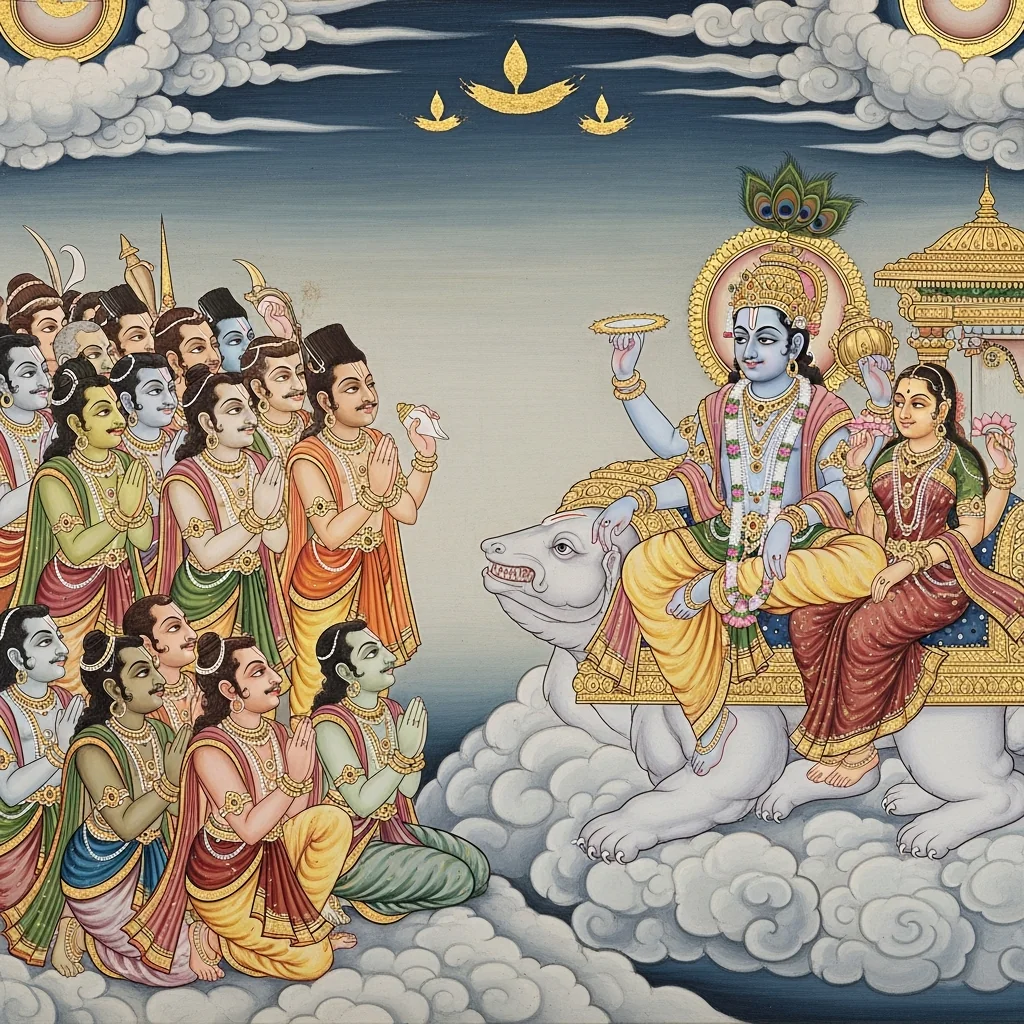
Lomasha recounts the renewed churning of the ocean for amṛta: Dhanvantari arises bearing the nectar-pot, but the asuras seize it by force. The bewildered devas seek refuge in Nārāyaṇa, who consoles them and assumes the form of Mohinī to regain command over the distribution. Discord breaks out among the asuras, and Bali respectfully asks Mohinī to apportion the amṛta. With socially framed persuasion—including a caution offered as worldly counsel—Mohinī imposes a ritual delay of fasting, an overnight vigil, and a morning bath; the asuras then sit in orderly rows. Mohinī arranges the serving so that the devas receive the nectar. Rāhu and Ketu disguise themselves among the devas; when Rāhu attempts to drink, the Sun and Moon expose him, and Viṣṇu beheads him, with cosmic disturbance attributed to the severed body. The tale then anchors its effects in sacred geography, explaining Mahādeva’s stance and the origins of place-names such as Pīḍana and Mahālaya; Ketu vanishes after returning the amṛta. The chapter closes with an explicit teaching that daiva (divine ordering/fate) surpasses mere human exertion, followed by the asuras’ furious reaction.
Shlokas
Verse 1
लोमश उवाच । प्रणम्य परमात्मानं रमायुक्तं जनार्द्दनम् । अमृतार्थं ममंथुस्ते सुरासुरगणाः पुनः
Lomaśa said: Having bowed to Janārdana—the Supreme Self, united with Ramā (Śrī)—the hosts of gods and asuras once more churned the ocean for the sake of amṛta, the nectar of immortality.
Verse 2
उदधेर्मथ्यमानाच्च निर्गतः सुमहायशाः । धन्वंतरिरिति ख्यातो युवा मृत्युञ्जयः परः
And as the ocean was being churned, there emerged one of great renown—known as Dhanvantari—youthful, supreme, and a conqueror of death.
Verse 3
पाणिभ्यां पूर्णकलशं सुधायाः परिगृह्य वै । यावत्सर्वे सुराः सर्वे निरीक्षंते मनोहरम्
Holding with both hands a brimming pot of sudhā (nectar), he stood there, while all the gods gazed upon that delightful sight.
Verse 4
तदा दैत्याः समं गत्वा हर्तुकामा बलादिव । सुधया पूर्णकलशं धन्वंतरिकरे स्थितम्
Then the Daityas approached together, eager to seize it by force, aiming for the pot filled with nectar that was in Dhanvantari’s hand.
Verse 5
यावत्तरंगमालाभिरावृतोऽभूद्भिषक्तमः । शनैः शनैः समायातो दृष्टोऽसौ वृषपर्वणा
While the foremost physician was veiled by garlands of waves, he came forward little by little; and Vṛṣaparvan beheld him.
Verse 6
करस्थः कलशस्तस्य हृतस्तेन बलादिव । असुराश्च ततः सर्वे जगर्जुरतिभीषणम्
The pot that was in his hand was snatched away, as if by sheer force; then all the Asuras roared with dreadful fury.
Verse 7
कलशं सुधया पूर्णं गृहीत्वा ते समुत्सुकाः । दैत्याः पातालमाजग्मुस्तदा देवा भ्रमान्विताः
Seizing the pot brimming with nectar, the Daityas, thrilled with eagerness, descended to Pātāla; then the gods were thrown into bewilderment.
Verse 8
अनुजग्मुः सुसंनद्धा योद्धुकामाश्च तैः सह । तदा देवान्समालोक्य बलिरेवमभाषत
They pursued them, fully armed and eager to fight at their side. Then Bali, beholding the gods, spoke as follows.
Verse 9
बलिरुवाच । वयं तु केवलं देवाः सुधया परितोषिताः । शीघ्रमेव प्रगंतव्यं भवद्भिश्च सुरोत्तमैः
Bali said: “We alone are the ‘gods,’ contented with the nectar. You too, O best among the Suras, must depart at once.”
Verse 10
त्रिविष्टपं मुदा युक्तैः किमस्माभिः प्रयोजनम् । पुरास्माभिः कृतं मैत्रं भवद्भिः स्वार्थतत्परैः । अधुना विदितं तत्तु नात्र कार्या विचारणा
“What need have we of Triviṣṭapa, even if it be joined with joy? Formerly we made friendship with you, yet you are intent only on your own gain. Now that this is known, there is no further need for deliberation here.”
Verse 11
एवं निर्भार्त्सितास्तेन बलिना सुरसत्तमाः । यथागतेन मार्गेण जग्मुर्नारायणं प्रभुम्
Thus rebuked by Bali, the foremost of the gods departed by the very path they had come and went to Lord Nārāyaṇa.
Verse 12
तं दृष्ट्वा विष्णुना सर्वे सुरा भग्नमनोरथा । आश्वासिता वचोभिश्च नानानुनयको विदैः
On seeing Viṣṇu, all the gods—whose hopes had been shattered—were consoled by his words, skilful in many modes of reassurance and persuasion.
Verse 13
मा त्रासं कुरुतात्रार्थ आनयिष्यामि तां सुधाम् । एवमाभाष्य भगवान्मुकुन्दोऽनाथसंश्रयः
“Do not be afraid about this matter; I shall bring that sudhā, the nectar.” Having spoken thus, the Blessed Lord Mukunda—refuge of the refuge-less—prepared to act.
Verse 14
स्थापयित्वा सुरान्सर्वांस्तत्रैव मधुसूदनः । मोहनीरूपमास्थाय दैत्यनामग्रतोऽभवत्
Having stationed all the gods right there, Madhusūdana assumed the form of Mohinī and appeared before the Dānavas (Daityas).
Verse 15
तावद्दैत्याः सुसंरब्धाः परस्परमथाब्रुवन् । विवादः सर्वदैत्यानाममृतार्थे तदाऽभवत्
Meanwhile the Daityas, greatly agitated, spoke among themselves; then a quarrel arose among all the Daityas concerning the amṛta, the nectar of immortality.
Verse 16
एवं प्रवर्तमाने तु मोहिनीरूपमाश्रिताम् । दृष्ट्वा योषां तदा दैवात्सर्वभूतमनोरमाम्
As events proceeded thus, they beheld—by fate—a woman who had assumed the form of Mohinī, enchanting to all beings.
Verse 17
विस्मयेन समाविष्टा बभूवुस्तृषितेक्षणाः । तां संमान्य तदा दैत्यराजो बलिरुवाच ह
Overwhelmed with wonder, they became fixed upon her with longing eyes. Then, honoring her, Bali—the king of the Daityas—spoke.
Verse 18
बलिरुवाच । सुधा त्वया विभक्तव्या सर्वेषां गतिहेतवे । शीघ्रत्वेन महाभागे कुरुष्व वचनं मम
Bali said: “The nectar must be apportioned by you, for the attainment and welfare of all. O fortunate lady, quickly do as I ask.”
Verse 19
एवमुक्ता ह्युवाचेदं स्मयमाना बलिं प्रति । स्त्रीणां नैव च विश्वासः कर्तव्यो हि विपश्चिता
Thus addressed, she replied—smiling at Bali: “Indeed, the wise should not place trust in women.”
Verse 20
अनृतं साहसं माया मूर्खत्वमति लोभता । अशौचं निर्घृणत्वं च स्त्रीणां दोषाः स्वभावजाः
“Falsehood, rash violence, deceit, foolishness, excessive greed, impurity, and lack of compassion—these are declared to be the natural-born faults attributed here to women.”
Verse 21
निःस्नेहत्वं च विज्ञेयं धूर्तत्वं चैव तत्त्वतः । स्वस्त्रीणां चैव विज्ञेया दोषा नास्त्यत्र संशयः
One should know in truth the absence of affection and also deceitfulness; these are to be understood as faults even in one’s own womenfolk—of this there is no doubt.
Verse 22
यथैव श्वापदानां च वृका हिंसापरायणाः । काका यतांडजानां च श्वापदानां च जंबुकाः । धूर्ता तथा मनुष्याणां स्त्रीज्ञेया सततं बुधैः
Just as wolves among wild beasts are ever intent on violence, and as crows among egg-born creatures, and jackals among beasts, are known for their cunning—so too, among human beings, a woman is understood by the wise as ever deceitful.
Verse 23
मया सह भवद्भिश्च कथं सख्यं प्रवर्तते । सर्वथात्र न विज्ञेयाः के यूयं चैव क ह्यहम्
“How can true friendship arise between you all and me? For here, in every way, it is not known—who you are, and indeed who I am.”
Verse 24
तस्माद्भवद्भिः संचिंत्यकार्याकार्यविचक्षणैः । कर्तव्यं परया बुद्ध्या प्रयातासुरसत्तमाः
Therefore, O best among the Asuras, you who are discerning in judging what ought to be done and what ought not, should reflect well and then act with the highest wisdom, setting forth accordingly.
Verse 28
बलिरुवाच । अद्यामृतं च सर्वेषां विभजस्व यथातथम् । त्वया दत्तं च गृह्णीमः सत्यंसत्यं वदामि ते
Bali said: “Today, distribute the nectar among all, in due measure and as is fitting. And whatever is given by you, we accept—this is the truth; truly, I say this to you.”
Verse 29
एवमुक्ता तदा देवी मोहिनी सर्वमंगला । उवाचाथासुरान्सर्वान्रोचयंल्लौकिकीं स्थितिम्
Thus addressed, the Goddess Mohinī—ever all-auspicious—then spoke to all the Asuras, commending to them a worldly course of conduct.
Verse 30
भगवानुवाच । यूयं सर्वे कृतार्थाश्च जाता दैवेन केनचित् । अद्योपावाससंयुक्ता अमृतस्याधिवासनम्
The Blessed Lord said: “All of you have indeed fulfilled your aim, by the working of some divine dispensation. Today, joined to the observance of fasting (upavāsa), you have become fit for consecration and for receiving amṛta, the nectar akin to immortality.”
Verse 31
क्रियतामसुराः श्रेष्ठाः शुभेच्छा किंचिदस्ति वः । श्वेभूते पारणं कुर्याद्व्रतार्चनरतिश्च वः
“Let it be done, O foremost among the Asuras—if there is any auspicious intention in you. When tomorrow arrives, duly conclude the fast with pāraṇa, and let your delight be in the worship that accompanies the vowed observance.”
Verse 32
न्यायोपार्जितवित्तेन दशमांशेन धीमता । कर्तव्यो विनियोगश्च ईशप्रीत्यर्थहेतवे
With wealth earned by righteous means, the wise should set aside a tenth share and duly allocate it, for the sake of pleasing Īśa, the Lord—this being the very purpose and cause of such giving.
Verse 33
तथेति मत्वा ते सर्वे यथोक्तं देवमायया । चक्रुस्तथैव दैतेया मोहिता नातिकोविदाः
Thinking, “So be it,” all those Daityas—bewildered by the divine power of Māyā and not very discerning—did exactly as was instructed.
Verse 34
मयासुरेण च तदा भवनानि कृतानि वै । मनोज्ञानि महार्हाणि सुप्रभाणि महांति च
Then indeed the Asura Māyā built splendid mansions—delightful to the mind, exceedingly precious, brilliantly radiant, and vast.
Verse 35
तेषुपविष्टास्ते सर्वे सुस्नाताः समलंकृताः । स्थापयित्वा सुसंरब्धाः पूर्णं कलशमग्रतः
Seated there, all of them—well bathed and adorned—eagerly placed a filled water-pot (kalaśa) before them.
Verse 36
रात्रौ जागरणं सर्वैः कृतं परमया मुदा । अथोषसि प्रवृत्ते च प्रातःस्नानयुता भवन्
At night they all kept vigil with great delight; and when dawn arrived, they engaged in the morning bath.
Verse 37
असुरा बलिमुख्याश्च पंक्तिभूता यताक्रमम् । सर्वमावश्यकं कृत्वा तदा पानरता भवन्
The Asuras, with Bali at their head, sat in rows in due order; having completed all the required formalities, they then became intent on drinking.
Verse 38
बलिश्च वृषपर्वा च नमुचिः शंख एव च । सुदंष्ट्रश्चैव संह्लादी कालनेमिर्विभीषणः
Bali and Vṛṣaparvan, Namuci and Śaṅkha; Sudaṃṣṭra, Saṃhlāda, Kālanemi, and Vibhīṣaṇa—all were present.
Verse 39
वातापिरिल्वलः कुम्भो निकुम्भः प्रच्छदस्तथा । तथा सुन्दोपसुन्दौ च निशुम्भः शुम्भ एव च
Vātāpi and Ilvala, Kumbha and Nikumbha, and also Pracchada; likewise Sunda and Upasunda, Niśumbha and Śumbha as well—were present.
Verse 40
महिषो महिषाक्षश्च बिडालाक्षः प्रतापवान् । चिक्षुराख्यो महाबाहुर्जृभणोऽथ वृषासुरः
Mahiṣa and Mahiṣākṣa, the mighty Biḍālākṣa; Cikṣura by name, the great-armed one; and Jṛbhaṇa, and then Vṛṣāsura—all were present.
Verse 41
विबाहुर्बाहुको घोरस्तथा वै घोरदर्शनः । एते चान्ये च बहवो दैत्यदानवराक्षसाः । यथाक्रमं चोपविष्टा राहुः केतुस्तथैव च
Vibāhu, Bāhuka, Ghōra, and indeed Ghōradarśana; these and many other Daityas, Dānavas, and Rākṣasas sat down in due order—along with Rāhu and Ketu as well.
Verse 42
तेषां तु कोटिसंख्यानां दैत्यानां पंक्तिरास्थिता
Indeed, of those Daityas numbering in crores, rows were formed and set in place.
Verse 43
ततस्तया तदा देव्या अमृतार्थं हि वै द्विजाः । यज्जातं तच्छृणौध्वं हि तया देव्या कृतं महत्
Then, O twice-born ones, for the sake of the nectar (amṛta), that Goddess performed a mighty deed. Listen now to what happened as a result of her action.
Verse 44
सर्वे विज्ञापिताः सद्यो गृहीतकलशा तदा । शोभया परया युक्ता साक्षात्सा विष्णुमोहिनी
All were informed at once, and then she took up the pitcher. Adorned with supreme beauty, she was manifestly Mohinī—the enchanting form of Viṣṇu.
Verse 45
करस्थेन तदा देवी कलशेन विराजिता । शुशुभे परया कांत्या जगन्मंगलमंगला
Then the Goddess, radiant with the pitcher held in her hand, shone with supreme splendour—she who is the auspiciousness of all that is auspicious for the world.
Verse 46
परिवेषधराः सर्वे सुरास्ते ह्यसुरांतिकम् । आगतास्तत्क्षणादेव यत्र ते ह्यसुरोत्तमाः
All those gods, assuming the guise of attendants who serve food and drink, came at once to the place near the asuras—where those foremost among demons were gathered.
Verse 47
तान्दृष्ट्वा मोहिनी सद्य उवाच प्रमदोत्तमा
Seeing them, Mohinī—the foremost among enchanting women—spoke at once.
Verse 48
मोहिन्युवाच । एते ह्यतिथयो ज्ञेया धर्म्मसर्वस्वसाधनाः । एभ्यो देयं यताशक्त्या यदि सत्यं वचो मम । प्रमाणं भवतां चाद्य कुरुध्वं मा विलंबथ
Mohinī said: “These are to be regarded as guests, and serving them is the very essence and accomplishment of dharma. Give to them according to your capacity—if my words are true. Make it your settled rule today; do not delay.”
Verse 49
परेषामुपकारं च ये कुर्वंति स्वशक्तितः । धन्यास्ते चैव विज्ञेयाः पवित्राः लोकपालकाः
Those who, according to their own ability, render help to others are to be known as truly blessed—purifying in nature, and as protectors of the world.
Verse 50
केवलात्मोदरार्थाय उद्योगं ये प्रकुर्वते । ते क्लेशभागिनो ज्ञेया नात्र कार्या विचारणा
But those who exert themselves only for their own belly alone are to be known as sharers in suffering; of this there is no need for further deliberation.
Verse 51
तस्माद्विभजनं कार्यं मयैतस्य शुभव्रताः । देवेभ्यश्च प्रयच्छध्वं यद्धि चात्मप्रियाप्रियम्
Therefore, O you of holy vows, this distribution should be carried out by me. And you should offer a share to the devas as well—whether it be pleasing or not pleasing to oneself.
Verse 52
इत्युक्ते वचने देव्या तथा चक्रुरतं द्रिताः । आह्वयामासुरसुराः सर्वान्देवान्सवासवान्
When the Goddess had spoken thus, they acted accordingly without negligence. The asuras then summoned all the gods—together with Indra (Vāsava).
Verse 53
उपविष्टाश्च ते सर्वे अमृतार्थं च भो द्विजाः । तेषूपविश्यमानेषु ह्युवाच परमं वचः । मोहिनी सर्वधर्म्मज्ञा असुराणां स्मयन्निव
O brāhmaṇas, they all sat down desiring the nectar of immortality. And as they were taking their seats, Mohinī—knower of every rule of conduct—spoke a supreme utterance, as though smiling at the Asuras.
Verse 54
मोहिन्युवाच । आदौ ह्यभ्यागताः पूज्या इति वै वैदिकी श्रुतिः
Mohinī said: “Indeed, Vedic revelation declares that guests who arrive should be honored first.”
Verse 55
तस्माद्यूयं वेदपराः सर्वे देवपरायणाः । ब्रुवंतु त्वरितेनैव आदौ केषां ददाम्यहम् । अमृतं हि महाभागा बलिमुख्या वदंतु भोः
“Therefore, since you are all devoted to the Veda and intent upon the gods, speak quickly: to whom shall I give the nectar first? O fortunate ones—let the leaders headed by Bali declare it!”
Verse 56
बलिनोक्ता तदा देवी यत्ते मनसि रोचते । स्वामिनी त्वं न संदेहो ह्यस्माकं सुंदरानने
Then Bali spoke to the goddess: “Whatever pleases your mind—do that. Without doubt you are our mistress, O beautiful-faced one.”
Verse 57
एवं संमानिता तेन बलिना भावितात्मना । परिवेषणकार्यार्थं कलशं गृह्य सत्वरा
Thus honored by Bali of resolute mind, she quickly took up the pitcher for the task of serving and distribution.
Verse 58
तस्मान्नरेन्द्रकरभोरुलसद्दृकूला श्रोणीतटालसगतिर्मविह्वलांगी । सा कूजती कनकनूपुरसिंजितेन कुंभस्तनी कलशपाणिरथाविवेश
Then that enchantress, unbewildered in limb—her eyes bright at the corners, her gait graceful with the sway of her hips—entered; her golden anklets chimed as she moved, full-breasted, holding the pitcher in her hand.
Verse 59
तदा तु देवी परिवेषयंती सा मोहिनी देवगणाय साक्षात् । ववर्ष देवेषु सुधारसं पुनः पुनः सुधाहाररसामृतं यथा
Then the goddess Mohinī, serving the hosts of gods in person, poured upon the Devas the very essence of nectar again and again—like the immortal savor of ambrosial food.
Verse 60
पुनश्च ते देवगणाः सुधारसं दत्तं तया परया विश्वमूर्त्या । बलिमुख्याः सह लोकपाला गंधर्वयक्षाप्सरसां गणाश्च
And again the hosts of gods received the nectar-essence bestowed by her—the Supreme One of universal form—while Bali and his chiefs, along with the guardians of the worlds and the companies of Gandharvas, Yakṣas, and Apsarases, looked on.
Verse 61
सर्वे दैत्या आसनस्था पुनश्च ते देवगणाः सुधारसं दत्तं पीडिताश्च । तूष्णींभूता बलिमुख्या द्विजेंद्रा मनस्विनो ध्यानपरा बभूवुः
All the Daityas remained seated, while again the hosts of gods were given the nectar-essence—and the Daityas were distressed. The chiefs headed by Bali fell silent, O best of brāhmaṇas, and those strong-minded ones became absorbed in brooding contemplation.
Verse 62
ततस्तथाविधान्दृष्ट्वा दैत्यांस्तान्मोहमाश्रितान् । तदा राहुश्च केतुश्च द्वावेतौ दैत्यपुंगवौ
Then, seeing those Daityas fallen into such delusion, thereupon Rāhu and Ketu—those two foremost among the Daityas—appeared upon the scene.
Verse 63
देवानां रूपमास्थाय अमृतार्थं त्वरान्वितौ । उपविष्टौ तदा पङ्क्त्यां देवानाममृतार्थिनौ
Assuming the form of the gods and hastening for the sake of the amṛta of immortality, the two—craving amṛta—then sat down in the row among the gods.
Verse 64
यदामृतं पातुकामो राहुः परमदुर्जयः । चन्द्रार्काभ्यां प्रकथितो विष्णोरमिततेजसः
When Rāhu—most difficult to overcome—desired to drink the nectar, he was reported by the Moon and the Sun to Viṣṇu of immeasurable splendor.
Verse 65
तदा तस्य शिरश्छिन्नं राहोर्दुर्विग्रहस्य च । शिवरो गगनमापेदे कबंधं च महीतले । भ्रममाणं तदा ह्यद्रींश्चूर्णयामास वै तदा
Then the head of that ill-formed Rāhu was severed; the head rose into the sky, while the trunk fell upon the earth. Whirling about, that body then crushed the mountains into fragments.
Verse 66
साद्रिश्च सर्वभूलोकश्चूर्णितश्च तदाऽभवत् । तया तेन च देहेन चूर्णितं सचराचरम्
Then the entire earth-world, together with its mountains, was pulverized; by that very body, all that moves and all that is still was crushed.
Verse 67
दृष्ट्वा तदा महादेवस्तस्योपरि तु संस्थितः । निवासः सर्वदेवानां तस्याः पादतलेऽभवत्
Seeing this, Mahādeva then stood upon it; and beneath his feet there came to be a dwelling-place for all the gods.
Verse 68
पीडनं तत्समीपेथ निवास इति नाम वै
Near that crushing (spot), indeed, the place is known by the name “Nivāsa.”
Verse 69
महतामालयं यस्माद्यस्यास्तच्चरणांबुजम् । महालयेति विख्याता जगत्त्रयविमोहिनी
Because her lotus-feet are an abode for the great, she is renowned as “Mahālayā”—the enchantress who beguiles the three worlds.
Verse 70
केतुश्च धूमरूपोऽसावाकाशे विलयं गतः । सुधां समर्प्य चंद्राय तिरोधानगतोऽभवत्
And Ketu, assuming a smoky form, dissolved into the sky; having offered the nectar to the Moon, he vanished from sight.
Verse 71
वासुदेवो जगद्योनिर्जगतां कारणं परम् । विष्णोः प्रसादात्तज्जातं सुराणां कार्यसिद्धिदम्
Vāsudeva is the womb of the world, the supreme cause of all creation. Through Viṣṇu’s grace this came to be, granting the gods the fulfillment of their purpose.
Verse 72
असुराणां विनाशाय जातं दैवविपर्ययात् । विना दैवेन जानीध्वमुद्यमो हि निरर्थकः
This came to pass for the destruction of the Asuras through the turning of destiny. Know well: without destiny—divine ordinance—human effort is indeed fruitless.
Verse 73
यौगपद्येन तैः सर्वैः क्षीराब्धेर्मंथनं कृतम् । सिद्धिर्जाता हि देवानामसिद्धिरसुरान्प्रति
Then all of them, acting in perfect unison, churned the Ocean of Milk. Success indeed arose for the Devas, while for the Asuras there came only failure.
Verse 74
ततश्च ते देववरान्प्रकोपिता दैत्याश्च मायाप्रवि मोहिताः पुनः । अनेकशस्त्रास्त्रयुतास्तदाऽभवन्विष्णौ गते गर्जमानास्तदानीम्
Thereupon those Daityas—enraged at the foremost of the Devas and again deluded, their minds seized by māyā—took up many weapons and astras; and when Viṣṇu had departed, they roared aloud at that very time.