Adhyaya 1
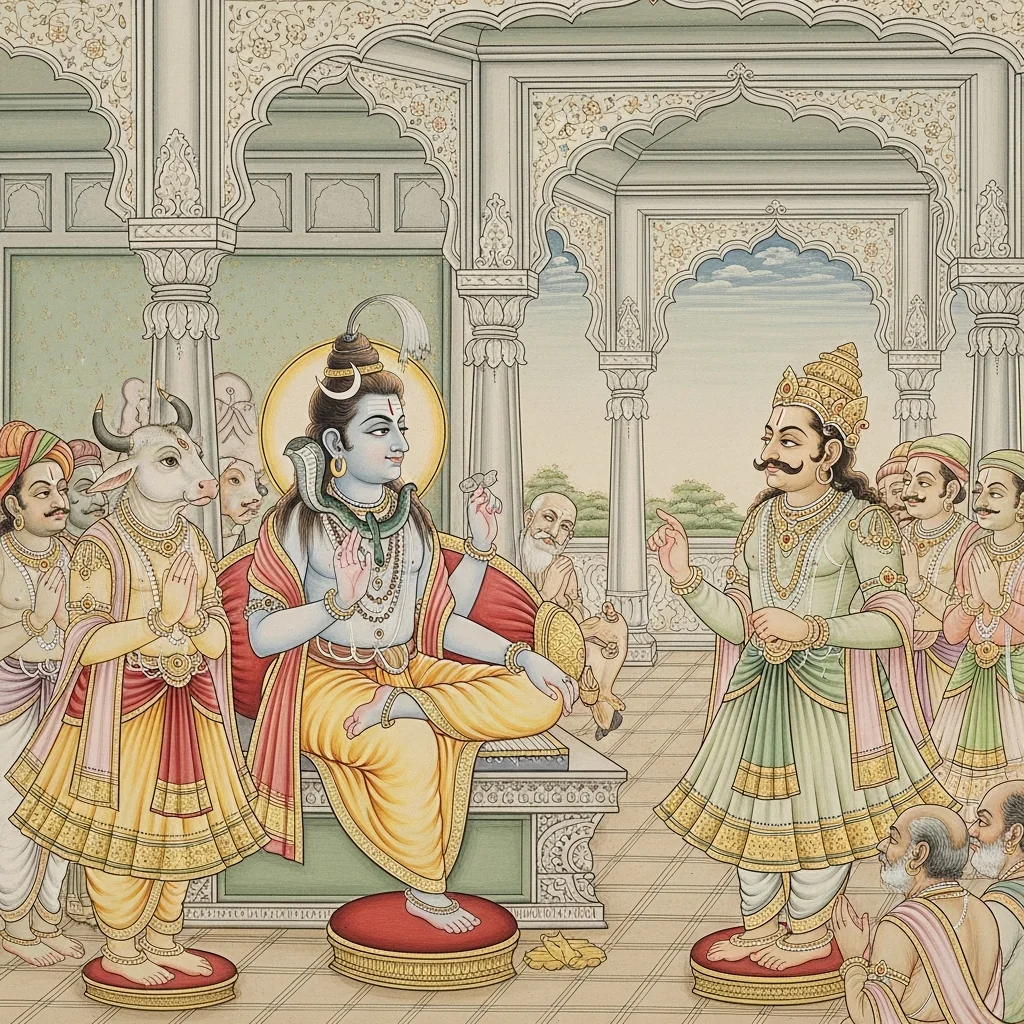
The chapter begins with customary Purāṇic invocations and sets the scene in Naimiṣāraṇya, where ascetic sages led by Śaunaka are engaged in a long sacrificial session. Lomasha, a learned ascetic in the Vyāsa lineage, arrives and is ritually welcomed. The sages request a systematic teaching of Śiva-dharma, asking about the merits of worship and devotional gifts—such as cleaning the shrine, making decorative designs, offering mirrors, fans, canopies, halls, and lamps—and about the fruits of sponsoring Purāṇa/Itihāsa recitation and Vedic study before Śiva. Lomasha replies that Śiva’s greatness is hard to describe in full; that the two-syllabled name “Śiva” bears powerful saving grace; and that crossing saṃsāra without Sadāśiva is futile. The narrative then turns to the Dakṣa episode: by Brahmā’s directive Satī is given to Śaṅkara; Dakṣa, offended when Śiva does not rise to greet him, reviles Śiva and his attendants and pronounces a curse. Nandin answers with a counter-curse against Dakṣa-aligned ritualism and social corruption. Śiva intervenes with ethical and theological instruction: anger toward Brahmins is improper; the Veda is mantra-formed and foundational; and true wisdom requires relinquishing conceptual proliferation and cultivating equanimity. The chapter ends with Dakṣa departing still hostile, persisting in criticism of Śiva and Śiva’s devotees.
Shlokas
Verse 1
अथ श्रीस्कान्दे महापुराणे प्रथमं माहेश्वरखण्डं प्रारभ्यते । श्रीगणेशाय नमः । ओंनमो भगवते वासुदेवाय । ओंनारायणं नमस्कृत्य नरं चैव नरोत्तमम् । देवीं सरस्वती चैव ततो जयमुदीरयेत्
Now begins, in the Śrī Skanda Mahāpurāṇa, the first division—the Māheśvara-khaṇḍa. Homage to Śrī Gaṇeśa. Oṁ—salutations to the Blessed Lord Vāsudeva. Having bowed to Nārāyaṇa, and to Nara, the best of men, and also to the goddess Sarasvatī, then one should proclaim victory.
Verse 2
तीर्थानामुत्तमं तीर्थं क्षेत्राणां क्षेत्रमुत्तमम् । तत्रैव नैमिषारण्ये सौनकाद्यास्तपोधनाः । दीर्घसत्रं प्रकुर्वंतः सत्रिणः कर्मचेतसः
In Naimiṣāraṇya—supreme among tīrthas and the most excellent of sacred regions—Śaunaka and the other sages, rich in austerity, were conducting a long sacrificial session, their minds intent on ritual duty.
Verse 3
तेषां सदर्शनौत्सुक्यादागतो हि महातपाः । व्यासशिष्यो महाप्राज्ञो लोमशोनाम नामतः
Eager to see them, there arrived the great ascetic—Vyāsa’s disciple, the highly wise sage known by name as Lomaśa.
Verse 4
तत्रागतं ते ददृशुर्मुनयो दीर्घसत्रिणः । उत्तस्थुर्युगपत्सर्वे सार्घ्यहस्ताः समुत्सुकाः
The sages engaged in the long sacrificial session saw him arrive there; all of them rose at once, eager, with offerings of arghya in their hands.
Verse 5
दत्त्वार्घ्यपाद्यं सत्कृत्य मुनयो वीतकल्मषाः । तं पप्रच्छुर्महाभागाः शिवधर्मं सविस्तरम्
Having offered arghya and water for washing the feet, and having honored him, the sinless sages of great fortune questioned him in detail about the dharma of Śiva.
Verse 6
ऋषय ऊचुः । कथयस्व महाप्राज्ञ देवदेवस्य शूलिनः । महिमानं महाभाग ध्यानार्चनसमन्वितम्
The sages said: O greatly wise one, O fortunate one—tell us the greatness of Śūlin, the God of gods, together with the disciplines of meditation and worship.
Verse 7
संमार्जने किं फलं स्यात्तथा रंगावलीषु च । प्रदाने दर्पणस्याथ तथा वै चामरस्य च
What sacred fruit arises from sweeping and cleansing the holy place, and likewise from drawing decorative patterns (raṅgāvalī)? And what merit is gained by gifting a mirror, and also a ceremonial fan (cāmara)?
Verse 8
प्रदाने च वितानस्य तथा धारागृहस्य च । दीपदाने किं फलं स्यात्पूजायां किं फलं भवेत्
And what merit lies in donating a canopy (vitāna), and likewise a water-shed pavilion (dhārāgṛha)? What fruit comes from offering lamps (dīpa-dāna), and what fruit arises from worship itself?
Verse 9
कानिकानि च पुण्यानि कथ्यतां शिवपूजने । इतिहासपुराणानि वेदाध्ययनमेव च
Please tell us of the many merits gained in the worship of Śiva—among them the merit of hearing or reciting the Itihāsas and Purāṇas, and indeed the merit of Vedic study as well.
Verse 10
शिवस्याग्रे प्रकुर्वंति कारयन्त्यथ वा नराः । किं फलं च नृणां तेषां कथ्यतां विस्तरेण हि
Whatever men perform as offerings before Śiva—or have performed by others—what fruit do they obtain thereby? Please tell it in full detail.
Verse 11
शिवाख्यानपरोलोके त्वत्तो नान्योऽस्ति वै मुने
In this world, O sage, there is none other than you who is devoted to recounting the sacred account of Śiva.
Verse 12
इति श्रुत्वा वचस्तेषां मुनीनां भावितात्मनाम् । उवाच व्यासशिष्योऽसौ शिवमाहात्म्यमुत्तमम्
Having heard the words of those sages, whose minds were disciplined, that disciple of Vyāsa spoke of the supreme greatness of Śiva.
Verse 13
लोमश उवाच । अष्टादशपुराणेषु गीयते वै परः शिवः । तस्माच्छिवस्य माहात्म्यं वक्तुं कोऽपि न पार्यते
Lomaśa said: In all the eighteen Purāṇas, the Supreme Śiva is indeed sung. Therefore, no one can fully express Śiva’s greatness.
Verse 14
शिवेति द्व्यक्षरं नाम व्याहरिइष्यंति ये जनाः । तेषां स्वर्गश्च मोक्षश्च भविष्यति न चान्यथा
Those who utter the two-syllabled name “Śiva”—for them there will be heaven and liberation; it cannot be otherwise.
Verse 15
उदारो हि महादेवो देवानां पतिरिश्वरः । येन सर्वं प्रदत्तं हि तस्मात्सर्व इति स्मृतः
Indeed Mahādeva is generous—the Lord, the sovereign of the gods. Since by Him everything has been bestowed, therefore He is remembered as “Sarva” (the All).
Verse 16
ते धन्यास्ते महात्मानो ये भजंति सदा शिवम्
Blessed indeed are those great souls who continually worship Śiva.
Verse 17
विना सदाशिवं योहि संसारं तर्तुमिच्छति । स मूढो हि महापापः शिवद्वेषी न संशयः
Whoever seeks to cross the ocean of saṃsāra without Sadāśiva is truly deluded—deeply sinful, and without doubt a hater of Śiva.
Verse 18
भक्षितं हि गरं येन दक्षयज्ञो विनाशितः । कालस्य दहनं येन कृतं राज्ञः प्रमोचनम्
He is the one who swallowed the deadly poison; he is the one by whom Dakṣa’s sacrifice was destroyed; he is the one who burned back Death itself and granted deliverance to a king.
Verse 19
ऋषय ऊचुः । यथा गरं भक्षितं च यथा यज्ञो विनाशितः । दक्षस्य च तथा ब्रूहि परं कौतूहलं हि नः
The sages said: “Tell us how the poison was swallowed, and how the sacrifice was destroyed—and likewise what befell Dakṣa. Great indeed is our curiosity.”
Verse 20
सूत उवाच । दाक्षायणी पुरा दत्ता शंकराय महात्मने । वचनाद्ब्रह्मणो विप्रा दक्षेण परमेष्ठिनः
Sūta said: “O brāhmaṇas, in former times Dākṣāyaṇī was given in marriage to the great-souled Śaṅkara—by the command of Brahmā—by Dakṣa, the illustrious lord of creatures.”
Verse 21
एकदा हि स दक्षो वै नैमिषारण्यमागतः । यदृच्छावशमापन्न ऋषिभिः परिपूजितः
Once, Dakṣa came to Naimiṣāraṇya, arriving as if by chance; and there he was duly honored by the sages.
Verse 22
स्तुतिभिः प्रणिपातैश्च तथा सर्वैः सुरासुरैः । तत्र स्थितो महादेवो नाभ्युत्थानाभिवादने । चकारास्य ततः क्रुद्धो दक्षो वचनब्रवीत्
Praised with hymns and bowed to by all—gods and asuras alike—Mahādeva stood there, yet he did not rise or offer a formal greeting. Then Dakṣa, angered, spoke these words.
Verse 23
सर्वत्र सर्वे हि सुरासुरा भृशं नमंति मां विप्रवराः समुत्सुकाः । कथं ह्यसौ दुर्जनवन्महात्मा भूतादिभिः प्रेतपिशाचयुक्तः । श्मशानवासी निरपत्रपो ह्ययं कथं प्रणामं न करोति मेऽधुना
“Everywhere, all gods and asuras bow deeply to me, O best of brāhmaṇas, eager to honor me. How is it that this ‘great soul’, behaving like a wicked man—attended by goblins, ghosts, and piśācas, dwelling in cremation-grounds, shameless—does not now bow to me?”
Verse 24
पाखंडिनो दुर्जनाः पापशीला विप्रं दृष्ट्वा चोद्धता उन्मदाश्च । वध्यास्त्याज्याः सद्भिरेवंविधा हि तस्मादेनं शापितुं चोद्यतोऽस्मि
“Such heretics—wicked and sinful by nature—become arrogant and frenzied even on seeing a brāhmaṇa. People of this sort are fit to be punished and cast out by the good; therefore I am resolved to curse him.”
Verse 25
इत्येवमुक्त्वा स महातपास्तदा रुषान्वितो रुद्रमिदं बभाषे
Having spoken thus, that great ascetic—filled with wrath—then addressed these words to Rudra.
Verse 26
श्रृण्वंत्वमी विप्रतमा इदानीं वचो हि मे कर्तुमिहार्हथैतत् । रुद्रो ह्ययं यज्ञबाह्यो वृतो मे वर्णातीतो वर्णपरो यतश्च
“Let these foremost brahmins listen now to my words and do what is fit here. For this Rudra has been kept outside the sacrifice by me—he is beyond caste and also the supreme over caste; therefore I have excluded him.”
Verse 27
नंदी निशम्य तद्वाक्यं शैलादो हि रुषान्वितः । अब्रवीत्त्वरितो दक्षं शापदं तं महाप्रभम्
Hearing those words, Nandī—the son of Śilāda—was filled with wrath and swiftly addressed Dakṣa, that mighty lord, with a curse upon his lips.
Verse 28
नन्द्युवाच । यज्ञबाह्यो हि मे स्वामी महेशोऽयं कृतः कथम् । यस्य स्मरणमात्रेण यज्ञाश्च सफला ह्यमी
Nandī said: “How has my Lord, this Maheśa, been made ‘outside the sacrifice’? By whose mere remembrance these very sacrifices become fruitful!”
Verse 29
यज्ञो दानं तपश्चैव तीर्थानि विविधानि च । यस्य नाम्ना पवित्राणि सोयं शप्तोऽधुना कथम्
“Sacrifice, charity, austerity, and the many kinds of sacred fords—these are purified by His very Name. How then can He be cursed now?”
Verse 30
वृथा ते ब्रह्मचापल्याच्छप्तोऽयं दक्ष दुर्मते । येनेदं पालितं विश्वं सर्वेण च महात्मना । शप्तोऽयं स कथं पाप रुद्रोऽयं ब्राह्मणाधम
“O Dakṣa of perverted mind, your curse is futile, born of brahminical arrogance. By that great Self, by whom this entire universe is upheld—how can that Rudra be cursed? O sinful one, O lowest of brahmins!”
Verse 31
एवं निर्भार्त्सितस्तेन नंदिना हि प्रजापतिः । नंदिनं च शशापाथ दक्षो रोषसमन्वितः
Thus harshly reprimanded by Nandī, the Prajāpati Dakṣa, filled with wrath, then cursed Nandī in return.
Verse 32
यूयं सर्वे रुद्रवरा वेदबाह्याश्च वै भृशम् । शप्ताहि वेदमार्गैश्च तथा त्यक्ता महर्षिभिः
“All of you—devotees of Rudra—shall be utterly outside the Vedic fold. You are cursed to be cut off from the Vedic path and abandoned by the great sages.”
Verse 33
पाषंडवादसंयुक्ताः शिष्टऽचारबहिष्कृताः । कपालिनः पानरतास्तथा कालमुखा ह्यमी
“They will be joined to heretical doctrines, expelled from the conduct of the cultured; they will become skull-bearing ascetics, addicted to drink, and known as Kālāmukhas.”
Verse 34
इति शप्तास्तदा तेन दक्षेण शिवकिंकराः । तदा प्रकुपितो नंदी दक्षं शप्तुं प्रचक्रमे
Thus were Śiva’s attendants cursed by Dakṣa; then Nandī, enraged, began to curse Dakṣa in return.
Verse 35
शप्ता वयं त्वया विप्र साधवः शिवकिंकराः । वृथैव ब्रह्मचापल्यादहं शापं ददामि ते
“O brahmin, we—upright servants of Śiva—have been cursed by you in vain, out of brahminical rashness. Therefore I now pronounce a curse upon you.”
Verse 36
वेदवादरता यूयं नान्यदस्तीतिवादिनः । कामात्मानः स्वर्गपरा लोभमोहसमन्विताः
“You are devoted only to disputing the Veda, proclaiming ‘there is nothing beyond this.’ Driven by desire, intent merely on heaven, you are entangled in greed and delusion.”
Verse 37
वैदिकं च पुरस्कृत्य ब्राह्मणाः शूद्रयाजकाः । दरिद्रिणो भविष्यंति प्रतिग्रहरताः सदा
Parading Vedic authority, the brāhmaṇas who officiate sacrifices for śūdras will fall into poverty, ever addicted to accepting gifts.
Verse 38
दक्ष केचिद्भविष्यन्ति ब्राह्मणा ब्रह्मराक्षसाः । लोमश उवाच । विप्रास्ते शपितास्तेन नंदिना कोपिना भृशम्
Some brāhmaṇas will become brahma-rākṣasas—clever indeed. Lomāśa said: “Those vipras were fiercely cursed by the wrathful Nandin.”
Verse 39
अथाकर्ण्येश्वरो वाक्यं नंदिनः प्रहसन्निव । उवाच वाक्यं मधुरं बोधययुक्तं सदाशिवः
Then, hearing Nandin’s words, the Lord—almost smiling—Sadāśiva spoke sweet speech, filled with instruction and clarity.
Verse 40
महादेव उवाच । कोपं नार्हसि वै कर्तुं ब्राह्मणान्प्रति वै सदा । ब्राह्मणागुरवो ह्येते वेदवादरताः सदा
Mahādeva said: “You should never direct anger toward brāhmaṇas. They are venerable teachers, ever devoted to the Veda and its recitation.”
Verse 41
वेदो मंत्रमयः साक्षात्तथा सूक्तमयो भृशम् । सूक्ते प्रतिष्ठितो ह्यात्मा सर्वेषामपि देहिनाम्
The Veda is directly made of mantras, and richly composed of hymns (sūktas). In those hymns the Self (Ātman) is established, indeed, for all embodied beings.
Verse 42
तस्मान्नात्मविदो निन्द्या आत्मैवाहं न चेतरः । कोऽयं कस्त्वं क्व चाहं वै कस्माच्छप्ता हि वै द्विजाः
Therefore, those who know the Self are not to be censured: the Self alone am I—there is no “other.” Who is this? Who are you? And where am I? For what reason, indeed, have the brāhmaṇas been cursed?
Verse 43
प्रपंचरचनां हित्वा बुद्धो भव महामते । तत्त्वज्ञानेन निर्वर्त्य स्वस्थः क्रोधादिवर्जितः
Abandon the weaving of worldly constructions; become awakened, O great-minded one. Accomplish this through knowledge of truth—be steady within yourself, free from anger and the like.
Verse 44
एवं प्रबोधितस्तेन शंभुना परमेष्ठिना । विवेकपरमो भूत्वा शैलादो हि महातपाः । शिवेन सह संगम्य परमानंदसंप्लुतः
Thus instructed by Śambhu, the Supreme Lord, the great ascetic Śailāda became foremost in discernment; and, meeting with Śiva, he was flooded with supreme bliss.
Verse 45
दक्षोपि हि रुषाऽविष्टऋषिभिः परिवारितः । ययौ स्थानं स्वकं तत्र प्रविवेश रुषाऽन्वितः
And Dakṣa too, seized by anger and surrounded by sages, went to his own abode and entered it still filled with wrath.
Verse 46
श्रद्धां विहाय परमां शिवपूजकानां निंदापरः स हि बभूव नराधमश्च । सर्वैर्महर्षिभिरुपेत्य स तत्र शर्वं देवं निनिन्द न बभूव कदापि शान्तः
Abandoning the highest reverence, he became intent on reviling Śiva’s devotees and thus turned into the lowest of men. Approaching that place along with all the great sages, he even criticized Śarva (Śiva), the God—and never, at any time, did he attain peace.