Adhyaya 53
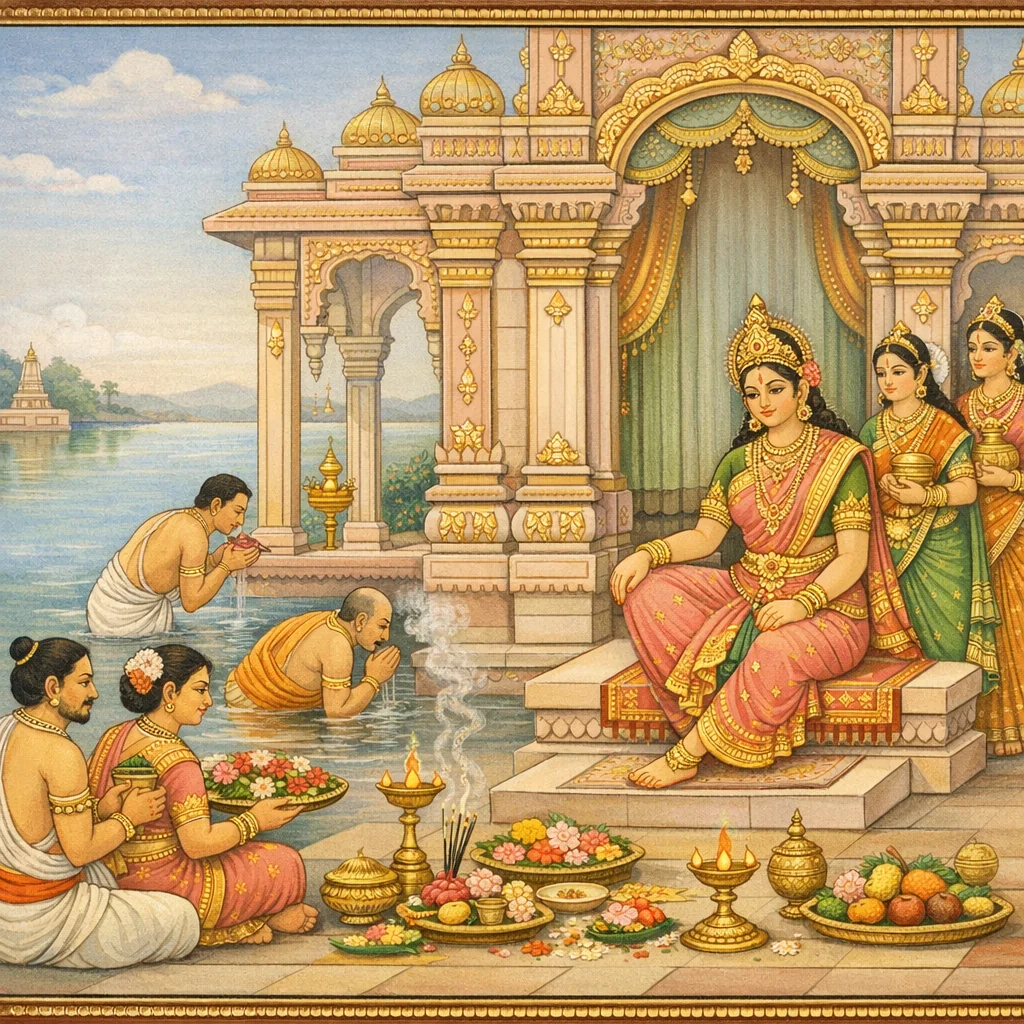
Chapter 53 is a composite account of tīrthas and rites spoken through Nārada. Concerned that a sacred site might vanish, Nārada worships the divine triad—Brahmā, Viṣṇu, and Maheśvara—and seeks a boon that the place will not disappear and will gain lasting renown; the triad grants protection through their partial presence (aṃśa). The chapter then lays out a ritual-legal safeguard: learned brāhmaṇas recite Vedic portions at fixed times—Ṛg in the forenoon, Yajus at midday, Sāman in the third watch—and when threatened, they utter a curse-formula before the śālā, declaring that an enemy will become ashes within specified time limits, as enforcement of the earlier vow of protection. Next it praises the Nārādīya-saras: Nārada excavates a pond and fills it with superior waters gathered from all tīrthas. Bathing and performing śrāddha/dāna there—especially in Āśvina on a Sunday—satisfies ancestors for immense durations, and the offerings are said to be akṣaya, imperishable in fruit. It also recounts nāga austerities to escape Kadru’s curse, culminating in the स्थापना of a Nāgeśvara-liṅga; worship there yields vast merit and lessens serpent-related fear. Finally, gate-associated goddesses (including “Apara-dvārakā” and a dvāravāsinī at a city gate) are described: bathing in a kuṇḍa and worship on prescribed dates (notably a Caitra kṛṣṇa-navamī and Āśvina navarātra) removes obstacles, fulfills aims, and grants prosperity and offspring, as the phalaśruti declares.
Shlokas
Verse 1
नारद उवाच । अथान्यत्संप्रवक्ष्यामि शालामाहात्म्य मुत्तमम् । संस्थापिते पुरा स्थाने प्रोक्तोहं द्विजपुंगवैः
Nārada said: Now I shall proclaim another excellent account—the greatness of Śālā. Long ago, at the sacred place already established, I was instructed about it by eminent Brāhmaṇas.
Verse 2
स्थानस्य रक्षणार्थाय उपायं कुरु सुव्रत । ततो मया प्रतिज्ञातं करिष्ये स्थान रक्षणम्
“For the protection of this sacred place, devise a means, O you of good vows.” Thereupon I made a vow: “I shall safeguard the holy site.”
Verse 3
आराधिता मया पश्चाद्ब्रह्मविष्णुमहेश्वराः । त्रयस्त्वेकाग्रचित्तेन ततस्तुष्टाः सुरोत्तमाः
Afterwards I worshipped Brahmā, Viṣṇu, and Maheśvara with one-pointed concentration. Thereupon those foremost of the gods—the three—became pleased.
Verse 4
समागम्याथ मां प्रोचुर्नारद व्रियतां वरः । प्रोक्तं तानार्च्य च मया क्रियतां स्थानरक्षणम्
Then they approached me and said: “O Nārada, choose a boon.” After honoring them in worship, I replied: “Let the protection of this sacred station be firmly secured.”
Verse 5
अयमेव वरो मह्यं देयो देवैः सुतोषितैः । स्थानलोपो यथा न स्याद्यथा कीर्तिर्भवेन्मम
“This alone is the boon to be granted to me by the gods, fully satisfied: may this sacred place suffer no decline or loss, and may enduring renown arise for me.”
Verse 6
एवमस्त्विति देवेशैः प्रतिज्ञातं तदा मुने । स्वांशेन प्रकरिप्याम द्विजानां तव रक्षणम्
Then the Lords of the gods promised: “So be it, O sage. By a portion of our own power we shall duly provide protection for your twice-born (brāhmaṇa) community.”
Verse 7
एवमुक्त्वा कला मुक्ता देवैस्त्रिपुरुषैः स्वयम् । अंतर्धानं ततः प्राप्ताः सर्वेऽपि सुरसत्तमाः
Having spoken thus, those three divine Persons themselves released their portion (kalā). Thereafter all those best of the gods disappeared from sight.
Verse 8
ततो मया द्विजैः सार्धं शालाग्रे स्थानरक्षणम् । स्थापिताश्च पृथग्देवास्त्रयस्त्रिभुवनेश्वराः
Then, together with the brāhmaṇas, I established the protection of the sacred precinct at the front of the hall (śālā). And there, separately, the three Lords of the three worlds were installed.
Verse 9
पीड्यमाना यदा विप्राः केनापि च भवंति हि । पूर्वाह्ने चापि ऋग्वेदं मध्याह्ने च यजूं ष्यथ
Whenever the brāhmaṇas are oppressed by anyone, then in the forenoon they recite the Ṛgveda, and at midday they recite the Yajurveda.
Verse 10
यामे तृतीये सामानि तारस्वरमधीत्य च । शापं यस्य प्रदास्यंति शालाग्रे भृशरोषिताः
In the third watch, after chanting the Sāmans in a high pitch, they—greatly enraged—pronounce a curse upon the offender at the front of the hall.
Verse 11
सप्ताहाद्वर्षमध्याद्वा त्रिवर्षाद्भस्मतां व्रजेत् । प्रतिज्ञाता स्थानरक्षा यदि वो नारदाग्रतः
Within a week, or within half a year, or within three years, the offender would be reduced to ashes—if, in Nārada’s presence, the protection of the sacred station has indeed been vowed by you.
Verse 12
सत्येन तेन नो वैरी भस्मीभवतु ह क्षणात् । अनेन शाप मंत्रेण भस्मीभवति निश्चितम्
By that truth, may our enemy become ashes this very instant. By this curse-mantra, he is certainly reduced to ashes—this is assured.
Verse 13
शालां त्रिपुरुषां तत्र यः पश्यति दिनेदिने । अर्चयेत्तोषयेच्चासौ स्वर्गलोके महीयते
Whoever, day after day, beholds there the Tripuruṣa-hall, and worships it and offers acts that please (the deity), is honored and exalted in the heavenly world.
Verse 14
इति त्रिपुरुषशालामाहात्म्यम् । नारद उवाच । अथान्यत्संप्रवक्ष्यामि मदीयसरसो महत्
Thus ends the glorification of the Tripuruṣa-hall. Nārada said: “Now I shall proclaim another account—the great majesty of the lake associated with me.”
Verse 15
माहात्म्यमतुलं पार्थ देवानामपि दुर्लभम् । मया पूर्वं सरः खातं दर्भांकुरशलाकया
O Pārtha, this greatness is incomparable—hard to attain even for the gods. Formerly, I myself dug this lake with a pointed stalk of darbha-grass.
Verse 16
मृत्तिका ताम्रपात्रेण त्यक्ता बाह्ये ततः स्वयम् । सर्वेषामेव तीर्थानामाहृत्योदक मुत्तमम्
Then the excavated earth was carried outside in a copper vessel; thereafter, I myself brought excellent water gathered from all the sacred bathing-places (tīrthas).
Verse 17
तत्तत्र सरसि क्षिप्तं तेन संपूरितं सरः । आश्विने मासि संप्राप्ते भानुवारे नरः शुचिः
That water was poured into the lake there, and by it the lake became filled. When the month of Āśvina arrives, on a Sunday, a pure man (should proceed there for the rite)…
Verse 18
श्राद्धं यः कुरुते तत्र स्नात्वा दानं विशेषतः । पितरस्तस्य तृप्यंति यावदाभूतसंप्लवम्
Whoever performs śrāddha there—having bathed and, especially, having given charity—his ancestors (pitṛs) are satisfied up to the time of cosmic dissolution.
Verse 19
नारदीयं सरो ह्येतद्विख्यात जगतीतले । महता पुण्ययोगेन देवैरपि हि लभ्यते
This Nāradīya lake is renowned upon the face of the earth; indeed, only through a great conjunction of merit can it be attained—even by the gods.
Verse 20
यदत्र दीयते दानं हूयते यच्च पावके । सर्वं तदक्षयं विद्याज्जपानशनसाधनात्
Whatever charity is given here, and whatever is offered into the sacred fire, know all of that to be imperishable—through the power of japa and religious observances such as fasting.
Verse 21
नारदीये सरःश्रेष्ठे स्नात्वा यो नारदेश्व रम् । पूजयेच्छ्रद्धया मर्त्यः सर्वपापैः प्रमुच्यते
In the excellent Nāradīya lake, having bathed, the mortal who worships Nāradeśvara with faith is released from all sins.
Verse 22
अत्र तीर्थे पुरा पार्थ सर्वनागैस्तपः कृतम् । कद्रूशापस्य मोक्षार्थमात्मनो हितका म्यया
At this tīrtha of old, O Pārtha, all the Nāgas performed austerities, desiring their own welfare and seeking release from Kadru’s curse.
Verse 23
ततः सिद्धिं परां प्राप्ता एतर्त्तार्थप्रभावतः । ततो नागेश्वरं लिंगं स्थापयामासुरूर्जितम्
Then, by the power of this sacred account itself, they attained the highest spiritual success. Thereafter they established the mighty Liṅga of Nāgeśvara.
Verse 24
नारदादुत्तरे भागे सर्वे नागाः प्रहर्षिताः । नारदीये सरःश्रेष्ठे यः स्नात्वा पूजयेद्धरम्
To the north of the place associated with Nārada, all the Nāgas rejoice. Whoever bathes in the excellent lake called Nāradīya and then worships Hara (Śiva)…
Verse 25
नागेश्वरं महाभक्त्या तस्य पुण्यमनन्तकम् । तेषां सर्पभयं नास्ति नागानां वचनं यथा
Whoever worships Nāgeśvara with great devotion—his merit becomes endless. For such people there is no fear of serpents, according to the word of the Nāgas.
Verse 26
इति नारदीयसरोमाहात्म्यम् । नारद उवाच । अपरद्वारकानाम देवी चात्रास्ति पांडव
Thus ends the Māhātmya of Nāradīya Lake. Nārada said: “O Pāṇḍava, here too there is a Goddess named Aparadvārakā.”
Verse 27
सा च ब्रह्मांडद्वारे वै सदैव विहितालया । चतुर्विंशतिकोटीभिर्देवीभिः परिरक्षिता
And that Goddess has her ordained abode at the “Gate of the Cosmic Egg” (Brahmāṇḍa-dvāra) forever; she is guarded on all sides by twenty-four crores of goddesses.
Verse 28
ततो दीर्घं तपस्तप्त्वा मयानीतात्र तोषिता । अपरस्मिंस्ततो द्वारे स्था पिता परमेश्वरी
Then, after performing long austerities, she was brought here by me and was well pleased. Thereafter, at another gateway, the Supreme Goddess was established.
Verse 29
पूर्वस्मिन्नगरद्वारे स्थापिता द्वारवासिनी । नवमी चैत्रमासस्य कृष्णपक्षे भवेत्तु या
At the eastern gate of the city, the Goddess known as the Dweller-at-the-Gate (Dvāravāsinī) was installed. Her sacred observance is on the ninth lunar day (Navamī) of the dark fortnight (Kṛṣṇa-pakṣa) in the month of Caitra.
Verse 30
कुण्डे स्नानं नरः कृत्वा तां च देवीं प्रपूजयेत् । बलिबाकुलनैवेद्यैर्गन्धधूपादिपूजनैः
After bathing in the sacred pond (kuṇḍa), one should worship that Goddess with wholehearted devotion—offering bali, bakula-flowers, and naivedya, and performing pūjā with fragrance, incense (dhūpa), and the like.
Verse 31
सप्तजन्मकृतं पापं नाशमायाति तत्क्षणात् । यान्यान्प्रार्थयते कामांस्तांस्ताना प्नोति मानवः
The sins amassed over seven births perish at that very moment. Whatever desires a person prays for, those very wishes are attained.
Verse 32
वन्ध्या च लभते पुत्रं स्नानमात्रेण तत्र वै । नवम्यां चैत्रमासस्य पुष्पधूपार्घ्यपूजया
Even a barren woman truly gains a son there by bathing alone. And on the ninth day (Navamī) of the month of Caitra, by worship with flowers, incense (dhūpa), and arghya-offerings…
Verse 33
विघ्नानि नाशयेद्देवी सर्व सिद्धिं प्रयच्छति । भक्तानां तत्क्षणादेव सत्यमेतन्न संशयः
The Goddess destroys obstacles and bestows every attainment (siddhi). For her devotees it happens at once—this is truth, without doubt.
Verse 34
उत्तरद्वारकां चापि पूज्यैवं विधिवन्नरः । एतदेव फलं सोपि प्राप्नुयान्मान वोत्तमः
Likewise, a man should worship Uttaradvārakā in this very manner, according to the proper rite; that best of men will obtain the same fruit as well.
Verse 35
पूर्वद्वारे तु वै देवी या स्थिता द्वारवासिनी । तस्याः पूजनमात्रेण प्राप्नुयाद्वांछितं फलम्
At the eastern gate indeed stands the Goddess, the Dweller at the threshold. By her worship alone one obtains the fruit one desires.
Verse 36
आश्विने मासि संप्राप्ते नव रात्रे विशेषतः । उपोष्य नवरात्रं च स्नात्वा कुण्डे समाहितः
When the month of Āśvina arrives—especially during the nine nights—having observed the Navarātra fast and bathed in the sacred pond, one should remain composed and intent.
Verse 37
पूजयेद्देवतां भक्त्या पुष्पधूपान्नतर्पणैः । अपुत्रो लभते पुत्रान्निर्धनो लभते धनम्
One should worship the deity with devotion—using flowers, incense, food offerings, and acts of satiation. The childless gains children; the poor gains wealth.
Verse 38
वन्ध्या प्रसूयते पार्थ नात्र कार्या विचारणा
Even a barren woman bears a child, O Pārtha; here there is no need for doubt or deliberation.
Verse 53
इति श्रीस्कांदे महापुराण एकाशीतिसाहस्र्यां संहितायां प्रथमे माहेश्वर खण्डे कौमारिकाखंडे कोटितीर्थादिमाहात्म्यवर्णनंनाम त्रिपंचाशत्तमोऽध्यायः
Thus ends the fifty-third chapter, entitled “The Description of the Greatness of Koṭitīrtha and other holy places,” in the Kaumārikā Khaṇḍa of the first Māheśvara Khaṇḍa of the Śrī Skanda Mahāpurāṇa, within the Saṃhitā of eighty-one thousand verses.