Adhyaya 31
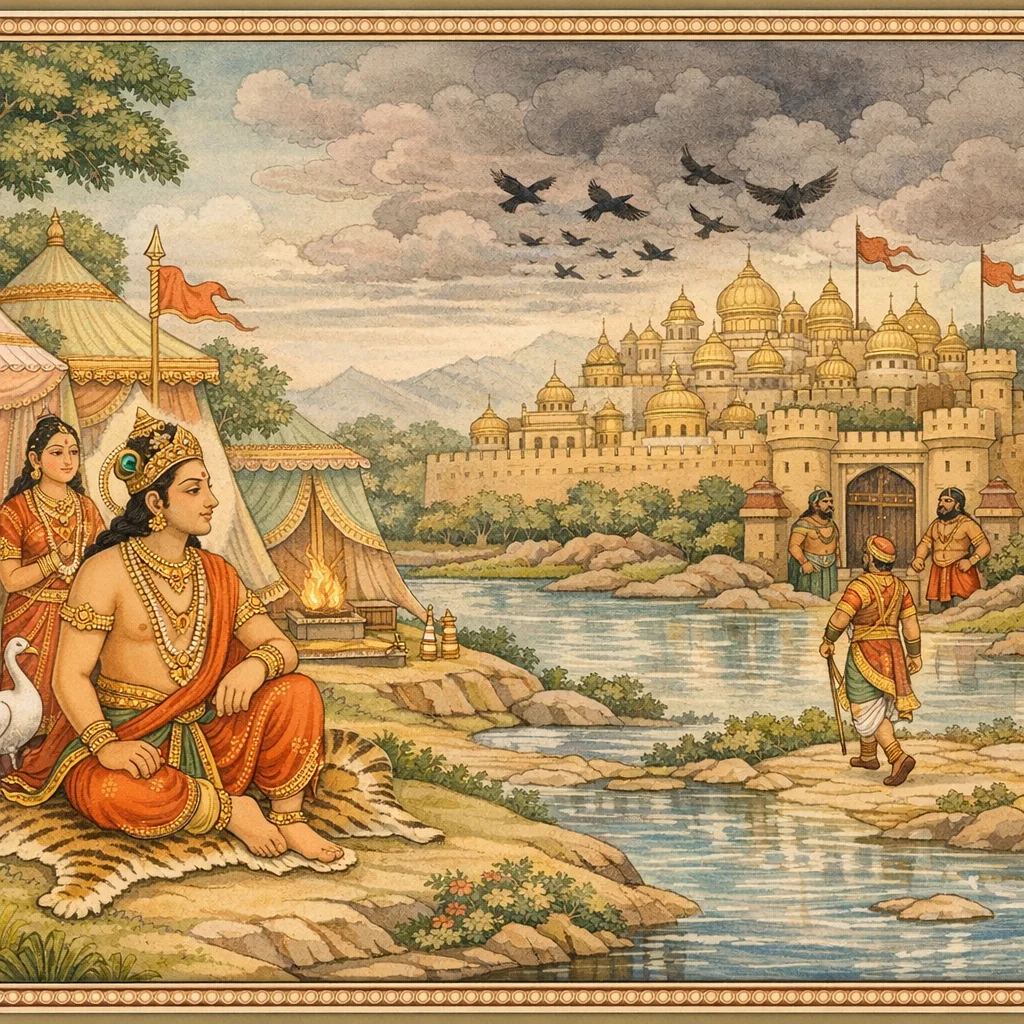
The chapter begins with Nārada recounting how the devas seek a boon from Guha/Skanda: the slaying of the sinful Tāraka. Guha agrees, mounts his peacock, and marches forth in martial readiness, yet declares a sharp ethical vow—he will not spare those who dishonor cows and brāhmaṇas—thus casting the coming war as the protection of dharma rather than mere conquest. A magnificent mobilization follows: Śiva, with Pārvatī, advances in a radiant chariot drawn by lions, with Brahmā holding the reins. Kubera, Indra, the Maruts, Vasus, Rudras, Yama, Varuṇa, and even personified weapons and implements accompany them, forming a cosmic procession, while Viṣṇu appears from behind to guard the entire formation. Reaching a northern bank, the host halts near a copper-hued rampart as Skanda surveys Tāraka’s prosperous city. The narrative turns to diplomacy: at Indra’s suggestion a messenger is sent, and a dūta delivers a stern ultimatum, threatening the city’s destruction if Tāraka does not come forth. Troubled by ominous signs, Tāraka beholds the overwhelming deva army and hears loud acclamations and hymns praising Skanda as Mahāsena, culminating in a formal stuti beseeching him to destroy the enemies of the gods.
Shlokas
Verse 1
नारद उवाच । ते चैनं योज्य चाशीर्भिरयाचंत वरं गुहम् । एष एव वरोऽस्माकं यत्पापं तारकं जहि
Nārada said: Having duly appointed him and blessing him, they asked a boon of Guha: “This alone is our boon—slay that sinful Tāraka.”
Verse 2
एवमस्त्विति तानुक्त्वा योगोयोग इति ब्रुवन् । तारकारिमहातेजा मयूरं चाध्यरोहत
Saying to them, “So be it,” and uttering “yogo-yoga,” the mighty, radiant foe of Tāraka mounted the peacock.
Verse 3
शक्तिहस्तो विनद्याथ गुहो देवांस्तदाब्रवीत् । यद्यद्य तारकं पापं नाहं हन्मि सुरोत्तमाः
With spear in hand, Guha roared and then said to the gods: “If today I do not slay that sinful Tāraka, O best of the devas…”
Verse 4
गोब्राह्मणावमन्तॄणां ततो यामि गतिं स्फुटम् । एवं तेन प्रतिज्ञाते शब्दोऽतिसुमहानभूत्
“…then I shall surely meet the fate of those who dishonor cows and brāhmaṇas.” When he made this vow, a tremendously great roar arose.
Verse 5
योगोयोग इति प्राहुराज्ञया शरजन्मनः । अरजो वाससी रक्ते वसानः पार्वतीसुतः
At the command of the reed-born Lord (Skanda), they cried “yogo-yoga.” Pārvatī’s son, wearing spotless red garments, stood forth.
Verse 6
अथाग्रे सर्वदेवानां स्थितो वीरो ययौ मुदा । तस्य केतुरलं भाति चरणायुधशोभितः
Then the hero, standing at the very forefront of all the gods, advanced in joy. His banner shone splendidly, adorned with the emblem of the weaponed feet.
Verse 7
चरणाभ्यां चरणाभ्यां गिरीञ्छक्तो यो विदारयितुं रणे । या चेष्टा सर्वभूतानां प्रभा शांतिर्बलं यथा
He who can, with his very feet, split mountains in battle—he embodied the activity of all beings, and likewise radiance, peace, and strength.
Verse 8
तन्मया गुहशक्तिः सा भृशं हस्ते व्यरोचत । यद्दार्ढ्यं सर्वलोकेषु तन्मयं कवचं तथा
That spear of Guha blazed brightly in his hand, as though wrought from his very essence. Likewise, the firmness found throughout all the worlds became his armor, as if fashioned from him.
Verse 9
योत्स्यमानस्य वीरस्य देहेप्रादुरभूत्स्वयम् । धर्मः सत्यमसंमोहस्तेजः कांतत्वमक्षतिः
Upon the body of that hero, poised for battle, there manifested of themselves: dharma, truth, freedom from delusion, splendor, beauty, and inviolability.
Verse 10
बलमोजः कृपा चव बद्धा करयुगं तथा । आदेशकारीण्यग्रेऽस्य स्वयं तस्थुर्महात्मनः
Strength, vigor, and compassion—together with the pair of hands, as if bound in readiness for service—stood of their own accord before that great-souled one, eager to carry out his command.
Verse 11
तमग्रे चापि गच्छंतं पृष्ठतोनुययौ हरः । रथेनादित्यवर्णेन पार्वत्या सहितः प्रभुः
As he went on ahead, Hara followed behind—the Lord, accompanied by Pārvatī, riding a chariot radiant like the sun.
Verse 12
निर्मितेन हरेणैव स्वयमीशेन लीलया । सहस्रं तस्य सिंहानां तस्मिन्युक्तं रथोत्तमे
That supreme chariot had been fashioned by Hara himself—by the Lord in sportive freedom—and a thousand lions were yoked to it.
Verse 13
अभीषून्पुरुषव्याघ्र ब्रह्मा च जगृहे स्वयम् । ते पिबंत इवाकाशं त्रासयंतश्चराचरम्
O tiger among men, Brahmā himself took hold of the reins; and those lions, as though drinking up the very sky, terrified all beings—moving and unmoving.
Verse 14
सिंहा रथस्य गच्छंतो नदंतश्चारुकेसराः । तस्मिन्रथे पशुपतिः स्थितो भात्युमया सह
The lions of the chariot advanced, roaring—beautiful-maned; and upon that chariot Paśupati shone, seated together with Umā.
Verse 15
विद्युता मेडितः सूर्यः सेंद्रचापघनो यथा । अग्रतस्तस्य भगवान्धनेशो गुह्यकैः सह
Like the sun surrounded by lightning within a raincloud bearing Indra’s bow (the rainbow), in front of him went the blessed Lord Dhaneśa (Kubera), together with the Guhyakas.
Verse 16
आस्थाय रुचिरं याति पुष्पकं नरवाहनः । ऐरावणं समास्ताय शक्रश्चापि सुरैः सह
Naravāhana (Kubera) set forth mounted upon the splendid Puṣpaka; and Śakra too, having mounted Airāvata, went on together with the gods.
Verse 17
पृष्ठतोनुययौ यांतं वरदं वृषभध्वजम् । तस्य दक्षिणतो देवा मरुतश्चित्रयोधिनः
Following behind the boon-giving Lord, the Bull-bannered One as he journeyed, on his right side went the gods and the Maruts, warriors of wondrous might.
Verse 18
गच्छंति वसुभिः सार्धं रुद्रैश्च सह संगताः । यमश्च मृत्युना सार्धं सर्वतः परिवारितः
They proceeded together with the Vasus, joined also by the Rudras; and Yama too, accompanied by Mṛtyu, moved about, surrounded on every side.
Verse 19
घोरैर्व्याधिशतैश्चापि सव्यतो याति कोपितः । यमस्य पृष्ठतश्चापि घोरस्त्रिशिखरः सितः
On the left side he went, enraged, accompanied by hundreds of dreadful diseases; and behind Yama too went the terrible Triśikhara, pale and fearsome.
Verse 20
विजयोनाम रुद्रस्य याति शूलः स्वयं कृतः । तमुग्रपाशो भगवन्वरुणः सलिलेश्वरः
Rudra’s self-fashioned trident, named Vijaya, advanced forth; and behind it came the blessed Varuṇa, lord of the waters, bearing his fearsome noose.
Verse 21
परिवार्य शतैयाति यादोभिर्विविधैर्वृतः । पृष्ठतो विजयस्यापि याति रुद्रस्य पट्टिशः
Surrounded by hundreds and encircled by diverse aquatic beings, it moved onward; and behind Vijaya too marched Rudra’s battle-axe (paṭṭiśa).
Verse 22
गदामुशलशक्त्याद्यैर्वरप्रहरणैर्वृतः । पट्टिशं चान्वगात्पार्थ अस्त्रं पाशुपतं महत्
Encircled by excellent weapons such as the mace, pestle, and spear, the great Pāśupata missile followed after the battle-axe, O son of Pṛthā.
Verse 23
बहुशीर्षं महाघोरमेकपादं बहूदरम् । कमंडलुश्चास्य पश्चान्महर्षिगणसेवितः
Then came a dreadful being with many heads, one foot, and many bellies; and behind it followed the kamaṇḍalu (ascetic’s water-pot), attended by hosts of great sages.
Verse 24
तस्य दक्षिणतो भाति दण्डो गच्छञ्छ्रिया वृतः । भृग्वंगिरोभिः सहितो देवैरप्य भिपूजितः
To its right shone the staff (daṇḍa) as it moved, encompassed by splendor—accompanied by Bhṛgu and Aṅgiras, and honored even by the gods.
Verse 25
राक्षसाश्चान्यदेवाश्च गन्धर्वा भुजगास्तथा । नद्यो नदाः समुद्राश्च मुनयोऽप्सरसां गणाः
Rākṣasas and other deities, Gandharvas and serpents as well; rivers, streams, and oceans; sages and the companies of Apsarases—
Verse 26
नक्षत्राणि ग्रहाश्चैव जंगमं स्थावरं तथा । मातरश्च महादेवमनुजग्मुः क्षुधान्विताः
The constellations and the planets as well, the moving and the unmoving alike; and the Mothers followed Mahādeva, driven by ravenous hunger.
Verse 27
सर्वेषां पृष्ठतश्चासीत्तार्क्ष्यस्थो बुद्धिमान्हरिः । पालयन्पृतनां सर्वां स्वपरीवारसंवृतः
At the rear of them all was wise Hari, mounted upon Tārkṣya (Garuḍa), guarding the entire host, surrounded by his own retinue.
Verse 28
एवं सैन्यसमोपेत उत्तरं तटमागतः । ताम्रप्राकारमाश्रित्य तस्थौ त्र्यंबकनंदनः
Thus accompanied by the full army, he reached the northern bank; taking shelter at the copper rampart, the son of Tryambaka stood firm.
Verse 29
स तारकपुरस्यापि पश्यनृद्धि मनुत्तमाम् । विसिष्मिये महासेनः प्रशशंस तपोऽस्य च
Seeing the surpassing prosperity of Tārakapura, Mahāsena marveled—and he praised the tapas, the austerity that had brought it about.
Verse 30
स्थितः पश्यन्स शुशुभे मयूरस्थो गुहस्तदा । छत्रेण ध्रियमाणेन स्वयं सोमसमस्त्विषा
Then Guha (Skanda), seated upon a peacock and gazing forth, shone brilliantly—an umbrella held over him—his own radiance matching the splendor of the Moon.
Verse 31
वीज्यमानश्चामराभ्यां वाय्वग्रिभ्यां महाद्युतिः । मातृभिश्च सुरैर्दत्तैः स्वैर्गणैरपि संवृतः
That One of great radiance was fanned with cāmara yak-tail whisks by Vāyu and Agni, and was also encircled by the Mother-goddesses and by hosts of his own attendants granted by the gods.
Verse 32
ततः प्रणम्य तं शक्रो देव मध्ये वचोऽब्रवीत् । पश्यपश्य महासेन दैत्यानां बलशालिनाम्
Then Śakra (Indra), bowing to him, spoke in the midst of the gods: “Behold, behold, O Mahāsena, the mighty strength of the Daityas.”
Verse 33
ये त्वां कालं न जानंति मर्त्या गृहरता इव । एतेषां च गृहे दूतो यस्त्वां शंसतु तारकम्
“Those mortals who do not recognize you as Kāla, Time itself—like householders absorbed in their homes—let a messenger go to their dwellings and proclaim you, O slayer of Tāraka.”
Verse 34
वीराणामुचितं त्वेतत्कीर्तिदं च महाजने । अनुज्ञया ततः स्कन्दभक्तं शक्रो धनंजय
“This is indeed fitting for heroes, and it bestows fame among the multitude.” Then, with permission, Śakra appointed Dhanañjaya, a devotee of Skanda, for that task.
Verse 35
मामादिश्यासुरेन्द्राय प्राहिणोद्दौत्ययोग्यकम् । अहं स्वयं गन्तुकामः शक्रेणापि च प्रेषितः
Having instructed me, he sent me—fit for the duty of a messenger—to the lord of the Asuras. I myself was eager to go, and I was dispatched by Śakra as well.
Verse 36
प्रासादे स्त्रीसहस्राणां प्रावोचं मध्यतोऽप्यहम् । असुराधमदुर्बुद्धे शक्रस्त्वामाह तच्छृणु
In the palace, even amid thousands of women, I proclaimed: “O vilest of Asuras, of crooked mind—Śakra addresses you; listen well.”
Verse 37
यज्जगद्दलनादाप्तं किल्बिषं दानव त्वया । तस्याहं नाशकस्तेऽद्य पुरुषश्चेद्भविष्यसि
“O Dānava, the sin you have amassed by crushing the worlds—today I can destroy it for you, if you become a man of true resolve.”
Verse 38
शीघ्रं निःसर पापिष्ठ निःसरिष्यसि चेन्न हि । क्षणात्तव पुरं क्षेप्स्ये पावित्र्यायैव सागरे
“Come out quickly, O most sinful one—if you do not come out, then in a moment I shall hurl your city into the ocean, for purification.”
Verse 39
इति श्रुत्वा रूक्षवाचं क्रुद्धः स्त्रीगणसंवृतः । मुष्टिमुद्यम्यमाऽधावद्भीतश्चाहं पलायितः
Hearing those harsh words, he grew enraged; surrounded by a troop of women, he rushed at me with fist raised—while I, frightened, fled away.
Verse 40
व्याकुलस्तत्र वृत्तांतं कुमाराय न्यवेदयम् । मयि चाप्यागते दैत्यश्चिंतयामास चेतसि
Agitated, I reported the entire account there to Kumāra (Skanda). And when I too arrived, the Daitya began to brood anxiously within his mind.
Verse 41
नालब्ध संश्रयः शक्रो वक्तुमेतदिहार्हति । निमित्तानि च घोराणि संत्रासं जनयंति मे
“Indra, having found no refuge, is not fit to speak thus here. And terrifying omens are producing dread within me.”
Verse 42
एवं विचिंत्य चोत्थाय गवाक्षं सोध्यरोहत । सहस्रभौमिकावासश्रृङ्गवातायनस्थितः
Thinking thus, he rose and climbed up to a window. Standing at the lofty window of a many-storeyed palace, he looked out from above.
Verse 43
अपश्यद्देवसैन्यं स दिवं भूमिं च संवृतम् । रतैर्गजैर्हयैश्चापि नादिताश्च दिशो दश
He saw the army of the gods, filling both sky and earth. With chariots, elephants, and horses, the ten directions resounded.
Verse 44
विमानैश्चाद्भुताकारैः किंनरोद्गीतनादितैः । दुन्दुभिभिर्गोविषाणैस्तालैः शंखैश्च नादितैः
There were wondrously-shaped aerial chariots, resonant with the songs of the Kiṃnaras; and the air thundered with kettledrums, cow-horns, cymbals, and conches.
Verse 45
अक्षोभ्यामिव तां सेनां दृष्ट्वा सोऽचिंतयत्तदा । एते मया जिताः पूर्वं कस्माद्भूयः समागताः
Seeing that army—like a heaving ocean—he thought then: “These were defeated by me before; why have they assembled again?”
Verse 46
इति चिंतापरो दैत्यः शुश्राव कटुकाक्षरम् । देवबंदिभिरुद्वुष्टं घोरं हृदयदारणम्
Thus, absorbed in anxious thought, the Daitya heard harsh words—cried aloud by the bards of the gods—terrible and heart-rending.
Verse 47
जयातु लशक्तिदीधितिपिंजररुचारुणमंडलभुजोद्भासितदेवसैन्य पुरवनकुमुदकाननविकासनेंदो कुमारनाथ जय दितिकुलमहोदधिवडवानल मधुररवमयूररवासुरमुकुटकूटकुट्टितचरणनखांकुर महासेन तारकवंशशुष्कतृमदावानल योगीश्वरयॉ योगिजनहृदयगगनविततचिंतासंतानसंतमसनोदनखरकिरणकल्पनखनिकरविराजितचरणकमल स्कन्द जय बाल सप्तवासर भुवनावलिशोकसंदहन
Victory to you, O Lord Kumāra, whose arms—encircled by the reddish-golden radiance of the spear’s splendor—make the army of the gods shine; O moon that causes the lotus-groves of the gods’ cities and forests to bloom. Victory, O Mahāsena—submarine fire to the vast ocean of Diti’s lineage; whose sweet roar is like a peacock’s cry; whose toenail-sprouts crush the peaks of the demons’ crowns. O Yogīśvara—forest-fire that burns the dry grass of Tāraka’s line; O Skanda—whose lotus-feet blaze with fierce rays that dispel the darkness of thoughts spread across the sky of yogins’ hearts. Victory, O divine Child—burner of the sorrow of the worlds, ever and always.
Verse 48
नमो नमस्तेस्तु मनोरमाय नमोस्तु ते साधुभयापहाय । नमोस्तु ते बालकृताचलाय नमोनमो नाशय देवशत्रून्
Salutations, salutations to you, the delightful One; salutations to you who remove the fear of the righteous. Salutations to you, the divine Child before whom even mountains bow; salutations, salutations—destroy the enemies of the gods!