Adhyaya 26
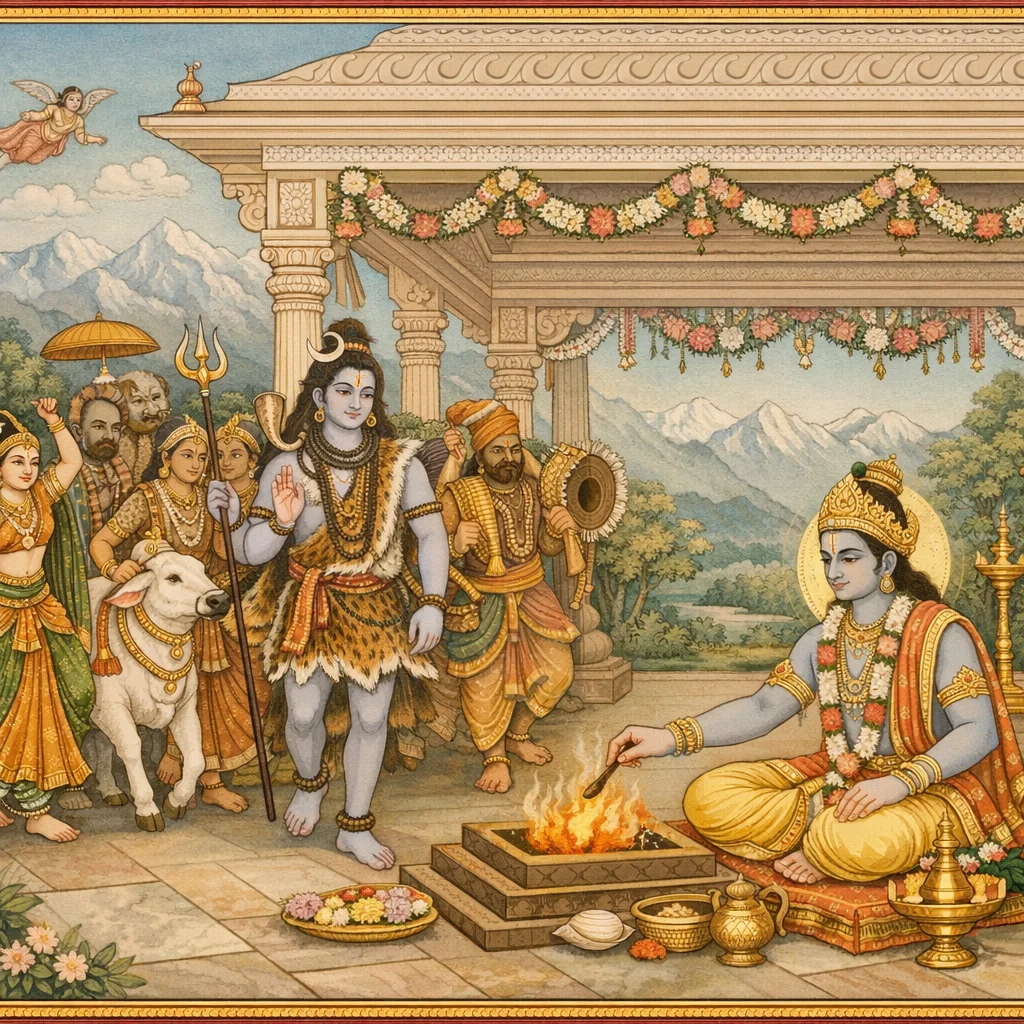
Chapter 26 recounts the formal solemnization of Śiva’s marriage to Pārvatī through a meticulously ordered Vedic rite and a cosmological wedding procession. Brahmā petitions Mahādeva to begin; a vast jeweled ceremonial city and the wedding mandapa are prepared. The whole universe is invited—excluding hostile daityas—so the occasion becomes a cosmic liturgy. Many deities contribute ornaments and insignia to Śiva: the moon-crest, the kaparda hair arrangement, the skull-garland, garments, and weapons. Gaṇas and celestial musicians gather in immense numbers, and the procession advances amid drums, songs, apsaras, and Vedic officiation. At Himālaya’s court, a procedural issue arises: the bride’s brother is absent for the lājāhoma rite, and the groom’s kula/gotra is questioned. Viṣṇu resolves both by assuming the role of Umā’s brother and explaining kinship logic that preserves ritual correctness. Brahmā serves as hotṛ; offerings and dakṣiṇā are distributed to Brahmā, Agni, and the sages. The chapter ends with a phalaśruti declaring that hearing or reciting this sacred wedding account brings enduring increase of auspiciousness (maṅgala-vṛddhi).
Shlokas
Verse 1
नारद उवाच । अथ ब्रह्मा महादेवमभिवाद्य कृतांजलिः । उद्वाहः क्रियतां देव इत्युवाच महेश्वरम्
Nārada said: Then Brahmā, having saluted Mahādeva with folded hands, said to Maheśvara, “O Lord, let the marriage rite be performed.”
Verse 2
तस्य तद्वचनं श्रुत्वा प्राहेदं भगवान्हरः । पराधीना वयं ब्रह्मन्हिमाद्रेस्तव चापि यत्
Hearing those words, the Blessed Lord Hara replied: “O Brahman, we stand here in deference to others—indeed, to Himādri and to you as well.”
Verse 3
यद्युक्तं क्रियतां तद्धि वयं युष्मद्वशेऽधुना । ततो ब्रह्मा स्वयं दिव्यं पुरं रत्नमयं शुभम्
“Let what is proper be done; for now we are in your hands.” Then Brahmā himself prepared a divine, auspicious city made of jewels.
Verse 4
उद्वाहार्थं महेशस्य तत्क्षणात्समकल्पयत् । शतयोजनविस्तीर्णं प्रासादशतशोभितम्
For Maheśa’s wedding, he arranged it at once—a city spread across a hundred yojanas, adorned with hundreds of palaces.
Verse 5
पुरेतस्मिन्महादेवः स्वयमेव व्यतिष्ठत । ततः सप्तमुनीन्देवश्चिंतिताब्यागतान्पुरः
In that city Mahādeva himself took his seat. Then the Lord—having but thought of them—beheld the seven sages arrive before him.
Verse 6
प्राहिणोदंबिकायाश्च स्थिरपत्रार्थमीश्वरः । सारुंधतीकास्ते तत्र ह्लादयंतो हिमाचलम्
For the sake of obtaining the steadfast leaves—tokens of auspiciousness—the Lord sent them to Ambikā. Those venerable ones, virtuous like Arundhatī, then delighted Himācala there.
Verse 7
सभार्यामीश्वरगुणैः स्थिरपत्राणि चादधुः । ततः संपूजितास्तेन पुनरागम्य तेऽचलात्
Together with their wives, they secured those steadfast leaf-tokens by the Lord’s own virtues; then, honored by Him, they returned again from the mountain.
Verse 8
न्यवेदयंस्र्यंबकाय स च तानभ्यनंदत । उद्वाहार्थं ततो देवो विश्वं सर्वं न्यमंत्रयत्
They reported it to Tryambaka, and He rejoiced over them. Then, for the sake of the wedding, the God invited the entire universe.
Verse 9
समागतं च तत्सव विना दैत्यैर्दुरात्मभिः । स्थावरं जंगमं यच्च विश्वं विष्णुपुरोगमम्
And all of that gathered—except the wicked-souled Dānavas. Whatever in the universe was stationary or moving came forth, with Viṣṇu at the forefront.
Verse 10
सब्रह्यकं पुरारातेर्महिमानमवर्धयत् । ततस्तं विधिराहेदं गन्धमादनपर्वते
Thus, along with Brahmā, the glory of the Foe of the Three Cities (Śiva) increased. Then, on Gandhamādana Mountain, the Creator (Brahmā) spoke these words to him.
Verse 11
पुरे स्थितं विवाहस्य देव कालः प्रवर्तते । ततस्तस्य जटाजूटे चंद्रखंडं पितामहः
‘In the city, the divine time for the wedding has now commenced.’ Then Grandfather Brahmā placed a crescent-moon fragment upon His matted hair.
Verse 12
बबंध प्रणयोदारविस्फारितविलोचनः । कपर्द्दं शोभनं विष्णुः स्वय चक्रेऽस्य हर्षतः
With eyes widened by generous affection, Viṣṇu, rejoicing, fashioned and tied with his own hands for Him a splendid kaparda, a beautiful topknot.
Verse 13
कपालमालां विपुलां चामुण्डा मूर्ध्न्यबंधत । उवाच चापि गिरिशं पुत्रं जनय शंकर
Cāmuṇḍā fastened a vast garland of skulls upon His head, and she also said to Girīśa: “O Śaṅkara, beget a son!”
Verse 14
यो दैत्येंद्रकुलं हत्वा मां रक्तैस्तर्पयिष्यति । सूर्यो ज्वलच्छिखारक्तं भाबासितजगत्त्रयम्
“He who, after slaying the lineage of the Daitya-lords, will satisfy me with blood-offerings…” The sun, red with blazing rays, illumined the three worlds.
Verse 15
बबंध देवदेवस्यच स्वयमेव प्रमोदतः । शेषवासुकिमुख्याश्च ज्वलंतस्तेजसा शुभाः
And, in delight, they themselves adorned the God of gods. Śeṣa, Vāsuki, and the foremost serpents—radiant and auspicious—blazed with splendor.
Verse 16
आत्मानं भूषणस्थाने स्वयं ते चक्रुरीश्वरे वायवश्च ततस्तीक्ष्णश्रृंगं हिमगिरिप्रभम्
They themselves became ornaments upon the Lord, taking their places as His adornments. Then the Wind-gods fashioned for Him a sharp-pointed horn, radiant like the Himālaya mountain.
Verse 17
वृषं विभूषयामासुर्नानारत्नोपपत्तिभिः । शक्रो गजजिनं गृह्य स्वयमग्रे व्यवस्थितः
They adorned the Bull with many kinds of precious jewels. Indra (Śakra), taking an elephant-hide, stood himself at the front, ready to offer it.
Verse 18
विना भस्म समाधाय कपाले रजतप्रभम् । मनुजास्थिमयीं मालां प्रेतनाथश्च वन्दनम्
One applied Vibhūti, the sacred ash, and another set in place a skull-bowl (Kapāla) shining like silver. The Lord of spirits (Preta-nātha) also bore a garland made of human bones—an awe-inspiring emblem of renunciation, worthy of reverence.
Verse 19
वह्निस्तेजोमयं दिव्यमजिनं प्रददौ स्थितः । एवं विभूषितः सर्वैर्भृत्यैरीशो बभौ भृशम्
Agni, standing by, presented a radiant, divine hide made of pure splendor. Thus adorned by all his attendants, the Lord shone exceedingly.
Verse 20
ततो हिमाद्रेः पुरुषा वीरकं प्रोचिरे वचः । मा भूत्कालात्ययः शीघ्रं भवस्यैतन्निवेद्यताम्
Then the men of Himālaya spoke these words to Vīraka: “Let there be no delay—quickly report this to Bhava (Śiva).”
Verse 21
ततो देवं प्रणम्याह वीरकः करसंपुटी । त्वरयंति महेशानं हिमाद्रेः पुरुषास्त्वमी
Then Vīraka, with palms joined in reverence, bowed to the Lord and said: “O Maheśāna, the men of Himālaya are urging haste.”
Verse 22
इति श्रुत्वा वचो देवः शीघ्रमित्येव चाब्रवीत् । सप्त वारिधयस्तस्य चक्रुर्दर्पणदर्शनम्
Hearing these words, the Lord replied at once, “Quickly.” Then the seven oceans granted Him a mirror-like vision.
Verse 23
तत्रैक्षत महादेवः स्वरूपं स जगन्मयम् । ततो बद्धांजलिर्धीमान्स्थाणुं प्रोवाच केशवः
There Mahādeva beheld His own form, pervading the whole universe. Then wise Keśava, with hands joined, addressed Sthāṇu, the Immovable Lord.
Verse 24
देवदेव महादेव त्रिपुरांतक शंकर । शोभसेऽनेन रूपेण जगदानंददायिना
O God of gods, O Mahādeva, O Tripurāntaka, O Śaṅkara—you shine in this form that bestows bliss upon the worlds.
Verse 25
महेश्वर यथा साक्षादपरस्त्वं महेश्वरः । ततः स्मयन्महादेवो जयेति भुवने श्रुतः
“O Maheśvara, You are directly the Supreme—none is other than You, O Maheśvara.” Then Mahādeva, smiling, cried “Victory!”, and the shout was heard throughout the worlds.
Verse 26
करमालंब्य विष्णोश्च वृषभं रुरुहेशनैः । ततश्च वसवो देवाः शूलं तस्य न्यवेदयन्
Taking hold of Viṣṇu’s hand, he slowly mounted the bull; then the Vasus, the gods, presented him with the trident.
Verse 27
धनदो निदिभिर्युक्तः समीपस्थस्ततोऽभवत् । स शूलपाणिर्विश्वात्मा संचचाल ततो हरः
Then Dhanada (Kubera), accompanied by the Nidhis, came and stood nearby. Thereupon Hara—the trident-bearer, the very Soul of the universe—set forth.
Verse 28
देवदुंदुभिनादैश्च पुष्पासारैश्च गीतकैः । नृत्यद्भिरप्सरोभिश्च जयेति च महास्वनैः
With the booming of the gods’ kettledrums, showers of flowers, songs, dancing Apsarases, and mighty cries of “Victory!”—
Verse 29
सव्यदक्षिणसंस्थानौ ब्रह्मविष्णूतु जग्मतुः । हंसं च गरुडं चैव समारुह्य महाप्रभौ
Brahmā and Viṣṇu, stationed to the left and right, proceeded—those great lords—mounting the swan and Garuḍa.
Verse 30
अथादितिर्दितिः सा च दनुः कद्रूः सुपर्णजा । पौलोमी सुरसा चैव सिंहिका सुरभिर्मुनिः
Then Aditi, Diti, Danu, Kadrū, Suparṇajā, Paulomī, Surasā, Siṃhikā, and Surabhi—along with the sages—(also came).
Verse 31
सिद्धिर्माया क्षमा दुर्गा देवी स्वाहा स्वधा सुधा । सावित्री चैव गायत्री लक्ष्मीः सा दक्षिणा द्युतिः
Siddhi, Māyā, Kṣamā, Durgā Devī, Svāhā, Svadhā, Sudhā; and Sāvitrī, Gāyatrī, Lakṣmī, Dakṣiṇā, and Dyuti (were present).
Verse 32
स्पृहामतिर्धृतिर्बुद्धिर्मंथिरृद्धिः सरस्वती । राका कुहूः सिनीवाली देवी भानुमती तथा
Spṛhā, Mati, Dhṛti, Buddhi, Manthi, Ṛddhi, and Sarasvatī came; and Rākā, Kuhū, Sinīvālī, and the goddess Bhānumatī as well.
Verse 33
धरणी धारणी वेला राज्ञी चापि च रोहिणी । इत्येताश्चान्यदेवानां मातरः पत्नयस्तथा
Dharaṇī, Dhāraṇī, Velā, Rājñī, and Rohiṇī—these and others too, as mothers and also as consorts of other gods, were present.
Verse 34
उद्वाहं देवदेवस्य जग्मुः सर्वा मुदान्विताः । उरगा गरुडा यक्षा गंधर्वाः किंनरा नराः
All went forth in joy to the wedding of the God of gods—Nāgas, Garuḍas, Yakṣas, Gandharvas, Kinnaras, and men.
Verse 35
सागरा गिरयो मेघा मासाः संवत्सरास्तथा । वेदा मंत्रास्तथा यज्ञाः श्रौता धर्माश्च सर्वशः
Oceans, mountains, clouds, months and years; the Vedas, mantras, sacrifices, and the Śrauta ordinances of dharma in every form—all were present and celebrated.
Verse 36
हुंकाराः प्रणवाश्चैव इतिहासाः सहस्रशः । कोटिशश्च तथा देवा महेंद्राद्याः सवाहनाः
Countless battle-cries of “Hūṃkāra” arose, and the sacred Pranava, the sound “Oṃ,” resounded; and thousands upon thousands of epic recitations were heard. Likewise the gods—beginning with Mahendra (Indra)—came in crores, each mounted upon his own celestial vehicle.
Verse 37
अनुजग्मुर्महादेवं कोटिशोऽर्बुदशश्च हि । गणाश्च पृष्ठतो जग्मुः शंखवर्णाश्च कोटिशः
They followed after Mahādeva in crores—indeed, in tens of crores. And behind him marched the gaṇas as well, in crores, radiant and white like conch-shells.
Verse 38
दशभिः केकराख्याश्च विद्युतोऽष्टाभिरेव च । चतुःषष्ट्या विशाखाश्च नवभिः पारियात्रिकाः
The Kekara-named hosts came in tens; the Vidyut (Lightning) hosts in eights; the Viśākhas in sixty-four; and the Pāriyātrikas in nines.
Verse 39
षड्भिः सर्वांतकः श्रीमांस्तथैव विकृताननः । ज्वालाकेशो द्वादशभिः कोटिभिः संवृतो ययौ
The glorious Sarvāntaka advanced with six companies, and likewise Vikṛtānana. Jvālākeśa proceeded, surrounded by twelve crores of followers.
Verse 40
सप्तभिः समदः श्रीमान्दुंदुभोष्ठाभिरेव च । पंचभिश्च कपालीशः षड्भिः संह्रादकः शुभः
The splendid Samada came with seven companies, and Duṃdubhoṣṭha as well. Kapālīśa came with five, and the auspicious Saṃhrādaka with six.
Verse 41
कोटिकोटिभिरेवैकः कुंडकः कुंभकस्तथा । विष्टंभोऽष्टाभिरेवेह गणपः सर्वसत्तमः
Kuṃḍaka alone was accompanied by crores upon crores, and so too was Kuṃbhaka. Here Viṣṭambha came with eight companies—a gaṇapa, the best among all beings.
Verse 42
पिप्पलश्च सहस्रेण सन्नादश्च तथा बली । आवेशनस्तथाष्टाभिः सप्तभिश्चंद्रतापनः
Pippala came with a thousand, and Sannāda as well—mighty in strength. Āveśana came with eight companies, and Candratāpana with seven.
Verse 43
महाकेशः सहस्रेण नंदिर्द्वादशभिस्तथा । नगः कालः करालश्च महाकालः शतेन च
Mahākeśa came with a thousand; and Nandi likewise with twelve companies. Naga, Kāla, and Karāla also came, while Mahākāla came with a hundred.
Verse 44
अग्निकः शतकोट्या वै कोट्याग्निमुख एव च । आदित्यमूर्धा कोट्या च कोट्या चैव धनावहः
Agnika came with a hundred koṭis; and Agnimukha with a koṭi as well. Ādityamūrdhā came with a koṭi, and Dhanāvaha likewise with a koṭi.
Verse 45
सन्नागश्च शतेनैव कुमुदः कोटिभिस्त्रिभिः । अमोघः कोकिलश्चैव कोटिकोट्या सुमंत्रकः
Sannāga came with a hundred; Kumuda with three koṭis. Amogha and Kokila also came; and Sumaṃtraka with koṭis upon koṭis.
Verse 46
काकपादस्तता षष्ट्या षष्ट्या संतानको गणः । महाबलश्च नवभिर्मधुपिंगश्च पिंगलः
Kākapāda, then Tatā and Saṃtānaka—each accompanied by sixty attendants. Mahābala came with nine, and Madhupiṅga together with Piṅgala.
Verse 47
नीलो नवत्या सप्तत्या चतुर्वक्त्रश्च पूर्वपात् । वीरभद्रश्चश्चतुःषष्ट्या करणो बालकस्तथा
Nīla came with ninety; another came with seventy; and Caturvaktra arrived from the east. Vīrabhadra came with sixty-four, and so too did Karaṇa and Bālaka.
Verse 48
पंचाक्षः शतमन्युश्च मेघमन्युश्च विंशतिः । काष्ठकोटिश्चतुःषष्ट्या सुकोशो वृषभस्तथा
Pañcākṣa, Śatamanyu, and Meghamanyu also came—Meghamanyu with twenty. Kāṣṭhakoṭi arrived with sixty-four; likewise Sukośa and Vṛṣabha.
Verse 49
विश्वरूपस्तालकेतुः पंचाशच्च सिताननः । ईशानो वृद्धदेवश्च दीप्तात्मा मृत्युहा तथा
Viśvarūpa and Tālaketu came, and Sitānana with fifty. Īśāna, Vṛddhadeva, Dīptātmā, and Mṛtyuhā also arrived.
Verse 50
विषादो यमहा चैव गणो भृंगरिटिस्तथा । अशनी हासकश्चैव चतुःषष्ट्या सहस्रपात्
Viṣāda, Yamahā, and the gaṇa named Bhṛṅgariṭi also came. Aśanī and Hāsaka arrived, and Sahasrapāt with sixty-four.
Verse 51
एते चान्ये च गणपा असंख्याता महाबलाः । सर्वे सहस्रहस्ताश्च जटामुकुटधारीणः
These and many other gaṇa-leaders—countless and of immense might—came there. All were thousand-handed and wore crowns of matted locks (jaṭā).
Verse 52
चंद्रलेखावतंसाश्च नीलकंठास्त्रिलोचनाः । हारकुंडलकेयूरमुकुटाद्यैरलंकृताः
They bore the crescent-moon as an ornament, were blue-throated and three-eyed, and were adorned with necklaces, earrings, armlets, crowns, and other ornaments.
Verse 53
अणिमादिगुणैर्युक्ताः शक्ताः शापप्रसादयोः । सूर्यकोटिप्रतीकाशास्तत्राजग्मुर्गणेश्वराः
Endowed with powers such as aṇimā and the rest, able both to curse and to bestow grace, the gaṇa-lords—radiant like ten million suns—arrived there.
Verse 54
पातालांबरभूमिस्थाः सर्वलोकनिवासिनः । तुंबुरुर्नारदो हाहा हूहूश्चैव तु सामगाः
From Pātāla, from the sky, and from the earth—indeed from every world—came the residents of all realms: Tumburu, Nārada, Hāhā, and Hūhū, the singers of Sāman hymns.
Verse 55
तंत्रीमादाय वाद्यांश्चाऽवादयञ्छंकरोत्सवे । ऋषयः कृत्स्नशश्चैव वेदगीतांस्तपोधनाः
Taking up lutes and other instruments, they played music at Śaṅkara’s festival; and the ascetic sages, rich in tapas, chanted the Vedic hymns in full.
Verse 56
पुण्यान्वैवाहिकान्मंत्राञ्जेषुः संहृष्टमानसाः । एवं प्रतस्थेगिरिशो वीज्यमानश्च गंगया
With delighted hearts they chanted the auspicious wedding mantras. Thus Girīśa (Śiva) set forth, while the Goddess Gaṅgā fanned and attended him.
Verse 57
तथा यमुनया चापांपतिना धृतच्छत्रया । स्त्रीभिर्नानाविधालापैलाजाभिश्चानुमोदितः
Likewise, Yamunā and Varuṇa, lord of the waters, held aloft the royal parasol; and he was joyfully welcomed by women with many festive utterances and with offerings of lājā, parched grain.
Verse 58
महोत्सवेन देवेशो गिरिस्थानं विवेश सः । प्रभासत्स्वर्णकलशं तोरणानां शतैर्युतम्
Amid a great festival, the Lord of the gods entered the mountain abode, adorned with hundreds of toraṇas—gateway arches crowned with shining golden finials.
Verse 59
वैडूर्यबद्धभूमिस्थं रत्नजैश्च गृहैर्युतम् । तत्प्रविश्य स्तूयमानो द्वारमभ्याससाद ह
Its courtyards were set with vaidūrya, the cat’s-eye gem, and it was furnished with houses wrought of jewels. Entering there, praised on every side, he drew near to the doorway.
Verse 60
ततो हिमाचलस्तत्र दृश्यते व्याकुलाकुलः । आदिशदात्मभृत्यानां महादेव उपस्थिते
Then Himācala, the Himālaya, was seen there, anxious and unsettled. With Mahādeva present, he began issuing instructions to his own attendants.
Verse 61
ततो ब्रह्माणमचलो गुरुत्वे प्रार्थयत्तदा । कृत्यानां सर्वभारेषु वासुदेवं च बुद्धिमान्
Then the wise Lord of the mountain entreated Brahmā to preside as the venerable elder, and Vāsudeva (Viṣṇu) to bear responsibility for all the duties that had to be performed.
Verse 62
प्रत्याह च विवाहऽस्मिन्कुमारीभ्रातरं विना । भविष्यति कथं विष्णो लाजहोमादिकर्मसु
He replied: “In this wedding, without the maiden’s brother, how can the rites—beginning with the lājā-offering and the homa—be performed, O Viṣṇu?”
Verse 63
सुतो हि मम मैनाकः स प्रविष्टोऽर्णवे स्थितः । इति चिंताविषण्णं तं विष्णुराहमहामतिः
“My son Maināka has entered and remains within the ocean.” Seeing him downcast with worry, the great-minded Viṣṇu spoke to him.
Verse 64
अत्र चिंता न कर्तव्या गिरिराज कथंचन । अहं भ्राता जगन्मातुरेतदे वं च नान्यथा
“Do not worry here in any way, O king of mountains. I myself am the brother of the Mother of the world—so it is, and not otherwise.”
Verse 65
ततः प्रमुदितः शैलः पार्वतीं च स्वलंकृताम् । सखीभिः कोटिसंख्याभिर्वृतां प्रवेशयत्सदः
Then the mountain-lord, filled with joy, led Pārvatī—adorned in her own splendor—into the assembly hall, surrounded by companions numbering in crores.
Verse 66
ततो नीलमयस्तंभं ज्वलत्कांचनकुट्टिमम् । मुक्ताजालपरिष्कारं ज्वलितौ षधिदीपितम्
Then (he beheld) a wedding pavilion with pillars of deep-blue sheen, a floor paved with glowing gold, adorned with lattices of pearls, and illumined by blazing, radiant herbs.
Verse 67
रत्नासनसहस्राढ्यं शतयोजनविस्तृतम् । विवाहमंडपं शर्वो विवेशानुचरावृतः
Abounding in thousands of jeweled seats and spread across a hundred yojanas, Śarva (Śiva) entered that wedding pavilion, surrounded by his attendants.
Verse 68
ततः शैलः सपत्नीकः पादौ प्रक्षाल्य हर्षितः । भवस्य तेन तोयेन सिषिचे स्वं जगत्तथा
Then Śaila (Himālaya), together with his consort, joyfully washed the feet of Bhava (Śiva); and with that very water he sprinkled and blessed his own world as well.
Verse 69
पाद्यमाचमनं दत्त्वा मधुपर्कं च गां तथा । प्रदानस्य प्रयोगं च संचिंतयंति ब्राह्मणाः
Having offered foot-water and water for sipping, along with madhuparka and a cow, the brāhmaṇas deliberated on the proper procedure for the formal act of gifting.
Verse 70
दौहित्रीं कव्यवाहानां दद्मि पुत्रीं स्वकामहम् । इत्युक्त्वा तस्थिवाञ्छैलो न जानाति हरस्य सः
Saying, “Of my own free will I give my daughter—the granddaughter of the carriers of the oblation (the Fire-gods),” Śaila stood ready; yet he did not know the true status of Hara (Śiva).
Verse 71
ततः सर्वानपृच्छत्स कुलं कोऽपि न वेद तत् । ततो विष्णुरिदं प्राह पृछ्यंतेऽन्ये किमर्थतः
Then he questioned everyone about the groom’s lineage, but no one knew it. Thereupon Viṣṇu said, “Why are others being questioned—what is the purpose?”
Verse 72
अज्ञातकुलतां तस्य पृछ्यतामयमेव च । अहिरेव अहेः पादान्वेत्ति नान्यो हिमाचल
Let this one alone be questioned about his unknown lineage; for only a serpent knows the track of a serpent—none other, O Himācala.
Verse 73
स्वगोत्रं यदि न ब्रूते न देया भगिनी मम । ततो हासस्तदा जज्ञे सर्वेषां सुमहास्वनः
“If he does not declare his own gotra, my sister must not be given in marriage.” Then a great laughter arose among all, resounding loudly.
Verse 74
निवृत्तश्च क्षणाद्भूयः किं वक्ष्यति हरस्त्विति । ततो विमृश्य बहुधा किंचिद्भीताननो यता
Then, after a moment, the laughter subsided; again they wondered, “What will Hara say?” Thereupon, after thinking in many ways, one approached with a face slightly anxious.
Verse 75
लज्जाजडः स्मितं चक्रे ततः पार्थ स वै हरः । ततो विशिष्टा ब्रुवति शीघ्रं कालोऽतिवर्तते
Then Hara (Śiva), stilled by modesty, merely smiled. Thereupon a distinguished lady said, “Quickly—time is passing away.”
Verse 76
हरिः प्राह महेशानं बिभ्यदावेद्मयहं तव । मातामहं च पितरं प्रयोगं श्रृणु भूधर
Hari spoke to Maheśāna: “Out of reverence I submit this to you. O Bhūdhara (Mountain), listen to the proper procedure: I shall act as the maternal grandfather, and also as the father, in arranging the rite.”
Verse 77
आत्मपुत्राय ते शंभो आत्मदौहित्रकाय ते । इत्युक्ते विष्णुना सर्वे साधुसाध्विति ते जगुः
When Viṣṇu said, “O Śambhu, she is for your own son, for your own grandson,” all there cried out, “Well said! Well said!”
Verse 78
देवोऽप्युदाहरेद्वुद्धिं सर्वेभ्योऽप्यधिकां वराम् । ततः शैलस्तथा चोक्त्वा दत्त्वा देवीं च सोदकम्
The god (Viṣṇu) also proclaimed an excellent counsel, superior to all others. Then the Mountain (Himālaya), having spoken accordingly, gave the Goddess together with the ritual water (sodaka).
Verse 79
आत्मानं चापि देवाय प्रददौ सोदकं नगः । ततः सर्वे तुष्टुवुस्तं विवाहं विस्मयान्विताः
And the Mountain, with the ritual water, also offered himself to the God in service and alliance. Then all, filled with wonder, praised that wedding.
Verse 80
दाता महीभृतां नाथो होता देवश्चतुर्मुखः । वरः पशुपतिः साक्षात्कन्या विश्वरणिस्तथा
The giver was the lord of mountains; the officiating priest was the four-faced god (Brahmā). The bridegroom was Paśupati himself, and the bride was likewise Viśvaraṇī (Pārvatī).
Verse 81
ततः स्तुवत्सु मुनिषु पुष्पवर्षे महत्यपि । नदत्सु देवतूर्येषु करं जग्राह त्र्यम्बकः
Then, as the sages sang praises, as a great shower of flowers fell, and as divine instruments resounded, Tryambaka took her hand.
Verse 82
देवो देवीं समालोक्य सलज्जां हिमशैलजाम् । न तृप्यति न चाह्लादत्सा च देवां वृषध्वजम्
The Lord, gazing upon the Goddess—Himālaya’s daughter, modest with shyness—was never sated, ever delighted; and she too rejoiced in beholding the God, the Bull-bannered one.
Verse 83
तत्र ब्रह्मादिमुनयो देवीमद्भुतरूपिणीम् । पश्यंतः शरणं जग्मुर्मनसा परमेश्वरम्
There, Brahmā and the sages, beholding the Goddess of wondrous form, mentally took refuge in Parameśvara.
Verse 84
मा मुह्याम पार्वतीं च यथा नारदपर्वतौ । ततस्तथैव तच्चक्रे सर्वेषामीप्सितं वचः
“Let us not be deluded about Pārvatī, as (once) Nārada and Parvata were.” Then, in that very way, he brought about the words desired by all.
Verse 85
ततो देवैश्च मुनिभिः संस्तुतः परमेश्वरः । प्रविवेश शुभां वेदीं मूर्तिमज्ज्वलनाश्रिताम्
Then Parameśvara, praised by the gods and sages, entered the auspicious altar, taking his place in the embodied sacred fire.
Verse 86
वेधाः श्रुतीरितैर्मं त्रैर्मूर्तिमद्भिरुपस्थितैः । मूर्तमग्निं जुहाव त्रिः परिक्रम्य च तं हरः
Then Vedhā (Brahmā), attended by embodied mantras as proclaimed in the Vedas, offered oblations three times into the manifest sacred fire; and Hara (Śiva) circumambulated that fire three times as well.
Verse 87
लाजाहोम उमाभ्राता प्राह तं सस्मितं हरिः । बहवो मिलिताः संति लोकाः संमर्द ईश्वर
At the time of the lājā-homa, the offering of parched grain, Hari (Viṣṇu), smiling, spoke to Umā’s brother, Hara (Śiva): “Many worlds have gathered here—there is great crowding, O Lord.”
Verse 88
सावधानेन रक्ष्याणि भूषणानि त्वया हर । ततो हरश्च तं प्राह स्वजने माऽतिगोपय
“O Hara, you must guard the ornaments with great care.” Then Hara replied: “Do not conceal it too much from your own people.”
Verse 89
किंचित्प्रार्थय दास्यामि प्राह विष्णुस्ततो वरम् । त्वयि भक्तिर्दृढा मेऽस्तु स च तद्दुर्लभं ददौ
Viṣṇu then said, “Ask for something; I shall grant you a boon.” He asked, “May my devotion to you be firm.” And Viṣṇu granted that boon—rare indeed.
Verse 90
ददतुः सृष्टिसंरक्षां ब्रह्मणे दक्षिणामुभौ । अग्नये यज्ञभागांश्च प्रीतौ हरजनार्दनौ
Pleased, Hara and Janārdana together gave to Brahmā, as dakṣiṇā, the priestly fee, the charge of safeguarding creation; and to Agni they granted the proper shares of the sacrifice.
Verse 91
भृग्वादीनां ततो दत्त्वा श्रुतिरक्षणदक्षिणाम् । ततो गीतैश्च नृत्यैश्च भोजनैश्च यथेप्सितैः
Then, giving to Bhṛgu and the other sages a dakṣiṇā for the protection of the Śruti, the Vedic tradition, they next arranged songs, dances, and desired feasts.
Verse 92
महोत्सवैरनेकैश्च विस्मयं समपद्यत । विसृज्य लोकं तं सर्वं किमिच्छादानकैर्भवः
With many grand festivals, all were filled with wonder. Having dismissed the assembled hosts, Bhava (Śiva) continued to bestow gifts according to whatever was sought.
Verse 93
सरस्वत्या च पितरौ देव्याश्चाऽश्वास्य दुःखितौ । आमंत्र्य हिमशैलेंद्रं ब्रह्मणं च सकेशवम्
Sarasvatī comforted the goddess’s grieving parents; then, taking leave of Himālaya, and of Brahmā along with Keśava (Viṣṇu), they prepared to depart.
Verse 94
जगाम मंदरगिरिं गिरिणा यानुगोर्चितः
Then he went to Mount Mandara, honored and accompanied by the mountain (Himālaya) in devoted attendance.
Verse 95
ततो गते भगवति नीललोहिते सहोमया गिरिममलं हि भूधरः । सबांधवो रुदिति हि कस्य नो मनो विसंष्ठंलं जगति हि कन्यकापितुः
When the Blessed Nīlalohita (Śiva) departed with Umā, the mountain-lord (Himālaya), with all his kin, wept bitterly upon his stainless peak. Indeed, whose heart in this world would not be shaken by the sorrow of a daughter’s father?
Verse 96
इमं विवाहं गिरिराजपुत्र्याः श्रृणोति चाध्येति च यो नरः शुचिः । विशेषतश्चापि विवाहमंगले स मंगलं वृद्धिमवाप्नुते चिरम्
Any pure-minded person who listens to and studies this account of the marriage of the Mountain-King’s daughter (Pārvatī)—especially on an auspicious wedding day—attains enduring auspiciousness and long-lasting prosperity and increase.