Adhyaya 4
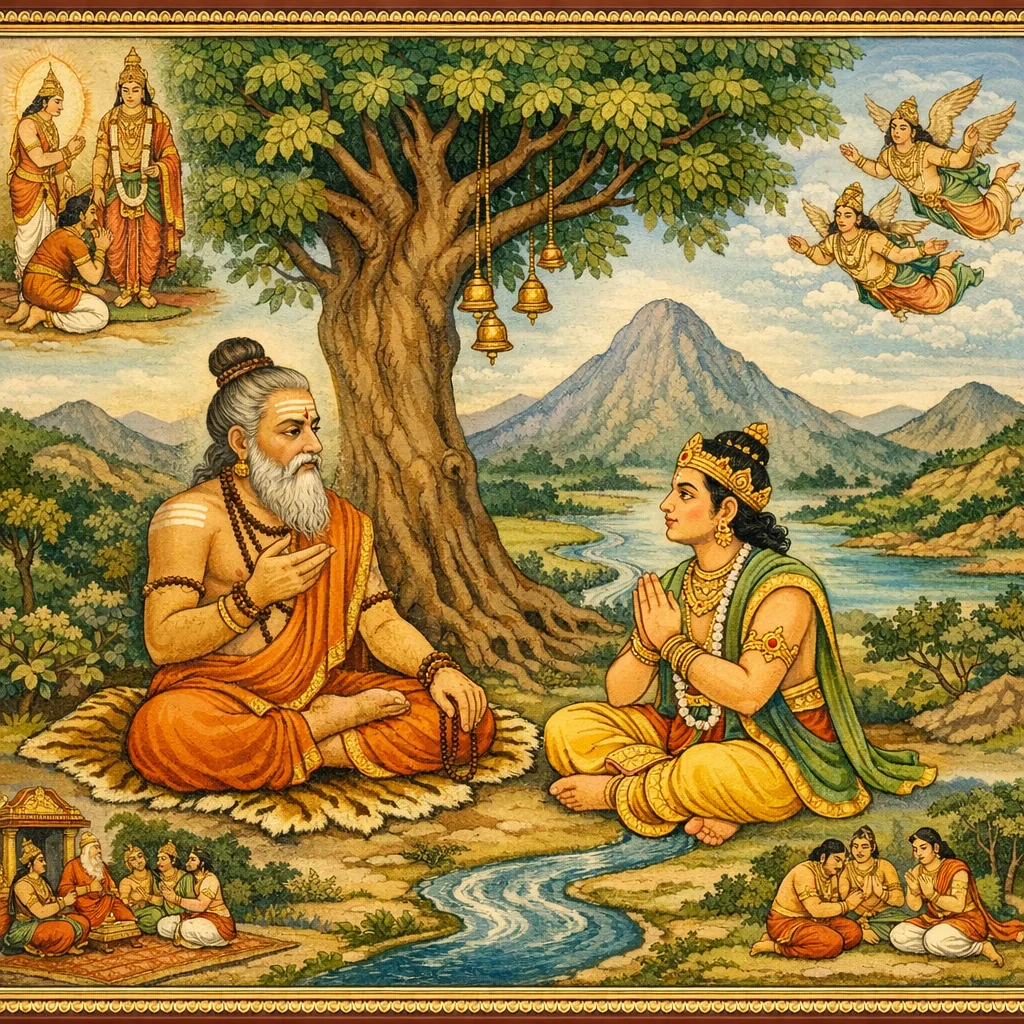
Chapter 4 unfolds as a guru–śiṣya transmission. Nandikeśvara addresses a sage who has been tested and proven as a devotee, affirming his maturity in Śaiva dharma and bhakti, and pointing to signs of divine favor—such as Yama being restrained under Śiva’s authority. The teacher then declares his intent to disclose a “guhya” (esoteric) kṣetra, to be rightly grasped through faith, a disciplined mind, and mantra-remembrance, including Śaṅkarī-vidyā and praṇava (ॐ) recitation. Arunācala is located in the southern Drāviḍa region, defined as a sacred expanse of three yojanas, and identified as Śiva’s heart-space; Śiva is said to have assumed a mountain-body for the welfare of the worlds. A dense catalogue of praise follows: siddhas and celestial beings dwell there; flora and fauna become worship-symbols; the landscape is described with attendant hills in the four directions; and yogic imagery (iḍā–piṅgalā–suṣumnā), jyotiḥ-stambha resonances, and allusions to Brahmā and Viṣṇu’s search motif appear. The narrative records exemplary tapas and installations: Gautama’s austerities and vision of Sadāśiva, Gaurī’s connection with the Pravālādriśvara liṅga, Durgā’s bestowal of mantra-siddhi, and named tīrthas/liṅgas such as Khaḍga-tīrtha and Pāpanāśana-liṅga with purificatory effects. The chapter culminates in a phalāśruti proclaiming Arunācala/Śoṇādri as unsurpassed, after which the disciple asks about karma, suffering, and the logic of consequences.
Shlokas
Verse 1
ब्रह्मोवाच । अथाभ्यधत्त विजया प्रणम्य जगदम्बिकाम् । सांत्वयन्ती स्तुतिशतैरुपायैः शिवदर्शनैः
Brahmā said: Then Vijayā, having bowed to the Mother of the worlds, spoke—seeking to console her with hundreds of praises and with methods leading to the darśana of Śiva.
Verse 2
देवि त्वमविनाभूता सदा देवेन शंभुना । प्राणेश्वरी त्वमेकासि शक्तिस्तस्य परात्मनः
“Goddess, you are ever inseparable from the Lord Śambhu. You alone are his sovereign life-force—his Śakti, of that Supreme Self.”
Verse 3
तथा मायां त्वमात्मीयां संदर्शयितुमीहसे । पृथग्भावमिवेशानः प्रकाशयति न स्वयम्
So too you wish to reveal your own Māyā. The Lord Īśāna does not, of himself, display separateness as though it were real.
Verse 4
आदेशं प्रतिगृह्यैव समुपेतासि पार्वति । अलंघनीया सेवाज्ञा शांभवी सर्वदा त्वया
O Pārvatī, having accepted his command, you have come here. The service-command of Śambhu must never be transgressed by you at any time.
Verse 5
विधातव्यं तपः प्राप्तं स्थानेस्मिच्छिवकल्पिते । निवृत्त्य निखिलान्कामाच्छंमुमाश्रितया त्वया
The austerity (tapas) you have undertaken must be duly completed in this place appointed by Śiva. Taking refuge in Śambhu, you must turn back from every desire.
Verse 6
अन्यथापि जगद्रक्षा त्वदधीना जगन्मयि । धर्मसंरक्षणं भूयः शिवेन सहितं तव
Moreover, O Mother who pervades the universe, the protection of the world depends upon you; and the safeguarding of Dharma is again your work—together with Śiva.
Verse 7
निष्कलं शिवमत्यंतं ध्यायंत्यात्मन्यवस्थितम् । वियोगदुःखं कञ्चित्त्वं न स्मरिष्यसि पार्वति
Meditating on the utterly transcendent Śiva—niṣkala, partless, established within your own Self—you will no longer remember any sorrow of separation, O Pārvatī, nor feel even the slightest sense of lack.
Verse 8
भक्तानां तव मुख्यानां तवैवाचारसंग्रहः । उपदेशितया लोके प्रथतां धर्मवत्सले
O lover of Dharma, may this very code of conduct of yours—meant for your foremost devotees—be taught by you and become renowned in the world.
Verse 9
इति तस्या वचः श्रुत्वा गौरी सुस्थिरमानसा । तपः कर्त्तुं समारेभे कंपा नद्यास्तटे शुभे
Hearing those words, Gaurī—her mind made firm—began to undertake austerity on the auspicious bank of the Kampā River.
Verse 10
विमुच्य विविधा भूषा रुद्राक्षगणभूषिता । विसृज्य दिव्यं वसनं पर्यधाद्वल्कले शुभे
Casting off her many ornaments—adorned instead with clusters of rudrākṣa beads—she set aside her divine garments and clothed herself in auspicious bark-fiber.
Verse 11
अलकैः सहसा शिल्पमनयच्च कपर्दृताम् । अलिंपत तनूं सर्वां भस्मना मुक्तकुंकुमा
In an instant she arranged her hair into matted locks; abandoning vermilion, she smeared her entire body with sacred ash.
Verse 12
मृगेषु कृतसंतोषा शिलोंछीकृतवृत्तिषु । जजाप नियमोपेता शिवपंचाक्षरं परम्
Content with what was fit for the forest, living by gleaned sustenance, and disciplined by sacred observances, she repeated the supreme five-syllabled mantra of Śiva.
Verse 13
कृत्वा त्रिषवणं स्नानं कम्पा पयसि निर्मले । कृत्वा च सैकतं लिंगं पूजयामास सादरम्
Bathing three times each day in the pure, stainless waters of the Kampā, she shaped a liṅga of sand and worshipped it with reverent devotion.
Verse 14
वृक्षप्ररोपणैर्दानैरशेषातिथिपूजनैः । श्रांतिं हरंती जीवानां देवी धर्ममपालयत्
By planting trees, by giving gifts, and by honoring every guest without exception, the Goddess upheld Dharma, lifting the weariness from living beings.
Verse 15
ग्रीष्मे पंचाग्निमध्यस्था वर्षासु स्थंडिलेशया । हेमन्ते जलमध्यस्था शिशिरे चाकरोत्तपः
In summer she stood amid the five fires; in the rains she lay upon bare ground; in autumn she remained in the midst of water; and in winter as well she performed tapas, holy austerity.
Verse 16
पुण्यात्मनां महर्षीणां दर्शनार्थमुपेयुषाम् । विस्मयं जनयामास पूजयामास सादरम्
To the great sages of holy nature who came seeking her darśana, she awakened wonder—and honored them with reverent worship.
Verse 17
कदाचित्स्वयमुच्चित्य वनांतात्पल्लवान्वितम् । पुष्पोत्करं विशेषेण शोधितुं समुपाविशत्
Once, having herself gathered from the forest’s edge a heap of flowers with tender leaves, she sat down to carefully sort and purify them for worship.
Verse 18
कृत्वा च सैकतं लिंगं कंपारोधसि पावने । संपूजयितुमारेभे न्यासावाहनपूर्वकम्
Having fashioned a liṅga of sand upon the sacred bank of the Kampā River, she began to worship it in full—first performing nyāsa, and then invoking the deity by āvāhana.
Verse 19
सूर्यमभ्यर्च्य विधिवद्रक्तैः पुष्पैश्च चंदनैः । पंचावरणसंयुक्तं क्रमादानर्च शंकरम्
After duly worshipping the Sun with red flowers and sandalpaste, she then worshipped Śaṅkara in proper sequence, honoring Him together with the fivefold attendant circles (pañcāvaraṇa).
Verse 20
धूपैर्दीपश्च नैवेद्यैर्भक्तिभावसमन्वितैः । अपरोक्षितमीशानमालुलोके पुरोहितम्
With incense, lamps, and food-offerings (naivedya), each infused with devotional feeling, the priest beheld the Lord Īśāna directly, as though present before his eyes.
Verse 21
अथ देवः शिवः साक्षात्संशोधयितुमंबिकाम् । कंपानद्याः प्रवाहेण महता पर्यवेष्टयत्
Then Lord Śiva Himself, wishing to test Ambikā, caused a great flood-current of the Kampā River to surge around her.
Verse 22
अतिवृद्धं प्रवाहं तं कम्पायाः समुपस्थितम् । आलोक्य नियमासीनामाहुः सख्यस्तदांबिकाम्
Seeing that exceedingly swollen flood of the Kampā arriving, her companions spoke to Ambikā, who was seated in observance of her vow and discipline.
Verse 23
उत्तिष्ठ देवि बहुलः प्रवाहोऽयं विजृंभते । दिशां मुखानि संपूर्य तरसा प्लावयिष्यति
Rise, O Goddess! This mighty flood-current is swelling wide; filling the mouths of all directions, it will swiftly inundate everything.
Verse 24
इति तद्वचनं श्रुत्वा ध्यायंती मीलितेक्षणा । उन्मील्य वेगमतुलं नद्यास्तं समवैक्षत
Hearing their words, she remained absorbed in meditation with eyes closed; then, opening them, she beheld the river’s incomparable rushing force.
Verse 25
अचिंतयच्च सा देवी पूजाविघ्नसमाकुला । किं करोमि न शक्नोमि हातुमारब्धमर्चनम्
Troubled by the obstruction to her worship, the Goddess reflected: “What shall I do? I cannot abandon the worship I have already begun.”
Verse 26
श्रेयः प्राप्तुमविघ्नेन प्रायः पुण्यात्मनां भुवि । घटते धर्मसंयोगो मनोरथफलप्रदः
To attain the highest good without hindrance, for the virtuous upon earth the conjunction with dharma generally comes to pass unobstructed, granting the fruits of righteous intentions and cherished aims.
Verse 27
सैकतं लिंगमतुलप्रवाहाल्लयमेष्यति । लिंगनाशे विमोक्तव्यः सद्भक्तैः प्राणसंग्रहः
This sand-made liṅga will be dissolved by the incomparable flood-current. When the liṅga is destroyed, true devotees should release their clinging to life and let the breath go—without panic—accepting what must be.
Verse 28
प्रवाहोऽयं समायाति शिवमायाविनिर्मितः । विशोधयितुमात्मानं भक्तियुक्तं निजे पदे
This flood has come—fashioned by Śiva’s own māyā—to purify the self joined to devotion and to establish it in its true, proper state.
Verse 29
आलिंग्य सुदृढं दोर्भ्यामेतल्लिंगमनाकुलम् । अहं वत्स्यामि याताशु सख्यो यूयं विदूरतः
“I will firmly embrace this liṅga with both arms, without wavering. I shall remain here; you, my friends, quickly go far away.”
Verse 30
इत्युक्ता सैकतं लिगं गाढमालिंग्य सांबिका । न मुमोच प्रवाहेन वेष्ट्यमानापि वेगतः
Having spoken thus, Sāṃbikā tightly embraced the sand-liṅga. Even as the rushing flood swirled around her, she did not let it go.
Verse 31
स्तनचूचुकनिर्मग्नमुद्रादर्शितलांछनम् । महालिंगं स्वसंयुक्तं प्रणनाम तदादरात्
Then, with reverence, she bowed to that great liṅga—marked with the visible imprint (mudrā) where her breast-nipple had pressed into it—now intimately united with her own being.
Verse 32
निमीलितेक्षणा ध्याननिष्ठैकहृदया स्थिता । पुलकांचितसर्वांगी सा स्मरंती सदाशिवम्
With eyes closed, she stood single-hearted and steadfast in meditation; her whole body thrilled with gooseflesh as she remembered Sadāśiva.
Verse 33
कंपस्वेदपरित्राणलज्जाप्रणयकेलिदात् । क्षणमप्यचला लिंगान्न वियोगमपेक्षते
Because of trembling, sweat, the need for protection, shyness, and the playful intimacy of love, she—unmoving—did not wish to be separated from the liṅga even for a moment.
Verse 34
अथ तामब्रवीत्कापि दैवी वागशरीरिणी । विमुंच बालिके लिंगं प्रवाहोऽयं गतो महान्
Then a certain divine, bodiless voice spoke to her: “Release the liṅga, child; this mighty flood has now passed.”
Verse 35
त्वयार्चितमिदं लिंगं सैकतं स्थिरवैभवम् । भविष्यति महाभागे वरदं सुरपूजितम्
“This sand-liṅga worshiped by you shall gain enduring glory, O greatly fortunate one. It will become a boon-giver, worshiped even by the gods.”
Verse 36
तपश्चर्यां तवालोक्य रचितं धर्मपालनम् । लिंगं चैतन्नमस्कृत्य कृतार्थाः संतु मानवाः
“Seeing your austerity and the dharma you have upheld, this has been established. By bowing to this liṅga, may human beings become fulfilled and attain their true purpose.”
Verse 37
अहं हि तैजसं रूपमास्थाय वसुधातले । वसामि चात्र सिद्ध्यर्थमरुणाचलसंज्ञया
Assuming a radiant form of divine light, I dwell upon the surface of the earth; and here, for the attainment of siddhi, I abide under the name Aruṇācala.
Verse 38
रुणद्धि सर्वलोकेभ्यः परुषं पापसंचयम् । रुणो न विद्यते यस्मिन्दृष्टे तेनारुणाचलः
It blocks and holds back the harsh accumulation of sins from all worlds; and because, upon seeing it, no “debt” (ruṇa) remains, it is therefore called Aruṇācala.
Verse 39
ऋषयः सिद्धगंधर्वा महात्मानश्च योगिनः । मुक्त्वा कैलासशिखरं मेरुं चैनमुपासते
Sages, Siddhas, Gandharvas, great souls, and yogins—leaving even the peaks of Kailāsa and Meru—worship this Aruṇācala.
Verse 40
मदंश जातयोः पूर्वं युध्यतोर्ब्रह्मकृष्णयोः । अहं मोहमपाकर्त्तुं तेजोरूपो व्यवस्थितः
Formerly, when Brahmā and Kṛṣṇa (Viṣṇu) were contending—having arisen from a fragment of pride—I stood forth in a form of blazing light to remove their delusion.
Verse 41
ब्रह्मणा हंसरूपेण विष्णुना क्रोडरूपिणा । अदृष्टशेखरपदः प्रणतो भक्तियोगतः
Brahmā, in the form of a swan, and Viṣṇu, in the form of a boar, could not see the summit or the base; and thus, through the power of devotion, they bowed down in reverence.
Verse 42
ततः प्रसन्नः प्रत्यक्षस्तस्यां वरमभीप्सितम् । प्रादां जगत्त्रयस्यास्य संरक्षायां तु कौशलम्
Then, becoming gracious and manifest before them, I granted the boon they desired—skill and capability for the protection of this threefold world.
Verse 43
प्रार्थितश्च पुनस्ताभ्यामरुणाचलसंज्ञया । अनैषि तैजसं रूपमहं स्थावरलिंगताम्
Requested again by those two that I remain as “Aruṇācala,” I led my radiant form into the state of an immovable liṅga.
Verse 44
गत्वा पृच्छ महाभागं मद्भक्तिं गौतमं मुनिम् । अरुणाचलमाहात्म्यं श्रुत्वा तत्र तपश्चर
Go, O noble one, and inquire of the great sage Gautama—my devoted servant. Having heard the greatness of Aruṇācala from him, practice austerity there.
Verse 45
तत्र ते दर्शयिष्यामि तैजसं रूपमात्मनः । सर्वपापनिवृत्त्यर्थं सर्वलोकहिताय च
There I shall show you my radiant form—so that all sins may cease, and for the welfare of all worlds as well.
Verse 46
इति वाचं समाकर्ण्य निष्कलात्कथितां शिवात् । तथेति सहसा देवी गंतुं समुपचक्रमे
Hearing these words spoken by Śiva in his formless (niṣkala) aspect, the Goddess at once replied, “So be it,” and immediately set about to depart.
Verse 47
अथ देवानृषीन्सर्वान्पश्चात्सेवार्थमागतान् । अवादीदंबिकालोक्य स्नेहपूर्णेन चक्षुषा
Then Ambikā, looking with eyes filled with affection, spoke to all the gods and sages who had come afterward for the sake of service.
Verse 48
तिष्ठतात्रैव वै देवा मुनयश्च दृढव्रताः । नियमांश्चाधितिष्ठंतः कंपारोधसि पावने
Remain right there, O gods and sages of steadfast vows, upholding your disciplines upon the holy bank of the Kampā river.
Verse 49
सर्वपापक्षयकरं सर्वसौभाग्यवर्द्धनम् । पूज्यतां सैकतं लिंगं कुचकंकणलांछनम्
Worship the sandy Liṅga, marked with the breast-ornament (kuca-kaṅkaṇa); it destroys all sins and increases every auspicious fortune.
Verse 50
अहं च निष्कलं रूपमास्थायैतद्दिवानिशम् । आराधयामि मंत्रेण शोणेश्वरं वरप्रदम्
And I too, assuming the formless mode (niṣkala), worship Śoṇeśvara, bestower of boons, day and night by mantra.
Verse 51
मत्तपश्चरणाल्लोके मद्धर्मपरिपालनात् । मल्लिंगदर्शनाच्चैव सिध्यंत्विष्टविभूतयः
By undertaking my austerities in the world, by upholding my dharma, and also by beholding my Liṅga—may the desired attainments be fulfilled.
Verse 52
सर्वकामप्रदानेन कामाक्षीमिति कामतः । मां प्रणम्यात्र मद्भक्ता लभंतां वांछितं वरम्
Because I grant all desires, I am sought and named ‘Kāmākṣī’. Here, my devotees, having bowed to me, may you obtain the boon you desire.
Verse 53
अहं हि देवदेवस्य शंभोरव्याहतो जनः । आदेशं पालयिष्यामि गत्वारुणमहीधरम्
Truly, I am an unhindered agent of Śambhu, the God of gods. I shall fulfill his command, going to the Aruṇa mountain.
Verse 54
तत्र गत्वा तपस्तीव्रं कृत्वा शंभुं प्रसाद्य च । मां तु लब्धवरां यूयं पश्चाद्रक्ष्यथ संगताः
Having gone there and performed intense austerity, and having pleased Śambhu, you all, gathered together, shall afterward protect me—when I have obtained the boon.
Verse 55
इति सर्वान्विसृज्याशु सद्भक्तान्पादसेविनः । अरुणाद्रिं गता बाला तपसे शंकराज्ञया
Thus, quickly dismissing them all—true devotees, attendants at her feet—the young maiden went to Aruṇādri for austerity, by Śaṅkara’s command.
Verse 56
नित्याभिसेविताऽकारि सखीभिरभियोगतः । आससादारुणाद्रीशं दिव्यदुंदुभिनादितम्
Constantly attended by her companions, and urged on by them, she reached the Lord of Aruṇādri—resounding with the sounds of divine kettledrums.
Verse 57
अंतस्तेजोमयं शांतमरुणाचलनायकम् । अप्सरोनृत्यगीतैश्च पूजितं पुष्पवृष्टिभिः
She beheld the Lord of Aruṇācala—peaceful, formed of inner radiance—worshipped with the dances and songs of the Apsarases, and honored by showers of flowers.
Verse 58
प्रणम्य स्थावरं लिंगं कौतूहलसमन्विता । सिद्धानां योगिनां सार्थमृषीणां चान्ववैक्षत
After bowing to the immovable Liṅga, filled with wonder, she gazed upon the assembled hosts of Siddhas, Yogins, and Ṛṣis.
Verse 59
अत्रिर्भृगुर्भरद्वाजः कश्यपश्चांगिरास्तथा । कुत्सश्च गौतमश्चान्ये सिद्धविद्याधरामराः
There were Atri, Bhṛgu, Bharadvāja, Kaśyapa, and Aṅgiras; likewise Kutsa and Gautama, and many others—Siddhas, Vidyādharas, and divine beings.
Verse 60
तपः कुर्वंति सततमपेक्षितवराप्तये । गंगाद्याः सरितश्चान्याः परितः पर्युपासते
They continually practice austerities to obtain the desired boons; and rivers beginning with the Gaṅgā, along with other streams, attend upon this holy place all around.
Verse 61
दिव्यलिंगमिदं पूज्यमरुणाद्रिरिति स्मृतम् । वंदस्वेति सुरैः प्रोक्ता प्रणनाम पुनःपुनः
“This divine Liṅga is to be worshipped; it is renowned as Aruṇādri.” Thus addressed by the gods—“Bow to it!”—she prostrated again and again.
Verse 62
अभ्यर्थिता पुनः सर्वैरातिथ्यार्थे महर्षिभिः । शिवाज्ञया गौतमो मे द्रष्टव्य इति सावदत्
Requested again by all the great sages for hospitality, she said: “By Śiva’s command, I must see Gautama.”
Verse 63
अयमत्रर्षिभिर्भक्तैर्निर्दिष्टं तमथाभ्यगात् । स मुनिः शिवभक्तानां प्रथमस्तपसां निधिः
Pointed out by the devoted sages as being here, she then approached him. That muni was foremost among Śiva’s devotees, a very treasury of tapas, sacred austerity.
Verse 64
वनांतरं गतेः प्रातः समित्कुशफलाहृतेः । अतिथीनाश्रमं प्राप्तानर्चथेति दृढव्रतान्
In the morning, having gone into the forest interior to gather firewood, kuśa-grass, and fruits, he had instructed: “Worship and honor the guests who arrive at the āśrama”—you who are firm in your vows.
Verse 65
शिष्यानादिश्य धर्मात्मा गतश्च विपिनांतरम् । अथ सा गौतमं द्रष्टुमागता पर्णशालिकाम्
Having instructed his disciples, that righteous-souled one went into the inner forest. Then she came to the leaf-hut hermitage, the āśrama, to see Gautama.
Verse 66
क्व गतो मुनिरित्युक्तैरित आयास्यति क्षणात् । शिष्यैरभ्यर्थितेत्युक्त्वा फलमूलैस्सुगंधिभिः
When she asked, “Where has the sage gone?”, the disciples replied, “He will come here in a moment.” Saying, “The disciples have requested it,” they honored her with fragrant fruits and roots.
Verse 67
अभ्युत्थानेनासनेन पाद्येनार्घेण सूनृतैः । वचनैः फलमृलेन सार्चिता शिष्यसंपदा
With rising up in welcome, offering a seat, water for the feet, the arghya-offering, and gentle truthful words—together with fruits and roots—she was duly honored by the disciples in their abundant service.
Verse 68
क्षणं क्षमस्वसूनुस्तामन्ये जग्मुस्तदन्तिकम् । देव्यां प्रविष्टमात्रायां महर्षेराश्रमो महान्
“Be patient for a moment, dear child,” they said, and others drew near to her. The instant the Goddess entered, the great sage’s hermitage was wondrously transformed.
Verse 69
अभवत्कल्पबहुलो मणिप्रासादसंकुलः । वनांतरादुपावृत्त्य समित्कुशफलाहरः
It became filled with wish-fulfilling trees and crowded with jeweled palaces. Returning from the inner forest, the sage—bearing fuel-sticks, kuśa grass, and fruits—drew near.
Verse 70
अपश्यत्स्वाश्रमं दूरे विमानशतशोभितम् । किमेतदिति साश्चर्यं चिंतयन्मुनिपुंगवः
From afar he saw his own hermitage, radiant with hundreds of celestial vimānas. “What is this?”—thus the foremost of sages pondered in amazement.
Verse 71
गौर्याः समागमं सर्वमपश्यज्ज्ञानचक्षुषा । शीघ्रं निवर्तमानोऽसौ द्रष्टुं तां लोकमातरम्
With the eye of spiritual knowledge he beheld the whole advent of Gaurī. At once he hastened back, longing to behold the Mother of the worlds.
Verse 72
शिष्यैः शीघ्रचरैर्वृत्तमावेदितमथाशृणोत्
Then he heard the account of what had occurred, as conveyed by swift-footed disciples.
Verse 73
अथ महर्षिरुपागतकौतुको निजतपःफलमेव तदागमम् । शिवदयाकलितं परिचिन्तयन्नभजदाश्रममाश्रितवत्सलः
Then the great sage, filled with eager wonder, reflected that her coming was indeed the fruit of his own austerities—yet shaped by Śiva’s compassion. Affectionate to those who sought refuge, he entered his hermitage.
Read Skanda Purana in the Vedapath app
Scan the QR code to open this directly in the app, with audio, word-by-word meanings, and more.