Adhyaya 2
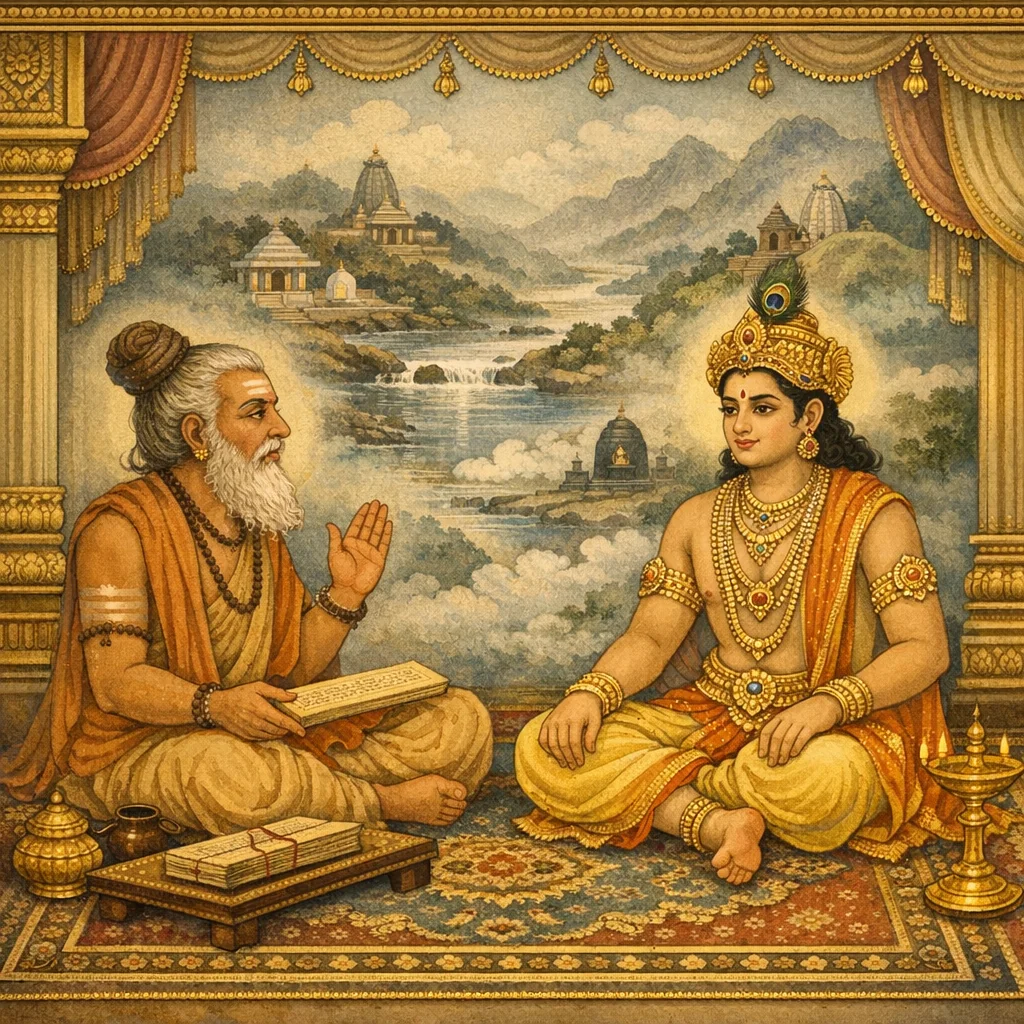
Nandikeśvara answers a sage’s question about a “place” (sthāna) that benefits all beings, explaining embodied life as ruled by karmic fitness and repeated birth through many kinds of wombs. He diagnoses saṃsāra as stubbornly enduring even when one has minor merits or only partial knowledge, portraying the round of birth and death through a cyclical, mechanical image like a water-wheel. The discourse then turns into a sweeping sacred geography: sages and divine residents are said to dwell along numerous riverbanks and holy locales, culminating in a named catalogue of renowned kṣetras across the subcontinent. Vārāṇasī (Avimukta), Gayā, Prayāga, Kedāra, Badarikāśrama, Naimiṣa, Oṃkāra/Amareśa, Puṣkara, Śrīśaila (Mallikārjuna), Kāñcī, Setubandha (Rāmanātha), Somnātha, Gokarṇa, Tripurāntaka, Jvālāmukha, and others appear as key nodes in a pan-Indic Śaiva pilgrimage map. The chapter closes with reverent transmission: the compassionate speaker blesses the devoted listener, affirming continuity of teaching and the humility proper to devotion.
Shlokas
Verse 1
ब्रह्मोवाच । अथाहमुच्चरन्वेदानशेषैर्वदनैः शिवम् । अस्तौषं भक्तिसंपूर्णं कृत्वा मानसमर्चनम्
Brahmā said: Then I, reciting the Vedas with all my mouths, praised Śiva with devotion overflowing, having performed worship within the mind.
Verse 2
नमः शिवाय महते सर्वलोकैकहेतवे । येन प्रकाश्यते सर्वं ध्रियते सततं नमः
Salutations to the great Śiva, the single cause of all worlds—by whom all is illumined and by whom it is ever sustained; salutations again and again.
Verse 3
विश्वव्याप्तमिदं तेजः प्रकाशयति संततम् । नेक्षंते त्वद्दयाहीना जात्यंधा भास्करं यथा
This radiance, pervading the universe, shines without cease; yet those bereft of Your grace do not behold it—like the congenitally blind who cannot see the sun.
Verse 4
भूलिंगममलं ह्येतद्दृश्यमध्यात्मचक्षुषा । अंतस्स्थं वा बहिस्स्थं वा त्वद्भक्तैरनुभूयते
This pure Bhū-liṅga is indeed seen with the inner spiritual eye; whether abiding within or standing without, it is experienced by Your devotees.
Verse 5
अपरिच्छेद्यमाकारमंतरात्मनि योगिनः । तदेतत्तव देवेश ज्वलितं दर्पणो यथा
Within the inner Self of yogins is Your form, immeasurable and beyond delimitation; O Lord of gods, it shines forth—like a radiant mirror.
Verse 6
अथवा शांकरी शक्तिः सत्याऽणोरप्यणीयसी । मत्तो नान्यतरः कश्चिद्यन्मय्यपि विलीयते
Or else, the Śāṃkarī Power is real—subtler even than the subtlest atom. Apart from me there is none other, since even that power dissolves into me.
Verse 7
अणुस्ते करुणापात्रं महत्त्वं ध्रुवमश्नुते । नाधिकोऽस्ति परस्त्वत्तो न मत्तोऽपि तदाश्रयात्
Even one who is small, when he becomes a vessel of Your compassion, surely attains greatness. None is higher than You; and by taking refuge in That, I too do not become higher.
Verse 9
स्वयमीश महादेव प्रसीद भुवनाधिक । आदिश प्रयतं भक्तमपेक्षितनियुक्तिषु
O Lord, O Mahādeva, be gracious—O One greater than the worlds. Personally command this disciplined devotee in the duties and appointments that are awaited.
Verse 10
इदं विज्ञाप्य विनयान्नमस्कृत्वा पुनःपुनः । प्रांजलिर्देवदेवेशं न्यषीदं सविधे विभो
Having thus submitted his request with humility and bowing again and again, he, with folded hands, sat down near the Lord of the gods, O Mighty One.
Verse 11
अथ विष्णुर्नवांभोदगंभीरध्वनिरभ्यधात् । वाचः कृतार्थन्भूयः शुक्लाः शंकरकीर्त्तनैः
Then Viṣṇu, whose voice was deep like a fresh rain-cloud, spoke; and the words became fulfilled again—made pure through the glorification of Śaṅkara.
Verse 12
जय त्रिभुवनाधीश जय गंगाधर प्रभो । जय नाथ विरूपाक्ष जय चंद्रार्द्धशेखर
Victory to You, Lord of the three worlds! Victory to You, mighty Bearer of the Gaṅgā! Victory to You, O Master, the Wide-Eyed One! Victory to You, O Lord crowned with the crescent moon!
Verse 13
अव्याजममितं शंभो कारुण्यं तव वर्द्धते । येन निर्धूतमखिलं भक्तेषु ज्ञानमाहितम्
O Śambhu, your boundless compassion—free of all pretense—ever increases; by it all impurity is shaken off, and true knowledge is planted in your devotees.
Verse 14
पालनं सर्वविद्यानां प्रापणं भूतिसंचयैः । पुराणं च सपुत्राणां पितुरेव प्रवर्धनम्
You are the protector of all branches of knowledge; you grant prosperity and the gathering of auspicious powers. And for sons, you are the very Father by whom the lineage is increased and strengthened.
Verse 15
शतानामपि मूर्तीनामेकामपि नवैः स्तवैः । स्तोतुं न शक्नुमेशान समवायस्तु कि पुनः
O Īśāna, among your hundreds of forms, we cannot adequately praise even one with new hymns; how much less, then, can we praise your totality all at once?
Verse 16
त्वमेव त्वामलं वेत्तुं यदि वा त्वत्प्रसादतः । भ्रमरः कीटमाकृष्य स्वात्मानं किं न चानयेत्
Only you can truly know your own stainless nature—or else one may know it only by your grace. For does not the bee, drawing a worm to itself, bring it into its own state?
Verse 17
देवास्त्वदंशसंभूतिप्रभवो न भवन्ति किम् । अप्यायस्याग्निकीलस्य दाहे शक्तिर्न किं भवेत्
Are not the gods born from the power of your own portion? Even a tiny spark of fire—does it not possess the capacity to burn?
Verse 18
देशकालक्रियायोगाद्यथाग्नेर्भेदसम्भवः । तथा विषयभेदेन त्वमेकोऽपि विभिद्यसे
Just as fire seems differentiated through variations of place, time, and activity, so too—though You are One—You are perceived as manifold according to differences of objects and contexts.
Verse 19
अनुग्रहपरो देव मूर्तिं दर्शय शंकर । आवयोरखिलाधार नयनानंददायिनीम्
O God devoted to grace, O Śaṅkara, show us Your form—O support of all—whose sight bestows joy upon our eyes.
Verse 20
एवं प्रणमतोर्देवः श्रद्धाभक्तिसमन्वितम् । प्रससाद परं शंभुः स्तुवतोरावयोर्द्वयोः
Thus, as we two bowed down and praised with faith and devotion, the supreme Śambhu became gracious and well-pleased with us.
Verse 21
तेजःस्तंभात्पुनस्तस्माद्देवश्चन्द्रार्द्धशेखरः । आविर्बभूव पुरुषः कपिलः कालकन्धरः
Then, from that pillar of radiance, the God—Moon-crested—manifested visibly: a personage tawny in hue, with a darkened throat.
Verse 22
परशुं बालहरिणं करैरभयविश्रमौ । दधानः पुरुषोऽवादीत्पुत्रावावामिति प्रभुः
Bearing an axe and a young deer, and showing with His hands the gestures of fearlessness and repose, the Lord appeared in human form and spoke: “You two are My sons.”
Verse 23
परितुष्टोऽस्मि युवयोर्भक्त्या युक्तात्मनोर्मयि । भवतं सर्वलोकानां सृष्टिरक्षाधिपौ युवाम्
I am wholly pleased with the devotion of you both, whose minds are united in Me. Become the presiding lords over the creation and protection of all the worlds.
Verse 24
युवयोरिष्टसिद्ध्यर्थमाविर्भूतोऽस्म्यहं यतः । वरं वृणुतमन्यं च वरदोऽहमुपागतः
Since I have manifested to fulfill your desired aim, choose a boon—and another as well. I have come here as the giver of boons.
Verse 25
इति देवस्य वचनात्सप्रीतौ च कृतांजली । विज्ञापयामासिवतौ स्वं स्वमर्थं पृथक्पृथक्
Hearing the Lord’s words, the two—delighted and with palms joined in reverence—submitted their respective requests, each one separately.
Verse 26
अहं मन्त्रैः शिशुप्रायजगत्त्रयविधायकः । संस्तुवन्वैदिकैर्मंत्रैरीशानमपराजितम्
I—though still almost a child, the ordainer of the three worlds—praise Īśāna, the unconquered Lord, with Vedic mantras.
Verse 27
नमस्येहमिदं रूपं शश्वद्वरदमीश्वरम् । तेजोमयं महादेवं योगिध्येयं निरंजनम्
I bow to this form of the Lord—ever the bestower of boons: Mahādeva, made of pure radiance, contemplated by yogins, stainless and untouched.
Verse 28
आपूर्यमाणं भवता तेजसा गगनांतरम् । परिपृच्छ्यः सुरावासः क्षणाद्देव भविष्यति
O Lord, as the expanse of the sky is being filled by Your radiance, even the abode of the gods will in a moment become a thing to be questioned—its very stability will be shaken.
Verse 29
सिद्धचारणगन्धर्वा देवाश्च परमर्षयः । नावसन्दिवि संचारं लभेरंस्तेजसा तव
Because of Your blazing radiance, Siddhas, Cāraṇas, Gandharvas, the gods, and the supreme seers would not be able to move about in the heavens.
Verse 30
पृथ्वी च सकला चैव तप्यमाना तवौजसा । चराचरसमुत्पत्तिक्षमा नैव भविप्यति
And the entire earth, scorched by Your might, will no longer be capable of producing the moving and the unmoving beings.
Verse 31
उपसंहृत्य तेजः स्वमरुणाचलसंज्ञया । भव स्थावरलिंगं त्वं लोकानुग्रहकारणात्
Therefore, withdraw Your own radiance and, under the name ‘Aruṇācala,’ become a fixed Liṅga—for the very purpose of showing grace to the worlds.
Verse 32
ज्योतिर्मयमिदं रूपमरुणाचलसंज्ञितम् । ये नमन्ति नरा भक्त्या ते भवन्त्यमराधिकाः
This form, known as Aruṇācala, is made of pure Light. Those who bow to it with devotion become worthy of the state of the immortals.
Verse 33
सेवंतां सकला लोकाः सिद्धाश्च परमर्षयः । गणाश्च विविधा भूमौ मानुषं भावमास्थिताः
May all the worlds worship you, together with the Siddhas and the supreme sages; and may the many gaṇas upon the earth, assuming a human disposition, also serve you.
Verse 34
दिव्याराम समुद्भूतकल्पकाद्याः सुरद्रुमाः । सेविनस्त्वां प्ररोहंतु भरिता विविधैः फलैः
May the celestial wish-fulfilling trees—Kalpaka and others, sprung from divine gardens—grow forth here in your service, laden with many kinds of fruits.
Verse 35
दिव्यौषधिगणास्सर्वे सिंहाद्या मृगजातयः । प्रशांताः परिवर्त्तंता पापकल्मषनाशनम्
May all groups of divine herbs be present here; and may the kinds of beasts—lions and others—become peaceful and transformed, as this place destroys the taint of sin.
Verse 36
अयनद्वयभिन्नेन गमनेनापि संयुतः । न लंघयिष्यति रविः शृंगं लिंगतनोस्तव
Even though the Sun moves along paths divided by the two solsticial courses, he will not overpass the peak of your liṅga-formed body.
Verse 37
दिव्य दुंदुभिशंखानां घोषैः पुष्पौघवृष्टिभिः । सेवितो भव देव त्वमप्सरोनृत्यगीतिभिः
Be served, O God, by the resounding of divine drums and conches, by showers of masses of flowers, and by the dances and songs of the Apsarases.
Verse 38
अमरत्वं च सिद्धत्वं रससिद्धीश्च निर्वृतिम् । लभंतां मानुषा नित्यं त्वत्संनिधिमुपागताः
May human beings who come into your holy presence always obtain immortality, perfection, the attainments of rasasiddhi, and inner peace.
Verse 39
ईशत्वं च वशित्वं च सौभाग्यं कालवंचनम् । त्वामाश्रित्य नरास्सर्वे लभंतामरुणाचल
O Aruṇācala, taking refuge in you, may all people obtain lordliness, mastery, good fortune, and even the power to outwit Time.
Verse 40
सर्वावयवदानेन सर्वव्याधिविनाशनात् । सर्वाभीष्टप्रदानेन दृश्यो भव महीतले
By granting well-being to every limb, by destroying all diseases, and by bestowing all desired aims—become visible upon the earth.
Verse 41
तथेति वरदं देवमरुणाद्रिपतिं शिवम् । प्रणम्य कमलानाथः प्रार्थयन्निदमब्रवीत्
Saying, “So be it,” that boon-giving God—Śiva, the Lord of Aruṇādri—assented. Then Kamalānātha (Brahmā), having bowed down, spoke these words in supplication.
Verse 42
प्रसीद करुणापूर्ण शोणशैलेश्वर प्रभो । महेश सर्वलोकानां हिताय प्रकटोदय
Be gracious, O Lord of the Red Mountain, filled with compassion. O Maheśa, you have manifested openly for the welfare of all the worlds.
Verse 43
यदाहं त्वामुपाश्रित्य जगद्रक्षणदक्षिणः । श्रीपतित्वमनुप्राप्तस्तदा भक्ता भवंतु ते
Since I, taking refuge in you, have become capable of protecting the universe and have attained the status of Śrī’s Lord, may those then become your devotees.
Verse 44
नाल्पपुण्यैरुपास्येत त्वद्रूपं महदद्भुतम् । मया च ब्रह्मणा चैवमदृष्टपदशेखरः
Your vast and wondrous form cannot be worshipped by those of little merit. Even by me—and by Brahmā as well—your supreme summit (highest state) has not been seen.
Verse 45
प्रदक्षिणानमस्कारैर्नृत्यगीतैश्च पूजनैः । त्वामर्चयंति ये मर्त्याः कृतार्थास्ते गतांहसः
Those mortals who worship you with circumambulation, prostrations, dances, songs, and acts of offering—those are fulfilled in purpose, and their sins are removed.
Verse 46
उपवासैर्व्रतैः सत्रैरुपहारैस्तथार्चनैः । त्वामर्चयंति मनुजाः सार्वभौमा भवंतु ते
May those people who worship you through fasts, vows, sacrificial sessions, gifts, and ritual adorations become universal sovereigns.
Verse 47
आरामं मंडपं चापि कूपं विधिविशोधनम् । कुर्वतामरुणाद्रीश संनिधाने पुनर्भव
O Lord of Aruṇādri, be again present nearby for those who build a garden, a pavilion, a well, and who establish proper ritual purification and order.
Verse 48
अंगप्रदक्षिणं कुर्वन्नष्टैश्वर्यसमन्वितः । अशेषपातकैः सद्यो विमुक्तो निर्मलाशयः
Performing bodily circumambulation (pradakṣiṇā), one becomes endowed with the eight siddhis; instantly freed from all sins, one’s inner disposition becomes pure.
Verse 49
आवामप्यविमुंचंतौ सदा त्वत्पादपंकजम् । ध्यातव्यं मनुजैः सर्वैस्तव संनिधिमागतैः
We too never abandon your lotus-feet. Therefore, all people who have come into your presence should ever meditate upon your lotus-feet.
Verse 50
तथास्त्विति वरं दत्त्वा विष्णवे चंद्रशेखरः । भरुणाचलरूपेण प्राप्तः स्थावरलिंगताम्
Saying, “So be it,” Candrasekhara granted the boon to Viṣṇu; and, taking the form of Aruṇācala, he attained the state of an unmoving liṅga.
Verse 51
तैजसं लिंगमेतद्धि सर्वलोकैककारणम् । अरुणाद्रिरिति ख्यातं दृश्यते वसुधातले
This indeed is the radiant liṅga, the single cause of all the worlds. Known as ‘Aruṇādri,’ it is seen upon the surface of the earth.
Verse 52
युगांतसमये क्षुब्धैश्चतुर्भिरपि सागरैः । अपि निर्मग्नलोकांतैरस्पृष्टांतिकभूतलम्
Even at the end of an age, when the four oceans are violently churned and the worlds sink into dissolution, that region of earth near it remains untouched.
Verse 53
गजप्रमाणैः पृषतैः पूरयंतो जगत्त्रयम् । पुष्कराद्या महामेघा विश्रांता यस्य सानुनि
There, mighty clouds—beginning with Puṣkara—pour elephant-sized drops that fill the three worlds, and yet they come to rest upon its slopes.
Verse 54
प्रवृत्ते भूतसंहारे प्रकृतौ प्रतिसंचरे । भविष्यत्सर्वबीजानि निषेदुर्यत्र निश्चयम्
When the dissolution of beings begins and all withdraw back into Prakṛti, the seeds of all future creation surely abide there.
Verse 55
मया चाहूयमानेभ्यः प्रलयानंतरं पुनः । यत्पादसेविविप्रेभ्यो वेदाध्ययनसंग्रहः
And after the dissolution, when they are summoned again by me, from the brahmins devoted to serving his feet the Vedas and their study are gathered anew.
Verse 56
सर्वासामपि विद्यानां कलानां शास्त्रसंपदाम् । आगमानां च वेदानां यत्र सत्यव्यवस्थितिः
There, the true foundation of all knowledges, arts, scriptural treasures, Āgamas, and Vedas stands firmly established.
Verse 57
यद्गुहागह्वरांतस्स्था मुनयः शंसितव्रताः । जटिनः संप्रकाशंते कोटिसूर्याग्नितेजसः
In its caves and deep ravines dwell sages of praised vows—matted-haired ascetics who shine forth with the splendor of ten million suns and fires.
Verse 58
पंचब्रह्ममयैर्मंत्रैः पंचाक्षरवपुर्धरैः । अकारपीठिकारूढो नादात्मा यः सदाशिवः
He is Sadāśiva—whose essence is Nāda, enthroned upon the seat of ‘A’, embodied as the five-syllabled mantra, and constituted of the mantras of the Pañcabrahman.
Verse 59
अष्टभिश्च सदा लिंगैरष्टदिक्पालपूजितः । अष्टमूर्त्तितया योऽयमष्टसिद्धिप्रदायकः
He is ever present as eight liṅgas, worshipped by the guardians of the eight directions; and as the Lord of eight forms, he bestows the eight siddhis.
Verse 60
यत्र सिद्धास्तथा लोकान्स्वान्स्वान्मुक्त्वा सुरेश्वराः । अपेक्षंते स्थिता मुक्तिं विहाय कनकाचलम्
There, siddhas and even the lords of the gods abandon their own respective worlds and, having left Kanakācala, remain waiting for liberation.
Verse 61
एवं वसुंधरापुण्यपरिपाकसमुच्चयः । अरुणाद्रिरिति ख्यातो भक्तभक्तिवरप्रदः
Thus, as the amassed ripened fruit of the earth’s merit, he is renowned as Aruṇādri—bestower of boons upon devotees through their devotion.
Verse 62
कैलासान्मेरुशिखरादागतैर्देवसंचयैः । पूज्यते शोणशैलात्मा शंभुः सर्ववरप्रदः
Hosts of gods, arriving from Kailāsa and the peaks of Meru, worship Śambhu—who abides as Śoṇaśaila (Aruṇācala)—the bestower of every boon.
Verse 63
इति कमलजवक्त्रपद्मजां तं मुदितमनाः सनको निशम्य भक्त्या । विरचितविनयः प्रणम्य पुत्रः पितरमपृच्छदशेषवेदसारम्
Thus, having heard that account from the Lotus-born (Brahmā), Sanaka—his heart delighted—listened with devotion; then the son, fashioned in humility, bowed and asked his father about the very essence of all the Vedas.