Adhyaya 42
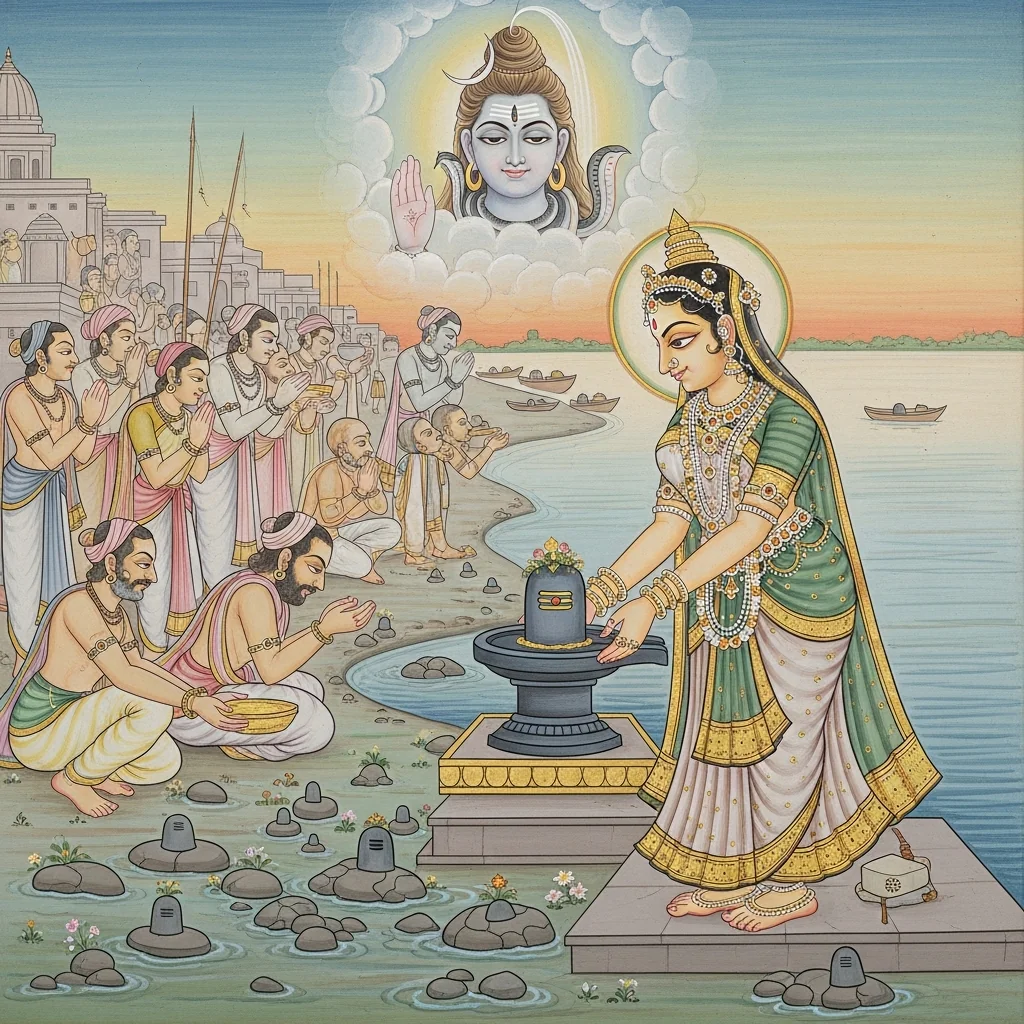
This chapter presents Skanda’s theological discourse on the māhātmya (sacred greatness) of the Narmadā (Revā), declaring that mere remembrance of Narmadā diminishes even grave sins. In an assembly of sages, the question arises as to which river is supreme; Mārkaṇḍeya classifies rivers as purifying and merit-bestowing, and highlights the canonical four—Gaṅgā, Yamunā, Narmadā, Sarasvatī—aligned with the embodiments of the four Vedas (Ṛg, Yajus, Sāman, Atharvan). Though Gaṅgā is praised as unrivaled, the narrative turns to Narmadā’s austerities and her plea for equal standing. Brahmā answers with a conditional principle: only if there could exist equivalents to Śiva (Tryakṣa), Viṣṇu (Puruṣottama), Gaurī, and Kāśī itself could another river match Gaṅgā—implying how rare such parity is. Narmadā then comes to Vārāṇasī, where liṅga-pratiṣṭhā (establishing a liṅga) is proclaimed an unsurpassed act of merit; she installs a liṅga at Pilipilā-tīrtha near Triviṣiṣṭapa. Pleased, Śiva grants boons: stones along Narmadā’s banks become liṅga-forms; Narmadā’s darśana alone immediately attenuates sin (unlike other rivers whose fruits mature in time); and the installed liṅga, named Narmadeśvara, bestows enduring liberation, with devotees receiving reverence from Sūrya’s son. The chapter closes with a phalaśruti assurance that hearing Narmadā’s māhātmya removes the “cloak of sin” and leads to higher knowledge.
Shlokas
Verse 1
स्कंद उवाच । नर्मदेशस्य माहात्म्यं कथयामि मुने तव । यस्य स्मरणमात्रेण महापातकसंक्षयः
Skanda said: O sage, I shall tell you the greatness of the land of the Narmadā; by its mere remembrance, great sins are diminished.
Verse 2
अस्य वाराहकल्पस्य प्रवेशे मुनिपुंगवैः । आपृच्छि का सरिच्छ्रेष्ठा वद तां त्वं मृकंडज
At the dawn of this Varāha-kalpa, the foremost sages asked: “Among rivers, which is the best? Declare it to us, O son of Mṛkaṇḍu.”
Verse 3
मार्कंडेय उवाच । शृणुध्वं मुनयः सर्वे संति नद्यः परःशतम् । सर्वा अप्यघहारिण्यः सर्वा अपि वृषप्रदाः
Mārkaṇḍeya said: “Listen, all you sages: there are more than a hundred rivers; all remove sin, and all bestow dharma—righteous merit.”},{
Verse 4
सर्वाभ्योपि नदीभ्यश्च श्रेष्ठाः सर्वाः समुद्रगाः । ततोपि हि महाश्रेष्ठाः सरित्सु सरिदुत्तमाः
Among all rivers, those that flow to the ocean are most excellent; yet beyond even them are the supremely excellent—praised as the best among all streams.
Verse 5
गंगा च यमुनाचाथ नर्मदा च सरस्वती । चतुष्टयमिदं पुण्यं धुनीषु मुनिपुंगवाः
Gaṅgā and Yamunā, Narmadā and Sarasvatī—this sacred quartet is the holy set among rivers, O best of sages.
Verse 6
ऋग्वेदमूर्तिर्गंगा स्याद्यमुना च यजुर्ध्रुवम् । नर्मदा साममूर्तिस्तु स्यादथर्वा सरस्वती
Gaṅgā is said to embody the Ṛgveda; Yamunā, surely, the Yajurveda; Narmadā embodies the Sāmaveda, and Sarasvatī is the Atharvaveda.
Verse 7
गंगा सर्वसरिद्योनिः समुद्रस्यापि पूरणी । गंगाया न लभेत्साम्यं काचिदत्र सरिद्वरा
Gaṅgā is the womb-source of all rivers and even the one who fills the ocean; here no excellent river attains equality with Gaṅgā.
Verse 8
किंतु पूर्वं तपस्तप्त्वा रेवया बह्वनेहसम् । वरदानोन्मुखो धाता प्रार्थितश्चेति सत्तम
But first, O best of the good, Revā (Narmadā) performed austerities for a very long time; then Dhātā, the Creator (Brahmā), inclined to grant a boon, was approached and petitioned.
Verse 9
गंगा साम्यं विधे देहि प्रसन्नोसि यदि प्रभो । ब्रह्मणाथ ततः प्रोक्ता नर्मदा स्मितपूर्वकम्
“Grant me equality with Gaṅgā, O Vidhe, Ordainer! If you are pleased, O Lord.” Thus Narmadā spoke; then Brahmā replied to her with a gentle smile.
Verse 10
यदि त्र्यक्षसमत्वं तु लभ्यतेऽन्येन केनचित् । तदा गंगासमत्वं च लभ्यते सरितान्यया
If, indeed, equality with the Three-Eyed Lord (Śiva) could be attained by anyone else, then another river might also attain equality with Gaṅgā.
Verse 11
पुरुषोत्तम तुल्यः स्यात्पुरुषोन्यो यदि क्वचित । स्रोतस्विनी तदा साम्यं लभते गंगया परा
If ever there were some other person equal to Puruṣottama (the Supreme Lord), then only would another river attain equality with Gaṅgā.
Verse 12
यदि गौरी समा नारी क्वचिदन्या भवेदिह । अन्या धुनीह स्वर्धुन्यास्तदा साम्यमुपैष्यति
If, in this world, there could be some other woman equal to Goddess Gaurī, then some other river too would attain equality with the celestial Gaṅgā, Svardhunī.
Verse 13
यदि काशीपुरी तुल्या भवेदस्या क्वचित्पुरी । तदा स्वर्गतरंगिण्याः साम्यमन्या नदी लभेत्
If there were anywhere some city equal to this Kāśī, then another river might attain equality with Gaṅgā, the bearer of heavenly waves.
Verse 14
निशम्येति विधेर्वाक्यं नर्मदा सरिदुत्तमा । धातुर्वरं परित्यज्य प्राप्ता वाराणसीं पुरीम्
Hearing these words of Vidhi (Brahmā), Narmadā—the best of rivers—set aside the Creator’s boon and came to the city of Vārāṇasī.
Verse 15
सर्वेभ्योपि हि पुण्येभ्यः काश्यां लिंगप्रतिष्ठितेः । अपरा न समुद्दिष्टा कैश्चिच्छ्रेयस्करी क्रिया
Indeed, among all meritorious acts, the wise declare no deed more beneficial than installing and consecrating a Śiva-liṅga in Kāśī.
Verse 16
अथ सा नर्मदा पुण्या विधिपूर्वां प्रतिष्ठितिम् । व्यधात्पिलिपिलातीर्थे त्रिविषिष्टपसमीपतः
Then that holy Narmadā performed the installation rite in proper traditional manner at Pilipilā Tīrtha, near the abode of the Thirty-Three gods.
Verse 17
ततः शंभुः प्रसन्नोभूऽत्तस्यै नद्यै शुभात्मने । वरं वृणीष्व सुभगे यत्तुभ्यं रोचतेऽनघे
Then Śambhu (Śiva), pleased with that river of auspicious nature, said: “O fortunate, sinless one—choose a boon, whatever you desire.”
Verse 18
सरिद्वरा निशम्येति रेवा प्राह महेश्वरम् । किं वरेणेह देवेश भृशं तुच्छेन धूर्जटे
Hearing this, the best of rivers—Revā (Narmadā)—said to Maheśvara: “O Lord of the gods, O Dhūrjaṭi, what is the use of a boon here—so very trifling?”
Verse 19
निर्द्वंद्वा त्वत्पदद्वंद्वे भक्तिरस्तु महेश्वर । श्रुत्वेति नितरां तुष्टो रेवागिरमनुत्तमाम्
“May unwavering devotion arise for me toward the pair of Your feet, O Maheśvara.” Hearing these unsurpassed words of Revā, the Lord became exceedingly pleased.
Verse 20
प्रोवाच च सरिच्छेष्ठे त्वयोक्तं यत्तथास्तु तत् । गृहाण पुण्यनिलये वितरामि वरांतरम्
And he said: “O best of rivers, let it be exactly as you have spoken. Accept it, O abode of merit; I shall grant you yet another boon.”
Verse 21
यावंत्यो दृषदः संति तव रोधसि नर्मदे । तावंत्यो लिंगरूपिण्यो भविष्यंति वरान्मम
“O Narmadā, as many stones as there are upon your banks, so many will become liṅga-forms—by the power of my boon.”
Verse 22
अन्यं च ते वरं दद्या तमप्याकर्णयोत्तमम् । दुष्प्रापं यज्ञतपसां राशिभिः परमार्थतः
And I shall grant you yet another boon—hear it, O excellent one—one that is truly hard to attain even by heaps of sacrifices and austerities.
Verse 23
सद्यः पापहरा गंगा सप्ताहेन कलिंदजा । त्र्यहात्सरस्वती रेवे त्वं तु दर्शनमात्रतः
The Gaṅgā removes sins at once; the Kalindajā (Yamunā) in seven days; Sarasvatī in three days. But you, O Revā, do so by mere sight alone.
Verse 24
अपरं च वरं दद्यां नर्मदे दर्शनाघहे । भवत्या स्थापितं लिंगं नर्मदेश्वरसंजकम्
And I shall grant yet another boon, O Narmadā, whose sight destroys sin: the liṅga established by you shall be known as “Narmadeśvara.”
Verse 25
यत्तल्लिंगं महापुण्यं मुक्तिं दास्यति शाश्वतीम । अस्य लिंगस्य ये भक्तास्तान्दृष्ट्वा सूर्यनंदनः
That liṅga is greatly meritorious and will bestow everlasting liberation. And the devotees of this liṅga—upon seeing them, the Son of the Sun (Yama)…
Verse 26
प्रणमिष्यंति यत्नेन महाश्रेयोभिवृद्धये । संति लिंगान्यनेकानि काश्यां देवि पदेपदे
…will bow to them with earnest effort, for the increase of great well-being. Indeed, O Goddess, in Kāśī there are many liṅgas—at every step.
Verse 27
परं हि नर्मदेशस्य महिमा कोपि चाद्भुतः । इत्युक्त्वा देवदेवेशस्तस्मिंल्लिंगे लयं ययौ
“Truly, the greatness of Narmadeśa is supremely wondrous.” Having spoken thus, the Lord of the gods entered absorption and merged within that liṅga.
Verse 28
नर्मदापि प्रहृष्टासीत्पावित्र्यं प्राप्य चाद्भुतम् । स्वदेशं च परिप्राप्ता दृष्टमात्राघहारिणी
Even the river Narmadā rejoiced, having attained a wondrous power of sanctification; and returning to her own realm, she became one who removes sins merely by being seen.
Verse 29
वाक्यं मृकंडजमुनेस्तेपि श्रुत्वा मुनीश्वराः । प्रहृष्टचेतसो जाताश्चक्रुः स्वं स्वं ततो हितम्
Hearing the words of Mṛkaṇḍu’s son, those lordly sages too became joyful at heart, and thereafter each undertook what was beneficial for himself.
Verse 30
स्कंद उवाच । नर्मदेशस्य माहात्म्यं श्रुत्वा भक्तियुतो नरः । पापकंचुकमुत्सृज्य प्राप्स्यति ज्ञानमुत्तमम्
Skanda said: A man who, endowed with devotion, hears the greatness of Narmadeśa—casting off the garment of sin—will attain the highest knowledge.
Verse 92
इति श्रीस्कांदे महापुराण एकाशीतिसाहस्र्यां संहितायां चतुर्थे काशीखंड उत्तरार्धे नर्मदेश्वराख्यानं नाम द्विनवतितमोऽध्यायः
Thus, in the revered Skanda Mahāpurāṇa, in the compilation of eighty-one thousand verses, in the fourth Saṃhitā, in the Kāśī Khaṇḍa (Uttarārdha), ends the ninety-second chapter called “The Narrative of Narmadeśvara.”