Adhyaya 41
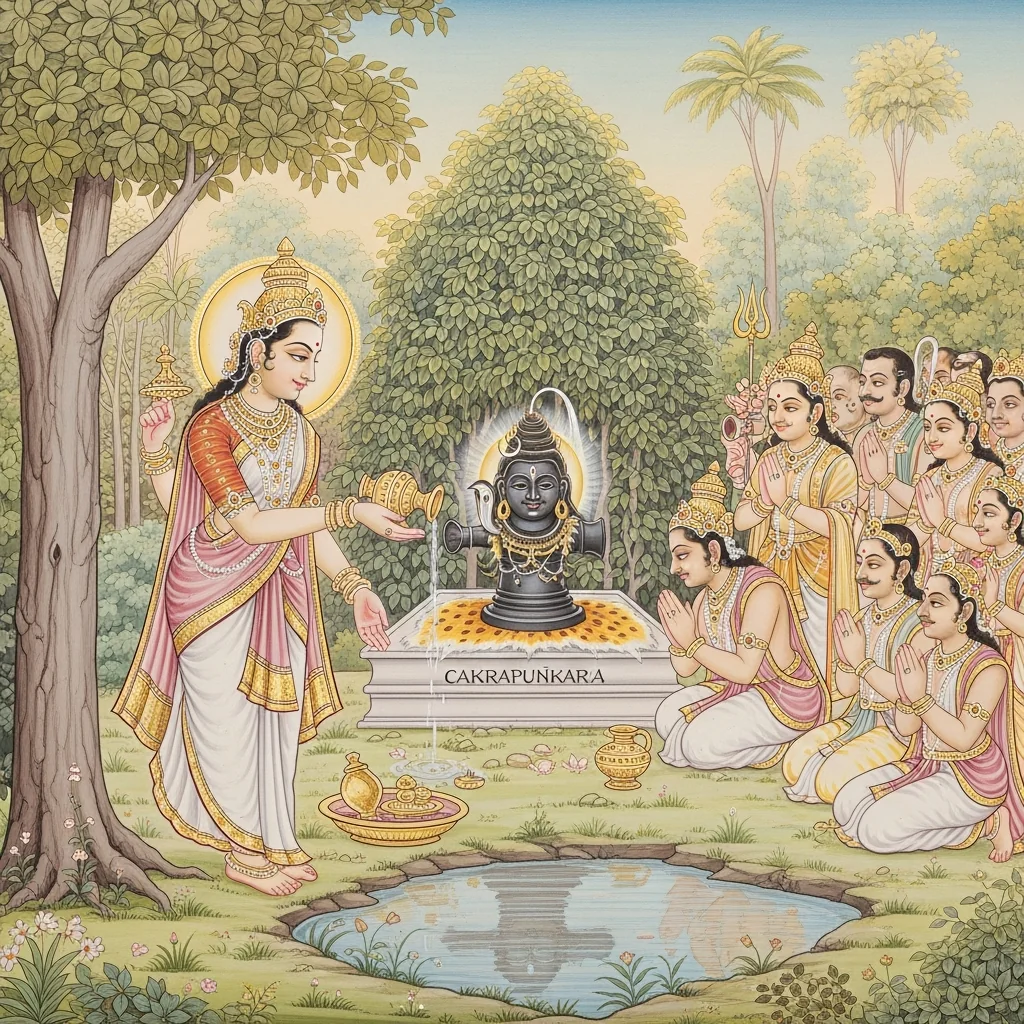
Skanda addresses a sage and introduces the theme of “Gaṅgeśvara-samudbhava,” praising Gaṅgeśvara as a sacred liṅga whose very hearing and remembrance bestow tīrtha-like merit, equal to bathing in the Gaṅgā. The account is set around Cakrapuṣkariṇī-tīrtha and the Ānandakānana grove, proclaiming the unmatched kṣetra-prabhāva of Kāśī under Śambhu’s protection. Recalling the extraordinary fruit of liṅga-pratiṣṭhā in Kāśī, the text states that Gaṅgā established an auspicious (śubha) liṅga to the east of Viśveśa. Darśana of this Gaṅgeśvara-liṅga is said to be rare even in Kāśī; worship on the Daśaharā tithi is declared to diminish at once the sins amassed over many births. It further foretells that in Kali-yuga the liṅga becomes guptra-prāya (largely hidden), making its sight still more uncommon; yet its darśana remains a cause of puṇya, equivalent to beholding the Gaṅgā directly. The concluding phalaśruti affirms that hearing Gaṅgeśa’s māhātmya prevents a fall into naraka-bound outcomes, stores up merit, and grants the attainment of one’s contemplated aims.
Shlokas
Verse 1
स्कंद उवाच । पार्वतीशस्य महिमा कथितस्ते मयानघ । मुने निशामयेदानीं गंगेश्वरसमुद्भवम्
Skanda said: “O sinless one, I have told you the greatness of Pārvatīśa (Śiva). Now, O sage, listen to the account of the origin of Gaṅgeśvara.”
Verse 2
यं श्रुत्वा यत्रकुत्रापि गंगास्नानफलं लभेत् । चक्रपुष्करिणीतीर्थं यदा गंगा समागता
“Hearing of this—even from anywhere—one gains the merit of bathing in the Gaṅgā. (It concerns the time) when the Gaṅgā came to the sacred ford called Cakrapuṣkariṇī.”
Verse 3
तेन दैलीपिना सार्धमस्मिन्नानंदकानने । क्षेत्रप्रभावमतुलं ज्ञात्वा शंभुपरिग्रहात्
“And together with that Dailīpina, in this Ānandakānana—the Grove of Bliss—having understood the incomparable power of this sacred field, because it is held and claimed by Śambhu (Śiva)…”
Verse 4
स्मृत्वा लिंगप्रतिष्ठायाः काश्यां लोकोत्तरं फलम् । गंगया स्थापितं लिंगं विश्वेशात्पूर्वतः शुभम्
Remembering the otherworldly, supreme fruit of establishing a Śiva-liṅga in Kāśī, the sacred Gaṅgā set up an auspicious liṅga to the east of Viśveśa.
Verse 5
गंगेश्वरस्य लिंगस्य काश्यां दृष्टिः सुदुर्लभा । तिथौ दशहरायां च यो गंगेशं समर्चयेत्
In Kāśī, the very darśana—the sight—of the Gaṅgeśvara liṅga is exceedingly rare. And whoever, on the Daśaharā tithi, worships Gaṅgeśa with full reverence…
Verse 6
तस्य जन्मसहस्रस्य पापं संक्षीयते क्षणात् । कलौ गंगेश्वरं लिंगं गुप्तप्रायं भविष्यति
For him, the sin accumulated over a thousand births is destroyed in an instant. Yet in the age of Kali, the Gaṅgeśvara liṅga will be mostly hidden.
Verse 7
तस्य संदर्शनं पुंसां जायते पुण्यहेतवे । दृष्टं गंगेश्वरं लिंगं येन काश्यां सुदुर्लभम्
Its darśana comes to people as a cause of merit. He by whom the Gaṅgeśvara liṅga—so exceedingly rare to behold in Kāśī—has been seen…
Verse 8
प्रत्यक्षरूपिणी गंगा तेन दृष्टा न संशयः । कलौ सुदुर्लभा गंगा सर्वकल्मषहारिणी
The Gaṅgā—present in visible form—has indeed been seen by him; of this there is no doubt. In Kali-yuga, the Gaṅgā, remover of all impurities, is hard to attain in her fullest sanctity.
Verse 9
भविष्यति न संदेहो मित्रावरुणनंदन । ततोपि तिष्ये संप्राप्ते काश्यत्यंतं सुदुर्लभा
So it shall be—there is no doubt, O son of Mitra and Varuṇa. And when the Tiṣya period arrives, Kāśī will become exceedingly difficult to attain (in access and availability).
Verse 10
ततोपि दुर्लभं काश्यां लिंगं गंगेश्वराभिधम् । यस्य संदर्शनं पुंसां भवेत्पापक्षयाय वै
Rarer still in Kāśī is the Liṅga known as Gaṅgeśvara; for the mere sight of it by people truly becomes a cause for the destruction of sins.
Verse 11
श्रुत्वा गंगेश माहात्म्यं न नरो निरयी भवेत् । लभेच्च पुण्यसंभारं चिंतितं चाधिगच्छति
Having heard the greatness of Gaṅgeśa, a man is not destined for hell; he gains a store of merit, and even attains what he has inwardly desired.
Verse 91
इति श्रीस्कांदे महापुराण एकाशीति साहस्र्यां संहितायां चतुथें काशीखंड उत्तरार्धे गंगेश्वरमहिमाख्यानं नामैकनवतितमोऽध्यायः
Thus, in the revered Skanda Mahāpurāṇa—within the Ekāśīti-sāhasrī Saṃhitā, in the fourth division, in the Uttarārdha of the Kāśīkhaṇḍa—ends the chapter called “The Narrative of the Glory of Gaṅgeśvara,” being the ninety-first adhyāya.