Adhyaya 40
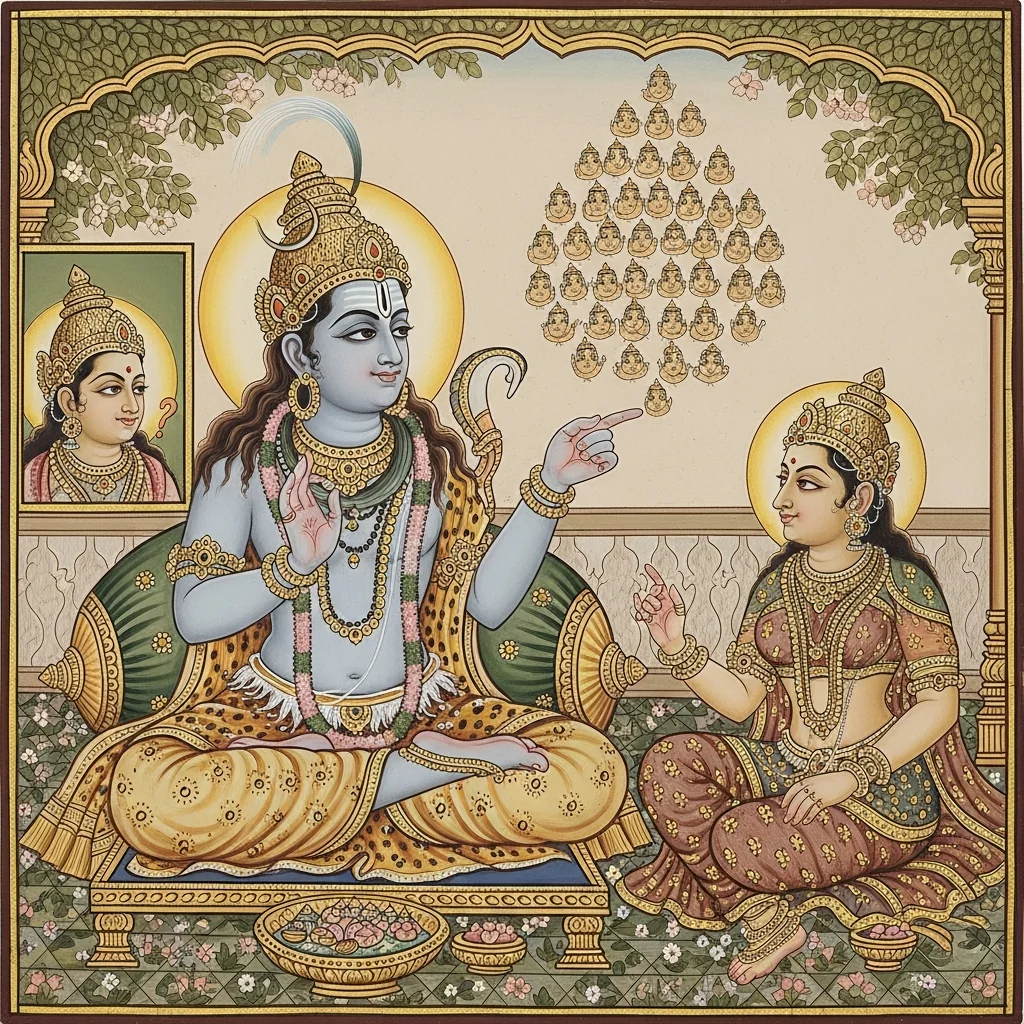
Agastya asks Skanda to explain the previously mentioned, sin-destroying topic connected with Pārvatī’s joy. Skanda recounts a domestic yet theological episode: when Menā questions Pārvatī about her marital residence, Pārvatī approaches Śiva and requests to dwell in his own abode. Śiva leads her from the Himālaya to Ānandavana, praised as the supreme cause of bliss, and Pārvatī’s very being becomes suffused with joy. Pārvatī then asks the source of uninterrupted bliss in that kṣetra. Śiva explains that within the pañcakrośa extent of this mokṣa-field, liṅgas are everywhere—so densely present that no space is without them—and that innumerable liṅgas of “supreme bliss-form” have been established by meritorious beings across the worlds. With Śiva’s permission, Pārvatī installs the Pārvatīśa liṅga near Mahādeva. The chapter lists the merits: mere sight of the liṅga dissolves grievous sins (including brahmahatyā) and breaks bondage to embodied existence. Worship in Kāśī transforms one into a “Kāśī-liṅga” identity and culminates in entry into Śiva. Worship on Caitra-śukla-tṛtīyā is especially praised for granting worldly auspiciousness and a favorable hereafter, and the phalaśruti declares that hearing this māhātmya fulfills aims in both this world and the next.
Shlokas
Verse 1
अगस्त्य उवाच । पार्वतीहृदयानंद पार्वतीश समुद्भवम् । कथयेह यदुद्दिष्टं भवता प्रागघापहम्
Agastya said: “O source of joy to Pārvatī’s heart, O Lord of Pārvatī—tell here the account you earlier indicated, the one that removes sin.”
Verse 2
स्कंद उवाच । शृण्वगस्ते यदा मेना हिमाचलपतिव्रता । गिरींद्रजां सुतामाह पुत्रि तेस्य महेशितुः
Skanda said: “Listen, O Agastya. Once Menā, devoted to her lord Himācala, spoke to her daughter Girīndrajā: ‘Daughter, about that great Lord Mahēśvara…’”
Verse 3
किं स्थानं वसतिर्वा का को बंधुर्वेत्सि किंचन । प्रायो गृहं न जामातुरस्य कोपि च कुत्रचित्
“What is his place? What is his dwelling like? Who are his relatives—do you know anything at all? For usually, the son-in-law’s home is not known to anyone anywhere.”
Verse 4
निशम्येति वचो मातुरतिह्रीणा गिरींद्रजा । आसाद्यावसरं शंभुं नत्वा गौरी व्यजिज्ञपत्
Hearing her mother’s words, Girīndrajā (Gaurī), overcome with shyness, found an opportunity, bowed to Śambhu, and made her request known.
Verse 5
मया श्वश्रूगृहं कांत गम्यमद्य विनिश्चितम् । नाथात्र नैव वस्तव्यं नय मां स्वं निकेतनम्
Beloved, I have firmly resolved to go today to my mother-in-law’s house. O Lord, I should not remain here—take me to Your own abode.
Verse 6
गिरींद्रजागिरं श्रुत्वा गिरीश इति तत्त्ववित् । हित्वा हिमगिरिं प्राप्तो निजमानंदकाननम्
Hearing the summons of the Lord of mountains, the Knower of truth—Śiva, Lord of the mountains—left the Himālaya and came to His own grove of bliss, Ānandavana (Kāśī).
Verse 7
प्राप्यानंदवनं देवी परमानंदकारणम् । विस्मृत्य पितृसंवासं जाता चानंदरूपिणी
Reaching Ānandavana, the Goddess—cause of supreme bliss—forgot even her life in her father’s home and became herself the very embodiment of bliss.
Verse 8
अथ विज्ञापयांचक्रे गौरी गिरिशमेकदा । अच्छिन्नानंदसंदोहः कुतः क्षेत्रेऽत्र तद्वद
Then, once, Gaurī questioned Giriśa: “Tell me—how is it that in this sacred field there is an unbroken mass of bliss?”
Verse 9
इति गौरीरितं श्रुत्वा प्रत्युवाच पिनाकधृक् । पंचक्रोशपरीमाणे क्षेत्रेस्मिन्मुक्तिसद्मनि
Hearing what Gaurī had said, the Bearer of the Pināka replied: “In this sacred field—measured as the Pañcakrośa—this very abode of liberation…”
Verse 10
तिलांतरं न देव्यस्ति विना लिंगं हि कुत्रचित् । एकैकं परितो लिंगं क्रोशं क्रोशं च यावनिः
O Devī, here there is not even a sesame-seed’s space anywhere without a liṅga. All around, liṅgas stand—one after another—throughout, krośa by krośa, as far as the land extends.
Verse 11
अन्यत्रापि हि सा देवि भवेदानंदकारणम् । अत्रानंदवने देवि परमानंदजन्मनि
Elsewhere too, O Devī, it may indeed become a cause of bliss; but here in Ānandavana, O Devī, it is the very birthplace of supreme bliss.
Verse 12
परमानंदरूपाणि संति लिंगान्यनेकशः । चतुर्दशसु लोकेषु कृतिनो ये वसंति हि
Liṅgas of the form of supreme bliss exist in countless numbers. Indeed, across the fourteen worlds dwell the meritorious ones…
Verse 13
तैः स्वनाम्नेह लिंगानि कृत्वाऽपि कृतकृत्यता । अत्र येन महादेवि लिंगं संस्थापितं मम
By them, liṅgas are fashioned here in their own names, and thus they attain fulfillment. Yet, O Mahādevī, whoever establishes my liṅga here…
Verse 14
वेत्ति तच्छ्रेयसः संख्यां शेषोपि न विशेषवित्
The measure of that merit—its very number—none can know; not even Śeṣa is a knower of its full extent.
Verse 15
परिच्छेदव्यतीतस्यानंदस्य परकारणम् । अतस्त्विदं परं क्षेत्रं लिर्गैर्भूयोभिरद्रिजे
This is the supreme cause of bliss (ānanda) that transcends all limitation. Therefore, O daughter of the Mountain, this is the highest sacred field (kṣetra), ever more abounding in liṅgas.
Verse 16
निशम्येति महादेवी पुनः पादौ प्रणम्य च । देह्यनुज्ञां महादेव लिंगसंस्थापनाय मे
Hearing this, the Great Goddess again bowed at (Śiva’s) feet and said: “O Mahādeva, grant me permission to establish the liṅga.”
Verse 17
पत्युराज्ञां समासाद्य यच्छेच्छ्रेयः पतिव्रता । न तस्याः श्रेयसो हानिः संवर्तेपि कदाचन
A devoted wife (pativratā), having obtained her husband’s consent, may pursue whatever is spiritually beneficial; her merit is never diminished—not even at the time of cosmic dissolution (pralaya).
Verse 18
इति प्रसाद्य देवेशमाज्ञां प्राप्य महेशितुः । लिंगं संस्थापितं गौर्या महादेव समीपतः
Thus, having pleased the Lord of gods and obtained Mahēśvara’s permission, Gaurī installed the liṅga near Mahādeva.
Verse 19
तल्लिंगदर्शनात्पुंसां ब्रह्महत्यादिपातकम् । विलीयेत न संदेहो देहबंधोपि नो पुनः
By merely beholding that liṅga, the sins of people—beginning with brahmahatyā—dissolve; there is no doubt. Even bondage to the body does not return.
Verse 20
तत्र लिंगे वरो दत्तो देवदेवेन यः पुनः । निशामय मुने तं तु भक्तानां हितकाम्यया
There, the God of gods bestowed a boon upon that liṅga. Listen, O sage, to that boon, spoken out of a wish for the welfare of the devotees.
Verse 21
लिंगं यः पार्वतीशाख्यं काश्यां संपूजयिष्यति । तद्देहावसितिं प्राप्य काशीलिंगं भविष्यति
Whoever in Kāśī worships the liṅga known as Pārvatīśa, upon the end of that body becomes a Kāśī-liṅga (attains the liṅga-state in Kāśī).
Verse 22
काशीलिंगत्वमासाद्य मामेवानुप्रवेक्ष्यति । चैत्रशुक्लतृतीयायां पार्वतीशसमर्चनात्
Having attained the state of a Kāśī-liṅga, he enters into Me alone—this comes from worshipping Pārvatīśa on the bright third day of the month of Caitra.
Verse 23
इह सौभाग्यमाप्नोति परत्र च शुभां गतिम् । पार्वतीश्वरमाराध्य योषिद्वा पुरुषोपि वा
By propitiating Pārvatīśvara, whether a woman or a man, one attains good fortune in this world and an auspicious destiny in the next.
Verse 24
न गर्भमाविशेद्भूयो भवेत्सौभाग्यभाजनम् । पार्वतीशस्य लिंगस्य नामापि परिगृह्णतः
One who even reverently takes up—utters or embraces—the name of Pārvatīśa’s liṅga does not enter the womb again, and becomes a vessel of good fortune.
Verse 25
अपि जन्मसहस्रस्य पापं क्षयति तत्क्षणात् । पार्वतीशस्य माहात्म्यं यः श्रोष्यति नरोत्तमः । ऐहिकामुष्मिकान्कामान्स प्राप्स्यति महामतिः
Even the sin amassed over a thousand births is destroyed in an instant. The best of men who listens to the greatness of Pārvatīśa (Śiva)—that wise one attains desires pertaining both to this world and the next.
Verse 90
इति श्रीस्कांदे महापुराण एकाशीति साहस्र्यां संहितायां चतुर्थे काशीखंड उत्तरार्धे पार्वतीशवर्णनं नाम नवतितमोऽध्यायः
Thus, in the holy Skanda Mahāpurāṇa—within the Ekāśīti-sāhasrī Saṃhitā, in the fourth part, in the Uttarārdha of the Kāśī-khaṇḍa—ends the ninetieth chapter entitled “The Description of Pārvatīśa (Śiva).”