Adhyaya 39
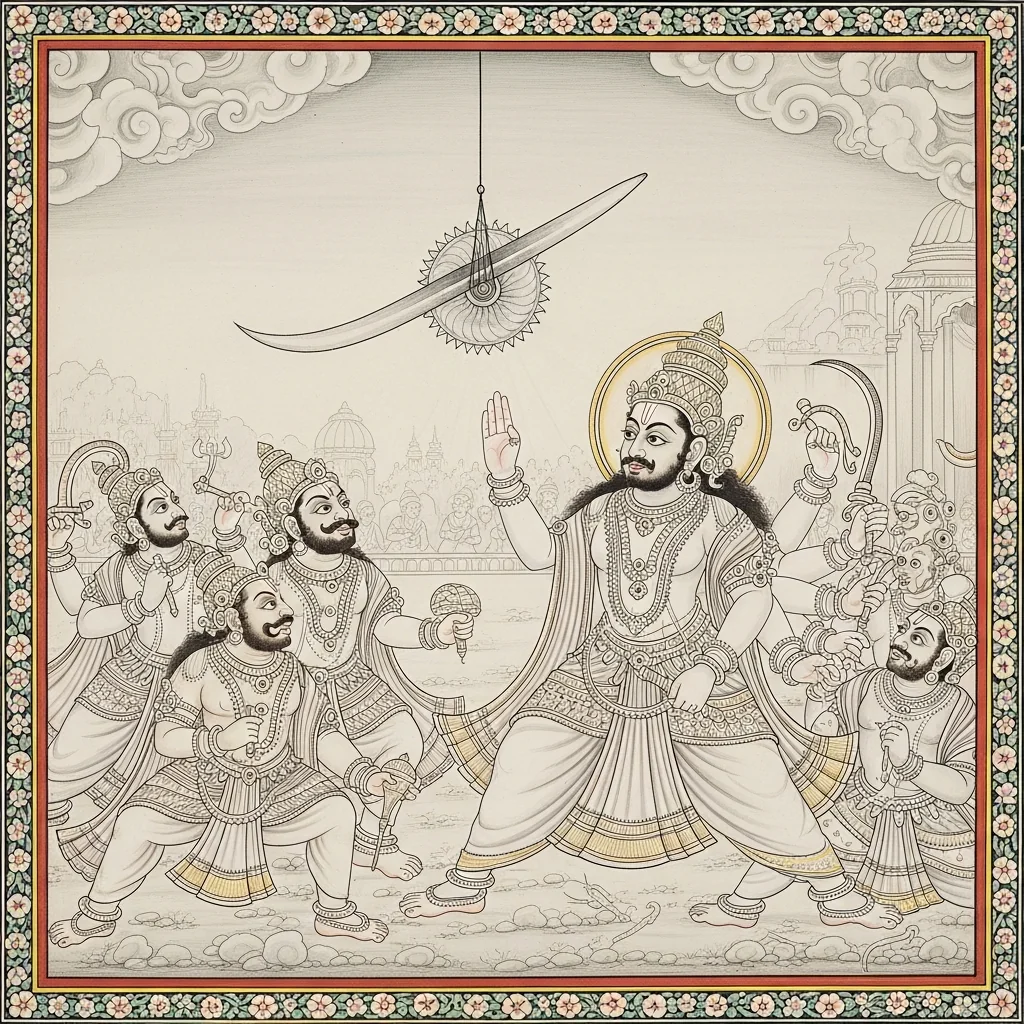
In this chapter, Nārada approaches Śiva (Śambhu/Mahākāla) after the events concerning Satī, and Śiva teaches a reflective doctrine of impermanence: all embodied conditions arise and dissolve, and the wise are not deluded by what is inherently perishable. The narrative then turns to ritual and moral consequence. Satī’s self-abandonment becomes the spark for Śiva’s fierce wrath, from which a mighty being manifests, asks for commands, and vows cosmic power. Śiva names him Vīrabhadra and commissions him to ruin Dakṣa’s sacrifice and confront those who dishonor Śiva. Vīrabhadra departs with vast hosts of gaṇas and devastates the sacrificial arena—overturning implements, scattering offerings, and injuring eminent participants—showing that ritual lacking true theological reverence is unstable. Viṣṇu then challenges Vīrabhadra; the Sudarśana discus is rendered ineffective through remembrance of Śiva, and a heavenly injunction restrains excessive violence. Vīrabhadra physically punishes Dakṣa for Śiva-nindā (denigration of Śiva), and the chapter closes with a cue of restoration (Mahādeva later orders reconstitution) and a phalāśruti promise: hearing this Dakṣeśvara-origin account is said to protect the listener from moral taint, even when connected with “abodes of offense,” within the text’s sacred logic.
Shlokas
Verse 1
स्कंद उवाच । पुनः स नारदोऽगस्त्य देव्याः प्राक्समुपागतः । तद्वृत्तांतमशेषं च हरायावेदितुं ययौ
Skanda said: O Agastya, once again Nārada—having first approached the Goddess—went to Hara (Śiva) to report the entire account in full.
Verse 2
दृष्ट्वा स नारदः शंभुं नंदिना सह संकथाम् । कांचित्तर्जनिविन्यास पूर्वं कुर्वंतमानमत्
Seeing Śambhu engaged in conversation with Nandin—and first making a certain gesture with his forefinger—Nārada bowed down.
Verse 3
उपाविशच्च शैलादि विसृष्टासनमुत्तमम् । वैलक्ष्यं नाटयन्किंचित्क्षणं जोषं समास्थितः
He sat upon the excellent seat offered by the mountain-born (Śiva), and, showing a slight embarrassment, remained silent for a moment.
Verse 4
आकारेणैव सर्वज्ञस्तद्वृत्तांतं विवेद ह । अवादीच्च मुनिं शंभुः कुतो मौनावलंबनम्
By his very demeanor, the all-knowing Lord understood the entire matter. Then Śambhu spoke to the sage: “Why do you take refuge in silence?”
Verse 5
शरारिणां स्थितिरियमुत्पत्तिप्रलयात्मिका । दिव्यान्यपि शरीराणि कालाद्यांत्येवमेव हि
Such is the condition of embodied beings: their nature is to arise and to perish. Even divine bodies, too, pass away in time—so it is indeed.
Verse 6
दृश्यं विनश्वरं सर्वं विशेषाद्यदनीश्वरम् । ततोऽत्र चित्रं किं ब्रह्मन्कंकालः कालयेन्न वै
All that is seen is perishable—especially whatever lacks mastery. So what wonder is there here, O Brahman, that a skeleton should be destroyed by time?
Verse 7
अभाविनो हि भावस्य भावः क्वापि न संभवेत् । भाविनोपि हि नाभावस्ततो मुह्यंति नो बुधाः
For what is not destined to be cannot come into being anywhere; and what is destined to be does not become non-being. Therefore the wise are not deluded.
Verse 8
शंभूदीरितमाकर्ण्य स इत्थं मुनिपुंगवः । प्रोक्तवान्सत्यमेवैतद्यद्देवेन प्रभाषितम्
Hearing what Śambhu had spoken, that foremost of sages replied: “Indeed, this is true—what has been declared by the God.”
Verse 9
अवश्यमेव यद्भाव्यं तद्भूतं नात्र संशयः । परं मां बाधतेत्यंतं चिंतैका चित्तमाथिनी
What is destined must indeed occur—of this there is no doubt. Yet one thought alone torments me intensely, churning my mind.
Verse 10
नापचीयेत ते किंचिन्नोपचीयेत तत्त्वतः । अव्ययत्वाच्च पूर्णत्वाद्धानिवृद्धी कृतस्त्वयि
In truth, nothing of Yours can diminish, nor can anything truly increase—because You are imperishable and ever-complete. ‘Loss’ and ‘gain’ are only notions projected upon You.
Verse 11
अहो वराकः संसारः क्व भविष्यत्यनीश्वरः । आरभ्याद्यदिनं न त्वामर्चयिष्यंति केपि यत्
Alas—how wretched is worldly existence! Where can it stand without the Lord? For from this very day, if people do not worship You at all, what refuge will remain?
Verse 12
यतः प्रजापतिर्दक्षो न त्वामाहूतवान्क्रतौ । तेनाद्यरीढि तं दृष्ट्वा देवर्षिमनुजा अपि
Because Prajāpati Dakṣa did not invite You to the sacrifice, even today—seeing that—both divine seers and men recoil from him, recognizing the fault of that act.
Verse 13
तव रीढां करिष्यंति किमैश्वर्येण रीढिनाम् । प्राप्तावहेडना लोके जितकालभया अपि । अथैश्वर्येण संपन्नाः प्रतिष्ठाभाजनं किमु
Those who take refuge in You—what need have they for worldly power? Even if they are mocked in society, they have conquered the fear of time (death). And if they are endowed with prosperity, what more ‘status’ could they possibly require?
Verse 14
महीयसायुषा तेषां वसुभिर्भूरिभिश्च किम् । येऽभिमानधनानेह लब्धरीढाः पदेपदे
What profit is long life to them, or wealth in abundance? Those whose only ‘treasure’ here is pride—though they find support at every step—remain hollow in their very essence.
Verse 15
अचेतनाश्च सावज्ञा जीवंतोपि न कीर्तये । अभिमानधना धन्या वरं योषित्सुसासती
The senseless and contemptuous, though alive, are not worthy of praise. Truly, a virtuous and chaste woman is better than those ‘fortunate’ ones whose only wealth is arrogance.
Verse 16
या त्वद्विनिंदाश्रवणात्तृणीचक्रे स्वजीवितम् । इत्याकर्ण्य महाकालः सम्यग्ज्ञात्वा सतीव्ययम्
She who, upon hearing You reviled, deemed her own life as mere straw—hearing this, Mahākāla, rightly understanding Satī’s passing, was stirred to act.
Verse 17
सत्यं मुने सती देवी तृणीचक्रे स्वजीवितम् । जोषं स्थिते मुनौ तत्र तन्महाकालसाध्वसात्
True indeed, O sage: the goddess Satī treated her life as straw. And when the sage there stood silent, it was out of awe before that Mahākāla.
Verse 18
रुद्रश्चातीवरुद्रोभूद्बहुकोपाग्निदीपितः । ततस्तत्कोपजाद्वह्निराविरासीन्महाद्युतिः
Rudra grew exceedingly fierce, kindled by the fire of intense wrath. From that anger-born blaze there arose a great, blazing radiance.
Verse 19
प्रत्यक्षः प्रतिमाकारः कालमृत्युप्रकंपनः । उवाच च प्रणम्येशं भुशुंडीं महतीं दधत्
Manifest before them in embodied form—one who made even Time and Death tremble—he spoke, after bowing to the Lord, bearing a mighty club.
Verse 20
आज्ञां देहि पितः किं ते करवै दास्यमुत्तमम् । ब्रह्मांडमेककवलं करवाणि त्वदाज्ञया
Command me, O Father—what supreme service shall I render to you? By your order, I am ready to make even the entire universe a single morsel.
Verse 21
पिबामि चार्णवान्सप्ताप्येकेन चुलुकेन वै । रसातलं वा पातालं पातालं वा रसातलम्
With a single handful I can drink up all seven oceans; and I can overturn Rasātala into Pātāla—or Pātāla into Rasātala.
Verse 22
त्वदाज्ञया नयामीश विनिमय्य स्वहेलया । सलोकपालमिंद्रं वा धृत्वा केशैरिहानये
By your command, O Lord, I can—playing as I please—drag even Indra together with the Lokapālas, seize him by the hair, and bring him here.
Verse 23
अपि वैकुंठनाथश्चेत्तत्साहाय्यं करिष्यति । तदा तं कुंठितास्त्रं च करिष्यामि त्वदाज्ञया
Even if the Lord of Vaikuṇṭha should come to aid him, then—by your command—I will still blunt that weapon-power and render it ineffective.
Verse 24
दनुजा दितिजाः के वै वरा कारणदुर्बलाः । तेषु चोत्कटतां कोपि धत्ते तं प्रणिहन्म्यहम्
Who, indeed, are the hosts of Dānava and Daitya? By mere boons they seem mighty, yet by nature they are frail. If any among them displays fierce arrogance, I shall strike him down.
Verse 25
कालं बध्नामि वा संख्ये मृत्योर्वा मृत्युमर्थये । स्थावरेषु चरेष्वत्र मयि कुद्धे रणांगणे
In battle I can bind even Time; or I can seek death for Death itself. When I am enraged upon the field of war, dread spreads among all beings—moving and unmoving.
Verse 26
त्वद्बलेन महेशान न कोपि स्थैर्यमेष्यति । ममपादतलाघातादेतद्वै क्षोणिमंडलम्
By your power, O Maheśāna, none shall remain steady. At the strike of the sole of my foot, this entire earth-sphere will surely tremble.
Verse 27
कदलीदलवद्वाताद्वेपते सरसातलम् । चूर्णीकरोमि दोर्दंडघाताच्चैतान्कुलाचलान्
Like a plantain leaf quivering in the wind, the earth—down to Rasātala—shakes. With blows of my arm, like a staff, I pulverize these boundary-mountains.
Verse 28
किं बहूक्तेन देह्याज्ञां ममासाध्यं न किंचन । त्वत्पादबलमासाद्य कृतं विद्ध्यद्यचिंतितम्
Why speak at length? Give the command—nothing is impossible for me. Having taken refuge in the power of your feet, know that today even the unthinkable stands accomplished.
Verse 29
इति प्रतिज्ञां तस्येशः श्रुत्वा कृतममन्यत । कृतकृत्यमिवात्यंतं तं मुदा प्रत्युवाच च
Hearing his vow, the Lord considered the matter as already accomplished. And, as though he were wholly fulfilled in purpose, He replied to him with joy.
Verse 30
महावीरोसि रे भद्र मम सर्वगणेष्विह । वीरभद्राख्यया त्वं हि प्रथितिं परमां व्रज
You are indeed a great hero, O auspicious one, among all my gaṇas here. Therefore, under the name ‘Vīrabhadra’, go forth and attain the highest renown.
Verse 31
कुरु मे सत्वरं कार्यं दक्षयज्ञं क्षयं नय । ये त्वां तत्रावमन्यंते तत्साहाय्यविधायिनः
Swiftly accomplish my task: bring Dakṣa’s sacrifice to ruin. And those there who would dishonor you—those who aid that enterprise—are also to be dealt with accordingly.
Verse 32
ते त्वयाप्यवमंतव्या व्रज पुत्र शुभोदय । इत्याज्ञां मूर्ध्नि चाधाय स ततः पारमेश्वरीम्
They too should be humbled by you—go, my son, whose rise is auspicious. Having thus received the command upon his head, he then set forth in accordance with the Lord’s will.
Verse 33
हरं प्रदक्षिणीकृत्य जग्मिवानतिरंहसा । ततस्तदनुगाञ्शंभुः स्वनिःश्वाससमुद्गतान्
Having circumambulated Hara (Śiva), he departed with great speed. Then Śambhu produced attendants—followers arising from his own breath.
Verse 34
शतकोटिमितानुग्रान्गणानन्न्यानवासृजत् । ते गणा वीरभद्रं तं यांतं केचित्पुरोगताः
He released other fierce gaṇas, as though numbering a hundred crores. Of those gaṇas, some went ahead in front of Vīrabhadra as he advanced.
Verse 35
केचित्तदनुगा जाताः केचित्तत्पार्श्वगा ययुः । अंबरं तैः समाक्रांतं तेजोवीजित भास्करैः
Some became his followers, and some moved alongside him. The sky was filled by them—beings whose radiance outshone the sun.
Verse 36
शृंगाग्राणि गिरीणां च कैश्चिदुत्पाटितानि वै । आचूडमूलाः कैश्चिच्च विधता वै शिलोच्चयाः
By some, the very peaks and summits of mountains were torn up. By others, rocky masses were lifted—held from their roots up to their tops.
Verse 37
उत्पाट्य महतो वृक्षान्केचित्प्राप्ता मखांगणम् । कैश्चिदुत्पाटिता यूपाः केचित्कुंडान्यपूपुरन्
Some, uprooting great trees, reached the sacrificial courtyard. Some tore out the yūpa-posts, and some filled up the ritual fire-pits.
Verse 38
मंडपं ध्वंसयामासुः केचित्क्रोधोद्धुरागणाः । अचीखनन्वै वेदीश्च केचिद्वै शूलपाणयः । अभक्षयन्हवींष्यन्ये पृषदाज्यं पपुः परे
Some gaṇas, maddened by wrath, demolished the pavilion. Some spear-bearers dug up the altars. Others devoured the oblations, and yet others drank the pṛṣadājya offering.
Verse 39
दध्वंसुरन्नराशींश्च केचित्पर्वतसन्निभान् । केचिद्वै पायसाहाराः केचिद्वै क्षीरपायिनः
Some shattered heaps of cooked food, piled like mountains. Some ate pāyasa (sweet milk-rice), and some drank milk.
Verse 40
केचित्पक्वान्नपुष्टांगा यज्ञपात्राण्यचूर्णयन् । अमोटयन्स्रुचादंडान्केचिद्दोर्दंडशालिनः
Some, their limbs strengthened by rich cooked food, crushed the vessels of the yajña; others, mighty-armed, snapped the ritual ladles and their handles in rage.
Verse 41
व्यभजञ्छकटान्केचित्पशून्केचिदजीगिलन् । अग्निं निर्वापयामासुः केचिदत्यग्नितेजसः
Some smashed the carts; some swallowed the sacrificial beasts; and some—blazing with fiercer fire than fire itself—extinguished the sacred flames of Agni.
Verse 42
स्वयं परिदधुश्चान्ये दुकूलानि मुदा युताः । जगृहुः केचन पुरा रत्नानां पर्वतं कृतम्
Others, delighted, clothed themselves in fine garments; and some seized what had been heaped up earlier—a veritable mountain of jewels.
Verse 43
एकेन च भगो देवः पश्यंश्चक्रे विलोचनः । पूष्णो दंतावलीमन्यः पातयामास कोपितः
One made the god Bhaga sightless even as he looked on; another, enraged, struck down Pūṣan’s row of teeth.
Verse 44
यज्ञः पलायितो दृष्टः केनचिन्मृगरूपधृक् । शिरोविरहितश्चक्रे तेन चक्रेण दूरतः
Yajña, the Sacrifice made manifest, was seen fleeing in the form of a deer; someone struck him so that he became headless, and by that severing he was driven far away.
Verse 45
एकः सरस्वतीं यांतीं दृष्ट्वा निर्नासिकां व्यधात् । अदितेरोष्ठपुटकौ छिन्नावन्येन कोपिना
One, seeing Sarasvatī approaching, made her noseless; another, in anger, cut off Aditi’s two lips.
Verse 46
अर्यम्णो बाहुयुगलं तथोत्पाटितवान्परः । अग्नेरुत्पाटयामास कश्चिज्जिह्वां प्रसह्य च
Another tore out Aryaman’s pair of arms; and someone, forcibly, ripped out Agni’s tongue as well.
Verse 47
चिच्छेद वायोर्वृषणं पार्षदोन्यः प्रतापवान् । पाशयित्वा यमं कश्चित्को धर्म इति पृष्टवान्
Another mighty attendant cut off Vāyu’s testicles; and someone, binding Yama fast, asked him, ‘What indeed is dharma?’
Verse 48
यत्र धर्मे महेशो न प्रथमं परिपूज्यते । नैरृतं संगृहीत्वान्यः केशेष्वातो्ल्यचासकृत्
‘Where, in the name of dharma, Maheśa is not worshipped first—there is no true dharma!’ Thus another, seizing Nairṛta, repeatedly dragged and struck him by the hair.
Verse 49
अनीश्वरं हविर्भुक्तं त्वयेत्या ताडयत्पदा । कुबेरमपरो धृत्वा पादयोरधुनोद्बलात्
“You have consumed the havi, the oblation, without honoring the Lord (Īśa)!”—so one kicked him with the foot; another, seizing Kubera by the feet, shook him violently with force.
Verse 50
वामयामास बहुशो भक्षिता ह्यध्वराहुतीः । एकादशाऽपि ये रुद्रा लोकपालैकपंक्तयः
He repeatedly caused disorder, for the āhuti—the oblations of the sacrifice—were indeed consumed. Even the Eleven Rudras, ranged in a single line together with the Lokapālas, the world-guardians, were thrown into confusion.
Verse 51
रुद्राख्या धारणवशात्प्रमथैस्तेऽवहेलिताः । वरुणोदरमापीड्य प्रमथोन्यो बलेनहि
Those who bore the name “Rudra” only by assumption were mocked and overpowered by the Pramathas. Another Pramatha, indeed by sheer force, pressed upon Varuṇa’s belly.
Verse 52
बहिरुद्गिरयामास यद्दत्तं चेशवर्ज्जितम् । मायूरीं तनुमासाद्य सहस्राक्षो महामतिः
He vomited out what had been given in the sacrifice, since it was offered while excluding the Lord (Īśa). Then the thousand-eyed one, great-minded Indra, assumed the form of a peahen.
Verse 53
उड्डीय गिरिमाश्रित्यच्छन्नः कौतुकमैक्षत । ब्राह्मणान्प्रमथा नत्वा यातयातेतिचाब्रुवन्
Flying off and taking refuge on a mountain, he hid himself and watched the spectacle. Bowing to the Brāhmaṇas, the Pramathas said, “Go on, go on!”
Verse 54
प्रमथाः कालयामासुरन्यानपि च याचकान् । इत्थं प्रमथिते यागे प्रमथैः प्रथमागतैः । वीरभद्रः स्वतः प्राप्तः प्रमथानीकिनी वृतः
The Pramathas struck down even other petitioners as well. When the sacrifice had thus been shattered by those Pramathas who arrived first, Vīrabhadra came there of his own accord, surrounded by an army of Pramathas.
Verse 55
यज्ञवाटं श्मशानाभं दृष्ट्वा तैः प्रमथैः पुरा । अतिशोच्यां दशां नीतं वीरभद्रस्ततो जगौ
Seeing the sacrificial enclosure turned by those Pramathas into something like a cremation-ground, Vīrabhadra then spoke, lamenting that it had been brought to so pitiable a state.
Verse 56
गणाः पश्यत दुर्वृत्तैः प्रारब्धानां च कर्मणाम् । अनीश्वरैरवस्थेयं कुतो द्वेषो महेश्वरे
‘O Gaṇas, behold: by the wicked, actions once set in motion bring about such a helpless condition. If this is the fate of those without true lordship, how can hatred be directed toward Maheśvara?’
Verse 57
ये द्विषंति महादेवं सर्वकर्मैकसाक्षिणम् । धर्मकार्ये प्रवृत्तास्तु ते प्राप्स्यंतीदृशं दशाम्
‘Those who hate Mahādeva—the single Witness of all actions—even if they appear engaged in works of dharma, will attain a condition like this.’
Verse 58
क्व स दक्षो दुराचारः क्व च यज्ञभुजः सुराः । धृत्वा सर्वानानयत यात द्रुततरं गणाः
‘Where is that wicked Dakṣa, and where are the gods who partake of the sacrifice? Seize them all and bring them here—go swiftly, O Gaṇas!’
Verse 59
इत्याज्ञा वीरभद्रस्य प्राप्य ते प्रमथा द्रुतम् । यावद्यांत्यग्रतस्तावदृष्टः कुद्धो गदाधरः
Having received Vīrabhadra’s command, the Pramathas hurried forth. Yet as they advanced, they beheld ahead Gadādhara, blazing with wrath.
Verse 60
तेन ते प्रमथाः सर्वे महाबलपराक्रमाः । शुष्कपर्णतृणावस्थां प्रापिता वात्ययेव हि
By him, all those Pramathas—mighty in strength and valor—were brought to the state of dry leaves and blades of grass, as though struck down by a fierce whirlwind.
Verse 61
अथ नष्टेषु सर्वेषु प्रमथेषु हरेर्भयात् । चुकोप वीरभद्रः स प्रलयानलसंनिभः
Then, when all the Pramathas had been destroyed out of fear of Hari, Vīrabhadra grew wrathful, like the fire of dissolution at the end of an age.
Verse 62
ददर्श शार्ङ्गिणं चाग्रे स्वगणैश्च परिष्टुतम् । चतुर्भुजैरसंख्यातैर्जितदैत्यमहाबलैः
He beheld before him Śārṅgin (Viṣṇu, bearer of the Śārṅga bow), praised by his own hosts—countless four-armed beings of immense might who had conquered the Daityas.
Verse 63
चक्रिभिर्गदिभिर्जुष्टं खड्गिभिश्चापि शार्ङ्गिभिः । वीरभद्रस्ततः प्राह दृष्ट्वा तं दैत्यसूदनम्
Surrounded by bearers of discus, mace, sword, and bow, Vīrabhadra then spoke upon seeing that slayer of the Daityas (Viṣṇu).
Verse 64
त्वं तु यज्ञपुमानत्र महायज्ञप्रवर्तकः । रक्षिता निजवीर्येण दक्षस्य त्र्यक्षवैरिणः
You indeed are here the very Person of the sacrifice, the initiator of this great rite; by your own prowess you are the protector of Dakṣa, the enemy of the Three-Eyed Lord.
Verse 65
किं वा दक्षं समानीय देहि युध्यस्व वा मया । न दास्यसि च चेद्दक्षं ततस्तं रक्ष यत्नतः
Either bring Dakṣa and hand him over, or else fight with me. And if you will not give up Dakṣa, then guard him with all your effort.
Verse 66
प्रायशः शंभुभक्तेषु यतस्त्वं प्रोच्यसेऽग्रणीः । एकोनेऽब्जसहस्रेप्राग्ददौ नेत्रांबुजं भवान्
For you are spoken of as the foremost among the devotees of Śambhu. Formerly, when one lotus was lacking from a thousand, you offered your own lotus-eye.
Verse 67
तुष्टेन शंभुना दत्तं तुभ्यं चक्रं सुदर्शनम् । यत्साहाय्यमवाप्याजौ त्वं जयेर्दनुजाधिपान्
Pleased, Śambhu bestowed upon you the Sudarśana discus; supported by its aid in battle, you conquer the lords of the Danujas.
Verse 68
इत्याकर्ण्य वचस्तस्य वीरभद्रस्य चोर्जितम् । जिज्ञासुस्तद्बलं विष्णुर्वीरभद्रमुवाच ह
Hearing those powerful words of Vīrabhadra, Viṣṇu—wishing to gauge his strength—addressed Vīrabhadra.
Verse 69
त्वं शंभोः सुत देशीयो गणानां प्रवरोस्यहो । राजादेशमनुप्राप्य ततोप्यतिबलो महान्
“You are Śambhu’s son, born from his own realm; truly, you are the foremost among the Gaṇas. Having received the King’s command, you are, beyond that, exceedingly strong and great.”
Verse 70
योसि सोस्यहमप्यत्र दक्षरक्षणदक्षधीः । पश्यामि तव सामर्थ्यं कथं दक्षं हरिष्यसि
“Whoever you are, I am here as well—keen-minded and skilled in guarding Dakṣa. I shall now witness your power: how will you carry Dakṣa away?”
Verse 71
इत्युक्तो वीरभद्रः स तेन वै शार्ङ्गधन्वना । प्रमथान्दृष्टिभंग्यैव प्रेरयामास संगरे
Thus addressed by Śārṅgadhanvan (Viṣṇu), Vīrabhadra, by a mere turn of his glance, urged the Pramathas forward in the battle.
Verse 72
अथ तैः प्रमथैर्विष्णोरनुगा गदिता रणे । आददानास्तृणं वक्त्रे णापिताः पाशवीं दशाम्
Then, in that battle, Viṣṇu’s followers were struck down by those Pramathas; with grass forced into their mouths, they were reduced to a beast-like condition, as if shaven and humiliated.
Verse 73
ततस्तार्क्ष्यरथः क्रुद्धस्त्वेकैकं रणमूर्धनि । सहस्रेणसहस्रेण बाणानां हृद्यताडयत्
Then the furious warrior riding the Tārkṣya-chariot (Garuḍa as his mount) struck each one on the battlefield’s forefront, showering thousands upon thousands of arrows into their chests.
Verse 74
ते भिन्नवक्षसः सर्वे गणा रुधिरवर्षिणः । वासंतीं कैंशुकीं शोभां परिप्रापूरणाजिरे
All those Gaṇas, their chests split open and raining blood, filled the sacrificial courtyard with a springlike splendor—like the crimson radiance of kiṁśuka blossoms.
Verse 75
क्षरंत इव मातंगाः स्रवंत इव पर्वताः । मदेन धातुरागेण मिश्रैः शुशुभिरे गणाः
The Gaṇas shone—like elephants oozing rut, like mountains seeping streams—smeared with mingled hues of intoxication and mineral-red flow.
Verse 76
ततः प्रहस्य गणपोऽब्रवीद्वै कुंठनायकम् । हे शार्ङ्गधन्वञ्जाने त्वां त्वं रणांगण पंडितः
Then, laughing, a leader of the Gaṇas said to the dull commander: “O Śārṅgadhanvan, I know you—you are truly a master of the battlefield.”
Verse 77
परं युध्यसि दैत्येंद्रैर्दानवेंद्रैर्न पार्षदैः । इत्युक्ता वीरभद्रेण भुशुंडीकलिताकरे
“You fight chiefly with lords of Daityas and Dānavas—not with mere attendants!” Thus spoke Vīrabhadra, his hand gripping the bhuśuṇḍī weapon.
Verse 78
गदिनाऽथ गदा तूर्णं दैत्येंद्रगिरिरेणुकृत् । ततः प्रहतवान्वीरो भुशुंड्या तं गदाधरम्
Then the mace of the mace-bearer, swiftly swung, raised dust like a mountain hurled by a Daitya-king; thereupon the hero struck that Gadādhara, the mace-holder, with his bhuśuṇḍī.
Verse 79
तदंगसंगमासाद्य विदद्रे शतधा तया । कौमोदकी प्रहारेण वीरभद्रं प्रतापिनम्
Reaching contact with his body, by the blow of the Kaumodakī mace, the mighty Vīrabhadra was split into a hundred pieces.
Verse 80
जघान वासुदेवोपि तरसाऽज्ञातवेदनम् । ततः खट्वांगमादाय गदाहस्तं गदाधरम्
Then Vāsudeva too struck down Ajñātavedana with great speed. Thereafter, seizing a khaṭvāṅga staff, he attacked the mace-bearing Gadādhara.
Verse 81
आताड्य सव्यदोर्दंडे गदां भूमावपातयत् । कुपितोयं मधुद्वेषी चक्रेणाताडयच्च तम्
Striking his left arm, he made the mace fall to the ground. Then the enraged slayer of Madhu struck him with the discus as well.
Verse 82
स च चक्रं समागच्छद्दृष्ट्वा सस्मार शंकरम् । शंकरस्मरणाच्चक्रं मनाग्वक्रत्वमाप्य च । कंठमासाद्यवीरस्य सम्यग्जातं सुदर्शनम्
And when he saw the discus coming toward him, he remembered Śaṅkara. Through that very remembrance of Śaṅkara, the discus was slightly deflected; and reaching the hero’s neck, Sudarśana became properly established there like an adornment.
Verse 83
तेन चक्रेण शुशुभे नितरां स गणेश्वरः । वीरलक्ष्म्यावृत इव समरे विजयस्रजा
With that discus he, the lord of the Gaṇas, shone exceedingly—like a hero covered in martial splendor, wearing a garland of victory in battle.
Verse 84
ततः सुदर्शनं दृष्ट्वा तत्कंठाभरणं हरिः । मनाक्स चकितं स्मित्वा ततो जग्राह नंदकम्
Then Hari (Viṣṇu), seeing Sudarśana as an ornament upon his neck, was slightly astonished; smiling, he then took up the sword Nandaka.
Verse 85
सनंदकं करं तस्य प्रोद्यतं मधुविद्विषः । पश्यतां दिविसिद्धानां स्तंभयामास हुंकृता
As the foe of Madhu (Hari) raised his hand holding Nandaka, the lord of the Gaṇas froze that uplifted arm with a thunderous “hūṃ,” while the celestial Siddhas looked on.
Verse 86
अभ्यधावच्च वेगेन गृहीत्वा शूलमुज्ज्वलम् । यावज्जिघांसति हरिं तावदाकाशवाचया
He rushed forward with speed, taking up a blazing trident. And just as he was about to strike down Hari, a voice from the sky intervened—
Verse 87
वारितो गणराजः स मा कार्षीः साहसं त्विति । ततस्तमपहायाशु वीरभद्रो गणोत्तमः
The Gaṇa-king was restrained: “Do not commit rashness.” Then Vīrabhadra, foremost of the Gaṇas, quickly left him and moved on.
Verse 88
प्राप्य दक्षं विनद्योच्चैर्धिक्त्वामीश्वरनिंदकम् । यस्येदृगस्ति संपत्तिर्यत्रदेवाः सहायिनः । स कथं सेश्वरं कर्म न कुर्याद्दक्षतांदधत्
Reaching Dakṣa, he roared aloud: “Shame on you, reviler of the Lord! One who possesses such prosperity, and for whom the gods themselves are allies—how could he, bearing the name ‘Dakṣa’ (the capable), fail to act with reverence toward the Supreme?”}]}}
Verse 89
येनास्येन पवित्रेण भवता निंदितः शिवः । चूर्णयामि तदास्यं ते चपेटाभिः समंततः
With that mouth—meant for purity—by which you have reviled Śiva, I shall crush that very mouth of yours with slaps from every side.
Verse 90
इत्युक्त्वा तस्य दक्षस्य हरपारुष्यभाषिणः । चिच्छेद वदनं वीरश्चपेटशतघातनैः
Having spoken thus, the valiant one—striking a hundred blows with his open palm—smashed the face of Dakṣa, who had uttered harsh words against Hara.
Verse 91
ततस्त्वदितिमुख्यानां मिलितानां महोत्सवे । त्रोटयामास कर्णादीन्यंगप्रत्यंगकानि च
Then, at that great festive gathering of Aditi and the other principal ladies assembled there, he tore and broke ears and other limbs and sub-limbs as well.
Verse 92
वेणीदंडाश्च कासांचित्तेनच्छिन्ना महारुषा । कासांचिच्च कराश्छिन्ना कासांचित्कर्तितास्तनाः
In his great fury, he cut off the braid-staffs (hair-knots) of some; the hands of some were severed; and for some, the breasts were mutilated.
Verse 93
नासापुटांस्तथान्यासां पाटयामास पार्षदः । चिच्छेद चांगुलीश्चापि तथान्यासां शिवप्रियः
That attendant, beloved of Śiva, split the nostrils of some women; and he also cut off the fingers of others.
Verse 94
ये ये निनिंदुर्देवेशं ये ये च शुश्रुवुस्तदा । तेषां जिह्वाश्रुतीः कोपादच्छिनच्चाकरोद्द्विधा
All who reviled the Lord of the gods, and all who listened approvingly then—out of wrath he cut off their tongues and ears, splitting them in two.
Verse 95
केचिदुल्लंबिता यूपे पाशयित्वा दृढं गले । अधोमुखायै देवेशं विहायात्तं महाहविः
Some were hung upon the sacrificial post, their necks tightly bound with a noose; turning their faces downward, they abandoned the Lord of gods and seized the great oblation for themselves.
Verse 96
द्विजराजश्च धर्मश्च भृगुमारीचिमुख्यकाः । अत्यंतमपमानस्य भाजनं तेन कारिताः
The king of brāhmaṇas and Dharma himself—along with Bhṛgu, Mārīci, and the other leading sages—were made by him to suffer extreme disgrace.
Verse 97
एते जामातरस्तस्य यतो दक्षस्य दुर्धियः । हित्वा महेश्वरममून्सोपश्यदधिकाञ्शिवात्
These were his sons-in-law; for Dakṣa, of wicked understanding, abandoned Maheśvara and regarded these others as greater than Śiva.
Verse 98
तानि कुंडानि ते यूपास्ते स्तंभाः स च मंडपः । तावेद्यस्तानि पात्राणि तानि हव्यान्यनेकधा
Those fire-pits, those sacrificial posts, those pillars, and that pavilion; those altars, those vessels, and those many kinds of offerings—
Verse 99
ते च वै यज्ञसंभारास्ते ते यज्ञप्रवर्तकाः । ते रक्षपालास्तेमंत्रा विनेशुर्हेलयाऽखिलाः
And those sacrificial requisites, those very promoters of the sacrifice, those guardians, and those mantras—all of them perished, brought to ruin through utter contempt.
Verse 100
स्तोकेनैव हि कालेन यथर्धिः परवंचनात् । अर्जिता नश्यति क्षिप्रं दक्षसंपद्गताऽशिवा
Indeed, in only a short time, wealth gained by deceiving others quickly perishes—like the ill-omened prosperity that once came to Dakṣa.
Verse 110
विधीरितमिति श्रुत्वा स्मित्वा देवो महेश्वरः । वीरमाज्ञापयामास यथापूर्वं प्रकल्पय
Hearing, “So the rite has been declared,” Lord Maheśvara smiled and commanded the hero: “Arrange it exactly as before.”
Verse 120
काश्यां लिंगप्रतिष्ठायैः कृताऽत्र सुकृतात्मभिः । सर्वे धर्माः कृतास्तैस्तु त एव पुरुषार्थिनः
In Kāśī, by establishing a liṅga—done here by souls rich in merit—all dharmas are as though performed by them; they alone truly attain the human goals of life.
Verse 130
स्तुत्वा नानाविधैः स्तोत्रैः प्रसन्नं वीक्ष्य शंकरम् । प्रोवाच देवदेवेशं यदि देयो वरो मम
Having praised Śaṅkara with many kinds of hymns, and seeing him pleased, he said to the Lord of the gods: “If a boon is to be granted to me…”
Verse 139
श्रुत्वाख्यानमिदं पुण्यं दक्षेश्वरसमुद्भवम् । नरो न लिप्यते पापैरपराधालयोपि हि
By hearing this meritorious sacred account, born of Dakṣeśvara, a man is not stained by sins—even if he is indeed a repository of offenses.