Adhyaya 34
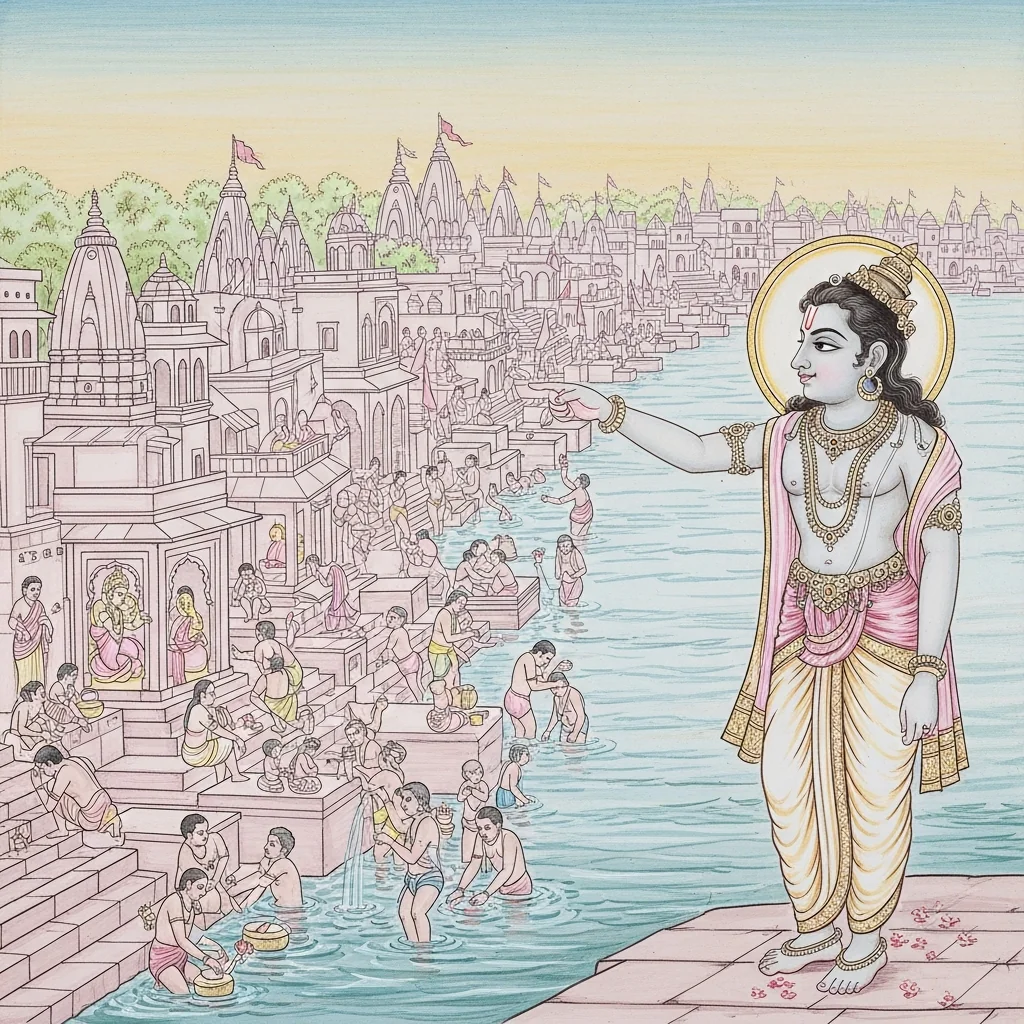
Chapter 34 presents a catalogic theological instruction in which Skanda teaches Agastya the ordered sequence of Kāśī tīrthas and the ritual fruits associated with each. It begins by sanctifying a confluence and establishing pādodaka—Viṣṇu’s foot-water—as a foundational tīrtha, then proceeds through a long chain of named sacred sites, each paired with a brief phala claim such as karmic purification, prosperity, divine vision, attainment of higher realms, or the lessening of rebirth. Pañcanada is then singled out as exceptionally potent, especially in the month of Kārttika and on certain calendrical combinations, and Jñānahrada and Maṅgala tīrthas are introduced as sources of knowledge and auspicious correction. The chapter continues with further sites and culminates in a devotional crescendo around Maṇikarṇikā, famed across the three worlds as sin-dissolving and equal to—or surpassing—the sum of great rites; remembrance, sight, bathing, and worship there are proclaimed to yield imperishable fruit.
Shlokas
Verse 1
स्कंद उवाच । आकर्णय क्षोणिसुर यथा स्थाणुरचीकरत् । गंगावरणयोः पुण्यात्संभेदात्तीर्थभूमिकाम्
Skanda said: Listen, O divine one upon the earth (O king), how Sthāṇu (Śiva) established the holy ground of a tīrtha, arising from the auspicious confluence of the Gaṅgā and the Varuṇā.
Verse 2
संगमे तत्र निष्णातः संगमेशं समर्च्य च । नरो न जातु जननी गर्भसंगमवाप्नुयात्
Bathing there at the confluence and duly worshiping Saṅgameśa, a man will never again attain the ‘meeting’ with a mother’s womb—he will not be reborn.
Verse 3
तत्र पादोदकं तीर्थं यत्र देवेन शार्ङ्गिणा । आदौ पादौ क्षलितौ तु मंदराच्चागतेन यत्
There lies the holy tīrtha called Pādodaka, where the god Śārṅgin (Viṣṇu, bearer of the Śārṅga bow) first washed his feet with water that came from Mount Mandāra.
Verse 4
विप्णुपादोदके तीर्थे वारिकार्यं करोति यः । व्यतीपातेन नियतं भूयः सांसारिकी गतिः
Whoever performs the water-offering at the tīrtha of Viṣṇu’s foot-water—if it is done at the inauspicious time of Vyatīpāta—will surely fall back again into worldly transmigration.
Verse 5
कृतपादोदक स्नानः कृतकेशवपूजनः । वीतसंसारवसतिः काश्यामासीन्नरोत्तमः
Having bathed in the Pādodaka and worshiped Keśava, that best of men dwelt in Kāśī, freed from residence in saṃsāra.
Verse 6
काश्यां सा भूमिरुद्दिष्टा श्वेतद्वीप इति द्विजैः । तत्र पुण्यार्जनं कृत्वा श्वेतद्वीपाधिपो भवेत्
In Kāśī, that tract of land is spoken of by the twice-born (dvija) as ‘Śvetadvīpa.’ Having accumulated merit there, one becomes a lord in Śvetadvīpa.
Verse 7
ततः पादोदकात्तीर्थात्तीर्थं क्षीराब्धिसंज्ञकम् । तत्रार्जित महापुण्यो वसेत्क्षीराब्धिरोधसि
Then, from the Pādodaka tīrtha, there is another sacred place known as ‘Kṣīrābdhi,’ the Ocean of Milk. One who gains great merit there dwells upon the shore of the Kṣīrābdhi.
Verse 8
क्षीरोदाद्दक्षिणेभागे तीर्थं शंखाख्यनुत्तमम् । तत्र स्नातो भवेन्नूनं नाशंखादिनिधेः पतिः
On the southern side of Kṣīroda lies the unsurpassed tīrtha called Śaṅkha. One who bathes there surely becomes a lord of treasures—conches and other riches.
Verse 9
अर्वाक्च शंखतीर्थाद्वै चक्रतीर्थमनुत्तमम् । संसारचक्रे न पतेत्तत्तीर्थजलमज्जनात्
Just near Śaṅkha-tīrtha lies the unsurpassed Cakra-tīrtha. By immersing in the waters of that holy ford, one does not fall again into the revolving wheel of worldly existence.
Verse 10
गदातीर्थं तदग्रे तु संसारगदनाशनम् । तत्र श्राद्धादिकरणात्पश्येद्देवं गदाधरम्
In front of that is Gadā-tīrtha, the destroyer of the ‘disease’ of worldly life. By performing śrāddha and related rites there, one beholds the Divine Lord—Gadādhara.
Verse 11
पद्माकृत्पद्मतीर्थं च तदग्रे पितृतृप्तिकृत् । तत्र स्नानादिकरणात्प्राप्नुयादघसंक्षयम्
Next is Padma-tīrtha, formed in the shape of a lotus, which brings satisfaction to the ancestors. By bathing and performing the prescribed rites there, one attains the diminishment of sin.
Verse 12
ततस्तीर्थं महालक्ष्म्या महापुण्यफलप्रदम् । तत्राभ्यर्च्य महालक्ष्मीं निर्वाणकमलां लभेत्
Then comes the tīrtha of Mahālakṣmī, bestowing the fruits of great merit. Worshipping Mahālakṣmī there, one gains the lotus of liberation—the nirvāṇa-lotus.
Verse 13
ततो गारुत्मतं तीर्थं संसारगरनाशनम् । कृतोदकक्रियस्तत्र वैकुंठे वसतिं लभेत्
After that comes the tīrtha called Gārutmata, which destroys the poison of worldly existence. Having performed the water-rites there, one attains a dwelling in Vaikuṇṭha.
Verse 14
पंचतीर्थ्यां नरः स्नात्वा न देहं पांचभौतिकम् । गृह्णाति जातुचित्काश्यां पंचास्योवाथ जायते
A man who bathes in the Pañcatīrthī never again, in Kāśī, takes up a body made of the five elements; rather, he becomes ‘five-faced,’ endowed with a divine form.
Verse 15
प्रह्लादतीर्थं तद्याम्ये महाभक्तिफलप्रदम् । तत्र वै स्नानमात्रेण विष्णोः प्रियतरो भवेत्
To the south lies Prahlāda-tīrtha, which grants the fruit of great devotion. By bathing there alone, one becomes especially dear to Viṣṇu.
Verse 16
अंबरीषं ततस्तीर्थं महापातकनाशनम् । तत्र वै शुभकर्माणो जना नो गर्भभाजनम्
Then comes Ambarīṣa-tīrtha, the destroyer of great sins. There, people engaged in auspicious deeds do not become subject again to the womb—rebirth.
Verse 17
आदित्यकेशवं नाम तदग्रे तीर्थमुत्तमम् । कृताभिषेकस्तत्रापि लभेत्स्वर्गाभिषेचनम्
Next is the excellent tīrtha called Āditya-Keśava. One who performs sacred ablution (abhiṣeka) there attains a consecration in heaven.
Verse 18
दत्तात्रेयस्य तत्रास्ति तीर्थं त्रैलोक्यपावनम् । योगसिद्धिं लभे तत्र स्नानमात्रेण भावतः
There too is the tīrtha of Dattātreya, purifier of the three worlds. With heartfelt faith, by bathing there alone, one attains yogic siddhi.
Verse 19
ततो नारदतीर्थं च ब्रह्मविद्यैककारणम् । तत्र स्नानेन मुक्तः स्याद्दृष्ट्वा नारदकेशवम्
Next is Nārada-tīrtha, the sole cause of Brahma-vidyā, the knowledge of Brahman. By bathing there and beholding Nārada-Keśava, one attains liberation (mokṣa).
Verse 20
ततो वामनतीर्थं च विष्णुसान्निध्यहेतुकम् । तत्र श्राद्धविधानेन मुच्यते पितृजादृणात्
Then comes Vāmana-tīrtha, a means of attaining nearness to Viṣṇu’s presence. By performing the śrāddha rites there, one is freed from debts owed to the ancestors.
Verse 21
नरनारायणाख्यं हि ततस्तीर्थं शुभप्रदम् । तत्तीर्थमज्जनात्पुंसां गर्भवासः सुदुर्लभः
After that is the tīrtha called Nara-Nārāyaṇa, bestowing auspiciousness. By bathing in that tīrtha, dwelling again in the womb becomes exceedingly rare for people (rebirth is curtailed).
Verse 22
यज्ञवाराहतीर्थं च ततो दक्षिणतः शुभम् । यत्र स्नातस्य वै पुंसां राजसूयफलं ध्रुवम्
To the south from there is the auspicious Yajña-Vārāha-tīrtha. For one who bathes there, the fruit of the Rājasūya sacrifice is assured.
Verse 23
विदारनारसिंहाख्यं तीर्थं तत्रास्ति पावनम् । यत्रैकस्नानतो नश्येदघ जन्मशतार्जितम्
There too is the purifying tīrtha called Vidāra-Nārasiṃha. By a single bath there, sin amassed over a hundred births is destroyed.
Verse 24
गोपीगोविंदतीर्थं च ततो वैष्णवलोकदम् । यस्मिन्स्नातो नरो विद्वान्न विंद्याद्गर्भवेदनम्
Next is Gopī-Govinda-tīrtha, which grants the world of Viṣṇu. A wise person who bathes there does not experience the suffering of the womb.
Verse 25
लक्ष्मीनृसिंहतीर्थं च गोपीगोविंद दक्षिणे । निर्वाणलक्ष्म्या यत्रत्यो व्रियते तु नरोत्तमः
To the south of Gopī-Govinda is also Lakṣmī-Nṛsiṃha-tīrtha. The best of men who dies there attains the blessed fortune of nirvāṇa, final release.
Verse 26
तद्दक्षिणायां काष्ठायां शेषतीर्थमनुत्तमम् । महापापौघ शेषोपि न तिष्ठेद्यन्निमज्जनात्
On the southern side is the unsurpassed Śeṣa-tīrtha. By immersion there, even the remaining residue of a flood of great sins cannot persist.
Verse 27
शंखमाधवतीर्थं च तद्याम्यां दिशि चोत्तमम् । तत्तीर्थसेवनान्नृणां कुतः पापभयं महत्
And in the southern direction is the excellent Śaṅkha-Mādhava-tīrtha. For those who resort to and serve that tīrtha, how could there be any great fear of sin?
Verse 28
ततोपि पावनतरं तीर्थं तत्क्षणसिद्धिदम् । नीलग्रीवाख्यमतुलं तत्स्नायी सर्वदा शुचिः
More purifying than those is a tīrtha that grants accomplishment in an instant. It is the incomparable one called Nīlagrīva; whoever bathes there remains ever pure.
Verse 29
तत्रोद्दालकतीर्थं च सर्वाघौघ विनाशनम् । ददाति महतीमृद्धिं स्नानमात्रेण तन्नृणाम्
There is the Udālaka Tīrtha, a destroyer of torrents of sin. For people, merely bathing there bestows great prosperity and well-being.
Verse 30
ततः सांख्याख्य तीर्थं च सांख्येश्वर समीपतः । तत्तीर्थसेवनात्पुंसां सांख्ययोगः प्रसीदति
Next is the tīrtha called Sāṃkhya, situated near Sāṃkhyeśvara. By resorting to and serving that tīrtha, the Sāṃkhya path of spiritual discernment becomes clear and favorable for a person.
Verse 31
स्वर्लोकाद्यत्र संलीनः स्वयं देव उमापतिः । अतः स्वर्लीनतीर्थं च स्वर्लीनेश्वर सन्निधौ
Here it is said that even the Lord Umāpati (Śiva) merged here, coming from Svarga itself. Therefore this is called the Svarlīna Tīrtha, in the presence of Svarlīneśvara.
Verse 32
तत्र स्नानेन दानेन श्रद्धया द्विजभोजनैः । जपहोमार्चनैः पुंसामक्षयं सर्वमेव हि
There—through bathing, charity, acts done with faith, feeding of brāhmaṇas, and through japa, homa, and worship—everything indeed becomes imperishable merit for a person.
Verse 33
महिषासुरतीर्थं च तत्समीपेति पावनम् । यत्र तप्त्वा स दैत्येंद्रो विजिग्ये सकलान्सुरान्
Nearby is the purifying Mahīṣāsura Tīrtha; there the lord of the Dānavas, having performed severe austerities, conquered all the gods.
Verse 34
तत्तीर्थसेवकोद्यापि नारिभिः परिभूयते । न पातकैर्महद्भिश्च प्रार्थितं च फलं लभेत्
Even if one who serves that tīrtha is slighted by women, he is not tainted by great sins; and he attains the fruit for which he prays.
Verse 35
बाणतीर्थं च तस्यारात्तत्सहस्रभुजप्रदम् । तत्र स्नातो नरो भक्तिं प्राप्नुयाच्छांभवीं स्थिराम्
Close by is the Bāṇa Tīrtha, which grants ‘a thousand arms’—extraordinary power and capability. One who bathes there attains steadfast devotion to Śambhu (Śiva).
Verse 36
गोप्रतारेश्वरं नाम तदग्रे तीर्थमुत्तमम् । अपुत्रोपि तरेद्यत्र स्नातो वैतरणीं सुखम्
In front of it is the excellent tīrtha named Gopratāreśvara. Bathing there, even a man without a son crosses the Vaitaraṇī with ease.
Verse 37
तीर्थं हिरण्यगर्भाख्यं तद्याम्ये सर्वपापहृत् । तत्र स्नातो हिरण्येन मुच्यते न कदाचन
To the south is the tīrtha called Hiraṇyagarbha, which removes all sins. One who bathes there is never again bound by ‘gold’—the fetters of wealth and attachment.
Verse 38
ततः प्रणवतीर्थं च सर्वतीर्थोत्तमोत्तमम् । जीवन्मुक्तो भवेत्तत्र स्नानमात्रेण मानवः
Then comes the Pranava Tīrtha, the most supreme among all tīrthas. By bathing there alone, a human being becomes a jīvanmukta—liberated while still living.
Verse 39
ततः पिशंगिला तीर्थं दर्शनादपि पापहृत् । मुने ममाधिष्ठानं वै तदगस्तेऽति सिद्धिदम्
Then comes the sacred ford called Piśaṃgilā; even its mere sight removes sin. O sage, that place is truly My own abode—known to you, Agastya—as a bestower of supreme attainment.
Verse 40
स्नात्वा पिशंगिला तीर्थे दत्त्वा दानं च किंचन । किं शोचति कृतात्पापादन्यत्रापि मृतो यदि
Having bathed at the Piśaṃgilā ford and having given some charity, why should a person grieve over sins formerly committed—even if he should die elsewhere?
Verse 41
यो वै पिशंगिला तीर्थे स्नात्वा मामर्चयिष्यति । भविष्यति स मे मित्त्रं मित्रतेजः समप्रभम्
Whoever bathes at the Piśaṃgilā ford and worships Me there becomes My friend, radiant with the very splendor of friendship.
Verse 42
ततस्त्रैविष्टपीदृष्टि निर्मलीकृत पुष्कलम् । तीर्थं पिलिपिलाख्यं वै मनोमलविनाशनम्
Thereafter is the abundant tīrtha called Pilipilā, made pure by the sight of the gods of heaven, destroying the impurities of the mind.
Verse 43
तत्र श्राद्धादिकरणाद्दीनानाथ प्रतर्पणात् । महतीं श्रियमाप्नोति मानवोतीव निश्चलाम्
There, by performing śrāddha and related rites, and by satisfying the poor and the unprotected, a person attains great prosperity—firm and enduring.
Verse 44
ततो नागेश्वरं तीर्थं महाघपरिशोधनम् । तत्तीर्थमज्जनादेव भवेत्सर्वाघसंक्षयः
Then comes the tīrtha of Nāgeśvara, a cleanser of great sins. By immersion in that sacred water alone, all sin is brought to destruction.
Verse 45
तद्दक्षिणे महापुण्यं कर्णादित्याख्यमुत्तमम् । तीर्थं यत्राप्लुतो मर्त्यो भास्करीं श्रियमावहेत्
To its south lies the supremely excellent, greatly meritorious tīrtha called Karṇāditya. A mortal who bathes there draws to himself solar splendor and prosperity.
Verse 46
ततो भैरवतीर्थं च महाघौघक्षयप्रदम् । चतुरर्थोदयकरं सर्वविघ्ननिवारणम्
Then comes the Bhairava Tīrtha, which destroys torrents of great sins. It brings about the rise of the four aims of life and wards off every obstacle.
Verse 47
भौमाष्टम्यां तत्र नरः स्नात्वा संतर्पयेत्पितॄन् । दृष्ट्वा च भैरवं कालं कलिं कालं च संजयेत्
On the Bhāuma Aṣṭamī, a man should bathe there and satisfy the ancestors with offerings. And having beheld Bhairava—Time itself—he conquers Kali and even conquers Time.
Verse 48
तीर्थं खर्वनृसिंहाख्यं तीर्थाद्भरवतः पुरः । तत्र स्नातस्य वै पुंसः कुतोघजनितं भयम्
In front of Bhairava’s tīrtha stands the sacred ford called Kharva-Nṛsiṃha. For the man who bathes there, how could fear born of sin remain?
Verse 49
मृकंडस्य मुनेस्तीर्थं तद्याम्यामतिनिर्मलम । तत्र स्नानेन मर्त्यानां नापायमरणं क्वचित्
To the south lies the exceedingly pure tīrtha of the sage Mṛkaṇḍa. By bathing there, mortals never meet a death of calamity or ill-omen.
Verse 50
ततः पंचनदाख्यं वै सर्वतीर्थनिषेवितम् । तीर्थं यत्र नरः स्नात्वा न संसारी पुनर्भवेत्
Thereafter comes the tīrtha known as Pañcanada, resorted to by all the sacred fords. Having bathed there, a man is not again bound to saṃsāra (rebirth).
Verse 51
ब्रह्मांडोदरवर्तीनि यानि तीर्थानि सर्वतः । ऊर्जे यत्र समायांति स्वाघौघ परिनुत्तये
Whatever sacred fords exist throughout the whole expanse of the cosmos, they all gather there in the month of Ūrja, to drive away their own accumulated sin.
Verse 52
सर्वदा यत्र सर्वाणि दशम्यादिदिनत्रयम् । तिष्ठंति तीर्थवर्याणि निजनैर्मल्यहेतवे
It is the place where, at all times, the foremost tīrthas abide for the three days beginning with the Tenth (Daśamī), for the sake of their own purification.
Verse 53
भूरिशः सर्वतीर्थानि मध्य काशि पदेपदे । परं पांचनदः कैश्चिन्महिमानापि कुत्रचित्
In the very midst of Kāśī, at every step, there are countless tīrthas. Yet Pañcanada is supreme—some declare its mahimā to be without equal anywhere.
Verse 54
अप्येकं कार्तिकस्याहस्तत्र वै सफलीकृतम् । जपहोमार्चनादानैः कृतकृत्यास्त एव हि
Even a single day of Kārtika spent there is truly made fruitful. By japa, homa, worship, and charitable giving, those people indeed become fulfilled in duty and purpose.
Verse 55
सर्वाण्यपि च तीर्थानि युगपत्तुलितान्यपि । नाधिजन्मुः पंचनद्याः कलाया अपि तुल्यताम्
Even if all tīrthas were weighed together at once, they would not attain equality with even a fraction of Pañcanadā’s merit and glory.
Verse 56
स्नात्वा पांचनदे तीर्थे दृष्ट्वा वै बिंदुमाधवम् । न जातु जायते धीमाञ्जननी जठराजिरे
Having bathed at the Pañcanada tīrtha and having beheld Bindu-Mādhava, the wise one is never again born into the womb—into the belly-prison of a mother.
Verse 57
ततो ज्ञानहदं तीर्थं जडानामपि जाड्यहृत् । तत्र स्नातो नरो जातु ज्ञानभ्रंशं न चाप्नुयात्
Then comes the tīrtha called Jñāna-hada, the ‘Pool of Knowledge’, which removes dullness even from the dull. A man who bathes there never suffers a fall from knowledge.
Verse 58
तत्र ज्ञानह्रदे स्नात्वा दृष्ट्वा ज्ञानेश्वरं नरः । ज्ञानं तदधिगच्छेद्वै येन नो बाध्यते पुनः
There, having bathed in the Jñāna-hrada and having beheld Jñāneśvara, a man truly attains that knowledge by which he is not afflicted again.
Verse 59
ततोस्ति मंगलं तीर्थं सर्वामंगलनाशनम् । तत्रावगाहनं कृत्वा भवेन्मंगलभाजनम्
Thereafter is the sacred ford called Maṅgala, the destroyer of every inauspiciousness. Having bathed by immersion there, one becomes a fit vessel of auspiciousness.
Verse 60
अमंगलानि नश्येयुर्भवेयुर्मंगलानि च । स्नातुर्वै मंगले तीर्थे नमस्कर्तुश्च मंगलम्
Inauspicious things are destroyed and auspicious outcomes arise. For one who bathes in the Maṅgala tīrtha—and for one who offers reverent obeisance there—auspiciousness is assured.
Verse 61
मयूखमालिनस्तीर्थं तदग्रे मलनाशनम् । तत्राप्लुतो गभस्तीशं विलोक्य विमलो भवेत्
There is the tīrtha called Mayūkhamālin; in front of it lies another ford called Malanāśana, ‘Destroyer of impurity.’ Bathing there and beholding Gabhastīśa, one becomes stainless.
Verse 62
मखतीर्थं तु तत्रैव मखैश्वर समीपतः । मखजं पुण्यमाप्नोति तत्र स्नातो नरोत्तमः
Right there is Makha-tīrtha, near Makheśvara. The best of men who bathes there attains merit born of sacrificial worship.
Verse 63
तत्पार्श्वे बिंदुतीर्थं च परमज्ञानकारणम् । तत्र श्राद्धादिकं कृत्वा लभेत्सुकृतमुत्तमम्
Beside it lies Bindu-tīrtha, a cause of supreme knowledge. Having performed śrāddha and related rites there, one attains the highest treasury of spiritual merit.
Verse 64
पिप्पलादस्य च मुनेस्तीर्थं तद्याम्यदिक्स्थितम् । स्नात्वा शनेर्दिने तत्र दृष्ट्वावै पिप्पलेश्वरम्
And there is the tīrtha of the sage Pippalāda, situated to the south. Having bathed there on Śani’s day (Saturday) and truly beheld Pippaleśvara, one gains the stated benefit.
Verse 65
पिप्पलं तत्र सेवित्वा अश्वत्थ इति मंत्रतः । शनिपीडां न लभते दुःस्वप्नं चापि नाशयेत्
Serving the pippala tree there while reciting the mantra “aśvattha,” one does not suffer Śani’s affliction, and one also destroys evil dreams.
Verse 66
ततस्ताम्रवराहाख्यं तीर्थं चैवातिपावनम् । यत्र स्नानेन दानेन न मज्जेदघसागरे
Then there is the exceedingly purifying tīrtha called Tāmra-varāha. By bathing and giving dāna (charity) there, one does not sink into the ocean of sin.
Verse 67
तदग्रे कालगंगा च कलिकल्मषनाशिनी । तस्यां स्नात्वा नरो धीमांस्तत्क्षणान्निरघो भवेत्
In front of it is Kāla-gaṅgā, the destroyer of the impurities of the Kali age. The wise person who bathes in it becomes sinless that very moment.
Verse 68
इंद्रद्युम्नं महातीर्थमिंद्रद्युम्नेश्वराग्रतः । तोयकृत्यं तत्र कृत्वा लोकमैंद्रमवाप्नुयात
Indradyumna is a great tīrtha, set before Indradyumneśvara. Having performed the water-rites there, one may attain Indra’s world.
Verse 69
ततस्तु रामतीर्थं च वीररामेश्वराग्रतः । तत्तीर्थस्नानमात्रेण वैष्णवं लोकमाप्नुयात्
Then comes Rāma-tīrtha, in front of Vīra-Rāmeśvara. By bathing in that sacred ford alone, one attains the Vaiṣṇava world, the divine realm of Viṣṇu.
Verse 70
तत ऐक्ष्वाकवं तीर्थं सर्वाघौघविनाशनम् । तत्र स्नानेन पूतात्मा जायते मनुजोत्तमः
Next is the Aikṣvāka-tīrtha, the destroyer of the floods of all sins. By bathing there, one’s soul is purified and one becomes the best among men.
Verse 71
मरुत्ततीर्थं तत्प्रांते मरुत्तेश्वरसन्निधो । तत्र स्नात्वा तमर्च्येशं महदैश्वर्यमाप्नुयात्
At its boundary is Marutta-tīrtha, near Marutteśvara. Bathing there and worshipping that Lord, one attains great prosperity and lordly power.
Verse 72
मैत्रावरुणतीर्थं च ततः पातकनाशनम् । तत्र पिंडप्रदानेन पितॄणां भवति प्रियः
Then comes Maitrāvaruṇa-tīrtha, which destroys sins. By offering piṇḍas there, one becomes dear to the Pitṛs, the ancestral spirits.
Verse 73
ततोग्नितीर्थविमलमग्नीश पुरतो महत् । अग्निलोकमवाप्नोति तत्तीर्थपरिमज्जनात्
Then there is the spotless Agni-tīrtha, the great one, before Agnīśa. By immersing in that tīrtha, one attains the world of Agni.
Verse 74
अंगारतीर्थं तत्रैव अंगारेश्वरसन्निधौ । तत्रांगार चतुर्थ्यां नु स्नात्वा निष्पापतामियात्
Right there is Aṅgāra-tīrtha, near Aṅgāreśvara. Bathing there on Aṅgāra-caturthī, one becomes free from sin.
Verse 75
ततो वै कलितीर्थं च कलशेश्वरसन्निधौ । स्नात्वा तल्लिंगमभ्यर्च्य कलिकालान्न बिभ्यति
Then indeed is Kali-tīrtha, near Kalaśeśvara. Having bathed there and worshipped that liṅga, one does not fear the troubles of the Kali age.
Verse 76
चंद्रतीर्थं च तत्रैव चंद्रेश्वरसमीपतः । तत्र स्नात्वार्च्य चंद्रेशं चंद्रलोकमवाप्नुयात्
There itself is Candra-tīrtha, near Candra-īśvara. Bathing there and worshipping Candra-īśvara, one attains the world of the Moon.
Verse 77
तदग्रे वीरतीर्थं च वीरेश्वर समीपतः । यदुक्तं प्राक्तवपुरस्तीर्थानामुत्तमं परम्
In front of that is Vīra-tīrtha, near Vīreśvara—of which it was previously declared: it is the supreme, most excellent among tīrthas.
Verse 78
विघ्नेशतीर्थं च ततः सर्वविघ्नविघातकृत् । जातुचित्तत्र संस्नातो न विघ्नैरभिभूयते
Then comes Vighneśa-tīrtha, the destroyer of all obstacles. Whoever bathes there is never overcome by impediments.
Verse 79
हरिश्चंद्रस्य राजर्षस्ततस्तीर्थमनुत्तमम् । यत्र स्नातो नरो जातु न सत्याच्चयवते कचित्
Next is the unsurpassed tīrtha of the royal sage Hariścandra. Having bathed there, a person never at any time falls away from truthfulness.
Verse 80
हरिश्चंद्रस्य तीर्थे तु यच्छ्रेयः समुपार्जितम् । तदक्षयफलं वीर इह लोके परत्र च
Whatever merit is gained at the tīrtha of Hariścandra—O hero—bears imperishable fruit, both in this world and in the world beyond.
Verse 81
ततः पर्वततीर्थं च पर्वतेश समीपतः । सर्वपर्वफलं तस्य स्नात्वा पर्वण्यपर्वणि
Then comes Parvata-tīrtha, near Parvateśa. By bathing there—whether on a festival day or not—one obtains the merit of all sacred occasions.
Verse 82
कंबलाश्वतरं तीर्थं तत्र सर्वविषापहम् । तत्र स्नातो भवेन्मर्त्यो गीतविद्याविशारदः
Next is the tīrtha called Kambalāśvatara, which removes all poisons. One who bathes there becomes skilled in the sacred arts of song and learning.
Verse 83
ततः सारस्वतं तीर्थं सर्वविद्योपपादकम् । तिष्ठेयुः पितरस्तत्र सह देवर्षिमानवैः
Then comes Sārasvata-tīrtha, the bestower of every branch of knowledge. There the Pitṛs abide, together with divine ṛṣis and exemplary humans.
Verse 84
उमातीर्थं तु तत्रैव सर्वशक्तिसमन्वितम् । औमेयलोकप्राप्त्यै स्यात्स्नानमात्रेण निश्चितम्
There itself is Umā-tīrtha, endowed with every power. By mere bathing alone, attainment of Umā’s divine realm is assured.
Verse 85
ततस्त्रिलोकी विख्यातं त्रिलोक्युद्धरणक्षमम् । तीर्थं श्रेष्ठतरं वीर यदाख्या मणिकर्णिका
Then comes that supremely excellent tīrtha, famed throughout the three worlds and capable of uplifting the three worlds—O hero—known as Maṇikarṇikā.
Verse 86
चक्रपुष्करिणीतीर्थं तदादौ विष्णुना कृतम् । तदाख्या कर्णनादेव सर्वैः पापैः प्रमुच्यते
The tīrtha called Cakrapuṣkariṇī was fashioned in ancient times by Viṣṇu. By merely hearing its name, one is released from all sins.
Verse 87
स्वर्गौकसस्त्रिसंध्यं वै जपंति मणिकर्णिकाम् । यन्नामग्रहणं पुंसां श्रेयसं परमाय हि
The dwellers of heaven indeed repeat “Maṇikarṇikā” at the three junctions of the day. For the very utterance of her name leads people to the highest good.
Verse 88
यैः श्रुता यैः स्मृता वीर यैर्दृष्टा मणिकर्णिका । त एव कृतिनो लोके कृतकृत्यास्त एव हि
O hero, those who have heard of Maṇikarṇikā, remembered her, or beheld her—only they are truly blessed in this world; only they have fulfilled life’s purpose.
Verse 89
त्रिलोके ये जपंतीह मानवा मणिकर्णिकाम् । जपामि तानहं वीर त्रिकालं पुण्यकर्मणः
O hero, those people in the three worlds who here repeat in japa the name of Maṇikarṇikā—those I myself remember and recite, three times a day, as doers of holy deeds.
Verse 90
इष्टं तेन महायज्ञैः सहस्रशतदक्षिणैः । पंचाक्षरी महाविद्या येनोक्ता मणिकर्णिका
By him, great yajñas have been duly performed, with gifts of hundreds and thousands as dakṣiṇā; and the five-syllabled Great Mantra—Maṇikarṇikā—has been uttered by him.
Verse 91
महादानानि दत्तानि तेन वै पुण्यकर्मणा । येनाहमर्चितो वीर संप्राप्य मणिकर्णिकाम्
By that truly meritorious man, great dānas have indeed been given; for, O hero, having reached Maṇikarṇikā, he worshipped me.
Verse 92
मणिकर्ण्यंबुभिर्येन तर्पिताः प्रपितामहाः । तेन श्राद्धानि दत्तानि गयायां मधुपायसैः
He by whom the forefathers were satisfied with the waters of Maṇikarṇikā—by him, as though at Gayā, śrāddha was offered with honeyed pāyasa (rice-milk).
Verse 93
मणिकर्णीजलं येन संपीतं शुद्धबुद्धिना । किं तस्य सोमपानैस्तैः पुनरावृत्तिलक्षणैः
For one who, with purified understanding, has drunk the water of Maṇikarṇikā—what need has he of those Soma-drinkings that still bear the mark of return to rebirth?
Verse 94
ते स्नाताः सर्वतीर्थेषु महापर्वसुभूरिशः । तथा च सर्वावभृथैर्यैः स्नाता मणिकर्णिका
Those who have bathed in Maṇikarṇikā have, in truth, bathed in all holy places at countless great festival-times, and have performed every concluding sacrificial bath (avabhṛtha).
Verse 95
तैः सुराः पूजिताः सर्वे ब्रह्मविष्णुमुखा मखैः । यैः स्वर्णकुसुमैरत्नैरर्चिता मणिकर्णिका
By those who have worshipped Maṇikarṇikā with golden flowers and jewels, all the gods—headed by Brahmā and Viṣṇu—have been worshipped through sacrificial rites.
Verse 96
अहं तेनोमया सार्धं दीक्षां संप्राप्य शांभवीम् । अर्चितः प्रत्यहं येन पूजिता णिकर्णिका
Having attained the Śāmbhavī initiation together with Umā, he worships me every day; and he likewise reveres Maṇikarṇikā.
Verse 97
तपांसि तेन तप्तानि शीर्णपर्णादिना चिरम् । सेविता श्रद्धया येन श्रीमती मणिकर्णिका
By him austerities (tapas) have been practiced for a long time, living on withered leaves and the like; and with faith he has served the auspicious Maṇikarṇikā.
Verse 98
दत्त्वा दानानि भूरीणि मखानिष्ट्वा तु भूरिशः । चिरं तप्त्वाप्यरण्येषु स्वर्गैश्वर्यान्महीं पुनः
Even after bestowing abundant gifts, performing many yajñas, and undertaking long austerities in the forests, having enjoyed the lordly splendors of Svarga one returns again to the earth.
Verse 99
विपुलेत्र महीपृष्ठे पंचक्रोश्यां मनोहरा । संश्रिता मणिकर्णीयैस्ते याताश्चानिवर्तकाः
On this vast earth, within the enchanting Pañcakrośī—the sacred circuit of Kāśī—those who take refuge with the devotees of Maṇikarṇikā proceed on a journey of no return, attaining final liberation.
Verse 100
दानानां च व्रतानां च क्रतूनां तपसामपि । इदमेव फलं मन्ये यदाप्या मणिकर्णिका
Of charities, vows, sacrifices, and austerities as well, this alone I deem their true fruit: to attain Maṇikarṇikā and reach its holy waters.
Verse 110
एतेषामपि तीर्थानां चतुर्णामपि सत्तम । पंचमं मणिकर्ण्याख्यं मनावेयवशुद्धिदम्
O best of the virtuous, even among these four tīrthas there is a fifth called Maṇikarṇī (Maṇikarṇikā), which bestows purification down to the subtlest grain of one’s being, making mind and body spotless.
Verse 117
इति वीरेश्वराख्यानं तीर्थाख्यानप्रसंगतः । कथितं ते पुरागस्ते कामेशं कथयाम्यतः
Thus, in the course of recounting the sacred tīrthas, the account of Vīreśvara has been told to you, O Agastya. Now, thereafter, I shall narrate the glory of Kāmeśa.