Adhyaya 21
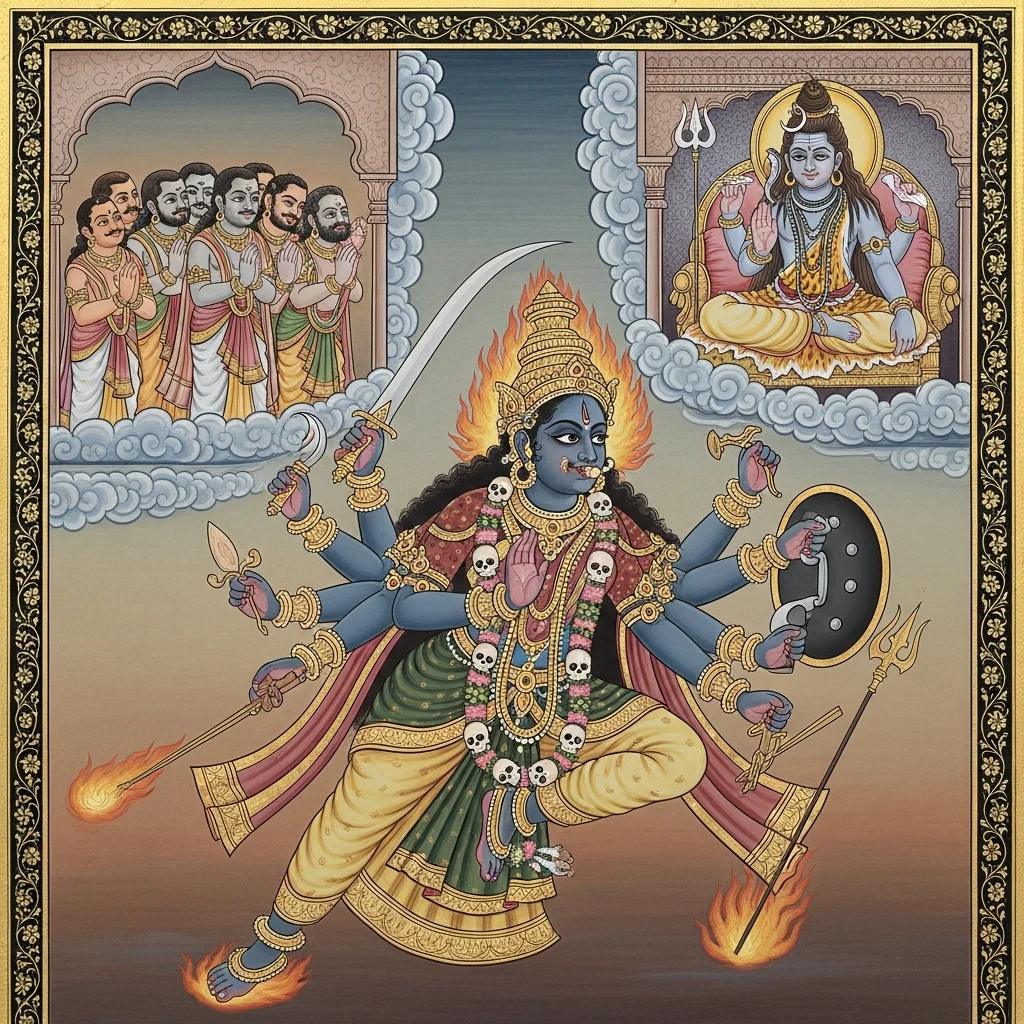
Agastya asks Skanda to explain why the Goddess is called “Durgā” and how she is to be worshipped in Kāśī. Skanda recounts an origin-legend of an asura named Durga who, through fierce austerities, subjugates the worlds and throws Vedic study, yajña, and social order into ruin. Cosmic and civic turmoil is shown as a mark of adharma, and Skanda adds an ethical teaching on composure and dhairya—steadfast courage—in prosperity and adversity. When the devas lose their sovereignty, they seek refuge in Maheśa. The Goddess, urged toward asura-mardana, sends Kālarātrī as a diplomatic emissary. Kālarātrī delivers a structured ultimatum—return the three worlds to Indra and restore Vedic rites, or face the consequences—and with strategic speech exposes the asura’s desire and arrogance. When he tries to seize her, she reveals overwhelming power, burning his forces and nullifying attacks; the conflict swells into a great confrontation as the Goddess manifests many śaktis to contain the asuric host, restoring divine protection as both metaphysical sovereignty and ritual-ethical balance.
Shlokas
Verse 1
अगस्त्य उवाच । कथं दुर्गेति वै नाम देव्या जातंमुमासुत । कथं च काश्यां सा सेव्या समाचक्ष्वेति मामिह
Agastya said: “O son of Umā, how indeed did the Goddess come to bear the name ‘Durgā’? And how is she to be duly worshipped in Kāśī? Explain this to me here.”
Verse 2
स्कंद उवाच । कथयामि महाबुद्धे यथा कलशसंभव । दुर्गा नामाभवद्देव्या यथा सेव्या च साधकैः
Skanda said: “O great-minded one, O Pot-born (Agastya), I shall explain how the Goddess came to be known as ‘Durgā,’ and in what manner she is to be worshipped by spiritual aspirants.”
Verse 3
दुर्गो नाम मदादैत्यो रुरु दैत्यांगजोभवत् । यश्च तप्त्वा तपस्तीव्रं पुंभ्योजेयत्वमाप्तवान्
There was a Daitya named Durga, born of the demon Ruru; and having performed fierce austerities, he obtained invincibility against men.
Verse 4
ततस्तेनाखिला लोका भूर्भुवःस्वर्मुखा अपि । स्वसात्कृता विनिर्जित्य रणे स्वभुजसारतः
Thereafter, he conquered and subdued all the worlds—even Bhūḥ, Bhuvaḥ, and Svaḥ—defeating them in battle by the sheer prowess of his own arms.
Verse 5
स्वयमिंद्रः स्वयं वायुः स्वयं चंद्रः स्वयं यमः । स्वयमग्निः स्वयं पाशी धनदोभूत्स्वयं बली
Indra himself, Vāyu himself, Candra himself, Yama himself; Agni himself, Varuṇa the Lord of the noose himself, and Kubera the Lord of wealth—each became, as it were, powerless before him.
Verse 6
स्वयमीशानरुद्रार्क वसूनां पदमाददे । तत्साध्वसाद्विमुक्तानि तपांस्यति तपस्विभिः
He seized for himself the stations of Īśāna, Rudra, the Sun, and the Vasus. Out of fear of him, the ascetics abandoned their austerities and withdrew from their disciplines.
Verse 7
न वेदाध्ययनं चक्रुर्ब्राह्मणास्तद्भयादिताः । यज्ञवाटा विनिर्ध्वस्तास्तद्भटैरतिदुःसहैः
Stricken by fear of him, the brāhmaṇas did not pursue Vedic study; and the sacrificial grounds were destroyed by his soldiers, who were exceedingly hard to withstand.
Verse 8
विध्वस्ता बहुशः साध्व्यस्तैरमार्गकृतास्पदैः । प्रसभं च परस्वानि अपहृत्य दुरासदाः
Many virtuous women were repeatedly violated by those who had made lawlessness their dwelling; and those hard to resist forcibly seized the property of others.
Verse 9
अभोक्षिषुर्दुराचाराः क्रूरकर्मपरिग्रहाः । नद्यो विमार्गगा आसञ्ज्वलंति न तथाग्नयः
Those of wicked conduct, devoted to cruel deeds, brought about disorder: rivers flowed off their proper courses, and fires did not blaze as they should.
Verse 10
ज्योतींषि न प्रदीप्यंति तद्भयाकुलितान्यहो । दिग्वधूवसनन्यासन्विच्छायानि समंततः
Lights would not shine—alas—agitated by fear of him; and everywhere the quarters seemed stripped of their radiance, as though the brides of the directions had laid aside their garments.
Verse 11
धर्मक्रियाविलुप्ताश्च प्रवृत्ताः सुकृतेतराः । त एव जलदीभूय ववृषुर्निज लीलया
The rites of dharma vanished, and people turned toward what is opposed to merit. Those very ones, becoming clouds, rained down by their own caprice.
Verse 12
सस्यानि तद्भयात्सूते त्वनुप्तापि वसुंधरा । सदैव फलिनो जातास्तरवोप्यवकेशिनः
Out of fear of him, even the earth—though unsown—brings forth crops; and even the trees, though leafless, become ever fruit-bearing.
Verse 13
बंदीकृताः सुरर्षीणां पत्न्यस्तेनातिदर्पिणा । दिवौकसः कृतास्तेन समस्ताः काननौकसः
By that exceedingly arrogant one, the wives of the divine seers were held captive; and all the dwellers of heaven were made to live like forest-dwellers.
Verse 14
मर्त्या अमर्त्यान्स्वगृहं प्राप्तानपि भयार्दिताः । अपि संभाषमात्रेण नार्च्चयंति विपज्जुषः
Mortals, stricken by fear, would not honor even the immortals who came to their own homes; indeed, those overwhelmed by calamity would not offer reverence even through a mere word of greeting.
Verse 15
स्कंद उवाच । न कौलीन्यं न सद्वृत्तं महत्त्वाय प्रकल्पते । एकमेव पदं श्रेयः पदभ्रंशो हि लाघवम्
Skanda said: Neither noble birth nor even good conduct, by itself, guarantees true greatness. A single firm step on the path of the good is auspicious; but slipping from one’s position is indeed baseness.
Verse 16
विपद्यपि हि ते धन्या न ये दैन्यप्रणोदिताः । धनैर्मलिनचित्तानामालभंतेंगणं क्वचित्
Blessed indeed are those who, even in misfortune, are not driven into wretchedness; but those whose minds are stained by wealth may at times gain a place of standing in the courtyard through riches alone.
Verse 17
पंचत्वमेव हि वरं लोके लाघववर्ज्जितम् । नामरत्वमपि श्रेयो लाघवेन समन्वितम्
Better indeed is death itself in this world, if it is free from baseness; even a kind of “nameless immortality” is preferable to a life joined with lowness.
Verse 18
त एव लोके जीवंति पुण्यभाजस्त एव वै । विपद्यपि न गांभीर्यं यच्चेतोब्धिः परित्यजेत्
They alone truly live in this world—those alone are rightful sharers of merit—whose ocean-like heart does not abandon its depth and gravity even in adversity.
Verse 19
कदाचित्संपदुदयः कदाचिद्विपदुद्गमः । दैवाद्द्वयमपि प्राप्य धीरो धैर्यं न हापयेत्
At times prosperity rises; at times calamity arises. Receiving both by the will of fate, the steadfast person should not lose courage.
Verse 20
उदयानुदयौ प्राज्ञैर्द्रष्टव्यौ पुष्पवंतयोः । सदैकरूपताऽत्याज्या हर्षाहर्षौ ततोऽध्रुवौ
The wise should observe rise and decline as they do in flowering plants. One should give up the demand for unchanging sameness; therefore joy and sorrow are inconstant.
Verse 21
यस्त्वापदं समासाद्य दैन्यग्रस्तो विपद्यते । तस्य लोकद्वयं नष्टं तस्माद्दैन्यं विवर्जयेत्
But one who, meeting calamity, collapses into dejection is ruined; for him both worlds are lost. Therefore one should abandon despair.
Verse 22
आपद्यपि हि ये धीरा इह लोके परत्र च । न तान्पुनः स्पृशेदापत्तद्धैर्येणावधीरिता
Indeed, the steadfast who remain composed in adversity—both in this world and in the next—are not touched again by calamity, for distress is rendered powerless by their courage.
Verse 23
भ्रष्टराज्याश्च विबुधा महेशं शरणं गताः । सर्वज्ञेन ततो देवीप्रेरिताऽसुरमर्दने
The gods, fallen from their sovereignty, took refuge in Maheśa. Then, urged by the all-knowing Lord, the Goddess was sent forth for the crushing of the asura.
Verse 24
माहेश्वरीं समासाद्य भवान्याज्ञां प्रहृष्टवत् । अमर्त्यायाऽभयं दत्त्वा समरायोपचक्रमे
Approaching Māheśvarī and receiving Bhavānī’s command with delight, she granted fearlessness to the immortals and then set about the work of battle.
Verse 25
कालरात्रीं समाहूय कांत्या त्रैलोक्यसुंदरीम् । प्रेषयामास रुद्राणी तमाह्वातुं सुरद्रुहम्
Rudrāṇī summoned Kālārātrī—radiant, the beauty of the three worlds—and dispatched her to call forth that enemy of the gods.
Verse 26
कालरात्री समासाद्य तं दैत्यं दुष्टचेष्टितम् । उवाच दैत्याधिपते त्यज त्रैलोक्यसंपदम्
Kālārātrī drew near that demon of wicked deeds and said: “O lord of the Daityas, relinquish the sovereignty of the three worlds.”
Verse 27
त्रिलोकीं लभतामिंद्रस्त्वं तु याहि रसातलम् । प्रवर्तंतां क्रियाः सर्वा वेदोक्ता वेदवादिनाम्
“Let Indra regain the three worlds; you, however, go down to Rasātala. Let all rites, as enjoined by the Veda and practiced by Veda-knowing men, proceed unhindered.”
Verse 28
अथ चेद्गर्वलेशोऽस्ति तदायाहि समाजये । अथवा जीविताकांक्षी तदिंद्रं शरणं व्रज
“And if even a trace of pride remains, then come—let us meet in battle. Otherwise, if you desire to live, then go and take refuge with Indra.”
Verse 29
इति वक्तुं महादेव्या महामंगलरूपया । त्वदंतिके प्रेषिताहं मृत्युस्ते तदुपेक्षया
“To say this, I have been sent to your presence by the Great Goddess, whose very form is supreme auspiciousness. If you disregard it, then death is yours by that very neglect.”
Verse 30
अतो यदुचितं कर्तुं तद्विधेहि महासुर । परं हितं चेच्छृणुयाज्जीवग्राहं ततो व्रज
“Therefore, O great asura, do what is fitting. If you would heed what is truly for your welfare, then seek the means of preserving life and depart accordingly.”
Verse 31
इत्याकर्ण्य वचो देव्या महाकाल्याः स दैत्यराट् । प्रजज्वाल तदा क्रोधाद्गृह्यतां गृह्यतामियम्
Hearing the words of the Goddess Mahākālī, the king of the daityas blazed with wrath and cried, “Seize her—seize her!”
Verse 32
त्रैलोक्यमोहिनी ह्येषा प्राप्ता मद्भाग्यगौरवैः । त्रैलोक्यराज्यसंपत्ति वल्ल्याः फलमिदं महत्
“Truly, she who enchants the three worlds has come to me through the weight and excellence of my own fortune. This great attainment is the ripe fruit of that creeper of prosperity—sovereignty and wealth over the three worlds.”
Verse 33
एतदर्थं हि देवर्षि नृपा बंदी कृता मया । अनायासेन मे प्राप्ता गृहमेषा शुभोदयात्
“For this very purpose, O divine seer, I made kings into captives. And now, without effort, she has come into my house by the rise of auspicious fortune.”
Verse 34
अवश्यं यस्य योग्यं यत्तत्तस्येहोपतिष्ठते । अरण्ये वा गृहे वापि यतो भाग्यस्य गौरवात्
“Whatever is truly fit for a person surely comes to him here—whether in a forest or in a home—because of the compelling force of destiny, of fortune.”
Verse 35
अंतःपुरचरा एतां नयंत्वंतःपुरं महत् । अनया सदलं कृत्या मम राष्ट्रमलंकृतम्
“Let the women of the inner palace lead her into the great inner apartments. By her—together with her attendants and services—my kingdom has been adorned.”
Verse 36
अहो महोदयश्चाद्य जातो मम महामते । केवलं न ममैकस्य सर्वदैत्यान्वयस्य च
“Ah—what great prosperity has arisen for me today, O wise one! And not for me alone, but for the entire lineage of the Daityas.”
Verse 37
नृत्यंतु पितरश्चाद्य मोदंतां बांधवाः सुखम् । मृत्युः कालोंऽतको देवाः प्राप्नुवंत्वद्य मे भयम्
“Let the ancestors dance today; let my kinsmen rejoice in happiness. Let Death, Time, Antaka, and even the gods—today—come to fear me!”
Verse 38
इति यावत्समायातास्तां नेतुं सौविदल्लकाः । तावत्तया कालरात्र्या प्रत्युक्तो दैत्यपुंगवः
“While he was speaking thus, the Sauvidallaka attendants arrived to lead her away. Just then, the bull among Daityas was answered in return by Kālarātrī.”
Verse 39
कालरात्र्युवाच । दैत्यराज महाप्राज्ञ नैतद्युक्तं भवादृशाम् । वयं दूत्यः परवशा राजनीतिविदुत्तम
“Kālarātrī said: ‘O king of Daityas, O greatly discerning one—this is not fitting for someone like you. We are merely messengers, acting under another’s command, O best knower of statecraft.’”
Verse 40
अल्पोपि दूतसंबाधां न विदध्यात्कदाचन । किं पुनर्ये भवादृक्षा महांतो बलिनोऽधिपाः
“Even a lesser man should never inflict injury or harassment upon an envoy. How much more, then, should mighty and powerful rulers like you refrain from it!”
Verse 41
दूतीषु कोनुरागोयं महाराजाल्पिकास्विह । अनायासेन च वयमायास्यामस्तदागमात्
“What is this attachment to mere female messengers, O great king—insignificant as we are here? In any case, we shall come again without effort, when the appointed time of arrival comes.”
Verse 42
विजित्य समरे तां तु स्वामिनीं मम दैत्यप । मादृशीनां सहस्रणि परिभुंक्ष्व यथेच्छया
“Having conquered in battle that mistress of mine, O lord of the Daityas, enjoy thousands of women like me as you please.”
Verse 43
अद्यैव ते महासौख्यं भावितस्याविलोकनात् । बांधवानां सुखं तेद्य भविता सह पूर्वजैः
“Today itself you will gain great delight by beholding what is destined; and today, along with your ancestors, the happiness of your kinsmen will also come to pass.”
Verse 44
संपत्स्यंतेऽद्य ते कामाः सर्वे ये चिरचिंतिताः । अबला सा च मुग्धा च तस्यास्त्राता न कश्चन
“Today all the desires you have long contemplated will be fulfilled. She is helpless and innocent, and there is no one at all to protect her.”
Verse 45
सर्वरूपमयी चैव तां भवान्द्रष्टुमर्हति । अहं हि दर्शयिष्यामि यत्र साऽस्ति जगत्खनिः
“She is indeed of all forms; you are fit to behold her. I myself will show you where she is—she who is the very mine and source of the world.”
Verse 46
धृतायामपि चैकस्यां कस्ते कामो भविष्यति । अहं ते सन्निधिं नैव त्यक्ष्याम्यद्य दिनावधि
“Even if you seize only one, what desire of yours will remain? I will not leave your presence at all—from today until the day’s end.”
Verse 47
ततो निवारयैतान्मामादित्सून्सौविदल्लकान् । इति श्रुत्वा वचस्तस्याः स कामक्रोधमोहितः
Then she said, “So restrain these Sauvidallakas who are trying to seize me!” Hearing her words, he became deluded by lust and anger.
Verse 48
तामेव बह्वमंस्तैकां दूतीं मृत्योरिवासुरः । शुद्धांतरक्षिणश्चैतां शुद्धां तं प्रापयंत्वरम्
That Asura regarded that very messenger—alone—as though she were Death itself. And the guardians of the inner quarters, though pure, quickly led him toward that excellent lady.
Verse 49
इति तेन समादिष्टाः सर्वे वर्पवरा मुने । तां धर्तुमुद्यमं चक्रुर्बलेन बलवत्तराः
Thus commanded by him, O sage, all those excellent attendants—stronger than the strong—made an effort to seize her by force.
Verse 50
सा तान्भस्मीचकाराशु हुंकारजनिताग्निना । ततो दैत्यपतिः क्रुद्धो दृष्ट्वा तान्भस्मसात्कृतान्
She swiftly reduced them to ashes with fire produced by her very roar. Then the lord of the Daityas, seeing them turned to ash, became enraged.
Verse 51
क्षणेनैव तया दूत्या दैत्त्यास्त्र्ययुतसंमितान् । दृशा व्यापारयामास दुर्धरं दुर्मुखं खरम्
In a single moment, that messenger set into motion—by her very glance—forces comparable to tens of thousands of asuric weapons: irresistible, terrible-faced, and fierce.
Verse 52
सीरपाणिं पाशपाणिं सुरेंद्रदमनं हनुम् । यज्ञारिं खङ्गलोमानमुग्रास्यं देवकंपनम्
“(Summon) Sīrapāṇi, Pāśapāṇi, the subduer of Indra, Hanūmān; the foe of sacrifice, Khaṅgaloman, Ugrāsya, and Devakampana.”
Verse 53
बद्ध्वा पाशैरिमां दुष्टामानयंत्वाशु दानवाः । विध्वस्तकेशवेशां च विस्त्रस्तांबरभूषणाम्
“Bind this wicked one with nooses and bring her here at once, O Dānavas—her hair and attire dishevelled, her garments and ornaments scattered.”
Verse 54
इति दैत्याधिपादेशाद्दुर्धरप्रमुखास्ततः । पाशासिमुद्गरधरास्तामादातुं कृतोद्यमाः
Thus, by the command of the lord of the Daityas, Durdhara and the others set forth—bearing nooses, swords, and maces—ready to seize her.
Verse 55
गिरींद्रगुरुवर्ष्माणः शस्त्रास्त्रोद्यतपाणयः । दिगंतं ते परिप्राप्तास्तदुच्छ्वासानिलाहताः
Their bodies were massive like great mountains; with weapons and missiles raised in their hands, they rushed to the edge of the quarters—yet they were struck back by the wind of her very breath.
Verse 56
तेषूड्डीनेषु दैत्येषु शतकोटिमितेषु च । निर्जगाम ततः सा तु कालरात्रिर्नभोध्वगा
When those Daityas—numbering a hundred crores—had been flung up and scattered, then Kālarātri herself emerged, moving through the sky.
Verse 57
ततस्तां तु विनिर्यांतीमनुजग्मुर्महासुराः । कोटिकोटिसहस्राणि पूरयित्वा तु रोदसी
As she went forth, the great Asuras followed her—filling the two worlds with crores upon crores, in thousands upon thousands.
Verse 58
दुर्गोनाम महादैत्यः शतकोटि रथावृतः । गजानामर्बुदशतद्वयेनपारिवारितः
A great Daitya named Durga came forth, surrounded by a hundred crores of chariots, and encircled by two hundred arbuda of elephants.
Verse 59
कोट्यर्बुदेन सहितो हयानां वातरंहसाम् । पदातिभिरसंख्यातैः पच्चूर्णितशिलोच्चयैः
He was accompanied by a koṭi-arbuda of horses swift as the wind, and by countless foot-soldiers who crushed rocky hillocks to powder.
Verse 60
उदायुधैर्महाभीमैःकृतत्रिजगतीभयैः । समेतः स महादैत्यो दुर्गः क्रुद्धो विनिर्ययौ
Armed with exceedingly terrifying weapons that had made the three worlds tremble, that great Daitya Durga—fully assembled with his host—went forth in wrath.
Verse 61
अथ दृष्ट्वा महादेवी विंध्याचलकृतालयाम् । आगत्य कालरात्र्यां च निवेदित तदागसम्
Then the Great Goddess, seeing the one whose dwelling was established on the Vindhya mountain, came and reported that offence to Kālarātri.
Verse 62
महाभुजसहस्राढयां महातेजोभिबृंहिताम् । तत्तद्घोरप्रहरणां रणकौतुकसादराम्
Filled with thousands of mighty arms and swollen with overwhelming radiance, she bore dreadful weapons of every kind—reverently eager for the thrill of battle.
Verse 63
प्रौद्यच्चंद्रसहस्रांशु निर्मार्जित शुभाननाम् । लावण्यवार्धि निर्गच्छच्चंचच्चंद्रैकचंद्रिकाम्
Her auspicious face seemed cleansed and brightened by the rays of a thousand rising moons; from the ocean of her beauty streamed a single, trembling moonlight.
Verse 64
महामाणिक्यनिचय रोचिःखचितविग्रहाम् । त्रैलोक्यरम्यनगरी सुप्रकाशप्रदीपिकाम्
Her form was inlaid with the radiance of heaps of great rubies—like a brilliantly lit lamp for a city enchanting to all the three worlds.
Verse 65
हरनेत्राग्निनिर्दग्ध कामजीवातुवीरुधम् । लसत्सौंदर्यसंभार जगन्मोहमहौषधिम्
She was the life-giving herb that revives even Kāma after he has been burnt by the fire of Hara’s eye—an immense medicine of enchantment for the world, rich with shining beauty.
Verse 66
विषमेषु शरैर्भिन्नहृदयो दैत्यपुंगवः । आदिष्टवान्महासैन्यनायकानुप्रशासनः
The foremost of the Dānavas—his heart pierced by arrows amid peril—issued commands, directing the captains of his vast army.
Verse 67
अयि जंभ महाजंभ कुजंभ विकटानन । लंबोदर महाकाय महादंष्ट्र महाहनो
“O Jambha, Mahājambha, Kujambha, O frightful-faced one—O pot-bellied, huge-bodied, great-tusked, mighty-jawed one!”
Verse 68
पिंगाक्ष महिषग्रीव महोग्रात्युग्रविग्रह । क्रूराक्ष क्रोधनाक्रंद संक्रंदन महाभय
“O tawny-eyed one, buffalo-necked one, of exceedingly fierce and dreadful form; O cruel-eyed one, roaring in wrath—O Saṃkrandana, great terror!”
Verse 69
जितांतक महाबाहो महावक्त्र महीधर । दुंदुभे दुंदुभिरव महादुंदुभिनासिक
“O Jitāntaka, mighty-armed; O great-faced, earth-supporting one; O Dundubha, thunder-voiced; O one with a nose like a great drum!”
Verse 70
उग्रास्य दीर्घदशनमेवकेश वृकानन । सिंहास्य सूकरमुख शिवाराव महोत्कट
“O fierce-faced one, long-toothed; O single-haired one, wolf-faced; O lion-faced, boar-mouthed; O Śivārāva, exceedingly formidable!”
Verse 71
शुकतुंड प्रचंडास्य भीमाक्ष क्षुदमानस । उलूकनेत्र कंकास्य काकतुंड करालवाक्
“O parrot-beaked one, with a terrible mouth; O frightful-eyed one, of petty mind; O owl-eyed one, vulture-faced; O crow-beaked one, whose speech is dreadful!”
Verse 72
दीर्घग्रीव महाजंघ क्रमेलक शिरोधर । रक्तबिंदो जपानेत्र विद्युज्जिह्वाग्नितापन
“O Dīrghagrīva, Mahājaṅgha, Kramelaka, Śirodhara; O Raktabiṃda, Japānetra, Vidyujjihvā, and Agnitāpana—”
Verse 73
धूम्राक्ष धूमनिःश्वास चंडचंडांशुतापन । महाभीषणमुख्याश्च शृण्वंत्वाज्ञां ममादरात्
“O Dhūmrākṣa, Dhūmaniḥśvāsa, Caṇḍa, Caṇḍāṃśutāpana, and you others headed by Mahābhīṣaṇa—listen with reverence to my command.”
Verse 74
भवत्स्वेतेषु चान्येषु एतां विंध्यवासिनीम् । धृत्यानेष्यति बुद्ध्या वा बलेनापि च्छलेन वा
“Among you—and among others as well—someone will bring here this Vindhyavāsinī, whether by steadfast resolve, by strategy, by force, or even by deception.”
Verse 76
यांतु क्षिप्रं नयावन्मे पंचेषु शरपीडितम् । मनोविह्वलतां गच्छेदेतत्प्राप्तेरभावतः
“Let them go swiftly and bring her to me; for I am tormented by the five arrows (of the god of love). If I do not obtain her, my mind will fall into utter agitation.”
Verse 77
इत्याकर्ण्य वचस्तस्य दुर्गस्य दनुजेशितुः । प्रोचुः सर्वे तदा दैत्याः प्रबद्धकरसंपुटाः
Thus hearing the words of that hard-hearted lord of the Dānava-s, all the Daitya-s then replied with their hands joined in reverence.
Verse 78
अवधेहि महाराज किमेतत्कर्मदुष्करम् । अनाथायास्तथैकस्या अबलया विशेषतः
Consider, O great king: how can this deed be difficult—especially when she is alone, without protection, and a woman of little strength?
Verse 79
अस्या आनयने कोयं महायत्नविधिः प्रभो । कोऽस्मान्प्रलयकालाग्निमहाज्वालावलीसमान्
O lord, what need is there for such great exertion and elaborate measures to bring her? Who could possibly withstand us—who are like the mighty blazing rows of the fire at the time of dissolution?
Verse 80
सहेत त्रिषु लोकेषु त्वत्प्रसादात्कृतोद्यमान् । यद्यादेशो भवेदद्य तदेंद्रं स मरुद्गणम्
By your favor, once we are set in motion, we could prevail within the three worlds. If your command be given today, then even Indra together with the host of Maruts would be subdued.
Verse 81
सांतःपुरं समानीय क्षिप्नुमस्त्वत्पदाग्रतः । भूर्भुवःस्वरिदं सर्वं त्वदाज्ञावशवर्तितम्
Bringing her with her attendants and inner retinue, we shall quickly place her at your feet. This entire realm—earth, mid-region, and heaven—moves under the control of your command.
Verse 82
महर्जनस्तपःसत्यलोकास्त्वदधिकारिणः । तत्राप्यसाध्यं नास्माकं त्वन्निदेशान्महासुर
Mahar, Jana, Tapa, and Satya—those worlds too are under your authority. Even there, nothing is impossible for us when we act by your command, O great Asura.
Verse 83
वैकुंठनायको नित्यं त्वदाज्ञापरिपालकः । यानि रम्याणि रत्नानि तानि संप्रेषयन्मुदा
The Lord of Vaikuṇṭha, ever obedient to Your command, joyfully sends to us whatever delightful jewels there are.
Verse 84
अस्माभिरेव संत्यक्तः कैलासाधिपतिः स वै । विपाशी चातिनिःस्वत्वाद्भस्मकृत्त्यहिभूषणः
Indeed, that Lord of Kailāsa is shunned by us; for, being extremely without possessions, he goes hungry—wearing ash, clad in a skin, and adorned with serpents.
Verse 85
अर्धांगेनास्मद्भयतो योषिदेका निगूहिता । तस्य ग्रामेपि सकले द्वितीयो न चतुष्पदः
Out of fear of us, he has concealed a single woman upon half his body; and in his entire village there is not even a second four-footed creature.
Verse 86
एकोऽजरद्गवः सोपि नान्यस्मात्परिजीवति । श्मशानवासिनः सर्वे सर्वे कौपीनवाससः
There is only one non-aging bull—and even he lives dependent on none else. All of them dwell in cremation-grounds; all of them wear only loincloths.
Verse 87
सर्वे विभूतिधवला सर्वेप्येक कपर्द्दिनः । समस्ते नगरे तस्य वसंत्येवंविधा गणाः
All are whitened with sacred ash; all, too, wear the single matted coil of hair. Throughout his entire city, such gaṇas dwell.
Verse 88
तेषां गणानां किं कुर्मो दरिद्राणां वयं विभो । समुद्रा रत्नसंभारं प्रत्यहं प्रेषयंति च
What can we do for those gaṇas who are poor, O Lord? Even the oceans send a heap of jewels every day.
Verse 89
नागा वराकाश्चास्माकं सायंसायं स्वयं प्रभो । प्रदीपयंति सततं फणा रत्नप्रदीपकान्
And our humble nāgas, evening after evening, O Lord, continually kindle jewel-lamps upon their hoods by themselves.
Verse 90
कल्पद्रुमः कामगवी चिंतामणिगणा बहु । तव प्रसादादस्माकमपि तिष्ठंति वेश्मसु
The wish-fulfilling tree, the wish-granting cow, and many clusters of cintāmaṇi gems—by Your grace, they stand even in our homes.
Verse 91
वायुर्व्यजनतां यातस्त्वां सेवेत प्रयत्नतः । स्वच्छान्यंबूनि वरुणः प्रत्यहं पूरयत्यहो
Vāyu, becoming a fan-bearer, serves you with effort; and Varuṇa—marvelously—fills (the place) each day with clear waters.
Verse 92
वासांसि क्षालयेदग्निश्चंद्रश्छत्रधरः स्वयम् । सूर्यः प्रकाशयेन्नित्यं क्रीडावाप्यंबुजानि च
Agni washes the garments; the Moon himself bears the parasol; and the Sun ever illumines the pleasure-ponds filled with lotuses as well.
Verse 93
कस्त्वत्प्रसादं नेक्षेत मर्त्यामर्त्योरगेषु च । सर्वे त्वामुपजीवंति सुराऽसुरखगादयः
Who indeed would not seek your gracious favor—among mortals, immortals, and the serpent-races alike? For all beings live supported by you: gods, asuras, birds, and the rest.
Verse 94
पश्य नः पौरुषं राजन्नानयामो बलादिमाम् । इत्युक्त्वा युगपत्सर्वे क्षुब्धास्तोयधयो यथा
“Behold our prowess, O King—we shall bring her here by force!” Saying so, all of them surged at once, like waters suddenly churned into turbulence.
Verse 95
संवर्तकालमासाद्य प्लावितुं जगतीमिमाम् । रणतूर्य निनादश्च समुत्तस्थौ समंततः
As though the time of cosmic dissolution had arrived to flood the whole earth, the blare of battle-trumpets rose up on every side.
Verse 96
रोमांचिता यच्छ्रवणात्कातरा अप्यकातराः । ततो देवा भयत्रस्ताश्चकंपे च वसुंधरा
At the mere hearing of it, even the fearless were struck with trembling awe and horripilation. Then the gods were terrified, and the very earth shook.
Verse 97
क्षुब्धा अंबुधयः सर्वे पेतुर्नक्षत्रमालिकाः । रोदसीमंडलं व्याप्तं तेन तूर्यरवेण वै
All the oceans were thrown into turmoil, and the garlands of stars seemed to fall; the whole vault of heaven and earth was filled with that thunder of war-instruments.
Verse 98
ततो भगवती देवी स्वशरीरसमुद्भवाः । शक्तीरुत्पादयामास शतशोऽथ सहस्रशः
Then the Blessed Goddess brought forth powers born from her own body—hundreds, and then thousands of Śaktis.
Verse 99
ताभिः शक्तिभिरेतेषां बलिनां दितिजन्मनाम् । प्रत्येकं परितो रुद्ध उद्वेलः सैन्यसागरः
By those Śaktis, the surging ocean of the army of those mighty Diti-born demons was hemmed in on all sides—each contingent separately encircled and restrained.
Verse 100
शस्त्रास्त्राणि महादैत्यैर्यान्युत्सृष्टानि संगरे । ताभिः शक्तिभिरुग्राणि तृणीकृत्योज्झितान्यरम्
The fierce weapons and missiles hurled in battle by the great demons—those Śaktis rendered them like mere blades of grass and swiftly cast them away.
Verse 110
स च बाणस्तया देव्या निज बाणैर्महाजवैः । निवारितोपि वेगेन तां देवीमभ्यगान्मुने
Yet that arrow—though checked by the Goddess with her own swift-flying shafts—still, by its force, rushed toward the Goddess, O sage.
Verse 119
तावञ्जगज्जनन्याताः प्रेरिता निज शक्तयः । विचेरुर्दैत्यसैन्येषु संवर्ते मृत्युसैन्यवत्
For that span, the Mother of the world’s own Śaktis—set in motion by her command—moved through the armies of the Daityas, like the hosts of Death at the time of dissolution.