Adhyaya 20
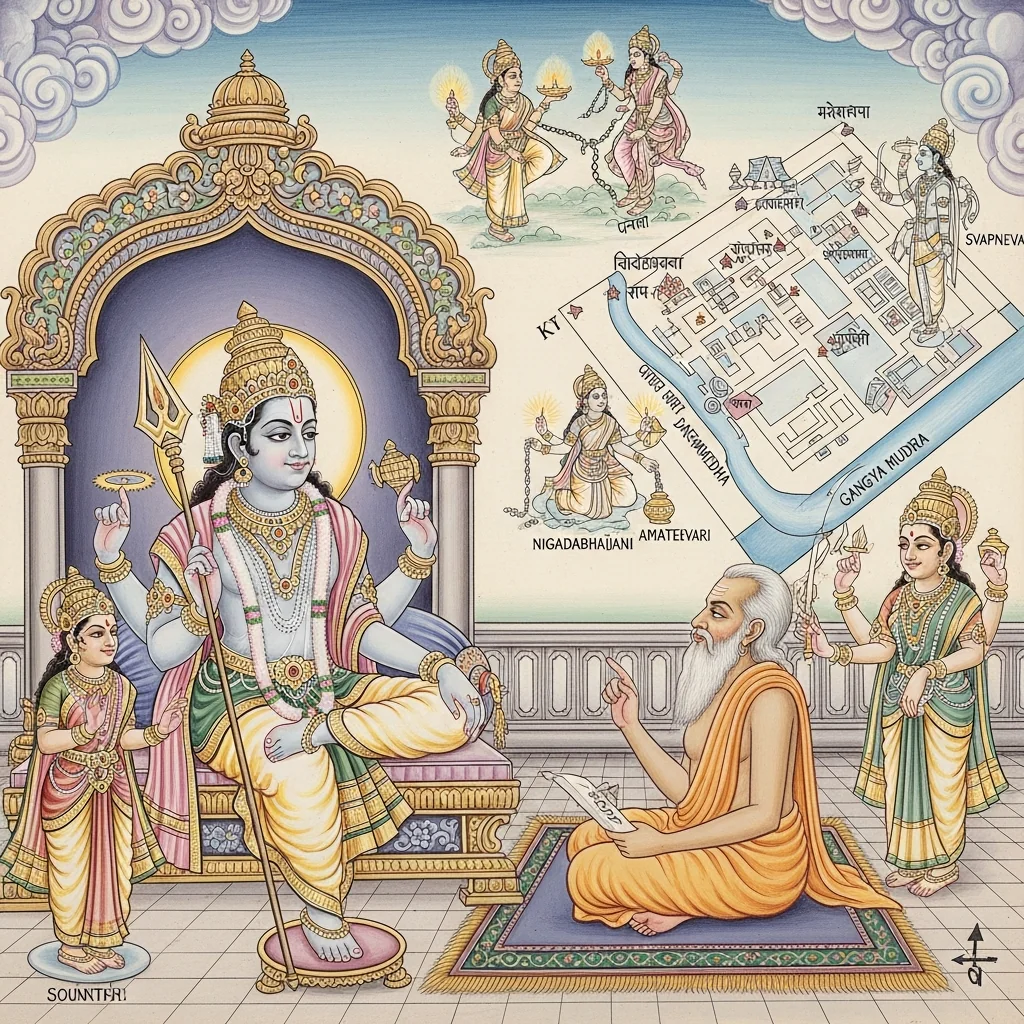
Adhyāya 20 is framed by Agastya’s question to the Kāt(y)āyaneya/Nandin lineage: which deities are stationed where to protect Avimukta in Kāśī, and how their appointments were made by divine command. Skanda replies by mapping a spatially ordered network of goddesses and tīrthas in Vārāṇasī, beginning with Viśālākṣī in relation to the Gaṅgā and Viśālatīrtha, and prescribing observances such as fasting, night-vigil, and feeding fourteen maidens on a specified tithi as a discipline tied to the merit of residing in Kāśī. The sacred itinerary then moves to Lalitātīrtha and Lalitā Devī, and onward to Viśvabhujā with emphasis on Navarātra pilgrimage. A sequence of protective forms is named—Vārāhī, Śivadūtī, Aindrī, Kaumārī, Māheśvarī, Nārasiṃhī, Brāhmī, Nārāyaṇī, and Gaurī/Śaileśvarī—along with specialized sites such as Citraghaṇṭā and its festival rites, Nigadabhañjanī with themes of release from bondage, and Amṛteśvarī symbolizing immortality. Siddhalakṣmī and the Mahālakṣmī-pīṭha are described with discourse on prosperity and siddhi, and fierce protective triads—Carmamuṇḍā, Mahāruṇḍā, and Cāmuṇḍā—are invoked. The chapter concludes by placing Svapneśvarī/Durgā as the southern guardian and presenting worship as an ethical guideline that steadies personal life while safeguarding the sanctity of the kṣetra.
Shlokas
Verse 1
अगस्त्य उवाच । कात्यायनेय कथय नंदिना विश्वनंदिना । यथा व्यापारिता देव्यो देवदेवनिदेशतः
Agastya said: O son of Kātyāyana, tell how the goddesses were commissioned by Nandin—by Viśvanandin—according to the command of the God of gods.
Verse 2
अविमुक्तस्य रक्षार्थं यत्र या देवताः स्थिताः । प्रसादं कुरु मे देव ताः समाचक्ष्व तत्त्वतः
For the protection of Avimukta, which deities abide where? Be gracious to me, O Lord—describe them to me truthfully, in accord with the essential principle.
Verse 3
इत्यगस्त्युदितं श्रुत्वा महादेवतनूद्भवः । कथयामास या यत्र स्थिताऽनंदवने मुदा
Hearing thus what Agastya had spoken, the one born from Mahādeva’s very body began, with delight, to relate which deity is stationed where in Ānandavana.
Verse 4
स्कंद उवाच । वाराणस्यां विशालाक्षी क्षेत्रस्य परमेष्टदा । विशालतीर्थं गंगायां कृत्वा पृष्ठे व्यवस्थिता
Skanda said: In Vārāṇasī, Viśālākṣī is the supreme presiding goddess of the sacred kṣetra. Having established the Viśāla Tīrtha upon the Gaṅgā, she remains stationed there as its guardian presence.
Verse 5
स्नात्वा विशालतीर्थे वै विशालाक्षीं प्रणम्य च । विशालां लभते लक्ष्मीं परत्रेह च शर्मदाम्
Indeed, having bathed at Viśāla Tīrtha and bowed to Viśālākṣī, one attains expansive lakṣmī—prosperity—and peace-bestowing welfare, both here and in the world to come.
Verse 6
भाद्रकृष्णतृतीयायामुपोषणपरैर्नृभिः । कृत्वा जागरणं रात्रौ विशालाक्षीसमीपतः
On the third tithi of the dark fortnight of Bhādrapada, those devoted to fasting should keep night-vigil in the proximity of Viśālākṣī.
Verse 7
प्रातर्भोज्याः प्रयत्नेन चतुर्दशकुमारिकाः । अलंकृता यथाशक्त्या स्रगंबरविभूषणैः
In the morning, with due care, fourteen young maidens should be fed; and, according to one’s means, they should be adorned with garlands, garments, and ornaments.
Verse 8
विधाय पारणं पश्चात्पुत्रभृत्यसमन्वितैः । सम्यग्वाराणसीवासफलं लभ्येत कुंभज
Thereafter, having duly performed the pāraṇa—the concluding meal—together with one’s sons and attendants, one truly obtains the full fruit of dwelling in Vārāṇasī, O Kumbhaja (Agastya).
Verse 9
तस्यां तिथौ महायात्रा कार्या क्षेत्रनिवासिभिः । उपसर्ग प्रशांत्यर्थं निर्वाणकमलाप्तये
On that sacred lunar day (tithi), the residents of the holy kṣetra of Kāśī should undertake the great yātrā-procession, to pacify calamities and attain the lotus of liberation (nirvāṇa).
Verse 10
वाराणस्यां विशालाक्षी पूजनीया प्रयत्नतः । धूपदीपैः शुभैर्माल्यैरुपहारैर्मनोहरैः
In Vārāṇasī, Goddess Viśālākṣī should be worshipped with earnest effort—using auspicious incense and lamps, garlands, and delightful offerings.
Verse 11
मणिमुक्ताद्यलंकारैर्विचित्रोल्लोच चामरैः । शुभैरनुपभुक्तैश्च दुकूलैर्गंधवासितैः
—with ornaments of jewels and pearls, with variegated fans and chāmara fly-whisks, and with auspicious, unused fine garments perfumed with fragrance.
Verse 12
मोक्षलक्ष्मी समृद्ध्यर्थं यत्रकुत्र निवासिभिः । अप्यल्पमपि यद्दत्तं विशालाक्ष्यै नरोत्तमैः
For the increase of mokṣa-lakṣmī—the blessed fortune of liberation—whatever the best of people offer to Viśālākṣī, even if only a little, wherever they may dwell,
Verse 13
तदानंत्याय जायंत मुने लोकद्वयेपि हि । विशालाक्षी महापीठे दत्तं जप्तं हुतं स्तुतम्
That becomes inexhaustible, O sage, indeed in both worlds. Whatever is given, recited, offered into the sacred fire, or praised at the great seat of Viśālākṣī bears endless fruit.
Verse 14
मोक्षस्तस्य परीपाको नात्र कार्या विचाणा । विशालाक्षी समर्चातो रूपसंपत्तियुक्पतिः
Liberation is the ripened result of that worship; here there is no need for doubt. Through proper adoration of Viśālākṣī one attains beauty and prosperity as well.
Verse 15
प्राप्यतेत्र कुमारीभिर्गुणशीलाद्यलंकृतः । गुर्विणीभिः सुतनयो वंध्याभिगर्भसंभवः
Here, maidens obtain a worthy husband adorned with virtues and good conduct; pregnant women obtain a fine son; and even barren women attain the blessing of conception.
Verse 16
असौभाग्यवतीभिश्च सौभाग्यं महदाप्यते । विधवाभिर्न वैधव्यं पुनर्जन्मांतरे क्वचित्
Women afflicted by ill fortune obtain great good fortune; and widows do not meet with widowhood again in any subsequent birth.
Verse 17
सीमंतिनीभिः पुंभिर्वा परं निर्वाणमिच्छुभिः । श्रुता दृष्टार्चिता काश्यां विशालाक्ष्यभिलाषदा
By married women and by men as well—by those who desire the supreme nirvāṇa—Viśālākṣī in Kāśī, when heard of, seen, and worshipped, grants the cherished aim.
Verse 18
ततोन्यल्ललितातीर्थं गंगाकेशवसन्निधौ । तत्रास्ति ललिता देवी क्षेत्ररक्षाकरी परा
Next comes another sacred ford, Lalitā-tīrtha, near Gaṅgā and Keśava. There dwells Goddess Lalitā, the supreme protectress of the holy kṣetra of Kāśī.
Verse 19
सा च पूज्या प्रयत्नेन सर्वसंपत्समृद्धये । ललितापूजकानां च जातु विघ्नो न जायते
She should be worshipped with earnest effort for the full flourishing of every kind of prosperity; and for those who worship Lalitā, obstacles never arise at any time.
Verse 20
इषे कृष्णद्वितीयायां ललितां परिपूज्य वै । नारी वा पुरुषो वापि लभते वांछितं पदम्
On the second lunar day (Dvitīyā) of the dark fortnight in the month of Īṣa, whoever duly worships Lalitā—whether woman or man—attains the desired state and reward.
Verse 21
स्नात्वा च ललिता तीर्थे ललितां प्रणिपत्य वै । लभेत्सर्वत्र लालित्यं यद्वा तद्वाऽनुलप्य च
Having bathed at the Lalitā-tīrtha and indeed bowed to Lalitā, one gains grace and beauty everywhere; and by uttering whatever prayerful words arise in devotion, one is further blessed.
Verse 22
मुने विश्वभुजा गौरी विशालाक्षी पुरः स्थिता । संहरंती महाविघ्नं क्षेत्रभक्तिजुषां सदा
O sage, Gaurī—Viśvabhujā, the wide-eyed Goddess—stands before the devotees, ever destroying great obstacles for those who cherish devotion to the sacred kṣetra of Kāśī.
Verse 23
शारदं नवरात्रं च कार्या यात्रा प्रयत्नतः । देव्या विश्वभुजाया वै सर्वकामसमृद्धये
During the autumnal Navarātra, one should earnestly undertake the pilgrimage (yātrā) to Goddess Viśvabhujā, indeed, for the complete fulfillment and increase of all desires.
Verse 24
यो न विश्वभुजां देवीं वाराणस्यां नमेन्नरः । कुतो महोपसर्गेभ्यस्तस्य शांतिर्दुरात्मनः
If a man in Vārāṇasī does not bow to Goddess Viśvabhujā, how could that misguided soul find peace from great calamities and afflictions?
Verse 25
यैस्तु विश्वभुजा देवी वाराणस्यां स्तुतार्चिता । न हि तान्विघ्नसंघातो बाधते सुकृतात्मनः
But those by whom Viśvabhujā Devī is praised and worshipped in Vārāṇasī—no mass of obstacles ever troubles those virtuous souls.
Verse 26
अन्यास्ति काश्यां वाराही क्रतुवाराहसन्निधौ । तां प्रणम्य नरो भक्त्या विपदब्धौ न मज्जति
Another Goddess in Kāśī is Vārāhī, near Kratuvārāha; having bowed to her with devotion, a person does not sink in the ocean of misfortunes.
Verse 27
शिवदूती तु तत्रैव द्रष्टव्याऽपद्विनाशिनी । आनंदवनरक्षार्थमुद्यच्छूलारितर्जनी
There itself, Śivadūtī should be beheld—the destroyer of distress—raising her trident and threatening gesture for the protection of Ānandavana (Kāśī).
Verse 28
वज्रहस्ता तथा चैंद्री गजराज रथास्थिता । इंद्रेशाद्दक्षिणेभागेऽर्चिता संपत्करी सदा
Likewise, Aindrī—holding the thunderbolt (vajra) in her hand and seated upon a chariot drawn by the lord of elephants—is worshipped on the southern side of Indreśa, ever bestowing prosperity.
Verse 29
स्कंदेश्वर समीपे तु कौमारी बर्हियानगा । प्रेक्षणीया प्रयत्नेन महाफलसमृद्धये
Near Skandeśvara is the Goddess Kaumārī, riding the peacock. She should be beheld with earnest effort, for the attainment and increase of great spiritual fruits.
Verse 30
महेश्वराद्दक्षिणतो देवी माहेश्वरी नरैः । वृषयानवती पूज्या महावृषसमृद्धिदा
To the south of Maheśvara is the Goddess Māheśvarī. Mounted upon the bull, she should be worshipped by people, for she bestows abundant prosperity in cattle and mighty bulls—strength and increase.
Verse 31
निर्वाणनरसिंहस्य समीपे मोक्षकांक्षिभिः । नारसिंही समर्च्या च समुद्यच्चक्र रम्यदोः
Near Nirvāṇa-Narasiṃha, seekers of liberation should duly worship Nārasiṃhī, whose beautiful hand bears the upraised discus (cakra). She aids the aspirant toward mokṣa.
Verse 32
हंसयानवती ब्राह्मी ब्रह्मेशात्पश्चिमे स्थिता । गलत्कमंडलुजल चुलका ताडिता हिता
To the west of Brahmeśa stands Brāhmī, riding the swan. Auspicious and beneficent, she is described with water dripping from her water-pot (kamandalu), as though sprinkling it in handfuls for the welfare of beings.
Verse 33
ब्रह्मविद्या प्रबोधार्थं काश्यां पूज्या दिनेदिने । ब्राह्मणैर्यतिभिर्नित्यं निजतत्त्वावबोधिभिः
For the awakening of Brahman-knowledge, Brahmavidyā in Kāśī should be worshipped day after day—always by brāhmaṇas and renunciants devoted to realizing their own true nature.
Verse 34
शार्ङ्गचापविनिर्मुक्त महेषुभिरितस्ततः । उत्सादयंतीं प्रत्यूहान्काश्यां नारायणीं श्रयेत्
In Kāśī one should take refuge in Nārāyaṇī, who—by the mighty arrows released from the Śārṅga bow—destroys obstacles on every side.
Verse 35
प्रतीच्यांगोपिगोविंदाद्भ्राम्यच्चक्रोच्च तर्जनीम् । नारायणीं यः प्रणमेत्तस्य काश्यां महोदयः
To the west of Gopīgovinda is Nārāyaṇī, with her discus whirling and her forefinger raised. Whoever bows to her attains great exaltation and flourishing in Kāśī.
Verse 36
ततो गौरीं विरूपाक्ष देवयान्या उदग्दिशि । पूजयित्वा नरो भक्त्या वांछितां लभते श्रियम्
Then, in the northern direction, one should worship Gaurī at Virūpākṣa-Devayānī. A person who worships her with devotion obtains the desired prosperity and well-being.
Verse 37
शैलेश्वरी समभ्यर्च्या शैलेश्वर समीपगा । तर्जयंती च तर्जन्या संसर्गमुपसर्गजम्
Śaileśvarī, who abides near Śaileśvara, should be worshipped with reverence. With her raised forefinger she wards off harmful contagion and afflictions born of evil influences.
Verse 38
चित्रकूपे नरः स्नात्वा विचित्रफलदे नृणाम् । चित्रगुप्तेश्वरं वीक्ष्य चित्रघंटां प्रपूज्य च
Having bathed at Citrakūpa, which bestows wondrous fruits upon people, one should behold Citragupt-eśvara and also worship Citraghaṇṭā.
Verse 39
बहुपातकयुक्तोपि त्यक्तधर्मपथोपि वा । न चित्रगुप्तलेख्यः स्याच्चित्रघंटार्चको नरः
Even if a man is burdened with many sins, or has strayed from the path of dharma, one who worships Citraghaṇṭā is not to be recorded by Citragupta in Yama’s register.
Verse 40
योषिद्वा पुरुषो वापि चित्रघंटां न योर्चयेत् । काश्यां विघ्नसहस्राणि तं सेवंते पदेपदे
Whether woman or man, whoever does not worship Citraghaṇṭā within Kāśī is attended by thousands of obstacles at every step.
Verse 41
चैत्रशुक्लतृतीयायां कार्या यात्रा प्रयत्नतः । महामहोत्सवः कार्यो निशि जागरणं तथा
On the third lunar day of the bright fortnight of Caitra, the pilgrimage procession should be undertaken with care; a great festival should be held, and night-vigil too should be observed.
Verse 42
महापूजोपकरणैश्चित्रघंटां समर्च्य च । शृणोति नांतकस्येह घंटां महिषकंठगाम्
Having duly worshipped Citraghaṇṭā with the full great requisites of pūjā, here in Kāśī one does not hear the bell of Antaka (Yama)—the bell that hangs at the neck of the buffalo, his mount.
Verse 43
चित्रांगदेश्वरप्राच्यां चित्रग्रीवां प्रणम्य च । न जातु जंतुर्वीक्षेत विचित्रां यमयातनाम्
Having bowed to Citragrīvā in the eastern precinct of Citrāṅgadeśvara, a being will never behold the dreadful and manifold torments of Yama.
Verse 44
भद्रकालीं नरो दृष्ट्वा नाभद्रं पश्यति क्वचित् । भद्रनागस्य पुरतो भद्रवाप्यां कृतोदकः
Having beheld Bhadrakālī, a man sees no inauspiciousness anywhere. Having performed the water-offering/ablution at Bhadravāpī, in front of Bhadranāga, he becomes ever auspicious.
Verse 45
हरसिद्धिं प्रयत्नेन पूजयित्वा नरोत्तमः । महासिद्धिमवाप्नोति प्राच्यां सिद्धिविनायकात्
The best of men, having worshipped Harasiddhi with earnest effort, attains great accomplishment—through Siddhivināyaka in the eastern quarter.
Verse 46
विधिं संपूज्य विधिवद्विविधैरुपहारकैः । विविधां लभते सिद्धिं विधीश्वरसमीपगाम्
Having perfectly worshipped Vidhi in the prescribed manner with various offerings, one gains manifold accomplishments—leading one to the proximity of Vidhīśvara.
Verse 47
प्रयागतीर्थे सुस्नातो जनो निगडभंजनीम् । सभाजयित्वा नो जातु निगडैः परिबाध्यते
A person who has bathed well at the Prayāga tīrtha and has duly honored the Devī Nigaḍabhañjanī is never, at any time, afflicted by fetters.
Verse 48
भौमवारे सदा पूज्या देवीनिगडभंजनी । कृत्वैकभुक्तं भक्त्यात्र बंदीमोक्षणकाम्यया
On Tuesdays, Devī Nigaḍabhañjanī should always be worshipped. Here, with devotion, one should keep the vow of a single meal, longing for the release of captives and freedom from bondage.
Verse 49
संसारबंधविच्छित्तिमपि यच्छति सार्चिता । गणना शृंखलादीनां का च तस्याः समर्चनात्
When She is worshipped with due reverence, She grants even the severing of the bonds of worldly existence. What need is there to count lesser fruits—release from chains and the like—when one has properly adored Her?
Verse 50
दूरस्थोपि हि यो बंधुः सोपि क्षिप्रं समेष्यति । बंदी पदजुषां पुंसां श्रद्धया नात्र संशयः
Even a kinsman who is far away will quickly come to meet. For those who take refuge at the sacred feet, help and good fortune are secured by faith—of this there is no doubt.
Verse 51
किंचिन्नियममालंब्य यदि सा परिषेविता । कामान्पूरयति क्षिप्रं काशी संदेहहारिणी
If She is served with even a small measure of discipline and observance, Kāśī—the remover of doubts—quickly fulfills one’s rightful desires.
Verse 52
घनटंककरा देवी भक्तबंधनभेदिनी । कं कं न पूरयेत्कामं तीर्थराजसमीपगा
The Goddess, whose hand bears a heavy axe, who breaks the fetters of devotees, and who dwells near the King of Tīrthas—whose desire would She not fulfill?
Verse 53
देवी पशुऽपतेः पश्चादमृतेश्वर सन्निधौ । स्नात्वा चैवामृते कूपे नमनीया प्रयत्नतः
Behind the shrine of Paśupati, near Amṛteśvara, one should bathe in the Amṛta-well; then, with due effort, bow to the Goddess in reverent homage.
Verse 54
पूजयित्वा नरो भक्त्या देवताममृतेश्वरीम् । अमृतत्वं भजेदेव तत्पादांबुज सेवनात्
Having worshipped the Goddess Amṛteśvarī with devotion, a person truly attains immortality through service at Her lotus-feet.
Verse 55
धारयंतीं महामायाममृतस्य कमंडलुम् । दक्षिणेऽभयदां वामे ध्यात्वा को नाऽमृतत्वभाक्
Meditating on Mahāmāyā, who bears a water-pot (kamandalu) of nectar, granting fearlessness with Her right hand and holding it with Her left—who would not become a sharer in immortality?
Verse 56
सिद्धलक्ष्मी जगद्धात्री प्रतीच्याममृतेश्वरात् । प्रपितामह लिंगस्य पुरतः सिद्धिदार्चिता
Siddhalakṣmī, the sustainer of the world, is to the west of Amṛteśvara; before the Prapitāmaha-liṅga she is worshipped as the bestower of siddhi (spiritual accomplishment).
Verse 57
प्रासादं सिद्धलक्ष्म्याश्च विलोक्य कमलाकृतिम् । लक्ष्मीविलाससंज्ञं च को न लक्ष्मीं समाप्नुयात्
Who would not attain Lakṣmī upon beholding the lotus-shaped temple of Siddhalakṣmī, renowned as ‘Lakṣmīvilāsa’?
Verse 58
ततः कुब्जा जगन्माता नलकूवरलिंगतः । पूजनीया पुरोभागे प्रपितामहपश्चिमे
Thereafter, Kūbjā—the Mother of the world—should be worshipped in the front, in connection with the Nalakūvara-liṅga, on the western side of the precinct of Prapitāmaha.
Verse 59
उपसर्गा न शेषांश्च कुब्जा हरति पूजिता । तस्मात्कुब्जा प्रयत्नेन पूज्या काश्यां शुभार्थिभिः
When duly worshipped, Kubjā removes calamities and also the remaining afflictions. Therefore, in Kāśī, those who seek auspiciousness should worship Kubjā with earnest effort.
Verse 60
कुब्जांबरेश्वरं लिंगं नलकूबर पश्चिमे । त्रिलोकसुंदरी गौरी तत्रार्च्याभीष्टदायिनी
To the west of Nalakūbara stands the liṅga named Kubjāmbareśvara. There, Gaurī as Trilokasundarī should be worshipped, for she grants the desired boons.
Verse 61
त्रिलोकसुंदरी सिद्धिं दद्यात्त्रैलोक्यसुंदरीम् । वैधव्यं नाप्यते क्वापि तस्या देव्याः समर्चनात्
Trilokasundarī bestows the siddhi of “beauty across the three worlds.” By devoted worship of that Goddess, widowhood is not encountered anywhere.
Verse 62
दीप्ता नाम महाशक्तिः सांबादित्यसमीपगा । देदीप्यमान लक्ष्मीका जायंते तत्समर्चनात्
There is a great Power named Dīptā, situated near Sāmbāditya. By duly worshipping her, radiant prosperities and splendors arise.
Verse 63
श्रीकंठ सन्निधौ देवी महालक्ष्मीर्जगज्जनिः । स्नात्वा श्रीकुंड तीर्थे तु समर्च्या जगदंबिका
Near Śrīkaṇṭha abides the Goddess Mahālakṣmī, the World-Mother who brings forth creation. After bathing at the Śrīkuṇḍa tīrtha, one should duly worship that Jagadambikā.
Verse 64
पितॄन्संतर्प्य विधिवत्तीर्थे श्रीकुंडसंज्ञिते । दत्त्वा दानानि विधिवन्न लक्ष्म्या परिमुच्यते
At the tīrtha known as Śrīkuṇḍa, one who duly satisfies the Pitṛs with the prescribed rites and gives charity according to rule is not parted from Lakṣmī—prosperity and grace.
Verse 65
लक्ष्मीक्षेत्रं महापीठं साधकस्यैव सिद्धिदम् । साधकस्तत्र मंत्रांश्च नरः सिद्धिमवाप्नुयात्
This Lakṣmī-kṣetra is a great pīṭha, bestowing siddhi especially upon the sādhaka. There, the practitioner attains accomplishment through mantras.
Verse 66
संति पीठन्यनेकानि काश्यां सिद्धिकराण्यपि । महालक्ष्मीपीठसमं नान्यल्लक्ष्मीकरं परम्
In Kāśī there are indeed many pīṭhas that bestow siddhi; yet none is supreme in granting Lakṣmī like the pīṭha of Mahālakṣmī.
Verse 67
महालक्ष्म्यष्टमीं प्राप्य तत्र यात्रा कृतां नृणाम् । संपूजितेह विधिवत्पद्मा सद्म न मुंचति
For those who, upon Mahālakṣmī Aṣṭamī, make pilgrimage there and worship in due rite, Padmā (Lakṣmī) does not abandon their home.
Verse 68
उत्तरे तु महालक्ष्म्या हयकंठीकुठारधृक् । काशीविघ्रमहावृक्षांश्छिनत्ति प्रतिवासरम्
To the north of Mahālakṣmī stands Hayakaṇṭhī, bearing an axe; day after day she hews down the great “trees” of obstacles that hinder one’s Kāśī-pilgrimage and welfare.
Verse 69
कौर्मी शक्तिर्महालक्ष्मी दक्षिणे पाशपाणिका । बध्नाति विघ्नसंघातं क्षेत्रस्यास्य प्रतिक्षणम्
On the southern side stands Mahālakṣmī, the Kaurmī Śakti, holding a noose in her hand; at every moment she binds and restrains the host of obstacles threatening this sacred field, Kāśī.
Verse 70
सा पूजितास्तुता मर्त्यैः क्षेत्रसिद्धिं प्रयच्छति । वायव्यां च शिखी चंडी क्षेत्ररक्षाकरी परा
When worshipped and praised by mortals, she bestows success in the kṣetra (Kāśī). And in the north-western quarter is Śikhī Caṇḍī, the supreme protectress of the sacred field.
Verse 71
खादंती विघ्नसंघातं शिखी शब्दं करोति च । तस्याः संदर्शनात्पुंसां नश्यंति व्याधयोखिलाः
Devouring the mass of obstacles, Śikhī also raises her cry; merely by her darśana, all diseases of people are destroyed.
Verse 72
भीमचंड्युत्तरद्वारं सदा रक्षेदतंद्रिता । भीमेश्वरस्य पुरतः पाशमुद्गरधारिणीम्
Bhīma-Caṇḍī, ever vigilant and unwearied, always guards the northern gate; before Bhīmeśvara she stands, bearing a noose and a mace.
Verse 73
भीमचंडीं नरो दृष्ट्वा भीमकुंडे कृतोदकः । भीमाकृतीन्न वै पश्येद्याम्यान्दूतान्क्वचित्कृती
Having beheld Bhīma-Caṇḍī and performed the water-rite at Bhīma-kuṇḍa, a person of merit never beholds the fearsome messengers of Yama at any time.
Verse 74
छागवक्त्रेश्वरी देवी दक्षिणे वृषभध्वजात् । अहर्निशं भक्षयति विघ्नौघतरुपल्लवान्
To the south of Vṛṣabhadhvaja (Śiva) is the goddess Chāgavaktreśvarī; day and night she consumes the tender shoots of the forest of obstacles.
Verse 75
तस्या देव्याः प्रसादेन काशीवासः प्रलभ्यते । अतश्छागेश्वरीं देवीं महाष्टम्यां प्रपूजयेत्
By the grace of that goddess, residence in Kāśī is obtained. Therefore, one should worship the goddess Chāgeśvarī on Mahāṣṭamī.
Verse 76
तालजंघेश्वरी देवी तालवृक्षकृतायुधा । उत्सादयति विघ्नौघानानंदवन मध्यगान्
Tālajaṅgheśvarī Devī, whose weapon is fashioned from the palm tree, destroys the floods of obstacles that arise within the midst of Ānandavana.
Verse 77
संगमेश्वर लिंगस्य दक्षिणे विकटाननाम् । तालजंघेश्वरीं नत्वा न विघ्नैरभिभूयते
To the south of the Saṅgameśvara Liṅga is Tālajaṅgheśvarī, of formidable countenance; having bowed to her, one is not overcome by obstacles.
Verse 78
उद्दालकेश्वराल्लिंगात्तीर्थं उद्दालकाभिधे । याम्यां च यमदंष्ट्राख्या चर्वयेद्विघ्नसंहतिम्
From the Liṅga of Uddālakeśvara arises the tīrtha called Uddālaka. And in the southern quarter stands the Devī named Yamadaṃṣṭrā, who chews up the amassed obstacles.
Verse 79
प्रणता यमदंष्ट्रायैस्तीर्थेचोद्दालकाभिधे । कृत्वापि पापसंघातं न यमाद्बिभ्यतीहते
At the sacred ford called Uddālaka, one who bows to Yamadaṃṣṭrā—even if burdened with a heap of sins—does not fear Yama here.
Verse 80
दारुकेश्वर तीर्थे तु दारुकेशसमीपतः । पातालतालुवदनामाकाशोष्ठीं धराधराम्
At the Darukeśvara Tīrtha, near Lord Darukeśa, there stands a Devī whose mouth is like the palate of Pātāla, whose lips reach to the sky, and who is firm as the earth-bearer, the mountain.
Verse 81
कपालकर्त्रीं हस्तां च ब्रह्मांडकवलप्रियाम् । शुष्कोदरीं स्नायुबद्धां चर्ममुंडेति विश्रुताम्
In her hand she wields a skull-cleaver; she delights in swallowing even the ‘cosmic egg’; gaunt-bellied and sinew-bound, she is famed by the name Carmamuṇḍā.
Verse 82
क्षेत्रस्य पूर्वदिग्भागं रक्षंती विघ्नसंघतः । लसत्सहस्रदोर्दंडां ज्वलत्केकरवीक्षणाम्
She guards the eastern quarter of the sacred kṣetra, crushing the host of obstacles—she whose thousands of arms shine forth, whose gaze blazes fiercely.
Verse 83
पारावारप्रसृमर हस्त न्यस्तारि मोदकाम् । द्वीपि कृत्तिपरीधानां कटुकाट्टाट्टहासिनीम्
With her far-reaching hand she holds the enemy’s “sweet morsel”; clad in a leopard-skin garment, she laughs with a harsh, cracking roar.
Verse 84
मृणालनालवत्तीव्रं चर्वंतीमस्थि पापिनः । शूलाग्रप्रोत दुर्वृत्त क्षेत्रद्रोहिकलेवराम्
Chewing the sinner’s bones, sharp as a lotus-stalk, she impales upon the tip of her trident the bodies of the wicked—those who betray the sacred kṣetra.
Verse 85
कपालमालाभरणां महाभीषणरूपिणीम् । चर्ममुंडां नरो नत्वा क्षेत्रविघ्नैर्न बाध्यते
A man who bows to Carmamuṇḍā—adorned with a garland of skulls and of most fearsome form—is not afflicted by obstacles within the sacred precinct.
Verse 86
यथैव चर्ममुंडैषा महारुंडापि तादृशी । एतावानेव भेदोस्या रुंडस्रग्भूषणात्वियम्
Just as this one is Carmamuṇḍā, so too is Mahāruṇḍā of the same kind; this alone is the difference—that she is adorned with a garland of severed heads.
Verse 87
क्षेत्ररक्षां प्रकुरुत उभेदेव्यौ महाबले । हसंत्यौ करतालीभिरन्योन्यं दोः प्रसारणात्
Those two mighty goddesses carry out the protection of the sacred kṣetra; laughing, they clap their hands and stretch out their arms toward one another.
Verse 88
हयग्रीवेश्वरे तीर्थे लोलार्कादुत्तरे सदा । महारुंडा प्रचंडास्या तिष्ठते भक्तविघ्नहृत्
At the Hayagrīveśvara Tīrtha, ever to the north of Lolārka, stands Mahāruṇḍā of fierce visage—she who removes obstacles for devotees.
Verse 89
चर्ममुंडा महारुंडा कथिते ये तु देवते । तयोरंतरतस्तिष्ठेच्चामुंडा मुंडरूपिणी
The two goddesses known as Carmamuṇḍā and Mahāruṇḍā have been described. Between those two stands Cāmuṇḍā herself, assuming the form of a severed head.
Verse 90
एतास्तिस्रः प्रयत्नेन पूज्याः क्षेत्रनिवासिभिः । धनधान्यप्रदाश्चैताः पुत्रपौत्रप्रदा इमाः
These three goddesses should be worshipped with earnest effort by those dwelling in the sacred field of Kāśī. They bestow wealth and grain, and they grant sons and grandsons as well.
Verse 91
उपसर्गानमूर्घ्नंति दद्युर्नैःश्रेयसीं श्रियम् । स्मृता दृष्टा न ताः स्पृष्टाः पूजिताः श्रद्धया नरैः
They destroy calamities and bestow auspicious prosperity that leads to the highest good. Remembered, beheld, and worshipped with faith by people—without even being physically touched—they grant their grace.
Verse 92
महारुंडा प्रतीच्यां च देवी स्वप्नेश्वरी शुभा । भविष्यं कथयेत्स्वप्ने भक्तस्याग्रे शुभाशुभम्
In the western quarter is Mahāruṇḍā—the auspicious Goddess Svapneśvarī. In a dream she tells her devotee what is to come, whether favorable or unfavorable.
Verse 93
तत्र स्वप्नेश्वरं लिंगं देवीं स्वप्नेश्वरीं तथा । स्नात्वासिसंगमे पुण्ये यस्मिन्कस्मिंस्तिथावपि
There one should venerate the Svapneśvara Liṅga and likewise the Goddess Svapneśvarī. Having bathed at the holy Asi-saṅgama, on whatever lunar tithi it may be, one becomes fit for that worship.
Verse 94
उपोषणपरो धीमान्नारीवा पुरुषोपि वा । संपूज्य स्थंडिलशयः स्वप्ने भावि विलोकयेत्
Whether a wise woman or a man, devoted to fasting—after completing the worship in full—should lie down upon a bed of bare ground; then, in a dream, one may behold what is to come.
Verse 95
अद्यापि प्रत्ययस्तत्र कार्य एष विजानता । भूतं भावि भवत्सर्वं वदेत्स्वप्नेश्वरी निशि
Even today, one who understands should undertake this confirmatory practice there. At night Svapneśvarī speaks—of what has been, what will be, and all that pertains to one’s present condition.
Verse 96
अष्टम्यां च चतुर्दश्यां नवम्यां निशि वा दिवा । प्रयत्नतः समर्च्या सा काश्यां ज्ञानार्थिभिर्नरैः
On the eighth, the fourteenth, and the ninth lunar tithi—by night or by day—she should be worshipped with earnest effort in Kāśī by those who seek spiritual knowledge.
Verse 97
स्वप्नेश्वर्याश्च वारुण्यां दुर्गादेवी व्यवस्थिता । क्षेत्रस्य दक्षिणं भागं सा सदैवाभिरक्षति
And in the Varuṇā quarter of Svapneśvarī is established the Goddess Durgā. She ever protects the southern portion of the sacred field, the Kāśī-kṣetra.