Adhyaya 18
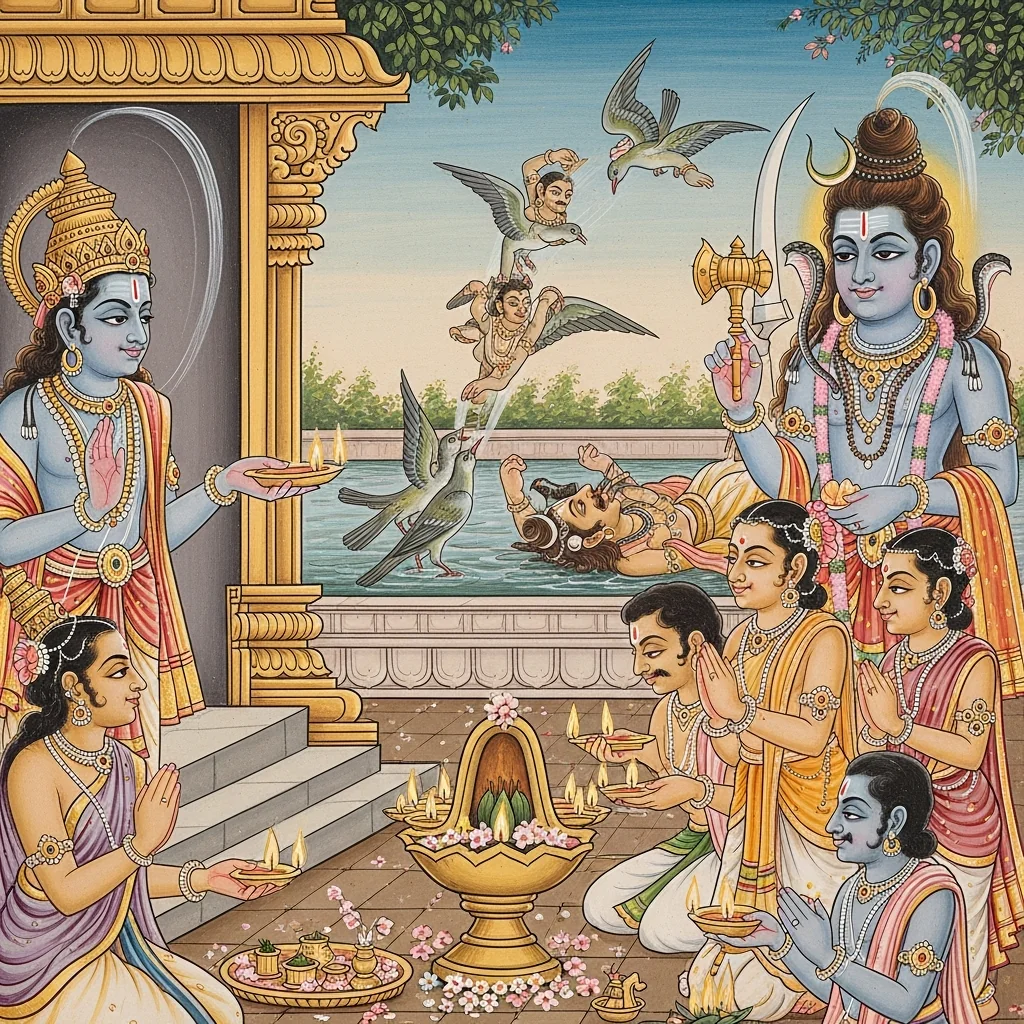
Chapter 18, set in Avimukta-Kṣetra, unfolds a closely connected origin narrative. Skanda tells Agastya of a “wonder-producing, great-sin-destroying” event: the advent of Gajāsura, son of Mahiṣāsura, a colossal force that disturbs the world. Śiva confronts him and pierces him with the triśūla, after which the episode turns into a theological exchange—Gajāsura acknowledges Śiva’s supremacy and asks for boons. He requests that his hide (kṛtti) become Śiva’s perpetual garment, establishing the epithet Kṛttivāsa. Śiva grants this and sanctifies the spot where the asura fell in Avimukta by ordaining a liṅga there—Kṛttivāseśvara—praised as foremost among Kāśī’s liṅgas and a destroyer of major sins. The chapter then lists ritual fruits: worship, stotra-recitation, repeated darśana, and specific observances (night vigil and fasting on Māgha kṛṣṇa caturdaśī; festival on Caitra śukla pañcadaśī). A kuṇḍa formed when the triśūla is withdrawn becomes a tīrtha where bathing and pitṛ-tarpaṇa yield great merit. A second miracle explains Haṃsatīrtha: during a festival, fighting birds fall into the kuṇḍa and are instantly transformed (crows becoming swan-like), showing immediate purification. The chapter closes with a local circuit around Haṃsatīrtha/Kṛttivāsa—liṅgas, Bhairava, Devī, vetāla, nāga, and healing kuṇḍas—each with distinct benefits, ending with a phalaśruti that hearing this origin brings auspicious results aligned with liṅga-darśana.
Shlokas
Verse 1
स्कंद उवाच । अन्यच्च शृणु विप्रेंद्र वृत्तातं तत्र संभवम् । महाश्चर्यप्रजननं महापातकहारि च
Skanda said: O best of Brahmins, hear yet another account that occurred there—one that gives rise to great wonder and also destroys grievous sins.
Verse 2
इत्थं कथां प्रकुर्वाणे रत्नशेस्य महेश्वरे । कोलाहलो महानासीत्त्रातत्रातेति सर्वतः
As this sacred discourse concerning Ratneśa, the Great Lord, was being carried on, a mighty tumult arose on every side—people crying, “Save us! Save us!”
Verse 3
महिषासुरपुत्रोसौ समायाति गजासुरः । प्रमथन्प्रमथान्सर्वान्निजवीर्य मदोद्धतः
That Gajāsura, son of Mahiṣāsura, now advances—arrogant, intoxicated by his own might—crushing and scattering all the Pramathas before him.
Verse 4
यत्रयत्र धरायां स चरणं प्रमिणोति हि । अचलोल्लोलयांचक्रे तत्रतत्रास्य भारतः
Wherever upon the earth he sets down his foot, O Bhārata, in each such place he makes even the mountains reel and sway.
Verse 5
ऊरुवेगेन तरवः पतंति शिखरैः सह । यस्य दोर्दंडघातेन चूर्णाः स्युश्च शिलोच्चयाः
By the rush of his thighs, trees fall down along with their crowns; and by the blows of his arms, like staves, even rocky mountains would be ground to powder.
Verse 6
यस्य मौलिजसंघर्षाद्घ नाव्योम त्यजंत्यपि । नीलिमानं न चाद्यापि जह्युस्तक्लेशसंगजम्
From the friction of his crown, the clouds do not even leave the sky; and even now they do not abandon their blueness, born of the distress produced by him.
Verse 7
यस्य निःश्वाससंभारैरुत्तरंगा महाब्धयः । नद्योप्यमंदकल्लोला भवंति तिमिभिः सह
By the gusts of his exhalations, the great oceans rise in swelling waves; and even the rivers surge in violent torrents, together with the mighty fish.
Verse 8
योजनानां सहस्राणि नवयस्य समुच्छ्रयः । तावानेव हि विस्तारस्तनोर्मायाविनोस्य हि
His height is nine thousand yojanas; and just so is the breadth of the body of this wielder of māyā.
Verse 9
यन्नेत्रयोः पिंगलिमा तथा तरलिमा पुनः । विद्युता नोज्झ्यतेऽद्यापि सोयमायाति सत्वरः
The tawny glare and restless flicker of his eyes, even now, are not surpassed by lightning; he is the one who is swiftly coming.
Verse 10
यांयां दिशं समभ्येति सोयं दुःसह दानवः । सासा समी भवेदस्य साध्वसादिव दिग्ध्रुवम्
Whichever direction that unbearable demon approaches, that very quarter surely seems to become ‘near’ to him—fixed, as it were, in dread.
Verse 11
ब्रह्मलब्धवरश्चायं तृणीकृतजगत्त्रयः । अवध्योहं भवामीति स्त्रीपुंसैः कामनिर्जितैः
Having obtained a boon from Brahmā, he deems the three worlds as mere straw, thinking, ‘I am invincible, I cannot be slain’—yet he is overcome by desire, among women and men alike.
Verse 12
ततस्त्रिशूलहेतिस्तमायांतं दैत्यपुंगवम् । विज्ञायावध्यमन्येन शूलेनाभिजघान तम्
Then the bearer of the trident-weapon, knowing that the foremost of the demons could not be slain by any other means, struck him as he advanced, with another spear.
Verse 13
प्रोतस्तेन त्रिशूलेन स च दैत्यो गजासुरः । छत्रीकृतमिवात्मानं मन्यमानो जगौ हरम्
Impaled upon that trident, the demon Gajāsura, imagining himself like a royal parasol held aloft above Śiva, addressed Hara (Śiva).
Verse 14
गजासुर उवाच । त्रिशूलपाणे देवेश जाने त्वां स्मरहारिणम् । तव हस्ते मम वधः श्रेयानेव पुरांतक
Gajāsura said: “O Lord of the gods, bearer of the trident, I know you as the destroyer of Smara (Kāma). To be slain by your own hand is truly a blessed fate for me, O Destroyer of the Triple City.”
Verse 15
किंचिद्विज्ञप्तुमिच्छामि अवधेहि ममेरितम् । सत्यं ब्रवीमि नासत्यं मृत्युंजय विचारय
“I wish to submit a request—please hear what I say. I speak truth, not falsehood; O Conqueror of Death, consider it.”
Verse 16
त्वमेको जगतां वंद्यो विश्वस्योपरि संस्थितः । अहं त्वदुपरिष्टाच्च स्थितोस्मी ति जितं मया
“You alone are worthy of worship by all the worlds, established above the entire universe. Yet I stood above you, thinking, ‘I have conquered!’.”
Verse 17
धन्योस्म्यनुगृहीतोस्मि त्वत्त्रिशूलाग्रसंस्थितः । कालेन सर्वैर्मर्तव्यं श्रेयसे मृत्युरीदृशः
Blessed am I; I am graced—set upon the tip of your trident. In time all must die; yet such a death as this is for the highest good.
Verse 18
इति तस्य वचः श्रुत्वा देवदेवः कृपानिधिः । प्रोवाच प्रहसञ्छंभुर्घटोद्भव गजासुरम्
Hearing his words, the God of gods—Śambhu, a treasury of compassion—smiled and spoke to Gajāsura, the one born from a pot (ghaṭa).
Verse 19
ईश्वर उवाच । गजासुर प्रसन्नोस्मि महापौरुषशेवधे । स्वानुकूल वरं ब्रूहि ददामि सुमतेऽसुर
The Lord said: “Gajāsura, I am pleased—O treasure-house of great heroism. Ask for a boon agreeable to you; I shall grant it, O wise-minded asura.”
Verse 20
इत्याकर्ण्य स दैत्येंद्रः प्रत्युवाच महेश्वरम् । गजासुर उवाच । यदि प्रसन्नो दिग्वासस्तदा नित्यं वसान मे
Having heard this, that lord of demons replied to Maheśvara. Gajāsura said: “If you are pleased, O sky-clad One, then wear me always…”
Verse 21
इमां कृत्तिं विरूपाक्ष त्वत्त्रिशूलाग्निपाविताम् । स्वप्रमाणां सुखस्पर्शां रणांगणपणीकृताम्
“This hide, O Virūpākṣa—purified by the fire of your trident—of fitting measure, pleasant to the touch, won as a stake upon the battlefield…”
Verse 22
इष्टगंधिः सदैवास्तु सदैवास्त्वतिकोमला । सदैव निर्मला चास्तु सदैवास्त्वतिमंडनम्
May it ever bear a pleasing fragrance; may it ever be exceedingly soft. May it ever remain spotless; and may it ever serve as the supreme adornment.
Verse 23
महातपोऽनलज्वालाः प्राप्यापि सुचिरं विभो । न दग्धा कृत्तिरेषा मे पुण्यगंधनिधिस्ततः
O Lord, though for a very long time I have been met by the flaming fires of great austerity, this hide of mine has not been burned; therefore it is a treasury of sacred fragrance and merit.
Verse 24
यदि पुण्यवती नैषा ममकृत्तिर्दिगंबर । तदा त्वदंगसंगोस्याः कथं जातो रणांगणे
O Naked One, if this hide of mine were not truly filled with merit, then how could it have come into contact with Your own body upon the battlefield?
Verse 25
अन्यं च मे वरं देहि यदि तुष्टोसि शंकर । नामास्तु कृत्तिवासास्ते प्रारभ्याद्यतनं दिनम्
Grant me yet another boon, O Śaṅkara, if You are pleased: let Your name be ‘Kṛttivāsā’ from this very day onward.
Verse 26
इति तस्य वचः श्रुत्वा तथेत्युक्त्वा च शंकरः । पुनःप्रोवाच तं दैत्यं भक्तिनिर्मलमानसम्
Hearing his words, Śaṅkara replied, “So be it,” and then again addressed that Daitya, whose mind had been purified by devotion.
Verse 27
ईश्वर उवाच । शृणु पुण्यनिधे दैत्य वरमन्यं सुदुर्लभम् । अविमुक्ते महाक्षेत्रे रण त्यक्त कलेवर
Īśvara said: Hear, O Daitya—treasury of merit—another boon, exceedingly rare: for one who has cast off the body in battle in Avimukta, the great sacred field…
Verse 28
इदं पुण्यशरीरं ते क्षेत्रेस्मिन्मुक्तिसाधने । मम लिंगं भवत्वत्र सर्वेषांमुक्तिदायकम्
This meritorious body of yours—in this kṣetra that is a means to liberation—shall become My liṅga here, bestowing mokṣa upon all.
Verse 29
कृत्तिवासेश्वरं नाम महापातकनाशनम् । सर्वेषामेव लिंगानां शिरोभूतमिदं वरम्
Its name is Kṛttivāseśvara, the destroyer of great sins; among all liṅgas, this blessed one stands as the very ‘head’—the foremost.
Verse 30
यावंति संति लिंगानि वाराणस्यां महांत्यपि । उत्तमं तावतामेतदुत्तमांगवदुत्तमम्
However many liṅgas there are in Vārāṇasī—even the great ones—this one is the best among them all, supreme like the highest limb, the head.
Verse 31
मानवानां हितायात्र स्थास्येहं सपरिग्रहः । दृष्टेनानेन लिंगेन पूजितेन स्तुतेन च । कृतकृत्यो भवेन्मर्त्यः संसारं न विशेत्पुनः
For the welfare of human beings, I shall abide here with My attendant retinue. By merely seeing this liṅga—and by worshipping it and praising it—a mortal becomes fulfilled in life’s purpose and does not enter saṃsāra again.
Verse 32
रुद्राः पाशुपताः सिद्धा ऋषयस्तत्त्वचिंतकाः । शांता दांता जितक्रोधा निर्द्वंद्वा निष्परिग्रहाः
Rudras, Pāśupatas, perfected Siddhas, and seers who contemplate the truth—peaceful, self-restrained, conquerors of anger, free from dualities, and without possessiveness—abide here.
Verse 33
अविमुक्ते स्थिता ये तु मम भक्ता मुमुक्षवः । मानापमानयोस्तुल्याः समलोष्टाश्मकांचनाः
But those devotees of Mine who dwell in Avimukta, intent on liberation—equanimous in honor and dishonor, and seeing clod, stone, and gold as the same—are truly established on the path of release.
Verse 34
कृत्तिवासेश्वरे लिंगे स्थास्येहं तदनुग्रहे । दशकोटिसहस्राणि तीर्थानि प्रतिवासरम्
By its grace, I shall abide here in the liṅga of Kṛttivāseśvara; and every day, tens of millions of tīrthas are present here.
Verse 35
त्रिकालमागमिष्यंति कृत्तिवासे न संशयः । कलिद्वापरसंभूता नराः कल्मषबुद्धयः
At the three times of day they will come to Kṛttivāsa—of this there is no doubt—people born in Kali and Dvāpara, whose minds are stained by impurity.
Verse 36
सदाचारविनिर्मुक्ताः सत्यशौचपराङ्मुखाः । मायया दंभलोभाभ्यां मोहाहंकृतिसंयुताः
They are bereft of good conduct, turned away from truth and purity; through māyā they are joined to hypocrisy and greed, and bound up with delusion and egoism.
Verse 37
शूद्रान्नसेविनो विप्रा जिह्वाला अतिलालसाः । संध्यास्नानजपेज्यासु दूरीकृत मनोधियः
Brāhmaṇas become eaters of others’ food, their tongues ever craving and excessively greedy; their minds and understanding are kept far from sandhyā rites, sacred bathing, japa, and worship.
Verse 38
कृत्तिवासेश्वरं प्राप्य सर्वपापविवर्जिताः । सुखेन मोक्षमेष्यंति यथा सुकृतिनस्तथा
Having reached Kṛttivāseśvara, they are freed from all sins and attain liberation with ease—just as the truly meritorious do.
Verse 39
कृत्तिवासेश्वरं लिंगं सेव्यं काश्यां ततो नरैः । जन्मांतरसहस्रेषु मोक्षोन्यत्र सुदुर्लभः
Therefore, in Kāśī, men should worship the liṅga of Kṛttivāseśvara; for in thousands of other births, liberation elsewhere is exceedingly hard to obtain.
Verse 40
कृत्तिवासेश्वरे लिंगे लभ्यस्त्वेकेन जन्मना । पृर्वजन्मकृतं पापं तपोदानादिभिः शनैः । नश्येत्सद्यो विनश्येत कृत्तिवासे श्वरेक्षणात्
At the liṅga of Kṛttivāseśvara, liberation is attainable in a single lifetime. Sin committed in former births may be destroyed gradually by austerity, charity, and the like—but it is destroyed immediately by merely beholding Kṛttivāseśvara.
Verse 41
कृत्तिवासेश्वरं लिंगं येर्चयिष्यंति मानवाः । प्रविष्टास्ते शरीरे मे तेषां नास्ति पुनर्भवः
Those humans who worship the liṅga of Kṛttivāseśvara enter into My very being; for them, there is no rebirth.
Verse 42
अविमुक्तेऽत्र वस्तव्यं जप्तव्यं शतरुद्रियम् । कृत्तिवासेश्वरो देवो द्रष्टव्यश्च पुनःपुनः
Here in Avimukta one should dwell; the Śatarudrīya should be recited; and the god Kṛttivāseśvara should be beheld again and again.
Verse 43
सप्तकोटिमहारुद्रैः सुजप्तैर्यत्फलं भवेत् । तत्फलं लभ्यते काश्यां पूजनात्कृत्तिवाससः
Whatever merit would arise from the well-performed japa of seven crores of Mahārudra-mantras—that very fruit is obtained in Kāśī simply by worshipping Kṛttivāsa (Śiva).
Verse 44
माघ कृष्णचतुर्दश्यामुपोष्य निशि जागृयात् । कृत्तिवासेशमभ्यर्च्य यः स यायात्परां गतिम्
Whoever fasts on the fourteenth day of the dark fortnight in Māgha and keeps vigil at night, and worships Lord Kṛttivāseśa—he attains the supreme state.
Verse 45
शुक्लायां पंचदश्यां यश्चैत्र्यां कर्ता महोत्सवम् । कृत्तिवासेश्वरे लिंगे न स गर्भं प्रवक्ष्येते
He who, on the bright-fortnight fifteenth in the month of Caitra, celebrates a great festival for the liṅga of Kṛttivāseśvara—of him it is declared: he will not enter the womb again (i.e., he will not be reborn).
Verse 46
कथयित्वेति देवेशस्तत्कृत्तिं परिगृह्य च । गजासुरस्य महतीं प्रावृणोद्धरिदंबरः
Having thus spoken, the Lord of gods took up that hide—the great skin of Gajāsura; and the sky-clad Lord, Digambara, covered himself with it.
Verse 47
महामहोत्सवो जातस्तस्मिन्नहनि कुंभज । कृत्तिवासत्वमापेदे यस्मिन्देवो दिगंबरः
On that very day, O Kumbhaja (Agastya), a grand festival arose—on the day when the sky-clad Lord came to be known as “Kṛttivāsa”.
Verse 48
यत्रच्छत्रीकृतो दैत्यः शूलमारोप्य भूतले । तच्छूलोत्पाटनाज्जातं तत्र कुंडं महत्तरम्
At the place where the demon—made like a canopy—was impaled upon the trident upon the earth, there, from the uprooting of that trident, a very great sacred pool (kuṇḍa) came into being.
Verse 49
तस्मिन्कुंडे नरः स्नात्वा कृत्वा च पितृतर्पणम् । कृत्तिवासेश्वरं दृष्ट्वा कृतकृत्यो नरो भवेत्
Having bathed in that sacred pool and performed libations (tarpaṇa) for the ancestors, a man—having beheld Kṛttivāseśvara—becomes one whose life’s duties are fulfilled.
Verse 50
स्कंद उवाच । तस्मिंस्तीर्थे तु यद्वृत्तं तदगस्ते निशामय । काका हंसत्वमापन्नास्तत्तीर्थस्य प्रभावतः
Skanda said: Now hear, O Agastya, what occurred at that tīrtha. By the power of that holy place, crows attained the state of swans.
Verse 51
एकदा कृत्तिवासे तु चैत्र्यां यात्राऽभवत्पुरा । अन्नं राशीकृतं तत्र ह्युपहारसमुद्भवम्
Once, in the month of Caitra, there was formerly a pilgrimage-festival at Kṛttivāsa. There, heaps of food were gathered, produced from offerings.
Verse 52
बहुदेवलकैर्विप्र तं दृष्ट्वा पक्षिणो मिलन् । परस्परं तदन्नार्थं युध्यंतो व्योमवर्त्मनि
O brāhmaṇa, seeing that heap of food attended by many temple servants, the birds gathered and, longing for that food, fought one another along the pathways of the sky.
Verse 53
बलिपुष्टैरपुष्टांगा रटतः करटाः कटु । वलिभिश्चातिपुष्टांगैरबलाश्चंचुभिर्हताः
Some—though strengthened by offerings—were still weak-limbed and cried out harshly; others, excessively fat through indulgence, were struck down by the beaks of the powerless.
Verse 54
ते हन्यमाना न्यपतंस्तस्मिन्कुंडे नभोंगणात् । आयुःशेषेण संत्राता हंसीभूतास्तु वायसाः
As they were being struck, they fell from the open sky into that sacred pond. Saved by the remainder of their allotted lifespan, those crows indeed became swans.
Verse 55
आश्चर्यवंतस्तत्रत्या यात्रायां मिलिता जनाः । ऊचुरंगुलिनिर्देशैरहो पश्यत पश्यत
Amazed, the people gathered there on pilgrimage exclaimed, pointing with their fingers, “Ah! Look—look!”
Verse 56
अस्मासु वीक्षमाणेषु काकाः कुंडेत्र ये पतन् । धार्तराष्ट्रास्तु ते जातास्तीर्थस्यास्य प्रभावतः
As we looked on, the crows that fell into this pond became Dhārtarāṣṭras—royal swans—through the mighty power of this tīrtha.
Verse 57
हंसतीर्थं तदारभ्य कृत्तिवास समीपतः । नाम्ना ख्यातमभूल्लोके तत्कुंडं कलशोद्भव
From that time onward, that pond—near Kṛttivāsa—became renowned in the world by the name “Haṃsatīrtha,” O Kalaśodbhava (Agastya).
Verse 58
अतीव मलिनात्मानो महामलिन कर्मभिः । क्षणान्निर्मलतां यांति हंसतीर्थकृतोदकाः
Even those whose inner being is exceedingly tainted by very impure deeds attain purity in an instant through the waters associated with Haṃsatīrtha.
Verse 59
काश्यां सदैव वस्तव्यं स्नातव्यं हंसतीर्थके । द्रष्टव्यः कृत्तिवासेशः प्राप्तव्यं परमं पदम्
One should ever dwell in Kāśī; one should bathe at Haṃsatīrtha; one should behold Lord Kṛttivāseśa—thereby the supreme state is attained.
Verse 60
काश्यां लिंगान्यनेकानि मुने संति पदेपदे । कृत्तिवासेश्वरं लिंगं सर्वलिंगशिरः स्मृतम्
In Kāśī, O sage, there are many liṅgas at every step; yet the liṅga of Kṛttivāseśvara is remembered as the ‘head’ among all liṅgas.
Verse 61
कृत्तिवासं समाराध्य भक्तियुक्तेन चेतसा । सर्वलिंगाराधनजं फलं काश्यामवाप्यते
By worshipping Kṛttivāsa with a mind filled with bhakti, in Kāśī one obtains the fruit that arises from worship of all liṅgas.
Verse 62
जपो दानं तपो होमस्तर्पणं देवतार्चनम् । समीपे कृत्तिवासस्य कृतं सर्वमनंतकम्
Japa, charity, austerity, homa, tarpaṇa, and worship of the deities—whatever is performed near Kṛttivāsa becomes inexhaustible in merit.
Verse 63
तीर्थं त्वनादिसंसिद्धमेतत्कलशसंभव । पुनर्देवस्य सान्निध्यादाविरासीन्महेशितुः
O Kalaśasaṃbhava, this tīrtha is beginningless and eternally accomplished; yet, by the Lord’s renewed presence, it again became manifest through the grace of Maheśa.
Verse 64
एतानि सिद्धलिंगानिच्छन्नानि स्युर्युगेयुगे । अवाप्य शंभुसान्निध्यं पुनराविर्भवंति हि
These accomplished, siddhi-bestowing liṅgas remain concealed from age to age; but upon attaining Śambhu’s proximity, they surely appear again.
Verse 65
हंसतीर्थस्य परितो लिंगानामयुतं मुने । प्रतिष्ठितं मुनिवरैरत्रास्ति द्विशतोत्तरम्
O sage, all around Haṃsatīrtha ten thousand liṅgas were established by eminent seers; and here there are, in addition, two hundred more.
Verse 66
एकैकं सिद्धिदं नृणामविमुक्तनिवासिनाम् । लिंगं कात्यायनेशादि च्यवनेशां तमेव हि
Each of these liṅgas grants siddhi to people dwelling in Avimukta (Kāśī). Among them is the liṅga called Kātyāyaneśa, and likewise Cyavaneśa indeed.
Verse 67
लोमशेशं महालिंगं लोमशेन प्रतिष्ठितम् । कृत्तिवासः प्रतीच्यां तु तद्दृष्ट्वा क्वांतकाद्भयम्
The great liṅga called Lomaśeśa was established by Lomaśa. And to the west is Kṛttivāsa; upon beholding it, fear of death comes to an end.
Verse 68
मालतीशं शुभं लिंगं कृत्तिवासोत्तरे महत् । सपर्ययित्वा तल्लिंगं राजा गजपतिर्भवेत्
North of Kṛttivāsa stands the great auspicious liṅga Mālatīśa. Having worshipped that liṅga, a king becomes a lord of elephants—a mighty sovereign.
Verse 69
अंतकेश्वर संज्ञं च लिंगं तद्रुद्रदिक्स्थितम् । अतिपापोपि निष्पापो जायते तद्विलोकनात्
There is also a liṅga known as Antakeśvara, situated in the direction of Rudra. Even one burdened with great sin becomes sinless by merely beholding it.
Verse 70
जनकेशं महालिंगं तत्पार्श्वे ज्ञानदं परम् । तल्लिंग वरिवस्यातो ब्रह्मज्ञानमवाप्यते
There is the great liṅga Janakeśa, and beside it another supreme giver of knowledge. By devoted worship of that liṅga, one attains knowledge of Brahman.
Verse 71
तदुत्तरे महामूर्तिरसितांगोस्ति भैरवः । तस्य दर्शनतः पुंसां न भवेद्यमदर्शनम्
To its north is the great-formed Bhairava named Asitāṅga. By his darśana, people do not have the vision of Yama, the Lord of Death.
Verse 72
शुष्कोदरी च तत्रास्ति देवी विकटलोचना । कृत्तिवासादुदीच्यां तु काशीप्रत्यूह भक्षिणी
There too abides the Goddess Śuṣkodarī, Vikaṭalocanā of wide and mighty eyes. To the north of Kṛttivāsa she is renowned as the devourer of Kāśī’s obstacles, the remover of hindrances upon the sacred path.
Verse 73
अग्निजिह्वोस्ति वेतालस्तस्या देव्यास्तु नैरृते । ददाति वांछितां सिद्धिं सोर्चितो भौमवासरे
In the south‑western quarter of that Goddess’s sacred sphere dwells a Vetāla named Agnijihva. Worshipped on a Tuesday, he grants the wished‑for siddhi, the desired attainment.
Verse 74
वेतालकुंडं तत्रास्ति सर्वव्याधिविघातकृत् । तत्कुंडोदकसंस्पर्शाद्व्रणविस्फोटरुग्व्रजेत्
There is the Vetāla‑kuṇḍa there, a destroyer of every disease. By merely touching the water of that pool, the pain of wounds and eruptions departs.
Verse 75
वेतालकुंडे सुस्नातो वेतालं प्रणिपत्य च । लभेत वांछितां सिद्धिं दुर्लभां सर्वदेहिभिः
Having bathed well in the Vetāla‑kuṇḍa and bowed in reverence to the Vetāla, one attains the desired siddhi—an accomplishment rare for embodied beings to obtain.
Verse 76
गणोस्ति तत्र द्विभुजश्चतुष्पात्पंचशीर्षकः । तस्य संवीक्षणादेव पापं याति सहस्रधा
There is also a gaṇa there—two‑armed, four‑footed, and five‑headed. By merely beholding him, sin is shattered into a thousand pieces.
Verse 77
तदुत्तरे मुने रुद्रश्तुःशृंगोस्ति भीषणः । त्रिपादस्तु द्विशीर्षा च हस्ताः स्युः सप्त एव हि
To the north of that, O sage, there is a fearsome Rudra named Tuḥśṛṅga: he has three feet, two heads, and indeed seven hands.
Verse 78
रोरूयते वृषाकारस्त्रिधा बद्धः स कुंभज । काशीविघ्रकरा ये च ये काश्यां पापबुद्धयः
He roars, bull‑formed, bound in three ways, O son of Kumbha. Those in Kāśī who create obstruction, and those who dwell in Kāśī with sinful intent—
Verse 79
तेषां च संछिदां कर्तुमहं धृतकुठारकः । ये काश्यां विघ्नहर्तारो ये काश्यां धर्मबुद्धयः
‘To cut down those (obstructors), I hold an axe. But those in Kāśī who remove obstacles, and those in Kāśī who are dharma‑minded—’
Verse 80
सुधाघटकरश्चाहं तद्वंशपरिषेककृत् । तं दृष्ट्वा वृषरुद्रं वै पूजयित्वा तु भक्तितः
‘I too bear a pot of amṛta (nectar), performing consecration for that lineage. Having seen that Vṛṣa‑Rudra, and having worshipped him with devotion,’
Verse 81
महामहोपचारैश्च न विघ्नैरभिभूयते । मणिप्रदीपो नागोऽस्ति तस्माद्रुद्रादुदग्दिशि
—with great offerings and reverent services, one is not overcome by obstacles. To the north of that Rudra there is a Nāga named Maṇipradīpa.
Verse 82
मणिकुंडं तदग्रे तु विषव्याधिहरं परम् । तस्मिन्कुंडे कृतस्नानस्तं नागं परिवीक्ष्य च
Before him lies the Maṇi-kuṇḍa, supremely potent in removing ailments born of poison. Having bathed in that sacred pool and having beheld that Nāga—
Verse 83
मणिमाणिक्यसंपूर्ण गजाश्वरथसंकुलम् । स्त्रीरत्नपुत्ररत्नैश्च समृद्धं राज्यमाप्नुयात्
One attains a flourishing kingdom—filled with pearls and gems, thronged with elephants, horses, and chariots, and enriched with treasures such as a noble wife and excellent sons.
Verse 84
कृत्तिवासेश्वरं लिंगं काश्यां यैर्न विलोकितम् । ते मर्त्यलोके भाराय भुवो भूता न संशयः
Those who have not beheld the Kṛttivāseśvara Liṅga in Kāśī become, in the mortal world, merely a burden upon the earth—of this there is no doubt.
Verse 85
स्कंद उवाच । कृत्तिवासः समुत्पत्तिं ये श्रोष्यंतीह मानवाः । तल्लिंगदर्शनाच्छ्रेयो लप्स्यंते नात्र संशयः
Skanda said: Those who, here, listen to the account of Kṛttivāsa’s origin will surely obtain spiritual good; and by the darśana of that Liṅga they attain auspicious welfare—of this there is no doubt.