Adhyaya 11
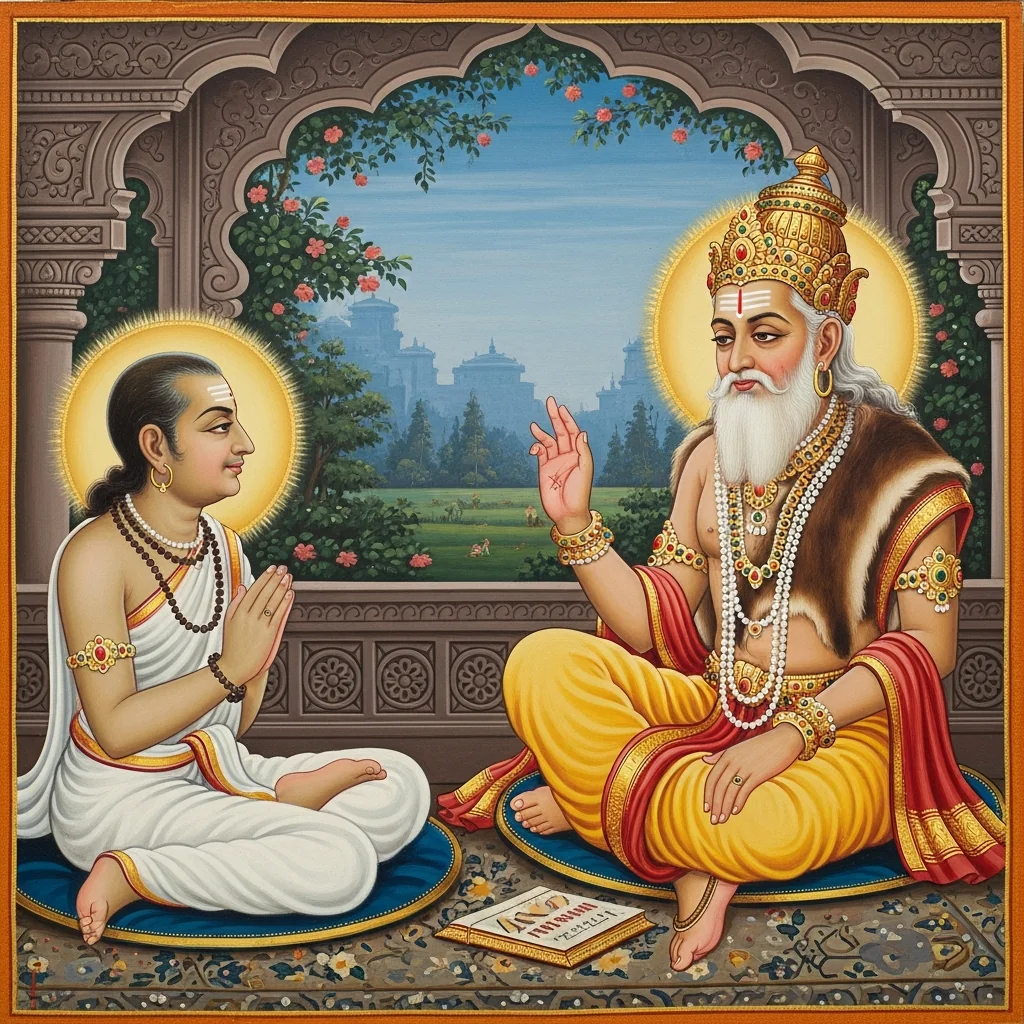
The chapter begins with Agastya seeking further clarification after hearing a purifying account of Mādhava and the greatness of Pañcanada. Skanda replies by conveying Mādhava’s instruction to the sage Agnibindu through the voice of Bindu-Mādhava. A systematic catalogue follows in which Viṣṇu declares his presence in many localized forms (Keśava/Mādhava/Nṛsiṃha and others), each fixed to a particular tīrtha and its merit—steadiness of knowledge (Jñāna-Keśava), protection from māyā (Gopī-Govinda), prosperity (Lakṣmī-Nṛsiṃha), wish-fulfillment (Śeṣa-Mādhava), higher attainments (Hayagrīva-Keśava), and more. The discourse then compares the worth of tīrthas, affirming Kāśī’s unrivaled potency and revealing a “rahasya”: at midday many tīrthas ritually converge at Maṇikarṇikā, with deities, sages, nāgas, and diverse beings portrayed as participating in this noon rite-cycle. Maṇikarṇikā’s efficacy is magnified—minimal acts such as a single prāṇāyāma, one Gāyatrī, or one oblation are said to yield multiplied results. When Agnibindu asks about Maṇikarṇikā’s extent, Viṣṇu gives a broad boundary description using landmarks (the Haricandra precinct, Vināyakas) and introduces adjacent tīrthas with their fruits. The chapter also offers a devotional visualization of Maṇikarṇikā as a goddess with iconographic details, followed by a mantra and a practice outline (japa and homa proportions) aimed at liberation. It continues listing nearby sacred stations (Śiva-liṅgas, tīrthas, protective forms) and ends with a phalaśruti: reciting or hearing the Bindu-Mādhava account with devotion grants bhukti (worldly well-being) and mukti (liberation).
Shlokas
Verse 1
अगस्त्य उवाच । षडास्य माधवाख्यानं श्रुतं मे पापनाशनम् । महिमापि श्रुतः श्रेयान्सम्यक्पंचनदस्य वै
Agastya said: I have heard the sin-destroying account of Ṣaḍāsya and Mādhava; and I have also heard, in due measure, the excellent greatness of Pañcanada.
Verse 2
यदग्निबिंदुना पृच्छि माधवो दैत्यसूदनः । तस्योत्तरं समाख्याहि यथाख्यातं मधुद्विषा
What Agnibindu asked Mādhava, the slayer of the daityas—recount that reply, exactly as it was spoken by the foe of Madhu.
Verse 3
स्कंद उवाच । शृण्वगस्त्य महर्षे त्वं कथ्यमानं मयाधुना । माधवेन यथाचक्षि मुनये चाग्निबिंदवे
Skanda said: Listen, O Agastya, great seer, to what I now relate—exactly as Mādhava declared it to the sage Agnibindu.
Verse 4
बिंदुमाधव उवाच । आदौ पादोदके तीर्थे विद्धि मामादिकेशवम् । अग्निबिंदो महाप्राज्ञ भक्तानां मुक्तिदायकम्
Bindumādhava said: First, at the sacred Pādodaka-tīrtha, know Me as Ādi-keśava—O most wise Agnibindu—bestowing liberation (mokṣa) upon devotees.
Verse 5
अविमुक्तेऽमृते क्षेत्रे येर्चयंत्यादिकेशवम् । तेऽमृतत्वं भजंत्येव सर्वदुःखविवर्जिताः
In Avimukta, the deathless sacred kṣetra, those who worship Ādi-keśava truly attain immortality, freed from every sorrow.
Verse 6
संगमेशं महालिंगं प्रतिष्ठाप्यादिकेशवः । दर्शनादघहं नृणां भुक्तिं मुक्तिं दिशेत्सदा
Having established the great Liṅga known as Saṅgameśa, Ādikeśava ever bestows upon people—by mere darśana—the destruction of sin, along with worldly enjoyment and final liberation.
Verse 7
याम्यां पादोदकाच्छ्वेतद्वीपतीर्थं महत्तरम् । तत्राहं ज्ञानदो नृणां ज्ञानकेशवसंज्ञकः
To the south lies the greatly exalted Śvetadvīpa-tīrtha, born from the water that washed the feet; there I, known as Jñānakeśava, bestow true knowledge upon people.
Verse 8
श्वेतद्वीपे नरः स्नात्वा ज्ञानकेशवसन्निधौ । न ज्ञानाद्भ्रश्यते क्वापि ज्ञानकेशवपूजनात्
A person who bathes at Śvetadvīpa in the presence of Jñānakeśava never falls away from knowledge anywhere—such is the power of worshipping Jñānakeśava.
Verse 9
तार्क्ष्यकेशवनामाहं तार्क्ष्यतीर्थे नरोत्तमैः । पूजनीयः सदा भक्त्या तार्क्ष्य वत्ते प्रिया मम
At Tārkṣya-tīrtha I am known as Tārkṣyakeśava, and there I am ever to be worshipped with bhakti by the best of men; for that Tārkṣya abode is dear to me.
Verse 10
तत्रैव नारदे तीर्थेस्म्यहं नारदकेशवः । ब्रह्मविद्योपदेष्टा च तत्तीर्थाप्लुत वर्ष्मणाम्
There itself, at Nārada-tīrtha, I am Nārada-Keśava; and I become the teacher of Brahma-knowledge for those whose bodies have been bathed in that sacred ford.
Verse 11
प्रह्लादतीर्थं तत्रैव नाम्ना प्रह्लादकेशवः । भक्तैः समर्चनीयोहं महाभक्ति समृद्धये
There also is Prahlāda-tīrtha; there I am called Prahlāda-Keśava. I am to be duly worshipped by devotees, for the flourishing of great devotion.
Verse 12
तीर्थेंऽबरीषे तत्राहं नाम्नैवादित्यकेशवः । पातकध्वांतनिचयं ध्वंसयामीक्षणादपि
At Ambārīṣa-tīrtha, there I am known as Ādityakeśava; and I destroy the amassed darkness of sins—even by a mere glance (darśana).
Verse 13
दत्तात्रेयेश्वराद्याम्यामहमादिगदाधरः । हरामि तत्र भक्तानां संसारगदसंचयम्
To the south of Dattātreyeśvara, I am Ādi-Gaḍādhara; and there I remove from devotees the accumulated illness of worldly existence (saṃsāra).
Verse 14
तत्रैव भार्गवे तीर्थे भृगुकेशव नामतः । काशीनिवासिनः पुंसो बिभर्मि च मनोरथैः
There also, at Bhārgava-tīrtha, I am named Bhṛgukeśava; and I sustain the man who dwells in Kāśī, fulfilling his cherished aims and desires.
Verse 15
वामनाख्येमहातीर्थे मनःप्रार्थितदे शुभे । पूज्योहं शुभमिच्छद्भिर्नाम्ना वामनकेशवः
At the great sacred ford called Vāmana—auspicious and granting what the heart prays for—I am to be worshipped by those who seek good, being known there as Vāmanakeśava.
Verse 16
नरनारायणे तीर्थे नरनारायणात्मकम् । भक्ताः समर्च्य मां स्युर्वै नरनारायणात्मकाः
At the sacred ford called Nara-Nārāyaṇa, I am present in the very form and essence of Nara-Nārāyaṇa. Devotees who worship Me there truly become imbued with the nature of Nara-Nārāyaṇa.
Verse 17
तीर्थे यज्ञवराहाख्ये यज्ञवाराहसंज्ञकः । नरैः समर्चनीयोहं सर्वयज्ञफलेप्सुभिः
At the tīrtha known as Yajña-Varāha, I am famed as Yajña-Vārāha. I am to be worshipped there by people who seek the fruits of all sacrifices.
Verse 18
विदारनरसिंहोहं काशीविघ्नविदारणः । तन्नाम्नि तीर्थे संसेव्यस्तीर्थोपद्रवशांतये
I am Vidāraṇa-Narasiṃha, the remover of obstacles in Kāśī. At the tīrtha that bears this very name, I should be worshipped so that disturbances and afflictions connected with the tīrtha may be pacified.
Verse 19
गोपीगोविंदतीर्थे तु गोपीगोविंदसंज्ञकम् । समर्च्य मां नरो भक्त्या मम मायां न संस्पृशेत्
At the Gopī-Govinda Tīrtha, I am known as Gopī-Govinda. A person who worships Me there with devotion does not come under the touch of My māyā (deluding power).
Verse 20
मुने लक्ष्मीनृसिंहोस्मि तीर्थे तन्नाम्नि पावने । दिशामि भक्तियुक्तेभ्यः सदानैः श्रेयसीं श्रियम्
O sage, at the purifying tīrtha that bears that name, I am Lakṣmī-Narasiṃha. To those joined to bhakti I grant auspicious prosperity, together with enduring gifts and well-being.
Verse 21
शेषमाधवनामाहं शेषतीर्थेऽघहारिणि । विश्राणयाम्यशेषाश्च विशेषान्भक्तचिंतितान्
I am named Śeṣa-Mādhava at the Śeṣa Tīrtha, which removes sin. There I bestow, without remainder, the special blessings devotees cherish in their hearts.
Verse 22
शंखमाधवतीर्थे च स्नात्वा मां शंखमाधवम् । शंखोदकेन संस्नाप्य भवेच्छंखनिधेः पतिः
At the Śaṅkha-Mādhava Tīrtha, having bathed, and having bathed Me—Śaṅkha-Mādhava—with water of the conch, one becomes lord of treasures, like the conch-treasure (Śaṅkha-nidhi).
Verse 23
हयग्रीवे महातीर्थे मां हयग्रीवकेशवम् । प्रणम्य प्राप्नुयान्नूनं तद्विष्णोः परमंपदम्
At the great sacred ford of Hayagrīva, bowing to Me as Hayagrīva-Keśava, one surely attains the supreme abode of that Viṣṇu.
Verse 24
भीष्मकेशवनामाहं वृद्धकालेशपश्चिमे । उपसर्गान्हरे भीष्मान्सेवितो भक्तियुक्तितः
I am named Bhīṣma-Keśava, in the western part near Vṛddha-Kāleśa. When I am worshipped with devoted discipline, I remove dreadful afflictions and calamities.
Verse 25
निर्वाणकेशवश्चाहं भक्तनिर्वाणसूचकः । लोलार्कादुत्तरेभागे लोलत्वं चेतसो हरे
I am Nirvāṇa-Keśava, the revealer of nirvāṇa to devotees. In the region north of Lolārka, I remove the mind’s fickleness and restless agitation.
Verse 26
वंद्यस्त्रिलोकसुंदर्या याम्यां यो मां समर्चयेत् । काश्यां ख्यातं त्रिभुवनकेशवं न स गर्भभाक्
Whoever worships me with devotion in the southern quarter—me whom even Trilokasundarī venerates—at Kāśī’s famed shrine of Tribhuvana-Keśava, does not again enter the womb (is freed from rebirth).
Verse 27
ज्ञानवाप्याः पुरोभागे विद्धि मां ज्ञानमाधवम् । तत्र मां भक्तितोभ्यर्च्य ज्ञानं प्राप्नोति शाश्वतम्
Know me as Jñāna-Mādhava, abiding at the forepart of Jñāna-vāpī. Worshipping me there with devotion, one attains everlasting spiritual knowledge.
Verse 28
श्वेतमाधवसंज्ञोहं विशालाक्ष्याः समीपतः । श्वेतद्वीपेश्वरं रूपं कुर्यां भक्त्या समर्चितः
Near Viśālākṣī I am known as Śveta-Mādhava. When worshipped with devotion, I assume the form of the Lord of Śvetadvīpa.
Verse 29
उदग्दशाश्वमेधान्मां प्रयागाख्यं च माधवम् । प्रयागतीर्थे सुस्नातो दृष्ट्वा पापैः प्रमुच्यते
To the north, beyond Daśāśvamedha, know me as Mādhava called “Prayāga.” Having bathed well at the Prayāga-tīrtha and then beholding me, one is released from sins.
Verse 30
प्रयागगमने पुंसां यत्फलं तपसि श्रुतम् । तत्फलं स्याद्दशगुणमत्र स्नात्वा ममाग्रतः
Whatever fruit tradition declares for people who go to Prayāga, that very fruit becomes tenfold here, by bathing in this sacred place before me.
Verse 31
गंगायमुनयोः संगे यत्पुण्यं स्नानकारिणाम् । काश्यां मत्सन्निधावत्र तत्पुण्यं स्याद्दशोत्तरम्
Whatever merit accrues to those who bathe at the confluence of Gaṅgā and Yamunā, that same merit becomes tenfold here in Kāśī, in my very presence.
Verse 32
दानानि राहुग्रस्तेर्के ददतां यत्फलं भवेत् । कुरुक्षेत्रे हि तत्काश्यामत्रैव स्याद्दशाधिकम्
Whatever fruit may arise from giving gifts when the sun is seized by Rāhu (during an eclipse), that fruit—even at Kurukṣetra—becomes tenfold right here in Kāśī.
Verse 33
गंगोत्तरवहा यत्र यमुना पूर्ववाहिनी । तत्संभेदं नरः प्राप्य मुच्यते ब्रह्महत्यया
Where Gaṅgā flows northward and Yamunā flows eastward, upon reaching that meeting-point a person is freed even from the sin of brahmahatyā, the slaying of a brāhmaṇa.
Verse 34
वपनं तत्र कर्तव्यं पिंडदानं च भावतः । देयानि तत्र दानानि महाफलमभीप्सुना
There one should perform vapanam (ritual tonsure) and, with sincere intent, offer piṇḍa-oblations; and one who seeks great fruit should give gifts there.
Verse 35
गुणाः प्रजापतिक्षेत्रे ये सर्वे समुदीरिताः । अविमुक्ते महाक्षेत्रेऽसंख्याताश्च भवंति हि
All the excellences proclaimed for Prajāpati’s sacred field—indeed, in Avimukta, the great holy region of Kāśī—they become countless.
Verse 36
प्रयागेशं महालिंगं तत्र तिष्ठति कामदम् । तत्सान्निध्याच्च तत्तीर्थं कामदं परिकीर्तितम्
There stands the great Liṅga known as Prayāgeśa, the bestower of desired boons. And by its holy proximity, that very tīrtha is celebrated as Kāmada, “the wish-fulfilling.”
Verse 37
काश्यां माघः प्रयागे यैर्न स्नातो मकरार्कगः । अरुणोदयमासाद्य तेषां निःश्रेयसं कुतः
How can final blessedness come to those who, in the month of Māgha when the Sun is in Makara, have not taken the sacred dawn-bath at Prayāga, even though the hour of sunrise has arrived?
Verse 38
काश्युद्भवे प्रयागे ये तपसि स्नांति संयताः । दशाश्वमेधजनितं फलं तेषां भवेद्ध्रुवम्
Those disciplined ones who bathe at Tapas-tīrtha in Prayāga—born of Kāśī—surely obtain the fruit that arises from ten Aśvamedha sacrifices.
Verse 39
प्रयागमाधवं भक्त्या प्रयागेशं च कामदम् । प्रयागे तपसि स्नात्वा येर्चयंत्यन्वहं सदा
Those who, after bathing at Tapas-tīrtha in Prayāga, worship with devotion every day without fail both Prayāga-Mādhava and Prayāgeśa, the wish-bestower Kāmada,
Verse 40
धनधान्यसुतर्द्धीस्ते लब्ध्वा भोगान्मनोरमान् । भुक्त्वेह परमानंदं परं मोक्षमवाप्नुयुः
They obtain wealth, grain, children, and prosperity; and having enjoyed here delightful worldly comforts, they finally attain supreme bliss and the highest liberation (mokṣa).
Verse 41
माघे सर्वाणि तीर्थानि प्रयागमवियांति हि । प्राच्युदीची प्रतीचीतो दक्षिणाधस्तथोर्ध्वतः
In the month of Māgha, all sacred fords (tīrthas) indeed come to Prayāga—from the east, the north, the west, from the south, from below, and from above.
Verse 42
काशीस्थितानि तीर्थानि मुने यांति न कुत्रचित् । यदि यांति तदा यांति तीर्थत्रयमनुत्तमम्
O sage, the tīrthas that abide in Kāśī do not go anywhere at all. If they ever do go, then they go only to the unsurpassed triad of tīrthas.
Verse 43
आयांत्यूर्जे पंचनदे प्रातःप्रातर्ममांतिकम् । महाघौघप्रशमने महाश्रेयोविधायिनि
In Ūrja (Kārttika), at Pañcanada, they come to me morning after morning—to that place which quells torrents of great sins and bestows the highest welfare.
Verse 44
प्राप्य माघमघारिं च प्रयागेश समीपतः । प्रातःप्रयागे संस्नांति सर्वतीर्थानि मामनु
When Māgha arrives—the enemy of sin—near Prayāgeśa, all tīrthas, following me, bathe in Prayāga at dawn.
Verse 45
समासाद्य च मध्याह्नमभियांति च नित्यशः । संस्नातुं सर्वतीर्थानि मुक्तिदां मणिकर्णिकाम्
When midday arrives, all the tīrthas come each day to bathe in Maṇikarṇikā, the bestower of mokṣa, liberation.
Verse 46
काश्यां रहस्यं परममेतत्ते कथितं मुने । यथा तीर्थत्रयीश्रेष्ठा स्वस्वकाले विशेषतः
O sage, I have told you this supreme secret concerning Kāśī: how the foremost of the triad of tīrthas becomes especially pre-eminent, each in its own appointed time.
Verse 47
अन्यद्रहस्यं वक्ष्यामि न वाच्यं यत्रकुत्रचित् । अभक्तेषु सदा गोप्यं न गोप्यं भक्तिमज्जने
I shall declare another secret—one that should not be spoken just anywhere. It must always be concealed from the faithless, but it is not to be concealed from one immersed in devotion.
Verse 48
काश्यां सर्वाणि तीर्थानि एकैकादुत्तरोत्तरम् । महैनांसि प्रहंत्येव प्रसह्य निज तेजसा
In Kāśī, all the tīrthas—each surpassing the one before—truly strike down even great sins, forcibly, by their own innate spiritual splendor.
Verse 49
एतदेव रहस्यं ते वाराणस्या उदीर्यते । उत्क्षिप्यैकांगुलिं तथ्यं श्रेष्ठैका मणिकर्णिका
This very secret of Vārāṇasī is proclaimed to you: as though raising a single finger to affirm the truth—Maṇikarṇikā alone is the supreme one.
Verse 50
गर्जंति सर्वतीर्थानि स्वस्वधिष्ण्यगतान्यहो । केवलं बलमासाद्य सुमहन्माणिकर्णिकम्
All the tīrthas, abiding in their own seats, roar aloud—marveling that they draw their strength solely from the exceedingly great Maṇikarṇikā.
Verse 51
पापानि पापिनां हत्वा महांत्यपि बहून्यपि । काशीतीर्थानि मध्याह्ने प्रायश्चित्तचिकीर्षया
Having destroyed the sins of sinners—even many and great—Kāśī’s tīrthas are approached at midday by those who long to perform expiation (prāyaścitta).
Verse 52
पर्वस्वपर्वस्वपि वा नित्यं नियमवं त्यहो । निर्मलानि भवंत्येव विगाह्य मणिकर्णिकाम्
Whether on festival days or on ordinary days, indeed—one who lives in daily discipline becomes purified simply by immersing in Maṇikarṇikā.
Verse 53
विश्वेशो विश्वया सार्धं सदोपमणिकर्णिकम् । मध्यंदिनं समासाद्य संस्नाति प्रतिवासरम्
Viśveśa, together with Viśvā, ever draws near to Maṇikarṇikā; when midday arrives, he bathes there day after day.
Verse 54
वैकुंठादप्यहं नित्यं मध्याह्ने मणिकर्णिकाम् । विगाहे पद्मया सार्धं मुदा परमया मुने
O sage, even from Vaikuṇṭha I come each day at midday; and with Padmā I joyfully immerse in Maṇikarṇikā, in the highest delight.
Verse 55
सकृन्ममाख्यां गृणतां निर्हरन्यदघान्यहम् । हरिनामसमापन्नस्तद्बलान्माणिकर्णिकात्
For those who utter my Name even once, I remove their sins. Endowed with the power of Hari’s holy Name, this grace arises from the might of Maṇikarṇikā.
Verse 56
सत्यलोकात्प्रतिदिनं हं सयानः पितामहः । माध्याह्निक विधानाय समायान्मणिकर्णिकाम्
Every day, Pitāmaha (Brahmā), riding upon the swan, comes from Satyaloka to Maṇikarṇikā to perform the prescribed midday rites.
Verse 57
इंद्राद्या लोकपालाश्च मरीच्याद्या महर्षयः । माध्याह्निकीं क्रियां कर्तुं समीयुर्मणिकर्णिकाम्
Indra and the other guardians of the worlds, and the great sages beginning with Marīci, assemble at Maṇikarṇikā to perform the midday rite.
Verse 58
शेषवासुकिमुख्याश्च नागा वै नागलोकतः । समायांतीह मध्याह्ने संस्नातुं मणिकर्णिकाम्
From Nāgaloka, the Nāgas—chiefly Śeṣa and Vāsuki—also come here at midday to bathe at Maṇikarṇikā.
Verse 59
चराचरेषु सर्वेषु यावंतश्च सचेतनाः । तावंतः स्नांति मध्याह्ने मणिकर्णी जलेमले
Among all moving and unmoving beings, as many as there are endowed with awareness—so many bathe at midday in the stainless waters of Maṇikarṇī (Maṇikarṇikā).
Verse 60
के माणिकर्णिकेयानां गुणानां सुगरीयसाम् । शक्ता वर्णयितुं विप्राऽसंख्येयानां मदादिभिः
O brāhmaṇas, who could ever describe the excellences of Maṇikarṇikā—supremely weighty, celebrated in greatness, and beyond all number?
Verse 61
चीर्णान्युग्राण्यरण्येषु तैस्तपांसि तपोधनैः । यैरियं हि समासादि मुक्तिभूर्मणिकर्णिका
In the forests, those wealthy in tapas performed fierce austerities; by them indeed was attained this Maṇikarṇikā, this very “ground of liberation.”
Verse 62
विश्राणितमहादानास्त एव नरपुंगवाः । चरमे वयसि प्राप्ता यैरेषा मणिकर्णिका
Those very best of men—who have bestowed great dānas—are the ones who reach this Maṇikarṇikā in the final stage of life.
Verse 63
चीर्णसर्वव्रतास्ते तु यथोक्तविधिना ध्रुवम् । यैः स्वतल्पीकृता माणिकर्णिकेयी स्थली मृदुः
Surely they are the ones who have observed every vrata according to the prescribed rule—those who have made the soft ground of Maṇikarṇikā their own humble bed.
Verse 64
त एव धन्या मर्त्येस्मिन्सर्वक्रतुषु दीक्षिताः । त्यक्त्वा पुण्यार्जितां लक्ष्मीमैक्षियैर्मणिकर्णिका
They alone are blessed in this mortal world—consecrated in all yajñas—who, abandoning wealth earned through merit, behold Maṇikarṇikā as their supreme refuge.
Verse 65
कृता नानाविधा धर्मा इष्टापूर्तास्तु तैर्नृभिः । वार्धकं समनुप्राप्य प्रापि यैर्मणिकर्णिका
Those men who have practiced many forms of dharma—especially the meritorious works of iṣṭa and pūrta—upon reaching old age attain Maṇikarṇikā.
Verse 66
रत्नानि सदुकूलानि कांचनं गजवाजिनः । देयाः प्राज्ञेन यत्नेन सदोपमणिकर्णिकम्
At the incomparable Maṇikarṇikā, a wise person should earnestly give in charity jewels, fine garments, gold, elephants, and horses.
Verse 67
पुण्येनोपार्जितं द्रव्यमत्यल्पमपि यैर्नरैः । दत्तं तदक्षयं नित्यं मुनेधिमणिकणिंकम्
Even if it is very little, whatever wealth people have acquired through righteous merit—when given there—becomes inexhaustible and everlasting, O sage, at Maṇikarṇikā.
Verse 68
कुर्याद्यथोक्तमप्येकं प्राणायामं नरोत्तमः । यस्तेन विहितो नूनं षडंगो योग उत्तमः
Even by performing a single prāṇāyāma exactly as prescribed, O best of men, by that alone one surely accomplishes the excellent six-limbed yoga.
Verse 69
जप्त्वैकामपि गायत्रीं संप्राप्य मणिकर्णिकाम् । लभेदयुतगायत्रीजपनस्य फलं स्फुटम्
Having reached Maṇikarṇikā, even by chanting the Gāyatrī just once, one clearly obtains the fruit of chanting it ten thousand times.
Verse 70
एकामप्याहुतिं प्राज्ञो दत्त्वोपमणिकर्णिकम् । यावज्जीवाग्निहोत्रस्य लभेदविकलं फलम्
At the incomparable Maṇikarṇikā, a wise person who offers even a single oblation attains the undiminished fruit of sustaining the Agnihotra for a lifetime.
Verse 71
इति श्रुत्वा हरेर्वाक्यमग्निबिंदुर्महातपाः । प्रणिपत्य महाभक्त्या पुनः पप्रच्छ माधवम्
Having heard Hari’s words, the great ascetic Agnibindu bowed down in deep devotion and again questioned Mādhava.
Verse 72
अग्निबिंदुरुवाच । विष्णो कियत्परीमाणा पुण्यैषा मणिकर्णिका । ब्रूहि मे पुंङरीकाक्ष नत्वत्तस्तत्त्ववित्परः
Agnibindu said: O Viṣṇu, what is the extent of this supremely meritorious Maṇikarṇikā? Tell me, O Lotus-eyed One—for none is a higher knower of truth than You.
Verse 73
श्रीविष्णुरुवाच । आगंगा केशवादा च हरिश्चंद्रस्य मंडपात् । आमध्याद्देवसरितः स्वर्द्वारान्मणिकर्णिका
Śrī Viṣṇu said: Maṇikarṇikā extends from Āgaṅgā and Keśava, from Hariścandra’s pavilion, from the middle of the divine river, and from Svargadvāra.
Verse 74
स्थूलमेतत्परीमाणं सूक्ष्मं च प्रवदामि ते । हरिश्चंद्रस्य तीर्थाग्रे हरिश्चंद्रविनायकः
This is its broad extent; now I shall also tell you the subtle, inner measure. At the forefront of Hariścandra’s tīrtha stands Hariścandra Vināyaka.
Verse 75
सीमाविनायकश्चात्र मणिकर्णी ह्रदोत्तरे । सीमाविनायकं भक्त्या पूजयित्वा नरोत्तमः
Here too is Sīmā‑Vināyaka, to the north of the Maṇikarṇī pool. Having worshiped Sīmā‑Vināyaka with devotion, O best of men…
Verse 76
मोदकैः सोपचारैश्च प्राप्नुयान्मणिकर्णिकाम् । हरिश्चंद्रे महातीर्थे तर्पयेयुः पितामहान्
With modakas and with the proper ritual offerings (upacāras), one should proceed to Maṇikarṇikā. At the great sacred ford of Hariścandra, one should perform tarpaṇa and satisfy the forefathers.
Verse 77
शतं समाःसु तृप्ताः स्युः प्रयच्छंति च वांच्छितम् । हरिश्चंद्रे महातीर्थे स्नात्वा श्रद्धान्वितो नरः
For a hundred years they remain satisfied and also grant what is desired—such is the fruit for a man who, endowed with faith, bathes at the great sacred ford of Hariścandra.
Verse 78
हरिश्चंद्रेश्वरं नत्वा न सत्यात्परिहीयते । ततः पर्वततीर्थं च पर्वतेश्वर संनिधौ
Having bowed to Hariścandreśvara, one does not fall away from truth. Thereafter is the Parvata‑tīrtha, in the presence of Parvateśvara.
Verse 79
अधिष्ठानं महामेरोर्महापातकनाशनम् । तत्र स्नात्वार्चयित्वेशं किंचिद्दत्त्वा स्वशक्तितः
It is the very seat of great Meru, a destroyer of great sins. Having bathed there, worshipped the Lord, and given something according to one’s means—
Verse 80
अध्यास्य मेरुशिखरं दिव्यान्भोगान्समश्नुते । कंबलाश्वतरं तीर्थं पर्वतेश्वर दक्षिणे
Seated upon the summit of Meru, one partakes of divine delights. (Next is) the tīrtha called Kambalāśvatara, to the south of Parvateśvara.
Verse 81
कंबलाश्वतरेशं च तत्तीर्थात्पश्चिमे शुभम् । तस्मिंस्तीर्थे कृतस्नानस्तल्लिंगं यः समर्चयेत्
And (there is) Kambalāśvatareśa, auspicious, to the west of that tīrtha. Whoever bathes at that tīrtha and duly worships that liṅga—
Verse 82
अपि तस्य कुले जाता गीतज्ञाः स्युः श्रियान्विताः । चक्रपुष्करिणी तत्र योनिचक्र निवारिणी
Even those born in his lineage become skilled in song and endowed with prosperity. There, too, is Cakrapuṣkariṇī, the remover of the ‘cycle of birth’ (yoni-cakra).
Verse 83
संसारचक्रे गहने यत्र स्नातो विशेन्नना । चक्रपुष्करिणी तीर्थ ममाधिष्ठानमुत्तमम्
In the dense and difficult wheel of saṃsāra, one who bathes there enters the saving path without fail. The tīrtha of Cakrapuṣkariṇī is my supreme seat (adhiṣṭhāna).
Verse 84
समाः परार्धसंख्यातास्तत्र तप्तं महातपः । तत्र प्रत्यक्षतां यातो मम विश्वेश्वरः परः
For years numbering a parārdha, great austerity (tapas) was practiced there. There my transcendent Viśveśvara came into direct manifestation.
Verse 85
तत्र लब्धं मयैश्वर्यमविनाशि महत्तरम् । चक्रपुष्करिणी चैव ख्याताभून्मणिकर्णिका
There I obtained a far greater, imperishable sovereignty. And that very Cakrapuṣkariṇī became renowned as Maṇikarṇikā.
Verse 86
द्रवरूपं परित्यज्य ललनारूपधारिणी । प्रत्यक्षरूपिणी तत्र मयैक्षि मणिकर्णिका
Abandoning her fluid (watery) form and assuming the form of a maiden, Maṇikarṇikā—manifest in a visible, direct form—was beheld there by me.
Verse 87
तस्या रूपं प्रवक्ष्यामि भक्तानां शुभदं परम् । यद्रूपध्यानतः पुंभिराषण्मासं त्रिसंध्यतः
I shall declare her form—supremely auspicious for devotees—by meditating on which, a person for six months, at the three daily junctures, attains blessedness.
Verse 88
प्रत्यक्षरूपिणी देवी दृश्यते मणिकर्णिका । चतुर्भुजा विशालाक्षी स्फुरद्भालविलोचना
The goddess Maṇikarṇikā is seen in a direct, manifest form—four-armed, wide-eyed, with a radiant eye upon her forehead.
Verse 89
पश्चिमाभिमुखी नित्यं प्रबद्धकरसंपुटा । इंदीवरवतीं मालां दधती दक्षिणे करे
Ever facing west, with her hands held in a joined, cupped gesture, she bears in her right hand a garland rich with blue lotuses.
Verse 90
वरोद्यते करे सव्ये मातुलुंग फलं शुभम् । कुमारीरूपिणी नित्यं नित्यं द्वादशवार्षिकी
In her left hand she displays the boon-bestowing gesture, together with an auspicious citron fruit; ever she abides in the form of a maiden—perpetually twelve years of age.
Verse 91
शुद्धस्फटिककांतिश्च सुनील स्निग्धमूर्द्धजा । जितप्रवालमाणिक्य रमणीय रदच्छदा
Her lustre is like pure crystal; her hair is glossy and deep-blue; her lovely lips surpass coral and ruby in radiance.
Verse 92
प्रत्यग्रकेतकीपुष्पलसद्धम्मिल्ल मस्तका । सर्वांग मुक्ताभरणा चंद्रकांत्यंशुकावृता
With her head adorned by a shining braid crowned with fresh ketakī blossoms, her whole body decked in pearls, she is clad in garments gleaming with moon-like splendour.
Verse 93
पुंडरीकमयीं मालां सश्रीकां बिभ्रती हृदि । ध्यातव्यानेन रूपेण मुमुक्षुभिरहर्निशम्
Wearing upon her heart a splendid garland made of white lotuses, she should be meditated upon in this very form by seekers of liberation—day and night.
Verse 94
निर्वाणलक्ष्मीभवनं श्रीमतीमणिकर्णिका । मंत्रं तस्याश्च वक्ष्यामि भक्तकल्पद्रुमाभिधम् । यस्यावर्तनतः सिद्ध्येदपि सिद्ध्यष्टकं नृणाम्
Glorious Maṇikarṇikā is the very abode of the prosperity of nirvāṇa, final release. I shall also teach her mantra, known as the “Wish-fulfilling Tree for Devotees”; by its repetition, even the eightfold attainments (siddhis) arise for human beings.
Verse 95
वाग्भवमायालक्ष्मीमदनप्रणवान्वदेत्पूर्वम् । भांत्यं बिंदूपेतं मणिपदमथ कर्णिके सहृत्प्रणवपुटः
First one should utter the seed-syllables—Vāgbhava, Māyā, Lakṣmī, and Madana—together with the Praṇava. Then one should utter “bhāṃ” endowed with the bindu, followed by the word “maṇi”; and then “karṇike”, enclosed by the Praṇava joined with “hṛt”.
Verse 96
मंत्रःसुरद्रुमसमः समस्तसुखसंततिप्रदो जप्यः । तिथिभिः परिमितवर्णः परमपदं दिशति निशितधियाम्
This mantra is like a wish-fulfilling divine tree: it bestows an unbroken succession of all joys and is to be recited in japa. Its syllables are measured according to the lunar dates (tithis); for those of keen understanding, it grants the supreme state.
Verse 97
तारस्तारतृतीयो बिंद्वंतोमणिपदं ततः कर्णिके । प्रणवात्मिपदं केन म इति मनुसंख्यवर्णमनुः
The mantra is formed with “tāra” and a third “tāra”; it ends with the bindu, and then comes the word “maṇi”, placed in the lotus’ pericarp (karṇikā). It has the Praṇava as its essence; joined with “kena” and the syllable “ma”, it is a mantra whose letters are counted in the prescribed manner.
Verse 98
अयं मंत्रोऽनिशं जप्यः पुंभिर्मुक्तिमभीप्सुभिः । होमो दशांशकः कार्यः श्रद्धाबद्धादरैर्नृभिः
This mantra should be recited continually by those who desire liberation (mokṣa). A fire-offering (homa) amounting to one-tenth of the japa count should be performed by people whose reverence is bound with faith.
Verse 99
परिप्लुतैः पुंडरीकैर्गव्येन हविषास्फुटैः । सशर्करेण मेधावी सक्षौद्रेण सदाशुचिः
Using fully-bloomed white lotuses, along with clarified cow-ghee as the pure oblation—mixed with sugar and with honey—the wise practitioner, ever clean, should perform the offering.
Verse 100
त्रिलक्षमंत्र जप्येन मृतो देशांतरेष्वपि । अवश्यं मुक्तिमाप्नोति मंत्रस्यास्य प्रभावतः
Even if one dies in another land, having completed the recitation of this mantra three hundred thousand times, one surely attains liberation—such is the power of this mantra.
Verse 110
पूजयित्वा पशुपतिमुपोषणपरायणाः । पशुपाशैर्न बध्यंते दर्शे विहितपारणाः
Those who worship Paśupati and are devoted to fasting are not bound by the bonds that bind creatures. Observing the prescribed breaking of the fast on the new-moon day (darśa), they become free from Paśupati’s fetters.
Verse 120
तत्राभ्याशे स्कंदतीर्थं तत्राप्लुत्य नरोत्तमः । दृष्ट्वा षडाननं चैव जह्यात्षाट्कौशिकीं तनुम्
Nearby there is the sacred Skanda-tīrtha. Having bathed there, the best of men—upon beholding Ṣaḍānana (six-faced Skanda)—casts off the body shaped by Kuśikā’s sixfold sheath, the sixfold limiting condition.
Verse 130
योगक्षेमं सदा कुर्याद्भवानी काशिवासिनाम् । तस्माद्भवानी संसेव्या सततं काशिवासिभिः
Bhavānī ever ensures the yoga-kṣema—welfare and security—of those who dwell in Kāśī. Therefore Bhavānī should be continually honored and served by the residents of Kāśī.
Verse 140
ज्ञानतीर्थं च तत्रैव ज्ञानदं सवर्दा नृणाम् । कृताभिषेकस्तत्तीर्थे दृष्ट्वा ज्ञानेश्वरं शिवम्
There itself is the Jñāna-tīrtha, ever bestowing spiritual knowledge upon people. Having performed ablution at that tīrtha and beholding Śiva as Jñāneśvara, one receives the gift of wisdom.
Verse 150
पितामहेश्वरं लिंगं ब्रह्मनालोपरिस्थितम् । पूजयित्वा नरो भक्त्या ब्रह्मलोकमवाप्नुयात्
Worshipping with devotion the liṅga of Pitāmaheśvara, situated above the Brahma-nāla, a person attains Brahmā’s world (Brahmaloka).
Verse 160
तत्र भागीरथे तीर्थे श्राद्धं कृत्वा विधानतः । ब्राह्मणान्भोजयित्वा तु ब्रह्मलोके नयेत्पितॄन्
There, at the Bhāgīratha Tīrtha, having duly performed śrāddha according to rule and then feeding the Brāhmaṇas, one leads one’s ancestors to the world of Brahmā.
Verse 170
मार्कंडेयेश्वरात्प्राच्यां वसिष्ठेश्वर पूजनात् । निष्पापो जायते मर्त्यो महत्पुण्यमवाप्नुयात्
To the east of Mārkaṇḍeyeśvara, by worshipping Vasiṣṭheśvara, a mortal becomes free from sin and attains great merit.
Verse 180
दक्षिणेऽगस्त्यतीर्थाच्च तीर्थमस्त्यतिपावनम् । गंगाकेशवसंज्ञं च सर्वपातकनाशनम्
To the south of Agastya Tīrtha there is another exceedingly purifying sacred ford, known as Gaṅgākeśava, which destroys all sins.
Verse 190
प्रचंडनरसिंहोहं चंडभैरवपूर्वतः । प्रचंडमप्यघं कृत्वा निष्पाप्मा स्यात्तदर्चनात्
“I am Pracaṇḍa Narasiṃha,” situated to the east of Caṇḍa Bhairava. Even if one has committed terrible sin, by worshipping him one becomes free from sin.
Verse 200
त्रिविक्रमोस्म्यहं काश्यामुदीच्यां च त्रिलोचनात् । ददामि पूजितो लक्ष्मीं हरामि वृजिनान्यपि
I am Trivikrama in Kāśī, to the north of Trilocana. When worshipped, I bestow prosperity and also remove misfortunes and sins.
Verse 210
नारायणस्वरूपेण गणाश्चक्रगदोद्यताः । कुर्वंति रक्षां क्षेत्रस्य परितो नियुतानि षट्
In the form of Nārāyaṇa, the gaṇas—armed with discus and mace—protect the sacred region on all sides, numbering six niyutas.
Verse 220
वामनः शंखचक्राब्जगदाभिरुपलक्षितः । लक्ष्मीवंतं जनं कुर्याद्गृहेपि परिधारितः
Vāmana, distinguished by conch, discus, lotus, and mace—even when reverently kept in one’s home—makes a person prosperous.
Verse 230
वासुदेवश्च शंखारि गदाजलजभृत्सदा । शंखांबुज गदाचक्री ध्येयो नारायणो नृभिः
Vāsudeva—ever bearing conch, discus, mace, and lotus—Nārāyaṇa endowed with conch, lotus, mace, and discus, is to be meditated upon by men.
Verse 240
प्रणम्य दूरादपिच संप्रहृष्टतनूरुहः । अभ्युत्थातुं मनश्चक्रे शंखचक्रगदाधरः
Having bowed even from afar, his body-hairs bristling with joy, the bearer of conch, discus, and mace resolved in his mind to rise in welcome.
Verse 250
पठितव्यः प्रयत्नेन बिंदुमाधवसंभवः । श्रोतव्यः परया भक्त्या भुक्तिमुक्तिसमृद्धये
This account connected with Bindumādhava should be read with earnest effort and heard with supreme devotion, for the flourishing of both worldly enjoyment and liberation.
Verse 251
संप्राप्ते वासरे विष्णो रात्रौ जागरणान्वितः । श्रुत्वाख्यानमिदं पुण्यं वैकुंठे वसतिं लभेत्
When the sacred day of Viṣṇu arrives, one who keeps vigil through the night and listens to this meritorious narrative attains residence in Vaikuṇṭha.