Adhyaya 9
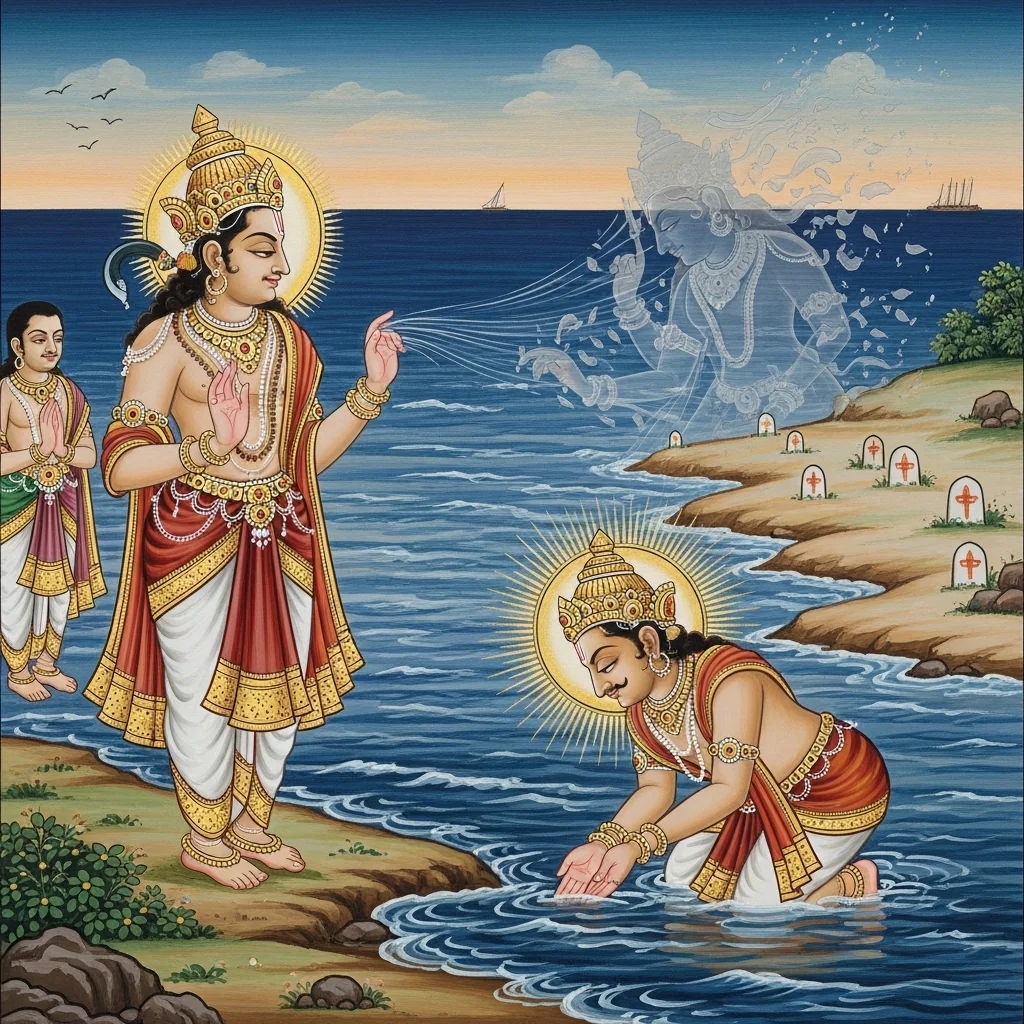
This adhyāya weaves moral exempla with the revelation of a sacred tīrtha. The grieving brāhmaṇa Govindasvāmin is sheltered by the compassionate merchant Samudradatta, while his son Aśokadatta matures into an extraordinary figure trained in both śāstra and martial skill. The Kāśī king Pratāpamukuṭa then recruits Aśokadatta to defeat a formidable southern wrestler‑king, establishing the hero’s public renown and royal favor. Later, the king and Aśokadatta hear the plea of an impaled man tormented by thirst; the king commands that water be given, presenting compassion as a royal ethical duty. At the cremation ground (śmaśāna), thronged with bhūtas, vetālas, and piśācas, Aśokadatta meets a striking woman who claims to be the victim’s beloved and asks him to offer his shoulder so she may reach him. Sensing predatory intent, Aśokadatta seizes her jeweled anklet (nūpura) and reports the eerie encounter; he is honored and granted a marriage alliance with Madanalekhā. When the king desires a matching anklet, Aśokadatta returns to the śmaśāna, uses bait (offering “great meat”) to draw out the rākṣasī, and obtains a second anklet and a second bride, Vidyutprabhā, along with a golden lotus (hemāmbuja) linked to a divine lake. Guided to the lake associated with the vetāla‑king Kapālavisphoṭa, he battles hostile beings until the Vidyādhara lord Vijñaptikautuka intervenes, revealing the curse‑chain: Aśokadatta’s brother Sukarṇa became a vetāla through a transgressive contact, and Aśokadatta’s own condition is bound up with that cursed participation. The remedy is disclosed as a supreme tīrtha near Chakratīrtha on the southern ocean shore. On arrival, mere wind‑borne droplets free Sukarṇa from the vetāla state; Aśokadatta then bathes with saṅkalpa and attains a divine form. The chapter ends by naming the site Vetalavaradā, proclaiming its extraordinary efficacy, prescribing regulated rites such as piṇḍadāna for ancestors, and concluding with a phalaśruti that promises release to readers and listeners.
Shlokas
Verse 1
ततः स विप्रः प्रत्यूषे पुत्रशोकेन पीडितः । अशोक दत्तसंयुक्तो भार्यया विललाप ह
Then, at dawn, that brāhmaṇa—tormented by grief for his son—lamented with his wife, with Aśokadatta by their side.
Verse 2
विलपंतं समालोक्य गोविंदस्वामिनं द्विजाः । वणिक्समुद्रदत्ताख्यः समानिन्ये निजं गृहम्
Seeing the brāhmaṇa Govindasvāmin lamenting, a merchant named Samudradatta brought him to his own home.
Verse 3
समानीय समाश्वास्य दयायुक्तो वणिग्वरः । स्वधनानां हि सर्वेषां रक्षितारमकल्पयत्
Having brought him in and consoled him, that compassionate best of merchants appointed him as the guardian of all his wealth.
Verse 4
स्मरन्महायतिवचः पुत्रदर्शनलालसः । स तस्थौ वणिजो गेहे पुत्रभार्यासमन्वितः
Remembering the words of the great ascetic and yearning to behold his son, he stayed in the merchant’s house together with his wife.
Verse 5
अशोकदत्तनामा तु द्वितीयो विप्रनंदनः । शस्त्रे चैव तथा शास्त्रे बभूवातिविचक्षणः
The brāhmaṇa’s second son, named Aśokadatta, became exceedingly skilled both in weapons and in the sacred sciences.
Verse 6
तथान्यास्वपि विद्यासु नास्ति तत्सदृशो भुवि । कृतविद्यो द्विजसुतः प्रख्यातो नगरेऽभवत्
In other branches of knowledge too, there was none on earth equal to him; that accomplished brāhmaṇa’s son became renowned in the city.
Verse 7
अत्रांतरे नरपतिं प्रतापमुकुटाभिधम् । काशीदेशाधिपो मल्लः कश्चिदभ्याययौ बली
Meanwhile, a powerful malla—some ruler of the land of Kāśī—marched against the king named Pratāpamukuṭa.
Verse 8
प्रतापमुकुटो राजा मल्लस्यास्य जयाय सः । बलिनं द्विजपुत्रं तमाह्वयामास भृत्यकैः
King Pratāpamukuṭa, seeking victory over that wrestler, summoned that strong brāhmaṇa’s son through his attendants.
Verse 9
तमागतं समालोक्य प्रतापमुकुटोऽब्रवीत् । अशोकदत्त सहसा मल्लमेनं बलोत्कटम्
Seeing him approach, King Pratāpamukuṭa spoke at once: “Aśokadatta! Strike down this wrestler, mighty in brute strength.”
Verse 10
दुर्जयं जहि संग्रामे त्वं वै वलवतां वरः । दाक्षिणात्यमहामल्लपतावस्मिञ्जिते त्वया
“Slay the hard-to-conquer foe in battle—you are indeed the best among the strong. If this lord of the great southern wrestlers is defeated by you…”
Verse 11
यदिष्टं तव तत्सर्वं दास्याम्यहं न संशयः । इति तस्य वचः श्रुत्वा वलवान्द्विजनंदनः
“Whatever you desire, all that I shall grant—no doubt of it.” Hearing these words of his, the strong son of a brāhmaṇa…
Verse 12
दाक्षिणात्यमहामल्लनृपतिं समताडयत् । ताडितो द्विजपुत्रेण मल्लः स बलिना बली
He struck the king who led the great southern wrestlers. Struck by the brāhmaṇa’s son, that wrestler—though himself powerful—was overcome by a stronger might.
Verse 13
सद्यो विवृत्तनयनः परासुर्न्यपतद्भुवि । द्विज पुत्रस्य तत्कर्म देवैरपि सुदुष्करम्
At once, with eyes rolled back and life departed, he fell to the ground. That deed of the brāhmaṇa’s son was exceedingly difficult even for the gods to accomplish.
Verse 14
प्रतापमुकुटो दृष्ट्वा प्रसन्नहृदयोऽभवत् । दत्त्वा वहुधनान्ग्रामान्समीपेऽस्थापयत्तदा
Seeing this, Pratāpamukuṭa became glad at heart. Then, having bestowed many prosperous villages, he settled him nearby.
Verse 15
स कदाचिन्महाराज सहितो द्विजसूनुना । संध्यायां विजने देशे चचार तुरगेण वै
Once, that great king, accompanied by the brāhmaṇa’s son, rode on horseback at twilight through a lonely place.
Verse 16
द्विजसूनुसखस्तत्र दीनां वाणीमथाशृणोत् । राजन्नल्पापराधोऽहं शत्रुप्रेरणयासकृत्
There, the companion of the brāhmaṇa’s son heard a pitiable voice: “O King, my offense is slight—I erred but once, urged on by an enemy.”
Verse 17
दण्डपालेन निहितः शूले निर्घृणचेतसा । दिनमद्य चतुर्थं मे शूलस्थस्यैव जीवतः
“A cruel-minded executioner has impaled me upon a stake. Today is the fourth day that I have remained alive, fixed upon this stake.”
Verse 18
प्राणाः सुखेन निर्यांति न हि दुष्कृतकर्मणाम् । भृशं मां बाधते तृष्णा तां निवारय भूपते
“For those who have done evil deeds, the life-breath does not depart easily. Fierce thirst torments me—O King, relieve it.”
Verse 19
इति दीनां समाकर्ण्य वाचं राजा द्विजा त्मजम् । अशोकदत्तनामानं धैर्यवंतमभाषत
Hearing those distressed words, the king addressed the Brāhmaṇa’s son—Aśokadatta by name—steadfast and courageous.
Verse 20
अस्मै निरपराधाय शूलप्रोताय जंतवे । तृष्णार्दिताय दातव्यं द्विजसूनो त्वया जलम्
‘To this blameless creature, impaled upon the stake and tormented by thirst—O Brāhmaṇa’s son—you must give water.’
Verse 21
इत्यादिष्टो नरेन्द्रेण सहसा द्विजनन्दनः । जलपूर्णं समादाय कलशं वेगवान्ययौ
Thus commanded by the king, the Brāhmaṇa’s son at once took up a water-filled pitcher and hurried away.
Verse 22
तच्छ्मशानं समासाद्य भूतवेतालसंकुलम् । शूलप्रोताय वै तस्मै जलं दातुं समुत्सुकः
Reaching that cremation-ground—crowded with spirits and vetālas—he was eager indeed to give water to the one impaled on the stake.
Verse 23
ददर्शाथ स्थितां नारीं नवयौवनशालिनीम् । उदैक्षत महाकांतिं मूर्तामिव रतिं द्विजः
Then the Brāhmaṇa youth saw a woman standing there, radiant with fresh youth; he beheld her great splendor, as though Rati herself had taken bodily form.
Verse 24
तामालोक्य ततः प्राह धैर्यवान्द्विजनंदनः । कासि भद्रे वरारोहे श्मशाने विजने स्थिता
Seeing her, the steadfast Brāhmaṇa’s son said: “Who are you, gentle lady of lovely form, standing alone in this desolate cremation-ground?”
Verse 25
अस्याधस्तात्किमर्थं त्वं शूलप्रोतस्य तिष्ठसि । इति तस्य वचः श्रुत्वा सा प्राह रुचिरानना
“Why are you standing beneath this man who has been impaled on the stake?” Hearing his words, that lovely-faced woman replied.
Verse 26
पुरुषो वल्लभोऽयं मे शूले राज्ञा समर्पितः । धनं यथा च कृपणः पश्य प्राणान्न मुंचति
She said: “This man is dear to me. The king has handed him over to the stake; and look—like a miser clinging to wealth, he does not let go of his life-breath.”
Verse 27
आसन्नमरणं चैनमनुयातुमिह स्थिता । तृषितो याचते वारि मामयं व्यथते मुहुः
“I am standing here to follow him as death draws near. Parched with thirst, he begs for water, and again and again he torments me with his pain.”
Verse 28
शूलप्रोतो द्धतग्रीवं मुमूर्षुं प्राणनायकम् । नास्मि पाययितुं शक्ता जलमेनमधःस्थिता
“Impaled on the stake, his neck raised up—he is dying, the very lord of my life. Standing below, I am not able to make him drink this water.”
Verse 29
अशोकदत्तस्तच्छ्रुत्वा करुणावरुणालयः । तत्कालसदृशं वाक्यं तां वधूमब्रवीत्तदा
Hearing her words, Aśokadatta—an abode of compassion—at once spoke to the young bride with speech suited to that urgent moment.
Verse 30
अशोकदत्त उवाच । मातर्मत्स्कंधमारुह्य देह्यस्मै शीतलं जलम् । सा तथेति तमाभाष्य तरुणी त्वरयान्विता
Aśokadatta said: “Mother, climb upon my shoulder and give this one cool water.” Saying, “So be it,” the young woman replied and, filled with haste, acted at once.
Verse 31
आनम्रवपुषस्तस्य स्कंधं पद्भ्यां रुरोह वै । द्विजसूनुर्ददर्शाथ शोणितं नूतनं पतत्
As he bent his body down, she climbed upon his shoulder. Then the son of a brāhmaṇa saw fresh blood falling.
Verse 32
किमेतदिति सोपश्यदुन्नम्य सहसा मुखम् । भक्ष्यमाणं तया तत्स विज्ञाय द्विजनंदनः
Thinking, “What is this?” he suddenly lifted his face and saw that she was devouring it; thus the brāhmaṇa’s son understood the truth.
Verse 33
अशोकदत्तो जग्राह तस्याः पादं सनूपुरम् । ततोऽगान्नूपुरं त्यक्त्वा बद्धरत्नं विहाय तत्
Aśokadatta seized her foot together with its anklet. Then she fled, abandoning the anklet and leaving behind the gem-set ornament.
Verse 34
प्रत्युप्तानेकरत्नाढ्यं तदादायच नूपुरम् । अशोकदत्तः प्रययौ तच्छ्मशानान्नृपांतिकम्
Taking up that anklet, richly inlaid with many gems, Aśokadatta departed from the cremation-ground and went to the king’s presence.
Verse 35
स्मशानवृत्तं तत्सर्वं स नृपाय निवेद्य वै । महार्घ्यरत्नप्रत्युप्तं नूपुरं च ददौ तदा
He reported to the king all that had occurred in the cremation-ground, and then presented the anklet, inlaid with priceless gems.
Verse 36
ज्ञात्वा तद्वीरचरितं वीरैरन्यैः सुदुष्करम् । ददौ मदनलेखाख्यां सुतां तस्मै महीपतिः
Knowing that heroic deed—most difficult even for other heroes—the king bestowed upon him his daughter named Madanalekhā.
Verse 37
कदाचिदथ ताद्दिव्यं नूपुरं वीक्ष्य भूपतिः । अस्य नूपुरवर्यस्य तुल्यं वै नूपुरांतरम्
Once, seeing that divine anklet, the king reflected: “Is there anywhere another anklet equal to this excellent one?”
Verse 38
कुतो वा लभ्यत इति सादरं समचिंतयत् । अशोकदत्तस्तु तदा विज्ञाय नृपकांक्षितम्
He thoughtfully considered, “From where could such a thing be obtained?” Then Aśokadatta, understanding what the king desired, prepared to respond.
Verse 39
नृपुरांतरसि द्ध्यर्थं चिंतयामास चेतसा । श्मशाने नूपुरमिदं यतः प्राप्तं मया पुरा
Seeking a means to gain entry into the inner quarters of the king’s city, he pondered in his mind: “This anklet I once obtained from a cremation-ground.”
Verse 40
तां नूपुरांतरप्राप्त्यै कुत्र द्रक्ष्यामि सांप्रतम् । इत्थं वितर्क्य बहुधा नि श्चिकाय महामतिः
“Where shall I now find her, so that I may regain the anklet?” Thus reasoning in many ways, that keen-minded one came to a firm resolve.
Verse 41
विक्रेष्यामि महामांसं समेत्य पितृकाननम् । तत्र राक्षसवेतालपिशाचादिषु सर्वशः
“I shall sell great quantities of meat, going to the forest of the Manes, the ancestral grove. There, among rākṣasas, vetālas, piśācas and the like—everywhere—they will gather.”
Verse 42
मंत्रैराहूयमानेषु साप्यायास्य ति राक्षसी । तामागतां बलाद्गृह्य तद्ग्रहीष्यामि नूपुरम्
“When they are summoned by mantras, that rākṣasī too will come. Seizing her by force when she arrives, I shall take back that anklet.”
Verse 43
राक्षसानां सहस्रं वा पिशाचानां तथायुतम् । वेतालानां तथा कोटिर्न लक्ष्यं बलिनो मम
“A thousand rākṣasas, or ten thousand piśācas, or even a crore of vetālas—none of these is a match for me, for I am strong.”
Verse 44
इति निश्चित्य मनसा श्मशानं सहसा ययौ । विक्रीणानो महामांसं मंत्रैराहूय राक्षसान्
Thus resolved in his mind, he hurried at once to the cremation-ground. Offering great meat for sale, he summoned the rākṣasas with mantras.
Verse 45
गृहाणेत्युच्चया वाचा चचार श्रावयन्दि शः । विक्रीयते महामांसं गृह्यतांगृह्यतामिति
Crying out in a loud voice, he roamed about, making the directions resound: “Take it! Great meat is for sale—take it, take it!”
Verse 46
तत्र राक्षसवेतालाः कंकालाश्च पिशाचकाः । अन्ये च भूतनिवहाः समाजग्मुः प्रहर्षिताः
There, rākṣasas and vetālas, as well as skeletal spirits and piśācas, and other multitudes of beings, gathered together—delighted.
Verse 47
भक्षयिष्यामहे सर्वे मांसमिष्टतमं त्विति । तत्रागच्छत्सु सर्वेषु रक्षःकन्यासमावृता
“We shall all eat this meat, most dear to us!”—so they spoke. And as they all came there, she arrived surrounded by rākṣasa maidens.
Verse 48
आययौ राक्षसी सापि मांसभक्षणलालसा । गवेषयंस्तदा विप्रस्तां समुद्वीक्ष्य राक्षसीम्
That rākṣasī too came, eager to devour meat. Then the brāhmaṇa, searching for her, saw that rākṣasī clearly.
Verse 49
सेयं दृष्टा पुरेत्येष प्रत्यभिज्ञानमाप्तवान् । तामाह द्विजपुत्रोऽन्यद्देहि मे नूपुरं त्विति
Recognizing her, he recalled, “This is the very one I saw before in the city.” Then the Brahmin’s son said to her, “Give me another anklet.”
Verse 50
सा तस्य वचनं श्रुत्वा प्रीता वाक्यमथाऽब्रवीत् । ममैव च त्वया नीतं पुरा वीरेंद्र नूपुरम्
Hearing his words, she was pleased and replied: “That anklet was mine indeed, and you carried it off earlier, O hero among lords.”
Verse 51
गृहाण रत्नरुचिरं द्वितीयमपि नूपुरम् । इत्युक्त्वा नूपुरं तस्मै स्वसुतां च ददौ प्रियाम्
“Take this second anklet too, radiant with jewels.” Saying so, she gave him the anklet, and also bestowed upon him her beloved daughter.
Verse 52
विद्युत्केश्या तदा दत्तां प्रियां विद्युत्प्रभाभिधाम् । विप्रः संप्राप्य मुमुदे रूपयौवनशालि नीम्
Receiving the beloved maiden given then by Vidyutkeśī—named Vidyutprabhā—the Brahmin rejoiced, for she was endowed with beauty and youthful grace.
Verse 53
विद्युत्केशी तु जामात्रे हेमाब्जमपि सा ददौ । विद्युत्प्रभां नूपुरं च हेमाब्जमपिलभ्य सः
Vidyutkeśī also gave her son-in-law a golden lotus. Thus he obtained Vidyutprabhā, the anklet, and the golden lotus as well.
Verse 54
श्वश्रूमाभाष्य सहसा पुनः प्रायान्नृपांतिकम् । ततः प्रतापमुकुटो नूपुरप्राप्तिनंदितः
After speaking swiftly with his mother-in-law, he at once set out again for the king’s presence. Then Pratāpamukuṭa, delighted at obtaining the anklet,
Verse 55
शौर्यधैर्यसमायुक्तं प्रशशंस द्विजात्मजम् । अथ विद्युत्प्रभां विप्रः सोऽब्रवीद्रहसि प्रियाम्
He praised the Brahmin’s son as one endowed with valor and steadfastness. Then the Brahmin spoke privately to his beloved Vidyutprabhā:
Verse 56
मात्रा तव कुतो लब्धमेतद्धेमांबुज प्रिये । एतत्तुल्यानि चान्यानि यतः प्राप्स्ये वरानने
“Beloved, from where did your mother obtain this golden lotus? And from what place might I obtain other things equal to this, O fair-faced one?”
Verse 57
द्विजात्मजं ततः प्राह पतिं विद्युत्प्रभा रहः । प्रभो कपालविस्फोटनाम्नो वेतालभूपतेः
Then, in private, Vidyutprabhā spoke to her husband, the Brahmin’s son: “My lord, there is a king of Vetālas named Kapālavisphoṭa…”
Verse 58
अस्ति दिव्यं सरः किंचिद्धेमांबुजपरिष्कृतम् । तव श्वश्र्वा जलक्रीडां वितन्वं त्येदमाहृतम्
“There is a certain divine lake adorned with golden lotuses. Your mother-in-law, while sporting in the water, brought this from there.”
Verse 59
इति श्रुत्वा वचस्तत्र मां नयेति जगाद सः । ततः सा सहसा विप्रं निन्ये तत्कांचनं सरः
Hearing those words, he said there, “Lead me (there).” Then she at once led the brāhmaṇa to that golden lake.
Verse 60
ततः स हेमपद्मानामाजिहीर्षुर्द्विजात्मजः । तद्विप्रकारिणः सर्वान्वेतालादींस्ततोऽवधीत्
Then the son of a brāhmaṇa, wishing to take those golden lotuses, slew all those who were hostile to the brāhmaṇa—beginning with the vetālas.
Verse 61
स्वयं कपालविस्फोटं निहताशेषसैनिकम् । ददर्श वेतालपतिं तं च हंतुं प्रचक्रमे
He himself saw Kapāla-visphoṭa, the lord of the vetālas, whose entire host had been slain; and he set about to kill him as well.
Verse 62
अत्रांतरे महातेजा नाम्ना विज्ञप्तिकौतुकः । विद्याधरपतिः प्राप्य विमानेनैनमब्रवीत्
Just then, the mighty Vidyādhara lord named Vijñapti-kautuka arrived in a celestial chariot and spoke to him.
Verse 63
अशोकदत्तं विप्रेंद्र साहसं मा कृथा इति । तदाकर्ण्य द्विजसुतो विमानवरसंस्थितम्
“O Aśokadatta, best of brāhmaṇas—do not act rashly,” he said. Hearing this, the brāhmaṇa’s son looked toward the one seated in the excellent vimāna.
Verse 64
ददर्श प्रभया युक्तं विद्याधरपतिं दिवि । तस्य दर्शनमात्रेण शापामुक्तो द्विजा त्मजः
He beheld in the sky the lord of the Vidyādharas, endowed with radiance; by the mere sight of him, the brāhmaṇa’s son was freed from the curse.
Verse 65
संत्यज्य मानुषं रूपं दिव्यं रूपमवाप्तवान् । विमानवरमारूढं दिव्याभरणभूषितम्
Casting off his human form, he attained a divine form—mounted upon an excellent vimāna and adorned with heavenly ornaments.
Verse 66
शापान्मुक्तं सुकर्णं तं प्राह विज्ञप्ति कौतुकः । अयं सुकर्ण ते भ्राता गालवस्य महामुनेः
Then Vijñapti-kautuka spoke to that Sukarṇa, now freed from the curse: “This Sukarṇa is your brother—of the great sage Gālava.”
Verse 67
शापाद्वेतालतां प्राप तत्कन्यास्पर्शपातकी । त्वं च शप्तः पुरा तेन तत्पापस्यानु मोदकः
“Through a curse he became a vetāla, having fallen into sin by touching that maiden; and you too were formerly cursed by him, because you approved of that wrongdoing.”
Verse 68
तवायमल्पपापस्य शापो मद्दर्शनावधिः । कल्पिस्ततेन मुनिना शापांतो नास्य कल्पितः
“For you, whose sin was slight, this curse was to last only until you beheld me. But for him, that sage did not set any termination of the curse.”
Verse 69
तदेहि मुक्तशापोसि सुकर्ण स्वर्गमारुह । ततः सुकर्णस्तं प्राह विद्याधरकुलाधिपम्
“Come, Sukarṇa—you are freed from the curse; ascend to Svarga.” Thereupon Sukarṇa addressed the lord of the Vidyādhara clan.
Verse 70
विद्याधरपते भ्रात्रा विना ज्येष्ठेन सांप्रतम् । सर्वभोगयुतं स्वर्गं नैव गंतुं समुत्सहे
Sukarṇa said: “O lord of the Vidyādharas, without my elder brother at present, I cannot bring myself to go to Svarga, even though it is filled with every enjoyment.”
Verse 71
शापस्यांतो यथा भूयान्मम भ्रातुस्तथा वद । तमुवाच महातेजास्तथा विज्ञप्तिकौतुकः
“Tell me how the curse upon my brother may come to an end.” Thus petitioned, the radiant one replied, moved by interest in the request.
Verse 72
दुर्निवारमिमं शापमन्यः को वा निवारयेत् । किं तु गुह्यतमं किंचित्तव वक्ष्यामि सांप्रतम्
“This curse is hard to avert—who else could possibly restrain it? Yet I shall now tell you a certain most secret teaching for your sake.”
Verse 73
ब्रह्मणा सनकादिभ्यो मुनिभ्यः कथितं पुरा । सर्वतीर्थाश्रये पुण्ये दक्षिणस्यो दधेस्तटे
“Long ago Brahmā taught it to sages such as Sanaka: on the southern shore of the ocean there is a sacred place, a refuge of all tīrthas, supremely meritorious.”
Verse 74
चक्रतीर्थसमीपे तु तीर्थमस्तिमहत्तरम् । महापातकसंघाश्च यस्य दर्शनमात्रतः
Near Cakratīrtha there is a far greater tīrtha; merely by beholding it, multitudes of great sins are destroyed.
Verse 75
नश्यंति तत्क्षणादेव न जाने स्नानजं फलम् । तत्र गत्वा तव ज्येष्ठो यदि स्नायान्महत्तरे
They perish that very instant—I cannot even measure the fruit born of bathing there. If, having gone there, your elder brother bathes in that most excellent tīrtha…
Verse 76
वेतालत्वं त्यजेन्नूनं तदा गालवशापजम् । सुकर्णस्तद्वचः श्रुत्वा भ्रात्रा वेतालरूपिणा
Then indeed he would abandon the state of being a vetāla—born of Gālava’s curse. Hearing these words, Sukarṇa, together with his brother who had the form of a vetāla…
Verse 77
सहितः सहसा प्रायाद्दक्षिणस्योदधेस्तटम् । दक्षिणं चक्रतीर्थाख्यादुत्तरं गंधमादनात्
…went swiftly together to the southern shore of the ocean—south of the place called Cakratīrtha and north of Gandhamādana.
Verse 78
ब्रह्मणा सनकादिभ्यः कथितं तीर्थमभ्यगात् । तत्तीर्थकूलमासाद्य भ्रातरं चेदमब्रवीत्
He reached that tīrtha which Brahmā had described to Sanaka and the other sages. Having come to its bank, he addressed his brother with these words.
Verse 79
भ्रातर्गालवशापस्य घोरस्यास्य निवृत्तये । तीर्थेऽस्मिन्नचिरात्स्नाहि सर्वतीर्थोत्तमोत्तमे
“Brother, to end this dreadful curse of Gālava, quickly bathe at this sacred ford—supreme, the best among all tīrthas.”
Verse 80
तस्मिन्न वसरे विप्रास्तस्य तीर्थस्य शीकराः । न्यपतंस्तस्य गात्रेषु वायुना वै समाहृताः
At that very moment, O brāhmaṇas, droplets from that tīrtha—gathered and carried by the wind—fell upon his limbs.
Verse 81
स तच्छीकरसंस्पर्शात्त्यक्त्वा वेतालतां तदा । तदेव मानुषं भावं द्विजपुत्रत्वमाप्तवान्
By the mere touch of those droplets, he cast off his state as a vetāla and regained his human condition—becoming once more a brāhmaṇa’s son.
Verse 82
ततः संकल्प्य सहसा तस्मिंस्तीर्थोत्तमोत्तमे । मनुष्यत्वनिवृत्त्यर्थं निममज्ज द्विजात्मजः
Then, forming his resolve at once, the brāhmaṇa’s son plunged into that supremely excellent tīrtha, seeking release even from the human state.
Verse 83
उत्तिष्ठन्नेव सहसा दिव्यं रूपमवाप्तवान् । विमानवरमारूढो देवस्त्रीपरिवारितः
As he rose up, he instantly attained a divine form; mounting a splendid celestial chariot (vimāna), he was surrounded by heavenly maidens.
Verse 84
सर्वाभरणसंयुक्तः सह भ्रात्रा सुदर्शनः । श्लाघमानश्च तत्तीर्थं नमस्कत्य पुनःपुनः
Adorned with every ornament, and together with his brother, the radiant Sudarśana praised that sacred tīrtha, bowing to it again and again.
Verse 85
विज्ञप्तिकौतुकं चापि पुरस्कृत्य दिवं ययौ । तदाप्रभृति तत्तीर्थं वेतालवरदाभिधम्
Honoring his grateful petition and wonder, he departed for heaven. From that time onward, that tīrtha became renowned as Vetāla-varadā—the boon-giver who frees one from vetāla-hood.
Verse 86
वेतालत्वं विनष्टं यच्छीकरस्पर्शमात्रतः । य इदं तीर्थमासाद्य चक्रतीर्थस्य दक्षिणे
Vetāla-hood was destroyed by mere contact with its droplets. Whoever reaches this tīrtha, situated to the south of Cakratīrtha,
Verse 87
स्नानं कदाचित्कुर्वंति जीवन्मुक्ता भवंति ते । एतत्तीर्थसमं पुण्यं न भूतं न भविष्यति
Those who perform bathing here—even once—become jīvanmukta, liberated while living. A merit equal to this tīrtha has not existed in the past, nor will it exist in the future.
Verse 88
घोरां वेतालतां त्यक्त्वा दिव्यतां स यदाप्तवान्
Having abandoned the dreadful state of being a vetāla, he attained divine exaltation.
Verse 89
अत्र संकल्प्य च स्नात्वा वेतालवरदे शुभे । पितृभ्यः पिंडदानं च कुर्याद्वै नियमान्वितः
Here, having made a solemn resolve and bathed in the auspicious Vētālavarada Tīrtha, one should—observing the prescribed disciplines—offer the piṇḍa-oblation to the Pitṛs (ancestral spirits).
Verse 90
एवं वः कथितं विप्रास्तस्य तीर्थस्य वैभवम् । वेतालवरदाभिख्या यथा चास्य समागता
Thus, O brāhmaṇas, the greatness of that sacred ford has been told to you, and how it too came to be renowned by the name “Vētālavarada.”
Verse 91
यः पठेदिममध्यायं शृणुयाद्वा स मुच्यते
Whoever recites this chapter—or even merely hears it—becomes liberated.