Adhyaya 8
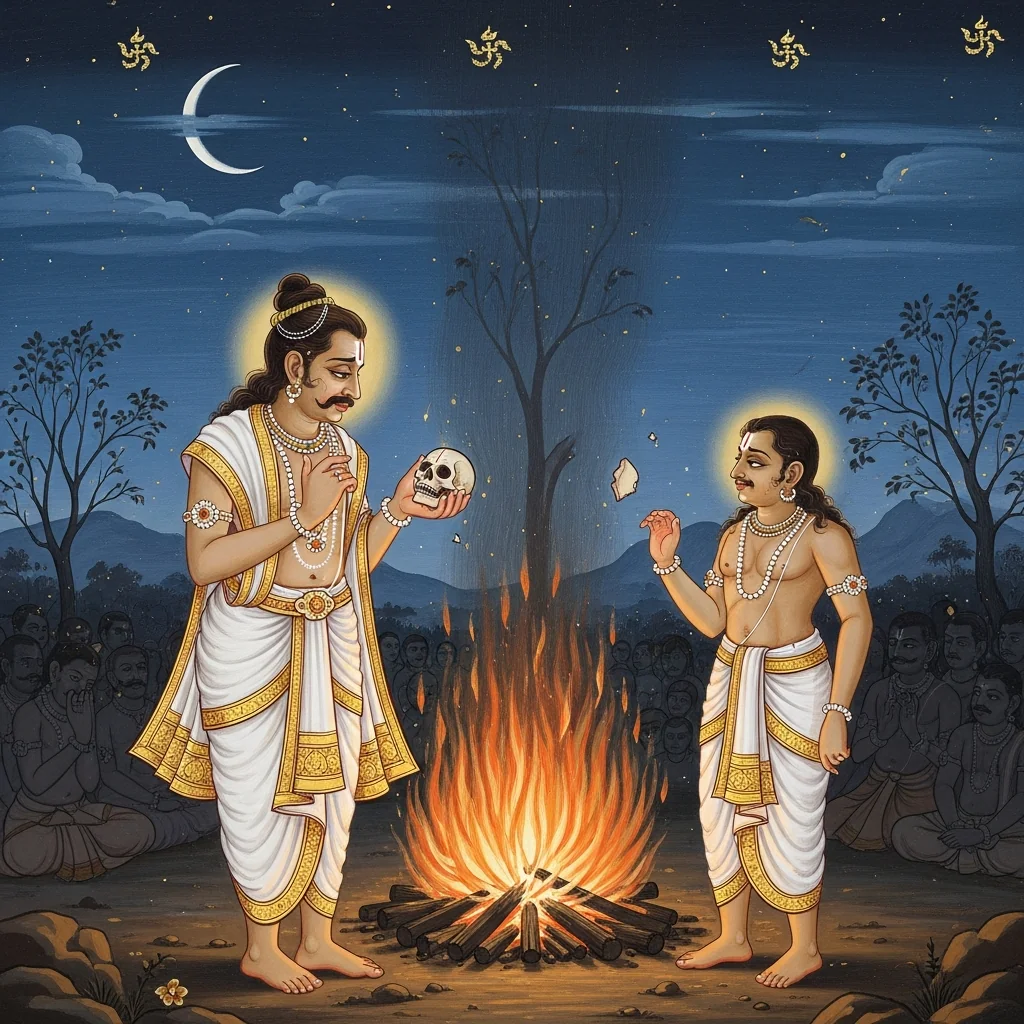
Chapter 8 begins with the ṛṣis asking Sūta for further auspicious accounts, especially about the renowned Vetalavaradā tīrtha south of Cakratīrtha. Sūta relates an esoteric yet publicly beneficial legend, traced to a discourse once spoken by Śambhu on Kailāsa. The story turns on the sage Gālava and his daughter Kāntimatī, whose disciplined service to her father exemplifies filial duty and self-restraint in dharma. Two Vidyādhara princes, Sudarśana and his younger companion Sukarṇa, behold Kāntimatī; Sudarśana’s desire becomes transgression when he seizes her by force. Her cry draws the sages, and Gālava pronounces a curse: Sudarśana must fall into human birth, endure social condemnation, and become a vetāla, while Sukarṇa also becomes human but is spared vetāla-status for lesser guilt, with release tied to later recognition of a Vidyādhara lord. The curse unfolds through rebirth: they are born as sons of the learned brāhmaṇa Govindasvāmin on the Yamunā’s bank during a long famine. An ominous blessing from a renunciant foretells separation from the elder son Vijayadatta (Sudarśana). One night in an empty shrine, the elder is struck by cold-fever and demands fire; the father seeks it at a cremation ground. The son follows, meets the funeral fire, splits a skull, tastes blood and fat, and swiftly transforms into a dreadful vetāla. A divine voice restrains him from harming his father; he departs to join other vetālas, gains the epithet Kapālasphoṭa (“Skull-Splitter”), and rises amid conflict to become a vetāla-lord. Thus the tīrtha’s identity is grounded in moral causality: unlawful desire leads to degradation, and the land remembers it in the name of the sacred ford.
Shlokas
Verse 1
ऋषय ऊचुः । भगवन्सूतसर्वज्ञ कृष्णद्वैपायनप्रिय । त्वन्मुखाद्वै कथाः श्रुत्वा श्रोत्रकामृतवर्षिणीः
The sages said: O blessed Sūta, all-knowing and dear to Kṛṣṇa Dvaipāyana (Vyāsa)! Having heard from your mouth these narratives that shower nectar upon the ears,
Verse 2
तृप्तिर्न जायतेऽस्माकं त्वद्वचोमृतपायिनाम् । अतः शुश्रूषमाणानां भूयो ब्रूहि कथाः शुभाः
we do not become satisfied, for we drink the nectar of your words. Therefore, for us who are eager to listen, speak again auspicious and holy narratives.
Verse 3
वेतालवरदंनाम चक्रतीर्थस्य दक्षिणे । तीर्थमस्ति महापुण्यमित्यवादीद्भवान्पुरा
Formerly you declared: “To the south of Cakratīrtha there is a supremely meritorious tīrtha named Vētālavarada.”
Verse 4
वेतालवरदाभिख्या तीर्थस्यास्यागता कथम् । किंप्रभावं च तत्तीर्थमेतन्नो वक्तुमर्हसि
How did this tīrtha come to bear the name ‘Vētālavarada’? And what is the power and special glory of that sacred place? Please tell us this.
Verse 5
श्रीसूत उवाच । साधुपृष्टं हि युष्माभिरतिगुह्यं मुनीश्वराः । शृणुध्वं मनसा सार्द्धं ब्रवीम्यत्यद्भुतां कथाम्
Śrī Sūta said: You have asked well, O best of sages—this is a most secret matter. Listen with focused minds; I shall relate a wondrous account.
Verse 6
पामरा अपि मोदन्ते यां वै श्रुत्वा कथां शुभाम् । कथा चेयं महापुण्या पुरा कैलासपर्वते
Even the unrefined rejoice upon hearing this auspicious tale. This very narrative is exceedingly meritorious, once spoken on Mount Kailāsa.
Verse 7
केलिकालेषु पावत्यै शंभुना कथिता द्विजाः । तां ब्रवीमि कथामेनामत्यद्भुततरां हि वः
O twice-born ones, this tale was told by Śambhu to Pāvatī during moments of divine play. That very account—most wondrous indeed—I now relate to you.
Verse 8
पुरा हि गालवोनाम महर्षिः सत्यवाक्छुचिः । चिंतयानः परं ब्रह्म तपस्तेपे निजाश्रमे
In ancient times there was a great rishi named Gālava—truth-speaking and pure. Meditating on the Supreme Brahman, he performed tapas, austerities, in his own āśrama.
Verse 9
तस्य कन्या महाभागा रूपयौवनशालिनी । नाम्ना कांतिमती बाला व्यचरत्पितुरंतिके
He had a most blessed daughter, endowed with beauty and youth. The young girl, named Kāntimatī, stayed near her father, attending upon him.
Verse 10
आहरंती च पुष्पाणि बल्यर्थं तस्य वै मुनेः । वेदिसंमार्जनादीनि समिदाहरणानि च
She brought flowers for the sage’s offerings, and she also performed tasks such as cleaning the vedi, the altar, and gathering samid, the fuel-sticks for the rites.
Verse 11
कुर्वती पितरं बाला सम्यक्परिचचार ह । कदाचित्सा तु वल्यर्थं पुष्पाण्याहर्तुमुद्यता
Thus the young girl served her father properly. Once, intending to bring flowers for the offering, she set out to gather them.
Verse 12
तस्मिन्वने कांतिमती सुदूरमगमत्तदा । तत्र पुष्पाणि रम्याणि समाहृत्य च पेटके
In that forest, Kāntimatī went far away. There she gathered lovely flowers and placed them into her basket.
Verse 13
तूर्णं निववृते बाला पितृशुश्रूषणे रता । निवर्तमानां तां कन्यां विद्याधरकुमारकौ
Devoted to serving her father, the young maiden quickly turned back. As she returned, two Vidyādhara princes noticed that girl.
Verse 14
सुदर्शनसुकर्णाख्यौ विमानस्थौ ददर्शतुः । तां दृष्ट्वा गालवसुतां रूपयौवनशालिनीम्
Sudarśana and Sukarṇa, seated in their aerial car, saw her. Beholding Gālava’s daughter—endowed with beauty and youthful grace—their hearts were drawn.
Verse 15
कामस्य पत्नीं ललितां रतिं मूर्तिमतीमिव । सुदर्शनाभिधो ज्येष्ठो विद्याधरकुमारकः
She appeared like Rati herself—Kāma’s graceful consort—embodied in visible form. The elder Vidyādhara prince was named Sudarśana.
Verse 16
हर्षसंफुल्लनयनश्चकमे काममोहितः । पूर्णचन्द्राननां तां वै वीक्षमाणो मुहुर्मुहुः
His eyes blossomed with delight; deluded by desire, he fell in love. Gazing again and again at her full-moon face, he could not look away.
Verse 17
तया रिरंसुकामोऽसौ विमानाग्रादवातरत् । तामुपेत्य मुनेः कन्यामित्युवाच सुदर्शनः
Longing to sport with her, he descended from the front of the vimāna. Approaching the sage’s daughter, Sudarśana spoke to her thus:
Verse 18
सुदर्शन उवाच । कासि भद्रे सुता कस्य रूपयौवनशालिनी । रूपमप्रतिमं ह्येतदाह्लादयति मे मनः
Sudarśana said: “O gentle lady, who are you, and whose daughter are you—so radiant in beauty and youth? This incomparable form of yours truly delights my mind.”
Verse 19
त्वां दृष्ट्वा रतिसंकाशां बाधते मां मनोभवः । सुकण्ठनामधेयस्य विद्याधरपतेरहम्
“Seeing you, who resemble Rati, Manobhava, the god of love, torments me. I am the son of the Vidyādhara lord named Sukaṇṭha.”
Verse 20
आत्मजो रूपसंपन्नो नाम्ना चैव सुदर्शनः । प्रतिगृह्णीष्व मां भद्रे रक्ष मां करुणादृशा
“His son am I, endowed with beauty, and my name too is Sudarśana. O gracious one, accept me; with compassionate eyes, protect me from the burning of desire.”
Verse 21
भर्तारं मां समासाद्य सर्वान्भोगानवाप्स्यसि । इत्याकर्ण्य वचस्तस्य विद्याधरसुतस्य सा
“Having obtained me as your husband, you will enjoy every delight.” Hearing these words of that Vidyādhara’s son, she responded.
Verse 22
तदा कांतिमती वाक्यं धर्मयुक्तमभाषत । सुदर्शन महाभाग विद्याधरपतेः सुत
Then Kāṃtimatī spoke words aligned with dharma: “O Sudarśana, noble and greatly blessed one, son of the lord of the Vidyādharas, …”
Verse 23
आत्मजां मां विजानीहि गालवस्य महात्मनः । कन्या चाहमनूढास्मि पितृशु श्रूषणे रता
“Know me as the daughter of the great-souled sage Gālava. I am an unmarried maiden, devoted to serving my father.”
Verse 24
बल्यर्थं हि पितुश्चाहं पुष्पाण्याहर्तुमागता । आहरंत्याश्च पुष्पाणि याम एको न्यवर्तत
“I have come to gather flowers for my father’s bali offering; yet while I was gathering them, one yāma of time passed.”
Verse 25
मद्विलंबेन स मुनिर्देव तार्चनतत्परः । कोपं विधास्यते नूनं तपस्वी मुनिपुंगवः
“Because of my delay, that ascetic—foremost among sages, intent on worship of the deities—will surely become angry.”
Verse 26
तच्छीघ्रमद्य गच्छामि पुष्पाण्यप्याहृतानि मे । कन्याश्च पितुराधीना न स्वतन्त्राः कदाचन
“Therefore I shall go quickly today; I have gathered the flowers as well. Maidens are under their father’s authority—never independent at any time.”
Verse 27
यदि मामिच्छति भवान्पितरं मम याचय । इति विद्याधरसुतमुक्त्वा कांतिमती तदा
“If you desire me, then request me from my father.” Having thus spoken to the Vidyādhara’s son, Kāṃtimatī then prepared to depart.
Verse 28
पितुराशंकिता तूर्णमा श्रमं गन्तुमुद्यता । गच्छन्तीं तां समालोक्य विद्याधरकुमारकः
Fearing her father, she swiftly set out for the āśrama. Seeing her depart, the young Vidyādhara prince was stirred to act.
Verse 29
तूर्णं जग्राह केशेषु धावित्वा मदनार्दितः । अभ्येत्य निजकेशेषु गृह्णन्ते तं विलोक्य सा
Rushing forward, tormented by passion, he quickly seized her by the hair. Seeing him clutch her by her own tresses, she was struck with alarm.
Verse 30
उच्चैश्चक्रंद सहसा कुररीव मुनेः सुता । अस्माद्विद्याधरसुताज्जनक त्राहि मां विभो
Suddenly the sage’s daughter cried out loudly, like a kurarī-bird: “Father, save me, O mighty one, from this Vidyādhara’s son!”
Verse 31
बलाद्गृह्णाति दुष्टात्मा विद्याधरसुतोऽद्य माम् । इत्थमुच्चैः प्रचुक्रोश स्वाश्रमान्नातिदूरतः
“By force this wicked-minded Vidyādhara’s son is taking me today!” Thus she cried out loudly, not far from her own āśrama.
Verse 32
तदाक्रंदितमाकर्ण्य गन्धमादनवासिनः । मुनयस्तु पुरस्कृत्य गालवं मुनिपुंगवम्
Hearing her cry, the sages dwelling on Gandhamādana came forth, placing Gālava—the foremost of sages—at their head.
Verse 33
किमेतदिति विज्ञातुं तं देशं तूर्णमाययुः । तं देशं तु समागत्य सर्वे ते ऋषिपुंगवाः
Eager to know, “What is this?”, those foremost of sages hurried to that place; and having reached that very spot, all of them gathered there.
Verse 34
विद्याधरगृहीतां तां ददृशुर्मु निकन्यकाम् । विद्याधरसुतं चान्यमंतिके समुपस्थितम्
They saw that maiden, the daughter of a sage, seized by a Vidyādhara; and nearby they also saw another—a Vidyādhara’s son—standing close at hand.
Verse 35
एतद्दृष्ट्वा महायोगी गालवो मुनिपुंगवः । गतः कोपवशं किंचिद्दुराप्मानं शशाप तम्
Seeing this, the great yogin Gālava—foremost among sages—fell somewhat under the sway of anger and cursed that wicked one.
Verse 36
कृतवानीदृशं कार्यं यत्त्वं विद्याधराधम । तद्याहि मानुषीं योनिं स्वस्य दुष्कर्मणः फलम्
‘Since you, lowest among Vidyādharas, have done such a deed—go then to a human womb: this is the fruit of your own evil action.’
Verse 37
संप्राप्य मानुषं जन्म बहुदुःखसमाकुलम् । अचिरेण तु कालेन तस्मिन्नेव तु जन्मनि
‘Having obtained a human birth filled with many sufferings, in no long time—indeed within that very same life—…’
Verse 38
मनुष्यैरपि निंद्यं तद्वेतालत्वं प्रयास्यसि । मांसानि शोणितं चैव सर्वदा भक्षयिष्यसि
You shall fall into the state of a Vetāla, despised even by humans, and forever you shall feed on flesh and blood.
Verse 39
वेताला राक्षसप्राया बलाद्गृह्णन्ति योषितः । तस्मात्त्वं मानुषो भूत्वा वेतालत्वमवाप्स्यसि
Vetālas, akin to Rākṣasas, seize women by force. Therefore, though born human, you shall attain the state of a Vetāla.
Verse 40
तव दुष्कर्मणो योऽसावनुमंता कनिष्ठकः । सुकर्ण इति विख्यातो भविता सोपि मानुषः
And your younger companion who consented to your misdeed—known as Sukarṇa—he too shall become human.
Verse 41
किंतु साक्षान्न कृतवान्यतोऽसावीदृशीं क्रियाम् । तन्मानुषत्व मेवास्य वेतालत्वं तु नो भवेत्
But since he did not directly commit such an act, his lot shall be only human birth; for him, there shall not be Vetāla-hood.
Verse 42
विज्ञप्तिकौतुकाभिख्यं यदा विद्याधराधिपम् । द्रक्ष्यतेऽसौ कनिष्ठस्ते तदा शापाद्विमोक्ष्यते
When your younger one beholds the lord of the Vidyādharas, renowned as Vijñapti-kautuka, then he shall be released from the curse.
Verse 43
ईदृशस्यतु यः कर्ता महापापस्य कर्मणः । स त्वं संप्राप्य मानुष्यं तस्मिन्नेव तु जन्मनि
Whoever performs such a deed of great sin—upon attaining a human birth, will surely experience its fruit in that very same lifetime.
Verse 44
वेतालजन्म संप्राप्य चिरं लोके चरिष्यसि । इत्युक्त्वा गालवः कन्यां गृहीत्वा मुनिभिः सह
“Having obtained a vetāla-birth, you shall wander long in the world.” Saying this, Gālava, taking the maiden along with the sages, departed.
Verse 45
विद्याधरसुतौ शप्त्वा स्वाश्रमं प्रति निर्ययौ । ततस्तस्मिन्महाभागे निर्याते मुनिपुंगवे
Having cursed the two sons of the Vidyādhara, he set out toward his own hermitage. Then, when that greatly fortunate sage—best among ascetics—had departed, …
Verse 46
सुदर्शनसुकर्णाख्यौ विद्याधरपतेः सुतौ । मुनिशापेन दुःखार्तौ चिंतयामासतुर्भृशम्
The two sons of the Vidyādhara-lord, named Sudarśana and Sukarṇa, afflicted with sorrow by the sage’s curse, pondered deeply.
Verse 47
कर्तव्यं तौ विनिश्चित्य सुदर्शनसुकर्णकौ । गोविंदस्वामिनामानं यमुनातटवासिनम्
Having resolved what must be done, Sudarśana and Sukarṇa approached the brāhmaṇa named Govindasvāmin, who dwelt on the bank of the Yamunā.
Verse 48
ब्राह्मणं शीलसंपन्नं पितृत्वे परिकल्प्य तौ । परित्यज्य स्वकं रूपमजायेतां तदा त्मजौ
Choosing a brāhmaṇa endowed with noble conduct as their father, the two relinquished their own form and were then born as his sons.
Verse 49
विजयाशोकदत्ताख्यौ तस्य पुत्रौबभूवतुः । सुतो विजयदत्ताख्यो ज्येष्ठो जज्ञे सुदर्शनः
His two sons came to be known as Vijayadatta and Aśokadatta. Of them, the elder—Vijayadatta—was in truth Sudarśana reborn.
Verse 50
अशोकदत्तनामा तु सुकर्णश्च कनिष्ठकः । विजयाशोकदत्तौ तु क्रमाद्यौवनमापतुः
The younger, Sukarṇa, was born bearing the name Aśokadatta. In due course, Vijayadatta and Aśokadatta attained their youth.
Verse 51
एतस्मिन्नेव कालेतु यमुनायास्तटे शुभे । अनावृष्ट्या तु दुर्भिक्षमभूद्द्वादशवार्षि कम्
At that very time, on the auspicious bank of the Yamunā, a famine arose from lack of rain, lasting twelve years.
Verse 52
गोविंदस्वामिनामा तु ब्राह्मणो वेदपारगः । दुर्भिक्षोपहतां दृष्ट्वा तदानीं स निजां पुरीम्
Now there was a brāhmaṇa named Govindasvāmin, fully accomplished in the Vedas. Seeing at that time his own city stricken by famine, he…
Verse 53
प्रययौ काशनिगरं सपुत्रः सह भार्यया । स प्रयागं समासाद्य द्वं दृष्ट्वा महावटम्
He set out for the city of Kāśī, together with his son and wife. Reaching Prayāga, he beheld the great banyan tree, Mahāvaṭa.
Verse 54
कपालमालाभरणं सोऽपश्यद्यतिनं पुरः । गोविंदस्वामिनामा तु नमश्चक्रे स तं मुनिम्
Before him he saw an ascetic (yati) adorned with a garland of skulls. The brāhmaṇa named Govindasvāmin bowed in reverence to that sage.
Verse 55
सपुत्रस्य सभार्यस्य सोऽवादीदाशिषो मुनिः । इदं च वचनं प्राह गोविंदस्वामिनं प्रति
To him—together with his son and wife—the sage spoke blessings, and he addressed these words to Govindasvāmin.
Verse 56
ज्येष्ठेनानेन पुत्रेण सांप्रतं ब्राह्मणोत्तम । क्षिप्रं विजयदत्तेन वियोगस्ते भविष्यति
O best of brāhmaṇas, soon you will be separated from this elder son, Vijayadatta.
Verse 57
इति तस्य वचः श्रुत्वा गोविंदस्वामिनामकः । सूर्ये चास्तं गते तत्र सांध्यं कर्म समाप्य च
Hearing those words, the man named Govindasvāmin—when the sun had set there—performed and completed the twilight rite (sandhyā).
Verse 58
सभार्यः ससुतो विप्रः सुदूराध्वसमाकुलः । उवास तस्यां शर्वर्य्यां शून्ये वै देवतालये
That brāhmaṇa, with wife and son, wearied by the long road, spent that night in an empty shrine-temple.
Verse 59
तदा त्वशोकदत्तश्च ब्राह्मणी च समाकुलौ । वस्त्रेणास्तीर्य पृथिवीं रात्रौ निद्रां समापतुः
Then Aśokadatta and the brāhmaṇa’s wife, both anxious and unsettled, spread a cloth upon the ground and lay down to sleep at night.
Verse 60
ततो विजयदत्तस्तु दूरमार्गविलंघनात् । बभूवात्यंतमलसो भृशं शीतज्वरार्दितः
Thereafter Vijayadatta—because of overexerting himself on the long road—became extremely fatigued and was severely afflicted with a cold-fever.
Verse 61
गोविंदस्वामिना पित्रा शीतवबाधानिवृत्तये । गाढमालिंग्यमानोऽपि शीतबाधां न सोऽत्यजत्
Though his father Govindasvāmin held him tightly in an embrace to ward off the torment of cold, he did not become free from that affliction.
Verse 62
बाधतेऽत्यर्थमधुना तात मां शीतलो ज्वरः । एतद्बाधानिवृत्त्यर्थं वह्निमानय मा चिरम्
“Father, this cold fever torments me greatly just now. To end this affliction, bring fire—without delay.”
Verse 63
इति पुत्रवचः श्रुत्वा सर्वत्राग्निं गवेषयन् । अलब्धवह्निः प्रोवाच पुन रभ्येत्य पुत्रकम्
Hearing his son’s words, the father searched everywhere for fire. But finding no fire, he returned again and spoke to the boy.
Verse 64
न वह्निं पुत्र विंदामि मार्गमाणोऽपि सर्वशः । रात्रिमध्ये तु संप्राप्ते द्वारेषु पिहितेषु च
“My son, though I searched in every way, I could not find any fire. And now the middle of the night has come, and the doors are shut.”
Verse 65
निद्रापरवशाः पौरा नैव दास्यंति पावकम् । इत्थं विजयदत्तोऽसावुक्तः पित्रा ज्वरातुरः
“The townsfolk, overpowered by sleep, will not give any fire.” Thus spoke the father to Vijayadatta, who was afflicted with fever.
Verse 66
ययाचे वह्निमेवासौ पितरं दीनया गिरा । शीतज्वरसमुद्भूतशीतबाधाप्रपीडितम्
Then he pleaded with his father—speaking in a pitiable voice—for fire alone, being tormented by chill that had arisen from a cold fever.
Verse 67
हिमशीकरवान्वायुर्द्विगुणं बाधतेऽद्य माम् । वह्निर्न लब्ध इति वै मिथ्यैवोक्तं पितस्त्वया
“This wind, laden with icy dew-drops, troubles me twice as much today. ‘Fire was not found’—that, father, has surely been spoken falsely by you.”
Verse 68
दूरादेष पुरोभागे ज्वालामालासमाकुलः । शिखाभिर्लेलिहानोभ्रं दृश्यते पश्य पावकः
Look—there ahead, from afar, a fire is seen, thronged with garlands of flame; its tongues of blaze lick the sky.
Verse 69
तं वह्निमानय क्षिप्रं तात शीतनिवृत्तये । इत्युक्तवन्तं तं पुत्रं स पिता प्रत्यभाषत
“Father, bring that fire quickly, so that the cold may cease!” When the son spoke thus, the father replied to him.
Verse 70
नानृतं वच्मि पुत्राद्य सत्यमेव ब्रवीम्यहम् । वह्निमान्योऽयमुद्देशो दूरादेव विलोक्यते
“Son, today I do not speak untruth; I speak only what is true. That place which appears to have fire is indeed seen from far away.”
Verse 71
पितृकाननदेशं तं पुत्र जानीहि सांप्रतम् । यद्येषोभ्रंलिहज्वालः पुरस्ताज्ज्वलतेऽनलः
“Son, know it now: that place is the forest-ground of the ancestors. For the fire that blazes ahead, with flames that lick the sky, is there.”
Verse 72
पुत्र वित्रासजनकं तं जानीहि चितानलम् । अमंगलो न सेव्योऽयं चिताग्निः स्पर्शदूषितः
“Son, know that fearsome fire to be the pyre-fire. It is inauspicious and should not be used; the cremation fire is defiled by contact.”
Verse 73
तस्य चायुःक्षयं याति सेवते यश्चितानलम् । तस्मात्तवायुर्हानिर्मा भूयादिति मया सुत
Whoever resorts to the fire of the funeral pyre meets with a lessening of lifespan. Therefore, my son, I have spoken thus, so that no loss of your life may come about.
Verse 74
अमंगलस्तथा स्पृश्यो नानीतोऽयं चितानलः । इत्युक्तवंतं पितरं स दीनः प्रत्यभाषत
“This is inauspicious and not fit to be touched; this pyre-fire must not be brought.” Thus spoken to by his father, the son—downcast—replied in return.
Verse 75
अयं शवानलो वा स्यादध्वरानल एव वा । सर्वथानीयतामेष नोचेन्मे मरणं भवेत्
“Whether this be the fire of corpses or the sacrificial fire—be it either—this must be brought by all means; otherwise, death will come to me.”
Verse 76
पुत्रस्नेहाभिभूतोऽथ समाहर्तुं चितानलम् । गोविंदस्वामिनामा तु श्मशानं शीघ्रमभ्यगात्
Overpowered by love for his son, Govindasvāmin hurried to the cremation-ground to fetch the pyre-fire.
Verse 77
गोविंदस्वामिनि गते समाहर्तुं चितानलम् । तूर्णं विजयदत्तोऽपि तदा गच्छंतमन्वयात्
When Govindasvāmin had gone to fetch the pyre-fire, Vijayadatta too quickly followed him as he went.
Verse 79
संप्राप्य तापनिकटं विकीर्णास्थि चितानलम् । आलिंगन्निव सोद्वेगं शनैर्निर्वृतिमाप्तवान्
Reaching the pyre’s fire—close to the heat, with bones scattered about—he, as though embracing it, gradually attained a grim satisfaction, though filled with agitation.
Verse 80
इति तस्य वचः श्रुत्वा पुत्रस्य ब्राह्मणोत्तमः । निपुणं तं निरूप्यैतद्वचनं पुनरब्रवीत्
Hearing those words of his son, the excellent brāhmaṇa, after carefully considering him, spoke again these words.
Verse 81
गोविंदस्वाम्युवाच । एतत्कपालमनलज्वालावलयवर्तुलम् । वसाकीकसमांसाढ्यमेतद्रक्तांबुजोपमम्
Govindasvāmin said: “This skull is ringed round by the circle of fire’s flames; it is thick with fat, sinew, and flesh, and it resembles a red lotus.”
Verse 82
द्विजस्य सूनुः श्रुत्वेति काष्ठाग्रेण जघान तत् । येन तत्स्फुटनोद्गीर्णवसासिक्तमुखोऽभवत्
Hearing this, the brāhmaṇa’s son struck it with the tip of a piece of wood; by that blow, as it cracked, fat spurted out and smeared his face.
Verse 83
कपालघट्टनाद्रक्तं यत्संसक्तं मुखे तदा । जिह्वया लेलिहानोऽसौ मुहुस्तद्रक्तमा स्वदत्
From the striking of the skull, the blood that then clung to his face—he repeatedly licked it with his tongue and tasted that blood again and again.
Verse 84
आस्वाद्यैवं समादाय तत्कपालं समाकुलः । पीत्वा वसां महाकायो बभूवातिभयंकरः
Thus, having tasted it and, in agitation, seized that skull, he drank the fat; and his body became gigantic—terrifying beyond measure.
Verse 85
सद्यो वेता लतां प्राप तीक्ष्णदंष्ट्रस्तदा निशि । तस्याट्टहासघोषेण दिशश्च प्रदिशस्तदा
At once, in the night, he became a Vetāla with sharp fangs; and by the roar of his loud laughter, the directions and sub-directions resounded.
Verse 86
द्यौरतरिक्षं भूमिश्च स्फुटिता इव सर्वशः । तस्मिन्वेगात्समाकृष्य पितरं हन्तुमुद्यते
Heaven, the mid-region, and the earth seemed as though shattered on every side. Then, in a surge of fury, he dragged his father toward himself, intent on killing him.
Verse 87
मा कृथाः साहसमिति प्रादुरासीद्वचो दिवि । स दिव्यां गिरमाकर्ण्य वेतालोऽतिभयंकरः
“Do not commit this rash deed!”—such words suddenly arose from the heavens. Hearing that divine voice, the exceedingly dreadful Vetāla paused.
Verse 88
पितरं तं परित्यज्य महावेगसमन्वितः । तूर्णमाकाशमाविश्य प्रययावस्खलद्गतिः
Abandoning his father, endowed with tremendous speed, he swiftly entered the sky and flew off—his movement unimpeded.
Verse 89
स गत्वा दूरमध्वानं वेतालैः सह संगतः । तमागतं समालोक्य वेतोलास्सर्व एव ते
Having traveled a long distance, he joined the Vetālas. Seeing him arrive, all those Vetālas turned toward him and gathered.
Verse 90
कपालस्फोटनादेष वेतालत्वं यदाप्तवान् । कपालस्फोटनामानमाह्वयांचक्रिरे ततः
Because he had attained Vetāla-hood through the bursting of a skull, they then called him by the name “Kapālasphoṭa”—“Skull-Burster.”
Verse 91
ततः कपालस्फोटो ऽसौ वेतालैः सर्वतो वृतः । नरास्थिभूषणाख्यस्य सद्यो वेतालभूपतेः
Then that Kapālasphoṭa, surrounded on all sides by Vetālas, went without delay into the presence of the Vetāla-king named Narāsthibhūṣaṇa.
Verse 92
अन्तिकं सहसा प्राप महाबलसमन्वितः । नरास्थिभूषणश्चैनं सेनाप तिमकल्पयत्
He suddenly came near, possessed of great strength; and Narāsthibhūṣaṇa appointed him as commander of the army.
Verse 93
तं कदाचित्तु गन्धर्वश्चित्रसेनाभिधो बली । नरास्थिभूषणं संख्ये न्यवधीत्सोऽपि संस्थितः
But at one time, the mighty Gandharva named Citrasena slew Narāsthibhūṣaṇa in battle; and he too remained standing firm.
Verse 94
नरास्थिभूषणे तस्मि न्गन्धर्वेण हते युधि । तदा कपालस्फोटोऽसौ तत्पदं समवाप्तवान्
When Narāsthibhūṣaṇa was slain in battle by a Gandharva, at that very moment Kapālasphoṭa attained that same state—his destined condition.
Verse 95
विद्याधरेन्द्रस्य सुतः सुदर्शनो मनुष्यतां वै प्रथमं स गत्वा । वेतालतां प्राप्य महर्षिशापात्क्रमाच्च वेतालपतिर्बभूव
Sudarśana, son of the lord of the Vidyādharas, first fell into human birth; then, by the curse of a great ṛṣi, he attained the state of a Vetāla—and in time became the lord of the Vetālas.