Adhyaya 41
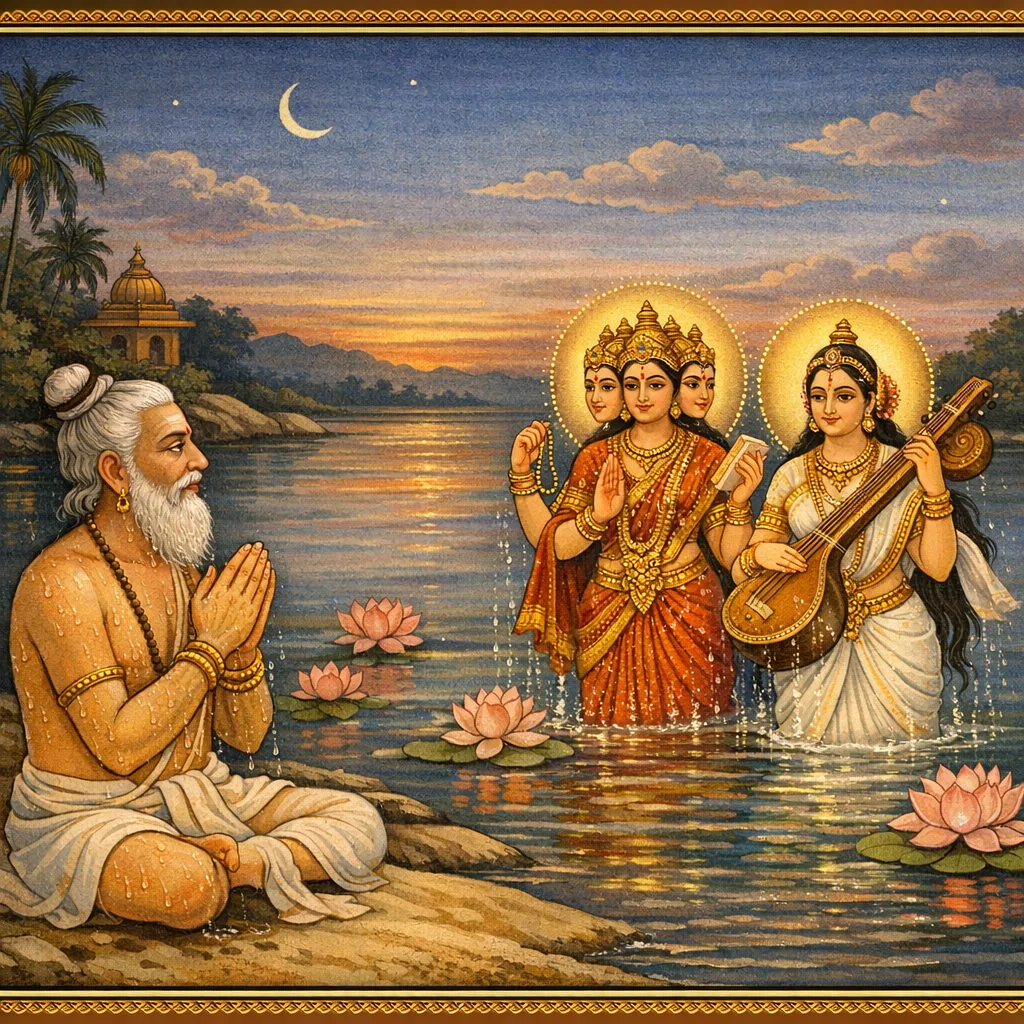
This adhyāya opens with Sūta’s pledge to narrate a purificatory itihāsa centered on the twin tīrthas, Gayatrī and Sarasvatī. It first retells the famed episode of King Parīkṣit: while hunting he insults a sage in meditation by placing a dead serpent on the sage’s shoulder, and the sage’s son Śṛṅgī curses him to die within seven days by Takṣaka’s bite. Though Parīkṣit arranges protections and the brāhmaṇa-mantrika Kaśyapa hastens to counter the poison, Takṣaka intercepts him, burns a banyan to display lethal power, and is met by Kaśyapa’s mantra that revives the tree and a man upon it; yet Takṣaka turns Kaśyapa back with wealth. Parīkṣit is then slain when Takṣaka, disguised as a worm inside a fruit, bites him. The discourse shifts to Kaśyapa’s moral crisis: he is socially censured for failing to save a poisoned person despite having the ability, and he seeks guidance from the sage Śākalya. Śākalya lays down a severe ethical rule—knowingly refusing life-saving aid out of greed is an extreme transgression with harsh social and ritual consequences—and prescribes a remedy. He directs Kaśyapa to the southern ocean–Setu region, to a Ghaṇḍamādana-associated spot where the twin tīrthas Gayatrī and Sarasvatī abide. Observing niyama and bathing with saṅkalpa, Kaśyapa is purified at once; the goddesses Gayatrī and Sarasvatī manifest as the resident forms of the tīrthas, grant boons, and receive his hymn praising them as vidyā embodied and as mothers of the Veda. The chapter concludes with its phala: bathing there, or hearing of these tīrthas, bestows purificatory merit.
Shlokas
Verse 1
श्रीसूत उवाच । अथातः संप्रवक्ष्यामि गायत्रीं च सरस्वतीम् । लक्ष्यीकृत्य कथामेकां पवित्रां द्विजसत्तमाः
Śrī Sūta said: Now I shall duly narrate the greatness of Gāyatrī and Sarasvatī, O best of the twice-born, focusing upon a single sacred account.
Verse 2
कश्यपाख्यो द्विजः पूर्वमस्मिंस्तीर्थद्वये शुभे । स्नात्वातिमहतः पापाद्विमुक्तो नरकप्रदात्
Formerly, a brāhmaṇa named Kāśyapa, by bathing at these two auspicious tīrthas, was freed from a very grave sin—one that would have led to hell.
Verse 3
ऋषय ऊचुः । मुने कश्यपनामासावकरोत्किं हि पातकम् । स्नात्वा तीर्थद्वयेप्यत्र यस्मान्मुक्तोऽभवत्क्षणात्
The sages said: O sage, what sin did that man named Kāśyapa commit, such that by bathing here at the two tīrthas he became freed at once?
Verse 4
एतन्नः श्रद्दधानानां ब्रूहि सूत कृपाबलात् । त्वद्वचोऽमृततृप्तानां न पिपासापि विद्यते
Tell this to us who are full of faith, O Sūta, by the power of your compassion. For those satisfied by the nectar of your words, no thirst remains at all.
Verse 5
श्रीसूत उवाच । गायत्र्याश्च सरस्वत्या माहात्म्यप्रतिपादकम् । इतिहासं प्रवक्ष्यामि शृण्वतां पापनाशनम्
Śrī Sūta said: I shall recount an ancient tale that proclaims the greatness of Gāyatrī and Sarasvatī—a tale that destroys the sins of those who listen.
Verse 6
अभिमन्युसुतो राजा परीक्षिन्नाम नामतः । अध्यास्ते हास्तिनपुरं पालयन्धर्मतो महीम्
There was a king, the son of Abhimanyu, named Parīkṣit. He ruled from Hāstinapura, protecting the earth in accordance with dharma.
Verse 7
स राजा जातु विपिने चचार मृगया रतः । षष्टिवर्षवया भूपः क्षुत्तृष्णापरिपीडितः
That king once roamed in the forest, intent on hunting. The ruler, sixty years of age, was tormented by hunger and thirst.
Verse 8
नष्टमेकं स विपिने मार्गयन्मृगमादरात् । ध्यानारूढं मुनिं दृष्ट्वा प्राह तं चीरवाससम्
Searching eagerly in the forest for a deer that had gone astray, he saw a sage absorbed in meditation, clad in bark-garments, and spoke to him.
Verse 9
मया बाणेन विपिने मृगो विद्धोऽधुना मुने । दृष्टः स किं त्वया विद्वन्विद्रुतो भयकातरः
“O sage, just now in the forest a deer was struck by my arrow. O wise one, did you see it—fleeing in terror?”
Verse 10
समाधिनिष्ठो मौनित्वान्न किं चिदपि सोऽब्रवीत् । ततो धनुरटन्याऽसौ स्कंधे तस्य महामुनेः
Established in samādhi and keeping the vow of silence, he spoke not a single word. Then that man (the king) placed his bow and quiver upon the shoulder of that great muni.
Verse 11
निधाय मृतसर्पं तु कुपितः स्वपुरं ययौ । मुनेस्तस्य सुतः कश्चिच्छृंगीनाम बभूव वै
Having placed the dead snake (upon the sage), the king—angered—returned to his own city. That muni indeed had a son, named Śṛṅgī.
Verse 12
सखा तस्य कृशाख्योऽभूच्छृंगिणो द्विजसत्तमाः । सखायं शृङ्गिणं प्राह कृशाख्यः स सखा ततः
O best of the twice-born, his friend was one named Kṛśa. Then that friend Kṛśa spoke to his companion Śṛṅgī.
Verse 13
पिता तव मृतं सर्पं स्कंधेन वहतेऽधुना । मा भूद्दर्पस्तव सखे मा कृथास्त्वं मदं वृथा
“Your father is now carrying a dead snake upon his shoulder. Let there be no pride in you, my friend; do not indulge in arrogance in vain.”
Verse 14
सोऽवदत्कुपितः शृंगी दित्सुश्शापं नृपाय वै । मत्ताते शवसर्पं यो न्यस्तवान्मूढचेतनः
Then Śṛṅgī, enraged and intending to utter a curse upon the king, said: “That deluded one, of foolish mind, who has placed a dead snake upon my father…”
Verse 15
स सप्तरात्रान्म्रियतां संदष्टस्तक्षकाहिना । शशापैवं मुनिसुतः सौभद्रेयं परीक्षितम्
“Let him die within seven nights, bitten by the serpent Takṣaka!” Thus did the sage’s son curse Parīkṣit, the son of Subhadrā.
Verse 16
शमीकाख्यः पिता तस्य श्रुत्वा शप्तं सुतेन तम् । नृपं प्रोवाच तनयं शृंगिणं मुनिपुंगवः
His father, the sage named Śamīka, hearing that his son had cursed the king, addressed his child Śṛṅgī—bull among sages.
Verse 17
रक्षकं सर्वलोकानां नृपं किं शप्तवानसि । अराजके वयं लोके स्थास्यामः कथमंजसा
“Why have you cursed the king, the protector of all worlds? In a world without a ruler, how indeed shall we dwell with ease?”
Verse 18
क्रोधेन पातकमभून्न त्वया प्राप्यते सुखम् । यः समुत्पादितं कोपं क्षमयैव निरस्यति
“Through anger, sin has arisen; by this you will not attain happiness. One who casts away the anger that has arisen—by forgiveness alone—truly overcomes it.”
Verse 19
इह लोके परत्रासावत्यंतं सुखमेधते । क्षमायुक्ता हि पुरुषा लभंते श्रेय उत्तमम्
“In this world and in the next, abundant happiness flourishes. For those endowed with forgiveness attain the highest good.”
Verse 20
ततः शमीकः स्वं शिष्यं प्राह गौरमुखाभिधम् । भो गौ मुख गत्वा त्वं वद भूपं परीक्षितम्
Then Śamīka spoke to his disciple named Gauramukha: “O Gauramukha, go and inform King Parīkṣit.”
Verse 21
इमं शापं मत्सुतोक्तं तक्षकाहिविदंशनम् । पुनरायाहि शीघ्रं त्वं मत्समीपे महामते
“This curse—spoken by my son—brings the deadly bite of the serpent Takṣaka. Return quickly to me, O great-minded one.”
Verse 22
एवमुक्तः शमीकेन ययौ गौरमुखो नृपम् । समेत्य चाब्रवीद्भूपं सौभद्रेयं परीक्षितम्
Thus addressed by Śamīka, Gauramukha went to the king; and on meeting him, he spoke to the ruler Parīkṣit, the son of Subhadrā.
Verse 23
दृष्ट्वा सर्पं पितुः स्कन्धे त्वया विनिहितं मृतम् । शमीकस्य सुतः शृंगी शशाप त्वां रुषान्वितः
Seeing the dead serpent placed by you upon his father’s shoulder, Śṛṅgī—the son of Śamīka—angered, cursed you.
Verse 24
एतद्दिनात्सप्तमेऽह्नि तक्षकेण महाहिना । दष्टो विषाग्निना दग्धो भूयादाश्वभिमन्युजः
“On the seventh day from today, may the son of Abhimanyu be bitten by the great serpent Takṣaka and be burned up by the fire of poison.”
Verse 25
एवं शशाप त्वां राजञ्छृंगी तस्य मुनेः सुतः । एतद्वक्तुं पिता तस्य प्राहिणोन्मां त्वदंतिकम्
“Thus did Śṛṅgī, the son of that muni, curse you, O King. To convey this, his father sent me into your presence.”
Verse 26
इतीरयित्वा तं भूपमाशु गौरमुखो ययौ । गते गौरमुखे पश्चाद्राजा शोकपरायणः
Having thus spoken to the king, Gauramukha quickly departed. After Gauramukha had gone, the king became wholly given over to sorrow.
Verse 27
अभ्रंलिहमथोत्तुंगमेकस्तंभं सुविस्तृतम् । मध्येगंगं व्यतनुत मंडपं नृपपुंगवः
Then the bull among kings constructed, in the midst of the Gaṅgā, a lofty and spacious pavilion (maṇḍapa), supported by a single pillar that seemed to lick the clouds.
Verse 28
महागारुडमंत्रज्ञैरौषधज्ञैश्चिकित्सकैः । तक्षकस्य विषं हंतुं यत्नं कुर्वन्समाहितः
With experts in the great Gāruḍa-mantras and physicians skilled in herbs, he diligently, with focused mind, strove to neutralize the poison of Takṣaka.
Verse 29
अनेकदेवब्रह्मर्षिराजर्षिप्रवरान्वितः । आस्ते तस्मिन्नृपस्तुंगे मंडपे विष्णुभक्तिमान्
Accompanied by many eminent devas, brahmarṣis, and foremost royal sages (rājārṣis), that king, devoted to Viṣṇu, stayed in that lofty pavilion (maṇḍapa).
Verse 30
तस्मिन्नवसरे विप्रः काश्यपो मांत्रिकोत्तमः । राजानं रक्षितुं प्रायात्तक्षकस्य महाविषात्
At that time, the brāhmaṇa Kāśyapa—foremost among mantra-knowers—set out to protect the king from Takṣaka’s dreadful poison.
Verse 31
सप्तमेऽहनि विप्रेंद्रो दरिद्रो धनकामुकः । अत्रांतरे तक्षकोऽपि विप्ररूपी समाययौ
On the seventh day, that foremost brāhmaṇa—though poor and eager for wealth—was on his way. Just then, Takṣaka too arrived, having assumed the form of a brāhmaṇa.
Verse 32
मध्येमार्गं विलोक्याथ कश्यपं प्रत्यभाषत । ब्राह्मण त्वं कुत्र यासि वद मेऽद्य महामुने
Watching him on the road, he then addressed Kāśyapa: “O brāhmaṇa, where are you going? Tell me today, O great sage.”
Verse 33
इति पृष्टस्तदावादीत्काश्यपस्तक्षकं द्विजाः । परीक्षितं महाराजं तक्षकोऽद्य विषाग्निना
Thus questioned, Kāśyapa replied to Takṣaka: “O brāhmaṇas, today Takṣaka will burn King Parīkṣit with the fire of poison.”
Verse 34
दक्ष्यते तं शमयितुं तत्समीपमुपैम्यहम् । इत्युक्तवंतं तं विप्रं तक्षकः पुनरब्रवीत्
“I shall be able to pacify that (poison), and therefore I am going near him,” said the brāhmaṇa. After he had spoken thus, Takṣaka again replied to him.
Verse 35
तक्षकोहं द्विजश्रेष्ठ मया दष्टश्चिकित्सितुम् । न शक्यो ऽब्दशतेनापि महामंत्रायुतैरपि
“I am Takṣaka, O best of the twice-born. One bitten by me cannot be cured—even in a hundred years, even with tens of thousands of great mantras.”
Verse 36
चिकित्सितुं चेन्मद्दष्टं शक्तिरस्ति तवाधुना । अनेकयोजनोच्छ्रायमिमं वटतरुं त्वहम्
“If you truly have the power right now to cure one bitten by me, then look: this banyan tree, many yojanas in height—I shall first make the test upon it.”
Verse 37
दशाम्युज्जीवयैनं त्वं समर्थोऽस्ति ततो भवान् । इतीरयित्वा तं वृक्षमदशत्तक्षकस्तदा
“I will bite it—revive it, if you are able; then your competence will be established.” Having said this, Takṣaka then bit that tree.
Verse 38
अभवद्भस्मसात्सोऽपि वृक्षोऽत्यंतं समूर्च्छितः । पूर्वमेव नरः कश्चित्तं वृक्षमधिरूढवान्
That tree too was reduced to ashes, utterly stricken. But earlier a certain man had already climbed up that tree.
Verse 39
तक्षकस्य विषोल्काभिः सोऽपि दग्धोऽभवत्तदा । तं नरं न विजिज्ञाते तौ च काश्यपतक्षकौ
By Takṣaka’s blazing embers of poison, that man too was burned at that time. Yet neither Kāśyapa nor Takṣaka recognized who that man was.
Verse 40
काश्यपः प्रतिजज्ञेऽथ तक्षकस्यापि शृण्वतः । तन्मंत्रशक्तिं पश्यंतु सर्वे विप्रा हि नोऽधुना
Then Kāśyapa made a vow, even as Takṣaka listened: “Let all the brāhmaṇas now witness the power of this mantra of mine.”
Verse 41
इतीरयित्वा तं वृक्षं भस्मीभूतं विषाग्निना । अजीवयन्मन्त्रशक्त्या काश्यपो मांत्रिकोत्तमः
Having thus spoken, Kāśyapa—the foremost among mantra-knowers—revived by the power of his mantras that tree which had been reduced to ashes by the fire of poison.
Verse 42
नरोऽपि तेन वृक्षेण साकमुज्जीवितोऽभवत् । अथाब्रवीत्तक्षकस्तं काश्यपं मंत्रकोविदम्
That man too was revived along with the tree. Then Takṣaka addressed Kāśyapa, the expert in mantras.
Verse 43
यथा न मुनिवाङ्मिथ्या भवेदेवं कुरु द्विज । यत्ते राजा धनं दद्यात्ततोपि द्विगुणं धनम्
“So that a sage’s word may not become false—do this, O brāhmaṇa: whatever wealth the king would give you, I shall give you double that wealth.”
Verse 44
ददाम्यहं निवर्तस्व शीघ्रमेव द्विजोत्तम । इत्युक्त्वानर्घ्यरत्नानि तस्मै दत्त्वा स तक्षकः
“I shall give it—turn back at once, O best of the twice-born.” Saying so, Takṣaka gave him priceless jewels.
Verse 45
न्यवर्तयत्काश्यपं तं ब्राह्मणं मंत्रको विदम् । अल्पायुषं नृपं मत्वा ज्ञानदृष्ट्या स काश्यपः
Thus Kāśyapa—the brāhmaṇa skilled in mantras—turned back, for by his eye of knowledge he understood the king to be short-lived.
Verse 46
स्वाश्रमं प्रययौ तूष्णीं लब्धरत्नश्च तक्षकात् । सोऽब्रवीत्तक्षकः सर्वान्सर्पानाहूय तत्क्षणे
Silently he went to his own hermitage, having obtained jewels from Takṣaka. Then Takṣaka, summoning all the serpents at that very moment, spoke.
Verse 47
यूयं तं नृपतिं प्राप्य मुनीनां वेषधारिणः । उपहारफलान्याशु प्रयच्छत परीक्षिते
“Go to that king, disguised in the garb of sages, and quickly present gift-fruits to Parīkṣit.”
Verse 48
तथेत्युक्त्वा सर्वसर्पा ददू राज्ञे फलान्यमी । तक्षकोपि तदा तत्र कस्मिंश्चिद्बदरीफले
Saying, “So be it,” all those serpents gave fruits to the king. And Takṣaka too, there and then, entered into a certain jujube fruit.
Verse 49
कृमिवेषधरो भूत्वा व्यतिष्ठद्दंशितुं नृपम् । अथ राजा प्रदत्तानि सर्पैर्ब्राह्मणरूपकैः
Assuming the guise of a worm, he lay in wait to bite the king. Then the king took note of the fruits presented by serpents in the form of brāhmaṇas.
Verse 50
परीक्षिन्मंत्रवृद्धेभ्यो दत्त्वा सर्वफलान्यपि । कौतूहलेन जग्राह स्थूलमेकं फलं करे
Parīkṣit, having offered all the fruits to the elder knowers of mantra, took—out of curiosity—one large fruit in his hand.
Verse 51
अस्मिन्नवसरे सूर्योऽप्यस्ताचलमगाहत । मिथ्या ऋषिवचो मा भूदिति तत्रत्यमानवाः
At that very moment, even the Sun sank into the western mountain. Fearing that the sage’s utterance might prove false, the people present there became anxious.
Verse 52
अन्योयमवदन्त्सर्वे ब्राह्मणाश्च नृपास्तथा । एवं वदत्सु सर्वेषु फले तस्मिन्नदृश्यत
All of them—Brāhmaṇas and kings alike—kept saying, “This is something else.” While everyone spoke thus, something was seen within that fruit.
Verse 53
फले रक्तकृमिः सर्वे राज्ञा चापि परीक्षिता । अयं किं मां दशेदद्य कृमिरित्युक्तवा न्नृपः
All saw a blood-red worm in the fruit, and the king too examined it. The king said, “What can this worm do—can it bite me today?”
Verse 54
निदधे तत्फलं कर्णे सकृमि द्विजसत्तमाः । तक्षकोऽस्मिन्स्थितः पूर्वं कृमिरूपी फले तदा
O best of Brāhmaṇas, he placed that fruit—along with the worm—upon his ear. For Takṣaka had earlier been dwelling there in that fruit, taking the form of a worm.
Verse 55
निर्गत्य तत्फलादाशु नृपदे हमवेष्टयत् । तक्षकावेष्टिते भूपे पार्श्वस्था दुद्रुवुर्भयात्
Quickly emerging from that fruit, it coiled around the king’s body. When the king was thus entwined by Takṣaka, those standing nearby fled in fear.
Verse 56
अनंतरं नृपो विप्रास्तक्षकस्य विषाग्निना । दग्धोऽभूद्भस्मसादाशु सप्रासादो बलीयसा
Immediately thereafter, O Brāhmaṇas, the king—together with his palace—was swiftly burned to ashes by Takṣaka’s fiery poison, so overpowering was it.
Verse 57
कृत्वोर्ध्वदैहिकं तस्य नृपस्य सपुरोहिताः । मंत्रिणस्तत्सुतं राज्ये जनमेजयनामकम्
After performing the post-funeral rites for that king, the ministers—together with the royal priests—installed his son, named Janamejaya, upon the throne.
Verse 58
राजानमभ्यषिंचन्वै गजद्रक्ष णवांछया । तक्षकाद्रक्षितुं भूपमायातः काश्यपाभिधः
Indeed, they consecrated the king, desiring the protection of the royal line. And a Brāhmaṇa named Kāśyapa arrived, intending to safeguard the ruler from Takṣaka.
Verse 59
यो ब्राह्मणो मुनिश्रेष्ठाः स सर्वैर्निंदितो जनैः । बभ्राम सकलान्देशाञ्छिष्टैः सर्वैश्च दूषितः
O best of sages, that Brāhmaṇa was censured by all people. Condemned by all the respectable, he wandered through every land in disgrace.
Verse 60
अवस्थानं न लेभेऽसौ ग्रामे वाप्याश्रमेऽपि वा । यान्यान्देशानसौ यातस्तत्रतत्रमहाजनैः
He found no place to settle—neither in a village nor even in a hermitage. Whatever lands he went to, in each and every place the leading people of the community confronted him.
Verse 61
तत्तद्देशान्निरस्तः स शाकल्यं शरणं ययौ । प्रणम्य शाकल्यमुनिं काश्यपो निन्दितो जनैः । इदं विज्ञापयामास शाकल्याय महात्मने
Driven away from place after place, he took refuge with Śākalya. Kāśyapa—reviled by the people—bowed to the sage Śākalya and then submitted this matter to that great-souled one.
Verse 62
काश्यप उवाच । भगवन्सर्वधर्मज्ञ शाकल्य हरिवल्लभ
Kāśyapa said: “O Blessed One, O knower of all dharma—O Śākalya, beloved of Hari—”
Verse 63
मुनयो ब्राह्मणाश्चान्ये मां निंदंति सुहृज्जनाः । नास्याहं कारणं जाने किं मां निंदंति मानवाः
“Sages, brāhmaṇas, and even other well-wishers censure me. I do not know the cause of it—why do people condemn me?”
Verse 64
ब्रह्महत्या सुरापानं गुरुस्त्रीगमनं तथा । स्तेयं संसर्गदोषो वा मया नाचरितः क्वचित्
“Brahmin-slaying, drinking liquor, approaching the teacher’s wife, theft, or even the fault of defiling association—none of these has ever been practiced by me.”
Verse 65
अन्यान्यपि हि पापानि न कृतानि मया मुने । तथापि निंदंति जना वृथा मां बांधवादयः
“Other sins too, O sage, have not been committed by me; and yet people—kinsmen and others—censure me without cause.”
Verse 66
जानासि चेत्त्वं शाकल्य मया दोषं कृतं वद । उक्तोऽथ काश्यपेनैवं शाकल्याख्यो महामुनिः । क्षणं ध्यात्वा बभाषे तं काश्यपं द्विजसत्तमाः
“If you know, O Śākalya, tell me what fault has been committed by me.” Thus addressed by Kāśyapa, the great sage named Śākalya reflected for a moment and then spoke to Kāśyapa, best of the twice-born.
Verse 67
शाकल्य उवाच । परीक्षितं महाराजं तक्षकाद्रक्षितुं भवान्
Śākalya said: “You were to protect King Parīkṣit from Takṣaka—”
Verse 68
अयासीदर्धमार्गे तु तक्षकेण निवारितः । चिकित्सितुं समर्थोऽपि विषरोगादिपीडितम्
“You had set out, but midway you were stopped by Takṣaka—though you were capable of treating one afflicted by poison, disease, and the like.”
Verse 69
यो न रक्षति लोभेन तमाहुर्ब्रह्मघातकम् । क्रोधात्कामाद्भयाल्लोभान्मात्सर्यान्मोहतोऽपि वा
“He who, out of greed, does not protect one in danger—him they call a slayer of a brāhmaṇa. Whether from anger, desire, fear, greed, envy, or even delusion—”
Verse 70
यो न रक्षति विप्रेंद्र विषरोगातुरं नरम् । ब्रह्महा स सुरापी च स्तेयी च गुरुतल्पगः
O best of brāhmaṇas, he who does not protect a man afflicted by poison or disease is (in sin) like a slayer of a brāhmaṇa, a drinker of liquor, a thief, and one who violates the guru’s bed.
Verse 71
संसर्गदोषदुष्टश्च नापि तस्य हि निष्कृतिः । कन्याविक्रयिणश्चापि हयविक्रयिणस्तथा
One tainted by the fault of corrupt association has, indeed, no expiation; so too are condemned those who sell a maiden (in marriage), and likewise those who sell horses.
Verse 72
कृतघ्न स्यापि शास्त्रेषु प्रायश्चित्तं हि विद्यते । विषरोगातुरं यस्तु समर्थोपि न रक्षति
Even for an ungrateful person, the śāstras teach an expiation; but one who, though capable, does not protect a man afflicted by poison or disease—
Verse 73
न तस्य निष्कृतिः प्रोक्ता प्रायश्चित्तायुतैरपि । न तेन सह पंक्तौ च भुंजीत सुकृती जनः
For such a one, no expiation is declared—even by tens of thousands of penances. A righteous person should not even dine in the same row with him.
Verse 74
न तेन सह भाषेत न पश्येत्तं नरं क्वचित् । तत्संभाषणमात्रेण महापातकभाग्भवेत्
One should not speak with him, nor even see that man anywhere; by mere conversation with him, one would become a sharer in great sin.
Verse 75
परीक्षित्स महाराजः पुण्यश्लोकश्च धार्मिकः । विष्णुभक्तो महायोगी चातुर्वर्ण्यस्य रक्षिता
Mahārāja Parīkṣit was renowned with holy fame and steadfast in dharma—a devotee of Viṣṇu, a great yogin, and a guardian of the fourfold social order.
Verse 76
व्यासपुत्राद्धरिकथां श्रुतवान्भक्तिपूर्वकम् । अरक्षित्वा नृपं तं त्वं वचसा तक्षकस्य यत्
Though you heard with devotion from Vyāsa’s son the sacred narration of Hari, you still failed to protect that king—because of the utterance concerning Takṣaka.
Verse 77
निवृत्तस्तेन विप्रेंद्रैर्बांधवैरपि दूष्यसे । स परीक्षिन्महाराजो यद्यपि क्ष णजीवितः
Having turned back from your duty, you are reproached by the foremost brāhmaṇas and even by your own kinsmen. That Mahārāja Parīkṣit, though his life remained but for a moment—
Verse 78
तथापि यावन्मरणं बुधैः कार्यं चिकित्सनम् । यावत्कण्ठगताः प्राणा मुमूर्षोर्मानवस्य हि
Even so, the wise should administer treatment until death—so long as the life-breaths of the dying have not yet risen to the throat, that is, until the very last moment.
Verse 79
तावच्चिकित्सा कर्तव्या कालस्य कुटिला गतिः । इति प्राहुः पुरा श्लोकं भिषग्वैद्याब्धिपारगाः
So long should treatment be undertaken, for the course of Time is crooked and unpredictable. Thus, in ancient days, physicians who had crossed the ocean of medical knowledge spoke this verse.
Verse 80
अतश्चिकित्साशक्तोऽपि यस्मादकृतभेषजः । अर्धमार्गे निवृत्तस्त्वं तेन तं हतवानसि । शाकल्येनैवमुदितः काश्यपः प्रत्यभाषत
Therefore, though you were able to treat him, since you did not administer the remedy and turned back midway, by that very act you have slain him. Thus addressed by Śākalya, Kāśyapa replied.
Verse 81
काश्यप उवाच । ममैतद्दोषशांत्यर्थमुपायं वद सुव्रत
Kāśyapa said: “O you of excellent vows, tell me the means by which this fault of mine may be pacified.”
Verse 82
येन मां प्रतिगृह्णीयुर्बांधवाः ससुहृज्जनाः
“By what means will my kinsmen—together with my friends and well-wishers—accept me again?”
Verse 83
कृपां मयि कुरुष्व त्वं शाकल्य हरिवल्लभ । काश्यपेनैवमुक्तस्तु शाकल्योपि मुनीश्वरः । क्षणं ध्यात्वा जगादैवं काश्यपं कृपया तदा
“Show compassion to me, O Śākalya, beloved of Hari.” Thus addressed by Kāśyapa, the lordly sage Śākalya, after reflecting for a moment, spoke to Kāśyapa with kindness.
Verse 84
शाकल्य उवाच । अस्य पापस्य शात्यर्थमुपायं प्रवदामि ते
Śākalya said: “For the pacification of this sin, I shall declare to you the proper means.”
Verse 85
तत्कर्त्तव्यं त्वया शीघ्रं विलंबं मा कृथा द्विज । दक्षिणांबुनिधौ सेतौ गंधमादनपर्वते
Do this at once; do not delay, O twice-born. At Setu on the southern ocean, upon Mount Gandhamādana…
Verse 86
अस्ति तीर्थद्वयं विप्रा गायत्री च सरस्वती । तत्र त्वं स्नानमात्रेण शुद्धो भूयाश्च तत्क्षणे
O brāhmaṇa, there are two sacred fords—Gāyatrī and Sarasvatī. By bathing there alone, you will become purified that very moment.
Verse 87
गायत्र्या च सरस्वत्या जलवात स्पृशो नरः । विधूय सर्वपापानि स्वर्गं यास्यंति निर्मलाः
Men who touch the waters—and even the purifying breeze—of Gāyatrī and Sarasvatī, shaking off all sins, go to heaven in a stainless state.
Verse 88
तद्याहि शीघ्र विप्र त्वं गायत्रीं च सरस्वतीम् । इत्युक्तः काश्यपस्तेन शाकल्येन द्विजोत्तमाः
Therefore go quickly, O brāhmaṇa, to Gāyatrī and Sarasvatī. Thus instructed by Śākalya, the best of twice-born, Kāśyapa prepared to act.
Verse 89
नत्वा मुनिं च शाकल्यं तमापृच्छ्य मुनीश्वरम् । तेन चैवाभ्यनुज्ञातः प्रययौ गन्धमादनम्
Having bowed to the sage Śākalya and taken leave of that lord among sages, and being granted permission by him, Kāśyapa set out for Gandhamādana.
Verse 90
तत्र गत्वा च गायत्रीसरस्वत्यौ च काश्यपः । नत्वा तीर्थद्वयं भक्त्या दण्डपाणिं च भैरवम्
Having gone there, Kāśyapa approached Gāyatrī and Sarasvatī. With devotion he bowed to the two tīrthas, and also to Bhairava, the club-bearing Daṇḍapāṇi.
Verse 91
संकल्पपूर्वं तत्तीर्थे सस्नौ नियमसंयुतः । तीर्थद्वये स्नानमात्रान्मुक्तपापोऽथ काश्यपः
With a prior solemn saṅkalpa and observing the proper restraints, Kāśyapa bathed at that tīrtha. By the mere act of bathing in the two holy tīrthas, he was freed from sin.
Verse 92
तीर्थद्वयस्य तीरेऽसौ किंचित्कालं तु तस्थिवान् । तस्मिन्काले च गायत्रीसरस्वत्यौ मुनीश्वराः
He stayed for some time on the bank of the twin holy waters. At that very time, O lords among sages, Gāyatrī and Sarasvatī were about to manifest there.
Verse 93
प्रादुर्बभूवतुर्मूर्ते सर्वाभरणभूषिते । देव्यौ ते स नमस्कृत्य काश्यपो भक्तिपूर्वकम्
The two goddesses appeared in embodied form, adorned with every ornament. Kāśyapa bowed to them with devotion.
Verse 94
के युवां रूपसंपन्ने सर्वालंकारसंयुते । इति पप्रच्छ दृष्ट्वा ते काश्यपो हृष्टमानसः । तेन पृष्टे च गायत्रीसरस्वत्यौ तमूचतुः
“Who are you two—so radiant in form and adorned with every ornament?” Thus, delighted at heart upon seeing them, Kāśyapa asked. When he had asked, Gāyatrī and Sarasvatī replied to him.
Verse 95
गायत्रीसरस्वत्यावूचतुः । काश्यपावां हि गायत्रीसरस्वत्यौ विधिप्रिये
Gāyatrī and Sarasvatī said: “O Kaśyapa, beloved of the sacred ordinances, we indeed are Gāyatrī and Sarasvatī.”
Verse 96
एतत्तीर्थस्वरूपेण नित्यं वर्तावहे त्वतः । अत्र तीर्थद्वये स्नानादावां तुष्टे तवाधुना
“We abide here always in the very form of this tīrtha. By your bathing at this pair of sacred waters, we two are now pleased with you.”
Verse 97
वरं मत्तो वृणीष्व त्वं यदिष्टं काश्यप द्विज । स्नांति तीर्थद्वये येऽत्र दास्यावस्तदभीप्सितम्
“Choose a boon from us—whatever you desire, O Kaśyapa, O twice-born. And whoever bathes here in this pair of tīrthas, to them we shall grant what they wish.”
Verse 98
श्रुत्वा वचस्तद्गायत्रीसरस्वत्योः स काश्यपः । तुष्टाव वाग्भिरग्र्याभिस्ते देव्यौ वेधसः प्रिये
Having heard the words of Gāyatrī and Sarasvatī, Kaśyapa praised those two goddesses—beloved of the Creator (Brahmā)—with exalted hymns.
Verse 99
काश्यप उवाच । चतुराननगेहिन्यौ जगद्धात्र्यौ नमाम्यहम् । विद्यास्वरूपे गायत्री सरस्वत्यौ शुभे उभे
Kaśyapa said: “I bow to the two who dwell with the Four-faced Lord (Brahmā), the two sustainers of the world—Gāyatrī and Sarasvatī—both auspicious, both the very embodiment of sacred knowledge.”
Verse 100
सृष्टिस्थित्यंतकारिण्यौ जगतो वेदमातरौ । हव्यकव्यस्वरूपे च चंद्रादित्यविलोचने
You two preside over creation, preservation, and dissolution; you are the Mothers of the Vedas for the whole world. You abide as the very forms of offerings to the gods and to the ancestors, and your eyes are the Moon and the Sun.
Verse 110
काश्यपोऽपि कृतार्थः सन्स्व देशं प्रति निर्ययौ । बांधवा ब्राह्मणाः सर्वे काश्यपं गतकिल्बिषम्
Kāśyapa too, having fulfilled his purpose, set out for his own land. And all his kinsmen—the Brāhmaṇas—honoured Kāśyapa, now freed from sin.
Verse 113
यो गायत्र्यां सरस्वत्यां स स्नातफलमश्नुते
Whoever bathes in Gāyatrī and in Sarasvatī obtains the full fruit of sacred bathing.