Adhyaya 4
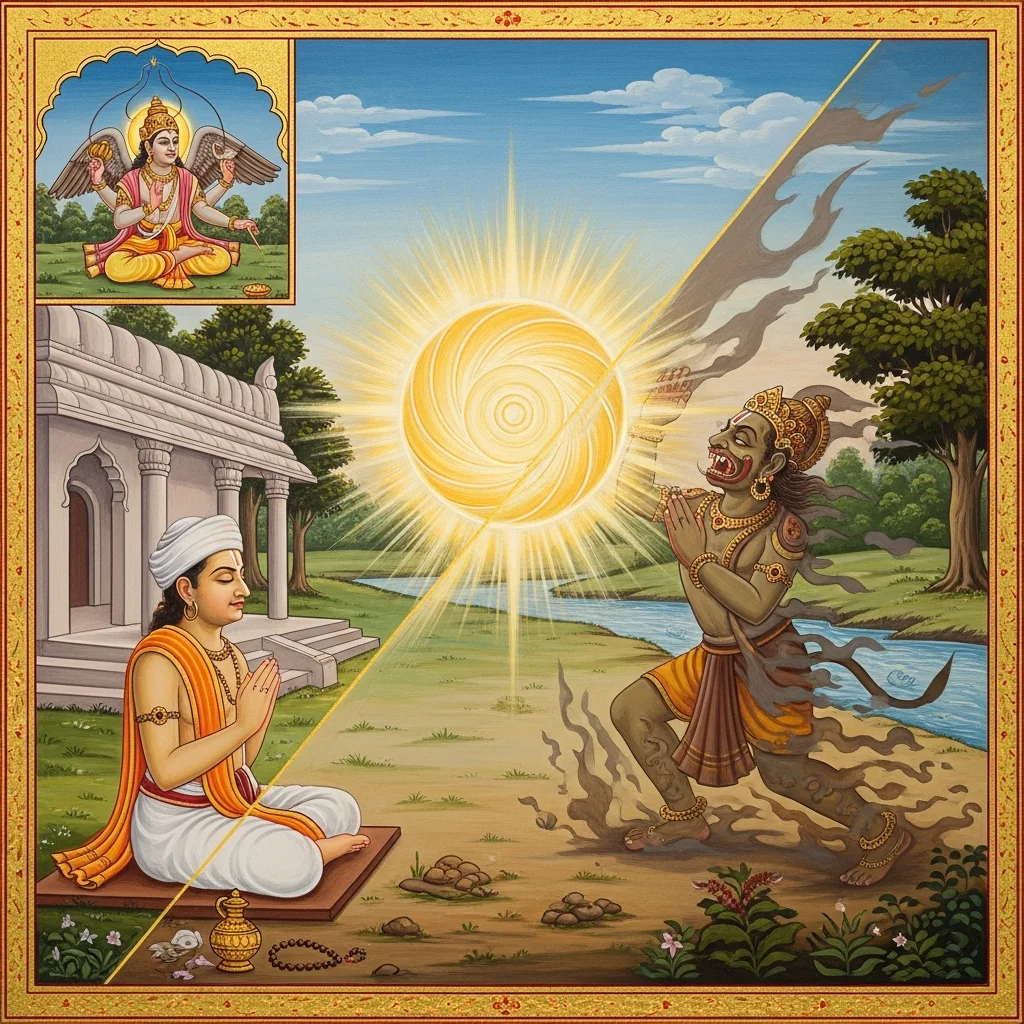
The chapter proceeds in a question-and-answer frame: the ṛṣis ask Sūta to name the rākṣasa who tormented the Viṣṇu-devoted sage Gālava. Sūta recounts the origin at Hālāsyakṣetra, where many Śiva-devoted sages led by Vasiṣṭha are engaged in worship. A gandharva named Durdama, absorbed in frivolous dalliance with many women, fails to cover himself on seeing the sages, and Vasiṣṭha curses him to become a rākṣasa; at the women’s plea, the curse is limited to sixteen years and his restoration is foretold. After wandering and harming beings, Durdama reaches Dharma-tīrtha and attacks Gālava. Gālava praises Viṣṇu, whereupon the Sudarśana-cakra is dispatched and severs the rākṣasa’s head; Durdama regains his gandharva form, hymns the cakra, and returns to heaven. Gālava then petitions Sudarśana to abide at that spot, establishing Cakra-tīrtha as a place that destroys sin, removes fear (even of bhūtas and piśācas), and grants liberation. The chapter ends by explaining the tīrtha’s seemingly “split” terrain: in primordial times Indra cut winged mountains, and fallen fragments reshaped the land and partly filled the tīrtha’s center.
Shlokas
Verse 1
ऋषय ऊचुः । भगवन्राक्षसः कोऽसौ सूत पौराणिकोत्तम । विष्णुभक्तं महात्मानं यो गालवमबाधत
The sages said: “O revered Sūta, best among the expounders of Purāṇic lore—who was that rākṣasa who harassed the great-souled Gālava, the devotee of Viṣṇu?”
Verse 2
श्रीसूत उवाच । वक्ष्यामि राक्षसं क्रूरं तं विप्राः शृणुतादरात् । यथा स राक्षसो जातो मुनीनां शापवैभवात्
Śrī Sūta said: “I shall describe that cruel rākṣasa. O brāhmaṇas, listen with reverence—how that rākṣasa came to be, through the potent force of sages’ curse.”
Verse 3
पुरा कैलासशिखरे हालास्ये शिवमंदिरे । चतुर्विशतिसाहस्रा मुनयो ब्रह्मवादिनः
Formerly, upon the peak of Kailāsa, in Hālāsya at Śiva’s temple, there were twenty-four thousand sages—expounders of brahman, the sacred truth.
Verse 4
वसिष्ठात्रिमुखाः सर्वे शिवभक्ता महौजसः । भस्मोद्धूलितसर्वांगास्त्रिपुंड्रांकितमस्तकाः
Led by Vasiṣṭha and Atri, all of them were devotees of Śiva, radiant with great spiritual vigor—smeared over their bodies with sacred ash, their foreheads marked with the triple lines, the tripuṇḍra.
Verse 5
रुद्राक्ष मालाभरणाः पंचाक्षरजपे रताः । हालास्यनाथं भूतेशं चंद्रचूडमुमापतिम्
Wearing rudrākṣa garlands and devoted to the japa of the five-syllabled mantra, they revered the Lord of Hālāsya—Bhūteśa, the moon-crested Śiva, the consort of Umā.
Verse 6
उपासांचक्रिरे मुक्त्यै मधुरापुरवासिनः । कदाचित्तत्र गंधर्वो विश्वावसुसुतो बली
The residents of the city of Madhurā performed worship seeking liberation. Once, there came there a powerful gandharva—the son of Viśvāvasu.
Verse 7
दुर्द्दमोनाम विप्रेंद्रा विटगोष्ठीपरायणः । ललनाशतसंयुक्तो विवस्त्रः सलिलाशये
O best of brāhmaṇas, he was named Durddama, given over to libertine revelry. Surrounded by hundreds of women, he sported naked in a watery resort.
Verse 8
चिक्रीड स विवस्त्राभिः साकं युवतिभिर्मुदा । हालास्यनाथतीर्थं तद्वसिष्ठो मुनिभिः सह
There he played joyfully with the unclothed young women at that Hālāsya-nātha tīrtha. Then Vasiṣṭha, together with the sages, came there.
Verse 9
माध्यंदिनं कर्तुमना ययौ शंकरमंदिरात् । तानृषीनवलोक्याथ रामास्ता भयकातराः
Intending to perform the midday rite, he went out from Śaṅkara’s temple. But when the women beheld those sages, they were shaken and distressed with fear.
Verse 10
वासांस्याच्छादयामासुर्दुर्द्दमो न तु साहसी । ततो वसिष्ठः कुपितः शशापैनं गत त्रपम्
The women quickly covered their garments, but Durdama—shameless and wholly unrestrained—did not. Then Vasiṣṭha, angered on seeing that he had lost all modesty, cursed him.
Verse 11
वसिष्ठ उवाच । यस्माद्दुर्दम गंधर्व दृष्ट्वास्मांल्लज्जया त्वया । वासो नाच्छादितं शीघ्रं याहि राक्षसतां ततः
Vasiṣṭha said: “Since you, O Durdama the Gandharva, upon seeing us did not quickly cover yourself out of modesty, therefore depart from here and become a Rākṣasa.”
Verse 12
इत्युक्त्वा ता स्त्रियः प्राह वसिष्ठो मुनिपुंगवः । यस्मादाच्छादितं वस्त्रं दृष्ट्वास्मांल्ललनोत्तमाः
Having spoken thus, Vasiṣṭha—the foremost among sages—addressed those women: “Since you, O best of women, upon seeing us covered your garments…”
Verse 13
ततो न युष्माञ्छपिष्यामि गन्छध्वं त्रिदिवं ततः । एवमुक्ता वसिष्ठेन रामाः प्रांजलयस्तदा
“Therefore I shall not curse you; go from here to Tridiva, the heavenly realm.” Thus addressed by Vasiṣṭha, those lovely women then stood with folded hands.
Verse 14
प्रणिपत्य वसिष्ठं तं भक्तिनम्रेण चेतसा । मुनिमंडलमध्ये तं वसिष्ठमिदमब्रुवन्
Bowing down to Vasiṣṭha with minds humbled by devotion, in the midst of the circle of sages they spoke these words to that Vasiṣṭha.
Verse 15
रामा ऊचुः । भगवन्सर्वधर्मज्ञ चतुरानननंदन । दयासिंधोऽवलोक्यास्मान्न कोपं कर्तुमर्हसि
The women said: “O Blessed One, knower of all dharma, O son of the four-faced Brahmā; O ocean of compassion—having looked upon us, you ought not to become angry.”
Verse 16
पतिरेवहि नारीणां भूषणं परमुच्यते । पतिहीना तु या नारी शतपुत्रापि सा मुने
“Indeed, for women the husband alone is said to be the supreme ornament. But a woman who is without a husband—even if she has a hundred sons, O sage—(is still considered bereft).”
Verse 17
विधवेत्युच्यते लोके तत्स्त्रीणां मरणं स्मृतम् । तत्प्रसादं कुरु मुने पत्यावस्माक मादरात्
“In the world she is called a widow; that is remembered as a kind of ‘death’ for women. Therefore, O sage, show your grace—out of regard for our husband.”
Verse 19
एकोऽपराधः क्षंतव्यो मुनिभिस्तत्त्वदर्शिभिः । क्षमां कुरु दयासिंधो युष्मच्छिष्येऽत्र दुर्दमे
“A single offense should be forgiven by sages who see the truth. O ocean of compassion, grant forgiveness here to Durdama, who is your disciple.”
Verse 20
न मे स्याद्वचनं मिथ्या कदाचिदपि सुभ्रुवः । उपायं वः प्रवक्ष्यामि शृणुध्वं श्रद्धया सह
“My word can never be false, O fair-browed ones. Yet I shall tell you a means (to resolve this); listen together with faith.”
Verse 21
षोडशाब्दावधिः शापो भर्तुर्वो भविता ध्रुवम् । षोडशाब्दावधौ चैष दुर्दमो राक्षसाकृतिः
For sixteen years, this curse upon your husband will surely endure. Throughout those sixteen years, Durdama will bear the form of a rākṣasa.
Verse 22
यदृच्छयाचक्र तीर्थं गमिष्यति सुरांगनाः । आस्ते तत्र महायोगी गालवो विष्णुतत्परः
By chance, O celestial maidens, he will go to Cakratīrtha. There dwells the great yogin Gālava, wholly devoted to Viṣṇu.
Verse 23
भक्ष्यार्थं तं मुनिं सोऽयं राक्षसोभिगमिष्यति । ततो गालवरक्षार्थं प्रेरितं चक्रमुत्तमम्
To devour that sage, this rākṣasa will approach him. Then, for Gālava’s protection, the supreme discus will be set in motion.
Verse 24
विष्णुनास्य शिरो रामा हरिष्यति न संशयः । ततः स्वरूपमासाद्य शापान्मुक्तः सुदुर्दमः
Viṣṇu will sever his head—of this there is no doubt, O Rāmās. Then, regaining his true form, Sudurdama will be freed from the curse.
Verse 25
पतिर्वस्त्रिदिवं भूयो गंतास्त्यत्र न संशयः । ततस्त्रिदिवमासाद्य दुर्द्दमोऽयं पतिर्हि वः
Your husband will go again to Tridiva, the heavenly world—of this there is no doubt. Having reached heaven, this Durdama will indeed be your husband as before.
Verse 26
रमयिष्यति सुन्दर्यो युष्मान्सुन्दरवेषभृत् । श्रीसूत उवाच । इत्युक्त्वा तु वसिष्ठस्ता दुर्दमस्य वरांगनाः
“He, adorned in a handsome guise, will delight you, O lovely women.” Śrī Sūta said: Having spoken thus, Vasiṣṭha addressed those excellent women of Durdama…
Verse 27
स्वाश्रमं प्रययौ तूर्णं हालास्येश्वरभक्तिमान् । अथ रामास्तमालिंग्य दुर्द्दमं पतिमातुराः
Devoted to Hālāsyeśvara, he quickly departed to his own āśrama. Then the Rāmās, distressed, embraced their husband Durdama.
Verse 28
रुरुदुः शोकसंविग्ना दुःखसागरमध्यगाः प्र । पश्यंतीषु तास्वेव दुर्दमो राक्षसोऽभवत्
They wept, shaken with grief, as though sunk in an ocean of sorrow. Even as they looked on, Durdama became a rākṣasa.
Verse 29
महादंष्ट्रो महाकायो रक्तश्मश्रुशिरोरुहः । तं दृष्ट्वा भयसंविग्ना जग्मू रामास्त्रिविष्टपम्
With huge fangs and a massive body, with red beard and hair—seeing him, the Rāmās, shaken with fear, went to Triviṣṭapa (heaven).
Verse 30
ततो राक्षसवेषोऽयं दुर्दमो भैरवाकृतिः । भक्षयन्प्राणिनः सर्वान्देशाद्देशं वनाद्वनम्
Thereafter, Durdama—clad in rākṣasa guise, with a terrifying, Bhairava-like appearance—devoured all beings, roaming from land to land, from forest to forest.
Verse 31
भ्रमन्न निलवेगोऽसौ धर्मतीर्थं ततो ययौ । एवं षोडशवर्षाणि भ्रमतोऽस्य ययुस्तदा
Thus Nīlavega, wandering restlessly, went to Dharmatīrtha. In this way, as he roamed about, sixteen years passed for him.
Verse 32
ततस्तु षोडशाब्दांते राक्षसोयं मुनीश्वराः । भक्षितुं गालवमुनिं धर्मतीर्थनिवासिनम्
Then, at the end of sixteen years, O best of sages, this rākṣasa set out to devour the sage Gālava, who was dwelling at Dharmatīrtha.
Verse 33
उपाद्रवद्वायुवेगः सचास्तौषीज्जनार्दनम् । गालवेन स्तुतो विष्णुस्तदा चक्रमचोदयत्
Vāyuvega rushed in to attack and praised Janārdana. Then Viṣṇu, praised by Gālava, set his discus in motion.
Verse 34
रक्षितुं गाल वमुनिं राक्षसेन प्रपीडितम् । अथागत्य हरेश्चक्रं राक्षसस्य शिरोऽहरत्
To protect the sage Gālava, who was oppressed by the rākṣasa, Hari’s discus came there and cut off the rākṣasa’s head.
Verse 35
ततोऽयं राक्षसं देहं त्यक्त्वा दिव्यकलेवरः । विमानवरमारुह्य दुर्दमः पुष्पवर्षितः
Then, abandoning that rākṣasa body, he assumed a divine form. Durdama mounted an excellent aerial car (vimāna), showered with flowers.
Verse 36
प्रांजलिः प्रणतो भूत्वा ववन्दे तं सुदर्शनम् । तुष्टाव श्रुतिरम्याभिर्वाग्भिरग्र्याभिरादरात्
With palms joined and bowed low, he paid homage to that glorious Sudarśana. With reverence he praised Him in noble words, delightful to hear.
Verse 37
दुर्दम उवाच । सुदर्शन नमस्तेऽस्तु विष्णुहस्तैकभूषण । नमस्तेऽसुरसंहर्त्रे सहस्रादित्यतेजसे
Durdama said: “Salutations to you, O Sudarśana—sole ornament of Viṣṇu’s hand. Salutations to you, slayer of the asuras, radiant like a thousand suns.”
Verse 38
कृपालेशेन भवतस्त्यक्त्वाहं राक्षसीं तनुम् । स्वरूपमभजं विष्णोश्चक्रायुध नमोऽस्तु ते
“By but a fraction of your compassion, I have cast off my rākṣasa body and regained my true nature. O Cakrāyudha of Viṣṇu, salutations to you.”
Verse 39
अनुजानीहि मां गन्तुं त्रिदिवं विष्णुवल्लभ । भार्या मे परिशोचंति विरहातुरचेतसः
“Permit me to depart to heaven, O beloved of Viṣṇu. My wives, their minds distressed by separation, are grieving for me.”
Verse 40
त्वन्मनस्को भविष्यामि यावज्जीवं यथाह्यहम् । तथा कृपां कुरुष्व त्वं मयि चक्र नमोऽस्तु ते
“So long as I live, I shall remain intent on you alone. Therefore, show your compassion toward me, O Discus—salutations to you.”
Verse 41
एवं स्तुतं विष्णुचक्रं दुर्दमेन सभक्तिकम् । अनुजग्राह सहसा तथास्त्विति मुनीश्वराः
Thus praised with devotion by Durdama, Viṣṇu’s discus at once showed him favor, saying, “So be it,” O best of sages.
Verse 42
चक्रायुधाभ्यनुज्ञातो दुर्दमो गालवं मुनिम् । प्रणम्य तेनानुज्ञातो गन्धर्वस्त्रिदिवं ययौ
Having received permission from Cakrāyudha, Durdama bowed to the sage Gālava; and, being permitted by him as well, that Gandharva went to Tridiva (heaven).
Verse 43
दुर्दमे तु गते स्वर्गं गालवो मुनिपुंगवः । स चक्रं प्रार्थयामास विष्ण्वायुधमनुत्तमम्
When Durdama had gone to heaven, Gālava—the bull among sages—then petitioned that unsurpassed weapon of Viṣṇu, the divine discus.
Verse 44
चक्रायुध नमामि त्वां महासुरविमर्द्दन । देवीपट्टण पर्यंते धर्मतीर्थे ह्यनुत्तमे
O Cakrāyudha, I bow to you, crusher of the great Asuras. Abide here, up to the boundary of Devīpaṭṭaṇa, in this unsurpassed sacred ford of Dharma.
Verse 45
सन्निधानं कुरुष्व त्वं सर्वपापविनाशनम् । त्वत्सन्निधानात्सर्वेषां स्नातानां पापिनामिह
Establish your presence here as the destroyer of all sins; for by your very presence, even sinful people who bathe here become freed from their faults.
Verse 46
पापनाशं कुरुष्व त्वं मोक्षं च कुरु शाश्वतम् । चक्रतीर्थमिति ख्यातिं लोकस्य परिकल्पय
Bring about the destruction of sins, and bestow eternal liberation as well. Grant this place renown among the people as “Cakratīrtha.”
Verse 47
त्वत्सन्निधानादत्रत्यमुनीनां भयनाशनम् । इतः परं भवत्वार्य चक्रायुध नमोऽस्तु ते
By your presence, may the fear of the sages dwelling here be destroyed. From this time onward, O noble Cakrāyudha, may it be so—salutations to you.
Verse 48
भूतप्रेतपिशाचेभ्यो भयं मा भवतु प्रभो । इति संप्रार्थितं चक्रं गालवेन मुनीश्वराः
“O Lord, let there be no fear from bhūtas, pretas, and piśācas.” Thus the discus was earnestly implored by Gālava, O best of sages.
Verse 49
तथैवा स्त्विति सम्भाष्य तस्मिंस्तीर्थे तिरोहितम् । श्रीसूत उवाच । एवं वः कथितो विप्रा राक्षसस्स भवो मया
Saying, “So be it,” it vanished in that very tīrtha. Śrī Sūta said: Thus, O brāhmaṇas, I have narrated to you the origin of that rākṣasa.
Verse 50
माहात्म्यं चक्र तीर्थस्य कथितं च मलापहम् । यच्छ्रुत्वा सर्वपापेभ्यो मुच्यते मानवो भुवि
The greatness of Cakratīrtha—remover of impurity—has been told. Hearing it, a human being on earth is freed from all sins.
Verse 51
ऋषय ऊचुः । व्यासशिष्य महाप्राज्ञ सूत पौराणिकोत्तम । आरभ्य दर्भशयनमादेवीपत्तनावधि
The sages said: “O Sūta—disciple of Vyāsa, greatly wise, foremost among Purāṇic narrators—please recount the sacred account, beginning from Darbhaśayana and extending up to Devīpattana.”
Verse 52
बहुव्यायामसंयुक्तं चक्रतीर्थमनुत्तमम् । ययौ विच्छिन्नतां मध्ये कथं कथय सांप्रतम्
“How did the unsurpassed Cakratīrtha—bound up with great exertion—come to be disrupted in the midst of its course? Tell us this now.”
Verse 53
एनं मनसि तिष्ठन्तं संशयं छेत्तुमर्हसि । श्रीसूत उवाच । पुरा हि पर्वताः सर्वे जातपक्षा मनोजवाः
“You should dispel this doubt that lingers in our minds.” Śrī Sūta said: “In ancient times, indeed, all the mountains had grown wings and moved with the speed of thought.”
Verse 54
पर्यंतपर्वतै सार्द्धं चेरुराकाशमार्गगाः । नगरेषु च राष्ट्रेषु ग्रामेषु च वनेषु च
Along with their bordering ranges, they roamed the pathways of the sky—over cities and kingdoms, over villages, and even through forests.
Verse 55
आप्लुत्याप्लुत्य तिष्ठंति पर्वताः सर्वतो भुवि । आक्रम्याक्रम्य तिष्ठंति यत्रयत्र महीधराः
Leaping again and again, the mountains came to rest everywhere upon the earth; pressing down repeatedly, those bearers of the world settled wherever they wished.
Verse 56
तत्रतत्र नरा गावस्तथान्ये प्राणिसंचयाः । मरणं सहसा प्रापुः पीड्यमाना महीधरैः
Here and there, men, cattle, and other multitudes of living beings suddenly met death, crushed and tormented by the mountains.
Verse 57
ब्राह्मणादिषु वर्णेषु नष्टेषु समनन्तरम् । यज्ञाद्यभावात्सहसा देवता व्यसनं ययुः
When the social orders beginning with the Brāhmaṇas were destroyed, immediately—because sacrifices and allied rites ceased—the gods suddenly fell into distress.
Verse 58
तत इन्द्रो महाक्रुद्धो वज्रमादाय वेगवान् । चिच्छेद सहसा पक्षान्पर्वतानां तरस्विनाम्
Then Indra, greatly enraged, swiftly took up the thunderbolt and at once severed the wings of the mighty mountains.
Verse 59
छिद्यमानच्छदाः सर्वे वासवेन महीधराः । अनन्यशरणा भूत्वा समुद्रं प्राविशन्भयात्
As their wings were being cut by Vāsava (Indra), all the mountains—having no other refuge—entered the ocean out of fear.
Verse 60
अचलेषु च सर्वेषु पतत्सु लवणार्णवे । निपेतुरर्णवभ्रांत्या चक्रतीर्थेपि केचन
And when all the mountains were falling into the salt ocean, some of them—mistaking it for the sea—fell even into Cakratīrtha.
Verse 61
पतितैः पर्वतैस्तैस्तु मध्यतः पूरितोदरम् । चक्रतीर्थं महापुण्यं मध्ये विच्छेदमाययौ
But by those mountains that had fallen, the hollow at the center was filled. Thus the supremely meritorious Cakra-tīrtha came to have a cleft in its middle.
Verse 62
यदृच्छया महाशैलाः पार्श्वयोस्तत्र नापतन् । अतो वै दर्भशयने तथा देवीपुरेऽपि च
By a fortunate chance, the great rocks did not fall upon the two sides there. Therefore, at Darbhaśayana—and likewise at Devīpura—this fact is remembered and indicated.
Verse 63
विच्छिन्नमध्यं तद्द्वेधा विभक्तमिव दृश्यते । मध्यतः पतितैः शैलैश्चक्रतीर्थं स्थलीकृतम्
Its middle, being cut, appears as though divided into two. And by the rocks that fell into its center, Cakra-tīrtha was turned into firm ground.
Verse 64
श्रीसूत उवाच । युष्माकमेवं कथितं मुनीन्द्रा यन्मध्यतस्तीर्थमिदं स्थली कृतम् । यथा महीध्राः सहसा बिडौजसा विच्छिन्नपक्षा इह पेतुरुन्नताः
Śrī Sūta said: “O lords of sages, you have thus described how this tīrtha, in its middle, became solid ground—how lofty mountains fell here all at once, their wings cut off by the mighty one.”