Adhyaya 36
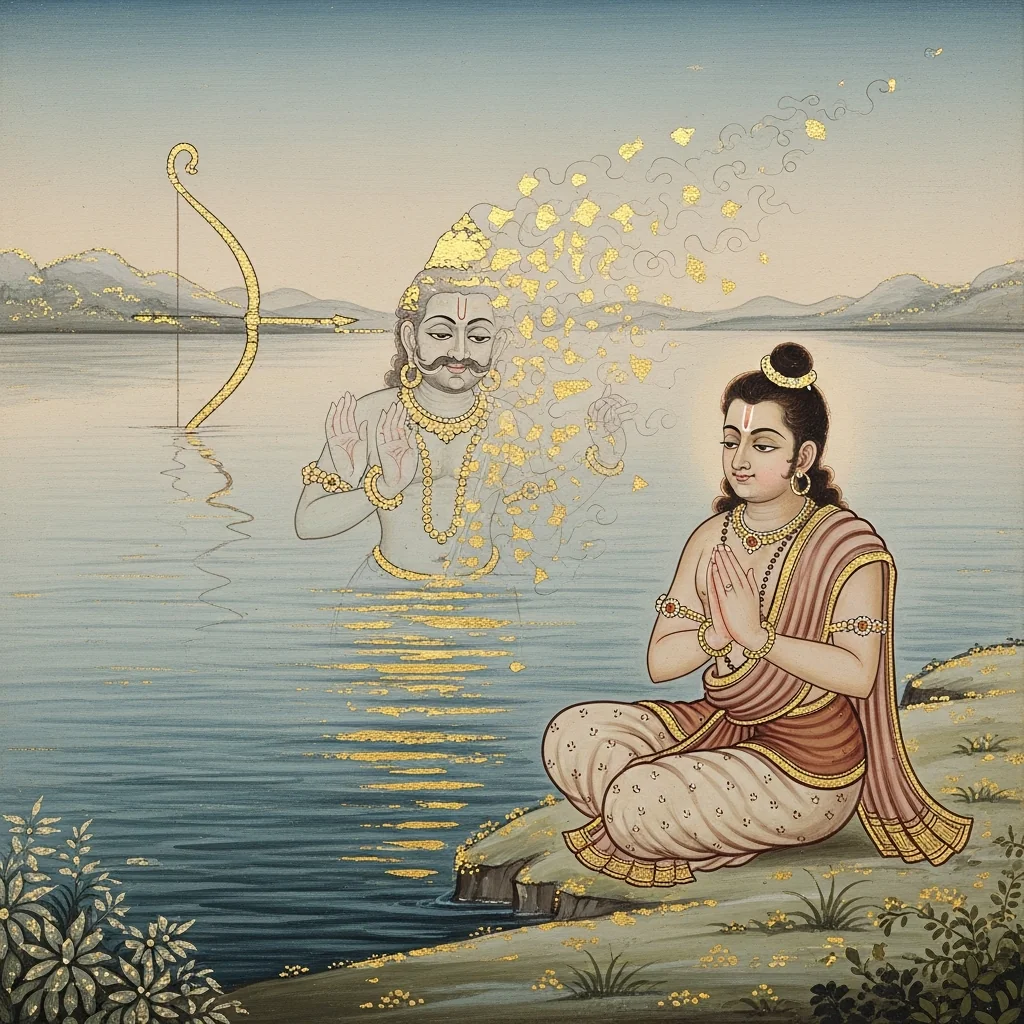
Chapter 36 unfolds as a dialogue between Sūta and the sages, using the case of the Brahmin Durācāra to teach two connected ethical-ritual principles. First is saṅga-dharma: sustained association with mahāpātakins steadily diminishes Brahminical merit and standing, culminating in an equal share of sin through shared dwelling, eating, and sleeping. Second is tīrtha-śakti: the waters of Dhanuṣkoṭi, linked to Rāmacandra’s bow and praised as a destroyer of great sins, grant immediate release from pāpa and even break the coercive possession of a vetāla. The chapter then gives calendrical instruction for Mahālaya śrāddha in the Bhādrapada kṛṣṇa pakṣa, listing tithi-specific devotional fruits and the demerit of neglect, and urging feeding Veda-competent, well-conducted Brahmins according to one’s means. It closes with a phalaśruti that hearing and knowing Dhanuṣkoṭi’s glory aids freedom from sins and supports the path to liberation.
Shlokas
Verse 1
श्रीसूत उवाच । धनुष्कोटेस्तु माहात्म्यं भूयोऽपि प्रब्रवीम्यहम् । दुराचाराभिधो यत्र स्नात्वा मुक्तो भवद्द्विजाः
Śrī Sūta said: I shall proclaim once again the greatness of Dhanuṣkoṭi—where a man known as ‘Durācāra’ attained release after bathing there, O twice-born sages.
Verse 2
मुनय ऊचुः । दुराचाराभिधः कोऽसौ सूत तत्त्वार्थकोविद । किंच पापं कृतं तेन दुराचारेण वै मुने
The sages said: Who is that person called ‘Durācāra’, O Sūta, knower of the truth and its meaning? And what sin was committed by that evil-doer, O sage?
Verse 3
कथं वा पातका न्मुक्तो धनुष्कोटौ निमज्जनात् । एतच्छुश्रूषमाणानां विस्तराद्वद नो मुने
How, indeed, was he freed from sins by immersing at Dhanuṣkoṭi? Tell us in detail, O sage, for we are eager to hear this.
Verse 4
श्रीसूत उवाच । मुनयः श्रूयतां तस्य दुराचारस्य पातकम् । स्नानेन धनुषः कोटौ यथा मुक्तश्च पातकात्
Śrī Sūta said: O sages, hear of the sin of that Durācāra—and how, by bathing at Dhanuṣkoṭi, he was freed from his transgression.
Verse 5
दुराचाराभिधो विप्रो गौतमीतीरमाश्रितः । कश्चिदस्ति द्विजाः पापी क्रूरकर्मरतः सदा
There was a certain brāhmaṇa named Durācāra who dwelt on the bank of the Gautamī; he was sinful, O twice-born, and ever devoted to cruel deeds.
Verse 6
ब्रह्मघ्नैश्च सुरापैश्च स्तेयिभिर्गुरुतल्पगैः । तदा संसर्गदुष्टोऽसौ तैः साकं न्यवसद्विजाः
He then lived together, O twice-born, with brahma-slaying sinners, drunkards, thieves, and those who violated the teacher’s bed; corrupted by such association, he dwelt in their company.
Verse 7
महापातकिसंसर्गं दोषेणास्य द्विजस्य वै । ब्राह्मण्यं सकलं नष्टं निःशेषेण द्विजोत्तमाः
Indeed, by the fault of associating with great sinners, all the brāhmaṇa-status of this twice-born man was entirely destroyed, O best of the twice-born.
Verse 8
महापातकिभिः सार्द्धं दिनमेकं तु यो द्विजः । निवसेत्सादरं तस्य तत्क्षणाद्वै द्विजन्मनः
But any twice-born who lives respectfully in the company of great sinners even for a single day—from that very moment, his state of twice-bornness is indeed diminished.
Verse 9
ब्राह्मणस्य तुरीयांशो नश्यत्येव न संशयः । द्विदिनं सेवनात्स्पर्शाद्दर्शनाच्छयनात्तथा
A quarter of a brāhmaṇa’s brāhmaṇa-status is surely lost—there is no doubt—by two days of attending upon and associating (with such people), by touch, by seeing, and likewise by lying down (with them or near them).
Verse 10
भोजनात्सह पंक्तौ च महापातकिभिर्द्विजाः । द्वितीयभागो नश्येत ब्राह्मणस्य न संशयः
O brāhmaṇas, if a brāhmaṇa eats in the same dining row along with great sinners (mahāpātakins), his second share of spiritual merit perishes—of this there is no doubt.
Verse 11
त्रिदिनाच्च तृतीयांशो नश्यत्येव न संशयः । चतुर्दिनाच्चतुर्थांशो विलयं याति हि ध्रुवम्
After three days, a third portion surely perishes—there is no doubt. After four days, a fourth portion certainly goes to destruction.
Verse 12
अतः परं तु तैः साकं शयनासनभोजनैः । तत्तुल्यपातकी भूयान्महापातकसंभवात्
Beyond this, if one shares bed, seat, and food with them, one becomes a sinner equal to them, for such conduct gives rise to great sin.
Verse 13
तेन ब्राह्मण्यहीनोऽयं दुराचाराभिधो द्विजाः । ग्रस्तोऽभवद्भीषणेन वेतालेन बलीयसा
Because of that, O twice-born, this man—known as ‘Durācāra’—became bereft of true brāhmaṇa-status, and was seized by a terrifying, powerful vetāla.
Verse 14
असौ परवशस्तेन वेतालेनातिपीडितः । देशाद्देशं भ्रमन्विप्रा वनाच्चैव वनांतरम्
Helpless under that vetāla’s sway and grievously tormented, he wandered from land to land, O brāhmaṇas, and from one forest to another.
Verse 15
पूर्वपुण्यविपाकेन दैवयोगेन स द्विजः । रामचंद्रधनुष्कोटिं महापातकनाशनीम्
By the ripening of former merit and by a providential convergence, that brāhmaṇa reached Rāmacandra’s Dhanuṣkoṭi, the destroyer of great sins.
Verse 16
अनुद्रुतः पिशाचेन तेनाविष्टो ययौ द्विजाः । न्यमज्जयत्स वेतालो धनुष्कोटिजले त्वमुम्
Pursued by that piśāca and possessed by it, he went on, O brāhmaṇas. Then the vetāla plunged him into the waters of Dhanuṣkoṭi.
Verse 17
धनुष्कोटिजले सोऽयं वेतालेन प्रवेशितः । उदतिष्ठत्क्षणादेव वेतालेन विमोचितः
Though this man was thrust into Dhanuṣkoṭi’s waters by the vetāla, he rose up at once—released from that very vetāla.
Verse 18
उत्थितोऽसौ द्विजो विप्रा धनुष्कोटिजलात्तदा । स्वस्थो व्यचिंतयत्कोऽयं देशो जलधितीरतः
Having risen then from Dhanuṣkoṭi’s waters, that brāhmaṇa became whole again. O brāhmaṇas, he reflected: “What is this land upon the ocean’s shore?”
Verse 19
कथं मयागतमिह गौतमीतीरवासिना । इति चिंताकुलः सोऽयं धनुष्कोटिनिवासिनम्
“How have I come here, I who dwell upon the banks of the Gautamī?”—thus, beset by anxious thoughts, he approached a resident of Dhanuṣkoṭi to inquire.
Verse 20
दत्तात्रेयं महात्मानं योगिप्रवरमुत्तमम् । समागम्य प्रणम्यासौ दुराचारोऽभ्यभाषत
Approaching the great-souled Dattātreya—the foremost and supreme among yogins—Durācāra bowed down before him and then spoke.
Verse 21
न जाने भगवन्देशः कतमोऽयं वदाधुना । गौतमीतीरनिलयो दुराचाराभिधो ह्यहम्
“O Blessed One, I do not know what region this is—tell me now. I dwell on the bank of the Gautamī, and I am indeed known as Durācāra.”
Verse 22
कृपया ब्रूहि मे ब्रह्मन्मयात्र कथमागतम् । इति पृष्टो मुनिस्तेन दुराचारेण सुव्रतः
“Out of compassion, O Brahman-sage, tell me how I have come to this place.” Thus questioned by Durācāra, the ascetic muni of noble vows responded.
Verse 23
ध्यात्वा मुहूर्तमवदद्दुराचारं घृणानिधिः । महापातकिसंसर्गे दुराचार कृते पुरा
After reflecting for a moment, the treasure-house of compassion spoke to Durācāra: “Formerly, O Durācāra, through association with great sinners (mahāpātakins)…”
Verse 24
ब्राह्मण्यं नष्टमभवद्वेतालस्त्वां ततोऽग्रहीत् । तेनाविष्टस्त्वमायातो विवशोऽत्र विमूढधीः
Your brahminical purity was ruined; then a vetāla seized you. Possessed by it, you came here helpless, your understanding utterly deluded.
Verse 25
न्यमज्जयत्त्वां वेतालो धनुष्कोटिजलेऽत्र तु । तत्र मज्जनमात्रेण विमुक्तः पातकाद्भवान्
Here, the vetāla plunged you into the waters of Dhanuṣkoṭi. By that mere immersion, you have been freed from sin.
Verse 26
धनुष्कोटौ तु ये स्नानं पुण्ये कुर्वंति मानवाः । तेषां नश्यंति वै सत्यं पंचपातकसंचयाः
Indeed, those people who perform sacred bathing at Dhanuṣkoṭi—truly, the accumulated mass of the five great sins is destroyed for them.
Verse 27
रामचंद्रधनुष्कोटावत्र मज्जनमात्रतः । महापातकिसंसर्गदोषस्ते विलयं ययौ
Here, at Rāmacandra’s Dhanuṣkoṭi, by mere immersion, the fault arising from association with great sinners has vanished for you.
Verse 28
तन्नाशादेव वेतालस्त्वां मुक्त्वा विलयं गतः । त्वामग्रहीद्यो वेतालः पुरायं ब्राह्मणोऽभवत्
Because that taint was destroyed, the vetāla released you and disappeared. The very vetāla that seized you was formerly a brāhmaṇa.
Verse 29
सोऽयं भाद्रपदे मासे कृष्णपक्षे महालयम् । पार्वणेन विधानेन पितॄणां नाकरोन्मुदा
This very man, in the month of Bhādrapada, during the dark fortnight at the time of Mahālaya, did not joyfully perform the ancestral rite for the Pitṛs according to the prescribed pārvaṇa procedure.
Verse 30
तेन स्वपितृभिः शप्तो वेतालत्वमगादयम् । सोपि चास्य धनुष्कोटेरवलोकनमात्रतः
Cursed by his own forefathers, this man fell into the state of a vetāla. Yet even he, by merely beholding the tip of this bow, began to be freed from that condition.
Verse 31
वेतालत्वं विहायेह विष्णुलोकम वाप्तवान् । अतो भाद्रपदे मासे कृष्णपक्षे महालयम्
Casting off the state of a vetāla here itself, he attained Viṣṇu’s world. Therefore, in the month of Bhādrapada, in the dark fortnight, the Mahālaya rites should be performed.
Verse 32
उद्दिश्य स्वपितॄन्ये तु न कुर्वन्त्यतिलोभतः । महालोभयुतास्तेऽद्धा वेतालाः स्युर्न संशयः
Those who, though intending their own ancestors, do not perform the rites because of excessive greed—such people, filled with great avarice, indeed become vetālas; of this there is no doubt.
Verse 33
तस्माद्भाद्रपदे मासे कृष्णपक्षे महालयम् । पितॄनुद्दिश्य शक्त्या ये ब्राह्मणान्वेदपारगान्
Therefore, in Bhādrapada during the dark fortnight—at Mahālaya—those who, dedicating it to their ancestors, according to their capacity, honour and feed Brāhmaṇas who are well-versed in the Vedas…
Verse 34
भोजयेयुर्महान्नेन न ते विंदंति दुर्गतिम् । यस्तु भाद्रपदे मासे कृष्णपक्षे महालयम्
…and feed them with abundant food—such people do not meet with misfortune. But whoever, in the month of Bhādrapada, during the dark fortnight (Kṛṣṇa-pakṣa) at Mahālaya…
Verse 35
स्वशक्त्यनुगुणं विप्रमेकं द्वौ त्रीनकिंचनः । भोजयेन्नहि दौर्गत्यं भवेदस्य कदाचन
Even a poor man should, according to his ability, feed one Brāhmaṇa—or two or three; for then misfortune will never befall him.
Verse 36
अयं भाद्रपदे मासे पितॄणामनुपासनात् । ययौ वेतालतां विप्रो यस्त्वां जग्राह पापिनम्
It was in the month of Bhādrapada—through neglect of worship of the ancestors—that this Brāhmaṇa, who seized you, the sinner, went into the condition of a vetāla.
Verse 37
कालो भाद्रपदमासमारभ्य वृश्चिकावधि । महालयस्य कथितो मुनिभिस्तत्त्वदर्शिभिः
The truth-seeing sages declare that the period of Mahālaya extends from the month of Bhādrapada up to (the time of) Vṛścika.
Verse 38
मासो भाद्रपदः कालस्तत्रापि हि विशिष्यते । कृष्ण पक्षो विशिष्टः स्याद्दुराचारक तत्र वै
Among those times, the month of Bhādrapada is especially distinguished; and within it the dark fortnight (Kṛṣṇa-pakṣa) is particularly distinguished—even for one of bad conduct, indeed.
Verse 39
तस्मिञ्छुभे कृष्णपक्षे प्रथमायां तथा तिथौ । श्राद्धं महालयं कुर्याद्यो नरो भक्तिपूर्वकम्
In that auspicious dark fortnight, on the first lunar day (Prathamā), the man who performs the Mahālaya śrāddha with devotion acts rightly and gains its merit.
Verse 40
तस्य प्रीणाति भगवान्पावकः सर्वपावनः । स वह्निलोकमाप्नोति वह्निना सह मोदते
Agni, the blessed Pāvaka who purifies all, is pleased with him. Such a person attains the world of Fire and rejoices there in the company of Agni.
Verse 41
तस्मै च ज्वलनो देवः सर्वैश्वर्यं ददात्यपि । प्रथमायां तिथौ मर्त्यो यो न कुर्यान्महालयम्
To him, the god Jvalana (Agni) grants every kind of prosperity as well. But the mortal who does not perform the Mahālaya rite on the first lunar day (Prathamā)…
Verse 42
वह्निर्गृहं दहेत्तस्य श्रियं क्षेत्रादिकं तथा । वेदज्ञे ब्राह्मणे भुक्ते प्रथमायां महालये
Fire burns down his house and likewise destroys his prosperity and property—lands and the rest—if, on the Mahālaya of the first tithi, even after feeding a Veda-knowing brāhmaṇa, he still fails in proper observance.
Verse 43
दश कल्पसहस्राणि पितरो यांति तृप्तताम् । द्वितीयायां तु यो भक्त्या कुर्याच्छ्राद्धं महालयम्
For ten thousand kalpas the Pitṛs (Fathers, ancestral spirits) attain satisfaction. But the one who, with devotion, performs the Mahālaya śrāddha on the second lunar day (Dvitīyā)…
Verse 44
तस्य प्रीणाति भगवान्भवानीपतिरीश्वरः । स कैलासमवाप्नोति शिवेन सह मोदते
The Lord Īśvara, consort of Bhavānī, is pleased with him. He attains Kailāsa and rejoices there together with Śiva.
Verse 45
विपुलां संपदं तस्मै प्रीतो दद्यान्महेश्वरः । द्वितीयायां तिथौ मर्त्यो यो न कुर्यान्महालयम्
Pleased, Maheśvara grants him abundant prosperity. But the mortal who does not perform the Mahālaya rite on the second lunar day (Dvitīyā)…
Verse 46
तस्य वै कुपितः शंभुर्नाशयेद्ब्रह्मवर्चसम् । रौरवं कालसूत्राख्यं नरकं चास्य दास्यति
Śambhu, angered with him, destroys his brahmanical splendor. He also consigns him to the hells called Raurava and Kālasūtra.
Verse 47
वेदज्ञे ब्राह्मणे भुक्ते द्वितीयायां महालये । विंशत्कल्प सहस्राणि पितरो यांति तृप्तताम्
When, on the Mahālaya of the second tithi, a Veda-knowing brāhmaṇa has been fed, the ancestors attain satisfaction for twenty thousand kalpas.
Verse 48
अनुग्रहात्पितॄणां च संततिश्चास्य वर्द्धते । तृतीयायां नरो भक्त्या कुर्याच्छ्राद्धं महालयम्
Through the grace of the ancestors, his lineage too increases and flourishes. Therefore, on the third lunar day (Tṛtīyā), a man should devotedly perform Mahālaya śrāddha.
Verse 49
तस्य प्रीणाति भगवांल्लोकपालो धनाधिपः । महापद्मादिनिधयो वर्तंते तस्य वै वशे
The blessed Lokapāla, lord of wealth (Kubera), is pleased with him. The great treasures—Mahāpadma and the rest—come under his control.
Verse 50
तस्यानुगास्त्रयो देवा ब्रह्मविष्णुमहेश्वराः । तृतीयायां तिथौ मर्त्यो यो न कुर्यान्महालयम्
Brahmā, Viṣṇu, and Maheśvara—those three gods—stand as his overseers. If a mortal does not perform the Mahālaya rite on the third lunar day (tṛtīyā), he becomes liable to their punitive ordinance.
Verse 51
धनदो भगवांस्तस्य संपदं हरति क्षणात् । दारिद्यं च ददात्यस्मै बहुदुःखसमाकुलम्
The Lord Dhanada (Kubera) instantly takes away his prosperity, and grants him poverty—one that is crowded with many sufferings.
Verse 52
तृतीयायां तिथौ मर्त्यो यः करोति महालयम् । तृप्यंति पितरस्तस्य त्रिंशत्कल्पसहस्रकम्
A mortal who performs Mahālaya on the third lunar day satisfies his forefathers; they remain gratified for thirty thousand kalpas.
Verse 53
चतुर्थ्यां तु नरो भक्त्या श्राद्धं कुर्यान्महालयम् । तस्य प्रीणाति भगवान्हेरंबः पार्वतीसुतः
But if a man, with devotion, performs the Mahālaya śrāddha on the fourth lunar day (caturthī), then the Lord Heramba—Pārvatī’s son—becomes pleased with him.
Verse 54
तस्य विघ्नाश्च नश्यंति गजवक्त्रप्रसादतः । चतुर्थ्यां तु तिथौ मर्त्यो यो न कुर्यान्महालयम्
By the grace of the Elephant-faced Lord, his obstacles are destroyed. But if a mortal does not perform Mahālaya on the fourth lunar day (caturthī)…
Verse 55
विघ्नेशो भगवांस्तस्य सदा विघ्नं करोति हि । चण्डकोलाहलाभिख्ये नरके च पतत्यथ
For Lord Vighneśa indeed always creates obstacles for him; and then he falls into the hell known as Caṇḍakolāhala.
Verse 56
चतुर्थ्यां वै तिथौ मर्त्यो यः करोति महालयम् । पितरः कल्पसाहस्रं चत्वारिंशत्प्रहर्षिताः
Indeed, a mortal who performs Mahālaya on the fourth lunar day makes his ancestors rejoice; they remain delighted for forty thousand kalpas.
Verse 57
बहून्पुत्रान्प्रदास्यंति श्राद्धकर्तुर्निरंतरम् । पंचम्यां तु तिथौ भक्त्या यो न कुर्यान्महालयम्
They will continually grant many sons to the performer of the śrāddha. But if, on the fifth lunar day (pañcamī), a man devotedly does not perform Mahālaya…
Verse 58
तस्य लक्ष्मीर्भगवती परित्यजति मंदिरम् । अलक्ष्मीः कलहाधारा तस्य प्रादुर्भवेद्गृहे
Goddess Lakṣmī abandons his dwelling; and Alakṣmī—whose very basis is quarrel—manifests in his home.
Verse 59
पचम्यां तु तिथौ मर्त्यो यः करोति महालयम् । तस्य तृप्यंति पितरः पंचकल्पसहस्रके
On the fifth lunar day (pañcamī), the mortal who performs the sacred Mahālaya satisfies his ancestors; they are gratified for five thousand kalpas.
Verse 60
संततिं चाप्यविच्छिन्नामस्मै दास्यंति तर्पिताः । पार्वती च प्रसन्ना स्यान्महदैश्वर्यदायिनी
When the ancestors are satisfied by offerings, they grant him an unbroken lineage; and Goddess Pārvatī too becomes pleased, bestowing great prosperity and lordly fortune.
Verse 61
षष्ठ्यां तिथौ नरो भक्त्या श्राद्धं कुर्यान्महालयम् । तस्य प्रीणाति भगवान्षण्मुखः पार्वती सुतः
On the sixth lunar day (Ṣaṣṭhī), if a man devoutly performs the Mahālaya śrāddha, Lord Ṣaṇmukha—Pārvatī’s son—becomes pleased with him.
Verse 62
तस्य पुत्राश्च पौत्राश्च षण्मुखस्य प्रसादतः । ग्रहैर्वालग्रहैश्चैव न बाध्यंते कदाचन
By the grace of Ṣaṇmukha, his sons and grandsons are never afflicted—either by planetary forces or by child-seizing spirits—at any time.
Verse 63
षष्ठ्यां तिथौ नरो भक्त्या यो न कुर्यान्महालयम् । तस्य स्कन्दो महासेनो विमुखः स्यान्न संशयः
But if, on Ṣaṣṭhī, a man does not devoutly perform the Mahālaya rite, then Skanda, the great commander (Mahāsena), turns away from him—of this there is no doubt.
Verse 64
गर्भान्निर्गतमात्रैव प्रजा तस्य विनश्यति । पूतनादिग्रहकुलैर्बाध्यते च निरंतरम्
His offspring perish the very moment they emerge from the womb; and he is continually tormented by hosts of afflicting spirits, such as Pūtanā and the like.
Verse 65
वह्निज्वालाप्रवेशाख्ये नरके च पतत्यधः । षष्ठ्यां तिथौ यः श्रद्धावान्कुर्याच्छ्राद्धं महालयम्
He falls down into the hell called “Entering the Flames of Fire”; but the faithful person who performs the Mahālaya śrāddha on Ṣaṣṭhī (the sixth lunar day) attains the auspicious fruit.
Verse 66
षष्टिकल्पसहस्रं तु पितरो यामति तृप्तताम् । पुत्रानपि प्रदास्यंति संपदं विपुलां तथा
For sixty thousand kalpas the Pitṛs attain satisfaction; and they also bestow sons, and likewise abundant wealth.
Verse 67
सप्तम्यां तु तिथौ मर्त्यः श्राद्धं कुर्यान्महालयम् । हिरण्यपाणिर्भगवानादित्यस्तस्य तुष्यति
On the seventh lunar day (Saptamī), if a mortal performs the Mahālaya śrāddha, the blessed Sun—Lord Āditya, “Golden-handed”—is satisfied with him.
Verse 68
अरोगो दृढगात्रः स्याद्भास्करस्य प्रसादतः । हिरण्यपाणिर्भगवान्हिरण्यं पाणिना स्वयम्
By Bhāskara’s grace he becomes free from disease and firm-limbed; and the Lord “Golden-handed” himself grants gold with his own hand to the performer of the Mahālaya śrāddha.
Verse 69
महालयश्राद्धकर्त्रे ददाति प्रीतमानसः । सप्तम्यां तु तिथौ भक्त्या यो न कुर्यान्महालयम्
With a gladdened heart he bestows (such merit) upon the performer of the Mahālaya śrāddha; but whoever, though devoted, does not perform Mahālaya on Saptamī incurs the contrary result described next.
Verse 70
व्याधिभिः क्षयरोगाद्यै बाध्यते स दिवानिशम् । तीक्ष्णधारास्त्रशय्याख्ये नरके च पतत्यधः
Afflicted day and night by diseases such as consumption (kṣaya) and the like, he falls down into the hell called “the bed of sharp-edged weapons.”
Verse 71
सप्तम्यां यो नरो भक्त्या श्राद्धं कुर्यान्महालयम् । सप्ततिं कल्पसाहस्रं प्रीणंति पितरोऽस्य वै
If a man, with devotion, performs the Mahālaya śrāddha on Saptamī (the seventh lunar day), his ancestors are indeed gratified for seventy thousand kalpas.
Verse 72
संततिं चाप्यविच्छिन्नां दद्युः पितृगणाः सदा । अष्टम्यां तु तिथौ मर्त्यः श्राद्धं कुर्यान्महाल यम्
The hosts of ancestors ever grant him an unbroken lineage. And on Aṣṭamī (the eighth lunar day), a mortal should perform the Mahālaya śrāddha.
Verse 73
मृत्युंजयः कृत्तिवासास्तस्य प्रीणाति शंकरः । करस्थं तस्य कैवल्यं शंकरस्य प्रसादतः
Śaṅkara—Mṛtyuṃjaya, the Lord Kṛttivāsā clad in skins—is pleased with him; by Śaṅkara’s grace, kaivalya, liberation, rests as it were in his very hand, readily attained.
Verse 74
महालयेन श्राद्धेन तुष्टे साक्षात्त्रि यंबके । चतुर्दशसु लोकेषु दुर्लभं तस्य किं भवेत्
When Tryambaka (Śiva) himself is pleased by the Mahālaya śrāddha, what could remain difficult to obtain for that person in all the fourteen worlds?
Verse 75
महालयं न कुर्याद्वै योऽष्टम्यां मूढचेतनः । संसारसागरे घोरे सदा मज्जति दुःखितः
Whoever, of deluded mind, does not perform the Mahālaya rite on the eighth lunar day (aṣṭamī), sinks forever—sorrowful—in the dreadful ocean of saṃsāra.
Verse 76
कदाचिदपि तस्येष्टं नैव सिद्ध्यति भूतले । वैतरिण्याख्यनरके पतत्याचंद्रतारकम्
Even once, his desired aims do not succeed upon the earth; and he falls into the hell called Vaitaraṇī, for as long as the moon and stars endure.
Verse 77
योऽष्टम्यां श्रद्धया श्राद्धं नरः कुर्यान्महालयम् । अशीतिकल्पसाहस्रं तृप्यंति पितरोऽस्य वै
If a man performs the Mahālaya śrāddha on the eighth lunar day (aṣṭamī) with faith, his ancestors are satisfied for eighty thousand kalpas.
Verse 78
आशीर्भिर्वर्द्धयंत्येनं विघ्नश्चास्य व्यपोहति । संततिं चाप्यविच्छिन्नां दद्युः पितृगणाः सदा
They increase him through blessings, and obstacles in his life are driven away; the hosts of ancestors always grant him an unbroken lineage as well.
Verse 79
नवम्यां तु तिथौ मर्त्यः श्राद्धं कुर्यान्महालयम् । दुर्गादेवी भगवती तस्य प्रीणाति शांभवी
On the ninth lunar day (Navamī), a mortal should perform the Mahālaya śrāddha; then the Blessed Goddess Durgā—Śāmbhavī herself—becomes pleased with him.
Verse 80
क्षयापस्मारकुष्ठा दीन्क्षुद्रप्रेतपिशाचकान् । नाशयेत्तस्य सन्तुष्टा दुर्गा महिषमर्दिनी
Pleased by his rite, Durgā—the slayer of Mahiṣa—destroys for him consumption, epilepsy, leprosy, misery, and the afflictions caused by petty spirits, pretas, and piśācas.
Verse 81
नवम्यां तु तिथौ मर्त्यो यो न कुर्यान्महालयम् । अपस्मारेण पीड्येत तथैव ब्रह्मरक्षसा
On the ninth lunar day, the mortal who does not perform the Mahālaya rite is afflicted by epilepsy, and likewise by a brahmarākṣasa.
Verse 82
अभिचारार्थकृत्याभिर्वाध्येत च निरन्तरम् । नवम्यां यस्तिथौ मर्त्यः श्राद्धं कुर्यान्महालयम्
He would be continually harassed by sorceries and hostile rites; therefore the mortal should perform the Mahālaya śrāddha on the ninth lunar day.
Verse 83
नवतिं कल्पसाहस्रं तृप्यन्ति पितरोऽस्य वै । संततिं चाप्यविच्छिन्नां दद्युः पितृगणाः सदा
For ninety thousand kalpas, his ancestors are indeed satisfied; and the hosts of Pitṛs always grant him unbroken lineage and continuity of progeny.
Verse 84
दशम्यां तु तिथौ मर्त्यः श्राद्धं कुर्यान्महालयम् । तस्यामृतकलश्चन्द्रः षोडशात्मा प्रसीदति
On the tenth tithi, a mortal should perform the Mahālaya śrāddha; then the Moon—vessel of amṛta and possessed of sixteen phases—becomes gracious.
Verse 85
औषधीनामधीशेऽस्मिञ्छ्राद्धेनानेन तोषिते । व्रीह्यादीनि तु धान्यानि दद्युरोषधयः सदा
When the lord of medicinal herbs is pleased by this śrāddha, the herbs ever bestow grains such as rice and the like.
Verse 86
यो न कुर्याद्दशम्यां तु महालयमनुत्तमम् । ओषध्यो निष्फलास्तस्य कृषिश्चाप्यस्य निष्फला
Whoever does not perform the unsurpassed Mahālaya rite on the tenth tithi—his herbs bear no fruit, and his agriculture too becomes fruitless.
Verse 87
दशम्यां यस्तिथौ मर्त्यः श्राद्धंकुर्यान्महालयम् । शतकल्पसहस्राणि तृप्यंति पितरोऽस्य वै
The mortal who performs the Mahālaya śrāddha on the tenth tithi—his ancestors are satisfied for a hundred thousand kalpas.
Verse 88
संततिं चाप्यविच्छिन्नां दद्युः पितृगणाः सदा । एकादश्यां नरो भक्त्या श्राद्धं कुर्यान्महालयम्
The hosts of the Pitṛs ever grant unbroken progeny; and on the eleventh tithi, a man should devoutly perform the Mahālaya śrāddha.
Verse 89
संहर्ता सर्वलोकस्य तस्य रुद्रः प्रसीदति । रुद्रस्य सर्वसंहर्तुः प्रसादेन जगत्पतेः
To him Rudra—the destroyer of all worlds—becomes gracious; by the grace of Rudra, the universal destroyer, the Lord of the world bestows favor.
Verse 90
शत्रून्पराजय त्येष श्राद्धकर्ता निरन्तरम् । ब्रह्महत्यायुतं चापि तस्य नश्यति तत्क्षणात्
One who continually performs Śrāddha surely overcomes enemies; even the burden of a myriad acts of brahmin-slaying is destroyed for him in that very instant.
Verse 91
अग्निष्टोमादियज्ञानां फलमाप्नोति पुष्कलम् । एकादश्यां नरो भक्त्या यो न कुर्यान्महालयम्
He gains abundant fruit equal to that of Agniṣṭoma and other sacrifices; but the man who, even with devotion, does not perform the Mahālaya rite on the eleventh lunar day fails in his duty.
Verse 92
तस्य वै विमुखो रुद्रो न प्रसीदति कर्हिचित् । सर्वतो वर्धमानाश्च बाधन्ते शत्रवो ह्यमुम्
For such a person, Rudra turns away and is never pleased; and enemies, increasing from every side, surely harass him.
Verse 93
अग्निष्टोमादिका यज्ञाः कृताश्च बहुदक्षिणाः । निष्फला एव तस्य स्युर्भस्मनि न्यस्तहव्यवत्
Even Agniṣṭoma and similar sacrifices—though performed with abundant priestly gifts—become fruitless for him, like oblations cast upon ashes.
Verse 94
ब्रह्मवातकतुल्यः स्याच्छ्राद्धाकरणदोषतः । एकादश्यां तिथौ यस्तु श्राद्धं कुर्यान्महालयम्
By the fault of neglecting Śrāddha, one becomes comparable to a brahma-vātaka, a grievous sinner; but he who performs the Mahālaya Śrāddha on the Ekādaśī tithi is freed from that blame.
Verse 95
द्विशतं कल्पसाहस्रं तृप्यंति पितरोऽस्य वै । संततिं चाप्यविच्छिन्नां दद्युः पितृ गणाः सदा
Truly, his ancestors are satisfied for two hundred thousand kalpas; and the hosts of the Pitṛs ever grant him an unbroken lineage.
Verse 96
द्वादश्यां तु तिथौ मर्त्यः कुर्याच्छ्राद्धं महालयम् । तस्य लक्ष्मीपतिः साक्षात्प्रसीदति जनार्दनः
If a mortal performs the Mahālaya Śrāddha on the Dvādaśī tithi, Janārdana—the Lord of Lakṣmī—becomes directly pleased with him.
Verse 97
प्रसन्ने सति देवेशे देवदेवे जनार्दने । चराचरं जगत्सर्वं प्रीतमेव न संशयः
When Janārdana—the God of gods, the Lord of deities—is pleased, the entire moving and unmoving world becomes pleased; of this there is no doubt.
Verse 98
भूमिर्हरिप्रिया चास्य सस्यं संवर्द्धयत्यपि । लक्ष्मीश्च वर्द्धते तस्य मंदिरे हरिवल्लभा
The earth, beloved of Hari, increases his crops as well; and Lakṣmī—dear to Hari—ever grows in his house.
Verse 99
गदा कौमोदकी नाम नारायणकरस्थिता । अपस्मारादिभूतानि नाशयत्येव सर्वदा
The mace named Kaumodakī, abiding in Nārāyaṇa’s hand, ever destroys beings such as Apasmāra and other afflictive spirits and disorders.
Verse 100
तीक्ष्णधारं तथा चक्रं शत्रूनस्य दहत्यपि । यातुधानपिशाचादीञ्छंखश्चास्य व्यपोहति
For him, the discus with its razor-sharp edge burns up even enemies; and his conch drives away yātudhānas, piśācas, and other malevolent beings.
Verse 110
सहस्रकल्पसाहस्रं प्रीणंति पितरोऽस्य वै । संततिं चाप्यविच्छिन्नां दद्युः पितॄगणास्तदा
For a thousand thousands of kalpas, his Pitṛs are truly gratified; and then the hosts of ancestors grant him an unbroken line of progeny.
Verse 120
संततिं चाप्यविच्छिन्नां दद्युः पितृगणास्तदा । अमायां तु नरो भक्त्या श्राद्धं कुर्यान्महालयम्
Then the hosts of ancestors grant unbroken progeny. Therefore, on the new-moon day (amāvasyā), a man should, with devotion, perform the Mahālaya śrāddha.
Verse 130
अस्मानुद्दिश्य मत्पुत्रा भोजयेयुर्द्विजोत्तमान् । तेन नो नरकक्लेशो न भविष्यति दारुणः
“Directing the rite toward us, may my sons feed the most excellent of the twice-born (dvijas); by that, the dreadful torment of hell shall not befall us.”
Verse 140
पार्वणेन विधानेन कुर्याच्छ्राद्धे महालयम् । नरो महालयश्राद्धे पितृवंश्यान्पितॄनिव
One should perform the Mahālaya śrāddha according to the pārvaṇa procedure; and in the Mahālaya śrāddha, a man should regard all those of his ancestral line as though they were the Pitṛs themselves.
Verse 150
नकुर्याद्यद्यपि श्राद्धं मातापित्रोर्मृतेऽहनि । कुर्यान्महालयश्राद्धमस्मरन्नेव बुद्धिमान्
Even if one does not perform śrāddha on the death-anniversary of one’s mother and father, a wise person should still perform the Mahālaya śrāddha, not letting it be forgotten.
Verse 160
क्षमध्वं मम तद्यूयं भवंतो हि दयापराः । दरिद्रो रोदनं कुर्यादेवं काननभूमिषु
“So forgive me—you are indeed compassionate. A poor man may weep thus in forest lands.”
Verse 170
एवं वै वरयेद्विप्राश्चतुरस्तु महालये । ब्राह्मणान्वेदसंपन्नान्सुशीलान्वरयेत्सुधीः
Thus, in Mahālaya one should invite four vipras; the wise should invite brāhmaṇas endowed with Vedic learning and good conduct.
Verse 180
नश्यंति तत्क्षणादेव भूतान्यन्यानि वै तथा । महालयस्यकरणाद्विपुलां श्रियमश्नुते
At that very moment, other (harmful) beings likewise perish; and by performing Mahālaya, one attains abundant prosperity.
Verse 190
हत्वा तु रावणं संख्ये सीतां पुनरवाप्तवान् । महालयस्य करणाद्धर्मपुत्रो युधिष्ठिरः
Having slain Rāvaṇa in battle, he regained Sītā; and by performing the Mahālaya, Yudhiṣṭhira—Dharma’s son—also attained fulfillment.
Verse 200
तस्माद्भाद्र पदे मासे दुराचार पितॄन्प्रति । ब्राह्मणान्भोजयान्नेन षड्रसेन सभक्तिकम्
Therefore, in the month of Bhādrapada, if one has acted wrongly toward the Pitṛs (ancestors), one should reverently feed brāhmaṇas with a meal endowed with the six tastes, offered with devotion.
Verse 210
तान्यप्यत्र विनश्यंति धनुष्कोटौ निमज्जनात् । शूद्रेण पूजितं लिंगं विष्णुं वा यो नमेद्द्विजः
Even those faults are destroyed here at Dhanuṣkoṭi by immersion. Yet a twice-born who bows to a liṅga—or to Viṣṇu—that has been worshipped by a śūdra incurs a fault.
Verse 219
एवं वः कथितं विप्रा धनुष्कोटेस्तु वैभवम् । यच्छ्रुत्वा सर्वपापेभ्यो मुच्यते मानवो भुवि
Thus, O vipras (brāhmaṇas), the grandeur of Dhanuṣkoṭi has been declared to you; hearing it, a person on earth is freed from all sins.