Adhyaya 35
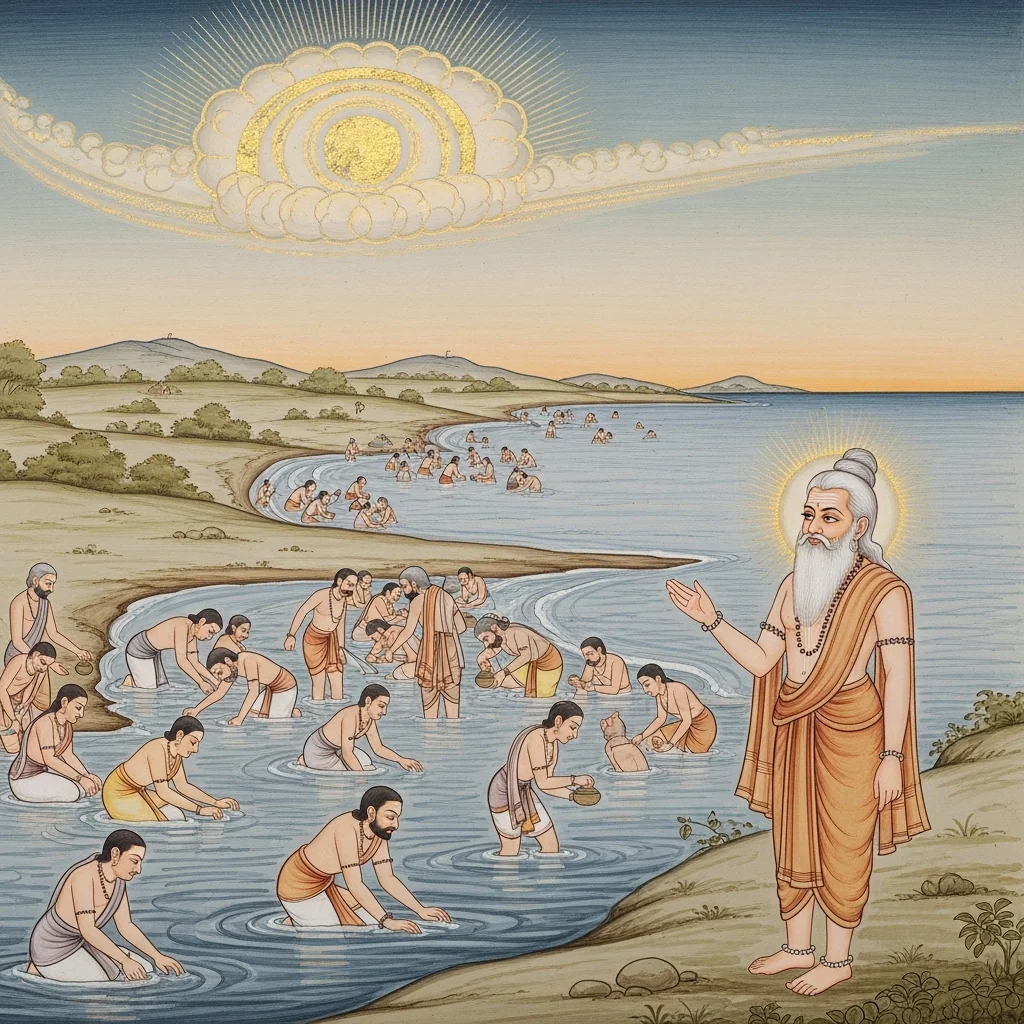
This chapter unfolds as a multi-voiced theological discourse on prāyaścitta—expiation through tīrtha practice. Yajñadeva asks Durvāsā about the brāhmin Durvinīta, who, deluded by desire, violated the sacred boundary owed to his mother and thereby incurred a grievous sin; later he is seized by remorse and seeks the counsel of sages. Durvāsā recounts his origins in the Pāṇḍya country, his famine-driven migration to Gokarṇa, his moral fall, and his turn toward penitence. Though some sages reject him, Vyāsa intervenes and prescribes a regimen bound to place and time: travel with his mother to Rāma-setu/Dhanuṣkoṭi, observe Māgha when the sun is in Makara, practice self-restraint, avoid harm and hostility, and undertake continuous bathing with fasting for a full month. The narrative declares purification for both son and mother, after which Vyāsa gives extended guidance for re-entering gṛhastha life—ahimsa, daily rites (sandhyā, nitya-karma), control of the senses, honoring guests and elders, study of śāstra, devotion to Śiva and Viṣṇu, mantra-japa, charity, and ritual cleanliness. A further frame follows: Sindhudvīpa tells how Yajñadeva brings his son to Dhanuṣkoṭi for release from brahmahatyā and other sins, and an incorporeal voice (aśarīriṇī vāk) confirms liberation. The phalaśruti concludes that hearing or reciting this adhyāya grants the fruit of bathing at Dhanuṣkoṭi and swiftly leads toward a liberation-like state, said to be difficult even for assemblies of yogins.
Shlokas
Verse 1
यज्ञदेव उवाच । दुर्वासर्षे महाप्राज्ञ परापरविचक्षण । दुर्विनीताभिधः कोऽयं योऽसौ गुर्वंगनामगात्
Yajñadeva said: “O sage Durvāsā, greatly wise and discerning of higher and lower truths—who is this one named Durvinīta, who went to the guru’s wife?”
Verse 2
कस्य पुत्रो धनुष्कोटौ स्नानेन स कथं द्विजः । तत्क्षणान्मुमुचे पापाद्गुरुस्त्रीगमसंभवात् । एतन्मे श्रद्धधानस्य विस्तराद्वक्तुमर्हसि
“Whose son was that brāhmaṇa, and how did he—by bathing at Dhanuṣ-koṭi—become instantly released from the sin born of approaching the guru’s wife? Please explain this to me in detail, for I ask with faith.”
Verse 3
दुर्वासा उवाच । पांड्यदेशे पुरा कश्चिद्ब्राह्मणोभूद्बहुश्रुतः
Durvāsā said: “Formerly, in the Pāṇḍya country, there lived a certain Brāhmaṇa, a man of great learning.”
Verse 4
इध्मवाहाभिधो नाम्ना तस्य भार्या रुचिंस्तथा । बभूव तस्य तनयो दुर्विनीताभिधो द्विजः
“His wife was named Ruciṃs, and he himself was called Idhmavāha. A son was born to him, a Brāhmaṇa named Durvinīta.”
Verse 5
दुर्विनीतः पितुस्तस्य स कृत्वा चौर्ध्वदैहिकम्
“Durvinīta, after performing his father’s funeral rites (the post-death ceremonies),”
Verse 6
कंचित्कालं गृहेऽवात्सीन्मात्रा विधवया सह । ततो दुर्भिक्षमभवद्वादशाब्दमवर्षणात्
“For some time he lived at home with his widowed mother. Then a famine arose, because there was no rain for twelve years.”
Verse 7
ततो देशांतरमगान्मात्रा साकं द्विजोत्तम । गोकर्णं स समासाद्य सुभिक्षं धान्यसंचयैः
Then that excellent Brāhmaṇa went to another land together with his mother. Reaching Gokarṇa, he found abundance there, with stores of grain.
Verse 8
उवास सुचिरं कालं मात्रा विधवया सह । ततो बहुतिथे काले दुर्विनीतो गते सति
He lived there for a long time with his widowed mother. Then, when much time had passed and Durvinīta had grown on (in life),
Verse 9
पूर्वदुष्कर्मपाकेन मूढबुद्धिरहो बत । अनंगशरविद्धांगो रागाद्विकृतमानसः
By the ripening of former evil deeds, alas, his understanding became deluded. Struck by the arrows of Anaṅga (Kāma), his limbs were inflamed, and his mind was distorted by passion.
Verse 10
मामेति वादिनीमंबां बलादाकृष्य पातकी । बुभुजे काममोहात्मा मैथुनेन द्विजोत्तम
Though his mother cried, ‘It is I, your mother!’, that sinner dragged her by force and, overcome by lust and delusion, violated her through intercourse—O best of the twice-born.
Verse 11
स खिन्नो दुर्विनीतोऽयं रेतःसेकादनंतरम् । मनसा चिंतयन्पापं रुरोदभृशदुःखितः
Thereafter, Durvinīta became utterly dejected. Immediately after the act, reflecting in his mind upon his sin, he wept—deeply afflicted with sorrow.
Verse 12
अहोतिपापकृदहं महापातकिनां वरः । अगमं जननीं यस्मात्कामबाणवशानुगः
“Alas! I have committed a most grievous sin—I am foremost among great sinners—for I approached my own mother, having fallen under the sway of Kāma’s arrows.”
Verse 13
इति संचित्य मनसा स तत्र मुनिसन्निधौ । जुगुप्तमानश्चात्मानं तान्मुनीनिदमब्रवीत्
Having thus gathered his thoughts in his mind, and standing there in the presence of the sages, he—ashamed and seeking to conceal himself—addressed those sages with these words.
Verse 14
गुरुस्त्रीगमपापस्य प्रायश्चित्तं ममद्विजाः । वदध्वं शास्त्रतत्त्वज्ञाः कृपया मयि केवलम्
“O twice-born sages, tell me the expiation (prāyaścitta) for the sin of approaching the wife of one’s guru. You who know the truth of the śāstras—out of compassion, speak to me alone.”
Verse 15
मरणान्निष्कृतिः स्याच्चेन्मरिष्यामि न संशयः । भवद्भिरुच्यते यत्तु प्रायश्चित्तं ममाधुना
“If release from this fault can be gained by death, then I will die—without doubt. Yet whatever expiation you prescribe for me now, I shall accept.”
Verse 16
करिष्ये तद्द्विजाः सत्यं मरणं वान्यदैव वा । तच्छ्रुत्वा वचनं तस्य केचित्तत्रमुनीश्वराः
“O sages, I shall truly do that—be it death or anything else ordained.” Hearing his words, some of the great sages there formed their judgment within.
Verse 17
अनेन साकं वार्ता तु दोषायेति विनिश्चिताः । मौनित्वं भेजिरे केचिन्मुनयः केचिदा भृशम्
Deciding, “Even conversation with this man brings defilement,” some sages embraced silence; others became greatly agitated.
Verse 18
दुष्टात्मा मातृगामी त्वं महापातकिनां वरः । गच्छगच्छेतिबहुशो वाचमूचुर्द्विजोत्तमाः
“Wicked-souled one! You who have violated your mother—foremost among great sinners! Go, go!”—thus again and again the best of the twice-born spoke to him.
Verse 19
तान्निवार्य कृपाशीलः सर्वज्ञः करुणानिधिः । कृष्णद्वैपायनस्तत्र दुर्विनीतमभाषत
Restraining them, compassionate and all-knowing, an ocean of mercy—Kṛṣṇa Dvaipāyana (Vyāsa)—there spoke to the ill-disciplined man.
Verse 20
गच्छाशु रामसेतौ त्वं धनुष्कोटौ सहांबया । मकरस्थे रवौ माघे मासमेकं निरंतरम्
“Go quickly to Rāma-setu, to Dhanuṣkoṭi, together with your mother. When the Sun is in Makara (Capricorn), in the month of Māgha, remain there continuously for one full month.”
Verse 21
जितेंद्रियो जितक्रोधः परद्रोहविवर्जितः । एकमासं निराहारः कुरु स्नानं सहांबया
“With senses conquered, anger subdued, and free from harming others—fasting without food for a month—perform the sacred bathing together with your mother.”
Verse 22
पूतो भविष्यस्यद्धा गुरुस्त्री गमदोषतः । यत्पातकं न नश्येत सेतुस्नानेन तन्नहि
Truly you shall be purified from the fault of approaching the guru’s wife; for there is no sin that is not destroyed by bathing at Setu.
Verse 23
श्रुतिस्मृतिपुराणेषु धनुष्कोटिप्रशंसनम् । बहुधा भण्यते पंचमहापातकनाशनम्
In the Śrutis, the Smṛtis, and the Purāṇas, the praise of Dhanuṣkoṭi is proclaimed in many ways, as the destroyer of the five great sins.
Verse 24
तस्मात्त्वं त्वरया गच्छ धनुष्कोटिं सहांबया । प्रमाणं कुरु मद्वाक्यं वेदवाक्यमिव द्विज
Therefore, O brāhmaṇa, go quickly to Dhanuṣkoṭi together with your mother. Establish my statement as true, just as the word of the Veda is accepted as authority.
Verse 25
श्रीरामधनुषः कोटौ स्नातस्य द्विज पुत्रक । महापातककोट्योपि नैव लक्ष्या इतीव हि
O brāhmaṇa’s son, for one who bathes at the tip of Śrī Rāma’s Bow, at Rāma-dhanuṣkoṭi, even crores of great sins become, as it were, no longer to be seen at all.
Verse 26
प्रायश्चित्तांतरं प्रोक्तं मन्वादिस्मृतिभिः स्मृतौ । तद्गच्छत्वं धनुष्कोटिं महापातक नाशिनीम्
In the Smṛti tradition, Manu and other lawgivers have taught various expiations; therefore go to Dhanuṣkoṭi, the destroyer of great sins.
Verse 27
इतीरितोऽथ व्यासेन दुर्विनीतोद्विजोत्तमाः । मात्रा साकं धनुष्कोटिं नत्वा व्यासं च निर्ययौ
Thus instructed by Vyāsa, Durvinīta, foremost among brāhmaṇas, set forth—bowing to Vyāsa and proceeding to Dhanuṣkoṭi together with his mother.
Verse 28
मकरस्थे रवौ माघे मासमात्रं निरंतरम् । मात्रा सह निराहारो जितक्रोधो जितेंद्रियः
When the Sun was in Capricorn, during the month of Māgha, he remained continuously for a full month—together with his mother—fasting, having conquered anger, and having mastered his senses.
Verse 29
श्रीरामधनुषः कोटौ सस्नौ संकल्पपूर्वकम् । रामनाथं नमस्कुर्वं स्त्रिकालं भक्तिपूर्वकम्
At the tip of Śrī Rāma’s Bow he bathed with a solemn vow (saṅkalpa), and with devotion he bowed to Rāmanātha three times each day.
Verse 30
मासांते पारणां कृत्वा मात्रा सह विशुद्धधीः । व्यासांतिकं पुनः प्रायात्तस्मै वृत्तं निवेदितुम्
At the end of the month, having performed the concluding breaking of the fast (pāraṇā) with his mother, his mind purified, he again went to Vyāsa in order to report all that had occurred.
Verse 31
स प्रणम्य पुनर्व्यासं दुर्विनीतोऽब्रवीद्वचः
Then Durvinīta, having again bowed to Vyāsa, spoke these words.
Verse 32
दुर्विनीत उवाच । भगवन्करुणासिंधो द्वैपायन महत्तम । भवतः कृपया रामधनुष्कोटौ सहांबया । माघमासे निराहारो मासमात्रमतंद्रितः
Durvinīta said: O Blessed One, ocean of compassion—O most great Dvaipāyana—by your grace, together with my mother at Rāma-dhanuṣkoṭi, in the month of Māgha I remained for a full month, fasting, without negligence.
Verse 33
अहं त्वकरवं स्नानं नमस्कुर्वन्महेश्वरम् । इतः परं मया व्यास भगवन्भक्तवत्सल
“I have now performed the sacred bath, bowing in reverence to Maheśvara. From this point onward, O Vyāsa—O Lord who is affectionate to devotees—(tell me what I should do).”
Verse 34
यत्कर्त्तव्यं मुने तत्त्वं ममोपदिश तत्त्वतः । इति तस्य वचः श्रुत्वा दुर्विनीतस्य वै मुनिः । बभाषे दुर्विनीतं तं व्यासो नारायणांशकः
“O sage, teach me truly—what is to be done, in accordance with reality.” Hearing these words of Durvinīta, the sage Vyāsa—an embodiment of a portion of Nārāyaṇa—then addressed him.
Verse 35
व्यास उवाच । दुर्विनीत गतं तेऽद्य पातकं मातृसंगजम्
Vyāsa said: “O Durvinīta, today your sin—born of illicit union with your mother—has departed.”
Verse 36
मातुश्च पातकं नष्टं त्वत्संगतिनिमि त्तजम् । संदेहो नात्र कर्तव्यः सत्यमुक्तं मया तव
“Your mother’s sin too—arising because of association with you—has been destroyed. No doubt should be entertained here; I have spoken the truth to you.”
Verse 37
बांधवाः स्वजनाः सर्वे तथान्ये ब्राह्मणाश्च ये । सर्वे त्वां संग्रहीष्यंति दुर्विनीतां बया सह
All your relatives and kinsmen—and the other brāhmaṇas as well—will accept you, together with the fear and stigma that once clung to you, O Durvinīta.
Verse 38
मत्प्रसादाद्धनुष्कोटौ विशुद्धस्त्वं निमज्जनात् । दारसंग्रहणं कृत्वा गार्हस्थ्यं धर्ममाचर
By my grace, through immersion at Dhanuṣkoṭi you are purified. Therefore, taking a wife, practice the dharma of the householder’s life (gārhasthya).
Verse 39
त्यज त्वं प्राणिहिंसां च धर्मं भज सनातनम् । सेवस्व सज्जनान्नित्यं भक्तियुक्तेन चेतसा
Abandon violence toward living beings, and follow the eternal dharma. Serve the good always, with a mind united with devotion (bhakti).
Verse 40
संध्योपासनमुख्यानि नित्यकर्माणि न त्यज । निगृहीष्वेन्द्रियग्राममर्चयस्व हरं हरिम्
Do not abandon your daily duties, foremost among them the worship at the twilight prayers (sandhyā). Restrain the host of senses, and worship both Hara (Śiva) and Hari (Viṣṇu).
Verse 41
परापवादं मा ब्रूया मासूयां भज कर्हिचित् । अन्यस्याभ्युदयं दृष्ट्वा संतापं कृणु मा वृथा
Do not speak ill of others; never take up envy. Seeing another’s prosperity, do not cause yourself pointless distress.
Verse 42
मातृवत्परदा रांश्च त्वन्नित्यमवलोकय । अधीतवेदानखिलान्माविस्मर कदाचन
Always regard other men’s wives as you would a mother; and never forget the Vedas you have studied in their entirety.
Verse 43
अतिथीन्मावमन्यस्व श्राद्धं पितृदिने कुरु । पैशून्यं मा वदस्व त्वं स्वप्नेऽप्यन्स्य कर्हिचित्
Do not dishonor guests; perform the śrāddha on the day sacred to the Pitṛs. Speak no slander—never, at any time, not even in a dream, against another.
Verse 44
इतिहासपुराणानि धर्मशास्त्राणि संततम् । अवलोकय वेदांतं वेदांगानि तथा पुनः
Constantly study the Itihāsas and Purāṇas, and the Dharmaśāstras; also examine the Vedānta and, again, the Vedāṅgas as well.
Verse 45
हरिशंकरना मानि मुक्तलज्जोऽनुकीर्त्तय । जाबालोपनिषन्मंत्रैस्त्रिपुंड्रोद्धूलनं कुरु
Freely and without embarrassment, repeatedly chant the names of Hari and Śaṅkara. Using the mantras of the Jābāla Upaniṣad, apply the sacred ash as the tripuṇḍra marks.
Verse 46
रुद्राक्षान्धारय सदा शौचाचारपरो भव । तुलस्या बिल्वपत्रैश्च नारायणहरावुभौ
Always wear rudrākṣa beads and be devoted to purity and right conduct. Worship both Nārāyaṇa and Hara, offering tulasī leaves and bilva leaves.
Verse 47
एकं कालं द्विकालं वा त्रिकालं चार्चयस्य भोः । तुलसीदलसंमिश्रं सिक्तं पादोदकेन च
Worship the Lord once, or twice, or even three times a day, O dear one—offering what is mixed with tulasī leaves and moistened with pādodaka, the water from His feet.
Verse 48
नैवेद्यान्नं सदा भुंक्ष्व शंभुनारायणाग्रतः । कुरु त्वं वैश्वदेवाख्यं बलिमन्नविशुद्धये
Always partake of food only after offering it as naivedya before Śambhu and Nārāyaṇa. Perform the offering called Vaiśvadeva—placing bali portions—for the purification of your food.
Verse 49
यतीश्वरान्ब्रह्मनिष्ठान्तर्पयान्नैर्गृहागतान् । वृद्धानन्याननाथांश्च रोगिणो ब्रह्मचारिणः
Satisfy with food the revered ascetics and those steadfast in Brahman who come to your home; also feed the elderly, the helpless, the sick, and the brahmacārins.
Verse 50
कुरु त्वं मातृशुश्रूषामौपासनपरो भव । पंचाक्षरं महामंत्रं प्रणवेन समन्वितम्
Serve your mother, and be devoted to the daily aupāsana—the household worship of the sacred fire. Also recite the great five-syllabled mantra, joined with the praṇava, Oṃ.
Verse 51
तथैवाष्टाक्षरं मंत्रमन्यमंत्रानपि द्विज । जप त्वं प्रयतो भूत्वा ध्यायन्मंत्राधिदेवताः
In the same way, O twice-born, chant the eight-syllabled mantra—and other mantras as well—becoming disciplined and focused, while meditating on the presiding deities of those mantras.
Verse 52
एवमन्यांस्तथा धर्मान्स्मृत्युक्तान्त्सर्वदा कुरु । एवं कृतव्रतस्ते स्याद्देहांते मुक्तिरप्यलम्
Likewise, always practice the other duties taught in the Smṛtis. Thus your vows will be fulfilled, and at the end of the body liberation itself will be assured.
Verse 53
इत्युक्तो व्यासमुनिना दुर्विनीतः प्रणम्य तम् । तदुक्तमखिलं कृत्वा देहांते मुक्तिमाप्तवान्
Thus instructed by the sage Vyāsa, Durvinīta bowed to him; having carried out all that was enjoined, he attained liberation at the end of his body.
Verse 54
तन्मातापि मृता काले धनुष्कोटिनिमज्जनात । अवाप परमां मुक्तिमपुनर्भवदायिनीम्
And his mother too, when her time came, obtained supreme liberation through immersion at Dhanuṣkoṭi—liberation that grants freedom from rebirth.
Verse 55
दुर्वासा उवाच । एवं ते दुर्विनीतस्य तन्मातुश्च विमोक्षणम् । धनुष्कोट्यभिषेकेण यज्ञदेव मयेरितम्
Durvāsā said: “Thus, O Yajñadeva, I have explained to you the deliverance of Durvinīta and of his mother—brought about by the sacred ablution (abhiṣeka) at Dhanuṣkoṭi.”
Verse 56
पुत्रमेनं त्वमप्याशु ब्रह्महत्याविशुद्धये । समादाय व्रज ब्रह्मन्धनुष्कोटिं विमुक्तिदाम्
“You too, O brāhmaṇa, quickly take this son to purify yourself from the sin of brahma-slaughter, and go to Dhanuṣkoṭi—the giver of liberation.”
Verse 57
सिंधुद्वीप उवाच । इति दुर्वाससा प्रोक्तो यज्ञदेवो निजं सुतम् । समादाय ययौ राम धनुष्कोटिं विमुक्तिदाम्
Siṃdhudvīpa said: “Thus instructed by Durvāsā, Yajñadeva took his own son and went, O Rāma, to Dhanuṣkoṭi—the giver of liberation.”
Verse 58
गत्वा निवासमकरोत्षण्मासं तत्र स द्विजः । पुत्रेण साकं नियतो हे सृगालप्लवंगमौ
Having arrived there, that brāhmaṇa stayed for six months, living in restraint together with his son—O jackal and monkey.
Verse 59
स सस्नौ च धनुष्कोटौ षण्मासं वै स पुत्रकः । षण्मासांते यज्ञदेवं प्राह वागशरीरिणी
And that son indeed bathed at Dhanuṣkoṭi for six months; at the end of six months, a bodiless voice spoke to Yajñadeva.
Verse 60
विमुक्ता यज्ञदेवस्य ब्रह्महत्या सुतस्य ते । स्वर्णस्तेयात्सुरापानात्किरातीसंगमात्तथा
“O Yajñadeva, the brahmahatyā of your son has been removed; likewise he is freed from the sins of stealing gold, drinking intoxicants, and consorting with a Kirātī woman.”
Verse 61
अन्येभ्योपि हि पापेभ्यो विमुक्तोयं सुतस्तव । संशयं मा कुरुष्व त्वं यज्ञदेव द्विजोत्तम
“Indeed, your son is freed even from other sins as well. Do not entertain doubt, O Yajñadeva, best of the twice-born.”
Verse 62
इत्युक्त्वा विररामाथ सा तु वाग शरीरिणी । तदाऽशरीरिणीवाक्यं यज्ञदेवः स शुश्रुवान्
Having spoken thus, that bodiless voice fell silent. Then Yajñadeva heard those words of the incorporeal speaker.
Verse 63
संतुष्टः पुत्रसहितो रामनाथं निषेव्य च । धनुष्कोटिं नमस्कृत्य पुत्रेण सहि तस्तदा
Satisfied and accompanied by his son, he worshipped Rāmanātha. Then, together with his son, he bowed in reverence to Dhanuskoṭi.
Verse 64
स्वदेशं प्रययौ हृष्टः स्वग्रामं स्वगृहं तथा । सपुत्रदारः सुचिरं सुखमास्ते सुनिर्वृतः
Joyful, he returned to his own country—indeed to his own village and home. With his son and wife, he lived happily for a long time, fully content.
Verse 65
सिन्धुद्वीप उवाच । गोमायुवानरावेवं युवयोः कथितं मया । यज्ञदेवसुतस्यास्य सुमतेः परिमोक्षणम्
Sindhudvīpa said: “O jackal and monkey, thus have I told you the account of the complete deliverance of Sumati, the son of Yajñadeva.”
Verse 66
पातकेभ्यो महद्भ्यश्च धनुष्कोटौ निमज्जनात् । युवामतो धनुष्कोटिं गच्छतं पापशुद्धये । नान्यथा पापशुद्धिः स्यात्प्रायश्चित्तायुतैरपि
By immersion at Dhanuskoṭi, one is freed even from great sins. Therefore, you two should go to Dhanuskoṭi for the purification of wrongdoing; for such cleansing would not occur otherwise—even by tens of thousands of expiatory rites.
Verse 67
श्रीसूत उवाच । सिन्धुद्वीपस्य वचनमिति श्रुत्वा द्विजो त्तमाः
Śrī Sūta said: Having heard these words of Sindhudvīpa, the excellent brāhmaṇas listened with reverent attention.
Verse 68
सृगालवानरावाशु विलंघितमहापथौ । धनुष्कोटिं प्रयासेन गत्वा स्नात्वा च तज्जले
The jackal and the monkey swiftly crossed the great road; with effort they reached Dhanuskoṭi and bathed in its waters.
Verse 69
विमुक्तौ सर्वपापेभ्यो विमानवरसंस्थितौ । देवैः कुसुमवर्षेण कीर्यमाणौ सुतेजसौ
Freed from all sins, the two radiant ones took their places in an excellent celestial vimāna, as the gods showered them with a rain of flowers.
Verse 70
हारकेयूरमुकुटकटकादिविभूषितौ । देवस्त्रीधूयमानाभ्यां चामराभ्यां विराजितौ । गत्वा देवपुरीं रम्यामिंद्र स्यार्द्धासनं गतौ
Adorned with garlands, armlets, crowns, bracelets, and the like, and shining as celestial maidens fanned them with cāmara whisks, they went to the delightful city of the gods and attained a seat of honor near Indra.
Verse 71
श्रीसूत उवाच । युष्माकमेवं कथितं सृगालस्य कपेरपि
Śrī Sūta said: “Thus have I narrated to you the account of the jackal, and also of the monkey.”
Verse 72
पापाद्विमोक्षणं विप्रा धनुष्कोटौ निमजनात् । भक्त्या य इममध्यायं शृणोति पठतेऽपि वा
O brāhmaṇas, there is release from sin through immersion at Dhanuṣkoṭi. And whoever, with devotion, listens to this chapter—or even recites it—shares in that merit.
Verse 73
स्नानजं फलमाप्नोति धनुष्कोटौ स मानवः । योगिवृंदैरसुलभां मुक्तिमप्याशु विंदति
That person who bathes at Dhanuṣkoṭi attains the fruit born of sacred bathing; indeed, he quickly obtains even that liberation which is difficult to reach even for multitudes of yogins.
Read Skanda Purana in the Vedapath app
Scan the QR code to open this directly in the app, with audio, word-by-word meanings, and more.