Adhyaya 30
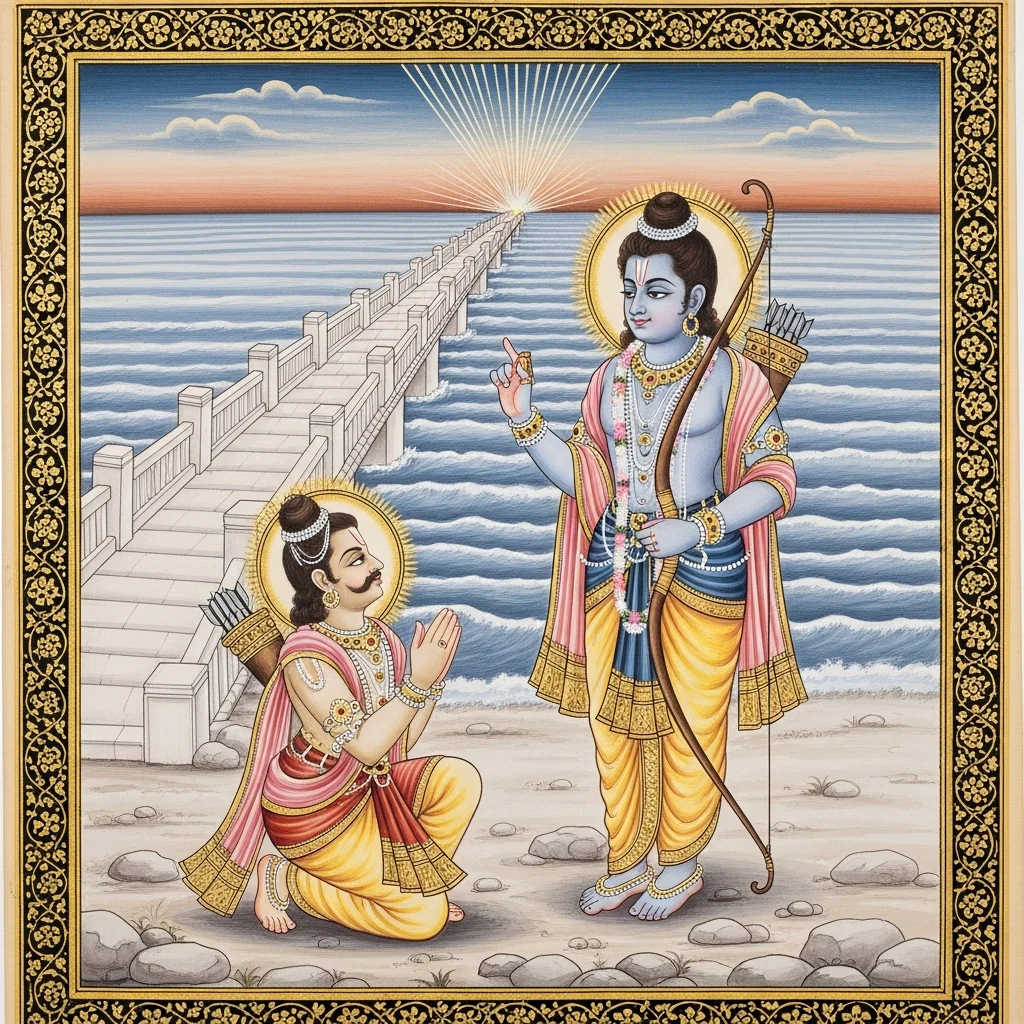
This chapter is a tīrtha-māhātmya on Dhanuskoṭi, narrated by Sūta to the assembly at Naimiṣa. It first proclaims that disciplined bathing and proper observance at Dhanuskoṭi purify even grave sins. It then lists the standard twenty-eight narakas (hell-realms), declaring that those who bathe there—or even connect with the place through remembrance, narration, or praise—avoid these punitive destinations. A sequence of moral exempla follows: harmful deeds such as theft, betrayal, violence, dharma-opposed conduct, sexual transgression, abuse of authority, and disruption of ritual norms are each paired with corresponding narakas, repeatedly countered by the refrain that Dhanuskoṭi bathing prevents such downfall. The text expands into a register of phala, equating immersion here with major gifts and great sacrifices (aśvamedha-like merit), and promising spiritual attainments such as self-knowledge and a fourfold idiom of liberation. Finally, the chapter explains the place-name: after Rāvaṇa’s defeat and Vibhīṣaṇa’s installation, Vibhīṣaṇa petitions Rāma regarding the setu; the locale becomes “Dhanuskoṭi” through a bow-related act or mark of Rāma that consecrates it. The chapter closes by placing Dhanuskoṭi within a wider Setu triad of divine sites and reaffirming it as a comprehensive purifier and bestower of both bhukti and mukti.
Shlokas
Verse 1
श्रीसूत उवाच । विहिताभिषवो मर्त्यः सर्वतीर्थेऽतिपावने । ब्रह्महत्यादिपापघ्नीं धनुष्कोटिं ततो व्रजेत्
Śrī Sūta said: Having duly performed the prescribed bath at the supremely purifying Sarvatīrtha, a mortal should then go to Dhanuṣkoṭi, which destroys sins such as brahmahatyā (the killing of a brāhmaṇa).
Verse 2
यस्याः स्मरणमात्रेण मुक्तः स्यान्मानवो भुवि । धनुष्कोटिं प्रपश्यंति स्नांति वा कथयंति ये
By merely remembering her—Dhanuṣkoṭi—a human being on earth may be liberated. Those who behold Dhanuṣkoṭi, or bathe there, or speak of her glory likewise gain that benefit.
Verse 3
अष्टाविंशतिभेदांस्ते नरकान्नोपभुंजते । तामिस्रमंधतामिस्रं महारौरवरौरवौ
They do not undergo the hells of the twenty-eight kinds—such as Tāmisra, Andhatāmisra, Mahāraurava, and Raurava.
Verse 4
कुम्भीपाकं कालसूत्रमसिपत्रवनं तथा । कृमिभक्षोंऽधकूपश्च संदंशं शाल्मली तथा
Nor (do they suffer) Kumbhīpāka, Kālasūtra, and Asipatravana; nor Kṛmibhakṣa, Andhakūpa, Saṁdaṁśa, and Śālmalī.
Verse 5
सूर्मिर्वैतरणी प्राणरोधो विशसनं तथा । लालाभक्षोऽप्यवीचिश्च सारमेयादनं तथा
Nor do they suffer Sūrmi, Vaitaraṇī, Prāṇarodha, and Viśasana; nor Lālābhakṣa, Avīci, and Sārameyādana.
Verse 6
तथैव वज्रकणकं क्षारकर्दमपातनम् । रक्षोगणाशनं चापि शूलप्रोतं वितोदनम्
Likewise (there are other hells): Vajrakaṇaka; Kṣārakardamapātana, where one is hurled into alkaline mire; Rakṣogaṇāśana, where hosts of rākṣasas devour the sinner; and Śūlaprota and Vitodana, where one is impaled on spears and pierced again and again.
Verse 7
दंदशूकाशनं चापि पर्यावर्तनसंज्ञितम् । तिरोधानाभिधं विप्रास्तथा सूचीमुखाभिधम्
And (there is) Daṃdaśūkāśana, where serpents devour; also the one called Paryāvartana, the “whirling back”; and, O brāhmaṇas, the hell named Tirodhāna, concealment and darkening, as well as the one called Sūcīmukha, “needle-faced.”
Verse 8
पूयशोणितभक्षं च विषाग्निपरिपीडनम् । अष्टाविंशतिसंख्याकमेवं नरकसंचयम्
And (there is) Pūyaśoṇitabhakṣa, where one is made to eat pus and blood; and Viṣāgniparipīḍana, where one is tormented by poison and fire. Thus, the collection of hells is said to be twenty-eight in number.
Verse 9
न याति मनुजो विप्रा धनुष्कोटौ निमज्जनात् । वित्तापत्यकलत्राणां योऽन्येषामपहारकः
O brāhmaṇas, the man who steals the wealth, children, or wife of others does not escape the consequence merely by immersing himself at Dhanuṣkoṭi.
Verse 10
स कालपाशनिर्बद्धो यमदूतैर्भयानकैः । तामिस्रनरके घोरे पात्यते बहुवत्सरम्
Bound fast in the noose of Time and seized by Yama’s dreadful messengers, he is hurled into the terrifying Tāmisra hell for many years.
Verse 11
स्नाति चेद्धनुषः कोटौ तस्मिन्नासौ निपात्यते । यो निहत्य तु भर्तारं भुंक्ते तस्य धनादिकान्
Even if she bathes at Dhanuṣkoṭi, she is nevertheless cast into that place—she who, having killed her husband, enjoys his wealth and the rest.
Verse 12
पात्यते सोंऽधतामिस्रे महादुःखसमाकुले । स्नाति चेद्धनुषः कोटौ तस्मिन्नासौ निपात्यते
He is cast into Andhatāmisra, filled with immense suffering; even if she bathes at Dhanuṣkoṭi, she is still thrown into that (hell).
Verse 13
भूतद्रोहेण यो मर्त्यः पुष्णाति स्वकुटुंबकम् । स तानिह विहायाशु रौरवे पात्यते ध्रुवम्
That mortal who maintains his household by harming living beings—abandoning them here at death—is swiftly and certainly cast into the Raurava hell.
Verse 14
विषोल्बणमहासर्पसंकुले यमपूरुषैः । स्नाति चेद्धनुषः कोटौ तस्मिन्नासौ निपात्यते
In that place swarming with huge serpents made fierce by venom—and with Yama’s servants—even if she bathes at Dhanuṣkoṭi, she is still cast into it.
Verse 15
यः स्वदेहंभरो मर्त्यो भार्यापुत्रादिकं विना । स महारौरवे घोरे पात्यते निजमांसभुक्
That mortal who lives only for his own body, without care for wife, children, and the like, is cast into the dreadful Mahāraurava, where he is made to feed upon his own flesh.
Verse 16
स्नाति चेद्धनुषः कोटौ तस्मि न्नासौ निपात्यते । यः पशून्पक्षिणो वापि सप्राणान्निरुणद्धि वै
Even if one bathes at Setu for only a bow-tip’s measure, he is not saved from falling there if he cruelly confines living creatures—whether animals or birds—while they still possess life.
Verse 17
कृपालेशविहीनं तं क्रव्यादैरपि निंदितम् । कुंभीपाके तप्ततैले पात यंति यमानुगाः
That person, devoid of even a trace of mercy—condemned even by flesh-eating creatures—Yama’s attendants cast into Kumbhīpāka, into boiling, heated oil.
Verse 18
स्नाति चेद्धनुषः कोटौ तस्मिन्नासौ निपात्यते । मातरं पितरं विप्रान्यो द्वेष्टि पुरुषाधमः
Even if he bathes at Setu for a bow-tip’s measure, that vile man still falls—he who hates his mother, his father, and the brāhmaṇas.
Verse 19
स कालसूत्र नरके विस्तृतायुतयोजने । अधस्तादग्निसंतप्त उपर्यर्कमरीचिभिः
He is sent to the hell called Kālasūtra, spread across ten thousand yojanas—burning from below by fire and scorched from above by the sun’s rays.
Verse 20
खले ताम्रमये विप्राः पात्यते क्षुधयार्दितः । स्नाति चेद्धनुषः कोटौ तस्मिन्नासौ निपात्यते
O brāhmaṇas, he is cast upon a copper pan and tormented by hunger; even if he bathes at Setu for but a bow-tip’s measure, he is still made to fall.
Verse 21
यो वेदमार्गमुल्लंघ्य वर्तते कुपथे नरः । सोऽसिपत्रवने घोरे पात्यते यमकिंकरैः
The man who transgresses the Vedic path and lives by a wicked way—Yama’s servants cast him into the dreadful Asipatra forest.
Verse 22
स्नाति चेद्धनुषः कोटौ तस्मिन्नासौ निपात्यते । यो राजा राजभृत्यो वा ह्यदंड्ये दंडमाचरेत्
Even if he bathes at Setu for a bow-tip’s measure, he still falls—whether a king or a royal officer—who inflicts punishment upon one who should not be punished.
Verse 23
शरीरदंडं विप्रे वा स शूकरमुखे द्विजाः । पात्यते नरके घोरे इक्षुवद्यंत्रपीडितः
If he inflicts bodily punishment upon a brāhmaṇa, O twice-born, he is cast into the dreadful hell called Śūkaramukha, crushed like sugarcane in a press.
Verse 24
स्नाति चेद्धनुषः कोटौ तस्मिन्नासौ निपात्यते । ईश्वराधीनवृत्तीनां हिंसां यः प्राणिनां चरेत्
Even if he bathes at Setu for a bow-tip’s measure, he still falls—he who commits violence against living beings whose livelihood depends upon their master.
Verse 25
तैरेव पीड्यमानोऽयं जंतुभिः स्वेन पीडितैः । अंधकूपे महाभीमे पात्यते यमकिंकरैः
Tormented by those very creatures he once tormented, he is cast by Yama’s servants into the dreadful Andhakūpa—the “Blind Well”.
Verse 26
तत्रांधकारबहुले विनिद्रो निर्वृतश्चरेत् । चेद्धनुषः कोटौ तस्मिन्नासौ निपात्यते
There, in that region thick with darkness, he wanders sleepless and without peace; yet if he bathes at the sacred spot called Dhanus-koṭi, he is not cast down into that fate.
Verse 27
योऽश्नाति पंक्तिभेदेन सस्यसूपादिकं नरः । अकृत्वा पंचयज्ञं वा भुंक्ते मोहेन स द्विजाः
O twice-born ones, the man who eats grains, soups, and the like by breaking the proper order of communal dining, or who in delusion eats without first performing the five daily yajñas, incurs sin.
Verse 28
प्रपात्यते यमभटैर्नरके कृमिभोजने । भक्ष्यमाणः कृमिशतैर्भक्षयन्कृमिसंच यान्
He is hurled by Yama’s servants into the hell called Kṛmibhojana; there he is eaten by hundreds of worms, and in turn he devours masses of worms.
Verse 29
स्वयं च कृमिभूतः संस्तिष्ठेद्यावदघक्षयम् । स्नाति चेद्धनुषः कोटौ तस्मिन्नासौ निपात्यते
Becoming a worm himself, he remains so until his sin is exhausted; yet if he bathes at Dhanus-koṭi, he is not cast down into that condition.
Verse 30
यो हरेद्विप्रवित्तानि स्तेयेन बलतोऽपि वा । अन्येषामपि वित्तानि राजा तत्पुरुषोऽपि वा
Whoever steals the wealth of brāhmaṇas—by theft or even by force—or likewise steals the wealth of others, whether a king or even the king’s agent, incurs grievous demerit.
Verse 31
अयस्मयाग्निकुंडेषु संदंशैः सोऽतिपीडितः । संदंशे नरके घोरे पात्यते यमपूरुषैः
Tormented with iron tongs in pits of blazing fire, he is cast by Yama’s men into the dreadful hell called Saṃdaṃśa.
Verse 32
स्नाति चेद्धनुषः कोटौ तस्मिन्नासौ निपात्यते । अगम्यां योभिगच्छेत स्त्रियं वै पुरुषाधमः
If he bathes at Dhanus-koṭi, he is not cast down there. But the vilest of men who approaches a woman who must not be approached (sexually) incurs grave sin.
Verse 33
अगम्यं पुरुषं योषिदभिगच्छेत वा द्विजाः । तावयस्मयनारीं च पुरुषं चाप्ययस्मयम्
O twice-born ones, if a woman approaches a man who is forbidden to her, then both—an iron woman and an iron man—are made to suffer accordingly.
Verse 34
तप्तावालिंग्य तिष्ठंतौ यावच्चंद्रदिवाकरौ । सूर्म्याख्ये नरके घोरे पात्येते बहुकंटके
Clasping each other while burning, they remain so for as long as the moon and the sun endure; they are cast into the dreadful hell called Sūrmyā, filled with many thorns.
Verse 35
स्नाति चेद्धनुषः कोटौ तस्मिन्नासौ निपात्यते । बाधते सर्वजंतून्यो नानो पायैरुपद्रवैः
If he bathes at Dhanus-koṭi, he is not cast down there. Yet one who harms all living beings, bringing affliction by many cruel means, incurs a grievous consequence.
Verse 36
शाल्मलीनरके घोरे पात्यते बहुकंटके । स्नाति चेद्धनुषः कोटौ तस्मिन्नासौ निपात्यते
He is cast into the dreadful Śālmalī hell, bristling with many thorns. Even if he were to bathe at Setu, at the sacred spot called “Dhanus-koṭi”, he would still fall there.
Verse 37
राजा वा राजभृत्यो वा यः पाषंडमनुव्रतः । भेदको धर्मसेतूनां वैतरण्यां निपात्यते
Whether a king or a royal servant—whoever follows heretical ways (pāṣaṇḍa) and breaks the bridges of Dharma—is cast into the Vaitaraṇī.
Verse 38
स्नानि चेद्धनुषः कोटौ तस्मिन्नासौ निपात्यते । वृषलीसंगदुष्टो यः शौचाद्याचारवर्जितः
Even if he bathes at Dhanus-koṭi on Setu, he is still cast there—he who is corrupted by immoral company and who has abandoned purity and proper conduct.
Verse 39
त्यक्तलज्जस्त्यक्तवेदः पशुचर्यारत स्तथा । स पूयविष्ठामूत्रासृक्छ्लेष्मपित्तादिपूरिते
Having abandoned modesty and forsaken the Veda, and delighting in bestial conduct, he is made to dwell in a place filled with pus, excrement, urine, blood, phlegm, bile, and the like.
Verse 40
अतिबीभत्सनरके पात्यते यमकिंकरैः । स्नाति चेद्धनुषः कोटौ तस्मिन्नासौ निपात्यते
Yama’s servants cast him into an exceedingly loathsome hell. Even if he bathes at Dhanus-koṭi on Setu, he is still hurled into that very place.
Verse 41
अश्मभिर्मृगयुर्हन्याद्बाणै र्वा बाधते मृगान् । स विध्यमानो बाणौघैः परत्र यमकिंकरैः
The hunter who kills with stones, or who torments animals with arrows, in the next world is pierced by torrents of arrows by Yama’s servants.
Verse 42
प्राणरोधाख्यनरके पात्यते यमकिंकरैः । स्नाति चेद्धनुषः कोटौ तस्मिन्नासौ निपात्यते
Yama’s servants cast him into the hell called Prāṇarodha, “the choking of life.” Even if he bathes at Dhanus-koṭi on Setu, he is still thrown into that place.
Verse 43
दांभिको यः पशून्यज्ञे विध्यनुष्ठानवर्जितः । हंत्यसौ परलोकेषु वैशसे नरके द्विजाः
O brāhmaṇas, the hypocrite who slaughters animals in sacrifice while abandoning the ordained procedure is struck down in the other world, in the Vaiśasa hell.
Verse 44
कृन्त्यमानो यमभटैः पात्यते दुःखसंकुले । स्नाति चेद्धनुषः कोटौ तस्मिन्नासौ निपात्यते
Cut to pieces by Yama’s guards, he is hurled into a realm crowded with suffering. Even if he bathes at Dhanus-koṭi on Setu, he is still cast into that very place.
Verse 45
आत्मभार्यां सवर्णां यो रेतः पाययते तु सः । परत्र रेतःपायी सन्रेतःकुंडे निपात्यते
He who makes his own lawful wife, of the same varṇa, drink semen—such a “semen-drinker”—is, in the next world, cast into the pit called Retaḥ-kuṇḍa.
Verse 46
स्नाति चेद्धनुषः कोटौ तस्मिन्नासौ निपात्यते । यो दस्युमार्ग माश्रित्य गरदो ग्रामदाहकः
But if one bathes at Dhanuṣkoṭi, he is not cast into that fate. Even a poisoner and a burner of villages—one who has taken to the path of banditry—does not fall into that downfall by the merit of that bathing.
Verse 47
वणिग्द्रव्यापहारी च स परत्र द्विजोत्तमाः । वज्रदंष्ट्राहिकाभिख्ये नरके पात्यते चिरम्
O best of Brahmins, one who steals a merchant’s goods is, in the hereafter, cast for a long time into the hell known as Vajradaṃṣṭrāhikā.
Verse 48
स्नाति चेद्धनुषः कोटौ तस्मिन्नासौ निपात्यते । विद्यंते यानि चान्यानि नरकाणि परत्र वै
If one bathes at Dhanuṣkoṭi, he is not cast down there; indeed, whatever other hells exist in the hereafter—
Verse 49
तानि नाप्नोति मनुजो धनुष्कोटिनिमज्जनात् । धनुष्कोटौ सकृत्स्ना नादश्वमेधफलं लभेत्
A man does not reach those (hells) because of immersion at Dhanuṣkoṭi. By bathing just once at Dhanuṣkoṭi, one obtains the fruit of an Aśvamedha sacrifice.
Verse 50
आत्मविद्या भवेत्साक्षान्मुक्तिश्चापि चतुर्विधा । न पापे रमते बुद्धिर्न भवेद्दुःखमेव वा
Direct knowledge of the Self arises, and liberation too—fourfold—is attained. The mind does not delight in sin, and sorrow no longer remains as before.
Verse 51
बुद्धेः प्रीति र्भवेत्सम्यग्धनुष्कोटौ निमज्जनात् । तुलापुरुषदानेन यत्फलं लभ्यते नरैः
Through immersion at Dhanuṣkoṭi, a true gladness of the intellect arises. Whatever fruit men obtain through the gift called Tulāpuruṣa—
Verse 52
तत्फलं लभ्यते पुंभिर्धनुष्कोटौ निमज्जनात् । गोसहस्र प्रदानेन यत्पुण्यं हि भवेन्नृणाम्
That very fruit is obtained by people through immersion at Dhanuṣkoṭi. And whatever merit indeed arises for men by gifting a thousand cows—
Verse 53
तत्पुण्यं लभते मर्त्यो धनष्कोटौ निमज्जनात् । धर्मार्थकाममोक्षेषु यंयमिच्छति पूरुषः
That merit is gained by a mortal through immersion at Dhanuṣkoṭi. Among dharma, artha, kāma, and mokṣa—whatever a person desires,
Verse 54
तंतं सद्यः समाप्नोति धनुष्कोटौ निमज्जनात् । महापातकयुक्तो वा युक्तो वा सर्वपातकैः
He immediately obtains that desired end through immersion at Dhanuṣkoṭi—whether stained with great sins or even burdened with all sins.
Verse 55
सद्यः पूतो भवेद्विप्रा धनुष्कोटौ निमज्जनात् । प्रज्ञालक्ष्मीर्यशः संपज्ज्ञानं धर्मो विरक्तता
O Brāhmaṇas, by immersion at sacred Dhanuṣkoṭi one is purified at once. There arise wisdom, auspicious prosperity, fame, well-being, spiritual knowledge, dharma, and dispassion.
Verse 56
मनःशुद्धिर्भवेन्नॄणां धनुष्कोटिनिमज्जनात् । ब्रह्महत्यायुतं चापि सुरापानायुतं तथा
By immersing oneself at Dhanuṣkoṭi, people attain purity of mind; and even the burden of ten thousand acts equal to brahma-slaughter, and likewise ten thousand equal to liquor-drinking, is removed.
Verse 57
अयुतं गुरुदाराणां गमनं पापकारणम् । स्तेयायुतं सुवर्णानां तत्संसर्गश्च कोटिशः
Even ten thousand acts of approaching the wives of one’s teachers—sources of grave sin—ten thousand acts of stealing gold, and association with such deeds in crores: all these are reckoned among the great sins.
Verse 58
शीघ्रं विलयमाप्नोति धनुष्कोटौ निमज्जनात् । ब्रह्महत्यासमानानि सुरापानसमानि च
By immersion at Dhanuṣkoṭi, sin quickly reaches dissolution: deeds equal to brahma-slaughter and deeds equal to liquor-drinking are swiftly destroyed.
Verse 59
गुरुस्त्रीगमनेनापि यानि तुल्यानि चास्तिकाः । सुवर्णस्तेयतुल्यानि तत्संसर्गसमानि च
O faithful ones, sins comparable to approaching a teacher’s wife, sins comparable to stealing gold, and sins comparable to association with such acts—all these are included among what is destroyed there.
Verse 60
तानि सर्वाणि नश्यंति धनुष्को टि निमज्जनात् । उक्तेष्वेतेषु संदेहो न कर्तव्यः कदाचन
All those sins perish through immersion at Dhanuṣkoṭi. Concerning these declared fruits, doubt should never be entertained.
Verse 61
जिह्वाग्रे परशुं तप्तं धारयामि न संशयः । अर्थवादमिमं सर्वं ब्रुवन्वै नारकी भवेत्
I would bear a heated axe upon the tip of my tongue—of this there is no doubt. Whoever declares all this praise to be mere exaggeration becomes fit for hell.
Verse 62
संकरः स हि विज्ञेयः सर्वकर्मबहिष्कृतः । अहो मौर्ख्यमहो मौर्ख्यमहो मौर्ख्यं द्विजोत्तमाः
Such a person should be known as a ‘saṃkara’ and is excluded from all rites. Alas—what folly, what folly, what folly, O best of the twice-born!
Verse 63
धनुष्कोट्यभिधे तीर्थे सर्वपातकनाशने । अद्वैतज्ञानदे पुंसां भुक्तिमुक्तिप्रदायिनि
At the sacred ford called Dhanuṣkoṭi—destroyer of all sins—bestowing non-dual knowledge upon people and granting both worldly enjoyment and liberation—
Verse 64
इष्टकाम्यप्रदे नित्यं तथैवाज्ञाननाशने । स्थितेऽपि तद्विहायायं रमतेऽन्यत्र वै जनः
Though it ever grants desired boons and likewise destroys ignorance, people—abandoning it even while it stands present—take delight elsewhere.
Verse 65
अहो मोहस्य माहात्म्यं मया वक्तुं न शक्यते । स्नातस्य धनुषः कोटौ नांतकाद्भयमस्ति वै
Alas, I cannot adequately speak of the greatness of delusion. For one who has bathed at Dhanuṣkoṭi, there is truly no fear of Antaka (Death).
Verse 66
धनुष्कोटिं प्रपश्यंति तत्र स्नांति च ये नराः । स्तुवंति च प्रशंसंति स्पृशंति च नमंति च । न पिबंति हि ते स्तन्यं मातॄणां द्विजपुंगवाः
O best of the twice-born: those who behold Dhanuṣkoṭi, bathe there, hymn it, praise it, touch it with reverence, and bow down—such men no longer drink their mothers’ milk (that is, they are not born again).
Verse 67
ऋषय ऊचुः । धनुष्कोट्याभिधा तस्य कथं सूत समागता
The sages said: “O Sūta, how did that place come to bear the name ‘Dhanuṣkoṭi’?”
Verse 68
तत्सर्वं ब्रूहि तत्त्वेन विस्तरान्मुनिपुंगव । इति पृष्टो नैमिषीयैराह सूतः पुनश्च तान्
“O best of sages, tell all of that truthfully and in detail.” Thus questioned by the sages of Naimiṣa, Sūta again addressed them.
Verse 69
श्रीसूत उवाच । रामेण निहते युद्धे रावणे लोककण्टके । बिभीषणे च लंकायां राजनि स्थापिते ततः
Śrī Sūta said: When Rāma had slain in battle Rāvaṇa—the thorn of the worlds—and Vibhīṣaṇa had been installed as king in Laṅkā, then…
Verse 70
वैदेहीलक्ष्मणयुतो रामो दशरथा त्मजः । सुग्रीवप्रमुखैर्वीरैर्वानरैरपि संवृतः
Rāma, the son of Daśaratha, accompanied by Vaidehī (Sītā) and Lakṣmaṇa, and also surrounded by heroic Vānaras led by Sugrīva…
Verse 71
सिद्धचारणगन्धर्वदेवविद्याधरर्षिभिः । अप्सरोभिश्च सततं स्तूयमाननिजाद्भुतः
He—wondrous by his very nature—was continually praised by Siddhas, Cāraṇas, Gandharvas, Devas, Vidyādharas, Ṛṣis, and also by Apsarases.
Verse 72
लीलाविधृतकोदण्डस्त्रिपुरघ्नो यथा शिवः । सर्वैः परिवृतो रामो गंधमादनमन्वगात्
Bearing his Kodanda bow as if in sport—like Śiva, the slayer of Tripura—Rāma, surrounded by all his companions, proceeded to Gandhamādana Mountain.
Verse 73
तत्र स्थितं महात्मानं राघवं रावणांतकम् । प्रांजलिः प्रार्थयामास धर्मज्ञोऽथ विभीषणः
There, Vibhīṣaṇa—knower of dharma—stood with folded hands and petitioned the great-souled Rāghava, the slayer of Rāvaṇa.
Verse 74
सेतुनानेन ते राम राजानः सर्व एव हि । बलोद्रिक्ताः समभ्येत्य पीडयेयुः पुरीं मम
“O Rāma, by means of this bridge (Setu), all kings indeed—swollen with power—could come here and oppress my city.”
Verse 76
बिभेद धनुषः कोट्या स्वसेतुं रघुनं दनः । अतो द्विजास्ततस्तीर्थं धनुष्कोटिरितिश्रुतम्
With the tip of his bow, Raghunandana (Rāma) broke his own bridge. Therefore, O twice-born, that tīrtha has become renowned as “Dhanuṣkoṭi”.
Verse 77
श्रीरामधनुषः कोट्या यो रेखां पश्यते कृताम् । अनेकक्लेशसंयुक्तं गर्भवासं न पश्यति
Whoever beholds the line made by the tip of Śrī Rāma’s bow shall not again behold the womb-dwelling—fraught with many hardships.
Verse 78
धनुष्कोट्यां कृता रेखा रामेण लवणांबुधौ । तद्दर्शनाद्भवेन्मुक्तिर्न जाने स्नानजं फलम्
The line made by Rāma at Dhanuṣkoṭi in the salt ocean—by merely seeing it, liberation arises; what need is there to speak of the fruit that comes from bathing?
Verse 79
अतः सेतुमिमं भिंधि धनुष्कोट्या रघूद्वह । इति संप्रार्थितस्तेन पौलस्त्येन स राघवः
“Therefore, O best of the Raghu line, break this Setu with the tip of your bow.” Thus was that Rāghava earnestly entreated by Paulastya.
Verse 80
दानं द्विजाः कुरुक्षेत्रे ब्रह्महत्यादिशोधकम् । तपश्च मरणं दानं धनुष्कोटौ कृतं नरैः
O twice-born ones, charity (dāna) at Kurukṣetra purifies even brahma-hatyā and the like; likewise, austerity (tapas), death (casting off the body), and charity performed by men at Dhanuṣkoṭi bear supreme purifying power.
Verse 81
महापातकनाशाय मुक्त्यै चाभीष्टसिद्धये । भवेत्समर्थं विप्रेंद्रा नात्र कार्या विचारणा
For the destruction of great sins, for liberation, and for the attainment of desired aims, it is fully capable, O best of brāhmaṇas—of this there is no doubt.
Verse 82
तावत्संपीड्यते जंतुः पातकैश्चोपपा तकैः । यावन्नालोक्यते राम धनुष्कोटिर्विमुक्तिदा
So long is a creature oppressed by sins and subsidiary sins, until the liberation-giving Dhanuskoṭi of Rāma is beheld.
Verse 83
भिद्यते हृदयग्रंथिश्छिद्यंते सर्वसंशयाः । क्षीयंते पापकर्माणि धनुष्कोट्यवलो किनः
For one who beholds Dhanuskoṭi, the knot of the heart is pierced, all doubts are cut away, and sinful deeds waste to nothing.
Verse 84
दक्षिणांभोनिधौ सेतौ रामचन्द्रेण निर्मिता । या रेखा धनुषः कोट्या विभीषणहिताय वै
That line, made by Rāmacandra at the Setu in the southern ocean with the tip of his bow, was indeed for the welfare of Vibhīṣaṇa.
Verse 85
सैव कैलासपदवीं वैकुण्ठब्र ह्मलोकयोः । मार्गः स्वर्गस्य लोकस्य नात्र कार्या विचारणा
That very mark is the pathway to Kailāsa, to Vaikuṇṭha and Brahmaloka; it is the road to the heavenly worlds—there is no room for doubt here.
Verse 86
तुल्यं यज्ञफलैः पुण्यैर्धनुष्कोट्यवगाहनम् । सर्वमंत्राधिकं पुण्यं सर्वदा नफलप्रदम्
Immersion at the sacred Dhanuṣkoṭi grants merit equal to the holy fruits of yajñas; it is a virtue surpassing all mantras, ever unfailing in its reward.
Verse 87
कायकलेशकरैः पुंसां किं तपोभिः किमध्वरैः । किं वेदैः किमु वा शास्त्रैर्धनुष्कोट्यवलोकिनः
For those who torment the body with harsh tapas, what need is there of such penances or of sacrifices? What need of the Vedas or even of the śāstras for one who has beheld Dhanuṣkoṭi?
Verse 88
रामचंद्रधनुष्कोटौ स्नानं चेल्लभ्यते नृणाम् । सितासितसरित्पुण्यवारिभिः किं प्रयोजनम्
If people can obtain the bath at Rāmacandra’s Dhanuṣkoṭi, what purpose is served by the holy waters of the Sitā and Asitā rivers?
Verse 89
रामचंद्रधनुष्कोटिदर्शनं लभ्यते यदि । काश्यां तु मरणान्मुक्तिः प्रार्थ्यते किं वृथा नरैः
If one gains the sight of Rāmacandra’s Dhanuṣkoṭi, why should people vainly beg for liberation by dying in Kāśī?
Verse 90
अनिमज्ज्य धनुष्कोटावनुपोष्य दिनत्रयम् । अदत्त्वा कांचनं गां च दरिद्रः स्यान्न संशयः
One who does not bathe at Dhanuṣkoṭi, does not fast for three days, and does not give gold and a cow in dāna will become poor—of this there is no doubt.
Verse 91
धनुष्कोट्य वगाहेन यत्फलं लभते नरः । अग्निष्टोमादिभिर्यज्ञैरिष्ट्वापि बहुदक्षिणैः
The fruit a person gains by immersing in Dhanuṣkoṭi is not attained even by performing sacrifices such as the Agniṣṭoma, though offered with abundant dakṣiṇā (priestly gifts).
Verse 92
न तत्फलमवाप्नोति सत्यंसत्यं वदाम्यहम् । धनुष्कोट्यभिधं तीर्थं सर्वतीर्थाधिकं विदुः
He does not obtain that same fruit—truly, truly I say. The tīrtha called Dhanuṣkoṭi is known as superior to all tīrthas.
Verse 93
दशकोटिसहस्राणि संति तीर्थानि भूतले । तेषां सान्निध्यमस्त्यत्र धनुष्कोटौ द्विजोत्तमाः
There are tens of millions of tīrthas upon the earth; yet their very presence is found here at Dhanuṣkoṭi, O best of the twice-born.
Verse 94
अष्टौ वसव आदित्या रुद्राश्च मरुतस्तथा । साध्याश्च सह गन्धर्वाः सिद्धविद्याधरास्तथा
The eight Vasus, the Ādityas, the Rudras, and likewise the Maruts; the Sādhyas together with the Gandharvas, and also the Siddhas and Vidyādharas—
Verse 95
एते चान्ये च ये देवाः सान्निध्यं कुर्वते सदा । तीर्थेऽत्र धनुषः कोटौ नित्यमेव पितामहः
These and other devas continually maintain their presence here, at this tīrtha of Dhanuṣkoṭi; and Pitāmaha (Brahmā) is here always.
Verse 96
सन्निधत्ते शिवो विष्णुरुमा मा च सरस्वती । धनुष्कोटौ तपस्तप्त्वा देवाश्च ऋषयस्तथा
Śiva and Viṣṇu abide here; Umā also, and Sarasvatī as well. At Dhanuṣkoṭi the gods and the ṛṣis too, having performed tapas, remain ever present.
Verse 97
विपुलां सिद्धिमगमंस्तत्फलेन मुनीश्वराः । स्नायात्तत्र नरो यस्तु पितृदेवांश्च तर्पयेत्
By the fruit of that holy act, the lordly sages attained abundant siddhi. And whoever bathes there and offers tarpaṇa to the ancestors and to the gods becomes a recipient of that sacred merit.
Verse 98
सर्वपापविनिर्मुक्तो ब्रह्मलोके महीयते । अत्रैकं भोजयेद्विप्रं यो नरो भक्तिसंयुतः
Freed from all sins, one is honored in the world of Brahmā. Here, the devotee who feeds even a single brāhmaṇa attains this exalted merit.
Verse 99
इह लोके परत्रापि सोनंतसुखमश्नुते । शाकमूलफले वृत्तिं यो न वर्तयते नरः
In this world and in the next as well, that person enjoys endless happiness—who does not reduce his livelihood to mere greens, roots, and fruits, as though such austerity were a substitute for rightful dharmic practice.
Verse 100
स नरो धनुषःकोटौ स्नायात्त त्फलसिद्धये । अश्वमेधक्रतुं कर्तुं शक्तिर्यस्य न विद्यते
That person should bathe at Dhanuṣkoṭi to attain the fruit and siddhi of great sacrifices—especially one who lacks the ability to perform the Aśvamedha rite.
Verse 110
स्नात्वांते शिवरात्रौ च निराहारो जितेंद्रियः । कृत्वा जागरणं रात्रौ प्रतियामं विशेषतः
After bathing, on the night of Śivarātri, fasting and with the senses restrained, one should keep vigil through the night, observing each yāma (watch) with particular care.
Verse 120
तत्र स्नानं द्विजाः पुंसामर्द्धोदयमहोदये । मन्वाद्युक्तं विना सत्यं प्रायश्चित्तं हि पापिनाम्
There, O twice-born, bathing at the auspicious junctures of Arddhodayā and Mahodayā is truly an expiation for sinners, even without additional rites such as the Manv-ādi observances.
Verse 130
सेतुमूलं धनुष्कोटिं गंधमादनमेव च । ऋणमोक्ष इति ख्यातं त्रिस्थानं देवनिर्मितम्
Setumūla, Dhanuskoṭi, and Gandhamādana—these three places, fashioned by the devas, are famed as ‘Ṛṇamokṣa’, the sacred triad that grants release from burdens, debts, and binding obligations.
Verse 133
एवं वः कथितं विप्रा धनुष्कोटेस्तु वैभवम् । भुक्तिमुक्तिप्रदं नृणां सर्वपापनिबर्हणम्
Thus, O brāhmaṇas, I have told you the glory of Dhanuskoṭi: it bestows bhukti (worldly welfare) and mukti (liberation) upon people, and eradicates all sins.