Adhyaya 29
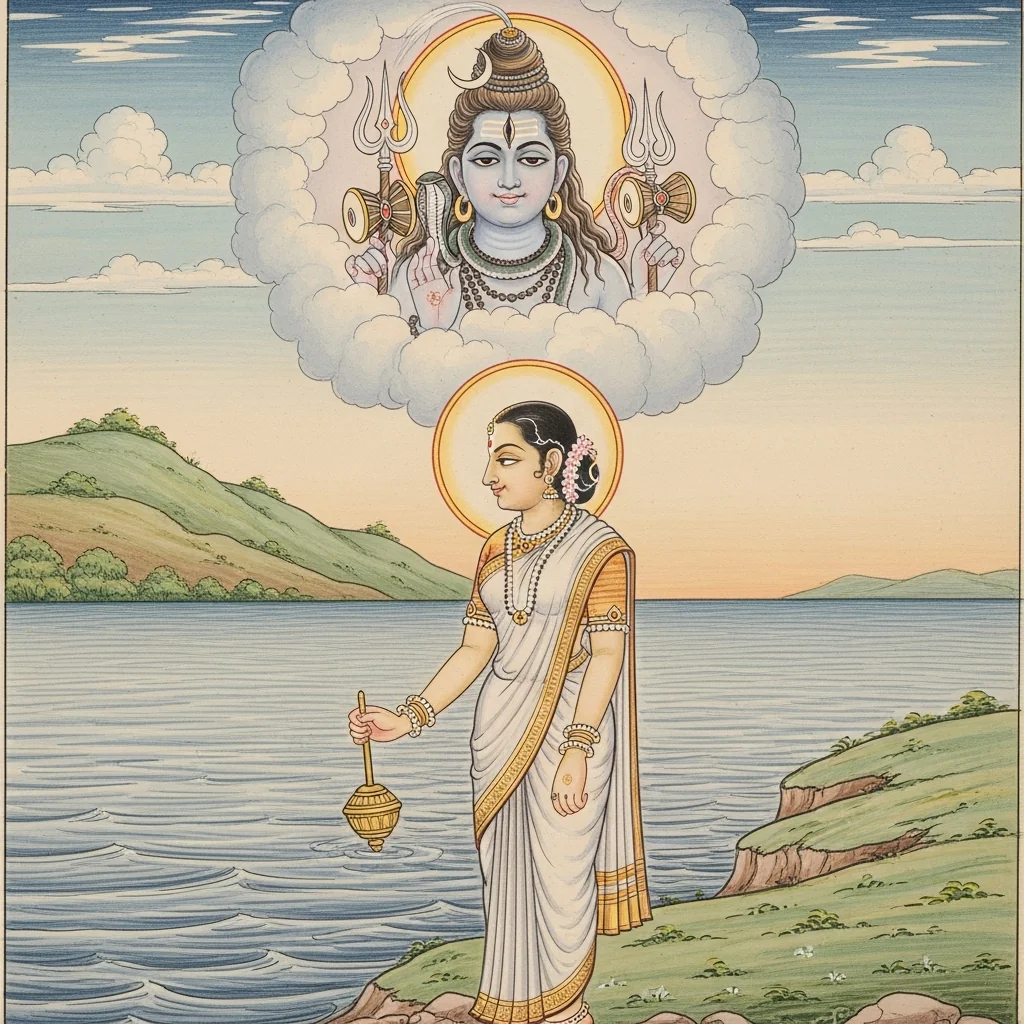
The chapter begins with Sūta outlining a purificatory sequence: a disciplined pilgrim, after bathing at a prior liberative site, proceeds to Sarvatīrtha, praised as supremely meritorious and able to destroy even grave sins. Moral impurities are said to tremble before one who bathes there, and the text declares that fruits normally gained through long Vedic recitation, great sacrifices, deity worship, sacred fasts, and mantra-japa may be obtained here by a single immersion. When the ṛṣis ask how the place came to be called “Sarvatīrtha,” Sūta recounts the story of Sucaritā, an ascetic of the Bhṛgu lineage—blind, aged, and unable to undertake a pan-Indian pilgrimage. Seeking an equivalent means, he performs severe Śaiva austerities at Gandhamādana near the southern ocean, maintaining tri-kāla worship, honoring guests, seasonal penances, ash-marking, rudrākṣa practice, and steady ascetic discipline. Pleased, Śiva appears, restores his sight, and invites him to ask a boon. Sucaritā requests the fruit of bathing in all tīrthas without traveling; Śiva proclaims he will summon all tīrthas into that very place—purified by Rāma’s Setu—thus establishing it as Sarvatīrtha, also called a Mānasa Tīrtha that grants both worldly aims and liberation. Sucaritā bathes and is instantly rejuvenated, is told to dwell there, bathe regularly while remembering Śiva, and avoid distant pilgrimages; at life’s end he attains Śiva. The phalaśruti concludes that reading or hearing this account frees one from sins.
Shlokas
Verse 1
श्रीसूत उवाच । स्नात्वा साध्यामृते तीर्थे नृपशापविमोक्षणे । सर्वतीर्थं ततो गच्छेन्मनुजो नियमान्वितः
Śrī Sūta said: Having bathed at Sādhyāmṛta Tīrtha—the holy ford that releases one from a king’s curse—a disciplined person, steadfast in observances, should then proceed to Sarvatīrtha.
Verse 2
सर्वतीर्थं महापुण्यं महापातकनाशनम् । महापातकयुक्तो वा युक्तो वा सर्वपातकैः
Sarvatīrtha is supremely meritorious and destroys even the great sins. Whether one is burdened with a mahāpātaka or entangled in every kind of sin—
Verse 3
शुद्ध्येत तत्क्षणादेव सवर्तीर्थनिमज्जनात् । तावत्सर्वाणि पापानि देहे तिष्ठंति सुव्रताः
He is purified at that very moment by immersion in Sarvatīrtha. Until then, all sins remain lodged in the body, O you of good vows.
Verse 4
स्नानार्थं सर्वतीर्थेऽस्मिन्दृष्ट्वा यांतं द्विजा नरम्
Seeing a man approaching this Sarvatīrtha for the sake of bathing, O brāhmaṇas—
Verse 5
वेपंते सर्वपापानि नाशोऽस्माकं भवेदिति । गर्भवासादिदुःखानि तावद्याति नरो भुवि
All sins tremble, thinking, “Now our destruction will come to pass!” Until then, a man in this world undergoes sufferings beginning with dwelling in the womb.
Verse 6
न स्नायात्सर्वतीर्थेऽस्मिन्यावद्ब्राह्मणपुंगवाः । अनुष्ठितैर्महायागैस्तथा तीर्थनिषेवणैः
O foremost of brāhmaṇas, one should not bathe in this Sarvatīrtha until one has first been disciplined by duly performed great yajñas and by proper service to other holy tīrthas.
Verse 7
गायत्र्यादिमहामंत्रजपैर्नियमपूर्वकम् । चतुर्णामपि वेदानामावृत्त्या शतसंख्यया
With disciplined observance—by repeating the great mantras beginning with the Gāyatrī, and by reciting the four Vedas a hundred times over—such merit is spoken of here.
Verse 8
शिवविष्ण्वादिदेवानां पूजया भक्ति पूर्वकम् । एकादश्यादितिथिषु तथैवानशनेन च । यत्फलं लभते मर्त्यस्तल्लभेदत्र मज्जनात्
Whatever fruit a mortal gains by devoted worship of deities such as Śiva and Viṣṇu, and likewise by fasting on holy lunar days beginning with Ekādaśī—those very results are obtained here by bathing through immersion at this place.
Verse 9
ऋषय ऊचुः । सर्वतीर्थमिति ख्यातिः सूतास्य कथमागता । ब्रूह्यस्माकमिदं पुण्यं विस्तराच्छृण्वतां मुने
The sages said: “O Sūta, how did this place come to be famed as ‘Sarvatīrtha’—the tīrtha of all tīrthas? Explain to us this merit in detail, O sage, as we listen.”
Verse 10
श्रीसूत उवाच । पुरा सुचरितोनाम मुनिर्नियमसंयुतः
Śrī Sūta said: “Formerly there was a sage named Sucarita, endowed with strict observances.”
Verse 11
भृगुवंशसमुद्भूतो जात्यंधो जरयातुरः । अशक्तस्तीर्थयात्रायां नेत्राभावेन स द्विजाः
Born in the lineage of Bhṛgu, blind from birth and afflicted by old age, he was unable to undertake pilgrimage to the tīrthas, O twice-born ones, because he lacked sight.
Verse 12
सर्वेषामेव तीर्थानां स्नातुकामो महामु निः । दक्षिणांबुनिधौ पुण्यं गंधमादनपर्वतम्
That great sage longed to bathe in all the tīrthas; therefore he went toward the sacred Gandhamādana mountain by the southern ocean.
Verse 13
गत्वा शंकरमुद्दिश्य तपस्तेपे सुदुष्करम् । त्रिकालमर्चयञ्छंभुमुपवासी जितेंद्रियः
Going there with Śaṅkara in his heart, he performed extremely difficult austerities—worshipping Śambhu at the three junctions of the day, fasting, and mastering his senses.
Verse 14
तथा त्रिषवणस्नानात्तथैवातिथिपूजकः । शिशिरे जलमध्यस्थो ग्रीष्मे पंचाग्निमध्यगः
He bathed at the three daily times and honored guests as well. In winter he remained immersed in water; in summer he stood amid the five fires.
Verse 15
वर्षास्वासारसहन अब्भक्षो वायुभोजनः । उद्धूलनं त्रिपुंड्रं च भस्मना धारयन्सदा
In the rainy season he endured the downpour; he lived on water alone and, as it were, on air. Ever he wore the ash-smearing and the three sacred lines (tripuṇḍra), bearing holy bhasma continually.
Verse 16
जाबालोपनिषद्रीत्या तथा रुद्राक्षधारकः । एवमुग्रं तपश्चक्रे दशसंवत्सरं द्विजः
In accordance with the injunction of the Jābāla Upaniṣad, he also wore Rudrākṣa beads. Thus the twice-born performed fierce austerities for ten years.
Verse 17
तपसा तस्य संतुष्टः शंकरश्चंद्रशेखरः । प्रादुरासीन्मुनेस्तस्य द्विजाः सुचरितस्य वै
Pleased by his austerities, Śaṅkara—Candraśekhara—manifested before that sage, O brāhmaṇas, namely Sucharita of noble conduct.
Verse 18
समारुह्य महोक्षाणं भूतवृंदनिषेवितः । गिरिजार्ध वपुः शूली सूर्यकोटिसमप्रभः
Mounted upon the great bull and attended by hosts of beings, the trident-bearing Lord—whose body is half that of Girijā—shone with a splendor equal to ten million suns.
Verse 19
स्वभासा भासयन्सर्वा दिशो वितिमिरास्तदा । भस्मपांडुरसर्वांगो जटामंडलमंडितः
With his own radiance he illuminated all the quarters, making them free of darkness. His entire body was pale with sacred ash, and he was adorned with a halo-like mass of matted locks.
Verse 20
अनंता दिमहानागविभूषणविभूषितः । प्रादुर्भूतस्ततः शंभुः प्रादात्तस्य विलोचने
Then Śambhu manifested, adorned with the ornaments of the great serpent Ananta; and he granted him eyes—the power of sight.
Verse 21
आत्मावलोकनार्थाय शंकरो गिरिजापतिः । ततः सुचरितो विप्राः शंभुना दत्तदृग्द्वयः । आलोक्य परमेशानं प्रतुष्टाव प्रसन्नधीः
For the sake of beholding Him directly, Śaṅkara—the Lord of Girijā—then bestowed upon Sucharita, O brāhmaṇas, a pair of eyes. Having seen the Supreme Lord, that serene-minded one praised Him with joy.
Verse 22
सुचरित उवाच । जय देव महेशान जय शंकर धूर्जटे
Sucharita said: Victory to You, O God, O Great Lord! Victory to You, O Śaṅkara, O Dhūrjaṭi, the matted-haired One!
Verse 23
जय ब्रह्मादिपूज्य त्वं त्रिपुरघ्न यमांतक । जयोमेश महादेव कामांतक जयामल
Victory to You, worshipped even by Brahmā and the other gods; O slayer of Tripura, O destroyer of Yama! Victory, O Lord of Umā, O Mahādeva; O destroyer of Kāma—victory to You, O Stainless One!
Verse 24
जय संसारवैद्य त्वं भूतपाल शिवाव्य य । त्रियंबक नमस्तुभ्यं भक्तरक्षणदीक्षित
Victory to You, the physician who cures the bondage of saṃsāra; O guardian of beings, O auspicious and imperishable One. O Three-eyed Lord, salutations to You—ever vowed to protect Your devotees.
Verse 25
व्योमकेश नमस्तुभ्यं जय कारुण्यविग्रह । नीलकण्ठ नमस्तुभ्यं जय संसारमोचक
Salutations to You, O Vyomakeśa; victory to You whose very form is compassion. Salutations to You, O Nīlakaṇṭha; victory to You, the liberator from saṃsāra.
Verse 26
महेश्वर नमस्तुभ्यं परमानंदविग्रह । गंगाधर नमस्तुभ्यं विश्वेश्वर मृडाव्यय
Salutations to You, O Maheśvara, whose very form is supreme bliss. Salutations to You, O Gaṅgādhara—Lord of the universe, benevolent and imperishable One.
Verse 27
नमस्तुभ्यं भगवते वासुदेवाय शंभवे । शर्वायोग्राय गर्भाय कैलासपतये नमः
Salutations to You, O Blessed Lord—Vāsudeva in all-pervading glory; to Śambhu; to Śarva; to the Fierce One; to the mysterious Womb, the source of all; and to the Lord of Kailāsa—again and again, my homage.
Verse 28
रक्ष मां करुणासिंधो कृपादष्ट्यवलोकनात् । मम वृत्तमनालोच्य त्राहि मां कृपया हर
Protect me, O ocean of compassion, with Your merciful glance. Without weighing my past deeds, rescue me by sheer grace, O Hara.
Verse 29
श्रीसूत उवाच । इति स्तुतो महादेवस्तमेनमिदमभ्यधात् । मुनिं सुचरितं विप्रा दयोदन्वानुमापतिः
Śrī Sūta said: Thus praised, Mahādeva spoke these words to the sage Sucharita, O brāhmaṇas—He who is an ocean of mercy, the true Lord beyond measure.
Verse 30
महादेव उवाच । मुने सुचरिताद्य त्वं वरं वरय कांक्षितम् । वरं दातुं तवायातः पुण्येस्मिन्नाश्रमे शुभे । इतीरितो मुनिः प्राह महादेवं दयानिधिम्
Mahādeva said: “O sage Sucharita, today choose the boon you desire. I have come to this auspicious and holy āśrama to grant you a boon.” Thus addressed, the sage spoke to Mahādeva, the treasure-house of compassion.
Verse 31
सुचरित उवाच । भगवंस्त्वं प्रसन्नो मे यदि स्याश्चंद्रशेखर
Sucharita said: “O Blessed Lord, if You are truly pleased with me, O Candrasekhara—”
Verse 32
तर्हि त्वां प्रवृणोम्यद्धा वरं मदभिकांक्षितम् । जरापलितदेहोहं कुत्रचिद्गंतुमक्षमः
“Then, indeed, I choose from You the boon I long for. I am aged—my body worn and grey—and I am unable to travel anywhere.”
Verse 33
सर्वतीर्थेषु च स्नातुमाकांक्षा मम विद्यते । तस्मात्सर्वेषु तीर्थेषु स्नानेन मनुजो हि यत् । फलं प्राप्नोति मे ब्रूहि तत्फला वाप्तिसाधनम्
“Yet I have a yearning—to bathe in all tīrthas. Therefore tell me: what fruit a person gains by bathing in all sacred fords, and what means will grant me that very attainment.”
Verse 34
महादेव उवाच । अहमावाहयिष्यामि तीर्थान्यत्रैव कृत्स्नशः
Mahādeva said: “I shall invoke all the tīrthas—entirely—right here itself.”
Verse 35
रामस्य सेतुना पूते नगेऽस्मिन्गंधमादने । इत्युक्त्वा स महादेवः पर्वते गन्धमादने
Having spoken thus on the Gandhamādana mountain—made holy by Rāma’s Setu—Mahādeva then set about to act upon that very Gandhamādana peak.
Verse 36
तीर्थान्यावाहयामास मुनिप्रीत्यर्थमुत्तमः । ततस्सुचरितं प्राह शंकरः करुणानिधिः
The Supreme One invoked the tīrthas for the sage’s delight. Then Śaṅkara, the treasury of compassion, spoke to Sucharita.
Verse 37
मुने सुचरितेदं तु महापातकनाशनम् । सांनिध्यात्सर्वतीर्थानां सर्वतीर्थाभिधं स्मृतम्
O sage Sucharita, this tīrtha destroys the greatest sins. Since all tīrthas are present here in close proximity, it is remembered as ‘Sarva-tīrtha’—the tīrtha that contains all tīrthas.
Verse 38
मयात्र सर्वतीर्थानां मनसाकर्षणादिदम् । मानसं तीर्थमित्याख्यां लप्स्यते भुक्तिमुक्तिदम्
Here, by my drawing in all tīrthas through the power of mind, this place will gain the name ‘Mānasa Tīrtha’; it bestows both bhukti (worldly enjoyment) and mukti (liberation).
Verse 39
अतः सुचरितात्र त्वं स्नाहि सद्यो विमुक्तये । महापातकसंघानां दावानलसमद्युतौ
Therefore, O Sucharita, bathe here at once for immediate release. This tīrtha shines like a forest-fire against masses of great sins.
Verse 40
काममोहभयक्रोधलोभरोगादिनाशने । विना वेदांतविज्ञानं सद्योनिर्वाणकारणे
It destroys desire, delusion, fear, anger, greed, diseases, and the like; and even without formal knowledge of Vedānta, it becomes a cause of immediate nirvāṇa.
Verse 41
जन्ममृत्य्वादिनक्रौघसंसारार्णवतारणे । कुम्भीपाकादिसकलनरकाग्निविनाशने
It ferries one across the ocean of saṃsāra, thronged with the crocodiles of birth, death, and the rest; it destroys the fires of all hells, beginning with Kumbhīpāka.
Verse 42
इतीरितः सुचरितः शम्भुना मदनारिणा । सस्नौ विप्राः सर्वतीर्थे महादेवस्य संनिधौ
Thus instructed by Śambhu, the foe of Madana, Sucarita and the brāhmaṇas bathed in the Sarvatīrtha, in the very presence of Mahādeva.
Verse 43
स्नात्वोत्थितः सुचरितो ददृशेऽखिलमानवैः । जरापलितनिर्मुक्तस्तरुणोऽतीव सुन्दरः
After bathing and rising up, Sucarita was seen by all the people—freed from old age and grey hair, youthful and exceedingly beautiful.
Verse 44
दृष्ट्वा स्वदेहसौंदर्यं ततः सुचरितो मुनिः । श्लाघयामास तत्तीर्थं बहुधाऽन्ये च तापसाः
Seeing the beauty of his own body, the sage Sucarita then praised that tīrtha in many ways; other ascetics too praised it.
Verse 45
महादेवः सुचरितं बभाषे तदनंतरम् । अस्य तीर्थस्य तीरे त्वं वसन्सुचरित द्विज
Then Mahādeva spoke to Sucarita: “O brāhmaṇa Sucarita, dwelling upon the bank of this tīrtha… (remain here).”
Verse 46
स्नानं कुरुष्व सततं स्मरन्मां मुक्तिदायकम् । देशांतरीयतीर्थेषु मा व्रज ब्राह्मणोत्तम
Perform sacred bathing continually, remembering Me, the giver of liberation. Do not go to tīrthas in other lands, O best of brāhmaṇas.
Verse 47
अस्य तीर्थस्य माहात्म्यान्मामंते प्राप्स्यसि ध्रुवम् । अन्येऽपि येऽत्र स्नास्यंति तेऽपि मां प्राप्नुयुर्द्विज
By the greatness of this tīrtha, you shall surely attain Me at life’s end. And even others who bathe here, O twice-born, shall also reach Me.
Verse 48
इत्युक्त्वा भगवानीशस्तत्रैवांतरधीयत । तस्मिन्नंतर्हिते रुद्रे ततः सुचरितो मुनिः
Having spoken thus, the Blessed Lord Īśa vanished right there. When Rudra had disappeared, the sage Sucarita then acted accordingly.
Verse 49
अनेककालं निवसन्सर्वतीर्थस्य तीरतः । स्नानं समाचरंस्तीर्थे मानसे नियमान्वितः
For a long time, dwelling on the bank of Sarvatīrtha, he regularly performed bathing at that holy place, endowed with inner disciplines and restraints.
Verse 50
देहांते शंकरं प्राप सर्वबन्धविमोचितः । सायुज्यं चापि संप्राप सर्वतीर्थस्य वैभवात्
At the end of his life, freed from every bondage, he attained Śaṅkara; and by the glory of Sarvatīrtha he also obtained sāyujya—complete union with the Lord.
Verse 51
एवं वः कथितं विप्राः सर्वतीर्थस्य वैभवम् । एतत्पठन्वा शृण्वन्वा मुच्यते सर्व पातकैः
Thus, O brāhmaṇas, the glory of Sarvatīrtha has been declared to you. By reading this, or even by hearing it, one is freed from all sins.