Adhyaya 23
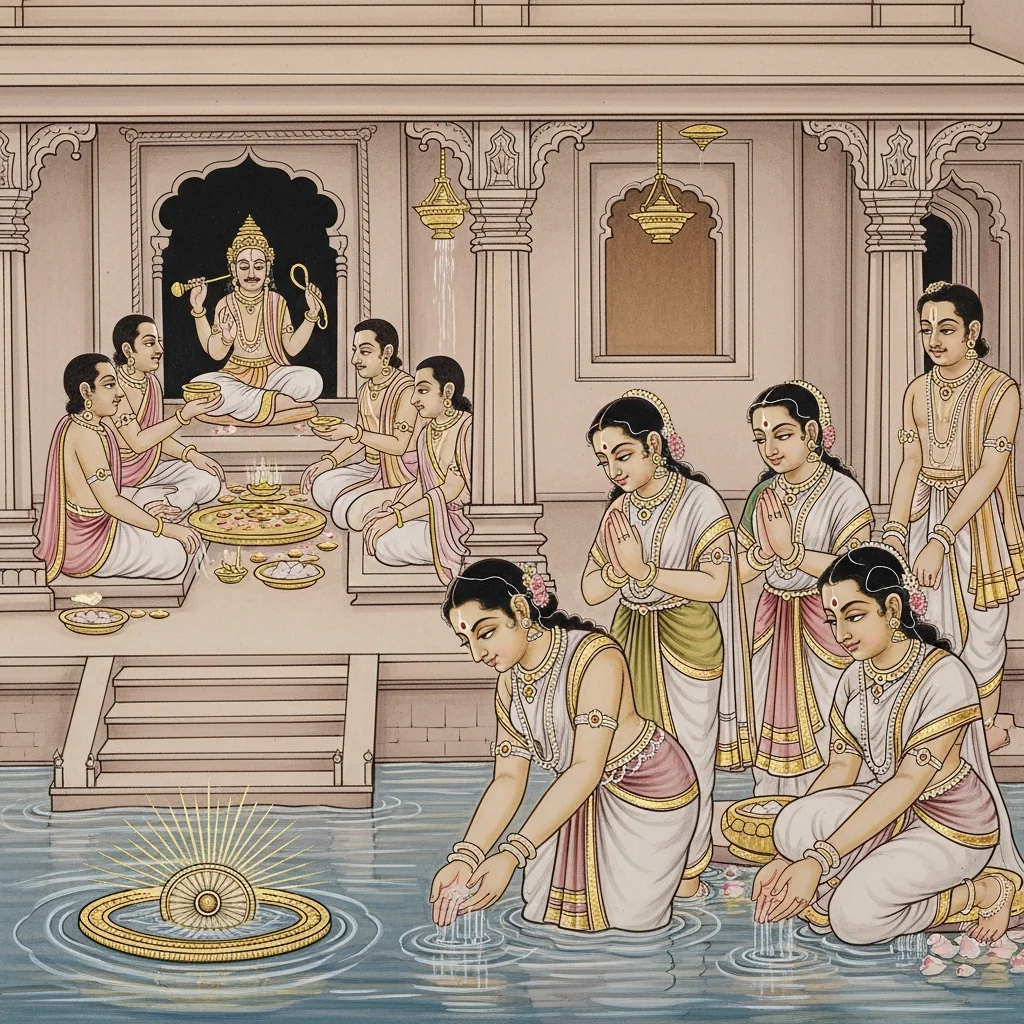
This chapter is framed as Sūta’s guidance on a pilgrimage sequence: after bathing at Agnitīrtha, praised as the destroyer of all sins, the purified pilgrim is directed to Chakratīrtha. Bathing there with a specific intention is said to yield the corresponding desired result, establishing Chakratīrtha as a sacred place where rightful wishes are fulfilled. The tīrtha’s authority is grounded in an earlier episode: the sage Ahirbudhnya performs tapas on Gandhamādana but is harassed by fearsome rākṣasas seeking to obstruct his austerity. Sudarśana intervenes, destroys the obstructors, and is thereafter declared to abide at the tīrtha, responding to devotees’ prayers; hence the name Chakratīrtha and the assurance that harmful afflictions from such beings do not arise there. A second, more ritual-focused myth explains Savitṛ/Āditya’s epithet “chinna-pāṇi” (“severed hands”). Pressed by daityas, the devas consult Bṛhaspati and approach Brahmā, who ordains a Māheśvara Mahāyajña at Gandhamādana under Sudarśana’s protection, detailing the ṛtvij offices (hotṛ, adhvaryu, etc.). When the potent prāśitra portion is distributed, Savitṛ’s hands are severed upon contact; on Aṣṭāvakra’s advice he bathes at the local tīrtha (formerly Munitīrtha, now Chakratīrtha) and emerges with restored golden hands. The phalaśruti concludes that reading or hearing this chapter supports restoration of bodily wholeness, grants desired aims, and promises liberation to the seeker of mokṣa.
Shlokas
Verse 1
श्रीसूत उवाच । अग्नितीर्थाभिधे तीर्थे सर्वपातकनाशने । स्नानं कृत्वा विशुद्धात्मा चक्रतीर्थं ततो व्रजेत्
Śrī Sūta said: In the sacred ford called Agni-tīrtha, which destroys all sins, having bathed and become purified in spirit, one should then proceed to Cakra-tīrtha.
Verse 2
यंयं कामं समुद्दिश्य चक्रतीर्थे द्विजोत्तमाः । स्नानं समाचरेन्मर्त्यस्तंतं कामं समश्नुते
O best of the twice-born, whatever desire a mortal holds in mind and performs bathing at Cakra-tīrtha for that purpose—he attains that very desire.
Verse 3
पुराहिर्बुध्न्यनामा तु महर्षिः संशित व्रतः । सुदर्शनमुपास्तास्मिंस्तपस्वी गंधमादने
Formerly, a great sage named Ahirbudhnya, steadfast in his vows, performed tapas on Mount Gandhamādana and worshipped Sudarśana there.
Verse 4
तपस्यंतं मुनिं तत्र राक्षसा घोररूपिणः । अबाधंत सदा विप्रास्तपोविघ्नैकतत्पराः
There, as the sage performed tapas, terrifying rākṣasas continually harassed him—O brāhmaṇas—intent solely on obstructing his penance.
Verse 5
सुदर्शनं तदागत्य भक्तरक्षणवांछया । यातुधानान्बाधमानान्न्यवधीर्लीलया पुरा
Then Sudarśana arrived, wishing to protect the devotee, and in former times effortlessly slew those yātudhānas who were causing harm.
Verse 6
तदाप्रभृति तच्चक्रं भक्तप्रार्थनया द्विजाः । अहिर्बुध्न्यकृते तीर्थे सन्निधानं सदाऽकरोत्
From that time onward, O twice-born ones, that Discus—at the devotee’s prayer—took up perpetual presence at the tīrtha established by Ahirbudhnya.
Verse 7
तदाप्रभृति तत्तीर्थं चक्रतीर्थमितीर्यते । सुदर्शनप्रसादेन तत्र तीर्थे निमज्जनात्
From that time, that holy place is called Cakratīrtha; by the grace of Sudarśana, immersion in that tīrtha bestows auspicious merit.
Verse 8
रक्षःपिशाचा दिकृता पीडा नास्त्येव कर्हिचित् । स्नात्वास्मिन्पावने तीर्थे छिन्नपाणिः पुरा रविः । स हिरण्यमयौ पाणी लब्धवांस्तीर्थवैभवात्
No affliction caused by rākṣasas, piśācas, and the like ever befalls one who takes refuge in this place. Long ago, Ravi (the Sun), whose hands had been severed, bathed in this purifying tīrtha and—by the tīrtha’s grandeur—obtained hands made of gold.
Verse 9
ऋषय ऊचुः । छिन्नपाणिः कथमभूदादित्यः सूतनंदन । यथा च लब्धवान्पाणी सौवर्णौ तद्वदस्व नः
The sages said: “O son of Sūta, how did Āditya, the Sun, come to have his hands severed? And how did he obtain those golden hands? Tell us.”
Verse 10
श्रीसूत उवाच । इंद्रादयः सुराः पूर्वं संततं दैत्यपीडिताः
Śrī Sūta said: “Formerly, Indra and the other gods were continually tormented by the daityas.”
Verse 11
किं कुर्म इति संचित्य संभूय सममंत्रयन् । बृहस्पतिं पुरस्कृत्य मंत्रयित्वा चिरं सुराः
Thinking, “What shall we do?”, the gods assembled and deliberated together; placing Bṛhaspati at the forefront, they consulted for a long time.
Verse 12
तुरासाहं पुरोधाय धाम स्वायंभुवं ययुः । ते ब्रह्माणं समासाद्य दृष्ट्वा स्तुत्वा च भक्तितः
Taking Turāsāha as their leader, they went to the abode of Svayambhū (Brahmā). Reaching Brahmā, they beheld him and praised him with devotion.
Verse 13
ततो व्यजिज्ञपस्तस्मै स्वेषामागमकारणम् । सुरा ऊचुः । भगवन्भारतीनाथ दैत्या ह्यस्मान्बलोत्कटाः
Then the gods made known to him the cause of their coming. The Devas said: “O Blessed One, O Lord of sacred speech, the Daityas—mighty with overpowering strength—are afflicting us.”
Verse 14
बाधंते सततं देव तत्र ब्रूहि प्रतिक्रियाम् । इत्युक्तः स सुरैर्ब्रह्मा तानाह कृपया वचः
“They harass us continually, O God—tell us the countermeasure.” Thus addressed by the Devas, Brahmā spoke to them with compassionate words.
Verse 15
ब्रह्मोवाच । मा भैष्ट यूयं विबुधास्तत्रोपायं ब्रवीम्यहम् । माहेश्वरं महायज्ञमसुराणां विनाशनम्
Brahmā said: “Do not fear, O gods. I shall tell you the means. Perform the great Māheśvara sacrifice—an instrument for the destruction of the Asuras.”
Verse 16
प्रारभध्वं सुरा यूयं मुनिभिस्तत्त्वदर्शिभिः । अयं च दैवतैः सर्वैर्विधिलोभं विना कृतः
“Begin it, O Devas, together with the sages who see the truth. And let it be performed by all the gods, without greed for ritual reward.”
Verse 17
माहेश्वरो महायज्ञः क्रियतां गंधमादने । यदि ह्यन्यत्र तं यज्ञं कुर्युस्तद्विबुधर्षभाः
“Let the great Māheśvara sacrifice be performed on Gandhamādana. For if, O best of the gods, you were to perform that sacrifice elsewhere…”
Verse 18
यज्ञविघ्नं तदा कुर्युर्दुरात्मानः सुरद्विषः । क्रियते यद्ययं यज्ञो गंधमादनपर्वते
Then those wicked ones, haters of the Devas, would raise obstacles to the yajña; but if this sacrifice is performed upon Mount Gandhamādana…
Verse 19
सुदर्शनप्रसादेन नैव विघ्नो भवेत्तदा । अहिर्बुध्न्याभिधानस्य महर्षेर्गंधमादने
By the grace of Sudarśana, then no obstacle would arise; for on Gandhamādana there dwells the great ṛṣi known as Ahirbudhnya…
Verse 20
अनुग्रहाय तत्तीर्थे सन्निधत्ते सुदर्शनम् । अतः कुरुध्वं भो यूयं तं यज्ञं गंधमादने
To bestow blessing, Sudarśana abides present at that sacred ford; therefore, O all of you, perform that yajña on Gandhamādana.
Verse 21
नातिदूरे चक्रतीर्थादसुराणां विनाशकम् । ततस्ते ब्रह्मवचसा सहसा गंधमादनम्
Not far from Cakratīrtha, the destroyer of the Asuras, they—stirred by Brahmā’s words—hastened at once toward Gandhamādana.
Verse 22
बृहस्पतिं पुरस्कृत्य जग्मुर्यज्ञचिकीर्षया । ते प्रणम्य महात्मानमहिर्बुध्न्यं मुनीश्वरम्
Placing Bṛhaspati at their head, they set forth intent on accomplishing the yajña. Bowing down, they paid homage to the great-souled sage-lord Ahirbudhnya.
Verse 23
अकल्पयन्यज्ञवाटन्नातिदूरे तदाश्रमात् । यज्ञकर्मसु निष्णातैः सहितास्ते तपोधनैः
Those ascetics, abounding in tapas, prepared a sacred yajña-enclosure not far from that hermitage, accompanied by experts fully trained in the rites of Vedic sacrifice.
Verse 24
इष्टिमारेभिरे देवा असुराणां विनाशिनीम् । तस्मिन्कर्मणि होतासीत्स्वयमेव बृहस्पतिः
The gods then commenced a sacrificial iṣṭi that would bring about the destruction of the Asuras; and in that rite Bṛhaspati himself served as the Hotṛ-priest.
Verse 25
बभूव मैत्रावरुणो जयंतः पाकशासनिः । अच्छावाको बभूवात्र वसूनामष्टमो वसुः
Jayanta, the son of Pākaśāsana (Indra), became the Maitrāvaruṇa; and here the eighth of the Vasus served as the Acchāvāka-priest.
Verse 26
ग्रावस्तुदभवत्तत्र शक्तिपुत्रः पराशरः । अष्टावक्रो महातेजा अध्वर्युधुरमूढवान्
There, Parāśara—the son of Śakti—served as the Grāvastut; and the greatly radiant Aṣṭāvakra bore the office of the Adhvaryu.
Verse 27
तत्र प्रतिप्रस्थाताभूद्विश्वामित्रो महामुनिः । नेष्टा बभूव वरुण उन्नेता च धनेश्वरः
There, the great sage Viśvāmitra became the Pratiprasthātṛ; Varuṇa served as the Neṣṭṛ; and Dhaneśvara (Kubera) acted as the Unnetṛ.
Verse 28
ब्रह्मा बभूव सविता यज्ञस्यार्धधुरं वहन् । बभूव ब्राह्मणाच्छंसी वसिष्ठो ब्रह्मणोत्तमः
Savitṛ became the Brahmā-priest, bearing half the burden of the sacrifice; and Vasiṣṭha, foremost among brahmins, became the Brāhmaṇācchaṃsī.
Verse 29
आग्नीध्रोऽभूच्छुनःशेपः पोता जातश्च पावकः । उद्गाता वायुरभवत्प्रस्तोता च परेतराट्
Śunaḥśepa became the Āgnīdhra; Pāvaka served as the Potṛ; Vāyu became the Udgātṛ; and Paretarāṭ acted as the Prastotṛ.
Verse 30
प्रतिहर्ता तु तत्रासीदगस्त्यः कुंभसंभवः । सुब्रह्मण्यो मधुच्छंदा विश्वामित्रात्मजो महान्
There, Agastya—born of the jar—served as the Pratihartṛ; and the great Madhucchandas, son of Viśvāmitra, became the Subrahmaṇya.
Verse 31
यजमानः स्वयमभूद्देवराजः पुरंदरः । उपद्रष्टा बभूवात्र व्यासपुत्रः शुको मुनिः
Devarāja Purandara (Indra) himself became the yajamāna (sacrificer); and here the sage Śuka, son of Vyāsa, served as the overseer-witness (upadraṣṭṛ).
Verse 32
ततस्ते ऋत्विजः सर्वे देवराजं पुरंदरम् । विधिवद्दीक्षयांचक्रुस्तत्र माहेश्वरे क्रतौ
Then all those officiating priests duly initiated Devarāja Purandara (Indra) there, in that Māheśvara sacrifice, according to proper rule.
Verse 33
प्रावर्तत महायज्ञ एवं वै गंधमादने । सुदर्शनप्रभावेन दुःसहेनातिपीडिताः
Thus, upon Gandhamādana, the great sacrifice commenced. Overwhelmed and sorely tormented by the unbearable power of Sudarśana, the obstructing forces were subdued.
Verse 34
नाविंदन्नसुरास्तत्र रंध्रं यज्ञे प्रवर्तिते । एवन्निरंतरायोऽसौ प्रावर्तत महा क्रतुः
When the sacrifice had begun, the Asuras found no opening there to disrupt it. In this way, that great rite proceeded without obstacle.
Verse 35
भक्षयंश्च हरिस्तत्र जज्वाल हुतवाहनः । विधिवत्कर्मजालानि कृत्वाध्वर्युरसंभ्रमात्
There, as Hari consumed the offerings, the fire—the bearer of oblations—blazed forth. The Adhvaryu priest, unflustered, performed the entire sequence of rites according to rule.
Verse 36
मंत्रपूतं पुरोडाशं जुहवामास पावके । हुतशेषं पुरोडाशं विभज्याध्वर्युरादरात्
He offered into the purifying fire the puroḍāśa sanctified by mantras. Then, with reverence, the Adhvaryu divided the remaining portion of the offered puroḍāśa.
Verse 37
ऋत्विग्भ्यो होतृमुख्येभ्यः प्रददौ पापनाशनम् । सवित्रे ब्रह्मणे चैकमत्युग्रतरतेजसम्
He bestowed upon the officiating priests—foremost among them the Hotṛ—a share that destroys sin. And to Savitṛ and to Brahmā he gave a single portion, blazing with exceedingly fierce radiance.
Verse 38
ददौ तत्र पुरोडाशभागं प्राशित्रनामकम् । प्रतिजग्राह पाणिभ्यां प्राशित्रं सविता तदा
There he gave a portion of the puroḍāśa called the prāśitra. Then Savitṛ accepted that prāśitra with his hands.
Verse 39
सवित्रा स्पृष्टमात्रं सत्तत्प्राशित्रं दुरासदम् । तस्य पाणी प्रचिच्छेद पश्यतां सर्वऋत्विजाम्
That prāśitra, difficult to approach, was scarcely touched by Savitṛ when it severed his hands—while all the priests looked on.
Verse 40
ततः संछिन्नपाणिः स प्राशित्रेणोग्रतेजसा । किमेतदिति संत्रस्तो विषण्णवदनोऽभवत्
Then, with his hands severed by the prāśitra’s fierce radiance, he became frightened, asking, “What is this?”—his face fallen in distress.
Verse 41
सविता ऋत्विजः सर्वान्समाहूयेदमब्रवीत् । सवितोवाच । पुरोडाशस्य भागोऽयं मम प्राशित्रनामकः
Savitṛ summoned all the priests and spoke: “This portion of the puroḍāśa is mine, known as the prāśitra.”
Verse 42
दत्तश्चिच्छेद मत्पाणी मिषत्स्वेव भवत्स्वपि । अतो भवंतः संभूय सर्व एव हि ऋत्विजः
Though it was duly given, it cut off my hands—even as you all looked on. Therefore, all of you priests should assemble together…
Verse 43
कल्पयंतामिमौ पाणी नोचेद्यज्ञं निहन्म्यमुम् । सवितुर्वाक्यमाकर्ण्य ते सर्वे समचिंतयन्
“Let these two hands be fashioned anew; otherwise I shall destroy this sacrifice (yajña)!” Hearing Savitṛ’s words, they all reflected together on what should be done.
Verse 44
तत्र मध्ये मुनींद्राणां देवानां चैव सर्वशः । अष्टावक्रो महातेजा ऋत्विजस्तानभाषत
There, in the midst of the foremost sages and the assembled gods, the greatly radiant Aṣṭāvakra addressed the officiating priests (ṛtviks).
Verse 45
अष्टावक्र उवाच । शृणुध्वमृत्विजः सर्वे मम वाक्यं समाहिताः । मयि जीवति विप्रेंद्रा विरिंचानां शतं गतम्
Aṣṭāvakra said: “Listen, all you priests (ṛtvij), with minds fully gathered, to my words. While I yet live, O best of brāhmaṇas, a hundred ages of Viriñca (Brahmā) have passed.”
Verse 46
जायंते च म्रियंते च चतुराननकोटयः । पश्यन्नेव च तान्सर्वानहं प्राणानधारयम्
Millions of four-faced Brahmās are born and die; and even as I watched them all, I sustained my life-breath, enduring through those aeons.
Verse 47
तत्र लोकेश्वराभिख्ये वर्तमाने प्रजापतौ । विप्रो हरिहरोनाम निवसञ्छयामलापुरे
In that time, when the Prajāpati named Lokeśvara was ruling, there lived in Śyāmalāpura a brāhmaṇa named Harihara.
Verse 48
व्याधेनारण्यवासेन केल्यर्थं लक्ष्यवेधिना । छिन्नपादोऽभवद्बाणैर्लक्ष्य मध्यं समागतः
A hunter dwelling in the forest, shooting at targets for sport, struck him with arrows; his feet were severed, for the hunter had hit the very center of the mark.
Verse 49
स गंधमादनं प्राप्य मुनिभिः प्रेरितस्तदा । स्नात्वा च मुनितीर्थेऽस्मिन्प्राप्तवांश्चरणौ पुरा
Then, urged by sages, he reached Gandhamādana; and after bathing at this Munitīrtha, he regained his feet as before.
Verse 50
तदा पुण्यमिदं तीर्थं मुनितीर्थमितीरितम् । इदानीं चक्रतीर्थाख्यं चक्रनाम त्वविंदत
Formerly this sacred ford was renowned as Munitīrtha; but now it has obtained the name Cakratīrtha, the ‘Discus Ford’.
Verse 51
तदत्र क्रियतां स्नानं प्राशित्रच्छिन्नपाणिना । मुनितीर्थे सवित्रापि युष्माकं यदि रोचते
Therefore, let bathing be performed here at Munitīrtha by the one whose hands are cut off after partaking of the sacrificial food; and let Savitṛ also do so—if it pleases you.
Verse 52
ऋत्विजः कथितास्त्वेवमष्टावक्रमहर्षिणा । सवितारमभाषंत सर्व एव प्रहर्षिताः
Thus instructed by the great sage Aṣṭāvakra, all the priests—delighted—addressed Savitṛ.
Verse 53
सवितः स्नाहि तीर्थेऽ स्मिंस्तव पाणी भविष्यतः । अष्टावक्रो यथा प्राह तथा कुरु समाहितः
“O Savitṛ, bathe in this sacred ford; your hands shall be restored. Do exactly as Aṣṭāvakra instructed—steadfast and collected in mind.”
Verse 54
ततः स सविता गत्वा चक्रतीर्थं महत्तरम् । सस्नौ पाण्योरवाप्त्यर्थमिष्टदायिनि तत्र सः
Then Savitṛ went to the exceedingly great Cakra-tīrtha. There, in that boon-bestowing holy place, he bathed seeking the recovery of his hands.
Verse 55
उत्तिष्ठन्नेव स तदा तत्र स्नात्वा सभक्तिकम् । युक्तो हिरण्मयाभ्यां तु पाणिभ्यां समदृश्यत
As he rose up after bathing there with devotion, he was seen endowed with two golden hands.
Verse 56
हिरण्यपाणिं तं दृष्ट्वा जहृषुः सर्वऋत्विजः । ततः समाप्य तं यज्ञं दैत्यसंघान्विजित्य च
Seeing him with golden hands, all the officiating priests rejoiced. Then, having completed that sacrifice—and having conquered the hosts of Dāityas as well—
Verse 57
इंद्रादयः सुराः सर्वे सुखिताः स्वर्गमाययुः । तस्मादेतत्समागत्य तीर्थं सर्वैश्च मानवैः
Indra and all the gods, delighted, returned to heaven. Therefore, this sacred tīrtha should be approached by all people—
Verse 58
सेवनीयं प्रयत्नेन स्वस्वाभीष्टस्य सिद्धये । अंधैश्च कुणिभिर्मूकैर्बधिरैः कुब्जकैरपि
It should be diligently resorted to for the fulfillment of one’s own desired aims—even by the blind, the maimed, the mute, the deaf, and the hunchbacked.
Verse 59
खंजैः पंगुभिरप्येतदंगहीनैस्तथापरैः । संछिन्नपाणिचरणैः संछिन्नान्यांगसंचयैः
Even by the lame, the paralysed, and others lacking limbs; by those with severed hands or feet, and by those whose other bodily members are mutilated—
Verse 60
मनुष्यैश्च तथान्यैश्च विकलांगस्य पूर्तये । सेवनीयमिदं तीर्थं सर्वाभीष्टप्रदायकम्
By humans and by others as well, for the completion of impaired limbs, this tīrtha should be resorted to—since it grants every desired aim.
Verse 61
एवं वः कथितं विप्राश्चक्रतीर्थस्य वैभवम् । यत्र स्नात्वा पुरा छिन्नौ पाणी प्राप प्रभाकरः
Thus, O brāhmaṇas, the greatness of Cakra-tīrtha has been told to you—where, long ago, Prabhākara regained his severed hands after bathing.
Verse 62
यः पठेदिममध्यायं शृणुयाद्वा समाहितः । अंगानि विकलान्यस्य पूर्णानि स्युर्न संशयः
Whoever, with a focused mind, recites this chapter or even hears it—his impaired limbs become whole; of this there is no doubt.
Verse 63
मोक्षकामस्य मर्त्यस्य मुक्तिः स्यान्नात्र संशयः
For the mortal who longs for mokṣa, liberation surely arises—of this there is no doubt.