Adhyaya 21
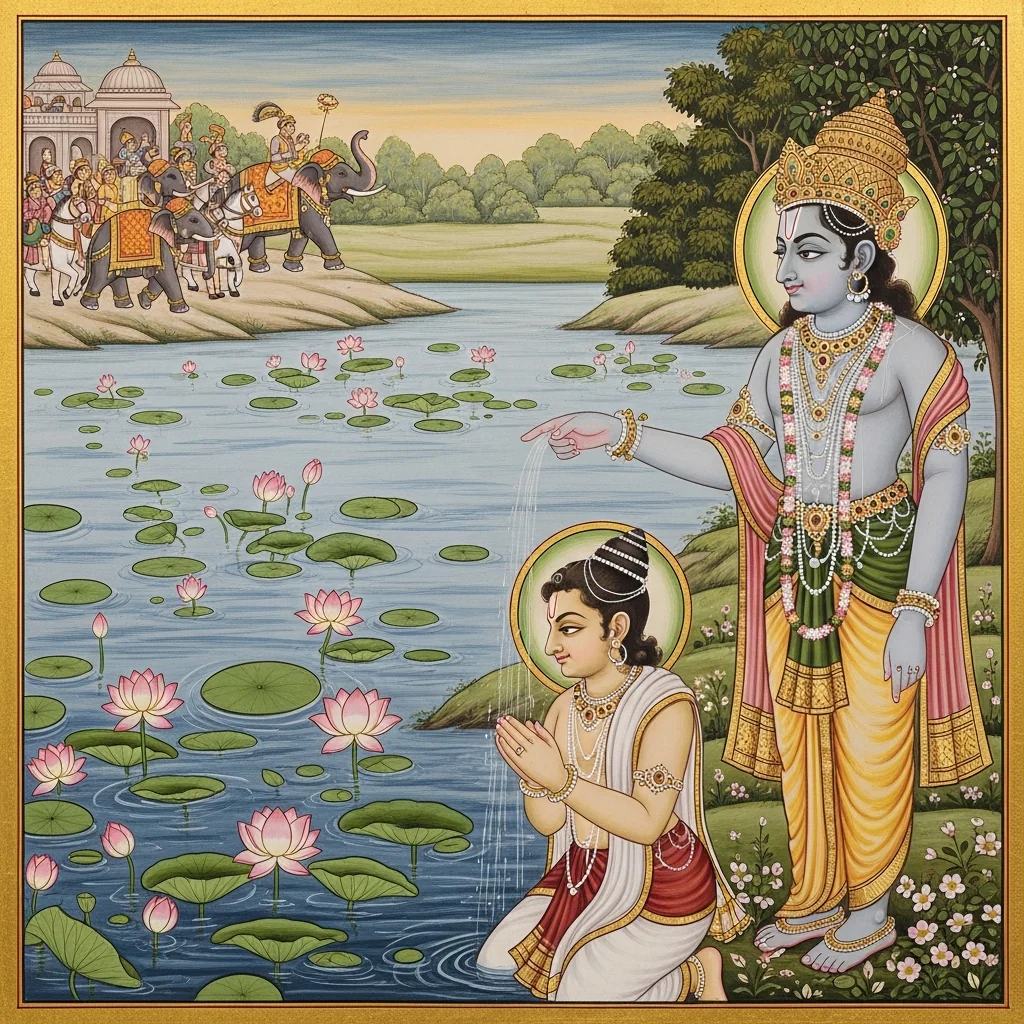
This chapter, narrated by Sūta to the sages, maps a sequence of tīrthas and especially glorifies Lakṣmī-tīrtha as a model place of purification and prosperity. It opens with the rule of ritual approach: after bathing at Jaṭā-tīrtha, praised as sin-destroying, the cleansed pilgrim proceeds to Lakṣmī-tīrtha, where bathing with a rightly formed intention is said to accomplish one’s desired aims. An epic exemplum is then given. Yudhiṣṭhira (Dharmaputra) at Indraprastha asks Śrī Kṛṣṇa what dharma enables humans to gain great sovereignty and prosperity. Kṛṣṇa directs him to the Gandhamādana mountain region, naming Lakṣmī-tīrtha as a singular cause of aiśvarya: bathing there increases wealth and grain, diminishes foes, strengthens kṣātra power, removes sins, and lessens disease. Yudhiṣṭhira observes strict niyamas, bathes repeatedly for a month, and then gives substantial gifts to brāhmaṇas, becoming fit to undertake the Rājasūya. Kṛṣṇa further teaches that the Rājasūya requires prior digvijaya (conquest of the quarters) and the collection of tribute; the Pāṇḍavas accomplish this, return with vast riches, and Yudhiṣṭhira performs the sacrifice with extensive donations. The chapter concludes by attributing these results to the māhātmya of Lakṣmī-tīrtha and states the phalaśruti: reciting or hearing it destroys bad dreams, grants desired ends, brings prosperity in this life, and promises liberation at life’s end after the rightful enjoyment of worldly goods.
Shlokas
Verse 1
श्रीसूत उवाच । जटा तीर्थाभिधे तीर्थे सर्वपातकनाशने । स्नानं कृत्वा विशुद्धात्मा लक्ष्मीतीर्थं ततो व्रजेत्
Śrī Sūta said: Having bathed at the sacred ford called Jaṭā-tīrtha—the destroyer of all great sins—one becomes purified in soul and should then proceed to Lakṣmī-tīrtha.
Verse 2
यंयं कामं समुद्दिश्य लक्ष्मीतीर्थे द्विजोत्तमाः । स्नानं समाचरेन्मर्त्यस्तंतं कामं समश्नुते
O best of the twice-born, whatever desire a mortal sets his intention upon and performs bathing for at Lakṣmī-tīrtha—that very desire he attains.
Verse 3
महादारिद्र्यशमनं महाधान्यसमृद्धिदम् । महादुःखप्रशमनं महासंपद्विवर्धनम्
It quells great poverty, bestows abundant grain and prosperity, pacifies great sorrow, and increases great fortune.
Verse 4
अत्र स्नात्वा धर्मपुत्रो महदैश्वर्यमाप्तवान् । इन्द्रप्रस्थे वसन्पूर्वं श्रीकृष्णेन प्रचोदितः
Here, having bathed, Dharmaputra attained great sovereignty and prosperity—formerly dwelling in Indraprastha, urged on by Śrī Kṛṣṇa.
Verse 5
ऋषय ऊचुः । यथैश्वर्यं धर्मपुत्रो लक्ष्मीतीर्थे निमज्जनात् । आप्तवान्कृष्णवचनात्तन्नो ब्रूहि महामुने
The sages said: How did Dharmaputra, by immersing at Lakṣmī-tīrtha, attain sovereignty—on Kṛṣṇa’s instruction? Tell us that, O great sage.
Verse 6
श्रीसूत उवाच । इन्द्रप्रस्थे पुरा विप्रा धृतराष्ट्रेण चोदिताः । न्यवसन्पांडवाः पंच महाबलपराक्रमाः
Śrī Sūta said: Long ago, O Brahmins, the five Pāṇḍavas—of mighty strength and valor—dwelt in Indraprastha, compelled by Dhṛtarāṣṭra.
Verse 7
इन्द्रप्रस्थं ययौ कृष्णः कदाचित्तान्निरीक्षितुम् । तमागतमेभिप्रेक्ष्य पांडवास्ते समुत्सुकाः
Kṛṣṇa once went to Indraprastha to see them. Seeing that he had arrived, those Pāṇḍavas became eager with anticipation.
Verse 8
स्वगृहं प्रापयामासुर्मुदा परमया युताः । कञ्चित्कालमसौ कृष्णस्तत्रावात्सीत्पुरोत्तमे
Filled with the greatest joy, they escorted him to their own residence. For some time, that Kṛṣṇa stayed there in that excellent city.
Verse 9
कदाचित्कृष्णमाहूय पूजयित्वा युधिष्ठिरः । पप्रच्छ पुंडरीकाक्षं वासुदेवं जगत्पतिम्
Once, Yudhiṣṭhira summoned Kṛṣṇa; having worshiped and honored Him, he questioned lotus-eyed Vāsudeva, the Lord of the world.
Verse 10
युधिष्ठिर उवाच । कृष्णकृष्ण महाप्राज्ञ येन धर्मेण मानवाः । लभंते महदैश्वर्यं तन्नो ब्रूहि महामते । इत्युक्तो धर्मपुत्रेण कृष्णः प्राह युधिष्ठिरम्
Yudhiṣṭhira said: “O Kṛṣṇa, O Kṛṣṇa, great sage in wisdom—by what dharma do people attain great sovereignty and prosperity? Tell us, O great-minded One.” Thus addressed by the son of Dharma, Kṛṣṇa spoke to Yudhiṣṭhira.
Verse 11
श्रीकृष्ण उवाच । धर्मपुत्र महाभाग गन्धमादनपर्वते
Śrī Kṛṣṇa said: “O son of Dharma, O greatly fortunate one—on Mount Gandhamādana…”
Verse 12
लक्ष्मी तीर्थमिति ख्यातमस्त्यैश्वर्यैककारणम् । तत्र स्नानं कुरुष्व त्वमैश्वर्यं ते भविष्यति
There is a sacred ford renowned as Lakṣmī-tīrtha, the singular cause of prosperity. Bathe there; prosperity shall surely arise for you.
Verse 13
तत्र स्नानेन वर्धंते धनधान्यसमृद्धयः । सर्वे सपत्ना नश्यंति क्षात्रमेषां विवर्द्धते
By bathing there, abundance of wealth and grain increases. All rivals are destroyed, and their royal power and martial strength steadily grow.
Verse 14
तीर्थे सस्नुः पुरा देवा लक्ष्मीनामनि पुण्यदे । अलभन्त्सर्वमैश्वर्यं तेन पुण्येन धर्मज
Formerly the gods bathed at that holy tīrtha called Lakṣmī, O giver of merit; and by that very puṇya, O son of Dharma, they obtained every kind of prosperity and lordly power.
Verse 15
असुरांश्च महावीर्यान्समरे जघ्नुरंजसा । मही लक्ष्मीश्च धर्मश्च तत्तीर्थस्नायिनां नृणाम्
In battle they easily slew the mighty, heroic asuras. For men who bathe at that sacred ford, the earth (kingdom), Lakṣmī (fortune), and Dharma (righteous order) become firmly established.
Verse 16
भविष्यत्यचिरादेव संशयं मा कृथा इह । तपोभिः क्रतुभिर्दानैराशीर्वादैश्च पांडव
It will come to pass very soon indeed—do not entertain doubt here. Through tapas (austerities), kratu (sacrifices), dāna (gifts), and blessings, O Pāṇḍava…
Verse 17
ऐश्वर्यं प्राप्यते यद्वल्लक्ष्मीतीर्थनिमज्जनात् । सर्वपापानि नश्यंति विप्रा यांति लयं सदा
Just as sovereignty and prosperity are attained by immersion in Lakṣmī-tīrtha, so too all sins perish; and the brāhmaṇas ever reach final dissolution—rest beyond worldly bondage.
Verse 18
व्याधयश्च विनश्यंति लक्ष्मीतीर्थनिषेवणात् । श्रेयः सुविपुलं लोके लभ्यते नात्र संशयः
Diseases too are destroyed by devoted resort to Lakṣmī-tīrtha. Great well-being and auspicious good are obtained in this world—of this there is no doubt.
Verse 19
स्नानमात्रेण वै लक्ष्म्यास्तीर्थेऽस्मि न्धर्मनंदन । रंभामप्सरसां श्रेष्ठां लब्धवानवधो नृपः
O Dharmanandana, by bathing only once in this Lakṣmī-tīrtha, King Avadha obtained Rambhā, the foremost among the apsarases—such is the manifest glory of this sacred ford.
Verse 21
तस्मात्त्वमपि राजेंद्र लक्ष्मीतीर्थे शुभप्रदे । स्नात्वा वृकोदरमुखैरनुजैरपि संवृतः
Therefore, O king, you too should bathe in the auspicious, boon-giving Lakṣmī-tīrtha, accompanied by your younger brothers, foremost among them Vṛkodara (Bhīma).
Verse 22
लप्स्यसे महतीं लक्ष्मीं जेष्यसे च रिपूनपि । संदेहो नात्र कर्तव्यः पैतृष्वसेय धर्मज
You will obtain great Lakṣmī—abundant prosperity—and you will also conquer your enemies. No doubt should be made about this, O Dharmarāja, kinsman of your paternal cousins.
Verse 23
इत्युक्तो धर्मपुत्रोऽयं कृष्णेनाद्भुतदर्शनः । सानुजः प्रययौ शीघ्रं गन्धमादनपर्वतम्
Thus addressed by Kṛṣṇa, this son of Dharma—of wondrous vision—set out swiftly with his younger brothers for Mount Gandhamādana.
Verse 24
लक्ष्मी तीर्थं ततो गत्वा महदैश्वर्यकारणम् । सस्नौ युधिष्ठिरस्तत्र सानुजो नियमान्वितः
Then Yudhiṣṭhira went to Lakṣmī-tīrtha, the cause of great sovereignty and prosperity; there, together with his younger brothers, he bathed while observing sacred restraints.
Verse 25
लक्ष्मतीर्थस्य तोये स सर्वपातकनाशने । सानुजो मासमेकं तु सस्नौ नियमपूर्वकम्
In the waters of Lakṣmī-tīrtha, which destroy all sins, he, together with his younger brothers, bathed for a full month, strictly observing the prescribed vows.
Verse 26
गोभूतिलहिरण्यादीन्ब्राह्मणेभ्यो ददौ बहून् । सानुजो धर्मपुत्रोऽसाविंद्रप्रस्थं ययौ ततः
He bestowed many gifts upon the brāhmaṇas—cows, land, sesame, gold, and more. Then that son of Dharma, together with his younger brothers, departed for Indraprastha.
Verse 27
राजसूयक्रतुं कर्तुं तत एच्छद्युधिष्ठिरः । कृष्णं समाह्वयामास यियक्षुर्धर्मनंदनं
Thereafter Yudhiṣṭhira desired to perform the Rājasūya sacrifice; intent on offering that sacred rite, Dharmanandana summoned Kṛṣṇa.
Verse 28
कृष्णो धर्मजदूतेन समाहूतः ससंभ्रमः । चतुर्भिरश्वैः संयुक्तं रथमा रुह्य वेगिनम्
Summoned by the messenger of Dharmarāja, Kṛṣṇa, with eager haste, mounted a swift chariot yoked with four horses.
Verse 29
सत्यभामासहचर इंद्रप्रस्थं समाययौ । तमागतं समालोक्य प्रमोदाद्धर्मनंदनः
Accompanied by Satyabhāmā, he arrived at Indraprastha. Seeing him come, Dharmanandana (Yudhiṣṭhira) was filled with joy.
Verse 30
न्यवेदयत्स कृष्णाय राजसूयोद्यमं तदा । अन्वमन्यत कृष्णोपि तथैव क्रियतामिति
Then he informed Kṛṣṇa of the intention to undertake the Rājasūya sacrifice. Kṛṣṇa too assented, saying, “So be it—let it be done in that very manner.”
Verse 31
वाक्यं च युक्तिसंयुक्तं धर्मपुत्रमभाषत । पैतृष्वस्रेय धर्मात्मञ्च्छृणु पथ्यं वचो मम
And he spoke to Dharmaputra words joined with sound reasoning: “O son of my father’s sister, O righteous-souled one—listen to my wholesome counsel.”
Verse 32
दुष्करो राजसूयोऽयं सर्वैरपि महीश्वरैः । अनेकशतपादातरथकुंजरवाजिमान्
“This Rājasūya is difficult to accomplish even for all earthly kings; it requires vast forces—hundreds of foot-soldiers, chariots, elephants, and horses.”
Verse 33
महीपतिरिमं यज्ञं कर्तुमर्हति नेतरः । दिशो दश विजेतव्या प्रथमं वलिना त्वया
“Only a sovereign lord of the earth is fit to perform this sacrifice—no other. Therefore, first you must, by your strength, conquer the ten directions.”
Verse 34
पराजितेभ्यः शत्रुभ्यो गृहीत्वा करमुत्तमम् । तेन कांचनजातेन कर्तव्योऽयं क्रतूत्तमः
“Having defeated hostile kings, you should take from them the finest tribute; and with that gold thus obtained, this best of sacrifices is to be performed.”
Verse 35
रोचये युक्तिविदहं न हि त्वां भीषयामि भोः । अतः क्रतुसमारंभात्पूर्वं दिग्विजयं कुरु
I, who know the proper means, speak to persuade you; I do not seek to frighten you, O king. Therefore, before beginning the sacrifice, undertake the conquest of the quarters.
Verse 36
ततो धर्मात्मजः श्रुत्वा कृष्णस्य वचनं हितम् । प्रशंसन्देवकीपुत्रमाजुहाव निजानुजान्
Then Dharmātmaja (Yudhiṣṭhira), having heard Kṛṣṇa’s beneficial words, praised Devakī’s son and summoned his own younger brothers.
Verse 37
आहूय चतुरो भ्रातॄन्धर्मजः प्राह हर्षयन् । अयि भीम महाबाहो बहुवीर्य धनंजय
Having summoned his four brothers, Dharmaja (Yudhiṣṭhira) spoke, gladdening them: “O Bhīma of mighty arms! O Dhanañjaya (Arjuna) of great valor!”
Verse 38
यमौ च सुकुमागंगौ शत्रुसंहारदीक्षितौ । चिकीर्षामि महायज्ञं राजसूयमनुत्तमम्
“And you twins as well—tender-limbed yet consecrated for the destruction of foes—I wish to perform the great sacrifice, the unsurpassed Rājasūya.”
Verse 39
स च सर्वान्रणे जित्वा कर्तव्यः पृथिवीपतीन् । अतो विजेतुं भूपालांश्चत्वरोऽपि ससैनिकाः
“And that task must be accomplished by conquering all the kings of the earth in battle. Therefore, you four—each with your armies—set forth to subdue the rulers.”
Verse 40
दिशश्चतस्रो गच्छंतु भवंतो वीर्यवत्तराः । युष्माभिराहतैर्द्रव्यैः करिष्यामि महाक्रतुम्
“Go forth to the four quarters, you heroes of surpassing valor. With the wealth you bring back, I shall perform the great mahākratu, the imperial sacrifice.”
Verse 41
इत्युक्ताः सादरं सर्वे वृकोदरमुखास्तदा । प्रसन्नवदना भूत्वा धर्मपुत्रानुजाः पुरात्
Thus addressed with honor, all of them—led by Vṛkodara (Bhīma)—became bright of face and set out from the city, the younger brothers of Dharmaputra.
Verse 42
राज्ञां जयाय सर्वासु निर्ययुर्दिक्षु पांडवाः । ते सर्वे नृपतीञ्जित्वा चतुर्दिक्षु स्थितान्बहून्
For the conquest of kings, the Pāṇḍavas marched out in all directions. They defeated many rulers established in the four quarters.
Verse 43
स्ववशे स्थापयित्वा तान्नृपतीन्पांडुनंदनाः । तैर्दत्तं बहुधा द्रव्यमसंख्यातमनुत्तमम्
Having brought those kings under their authority, the sons of Pāṇḍu received from them abundant tribute—countless and excellent wealth.
Verse 44
आदाय स्वपुरं तूर्णमाययुः कृष्णसंश्रयाः । भीमः समाययौ तत्र महाबलपराक्रमः
Bearing the gathered wealth, they swiftly returned to their own city, taking refuge in Kṛṣṇa. There too arrived Bhīma, mighty in strength and heroic in prowess.
Verse 45
शतभारसुवर्णानि समादाय पुरोत्तमम् । सहस्रं भारमादाय सुवर्णानां ततोऽर्जुनः
Taking a hundred bhāras of gold, he came to the excellent city. Then Arjuna too arrived, bearing a thousand bhāras of gold.
Verse 46
शक्रप्रस्थं समायातो महाबलपराक्रमः । शतभारं सुवर्णानां प्रगृह्य नकुलस्तथा
He arrived at Śakraprastha, great in strength and valor. Likewise Nakula came, carrying a hundred bhāras of gold.
Verse 47
समागतो महातेजाः शक्रप्रस्थं पुरोत्तमम् । दत्तान्विभीषणेनाथ स्वर्णतालांश्चतुर्दश
The radiant one arrived at Śakraprastha, the excellent city, bringing fourteen golden palm-trees—golden standards—given by Vibhīṣaṇa.
Verse 48
दाक्षिणात्यमहीपानां गृहीत्वा धनसंचयम् । सहदेवोपि सहसा समा यातो निजां पुरीम्
Having taken the amassed wealth of the southern kings, Sahadeva too swiftly returned to his own city.
Verse 49
लक्षकोटिसहस्राणि लक्षकोटिशतान्यपि । सुवर्णानि ददौ कृष्णो धर्मपुत्राय यादवः
Kṛṣṇa the Yādava gave Dharmaputra gold in vast measure—thousands of lakṣa-koṭis, and even hundreds of lakṣa-koṭis.
Verse 50
स्वानुजैराहृतैरेवमसं ख्यातैर्महाधनैः । कृष्णदत्तैरसंख्यातैर्धनैरपि युधिष्ठिरः
Thus Yudhiṣṭhira too possessed immeasurable great wealth—brought by his younger brothers, and also countless riches bestowed by Kṛṣṇa.
Verse 51
कृष्णाश्रयोऽयजद्विप्रा राजसूयेन पांडवः । तस्मिन्यागे ददौ द्रव्यं ब्राह्मणेभ्यो यथेष्टतः
O brāhmaṇas, the Pāṇḍava—taking refuge in Kṛṣṇa—performed the Rājasūya sacrifice; and in that rite he gave wealth to the brāhmaṇas according to their wish.
Verse 52
अन्नानि प्रददौ तत्र ब्राह्मणेभ्यो युधिष्ठिरः । वस्त्राणि गाश्च भूमिं च भूषणानि ददौ तथा
There Yudhiṣṭhira gave food to the brāhmaṇas; he also gave garments, cows, land, and ornaments as well.
Verse 53
अर्थिनः परितुष्यंति यावता कांचनादिना । ततोपि द्विगुणं तेभ्यो दापयामास धर्मजः
As much as supplicants might be satisfied with gold and the like, Dharma’s son made twice that amount be given to them.
Verse 54
इयंति दत्तान्यर्थिभ्यो धनानि विविधान्यपि । इतीयत्तां परिच्छेत्तुं न शक्ता ब्रह्मकोटयः
So many and so various were the treasures given to the supplicants, that even crores of Brahmās would not be able to determine their full extent.
Verse 55
अर्थिभिर्दीयमानानि दृष्ट्वा तत्र धनानि वै । सर्वस्वमप्यहो राज्ञा दत्तमित्यब्रवीज्जनः
Seeing the riches being distributed there to the petitioners, people exclaimed, “Indeed, the king has given away even everything he owns!”
Verse 57
स्वल्पं हि दत्तमर्थिभ्य इत्यवोचञ्जनास्तदा । इष्ट्वैवं राजसूयेन धर्मपुत्रः सहानुजः
Then people even said, “Only a little has been given to the supplicants.” Having thus performed the Rājasūya, Dharma’s son Yudhiṣṭhira, along with his younger brothers,
Verse 58
बहुवित्तसमृद्धः सन्रेमे तत्र पुरोत्तमे । लक्ष्मीतीर्थस्य माहात्म्याद्धर्मपुत्रो युधिष्ठिरः
Enriched with abundant wealth, Dharma’s son Yudhiṣṭhira rejoiced there in that excellent city—by the greatness of Lakṣmītīrtha.
Verse 59
लेभे सर्वमिदं विप्रा अहो तीर्थस्य वैभवम् । इदं तीर्थं महापुण्यं महा दारिद्यनाशनम्
“He obtained all this, O brāhmaṇas—marvel indeed at the splendour of the tīrtha! This tīrtha is supremely meritorious and a great destroyer of poverty.”
Verse 60
धनधान्यप्रदं पुंसां महापातकनाशनम् । महानरकसंहर्तृ महादुःखनिवर्तकम्
It grants people wealth and grain; it destroys great sins; it annihilates great hells and removes immense sorrow.
Verse 61
मोक्षदं स्वर्गदं नित्यं महाऋण विमोचनम् । सुकलत्रप्रदं पुंसां सुपुत्रप्रदमेव च
It bestows liberation and heaven eternally, and releases one from great debts. For men it grants a virtuous spouse, and indeed it also grants worthy sons.
Verse 62
एतत्तीर्थसमं तीर्थं न भूतं न भविष्यति । एतद्वः कथितं विप्रा लक्ष्मीतीर्थस्य वैभवम्
No sacred ford equal to this tīrtha has existed, nor will it ever exist. Thus, O brāhmaṇas, the greatness of Lakṣmītīrtha has been declared to you.
Verse 63
दुःस्वप्ननाशनं पुण्यं सर्वाभीष्टप्रसाधकम् । यः पठेदिममध्यायं शृणुते वा सभक्तिकम्
This account is meritorious, destroys evil dreams, and accomplishes all desired aims. Whoever recites this chapter—or listens to it with devotion—
Verse 64
धनधान्यसमृद्धः स्यात्स नरो नास्ति संशयः । भुक्त्वेह सकलान्भोगान्देहांते मुक्तिमाप्नुयात्
That man will become prosperous in wealth and grain—of this there is no doubt. Having enjoyed all pleasures here, at the end of the body he attains liberation.