Adhyaya 20
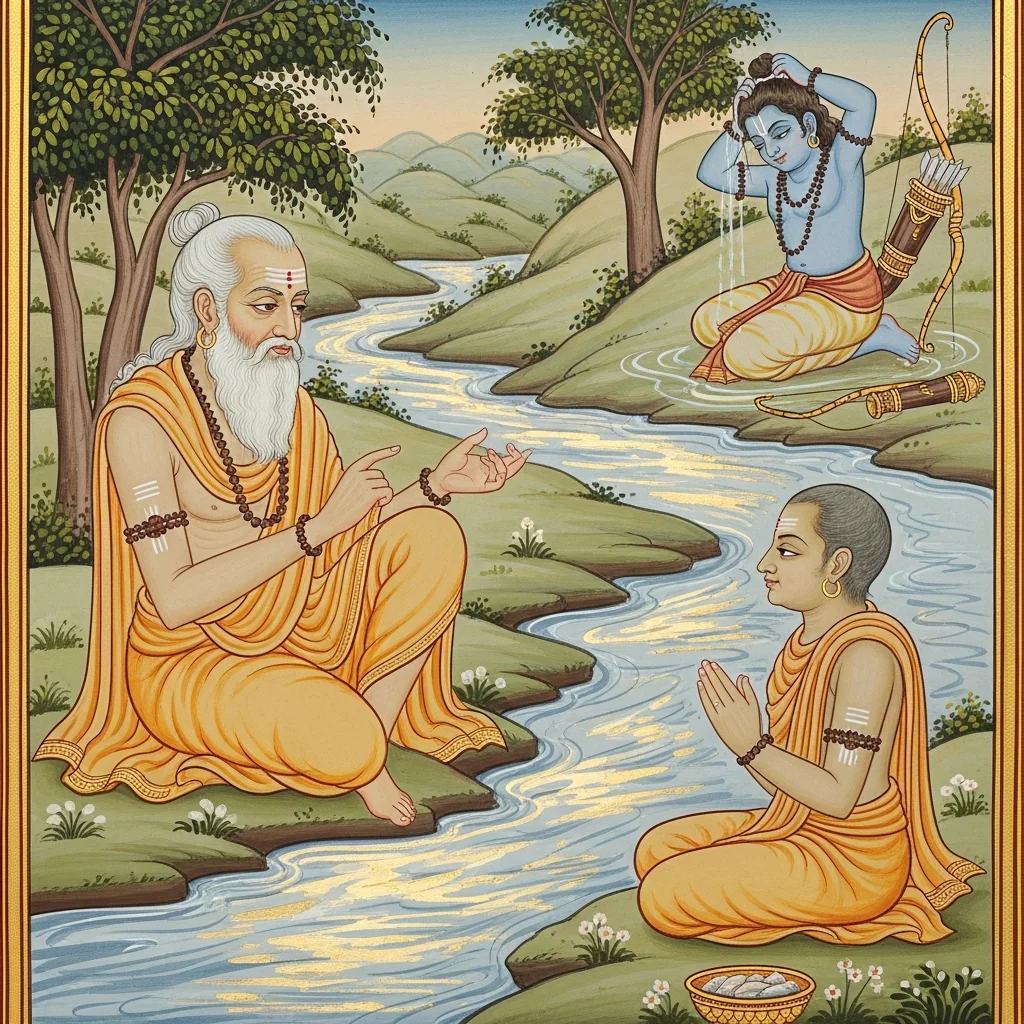
This chapter is a tīrtha-māhātmya cast as instruction on inner purification and the removal of ignorance. Sūta addresses the brāhmaṇas, directing seekers from Lakṣmaṇa’s great tīrtha—praised as destroying the sin of brahmahatyā—onward to Jatātīrtha for citta-śuddhi. It censures merely verbal Vedānta—argument, disputation, and scholastic entanglement—saying that when ruled by controversy it may fail to cleanse the mind; instead, as a “light method” (laghūpāya), Jatātīrtha is extolled as a direct means to antaḥkaraṇa-śuddhi, ajñāna-nāśa, the rise of jñāna, and finally mokṣa with realization of Akhaṇḍa-saccidānanda (undivided being-consciousness-bliss). The site’s authority is grounded in origin tales: Śambhu is said to have established it for the welfare of all, and Rāma, after defeating Rāvaṇa, washed his jaṭā in its waters, giving the place its name. Statements of comparative merit claim that even a single bath here equals or surpasses famed bathing cycles. A didactic exemplum follows: Śuka asks Vyāsa for a secret method that yields mind-purification, knowledge, and final liberation; Vyāsa prescribes Jatātīrtha. Further precedents (Bhṛgu taught by Varuṇa, Durvāsā, Dattātreya) reinforce that bathing alone—without yajña, japa, fasting, or complex observances—brings buddhi-śuddhi. The chapter ends with an expansive phalaśruti: reading or hearing this adhyāya cleanses sins and grants a Vaiṣṇava destination or state.
Shlokas
Verse 1
श्रीसूत उवाच । लक्ष्मणस्य महातीर्थे ब्रह्महत्याविनाशने । स्नात्वा स्वचित्तशुद्ध्यर्थं जटातीर्थं ततो व्रजेत्
Śrī Sūta said: Having bathed at Lakṣmaṇa’s great sacred ford, which destroys the sin of brahman-slaying, one should then go to Jaṭātīrtha for the purification of one’s own mind.
Verse 2
जन्ममृत्युजराक्रांतसंसारातुरचेतसाम् । अज्ञाननाशकं नास्ति जटातीर्थादृते द्विजाः
O twice-born ones, for minds afflicted by saṃsāra—overrun by birth, death, and old age—there is no destroyer of ignorance like Jaṭātīrtha.
Verse 3
लोके मुमुक्षवः केचिच्चित्तशुद्धिमभीप्सवः । वाचा पठंति वेदांतांस्तूष्णीन्नानुभवंति ते
In the world, some seekers of liberation, desiring purity of mind, recite the Vedānta only with their speech; yet in silence they do not truly realize it in inner experience.
Verse 4
पूर्वपक्षमहाग्राहे सिद्धांतझषसंकुले । वेदांताब्धाविहाज्ञानं मुह्यंति पतिता द्विजाः
In this ocean of Vedānta—infested with the great crocodile of rival doctrines and crowded with the fish of disputatious conclusions—fallen twice-born men, through ignorance, become bewildered.
Verse 5
प्रथमं चित्तशुद्ध्यर्थं वेदांतान्संपठंति ये । विवदंते पठित्वा ते कलहं च वितन्वते
Those who first study Vedānta for the sake of purifying the mind—after reading, they end up disputing and spreading quarrel.
Verse 6
चित्तशुद्धिर्न वेदांताद्बहुव्यामोहकारणात् । ततो वयं न वेदांतान्मुनींद्रा बहु मन्महे
Purity of mind does not arise from Vedānta, for it becomes a cause of much bewilderment; therefore, O lords of sages, we do not place great reliance on Vedānta alone.
Verse 7
चित्तशुद्धिं यदीच्छध्वं लघूपायेन तापसाः । उद्घोषयामि सर्वेषां जटातीर्थं निषेवत
O ascetics, if you desire purity of mind by an easy means, I proclaim to all: resort to Jaṭātīrtha and serve it.
Verse 8
पुरा सर्वोपकारार्थं तीर्थमज्ञाननाशनम् । एतद्विनिर्मितं साक्षाच्छम्भुना गन्धमादने
Formerly, for the welfare of all, this sacred tīrtha—destroyer of ignorance—was fashioned directly by Śambhu himself on Mount Gandhamādana.
Verse 9
निहते रावणे विप्रा जटां रामस्तु धार्मिकः । क्षालयामास यत्तोये तज्जटातीर्थमुच्यते
O Brāhmaṇas, when Rāvaṇa had been slain, righteous Rāma washed his matted locks in that water; therefore it is called Jaṭātīrtha.
Verse 10
वर्षाणां षष्टिसाहस्रं जाह्नवीजलमज्जनम् । गोदावर्यां सकृत्स्नानं सिंहस्थे च बृहस्पतौ
Immersion in the waters of the Jāhnavī (Gaṅgā) for sixty thousand years is equaled by a single bath in the Godāvarī when Bṛhaspati (Jupiter) is in Siṃha (Leo), during the Siṃhastha period.
Verse 11
तावत्सहस्रस्नानानि सिंहं देवगुरौ गते । गोमत्यां लभ्यते वर्षैस्तज्जटातीर्थदर्शनात्
When Guru (Bṛhaspati), the preceptor of the gods, enters Leo, the merit of a thousand ritual baths in the river Gomati is gained over the course of years; yet that very merit is obtained simply by beholding Jaṭā Tīrtha.
Verse 12
जटातीर्थे मनुष्याणां स्नातानां द्विजपुंगवाः । अन्तःकरणशुद्धिः स्यात्ततोऽज्ञानं विनश्यति
O best of the twice-born, for those who bathe at Jaṭā Tīrtha, inner purification arises; and from that, ignorance is destroyed.
Verse 13
अज्ञाननाशे ज्ञानं स्यात्ततो मुक्तिमवाप्स्यसि । अखण्डसच्चिदानंदसंपूर्णः स्यात्ततः परम्
When ignorance is destroyed, knowledge arises; then you attain liberation (mokṣa). Thereafter you become complete in the undivided Reality—Sat-Cit-Ānanda, Existence, Consciousness, and Bliss—supreme beyond all.
Verse 14
अत्राप्युदाहरंतीममितिहासं पुरातनम् । पितुः पुत्रस्य संवादं व्यासस्य च शुकस्य च
Here too they cite an ancient sacred history: the dialogue of father and son—Vyāsa and Śuka.
Verse 15
पुरा मुनिवरं कृष्णं भावि तात्मानमच्युतम् । पारंपर्यविशेषज्ञं सर्वशास्त्रार्थकोविदम् । प्रणम्य शिरसा व्यासं शुकः पप्रच्छ वै द्विजाः
In former times, Śuka—having bowed his head to Vyāsa, the noble sage Kṛṣṇa (Dvaipāyana), the future embodiment of Acyuta, knower of the subtleties of the paramparā and expert in the meanings of all śāstras—questioned him, O brāhmaṇas.
Verse 16
श्रीशुक उवाच । भगवंस्तात सर्वज्ञ ब्रूहि गुह्यमनुत्तमम्
Śrī Śuka said: “O Blessed One, dear father, all-knowing—tell me the unsurpassed secret.”
Verse 17
अन्तःकरणशुद्धिः स्यात्तथाज्ञानविनाशनम् । ज्ञानोदयश्च येन स्यादंते मुक्तिश्च शाश्वती
“By what means does inner purification arise, along with the destruction of ignorance—by which the dawn of knowledge comes, and in the end eternal liberation?”
Verse 18
तमुपायं वदस्वाद्य स्नेहान्मम महामुने । वेदांताश्चेतिहासाश्च पुराणादीनि कृत्स्नशः
“O great sage, out of affection for me, tell me that means today. Vedānta, the Itihāsas, and the Purāṇas—indeed all of them—(I have studied).”
Verse 19
अधीतानि मया त्वत्तः शोधयंति न मानसम् । अतो मे चित्तशुद्धिः स्याद्यथा तात तथा वद
“Though I have studied them from you, they do not purify my mind. Therefore, dear father, tell me in such a way that purity of heart may arise in me.”
Verse 20
इति पृष्टस्तदा व्यासः शुकेन मुनिसत्तमाः । रहस्यं कथयामास येनाविद्या विन श्यति
Thus questioned by Śuka, Vyāsa—the best of sages—then began to explain the secret by which ignorance is destroyed.
Verse 21
व्यास उवाच । शुक वक्ष्यामि ते गुह्यमविद्याग्रन्थिभेदनम् । बुद्धिशुद्धिप्रदं पुंसां जन्मादिभयनाशनम्
Vyāsa said: O Śuka, I shall tell you a secret teaching that cuts the knot of ignorance—bestowing purity of intellect upon people and destroying fears beginning with birth and rebirth.
Verse 22
रामसेतौ महापुण्यं गन्धमादनपर्वते । विद्यते पापसंहारि जटातीर्थमिति श्रुतम्
At Rāmasetu, on the greatly meritorious Gandhamādana mountain, there is said to be a holy ford called Jaṭā-tīrtha, renowned as a destroyer of sins.
Verse 23
जटां स्वां शोधयामास यत्र रामो हरिः स्वयम् । रामो दाशरथिः श्रीमांस्तीर्थाय च वरं ददौ
There, Rāma—Hari Himself—cleansed his own matted locks; and that illustrious Rāma, son of Daśaratha, granted a boon to the tīrtha.
Verse 24
स्नाति येऽत्र समागत्य जटातीर्थेऽतिपावने । अन्तःकरणशुद्धिश्च तेषां भूयादिति स्म सः
He declared: ‘For those who come here and bathe in the supremely purifying Jaṭā-tīrtha, may inner purification indeed arise.’
Verse 25
विना यज्ञं विना ज्ञानं विना जाप्यमुपोषणम् । स्नानमात्राज्जटातीर्थे बुद्धिशुद्धिर्भवेन्नृणाम्
Without sacrifice, without formal knowledge, without recitation or fasting—by mere bathing at Jaṭā-tīrtha, purity of intellect arises for people.
Verse 26
सर्वदानसमं पुण्यं स्नानादत्र भविष्यति । दुर्गाण्यनेन तरति पुण्यलोकान्समश्नुते
By bathing here, one gains merit equal to that of all charitable gifts. Through this, one crosses hardships and attains the worlds of the virtuous.
Verse 27
महत्त्वमश्नुते स्नानाज्जटातीर्थे शुभोदके । जटातीर्थं विना नान्यदंतःकरण शुद्धये
By bathing in the auspicious waters of Jaṭā-tīrtha one attains greatness. For inner purification, there is nothing like Jaṭā-tīrtha.
Verse 28
विद्यते नियमो वापि जपो वा नान्यदेवता । धन्यं यशस्यमायुष्यं सर्वलोकेषु विश्रुतम्
Here there is no need of special restraints, nor japa, nor worship of any other deity as a requirement: this sacred place is famed in all worlds as blessed, fame-giving, and life-enhancing.
Verse 29
पवित्राणां पवित्रं च जटातीर्थं शुकाधुना । सर्वपापप्रशमनं मंगलानां च मंगलम्
O Śuka, hear now: Jaṭā-tīrtha is the purest among the pure—quelling all sins, and the most auspicious among auspicious things.
Verse 30
भृगुर्वै वारुणिः पूर्वं वरुणं पितरं शुक । बुद्धिशुद्धिप्रदोपायमपृच्छत्पावनं शुभम् । प्रोवाच वरुणस्तस्मै बुद्धिशुद्धिप्रदं शुभम्
Formerly, O Śuka, Bhṛgu Vāruṇi asked his father Varuṇa about a pure and auspicious means that bestows purity of intellect. Varuṇa then explained to him that auspicious means which grants purity of intellect.
Verse 31
वरुण उवाच । रामसेतौ भृगो पुण्ये गन्धमादनपर्वते
Varuṇa said: “O Bhṛgu, at the sacred Rāmasetu, upon the holy Gandhamādana mountain, listen to this account.”
Verse 32
स्नानमात्राज्जटा तीर्थे बुद्धिशुद्धिर्भवेद्ध्रुवम् । स पितुर्वचनात्सद्यो भृगुर्वै वरुणात्मजः
By mere bathing at the sacred Jaṭā-tīrtha, purity of understanding surely arises. Therefore Bhṛgu—Varuṇa’s son—at once went, obedient to his father’s word.
Verse 33
गत्वा स्नात्वा जटातीर्थे बुद्धिशुद्धिमवाप्तवान् । विनष्टाज्ञानसंतानस्तया शुद्ध्या तदा भृगुः
Having gone and bathed at Jaṭā-tīrtha, Bhṛgu attained purity of understanding. Through that purification, the continuous stream of ignorance within him was then destroyed.
Verse 34
उत्पन्नाद्वैतविज्ञानः स्वपितुर्वरुणादयम् । अखण्डसच्चिदानंदपूर्णाकारोऽभवच्छुक
Through his own father Varuṇa, non-dual realization arose in him. O Śuka, he became of the nature of the indivisible fullness of Being–Consciousness–Bliss (Sat–Cit–Ānanda).
Verse 35
शंकरांशोऽपि दुर्वासा जटातीर्थेऽभिषेकतः । मनःशुद्धिमवाप्याशु ब्रह्मानंदमयोऽभवत्
Even Durvāsā—an emanation of Śaṅkara—by ablution at Jaṭā-tīrtha quickly attained purity of mind and became suffused with the bliss of Brahman.
Verse 36
दत्तात्रेयोऽपि विष्ण्वंशस्तीर्थेऽस्मिन्नभिषेचनात् । शुद्धांतःकरणो भूत्वा ब्रह्माकारोऽभवच्छुक
Even Dattātreya—an emanation of Viṣṇu—by ablution at this tīrtha purified his antaḥkaraṇa. O Śuka, he became established in the form of Brahman (brahmākāra).
Verse 37
इच्छेदज्ञाननाशं यः स स्नायात्तु जटाभिधे । तीर्थे शुद्धतमे पुण्ये सर्वपापविनाशने
Whoever longs for the destruction of ignorance should indeed bathe in the tīrtha called Jaṭā—most pure and holy, the destroyer of all sins.
Verse 38
जटातीर्थमतस्त्वं च शुक गच्छ महामते । मनःशुद्धिप्रदं तस्मिन्स्नानं च कुरु पुण्यदे
Therefore, O Śuka of great understanding, go to Jaṭā-tīrtha. Bathe there, for it bestows purity of mind and grants merit.
Verse 39
पित्रैवमुक्तो व्यासेन शुकः पुत्रस्तदा द्विजाः । रामसेतुं महापुण्यं गन्धमादनपर्वतम्
Thus instructed by his father Vyāsa, Śuka his son—O twice-born ones—set out toward the highly meritorious Rāmasetu and Mount Gandhamādana.
Verse 40
अगमत्स्नातुकामः सञ्जटातीर्थे विशुद्धिदे । स्नात्वा संकल्पपृर्वं च जटातीर्थे शुको मुनिः
Desiring to bathe, he went to Jaṭā-tīrtha, the giver of complete purification. The sage Śuka, having first made a solemn saṃkalpa, bathed there at Jaṭā-tīrtha.
Verse 41
मनःशुद्धिमनुप्राप्य तेन चाज्ञाननाशने । स्वस्वरूपं समापन्नः परमानंदरूपकम्
Having attained purity of mind—and with it the destruction of ignorance—one abides in one’s own true nature, whose very essence is supreme bliss.
Verse 42
ये चाप्यन्ये मनःशुद्धिकामाः संति द्विजोत्तमाः । जटातीर्थे तु ते सर्वे स्नातुं भक्तिपुरःसरम
And other excellent twice-born as well, who desire purity of mind—all of them come to bathe at Jaṭātīrtha, led foremost by devotion.
Verse 43
अहो जना जटातीर्थे कामधेनुसमे शुभे । विद्यमानेऽपि किं तुच्छे रमंतेन्यत्र मोहिताः
Alas—when the auspicious Jaṭātīrtha, equal to Kāmadhenu, is present, why do people, deluded, take delight in other paltry places?
Verse 44
भुक्तिकामो लभेद्भुक्तिं मुक्तिकामस्तु तां लभेत् । स्नानमात्राज्जटातीर्थे सत्यमुक्तं मया द्विजाः
He who desires worldly enjoyment gains enjoyment; he who desires liberation gains that liberation—by bathing alone at Jaṭātīrtha. This I declare as truth, O twice-born.
Verse 45
वेदानुवच नात्पुण्याद्यज्ञाद्दानात्तपोव्रतात् । उपवासाज्जपाद्योगान्मनःशुद्धिर्नृणां भवेत्
For people, purity of mind does not arise merely from reciting the Vedas, nor from pious acts, sacrifices, gifts, austerities and vows, fasting, japa, or yogic practice.
Verse 46
विनाप्येतानि विप्रेंद्रा जटातीर्थेऽतिपावने । स्नानमात्रान्मनःशुद्धिर्ब्राह्मणानां ध्रुवं भवेत्
Even without those observances, O best of brāhmaṇas, at the supremely purifying Jaṭātīrtha, purity of mind for brāhmaṇas surely arises from bathing alone.
Verse 47
जटातीर्थस्य माहात्म्यं मया वक्तुं न शक्यते । शंकरो वेत्ति तत्तीर्थं हरिर्वेत्ति विधिस्तथा
The greatness of Jaṭātīrtha cannot be fully spoken by me. Śaṅkara knows that holy place; Hari knows it; and so does Vidhī (Brahmā).
Verse 48
जटातीर्थसमंतीर्थं न भूतं न भविष्यति । जटातीर्थस्य तीरे यः क्षेत्रपिंडं समाचरेत्
No holy place equal to Jaṭātīrtha has existed, nor will exist. Whoever, on the bank of Jaṭātīrtha, performs the rite of kṣetra-piṇḍa (piṇḍa-offerings in a sacred field)…
Verse 49
गयाश्राद्धसमंपुण्यंतस्य स्यान्नात्र संशयः । जटातीर्थे नरः स्नात्वा न पापेन विलिप्यते । दारिद्र्यं न समाप्नोति नेयाच्च नरकार्णवम्
For him, the merit becomes equal to the śrāddha performed at Gayā—of this there is no doubt. Having bathed at Jaṭātīrtha, a man is not smeared by sin; he does not fall into poverty, nor does he go to the ocean of hell.
Verse 50
श्रीसूत उवाच । एवं वः कथितं विप्रा जटातीर्थस्य वैभवम्
Śrī Sūta said: Thus, O brāhmaṇas, the glory of Jaṭātīrtha has been related to you.
Verse 51
यत्र व्याससुतो योगी स्नात्वा पापविमोचने । अवाप्तवान्मनःशुद्धिमद्वैतज्ञानसाधनाम्
There, at that sin-destroying ford, Vyāsa’s son, the yogin, bathed and attained purity of mind—the very means for realizing non-dual (Advaita) knowledge.
Verse 52
यस्त्विमं पठतेऽध्यायं शृणुते वा समाहितः । स विधूयेह पापानि लभते वैष्णवं पदम्
But whoever, with focused mind, recites this chapter—or even hears it—shakes off sins here itself and attains the supreme Vaiṣṇava state.