Adhyaya 2
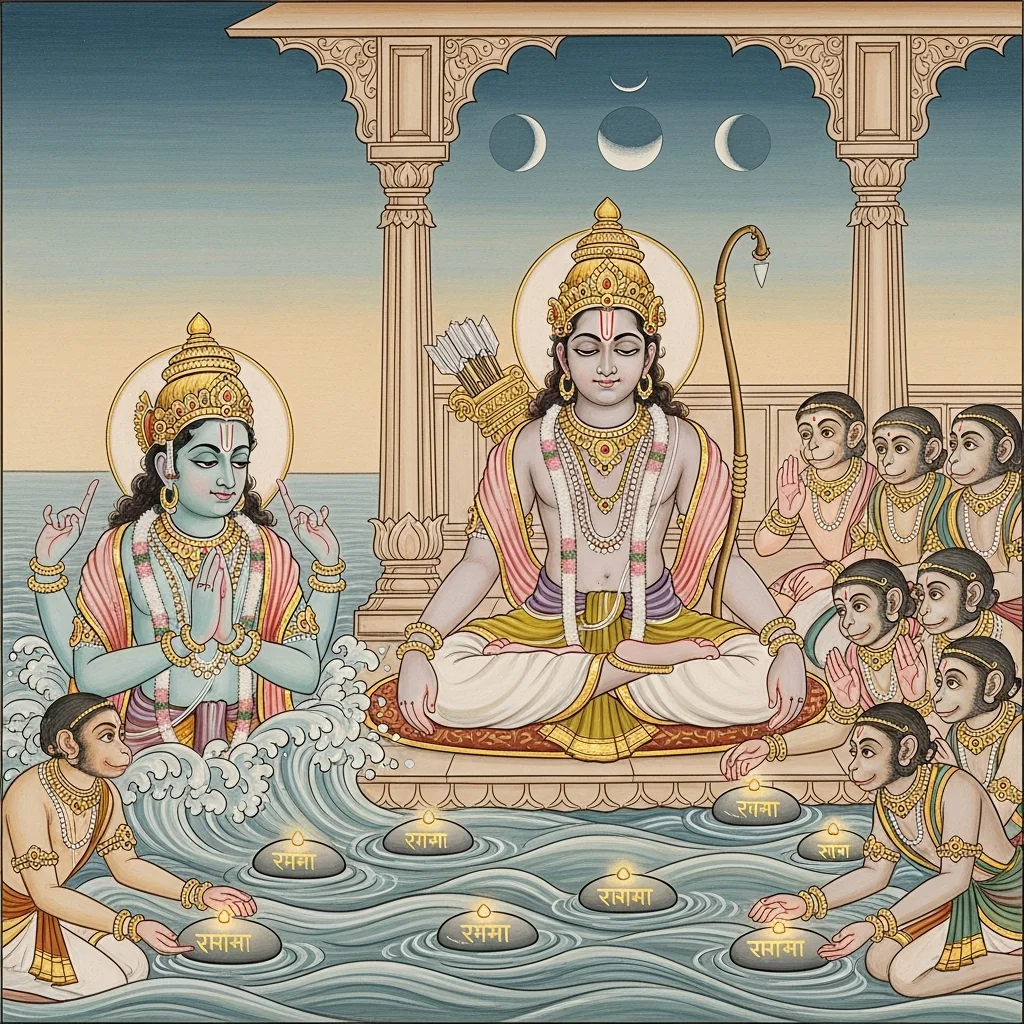
This adhyāya begins with sages asking Sūta how Rāma—renowned for acting without inner disturbance—bound a bridge across the deep ocean (Varuṇālaya), and how many tīrthas are found at Setu and in the Gandhamādana setting. Sūta then recounts, in brief, the Rāma-cycle: exile to Daṇḍaka and Pañcavaṭī; Sītā’s abduction by Rāvaṇa through Mārīca’s disguise; Rāma’s search and meeting with Hanumān; the fire-witnessed alliance with Sugrīva; Vāli’s defeat; the vānaras’ mobilization to recover Sītā; Hanumān’s successful reconnaissance and his return with the token cūḍāmaṇi; the march to Mahendra and stay at Cakra-tīrtha; and Vibhīṣaṇa’s arrival, testing, and consecration. When the ocean-crossing problem arises, counsel is offered—boats, floats, or propitiating the sea. Rāma performs disciplined upāsanā on a kuśa-grass bed for three nights; when the ocean does not appear, he prepares to dry the sea with his weapons. The ocean deity then manifests, praises Rāma with a devotional stotra, explains natural law (svabhāva) and its limits, and gives a practical remedy: Nāla, the vānaras’ artisan, will make the thrown materials float and form a bridge. Commissioned by Rāma, Nāla leads the vānaras as they gather mountains, rocks, trees, and vines, and the bridge is built in idealized measures. The chapter next proclaims the purificatory merit of bathing at Setu (Setu-snānā) and introduces a catalog of the principal Setu tīrthas, said to be twenty-four, naming many—Cakra-tīrtha, Vetāla-varada, Sītā-saras, Maṅgala-tīrtha, Amṛta-vāpikā, Brahma-kuṇḍa, Hanūmat-kuṇḍa, Agastya-tīrtha, Rāma-tīrtha, Lakṣmaṇa-tīrtha, Jaṭā-tīrtha, Lakṣmī-tīrtha, Agni-tīrtha, Śiva-tīrtha, Śaṅkha-tīrtha, Yāmuna-tīrtha, Gaṅgā-tīrtha, Gayā-tīrtha, Koṭi-tīrtha, Mānasa-tīrtha, Dhanuskoṭi. It ends with a phalaśruti: hearing or reciting this adhyāya is said to grant victory beyond and ease the affliction bound up with rebirth.
Shlokas
Verse 1
ऋषय ऊचुः । कथं सूत महाभाग रामेणाक्लिष्टकर्मणा । सेतुर्बद्धो नदीनाथे ह्यगाधे वरुणालये
The sages said: “How, O blessed Sūta, did Rāma—whose deeds know no toil—build the bridge across the lord of rivers, the unfathomable ocean, the very abode of Varuṇa?”
Verse 2
सेतौ च कति तीर्थानि गंधमादनपर्वते । एतन्नः श्रद्दधानानां ब्रूहि पौराणिकोत्तम
“How many tīrthas, sacred bathing-places, are there at Setu and on Mount Gandhamādana? Tell us this, O best of Purāṇic narrators, for we are full of faith.”
Verse 3
श्रीसूत उवाच । रामेण हि यथासेतुर्निबद्धो वरुणालये । तदहं संप्रवक्ष्यामि युष्माकं मुनिपुंगवाः
Śrī Sūta said: “How Rāma indeed constructed the bridge in the abode of Varuṇa—this I shall now relate to you in full, O foremost of sages.”
Verse 4
आज्ञया हि पितू रामो न्यवसद्दंडकानने । सीतालक्ष्मणसंयुक्तः पंचवट्यां समाहितः
Obeying his father’s command, Rāma dwelt in the Daṇḍaka forest, accompanied by Sītā and Lakṣmaṇa; at Pañcavaṭī he remained composed, intent, and disciplined.
Verse 5
तस्मिन्निव सतस्तस्य राघवस्य महात्मनः । रावणेन हृता भार्या मारीचच्छद्मना द्विजाः
While that great-souled Rāghava was living there, his wife was abducted by Rāvaṇa—through the deception contrived with Mārīca, O twice-born ones.
Verse 6
मार्गमाणो वने भार्यां रामो दशरथात्मजः । पंपातीरे जगा मासौ शोकमोहसमन्वितः
Searching for his wife in the forest, Rāma, son of Daśaratha, went to the bank of Pampā, overcome by grief and bewilderment.
Verse 7
दृष्टवान्वानरं तत्र कंचिद्दशरथात्मजः । वानरेणाथ पृष्टोऽयं को भवानिति राघवः
There, Rāma, Daśaratha’s son, saw a certain monkey. Then the monkey asked Rāghava, “Who are you?”
Verse 8
आदितः स्वस्य वृत्तांत्तं तस्मै प्रोवाच तत्त्वतः । अथ राघवसंपृष्टो वानरः को भवानिति
From the beginning, he truthfully recounted his own story to him. Then, when questioned by Rāghava, the monkey too was asked, “Who are you?”
Verse 9
सोपि विज्ञापयामास राघवाय महात्मने । अहं सुग्रीवसचिवो हनूमा न्नाम वानरः
He too informed the great-souled Rāghava: “I am the monkey named Hanūmān, minister of Sugrīva.”
Verse 10
तेन च प्रेरितोऽभ्यागां युवाभ्यां सख्यमिच्छता । आगच्छतं तद्भद्रं वां सुग्रीवांतिकमाशु वै
Sent by him (Sugrīva), I have come here seeking friendship with you both. Therefore I say: “Come—may good be upon you—quickly into Sugrīva’s presence.”
Verse 11
तथास्त्विति स रामो पि तेन साकं मुनीश्वराः । सुग्रीवांतिकमागप्य सख्यं चक्रेऽग्निसाक्षिकम्
Saying, “So be it,” Rāma too went with him to Sugrīva; and there he forged friendship, with Fire as witness.
Verse 12
प्रतिजज्ञेऽथ रामोऽपि तस्मै वालिवधं प्रति । सुग्रीवश्चापि वै देह्याः पुनरानयनं द्विजाः
Then Rāma too vowed to him concerning the slaying of Vāli; and Sugrīva, indeed, vowed the restoration—the bringing back again of what was lost, O twice-born ones.
Verse 13
इत्येवं समयं कृत्वा विश्वास्य च परस्परम् । मुदा परमया युक्तौ नरेश्वरकपीश्वरौ
Thus, having made an agreement and placing mutual trust in one another, the lord of men and the lord of monkeys were united with supreme joy.
Verse 14
आसाते ब्राह्मणश्रेष्ठा ऋष्यमूकगिरौ तथा । सुग्रीवप्रत्ययार्थं च दुंदुभेः कायमाशु वै
They stayed there upon Mount Ṛṣyamūka, O best of brāhmaṇas; and, in order to give Sugrīva confidence, (Rāma attended to) the body of Dundubhi—quickly indeed.
Verse 15
पादांगुष्ठेन चिक्षेप राघवो बहुयोजनम् । सप्तताला विनिर्भिन्ना राघवेण महात्मना
With his great toe, Rāghava hurled it many yojanas away; and seven tāla trees were pierced through by the great-souled Rāghava.
Verse 16
ततः प्रीतमना वीरः सुग्रीवो राममब्रवीत् । इंद्रादिदेवताभ्योऽपि नास्ति राघव मे भयम्
Then, pleased at heart, the heroic Sugrīva said to Rāma: “O Rāghava, I have no fear—even of Indra and the other gods.”
Verse 17
भवान्मित्रं मया लब्धो यस्मादति पराक्रमः । अहं लंकेश्वरं हत्वा भार्यामानयितास्मि ते
I have gained you as my ally, for your valor is extraordinary. I shall slay the lord of Laṅkā and bring back your wife to you.
Verse 18
ततः सुग्रीवसहितो रामचंद्रो महाबलः । सलक्ष्मणो ययौ तूर्णं किष्किंधां वालिपालिताम्
Then mighty Rāmacandra, accompanied by Sugrīva and Lakṣmaṇa, swiftly went to Kiṣkindhā, the city guarded by Vāli.
Verse 19
ततो जगर्ज सुग्रीवो वाल्यागमनकांक्षया । अमृष्यमाणो वाली च गर्जितं स्वानुजस्य वै
Then Sugrīva roared, longing for Vāli to come forth. And Vāli too, unable to bear it, heard the roar of his own younger brother.
Verse 20
अंतःपुराद्विनिष्क्रम्य युयुधेऽवरजेन सः । वालिमुष्टिप्रहारेण ताडितो भृशविह्वलः
Coming out from the inner palace, he fought with his younger brother. Struck by Vāli’s blow of the fist, he was greatly shaken and distressed.
Verse 21
सुग्रीवो निर्गतस्तूर्णं यत्र रामो महाबलः । ततो रामो महाबाहुस्सुग्रीवस्य शिरोधरे
Sugrīva quickly withdrew to where mighty Rāma was. Then strong-armed Rāma, at Sugrīva’s neck and head region,
Verse 22
लतामाबध्य चिह्नं तु युद्धायाचोदयत्तदा । गर्जितेन समाहूय सुग्रीवो वालिनं पुनः
Binding a creeper as a distinguishing mark, he then urged him to battle. With a thunderous roar of summons, Sugrīva called Vāli once again.
Verse 23
रामप्रेरणया तेन बाहुयुद्धमथाकरोत् । ततो वालिनमाजघ्ने शरेणैकेन राघवः
Urged by Rāma, he entered into hand-to-hand combat. Thereupon Rāghava struck Vāli down with a single arrow.
Verse 24
हते वालिनि सुग्रीवः किष्किंधां प्रत्यपद्यत । ततो वर्षास्वतीतासु सुग्रीवो वानराधिपः
When Vāli was slain, Sugrīva regained Kiṣkindhā. Then, after the rainy season had passed, Sugrīva, lord of the Vānaras,
Verse 25
सीतामानयितुं तूर्णं वानराणां महाचमूम् । समादाय समागच्छदंतिकं नृपपुत्रयोः
To bring Sītā back swiftly, he gathered the great army of the Vānaras and came near the two princes.
Verse 26
प्रस्थापयामास कपीन्सीतान्वेषणकांक्षया । विदितायां तु वैदेह्या लंकायां वायुसूनुना
Desiring the search for Sītā, he dispatched the monkeys. And when, through the Son of the Wind, it became known that Vaidehī was in Laṅkā,
Verse 27
दत्ते चूडामणौ चापि राघवो हर्षशोकवान् । सुग्रीवेणानुजेनापि वायुपुत्रेण धीमता
When the crest-jewel was delivered, Rāghava (Rāma) was filled with both joy and sorrow—it had been brought by Sugrīva’s younger brother, the wise son of Vāyu, Hanumān.
Verse 28
तथान्यैः कपिभिश्चैव जांबवन्नलमुख्यकैः । अन्वीयमानो रामोऽसौ मुहूर्तेऽभिजिति द्विजाः
Thus, accompanied by other monkeys as well—chiefly Jāmbavān and Nala—Rāma proceeded on, O twice-born ones, at the auspicious Abhijit-muhūrta.
Verse 29
विलंघ्य विविधा न्देशान्महेंद्रं पर्वतं ययौ । चक्रतीर्थं ततो गत्वा निवासमकरोत्तदा
Crossing through many regions, he went to Mount Mahendra. Then, proceeding to Cakratīrtha, he made his dwelling there at that time.
Verse 30
तत्रैव तु स धर्मात्मा समागच्छद्विभीषणः । भ्राता वै राक्षसेंद्रस्य चतुर्भिः सचिवैः सह
There indeed Vibhīṣaṇa arrived—the righteous-souled one—brother of the lord of Rākṣasas (Rāvaṇa), together with four ministers.
Verse 31
प्रतिजग्राह रामस्तं स्वागतेन महात्मना । सुग्रीवस्य तु शंकाऽभूत्प्रणिधिः स्यादयं त्विति
The great-souled Rāma received him with words of welcome. Yet Sugrīva had a doubt: “Could this one be a spy?”
Verse 32
राघवस्तस्य चेष्टाभिः सम्यक्स्वचरितैर्हितैः । अदुष्टमेनं दृष्ट्वैव तत एनमपूजयत्
Observing his conduct—proper, beneficial, and in keeping with noble character—Rāghava, seeing him free from malice, then honored him.
Verse 33
सर्वराक्षसराज्ये तमभ्यषिंचद्विभीषणम् । चक्रे च मंत्रिप्रवरं सदृशं रविसूनुना
He consecrated Vibhīṣaṇa over the entire kingdom of the Rākṣasas, and also appointed an excellent minister—worthy and fitting—just as the son of Ravi (Sugrīva) had done.
Verse 34
चक्रतीर्थं समासाद्य निवसद्रघुनंदनः । चिंतयन्राघवः श्रीमान्सुग्रीवादीनभाषत
Reaching Cakratīrtha, the delight of the Raghu line stayed there. The illustrious Rāghava, reflecting, spoke to Sugrīva and the others.
Verse 35
मध्ये वानरमु ख्यानां प्राप्तकालमिदं वचः । उपायः को नु भवतामेतत्सागरलंघने
In the midst of the foremost Vānara leaders, he spoke these timely words: “What means do you propose for crossing this ocean?”
Verse 36
इयं च महती सेना सागरश्चापि दुस्तरः । अंभोराशिरयं नीलश्चंचलोर्म्मिसमाकुलः
“This army is vast, and the ocean too is hard to cross—this blue expanse of waters is restless, crowded with wavering waves.”
Verse 37
उद्यन्मत्स्यो महानक्रशंखशुक्तिसमाकुलः । क्वचिदौर्वानलाक्रांतः फेनवानतिभीषणः
The ocean heaved with leaping fish, crowded with huge crocodiles, conches, and oysters; in places it seemed seized by the sages’ submarine fire, and it foamed—utterly terrifying to behold.
Verse 38
प्रकृष्टपवनाकृष्टनीलमेघसमन्वितः । प्रलयांभोधरारावः सारवाननिलोद्धतः
Driven by fierce winds, the ocean was accompanied by dark-blue clouds; it roared like the thunder of dissolution-clouds at the end of time, surging with force, whipped up by the gale.
Verse 39
कथं सागरमक्षोभ्यं तरामो वरुणा लयम् । सैन्यैः परिवृताः सर्वे वानराणां महौजसाम्
“How shall we cross this unshakable ocean—the abode of Varuṇa—when all of us are surrounded by the armies of the mighty, energetic Vānaras?”
Verse 40
उपायैरधिगच्छामो यथा नदनदीपतिम् । कथं तरामः सहसा ससैन्या वरुणालयम्
“Let us approach the lord of rivers and streams by proper means; how could we, together with the army, suddenly cross the abode of Varuṇa?”
Verse 41
शतयोजनमायातं मनसापि दुरासदम् । अतो नु विघ्ना बहवः कथं प्राप्या च मैथिली
“We have come a hundred yojanas—yet even in thought this (ocean) is hard to overcome. Therefore many obstacles arise; how, then, can Maithilī be reached?”
Verse 42
कष्टात्कष्टतरं प्राप्ता वयमद्य निराश्रयाः । महाजले महावाते समुद्रे हि निराश्रये
From hardship we have fallen into an even greater hardship; today we are without refuge—amid vast waters, amid violent winds, in this ocean that offers no shelter.
Verse 43
उपायं कं विधास्यामस्तरणार्थं वनौकसाम् । राज्याद्भ्रष्टो वनं प्राप्तो हृता सीता मृतः पिता
What means shall we devise so that the forest-dwellers, our allies, may cross? Cast out from the kingdom, I have come to the forest; Sītā has been abducted; my father has died.
Verse 44
इतोऽपि दुःसहं दुःखं यत्सागरविलंघनम् । धिग्धिग्गर्जितमंभोधे धिगेतां वारिराशिताम्
More unbearable than even this is the anguish of having to cross the ocean. Fie on your roaring, O sea! Fie on this immense mass of waters!
Verse 45
कथं तद्वचनं मिथ्या महर्षेः कुम्भजन्मनः । हत्वा त्वं रावणं पापं पवित्रे गंधमादने । पापोपशमनायाशु गच्छस्वेति यदीरितम्
How could the words of the great sage, the pot-born Agastya, be false—when he declared: “Having slain the sinful Rāvaṇa, go swiftly to the holy Gandhamādana, for the quick pacification of sins”?
Verse 46
श्रीसूत उवाच । इति रामवचः श्रुत्वा सुग्रीवप्रमुखास्तदा
Śrī Sūta said: “Having heard these words of Rāma, then Sugrīva and the others with him at their head…”
Verse 47
ऊचुः प्रांजलयः संर्मे राघवं तं महाबलम् । नौभिरेनं तरिष्यामः प्लवैश्च विविधैरिति
With hands folded in reverence, they spoke earnestly to mighty Rāghava: “We shall cross this ocean by boats, and also by various rafts.”
Verse 48
मध्ये वानरकोटीनां तदोवाच विभीषणः । समुद्रं राघवो राजा शरणं गन्तुमर्हति
Then, amid crores of Vānaras, Vibhīṣaṇa spoke: “King Rāghava should seek refuge with the Ocean.”
Verse 49
खनितः सागरैरेष समुद्रो वरुणालयः । कर्तुमर्हति रामस्य तज्ज्ञातेः कार्यमंबुधिः
“This Ocean—Varuṇa’s abode—was dug out by the Sāgaras; therefore the sea should accomplish Rāma’s purpose, recognizing his rightful claim and intent.”
Verse 50
विभीषणेनैवमुक्तो राक्षसेन विपश्चिता । सांत्वयन्राघवः सर्वान्वानरानिदमब्रवीत्
Thus addressed by wise Vibhīṣaṇa, the Rākṣasa, Rāghava consoled all the Vānaras and spoke these words:
Verse 51
शतयोजन विस्तारमशक्ताः सर्ववानराः । तर्तुं प्लवोडुपैरेनं समुद्रमतिभीषणम्
All the Vānaras were unable to cross this exceedingly fearsome ocean, spread across a hundred yojanas, by means of rafts and small boats.
Verse 52
नावो न संति सेनाया बह्व्या वानरपुंगवाः । वणिजामुपघातं च कथमस्मद्विधश्चरेत्
There are no boats sufficient for this vast army, O foremost leaders among the Vānaras. And how could one like me proceed in a manner that would also bring harm to merchants?
Verse 53
विस्तीर्णं चैव नः सैन्यं हन्याच्छिद्रेषु वा परः । प्लवोडुपप्रतारोऽतो नैवात्र मम रोचते
Moreover, our army is spread far and wide; an enemy could strike it at vulnerable gaps. Therefore, crossing by rafts and small boats does not please me here.
Verse 54
विभीषेणोक्तमे वेदं मोदते मम वानराः । अहं त्विमं जलनिधिमुपास्ये मार्गसिद्धये
My Vānaras rejoice at what Vibhīṣaṇa has said. As for me, I shall worship this august lord, the ocean, so that the path may be accomplished.
Verse 55
नो चेद्दर्शयिता मार्गं धक्ष्याम्येनमहं तदा । महास्त्रैरप्रतिहतैरत्यग्निपवनोज्ज्वलैः
If he does not reveal the path, then I shall burn him—the ocean—with great, irresistible weapons, blazing with fierce fire and wind.
Verse 56
इत्युक्त्वा सहसौमित्रिरुपस्पृश्याथ राघवः । प्रतिशिश्ये जलनिधिं विधिवत्कुशसंस्तरे
Having spoken thus, Rāghava—together with Saumitrī—performed ācamana, the ritual act of purification, and then lay down facing the ocean, according to rule, upon a bed of kuśa grass.
Verse 57
तदा रामः कुशा स्तीर्णे तीरे नदनदीपतेः । संविवेश महाबाहुर्वेद्यामिव हुताशनः
Then Rāma, mighty-armed, lay down upon the bank of the lord of rivers and streams, on a bed spread with kuśa grass—like the sacred fire resting upon the altar.
Verse 58
शेषभोगनिभं बाहुमुपधाय रघूद्वहः । दक्षिणो दक्षिणं बाहुमुपास्ते मकरालयम्
That best of the Raghu line, placing his arm—like the coiled hood of Śeṣa—as a pillow, lay facing south and worshipfully attended upon the ocean, the abode of makaras.
Verse 59
तस्य रामस्य सुप्तस्य कुशास्तीर्णे महीतले । नियमादप्रमत्तस्य निशास्तिस्रोऽतिचक्रमुः
As Rāma slept upon the earth spread with kuśa grass—ever vigilant in his vowed discipline—three nights passed by.
Verse 60
स त्रिरात्रोषितस्तत्र नयज्ञो धर्मतत्परः । उपास्तेस्म तदा रामः सागरं मार्गसिद्धये
Having stayed there for three nights, devoted to dharma and as though performing a sacrifice through disciplined conduct, Rāma then worshipped the ocean for the successful accomplishment of a passage.
Verse 61
न च दर्शयते मन्दस्तदा रामस्य सागरः । प्रयतेनापि रामेण यथार्हमपि पूजितः
Yet the ocean, unresponsive, did not reveal himself to Rāma—though Rāma, with full effort, had worshipped him duly and as was fitting.
Verse 62
तथापि सागरो रामं न दर्शयति चात्मनः । समुद्राय ततः क्रुद्धो रामो रक्तांतलोचनः
Even so, the Ocean did not reveal himself to Rāma. Then Rāma—his eyes reddened at the corners—grew wrathful toward the sea.
Verse 63
समीपवर्तिनं चेदं लक्ष्मणं प्रत्यभाषत । अद्य मद्बाणनिर्भिन्नैर्मकरैर्वरुणालयम्
He addressed Lakṣmaṇa who stood nearby: “Today, with makaras pierced by my arrows, I shall make Varuṇa’s abode—the ocean—…”
Verse 64
निरुद्धतोयं सौमित्रे करिष्यामि क्षणादहम् । सशंखशुक्ताजालं हि समीनमकरं शनैः
“O Saumitrī, in a moment I shall restrain its waters—so that, little by little, it becomes a mass of conches and shells, with its fish and makaras cast up and exposed.”
Verse 66
असमर्थं विजानाति धिक्क्षमामीदृशे जने । न दर्शयति साम्ना मे सागरो रूपमात्मनः
“He takes me to be powerless—shame on such a being! The ocean does not reveal his own form to me, even when I use conciliation.”
Verse 67
चापमानय सौमित्रे शरांश्चाशीविषोपमान् । सागरं शोषयिष्यामि पद्भ्यां यांतु प्लवंगमाः
“Bring my bow, O Saumitrī, and arrows like venomous serpents. I shall dry up the ocean—let the vānaras go forward on foot.”
Verse 68
एनं लंघितमर्यादं सहस्रोर्मिसमाकुलम् । निर्मर्यादं करिष्यामि सायकैर्वरुणालयम्
“This Ocean, having overstepped all bounds and roiled with a thousand waves—I shall, with my arrows, strip him of restraint and make even Varuṇa’s abode lawless.”
Verse 69
अद्य बाणैरमोघास्त्रैर्वारिधिं परिशोषये । क्षमया हि समायुक्तं मामयं मकरालयः
“Today, with unfailing, unconquerable missiles, I shall dry up the ocean. This abode of crocodiles deems me—restrained by forbearance—one to be disregarded.”
Verse 70
एवमुक्त्वा धनुष्पाणिः क्रोधपर्याकुलेक्षणः । रामो बभूव दुर्धर्षस्त्रिपुरघ्नो यथा शिवः
Having spoken thus, Rāma—bow in hand, his eyes inflamed with wrath—became unassailable, like Śiva, the slayer of Tripura.
Verse 71
आकृष्य चापं कोपेन कम्पयित्वा शरैर्जगत् । मुमोच विशिखानुग्रांस्त्रिपुरेषु यथा भवः
Drawing his bow in fury and making the world tremble with his arrows, he released fierce shafts—just as Bhava (Śiva) did against the Tripuras.
Verse 72
दीप्ता बाणाश्च ये घोरा भासयन्तो दिशो दश । प्राविशन्वारिधेस्तोयं दृप्तदानवसंकुलम्
Those blazing, terrible arrows, illuminating the ten directions, plunged into the ocean’s waters—waters thronged with arrogant dānavas.
Verse 73
समुद्रस्तु ततो भीतो वेपमानः कृतांजलिः । अनन्यशरणो विप्राः पाता लात्स्वयमुत्थितः
Then the Ocean, terrified and trembling, with hands folded in reverence—having no other refuge, O brāhmaṇas—rose of his own accord from Pātāla.
Verse 74
शरणं राघवं भेजे कैवल्यपदकारणम् । तुष्टाव राघवं विप्रा भूत्वा शब्दैर्मनोरमैः
He took refuge in Rāghava, the very cause of the state of Kaivalya (liberation); and then, O brāhmaṇas, he praised Rāghava with words delightful to hear.
Verse 76
समुद्र उवाच । नमामि ते राघव पादपंकजं सीतापते सौख्यद पादसेवनात् । नमामि ते गौतमदारमोक्षजं श्रीपादरेणुं सुरवृन्दसेव्यम्
The Ocean said: “I bow to your lotus-feet, O Rāghava—O lord of Sītā—for service at your feet bestows blessedness. I bow to the sacred dust of your feet, worshipped by hosts of gods, famed as the means by which Gautama’s wife was released from her curse.”
Verse 77
रामराम नमस्यामि भक्तानामिष्टदायिनम् । अवतीर्णो रघुकुले देवकार्यचिकीर्षया
“Rāma, Rāma—I bow to you, the giver of the devotees’ cherished desires. You have descended in the Raghu line to accomplish the work of the gods.”
Verse 78
नारायणमनाद्यंतं मोक्षदं शिवमच्युतम् । रामराम महाबाहो रक्ष मां शरणागतम्
“(You are) Nārāyaṇa—without beginning or end—bestower of mokṣa, auspicious and unfailing. Rāma, Rāma, O mighty-armed one: protect me, who has come to you for refuge.”
Verse 79
कोपं संहर राजेंद्र क्षमस्व करुणालय । भूमिर्वातो वियच्चापो ज्योतींषि च रघूद्वह
Restrain your wrath, O king of kings; forgive, O abode of compassion. The earth, the wind, the sky, the waters, and the luminaries abide in their own nature, O best of the Raghu line.
Verse 80
यत्स्वभावानि सृष्टानि ब्रह्मणा परमेष्ठिना । वर्तंते तत्स्वभा वानि स्वभावो मे ह्यगाधता
Whatever natures were created by Brahmā, the Supreme Ordainer—beings act according to those very natures. My own nature, indeed, is unfathomable and not easily altered.
Verse 81
विकारस्तु भवेद्गाध एतत्सत्यं वदाम्यहम् । लोभात्कामाद्भयाद्वापि रागाद्वापि रघूद्वह
Yet a disturbance of nature can indeed become deep and formidable—this truth I declare. Whether arising from greed, desire, fear, or attachment, O foremost of the Raghu line.
Verse 82
न वंशजं गुणं हातुमुत्सहेयं कथंचन । तत्करिष्ये च साहाय्यं सेनायास्तरणे तव
I cannot, in any way, abandon the inherited virtue of my lineage. Therefore I shall render assistance for the crossing of your army.
Verse 83
इत्युक्तवन्तं जलधिं रामोऽवादीन्नदीपतिम् । ससैन्योऽहं गमि ष्यामि लंकां रावणपालिताम्
When the ocean had spoken thus, Rāma replied to the lord of waters: “I shall go with my army to Laṅkā, guarded by Rāvaṇa.”
Verse 84
तच्छोषमुपयाहि त्वं तरणार्थं ममाधुना । इत्युक्तस्तं पुनः प्राह राघवं वरुणालयः
“Come now to that dried passage, so that I may be crossed.” Having spoken thus, the abode of Varuṇa—the ocean—again addressed Rāghava.
Verse 85
शृणुष्वाव हितो राम श्रुत्वा कर्तव्यमाचर । यद्याज्ञया ते शुष्यामि ससैन्यस्य यियासतः
Listen, O Rāma, for your welfare; having heard, do what ought to be done. If, by your command, I am to dry up for the sake of your army that longs to depart and cross…
Verse 87
अस्ति ह्यत्र नलोनाम वानरः शिल्पिसंमतः । त्वष्टुः काकुत्स्थ तनयो बलवान्विश्वकर्मणः
Here indeed is a Vānara named Nala, esteemed among craftsmen. He is, O scion of Kakutstha, the powerful son of Tvaṣṭṛ—Viśvakarman.
Verse 88
स यत्काष्ठं तृणं वापि शिलां वा क्षेप्स्यते मयि । सर्वं तद्धारयिष्यामि स ते सेतुर्भविष्यति
Whatever wood, grass, or even stones he casts upon me, I shall bear it all; that shall become your bridge.
Verse 89
सेतुना तेन गच्छ त्वं लंकां रावणपालि ताम् । उक्त्वेत्यंतर्हिते तस्मिन्रामो नलमुवाच ह
“Go by that bridge to Laṅkā, ruled by Rāvaṇa.” Having said this, when he (the ocean) vanished, Rāma then addressed Nala.
Verse 90
कुरु सेतुं समुद्रे त्वं शक्तो ह्यसि महामते । तदाऽब्रवीन्नलो वाक्यं रामं धर्मभृतां वरम्
“Build a bridge across the ocean—you are indeed able, O great-minded one.” Then Nala spoke these words to Rāma, the foremost among the upholders of dharma.
Verse 91
अहं सेतुं विधास्यामि ह्यगाधे वरुणालये । पित्रा दत्तवरश्चाहं सामर्थ्ये चापि तत्समः
“I shall construct the bridge in this unfathomable abode of Varuṇa, the ocean. I too have received a boon from my father, and in ability I am equal to that divine skill.”
Verse 92
मातुर्मम वरो दत्तो मन्दरे विश्वक र्मणा । शिल्पकर्मणि मत्तुल्यो भविता ते सुतस्त्विति
“A boon was granted to my mother by Viśvakarman on Mount Mandara: ‘Your son shall be equal to me in the works of craft and construction.’”
Verse 93
पुत्रोऽहमौरसस्तस्य तुल्यो वै विश्वकर्मणा । अद्यैव कामं बध्नंतु सेतुं वानरपुं गवाः
“I am his true-born son, indeed equal to Viśvakarman. Let the Vānara heroes, as they wish, bind together the bridge—let it be done this very day.”
Verse 94
ततो रामनिसृष्टास्ते वानरा बलवत्तराः । पर्वतान्गिरिशृंगाणि लतातृणमहीरुहान्
Then, dispatched by Rāma, those mighty Vānaras gathered mountains and mountain-peaks, along with creepers, grasses, and trees.
Verse 95
समाजह्रुर्महाकाया गरुडानिलरंहसः । नलश्चक्रे महासेर्तुमध्ये नदनदीपतेः
Those of mighty frame, swift as Garuḍa and as the wind, gathered them together. And Nala fashioned a great Setu in the midst of the Lord of rivers—the ocean.
Verse 96
दशयोजनविस्तीर्णं शतयोजनमायतम् । जानकीरमणो रामः सेतुमेवमकारयत्
Thus did Rāma, beloved of Jānakī, have the Setu built—ten yojanas in breadth and a hundred yojanas in length.
Verse 97
नलेन वानरेन्द्रेण विश्वकर्मसुतेन वै । तमेवं सेतुमासाद्य रामचन्द्रेण कारितम्
That Setu—thus reached and firmly established—was built by Rāmacandra through Nala, lord among the Vānaras, indeed the son of Viśvakarman.
Verse 98
सर्वे पातकिनो मर्त्या मुच्यन्ते सर्वपातकैः । व्रतदान तपोहोमैर्न तथा तुष्यते शिवः
All sinful mortals are freed there from every sin. By vows, gifts, austerities, and fire-offerings, Śiva is not pleased so greatly as by this sacred merit.
Verse 99
सेतुमज्जनमात्रेण यथा तुष्यति शंकरः । न तुल्यं विद्यते तेजोयथा सौरेण तेजसा
By merely bathing at the Setu, Śaṅkara is pleased to such a degree. No radiance is equal to that radiance—just as none equals the splendor of the Sun.
Verse 100
सेतुस्नानेन च तथा न तुल्यं विद्यते क्वचित् । तत्सेतुमूलं लंकायां यत्ररामो यियासया
Nothing anywhere is comparable to the sacred bathing at Setu. The very root of that Setu lies toward Laṅkā—where Rāma, intent on crossing, set forth with steadfast resolve.
Verse 101
वानरैः सेतुमारेभे पुण्यं पाप प्रणाशनम् । तद्दर्भशयनं नाम्ना पश्चाल्लोकेषु विश्रुतम्
When the vānaras began the building of the Setu, there arose a holy act/spot that destroys sin. Later it became renowned in the worlds by the name “Darbhaśayana”.
Verse 102
एवमुक्तं मया विप्राः समुद्रे सेतुबंधनम् । अत्र तीर्थान्यनेकानि संति पुण्यान्यनेकशः
Thus, O brāhmaṇas, I have spoken of the binding of the Setu upon the ocean. Here there are many tīrthas—holy places in great abundance.
Verse 103
न संख्यां नामधेयं वा शेषो गणयितुं क्षमः । किं त्वहं प्रब्रवीम्यद्य तत्र तीर्थानि कानिचित्
Even Śeṣa is not capable of counting their number or fully stating their names. Still, today I shall declare some of the tīrthas found there.
Verse 104
चतुर्विंशति तीर्थानि संति सेतौ प्रधानतः । प्रथमं चकतीर्थं स्याद्वेतालवरदं ततः
Principally, there are twenty-four tīrthas at Setu. The first is said to be Caka-tīrtha; next comes Vetāla-varada—the boon-giving Vetāla tīrtha.
Verse 105
ततः पापविनाशार्थं तीर्थं लोकेषु विश्रुतम् । ततः सीतासरः पुण्यं ततो मंगलतीर्थकम्
Next comes the tīrtha renowned in all worlds for the destruction of sin. After that is the holy Sītā-saras, and then the auspicious Maṅgala-tīrtha.
Verse 106
ततः सकलपापघ्नी नाम्ना चामृतवापिका । ब्रह्मकुण्डं ततस्तीर्थं ततः कुंडं हनूमतः
Next is the ‘Amṛta-vāpikā’, also called ‘Sakala-pāpa-ghnī’—the destroyer of all sins. Then comes the sacred Brahma-kuṇḍa, and thereafter the kuṇḍa of Hanūmān.
Verse 107
आगस्त्यं हि ततस्तीर्थं रामतीर्थ मतः परम् । ततो लक्ष्मणतीर्थं स्याज्जटातीर्थमतः परम्
Then comes the Agastya-tīrtha; beyond that is held to be the Rāma-tīrtha supreme. Next is the Lakṣmaṇa-tīrtha, and after that the Jaṭā-tīrtha.
Verse 108
ततो लक्ष्म्याः परं तीर्थमग्नितीर्थमतः परम् । चक्रतीर्थं ततः पुण्यं शिवतीर्थमतः परम्
Next comes the supreme tīrtha of Lakṣmī; after that, the Agni-tīrtha. Then the holy Cakra-tīrtha, and thereafter the Śiva-tīrtha.
Verse 109
ततः शंखाभिधं तीर्थं ततो यामुनतीर्थकम् । गंगातीर्थं ततः पश्चाद्गयातीर्थमनन्तरम्
Next is the tīrtha called Śaṅkha; then the Yāmunā-tīrtha. After that comes the Gaṅgā-tīrtha, and immediately thereafter the Gayā-tīrtha.
Verse 110
ततः स्यात्कोटितीर्थाख्यं साध्यानाममृतं ततः । मानसाख्यं ततस्तीर्थं धनुष्कोटिस्ततः परम्
Thereafter is the sacred ford called Koṭitīrtha; next comes the “Nectar of the Sādhyas.” After that is the tīrtha known as Mānasa; and beyond that lies Dhanuṣkoṭi.
Verse 111
प्रधानतीर्थान्येतानि महापापहराणि च । कथितानि द्विजश्रेष्ठास्सेतुमध्यगतानि वै
These are the chief tīrthas, and they destroy even great sins. They have been described to you, O best of the twice-born, as situated indeed within the Setu region.
Verse 112
यथा सेतुश्च बद्धोऽभूद्रामेण जलधौ महान् । कथितं तच्च विप्रेन्द्राः पुण्यं पापहारं तथा
How the great Setu was built by Rāma in the ocean—this too has been narrated, O foremost of brāhmaṇas; and likewise its merit, which removes sin.
Verse 113
यच्छ्रुत्वा च पठित्वा च मुच्यते मानवो भुवि
By hearing this and by reciting it, a human being is freed while living in this world.
Verse 114
अध्यायमेनं पठते मनुष्यः शृणोति वा भक्तियुतो द्विजेंद्राः । सो नंतमाप्नोति जयं परत्र पुनर्भवक्लेशमसौ न गच्छेत्
O lords among brāhmaṇas, a person who recites this chapter—or hears it with devotion—attains endless victory in the world beyond, and does not go again to the affliction of repeated rebirth.
Verse 816
अन्येऽप्याज्ञापयिष्यंति मामेवं धनुषो बलात् । उपायमन्यं वक्ष्यामि तरणार्थं बलस्य ते
Others too will command me thus, trusting in the might of the bow. I shall tell you another means of crossing, for the sake of your forces.