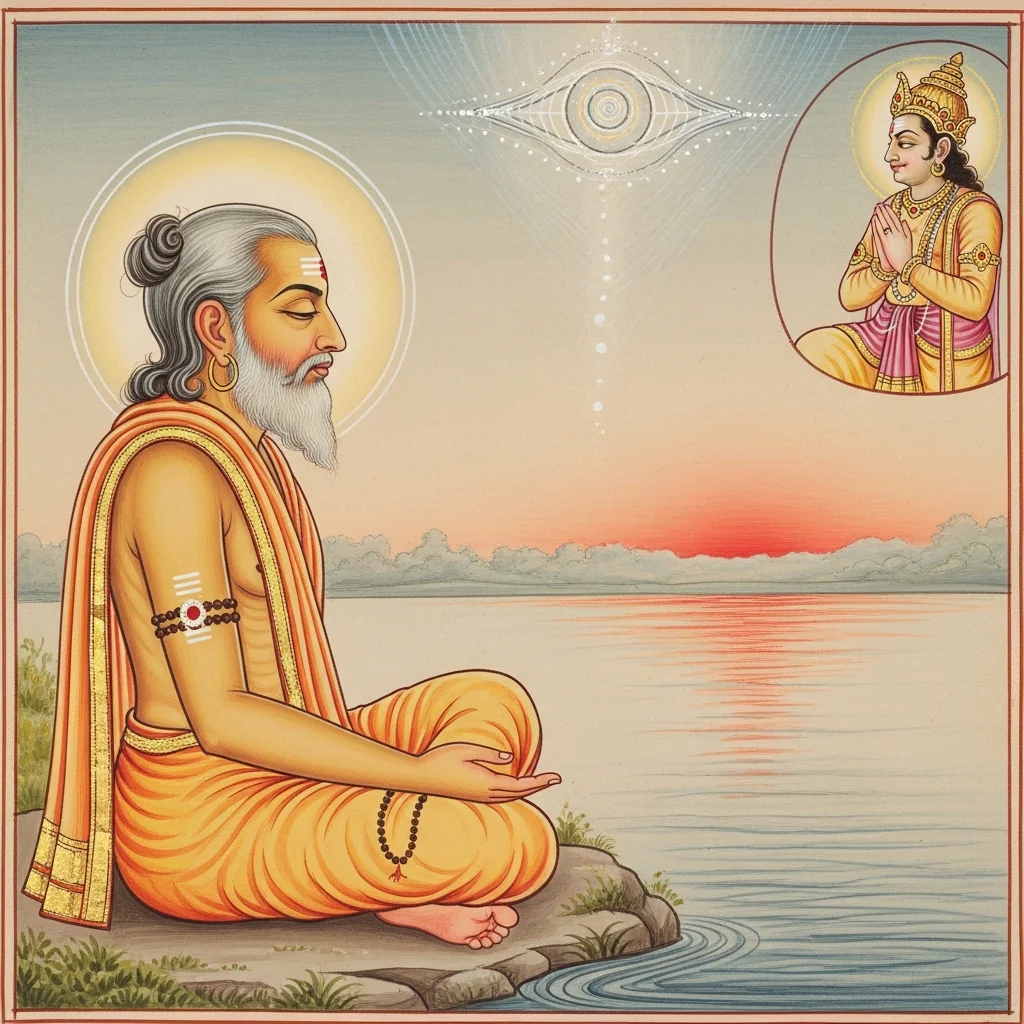
Adhyaya 18
The chapter begins with a tīrtha itinerary: one should bathe at Kumbhasaṃbhava-tīrtha and then go to Rāma-kuṇḍa to be released from sin. It next extols Raghunātha-saras as a pāpa-haraṇa holy place, where even small offerings to Veda-knowers multiply in merit, and where study and japa become especially fruitful. Sūta then relates a sacred history of the sage Sutīkṣṇa, Agastya’s disciple and a devotee of Rāma’s feet. On the shore of Rāmacandra-saras he performs severe tapas, continually recites the six-syllable Rāma-mantra, and offers a long hymn of salutations to Rāma’s deeds and epithets. Through sustained practice and tīrtha-sevā his devotion becomes steady and pure, accompanied by non-dual insight; various yogic attainments are listed as secondary results. The discourse broadens the tīrtha’s saving power: Rāma establishes a great liṅga on the shore for the welfare of beings, and bathing and beholding it are said to culminate in liberation. An exemplum follows: Dharmaputra (Yudhiṣṭhira) is described as instantly freed from a fault born of an untruth; when sages ask why, Sūta recounts the Mahābhārata episode of Droṇa’s death, the strategic statement about “Aśvatthāmā,” and the moral burden that followed. Later an incorporeal voice warns against kingship without expiation; Vyāsa arrives and prescribes a remedy oriented toward Rāma-setu in the southern ocean. The chapter ends with a phalaśruti: reciting or hearing it leads toward Kailāsa and freedom from repeated birth.
Shlokas
Verse 1
श्रीसूत उवाच । कुंभसंभवतीर्थेऽस्मिन्विधायाभिषवं नरः । रामकुंडं ततः पुण्यं गच्छेत्पापविमुक्तये
Śrī Sūta said: Having performed the prescribed ablution at this sacred ford known as Kumbhasaṃbhava-tīrtha, a person should then go to the holy Rāmakūṇḍa, for liberation from sins.
Verse 2
रघुनाथसरः पुण्यं द्विजाः पापहरं तथा । रघुनाथसरस्तीरे कृतो यज्ञोऽल्पदक्षिणः
O twice-born ones, Raghunātha Lake is holy and likewise removes sins. Upon its bank, a sacrifice was performed with only a small sacrificial fee.
Verse 3
संपूर्णफलदो भूयात्स्वाध्यायोऽपि जपस्तथा । रघुनाथ सरस्तीरे मुष्टिमात्रमपि द्विजाः
O twice-born ones, on the bank of Raghunātha Lake, even a mere handful of practice becomes fully fruit-bearing—whether it is Vedic self-study or japa.
Verse 4
दत्तं चेद्वेदविदुषे तदनंतगुणं भवेत् । रामतीर्थं समुद्दिश्य वक्ष्यामि मुनिपुंगवाः
If a gift is given to a knower of the Veda, it becomes of endless merit. O best of sages, I shall now speak with reference to Rāma-tīrtha.
Verse 5
इतिहासं महापुण्यं सर्वपातकनाशनम् । सुतीक्ष्णनामा विप्रेंद्रो मुनिर्नियतमानसः
A sacred history of great merit, destroying all sins: there was a sage—foremost among brāhmaṇas—named Sutīkṣṇa, disciplined in mind.
Verse 6
अगस्त्यशिष्यो रामस्य चरणाब्जविचिंतकः । रामचंद्रसरस्तीरे तपस्तेपे सुदुष्करम्
A disciple of Agastya, ever meditating on the lotus-feet of Rāma, he performed very difficult austerities on the bank of Rāmacandra Lake.
Verse 7
जपन्षडक्षरं मंत्रं रामचंद्राधिदैवतम् । नित्यं स पंचसाहस्रं मत्रराजमतंद्रितः
He chanted the six-syllabled mantra whose presiding deity is Rāmacandra; untiring, he daily repeated the king of mantras five thousand times.
Verse 8
जजाप कुर्वन्स्नानं च रघुनाथसरोजले । भिक्षाशी नियताहारो जितक्रोधो जितेंद्रियः
He continued his japa while also bathing in the waters of Raghunātha Lake—living on alms, regulated in diet, having conquered anger and mastered the senses.
Verse 9
एवं सुतीक्ष्णो विप्रेंद्रा बहुकालमवर्तत । ततः कदाचित्स मुनीरामं ध्याय न्सदा हृदि । तुष्टाव सीतासहितं रामचंद्रं सभक्तिकम्
Thus, O best of brāhmaṇas, Sutīkṣṇa lived for a long time. Then, on one occasion, the sage—ever meditating on Rāma within his heart—praised Rāmacandra together with Sītā, with full devotion.
Verse 10
सुतीक्ष्ण उवाच । नमस्ते जानकीनाथ नमस्ते हनुमत्प्रिय
Sutīkṣṇa said: “Salutations to You, O Lord of Jānakī (Sītā); salutations to You, O beloved of Hanumān.”
Verse 11
नमस्ते कौशिकमुनेर्यागरक्षणदीक्षित । नमस्ते कौसलेयाय विश्वामित्रप्रियाय च
“Salutations to You, who were vowed to protect the sacrifice of the sage Kauśika; salutations to You, O son of Kauśalyā, beloved of Viśvāmitra as well.”
Verse 12
नमस्ते हरकोदण्डभंजकामरसेवित । मारीचांतक राजेंद्र ताटकाप्राणनाशन
“Salutations to You, breaker of Hara’s bow, worshipped by the immortals; slayer of Mārīca, O best of kings, destroyer of Tāṭakā’s life.”
Verse 13
कबंधारे हरे तुभ्यं नमो दशरथात्मज । जामदग्न्यजिते तुभ्यं खरविध्वंसिने नमः
“Salutations to You, O Hari, remover of Kabandha; obeisance to You, O son of Daśaratha. Salutations to You, conqueror of Jāmadagnya (Paraśurāma); salutations to You, destroyer of Khara.”
Verse 14
नमः सुग्रीवनाथाय नमो वालिहराय ते । विभीषणभयक्लेशहारिणे मलहारिणे
“Salutations to You, lord and protector of Sugrīva; salutations to You, slayer of Vāli. To You who remove Vibhīṣaṇa’s fear and affliction—remover of impurity—salutations.”
Verse 15
अहल्यादुःखसंहर्त्रे नमस्ते भरताग्रज । अंभोधिगर्वसंहर्त्रे तस्मिन्सेतु कृते नमः
Salutations to You, remover of Ahalyā’s sorrow; salutations to You, elder brother of Bharata. Salutations to You who humbled the ocean’s pride; salutations to You by whom the sacred bridge (Setu) was made.
Verse 16
तारकब्रह्मणे तुभ्यं लक्ष्मणाग्रज ते नमः । रक्षःसंहारिणे तुभ्यं नमो रावणमर्द्दिने
Salutations to You, the saving Brahman who grants the crossing beyond; salutations to You, elder brother of Lakṣmaṇa. Salutations to You, destroyer of the Rākṣasas; salutations to You, crusher of Rāvaṇa.
Verse 17
कोदण्डधारिणे तुभ्यं सर्व रक्षाविधायिने । इति स्तुवन्मुनिः सोऽयं सुतीक्ष्णो राममन्वहम्
Salutations to You, bearer of the Kodanda bow, who bestows protection in every way. Thus praising, the sage Sutīkṣṇa extolled Rāma day after day.
Verse 18
निनाय कालमनिशं रामचंद्रनिषण्णधीः । एवमभ्यसतस्तस्य राम मन्त्रं षडक्षरम्
With his mind absorbed in Rāmacandra, he passed his time unceasingly. As he practiced thus, the six-syllabled Rāma-mantra became his constant discipline.
Verse 19
स्तुवतो रामचंद्रं च स्तोत्रेणानेन सुव्रताः । तीर्थे च रघुनाथस्य कुर्वतः स्नानमन्वहम्
O you of good vows, as he praised Rāmacandra with this hymn, and as he performed daily bathing at the tīrtha of Raghunātha…
Verse 20
अभवन्निश्चला भक्ती रामचंद्रेतिनिर्मला । अभूदद्वैतविज्ञानं प्रत्यगात्मैकलक्षणम्
Through the pure remembrance of Rāmacandra, unwavering and stainless devotion arose; and non-dual knowledge dawned as well—marked by the direct realization of the one inner Self.
Verse 21
अनधीतत्रयीज्ञानं तथैवाश्रुतवेदनम् । परकायप्रवेशे च सामर्थ्यमभवद्द्विजाः
Even without studying the Vedic triad, and even without hearing the Veda, its knowledge arose in him; and, O twice-born ones, the power to enter another’s body also manifested.
Verse 22
आकाशगमने शक्तिः कलावैदग्ध्यमेव च । अश्रुतानां च शास्त्राणामभिज्ञानं विना गुरुम्
There arose the power to travel through the sky, and skillfulness in the arts; and even knowledge of scriptures never heard—without the need of a teacher.
Verse 23
गमनं सर्वलोकेषु प्रति घातविवर्जितम् । अतींद्रियार्थद्रष्टृत्वं देवैः संभाषणं तथा
Free from all obstruction, there was movement through all worlds; the sight of supersensory realities; and likewise, conversation with the gods.
Verse 24
पिपीलिकादिजंतूनां वार्ताज्ञानमपि द्विजाः । ब्रह्मविष्णुमहादेवलोकेषु गमनं तथा
Even knowledge of the speech and doings of creatures such as ants arose, O twice-born ones; and likewise, the ability to journey to the worlds of Brahmā, Viṣṇu, and Mahādeva.
Verse 25
चतुर्दशसु लोकेषु स्वाधीनगमनं तथा । एतान्यन्यानि सर्वाणि योगिलभ्यानि सत्तमाः
And there was free movement, at one’s own will, through the fourteen worlds. All these and other such powers, O best of the virtuous, are attainments obtainable by yogins.
Verse 26
सुतीक्ष्णस्याभवन्विप्रा रामा तीर्थनिषेवणात् । एवंप्रभावं तत्तीर्थं महापातकनाशनम्
For Sutīkṣṇa, O brāhmaṇas, these fruits arose through devoted resort to Rāma-tīrtha. Such is the power of that sacred ford—it destroys even the great sins.
Verse 27
महासिद्धिकरं पुण्यमपमृत्युविनाशनम् । भुक्तिमुक्तिप्रदं पुंसां नरकक्लेशना शनम्
It is holy and a giver of great siddhis; it destroys untimely death; it grants men both bhukti (worldly enjoyment) and mukti (liberation); and it removes the torments of hell.
Verse 28
रामभक्तिप्रदं नित्यं संसारोच्छेदकारणम् । अस्य तीरे महल्लिंगं स्थापयित्वा रघूद्वहः । पूजयामास तल्लिंगं लोकानुग्रहका म्यया
It eternally bestows devotion to Rāma and becomes a cause for cutting off saṃsāra. On its bank, the scion of Raghu established a great liṅga and worshipped that liṅga, desiring the welfare of the worlds.
Verse 29
रामतीर्थे महापुण्ये स्नात्वा तल्लिंगदर्शनात् । नराणां मुक्तिरेव स्यात्किमुतान्या विभूतयः
By bathing at the supremely meritorious Rāma-tīrtha and by beholding that liṅga, men surely attain liberation—what need then to speak of other lesser powers?
Verse 30
तत्र स्नात्वा शिवं दृष्ट्वा धर्म पुत्रः पुरा द्विजाः । अनृतोक्तिसमुद्भूतदोषान्मुक्तोऽभवत्क्षणात्
O brāhmaṇas, in former times Dharmaputra (Yudhiṣṭhira), having bathed there and beheld Śiva, was instantly freed from the fault that had arisen from speaking an untruth.
Verse 31
ऋषय ऊचुः असत्यमुदितं कस्माद्धर्मपुत्रेण सूतज । यद्दोषशांतये सस्नौ रामतीथेऽतिपावने
The sages said: “O son of Sūta, why did Dharmaputra utter an untruth, on account of which—seeking the pacification of that fault—he bathed at the supremely purifying Rāmatīrtha?”
Verse 32
श्रीसूत उवाच । युष्माकमृषयो वक्ष्ये यथोक्तमनृतं रणे । छलेन धर्मपुत्रेण यन्नष्टं रामतीर्थके
Śrī Sūta said: “O sages, I shall tell you how, in the battle, an untruth was spoken as it was contrived—by Dharmaputra through a stratagem—and how that (fault) was removed at Rāmatīrtha.”
Verse 33
अन्योन्यं पांडवा विप्रा धर्मपुत्रादयः पुरा । धृतराष्ट्रस्य पुत्राश्च दुर्नोधनमुखास्तदा
O brāhmaṇas, long ago the Pāṇḍavas—beginning with Dharmaputra—and the sons of Dhṛtarāṣṭra, headed by Duryodhana, stood opposed to one another.
Verse 34
महद्वै वैरमासाद्य राज्यार्थं विप्रसत्तमाः । महत्या सेनया सार्द्धं कुरुक्षेत्रे समेत्य च
Having reached a great enmity over the kingdom, O best of brāhmaṇas, they assembled together at Kurukṣetra with vast armies.
Verse 35
अयुध्यन्समरे वीराः समरेष्वनिवर्तिनः । युद्धं कृत्वा दशदिनं गांगेयः पतितो भुवि
In the battle the heroes fought, never turning back in combat. After ten days of warfare, Gāṅgeya (Bhīṣma) fell upon the earth.
Verse 36
ततः पंचदिनं भूयो धृष्टद्युम्नेन वीर्यवान् । आचार्यो युयुधे द्रोणो महाबलपराक्रमः
Then, for a further five days, the mighty teacher Droṇa—great in strength and valor—fought with Dhṛṣṭadyumna.
Verse 37
अनेकास्त्राणि शस्त्राणि द्रोणाचर्यो महाबली । विसृजन्पांडवानीकं पीडयामास वीर्यवान्
Mighty Droṇācārya, hurling many weapons and missiles, grievously afflicted the Pāṇḍava host with his prowess.
Verse 38
अथ दिव्यास्त्रविच्छूरो धृष्टद्युम्नो महाबलः । अभिनद्बाणवर्षेण द्रोणसेनामनेकधा
Then the greatly powerful Dhṛṣṭadyumna, blazing with divine missiles, shattered Droṇa’s army in many ways with a rain of arrows.
Verse 39
धृष्टद्युम्नं तदा द्रोणः शरवर्षैरवाकिरत् । पार्थसेना तथा द्रोणबाणवर्षातिपीडिता
Then Droṇa covered Dhṛṣṭadyumna with showers of arrows. Likewise, Pārtha’s army was greatly afflicted by Droṇa’s rain of shafts.
Verse 40
दशदिक्षु भयाक्रांता विद्रुता द्विजसत्तमाः । ततोऽर्जुनो रणे द्रोणं युयुधे रथिनां वरः
Struck with fear, the foremost of the twice-born scattered and fled in all ten directions. Then Arjuna—the best of chariot-warriors—engaged Droṇa in battle.
Verse 41
रणप्रवीणयोस्तत्र विजयद्रोणयो रणे । द्रष्टुं समागतैर्देवैरभूद्व्योमनिरं तरम्
As those two masters of warfare—Vijaya (Arjuna) and Droṇa—fought there, the gods assembled to witness it, and the sky became filled without a gap.
Verse 42
द्रोणफाल्गुनयोर्विप्रा नास्ति युद्धोपमा भुवि । सामर्षयोस्तदाचार्यशिष्ययोरभवद्रणः
O brāhmaṇas, on earth there was no battle comparable to that of Droṇa and Phālguna. That contest arose between the teacher and his disciple, both filled with ardor.
Verse 43
द्रोणफाल्गुनयोर्युद्धं द्रोणफाल्गुन योरिव । बहु मेनेऽथ मनसा द्रोणोऽर्जुनपराक्रमम्
The battle between Droṇa and Phālguna seemed as though it were a second battle of Droṇa and Phālguna once more. Then Droṇa, in his heart, greatly esteemed Arjuna’s valor.
Verse 44
ततो द्रोणो महावीर्यं प्रियशिष्यं स फाल्गुनम् । विहाय पांचालबलं समयुध्यत वीर्यवान्
Then mighty Droṇa, leaving aside the Pāñcāla forces, fought directly with Phālguna—his beloved disciple of great prowess.
Verse 45
सविंशतिसहस्राणि दश तत्रायुतानि च । द्रोणाचार्योऽवधीद्राज्ञां युद्धे सगजवाजिनाम्
In that battle, Droṇācārya slew kings—together with their elephants and horses—twenty thousand in number, and ten ayutas besides.
Verse 46
धृष्टद्युम्नोऽथ कुपितो द्रोण मभ्यहनच्छरैः । द्रोणश्च पट्टिशं गृह्य धृष्टद्युम्नमताडयत्
Then Dhṛṣṭadyumna, inflamed with wrath, struck Droṇa with arrows; and Droṇa, seizing a spear (paṭṭiśa), smote Dhṛṣṭadyumna.
Verse 47
शरैर्विव्याध तं युद्धे तीक्ष्णैरग्निशिखोपमैः । परङ्मुखोऽभवत्तत्र धृष्ट द्युम्नः शराहतः
In the battle he pierced him with keen arrows, like tongues of flame; thereupon Dhṛṣṭadyumna, struck by shafts, turned away from the fight.
Verse 48
ततो विरथमागत्य धृष्टद्युम्नं वृकोदरः । स्वं स्यंदनं समारोप्य द्रोणाचार्यमथाब्रवीत्
Then Vṛkodara (Bhīma) came to Dhṛṣṭadyumna, who had lost his chariot, set him upon his own chariot, and thereafter spoke to Droṇācārya.
Verse 49
स्वकर्मभिरसंतुष्टाः शिक्षितास्त्रा द्विजाधमाः । न युद्ध्येरन्यदि क्रूरा न नश्येरन्नृपा रणे
Unsatisfied with their own proper duties, those vile brāhmaṇas—trained in weaponry—became cruel; otherwise kings would not fight, nor would rulers perish in battle.
Verse 50
अहिंसा हि परो धर्मो ब्राह्मणानां सदा स्मृतः । हिंसया दारपुत्रादीन्रक्षंते व्याधजातयः
Non-violence (ahiṃsā) is ever remembered as the highest dharma of the brāhmaṇas. Yet by violence the tribes of hunters protect their wives, sons, and the rest.
Verse 51
हिंसीस्त्वमेकपुत्रार्थे युद्धे स्थित्वा बहून्नृपान् । स चापि ते सुतो ब्रह्मन्हतः शेते रणाजिरे
For the sake of a single son, you committed violence—standing in battle you slew many kings. And yet that very son of yours, O brāhmaṇa, lies slain upon the field of war.
Verse 52
तथापि लज्जा ते नास्ति शोकोऽपीह न जायते । वचनं त्विति भीमस्य सत्यं श्रुत्वा युधिष्ठिरात्
Even so, you feel no shame, nor does any grief arise in you here. Having heard from Yudhiṣṭhira the true report of Bhīma’s words…
Verse 53
निजायुधं स तत्याज पपात स्यंदनो परि । योगवित्प्रायमातस्थे द्रोणाचार्यस्तदा द्विजाः
He cast aside his own weapon and fell down upon his chariot. Then Droṇācārya, knower of yoga, undertook the fast unto death, O twice-born ones.
Verse 54
तदंतरं परिज्ञाय द्रोणाचार्यस्य पार्श्वतः । खङ्गपाणिः शिरच्छेत्तुमभ्यधावद्रणा जिरे
Recognizing that interval of vulnerability beside Droṇācārya, the sword-in-hand warrior rushed on the battlefield to sever his head.
Verse 55
वार्यमाणोऽपि पार्थाद्यैस्तच्छिरश्छेत्तुमुद्ययौ । योगवित्त्वाद्द्रोणमूर्ध्नो ज्योतिरूर्ध्वं दिवं ययौ
Though restrained by Pārtha and the others, he still attempted to cut off that head. Yet because Droṇa was a knower of yoga, a radiance rose upward from his crown and went to heaven.
Verse 56
दृष्टं कृष्णार्जुनकृपधर्मपुत्रादि भिर्मृधे । द्रोणस्यास्य गतप्राणाच्छरीरादच्छिनच्छिरः
In the battle it was witnessed by Kṛṣṇa, Arjuna, Kṛpa, Dharmaputra, and others: from Droṇa’s body, now bereft of life, his head was cut off.
Verse 57
भारद्वाजे हते युद्धे कौरवाः प्राद्रवन्भयात् । जहृषुः पांडवा विप्रा धृष्टद्युम्नादय स्तदा
When Bhāradvāja’s son (Droṇa) was slain in battle, the Kauravas fled in fear. Then the Pāṇḍavas rejoiced, O brāhmaṇas, along with Dhṛṣṭadyumna and the others.
Verse 58
सेनां तां विद्रुतां दृष्ट्वा द्रौणिरूचे सुयोधनम् । एतद्द्रवति कि सैन्यं त्यक्तप्रहरणं नृप
Seeing that army in flight, Drauṇi said to Suyodhana: “Why is this host running, O king, having cast away its weapons?”
Verse 59
तदा दुर्योधनो राजा स्वयं वक्तु मशक्नुवन् । युद्धे द्रोणवधं वक्तुं कृपाचार्यमचोदयत् । द्रौणयेऽथ कृपाचार्यो वधमूचे गुरोस्तदा
Then King Duryodhana, unable to speak of it himself, urged Kṛpācārya to tell of Droṇa’s killing in the battle. Thereupon Kṛpācārya told Drauṇi of the slaying of his teacher-father.
Verse 60
कृप उवाच । अश्वत्थामंस्तव पिता ब्रह्मास्त्रेण मृधे रिपून् । हत्वा निनाय सदनं यमस्य शतशो बली
Kṛpa said: “Aśvatthāmā, your father—mighty in battle—slew the foes in the fight with the Brahmā-weapon (Brahmāstra) and sent them by the hundreds to Yama’s abode.”
Verse 61
दुराधर्षतमं दृष्ट्वा तद्वीर्यं केशवस्तदा । पांडवान्प्राह विप्रेंद्र वाक्यं वाक्यविशारदः
Seeing that invincible might, Keśava then addressed the Pāṇḍavas, O best of brāhmaṇas, speaking words with consummate skill.
Verse 62
केशव उवाच । द्रोणं जेतुमुपायोऽस्ति पांडवा युधि दुर्जयम्
Keśava said: “O Pāṇḍavas, there is a means to conquer Droṇa, who is unconquerable in battle.”
Verse 63
अश्वत्थात्मा तव सुतो हतो द्रोण मृधेऽधुना । सत्यवादी वदेदेवं यदि प्रामाणिको जनः
“Droṇa, ‘Aśvatthāmā, your son has now been slain in battle’—if a trustworthy man, devoted to truth, were to say it thus, it would be believed.”
Verse 64
द्रोणो निवर्तेत रणात्तदा त्यक्त्वायुधं क्षणात् । अत एनां मृषावार्तां धर्मराजोऽधुना वदेत्
“Then Droṇa would withdraw from the battle, casting aside his weapons in an instant. Therefore Dharmarāja should now utter this false report.”
Verse 65
नान्यथा शक्यते जेतुं द्रोणो युद्धविशारदः । धर्माज्जेतुमशक्यं चेद्धर्मं त्यक्त्वाऽप्यरिं जयेत्
Droṇa, skilled in warfare, cannot be conquered by any other means. If victory through dharma is impossible, one may even relinquish dharma and defeat the enemy.
Verse 66
इति केशववाक्यं तच्छ्रुत्वा भीमः पृथासतः । पितरं ते समभ्येत्य मिथ्यावाक्यमभाषत
Hearing those words of Keśava, Bhīma—the son of Pṛthā—approached your father and spoke a false statement.
Verse 67
अश्वत्थामा हतो द्रोण युद्धेऽत्र पतितोऽधुना । द्रोणाचार्योपि तद्वाक्यममन्यत यथार्थतः
“Aśvatthāmā is slain, O Droṇa, fallen here in battle now.” Even Droṇācārya took that statement to be true.
Verse 68
अविश्वस्य पुनः सोऽथ धर्मजं प्राप्य चाब्रवीत् । धर्मात्मज मृधे सूनुरश्वत्थामा ममाधुना
Yet, still doubtful, he approached Dharmarāja and said: “O son of Dharma, in this battle is my son Aśvatthāmā now—”
Verse 69
हतः किं त्वं वदस्वाद्य सत्यवादी भवान्मतः । धर्मपुत्रोऽसत्यभीरुरासीच्चारिजयोत्सुकः
“Is he slain? Tell me today—for you are regarded as a speaker of truth.” Dharmaputra, fearful of falsehood yet eager for victory, stood in inner conflict.
Verse 70
किं कर्तव्यं मयाद्येति दोलालोलमना अभूत् । स दृष्ट्वा भीमनिहतमश्वत्थामाभिधं गजम्
“What should I do now?”—his mind became wavering and unsteady. Then, seeing the elephant named Aśvatthāmā, slain by Bhīma, he was seized by doubt and deliberation.
Verse 71
अश्वत्थामा हतो युद्धे भीमेनाद्य रणे महान् । इत्थं द्रोणं बभाषेऽसौ धर्मपुत्रश्छलोक्तितः
“Aśvatthāmā has been slain today in battle by Bhīma, in this great fight.” Speaking thus, Dharmaputra (Yudhiṣṭhira) addressed Droṇa with a deceptive utterance.
Verse 72
तच्छ्रुत्वा त्वत्पिता शस्त्रं त्यक्त्वा युद्धान्न्यवर्त्तत । अथ धर्मसुतः प्राह परं वारण इत्यपि
Hearing that, your father laid aside his weapon and withdrew from the battle. Then the son of Dharma spoke again, saying, “Enough—desist.”
Verse 73
त्यक्तं शस्त्रं न गृह्णीयां युद्धे पुनरिति स्म सः । प्रतिजज्ञे तव पिता वत्स द्रोणो बली पुनः
“A weapon once cast away I shall not take up again in battle”—so indeed he declared. O dear child, your father, the mighty Droṇa, once again made this solemn vow.
Verse 74
अतः शस्त्रं न जग्राह प्रतिज्ञाभंगकातरः । धृष्टद्युम्नं तदा दृष्ट्वा पिता ते मृत्युमात्मनः
Therefore, distressed at the very thought of breaking his vow, he did not take up a weapon. But when he then beheld Dhṛṣṭadyumna, your father regarded him as death itself come for him.
Verse 75
मत्वा प्रायोपवेशेन रथोपस्थे स योगवित् । अशयिष्ट समाधिस्थः प्राणानायम्य वाग्यतः
Resolving to undertake prāyopaveśa (the sacred fast unto death), that knower of Yoga lay down upon the seat of the chariot. Established in samādhi, he restrained the vital breaths and remained silent, with speech held in complete control.
Verse 76
ततो निर्भिद्य मूर्धानं तत्प्राणा निर्ययुः क्षणात् । तदा मृतस्य द्रोणस्य वत्स खङ्गेन तच्छिरः
Then, as the head was cleft open, his life-breaths departed in an instant. Thereupon, O dear one, the head of Droṇa—now dead—was (severed) with a sword.
Verse 77
केशागृहीत्वा हस्तेन धृष्टद्युम्नोऽच्छिनद्युधि । मावधीरिति पार्थाद्याः प्रोचुः सर्वे च सैनिकाः । सर्वैर्निवार्यमाणोपि त्वत्तातं पार्श्वतोऽवधीत्
Grasping him by the hair with his hand, Dhṛṣṭadyumna struck him down in the midst of battle. ‘Do not kill!’—thus did Pārtha and the others, along with all the soldiers, cry out. Yet, though restrained by everyone, he nevertheless slew your father from the side.
Verse 78
श्रीसूत उवाच । पितरं निहतं श्रुत्वा रुदन्द्रौणिश्चिरं द्विजाः
Śrī Sūta said: O twice-born sages, on hearing that his father had been slain, Rudandrauṇi remained for a long time (overwhelmed and motionless).
Verse 79
कोपेन महता तत्र ज्वलन्वाक्यमथाब्रवीत । अनृतं प्रोच्य पितरं न्यस्तशस्त्रं चकार यः
There, inflamed with great anger, he spoke burning words: “He who has lied to his father and who, laying aside his weapons, acted in betrayal—such a one is blameworthy.”
Verse 80
पितरं मेऽद्य तं पार्थमप्यन्या थ पांडवान् । गृहीत्वा केशपाशं यस्त्यक्तशस्त्रशिरोऽहनत्
“Today I shall strike down that Pārtha (Arjuna), my father, and the other Pāṇḍavas as well—he who, seizing by the lock of hair, slew one whose head was bowed and whose weapon had been cast aside.”
Verse 81
छद्मना पार्षतं तं च हनिष्याम्यचिरादहम् । कृष्णेन सह पश्यंतु पाण्डवा मत्पराक्रमम्
“By deceit I shall soon kill that Pārṣata (Dhṛṣṭadyumna) too. Let the Pāṇḍavas, together with Kṛṣṇa, behold my prowess!”
Verse 82
इति द्रौणिर्द्विजास्तत्र प्रतिजज्ञे भयंकरम् । ततोस्तं गत आदित्ये राजानः सर्व एव ते
Thus, O Brāhmaṇas, Drauṇi there made a dreadful vow. Then, when the sun had set, all those kings and warriors withdrew as night fell.
Verse 83
उभये निहते द्रोणे प्राविशन्पटमण्डपम् । अष्टादशदिनैरेवं निवृत्तमभवद्रणम्
When Droṇa had fallen amid the two armies, they entered the tented pavilion. Thus, in eighteen days, the battle came to an end.
Verse 84
शल्यं कर्णं तथान्यांश्च दुर्योधनमुखांस्ततः । धार्तराष्ट्रान्निहत्याजौ धर्मराजो युधिष्ठिरः
After Śalya, Karṇa, and the rest—led by Duryodhana—had been slain in battle, Dharmarāja Yudhiṣṭhira destroyed the Dhārtarāṣṭras on the field.
Verse 85
स्वीयानां च परेषां च मृतानां सांपरायिकम् । अकरोद्विधिवद्विप्राः सार्धं धौम्या दिभिर्द्विजैः
Then, in accordance with sacred ordinance, the Brāhmaṇas—together with Dhaumya and other twice-born sages—performed the funerary rites for the dead, both their own and their foes.
Verse 86
वंदित्वा धृतराष्ट्रं च सर्वे संभूय पाण्डवाः । धृतराष्ट्राभ्यनुज्ञाता हतशिष्टजनैर्वृताः
Having assembled together, all the Pāṇḍavas paid homage to Dhṛtarāṣṭra; and, permitted by him, they proceeded, surrounded by the surviving people left after the slaughter.
Verse 87
संप्राप्य हास्तिनपुरं प्राविशंस्ते स्वमंदिरम् । ततः कतिपयाहःसु गतेषु किल नागराः
Reaching Hāstinapura, they entered their own palace. Then, after some days had passed, the citizens indeed gathered and turned their attention to what was to follow.
Verse 89
धौम्यादिमुनिभिः सार्धं धर्मजस्य महात्मनः । राज्या भिषेचनं कर्तुं प्रारभंत मुनीश्वराः । राज्याभिषेचने तस्य प्रवृत्ते धर्मजस्य तु । अशरीरा ततो वाणी बभाषे धर्मनंदनम्
Together with Dhaumya and other sages, the great seers began to perform the rājyābhiṣeka, the royal consecration, of that noble son of Dharma. But when his consecration had commenced, a bodiless voice addressed the delight of Dharma.
Verse 90
धर्म पुत्र महाभाग रिपूणामपि वत्सल । राज्याभिषेकं मा कार्षीर्नार्हस्त्वं राज्यपालने
“O fortunate son of Dharma, compassionate even toward enemies—do not undergo the rājyābhiṣeka, the royal consecration. You are not yet fit to bear the burden of protecting the kingdom.”
Verse 91
यतस्त्वं छद्मनाचार्यमुक्त्वा सत्यं द्विजोत्तमम् । न्यस्त शस्त्रं रणे राजन्नघातयदलज्जकः
For you, O King, having deceitfully called that best of the twice-born “teacher” and “truthful,” then—shamelessly—caused him to be slain in battle when he had laid down his weapons.
Verse 92
अतस्ते पापबाहुल्यं विद्यते धर्मनंदन । प्रायश्चित्तमकृत्वास्य राज्यपालनकर्मणि
Therefore, O son of Dharma, sin has become abundant for you; and without performing atonement for it, you are not fit to continue in the duty of protecting and ruling the kingdom.
Verse 93
नार्हता विद्यते यस्मात्प्रायश्चित्तमतश्चर । इत्युक्त्वा विररामाथ सा तु वागशरीरिणी
Since, without atonement, no worthiness remains—therefore undertake expiation. Having spoken thus, that bodiless voice then fell silent.
Verse 94
ततो धर्मसुतो राजा तद्वाक्यं भृशकातरः । मूढोऽहं साहसी क्रूरः पिशुनो लोभमोहितः
Then the king, the son of Dharma, shaken greatly by those words, said: “I am deluded—rash, cruel, slanderous, and bewildered by greed.”
Verse 95
तुच्छराज्याभिलाषेण कृतवान्पापमीदृशम् । एतत्पापविशुद्ध्यर्थं किं करिष्यामि का गतिः
Driven by desire for a petty kingdom, I committed such a sin. For the purification of this wrongdoing, what shall I do—what refuge is there for me?
Verse 96
किं वा दानं प्रदास्यामि कुत्र यास्यामि वा पुनः । इति शोकसमाविष्टे तस्मिन्राजनि धर्मजे
“What charity shall I give? Where shall I go again?” Thus that king—the son of Dharma—was overwhelmed by grief…
Verse 97
कृष्णद्वैपायनो व्यासस्समायातस्तदंतिकम् । ततोऽभिवंद्य तं व्यासं प्रत्युत्थाय कृतांजलिः
Kṛṣṇa-Dvaipāyana Vyāsa came into his presence. Then the king rose to greet him and, with joined palms, bowed to Vyāsa.
Verse 98
संपूज्यार्घ्यादिना विप्रा भक्तियुक्तेन चेतसा । अदेहवाचा यत्प्रोक्तं तत्सर्वमखिलेन सः
Having duly worshipped the sage with offerings such as arghya, his mind filled with devotion, he recounted in full all that had been spoken by the bodiless voice.
Verse 99
व्यासाय श्रावयामास दुःखितो धर्मनंदनः । श्रुत्वा तदखिलं वाक्यं धर्मजस्य महामुनिः । ध्यात्वा तु सुचिरं कालं ततो वक्तुं प्रच क्रमे
The sorrowing Dharmanaṃdana recounted it to Vyāsa. Having heard the entire account from the son of Dharma, the great sage reflected for a long time, and then began to speak.
Verse 100
व्यास उवाच । मा कार्षीस्त्वं भयं राजन्नुपायं प्रब्रवीमि ते । अस्य पापस्य शांत्यर्थं श्रुत्वानुष्ठीयतां त्वया
Vyāsa said: “Do not give way to fear, O King. I shall tell you the means; for the pacification of this sin, hear it and then perform it accordingly.”
Verse 101
युधिष्ठिर उवाच । किं तद्ब्रूहि महायोगिन्पाराशर्य कृपानिधे । येन मे पापनाशः स्यादचिरात्तद्वदाधुना
Yudhiṣṭhira said: O great Yogin, O son of Parāśara, ocean of compassion—tell me the means by which my sins may be destroyed swiftly. Speak of it now.
Verse 102
व्यास उवाच । दक्षिणांभोनिधौ सेतौ गंधमादनपर्वते
Vyāsa said: At the Setu in the southern ocean, and at Mount Gandhamādana—
Verse 110
रामसेतुं समुद्दिश्य प्रतस्थे वाहनं विना । दिनैः कतिपयैरेव रामसेतुं जगाम सः
Setting out with Rāmasetu as his goal, he departed without any conveyance; and within only a few days, he reached Rāmasetu.
Verse 120
अभिषिक्तोऽथ राज्येऽसौ पालयामास मेदिनीम् । इत्थं धर्मात्मजो विप्रा रामतीर्थनिमज्जनात्
Then, having been consecrated to kingship, he ruled and protected the earth. Thus, O Brāhmaṇas, the righteous-souled one—through immersion in Rāmatīrtha—attained this result.
Verse 123
पठंति येऽ ध्यायमिदं द्विजोत्तमाः शृण्वंति वा ये मनुजा विपातकाः । यास्यंति कैलासमनन्यलभ्यं गत्वा न संयांति पुनश्च जन्म
Those best among the twice-born who recite this chapter, or those people—even burdened with grievous sins—who listen to it, will go to Kailāsa, attainable by no other means; having gone there, they do not return again to rebirth.
Read Skanda Purana in the Vedapath app
Scan the QR code to open this directly in the app, with audio, word-by-word meanings, and more.