Adhyaya 17
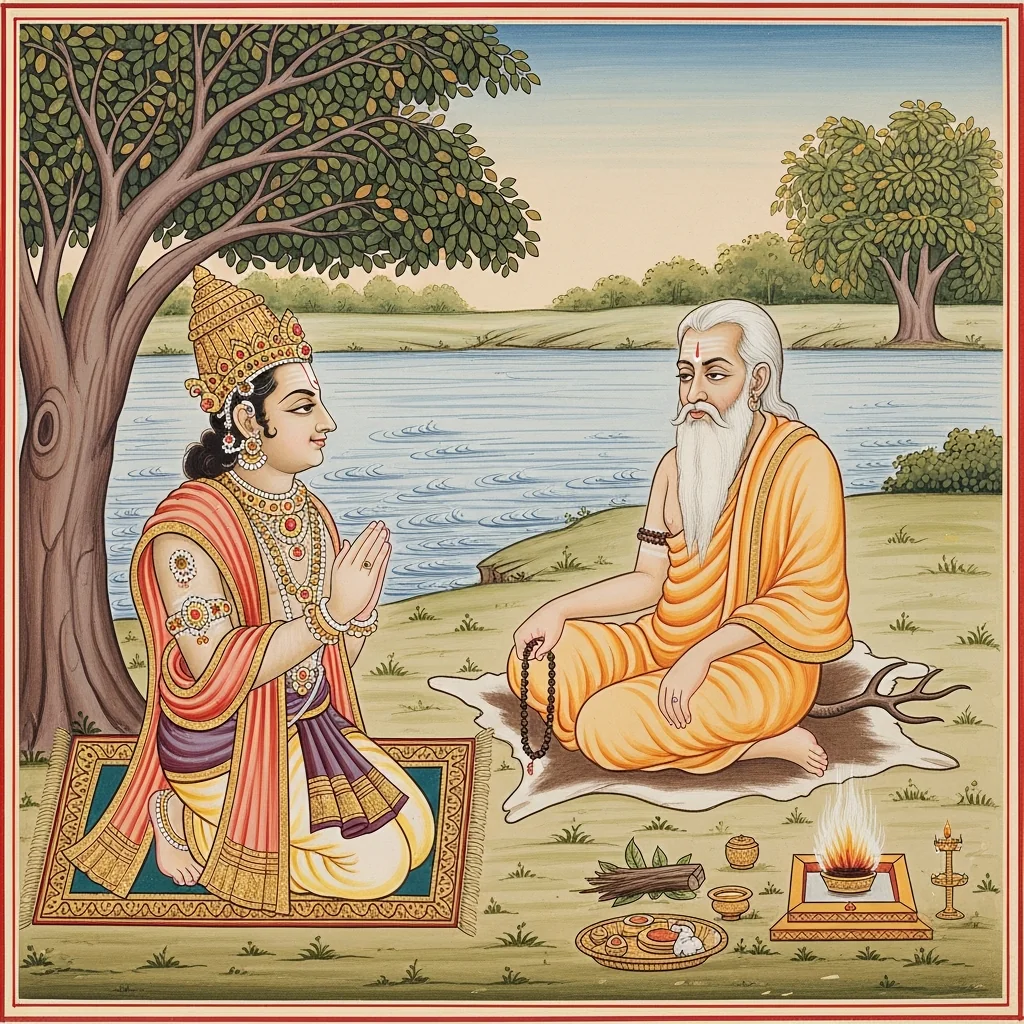
This chapter recounts a wedding episode at Agastya-tīrtha in the Setukhaṇḍa region. Sūta tells how Kakṣīvān, acting on his teacher’s instruction and seeking a proper means to marry, arrives at the tīrtha. King Svanaya learns that the sage Dīrghatamas (with his son) is on the riverbank and pays reverence; Udanka too arrives with disciples to bathe at Rāmasetu/Dhanuṣkoṭi and serves as the ritual authority. Hospitality is observed through greetings, blessings, and the offering of arghya, after which an auspicious time is fixed and arrangements are made to bring the bride from the palace. The wedding is described with public auspicious rites: a procession, nīrājana welcome, exchange of garlands, kindling of the sacred fire, lājā-homa and related procedures, and the formal hand-taking (pāṇigrahaṇa) performed under Udanka’s supervision. When the rites conclude, the king feeds and gifts Brahmins on a grand scale and bestows ample strīdhana and dowry-like gifts upon his daughter. The sages return to their hermitage in Veda-araṇya and the king to his city; the chapter ends with a phalaśruti declaring that hearing or reciting this ancient, Veda-grounded account brings well-being and lessens hardship and poverty.
Shlokas
Verse 1
श्रीसूत उवाच । पुनरित्याह कक्षीवान्पितरं तं मुनीश्वराः । यथोदंकेन गुरुणा प्रेषितोऽहमिहा धुना
Śrī Sūta said: “Then Kakṣīvān again spoke to his father, ‘O lord among sages, just as I have now been sent here by my teacher Udaṅka…’”
Verse 2
समागतोस्मि तीर्थेऽस्मिन्नागस्त्ये मुनिसत्तम । स्वनयस्य सुतोद्वाहसिद्ध्यर्थं गुरुचोदितः
“O best of sages, I have come to this sacred ford of Agastya, urged by my teacher, in order to accomplish the means for arranging Svānaya’s son’s marriage.”
Verse 3
उपायं तन्निगदितमत्र कुर्व न्न्यवर्तिषम् । वर्षत्रयावसाने मामुद्वाहोपायसंयुतम्
“Carrying out here the means that had been explained, I remained engaged in it. At the end of three years, I found myself furnished with the means for that marriage.”
Verse 4
स्वनयोत्रैव तिष्ठन्तमाससाद यदृच्छया । स च मामेत्य कन्यां ते दास्यामीति वचोऽब्रवीत्
While I was staying right here, Svānaya happened upon me by chance. Approaching me, he said, “I will give you a maiden in marriage.”
Verse 5
ततोस्मदनुरोधेन त्वामाह्वयदयं नृपः । इतीरयित्वा पितरं कक्षीवान्विरराम सः
Then, at my request, this king summoned you. Having said this to his father, Kakṣīvān fell silent.
Verse 6
सुदर्शनोऽथ विप्रेंद्रः पुरोधाः स्वन यस्य सः । प्रययौ राजसविधं स्वनयाय निवेदितुम्
Then Sudarśana, foremost among brāhmaṇas and Svānaya’s royal priest, went to the king’s presence to inform Svānaya.
Verse 7
राजानं तं समासाद्य स्वनयं स सुदर्शनः । प्राप्तं निवेदयामास तं दीर्घतमसं मुनिम्
Reaching King Svānaya, Sudarśana informed him that the sage Dīrghatamas had arrived.
Verse 9
अगस्त्यतीर्थतीरे तं सपुत्रमृषि सत्तमम् । ददर्श राजा स्वनयो ब्रह्माणमिव देवराट्
On the bank of Agastya-tīrtha, King Svānaya beheld that excellent sage together with his son—like Indra beholding Brahmā.
Verse 10
ववंदे दीर्घतमसश्चरणौ लोकमंगलौ । उत्थाप्य नृपतिं विप्रास्तदा दीर्घतमा मुनिः
Then the brāhmaṇas raised the king up, and the sage Dīrghatamas bowed at those auspicious feet that bring welfare to all the worlds.
Verse 11
आशिषं प्रयुयोजाथ स्वनयाय नृपाय सः । अत्रांतरे समायात उदंकोऽपि महानृषिः
He then bestowed a blessing upon his own son, the king. Meanwhile, the great ṛṣi Udaṅka also arrived there.
Verse 12
रामसेतौ धनुष्कोटौ स्नातुं शिष्यगणैर्वृतः । लक्षसंख्यो मुनिगणस्तेन साकं मुनीश्वरः
At Rāma-setu, at Dhanuṣkoṭi, the lordly sage came to bathe, surrounded by bands of disciples; with him was a host of sages numbering in the lakhs.
Verse 13
उदंकोऽगस्त्यतीर्थेस्मिन्स्नातुं संप्राप्तवान्मुनिः । उदंकमागतं दृष्ट्वा कक्षीवान्प्रणनाम तम्
The sage Udaṅka arrived at this Agastya-tīrtha to bathe. Seeing Udaṅka come, Kakṣīvān bowed to him.
Verse 14
अकरोदाशिषं विप्रः शिष्यायाथ गुरुस्तदा । अथ दीर्घतमा विप्रस्तमुदंकं महामुनिम्
Then the guru, the brāhmaṇa, bestowed his blessing upon the disciple. After that, the brāhmaṇa Dīrghatamā addressed the great sage Udaṅka.
Verse 15
कुशलं परिपप्रच्छ सोऽपि तं मुनि पुंगमम् । उभौ तौ मुनिशार्दूलौ सर्वलोकेषु विश्रुतौ
With reverence he inquired of that foremost sage about his well-being; indeed, those two tiger-like sages were renowned in all the worlds.
Verse 16
कथयामासतुस्तत्र कथाः पापप्रणाशिनीः । अथ राजाप्युदंकं तं प्रणनाम मुनीश्व रम्
There they recounted narratives that destroy sin. Then the king too bowed to Udaṅka, the lord among sages.
Verse 17
उदंकोप्याशिषं तस्मै प्रायुंक्त स्वनयाय वै । राजाथ स्वनयः प्रीतस्तत्र वाक्यमभाषत
Udaṅka too bestowed a blessing upon him, indeed upon his son. Then the king’s son, pleased, spoke words there.
Verse 18
मुनिं तं दीर्घतमसं विवाहः क्रिय तामिति । तथास्त्वित्यवदत्सोऽपि तदा दीर्घतमा मुनिः
“Let the marriage be performed with the sage Dīrghatamas,” he said. Then the sage Dīrghatamā replied, “So be it.”
Verse 19
श्व एव क्रियतां राजन्सुमुहूर्ते महामते । अत्रैव पाणिग्रहणं क्रियतां गन्धमा दने
“Let it be performed tomorrow itself, O King, at a most auspicious moment, O great-minded one. Right here at Gandhamādana let the pāṇigrahaṇa—the taking of the hand—be done.”
Verse 20
तस्मादिहानय क्षिप्रं कन्यामंतःपुरं तथा । इत्युक्तः स्वनयो राजा गत्वा स्वपटमण्डपम्
“Therefore, quickly bring the maiden here from the inner palace.” Thus instructed, King Svanaya went to his own royal pavilion.
Verse 21
आहूय शतसंख्याकान्वृद्धान्वर्ष वरांस्तदा । आनेतुं प्रेषयामास कन्यामंतःपुरं तथा
Then, summoning a hundred venerable and eminent elders, he dispatched them to bring the maiden from the inner palace.
Verse 22
ते वर्षवरमुख्यास्तु स्वनयेन प्रचोदिताः । मनोजवान्समारुह्य वाजिनो मधुरां ययुः
Those foremost among the venerable elders, urged by Svanaya, mounted swift horses and set out for Madhurā.
Verse 23
गत्वा चांतःपुरं तूर्णं वृत्तं सर्वं निवेद्यच । कन्ययांतःपुरेणापि सहिताः पुनराययुः
Having quickly gone to the inner palace and reporting all that had occurred, they returned again—accompanied by the maiden and her attendants from the women’s quarters.
Verse 24
ततः परस्मिन्दिवसे शुभे दीर्घतमा ऋषिः । गोदानादीनि पुत्रस्य विधिवन्निरवर्तयत्
Then, on the next auspicious day, the sage Dīrghatamā duly carried out for his son the prescribed rites beginning with the gifting of cows.
Verse 25
निर्वृत्तेष्वथ कक्षीवान्गोदानादिषु कर्मसु । उद्वोढुं राजतनयां पित्रा च गुरुणा सह
When the rites beginning with the gifting of cows and the like were completed, Kakṣīvān—together with his father and his teacher—set out to wed the king’s daughter.
Verse 26
चतुर्दंतं महाकायं गजं सर्वांगपांडुरम् । आरुह्य हर्षसंयुक्तो द्वितीय इव देवराट्
Mounting a huge, four-tusked elephant, white in every limb, he rode forth filled with joy—like a second lord of the gods.
Verse 27
मनोरमायाः कन्यायाः पूरयंश्च मनोरथम् । ब्राह्मणैर्बहुसाहस्रैः सहितः स्वस्तिवाचकैः
Fulfilling the cherished wish of the lovely maiden, he proceeded accompanied by many thousands of brāhmaṇas who uttered blessings of well-being.
Verse 28
तोरणालंकृतद्वारं राजर्षे पटमण्डपम् । कृतमंगलकृत्योऽसौ कक्षीवान्मुदितो ययौ
Having completed the auspicious preliminaries, the joyful Kakṣīvān went to the royal sage’s pavilion, whose doorway was adorned with ceremonial arches.
Verse 29
ततः स्वनयकन्या सा कृतमंगलभूषणा । चतुर्दंतमहाकायश्वेतदंतावलस्थितम्
Then Svanaya’s daughter—adorned with auspicious ornaments—was seated upon a massive four-tusked elephant with gleaming white tusks.
Verse 30
कक्षीवंतं समायांतं दृष्ट्वा स्वोद्वाहनोत्सुकम् । प्रतिज्ञा मत्कृते दानीं निर्वृत्तेति मुदं ययौ
Seeing Kakṣīvān arrive, eager for his own wedding, the king rejoiced, thinking, “Now the promise made for my sake has at last been fulfilled.”
Verse 31
कक्षीवान्दीर्घतमसा तथोदंकेन संयुतः । पटाकारबहिर्द्वारं क्रमाद्राज्ञः समाययौ
Kakṣīvān, accompanied by the sage Dīrghatamas and by Udaṅka as well, gradually reached the king’s outer gate, adorned with banners.
Verse 32
स्वनयस्तु ततो दृष्ट्वा कक्षीवंतं समागतम् । प्रत्युज्जगाम सहितः सुदर्शनपुरोधसा
Then Svanaya, seeing Kakṣīvān arrive, went forth to welcome him, accompanied by Sudarśana, his royal priest.
Verse 33
कक्षीवतो वरस्याथ कन्यकापरिचारिकाः । राजतैः स्वर्णपात्रैश्च चक्रु र्नीराजनाविधिम्
Then the young maidservants of the bride performed the auspicious rite of ārati for the bridegroom Kakṣīvān, using silver and golden vessels.
Verse 34
स्वनयेन समाहूतो ब्राह्मणैः परिवारितः । प्रविवेशाथ लक्ष्मीवान्कक्षीवान्राजमंदिरम्
Summoned by Svanaya and surrounded by brāhmaṇas, the fortunate Kakṣīvān then entered the royal palace.
Verse 35
ततो वरेण सहितं तं दीर्घतमसं मुनिम् । सोदंकमनयद्राजा स्वगृहं विनयान्वितः
Then the king, endowed with courtesy, led the sage Dīrghatamas—together with the bridegroom and Udaṅka—into his own residence.
Verse 36
उदंकदीर्घतमसोरर्घ्यं च प्रददौ नृपः । अलंकृते प्रपामध्ये वस्त्रचामरतोरणैः
In the midst of a well-adorned pavilion—decorated with cloth, chowries, and festoons—the king offered arghya, the honor-water, to Udaṅka and Dīrghatamas.
Verse 37
वरो दीर्घतमाश्चान्ये सोदंका मुनयस्तदा । न्यषीदन्स्वनयश्चापि सामात्यः सपुरोहितः
Then the bridegroom, Dīrghatamas, and the other sages along with Udaṅka took their seats; Svanaya too sat down, together with his ministers and his priest.
Verse 38
ततो दुहितरं कन्यां सुकेशीं तां मनो रमाम् । भूषणालंकृतां गात्रे दिव्यवस्त्रधरां शुभाम्
Then he brought forth his daughter—the maiden of lovely hair, delightful to behold—auspicious, adorned with ornaments upon her limbs, and clothed in splendid garments.
Verse 39
बिंबोष्ठीं चारुसर्वांगीं पीनोन्नतपयोधराम् । प्रपायामध्यमनयन्महाजनसमाकुलम्
With lips like a bimba-fruit and a graceful form, with full and uplifted bosom, he led her into the midst of the pavilion, crowded with many people.
Verse 40
ततो वरस्य कंठे सा मालां चंपकनिर्मिताम् । निवेशयामास शुभा जनमध्ये मनोरमा
Then, in the midst of the assembled people, that auspicious and lovely maiden placed upon the bridegroom’s neck a garland made of campaka flowers.
Verse 41
उदंकस्तत आगत्य प्रतिष्ठाप्यानलं स्थले । कृत्वाग्निमुखपर्यंतं लाजाहोमादिकं तथा
Then Udaṃka arrived there, established the sacred fire upon the proper spot, and performed the rites up to the agnimukha, including the offering of parched grain (lājā-homa) and the other prescribed acts.
Verse 42
पाणिमग्राहयत्तस्याः कन्यायाश्च वरेण तु । उदंकः सर्वकर्माणि कारयामास तत्र वै
Udaṃka then had the bridegroom take the maiden’s hand (pāṇigrahaṇa), and there he caused all the remaining rites to be duly carried out.
Verse 43
वरवध्वोस्तदा विप्राः प्रायुंजत तदाशिषः । ततः स राजा स्वनयो वरं दीर्घतमोमुनिम्
Then the brāhmaṇas pronounced blessings upon the bride and groom. After that, the king honored his own son-in-law and the sage Dīrghatamas as well.
Verse 44
उदंकं वरपक्षीयान्स्वपक्षीयांस्तथाद्विजाः । त्रिलक्षं ब्राह्मणानन्नैर्भोजयामास षड्रसैः
He honored Udaṃka, and likewise fed the twice-born—both those of the bridegroom’s side and those of his own side—three hundred thousand brāhmaṇas, serving them foods of the six tastes.
Verse 45
ततः संभावयामास तांबूलाद्यैरनेकधा । अथामंत्र्य मुनिश्रेष्ठमुदंकः स्वाश्रमं ययौ
Thereafter he honored them in many ways with tāmbūla (betel) and other courtesies. Then, having taken leave of the foremost of sages, Udaṃka departed for his own āśrama.
Verse 46
अन्ये च ब्राह्मणाः सर्वे स्वदेशान्प्रययुस्तदा । एवं विवाहे निर्वृत्ते कक्षीवद्राजकन्ययोः
And all the other brāhmaṇas then returned to their own lands. Thus, when the marriage of Kakṣīvat and the king’s daughter had been duly concluded,
Verse 47
प्रविश्यागस्त्यतीर्थं स तिरोधत्त गजोत्तमः । ततो दीर्घतमा विप्राः पुत्रेण स्नुषया सह
Entering Agastya’s sacred tīrtha, that excellent elephant vanished from sight. Then the brāhmaṇas—Dīrghatamas along with his son and daughter-in-law—
Verse 48
अगस्त्यस्य महातीर्थे स्नानं कृत्वेष्टदायिनि । श्लाघमानश्च तत्तीर्थं सर्वलोकेषु विश्रुतम्
Having bathed at Agastya’s great tīrtha—which grants desired blessings—he praised that sacred ford, renowned throughout all the worlds.
Verse 49
प्रयातुं स्वा श्रमं पुण्यं वेदारण्यं मनो दधे । राजानं च तमागंतुमापृच्छन्मुनिसत्तमः
He resolved in his mind to depart for his own sacred hermitage, Vedāraṇya. And the foremost of sages requested the king to come there as well.
Verse 50
स्वनयोऽपि तदा राजा स्वदुहित्रे मुदान्वितः । ददौ शतसहस्राणि स्वर्णानि स्त्रीधनं तदा
Then the king too, filled with great joy, gave his own daughter a dowry—one hundred thousand pieces of gold—as her strīdhana, the woman’s rightful property.
Verse 51
गवां सहस्रं प्रददौ दासीनां च सहस्रकम् । ग्रामं पंचशतं चापि ददौ दुहितृवत्सलः
The king, devoted to his daughter, bestowed a thousand cows, a thousand maidservants, and also five hundred villages.
Verse 52
दिव्यवस्त्रा युतं चापि शतं भूषणपेटिकाः । हारमालासहस्रं च ददौ दुहितृसौहृदात्
Out of affection for his daughter, he also gave a hundred sets of divine garments, caskets of ornaments, and a thousand necklaces and garlands.
Verse 53
एतत्सर्वं समादाय स पुत्रः सस्नुषो मुनिः । राज्ञा च समनुज्ञातः प्रययौ वेदकाननम्
Taking all these gifts, the sage—together with his son and daughter-in-law—departed for the forest called Vedakānana, with the king’s permission.
Verse 54
वेदारण्यं समासाद्य तदा दीर्घतमा मुनिः । उवास ससुखं विप्राः पुत्रेण स्नुषया सह
Reaching the forest of Veda, the sage Dīrghatamas dwelt there happily, O brāhmaṇas, together with his son and daughter-in-law.
Verse 55
सेवन्वेदाटवीनाथं भुक्तिमुक्तिफलप्रदम् । न्यवसत्तु चिरं कालं कक्षीवानपि भार्यया
Serving the Lord of the Veda-forest—who bestows the fruits of worldly enjoyment and liberation—Kakṣīvān too dwelt there for a long time with his wife.
Verse 56
स्वनयोपि स राजर्षिः स्नात्वा कुंभजनिर्मिते । तत्र तीर्थे महापुण्ये सहितः सर्वसैनिकैः
That royal sage too, after bathing at the highly meritorious tīrtha established by Kumbhaja (Agastya), remained there accompanied by all his troops.
Verse 57
अतःपुरं समादाय मुदितः स्वपुरं ययौ । अगस्त्यतीर्थमाहात्म्यादेवं कक्षीवतो मुनेः । अनन्यसुलभो विप्रा विवाहः समजायत
Then, taking his inner apartments (household) with him, he happily returned to his own city. Thus, by the greatness of Agastya-tīrtha, O brāhmaṇas, the otherwise hard-to-attain marriage of the sage Kakṣīvān came to pass.
Verse 58
श्रीसूत उवाच । इतिहासस्त्वयं पुण्यो वेदसिद्धो मुनीश्वराः
Śrī Sūta said: “This sacred account is holy and confirmed by Vedic authority, O lords among sages.”
Verse 59
धन्यो यशस्य आयुष्यः कीर्तिसौभाग्य वर्द्धनः । श्रोतव्यः पठितव्योऽयं सर्वथा मानवैर्द्विजाः
It is auspicious, fame-giving, life-promoting, and an increaser of renown and good fortune. Therefore, O brāhmaṇas, it should always be heard and recited by people.
Verse 60
पठतां शृण्वतां चेममितिहासं पुरातनम् । नेहामुत्रापि वा क्लेशो दारिद्यं चापि नो भवेत्
For those who recite and those who listen to this ancient sacred account, there shall be no affliction—neither in this world nor in the next; and poverty, too, shall not arise.