Adhyaya 11
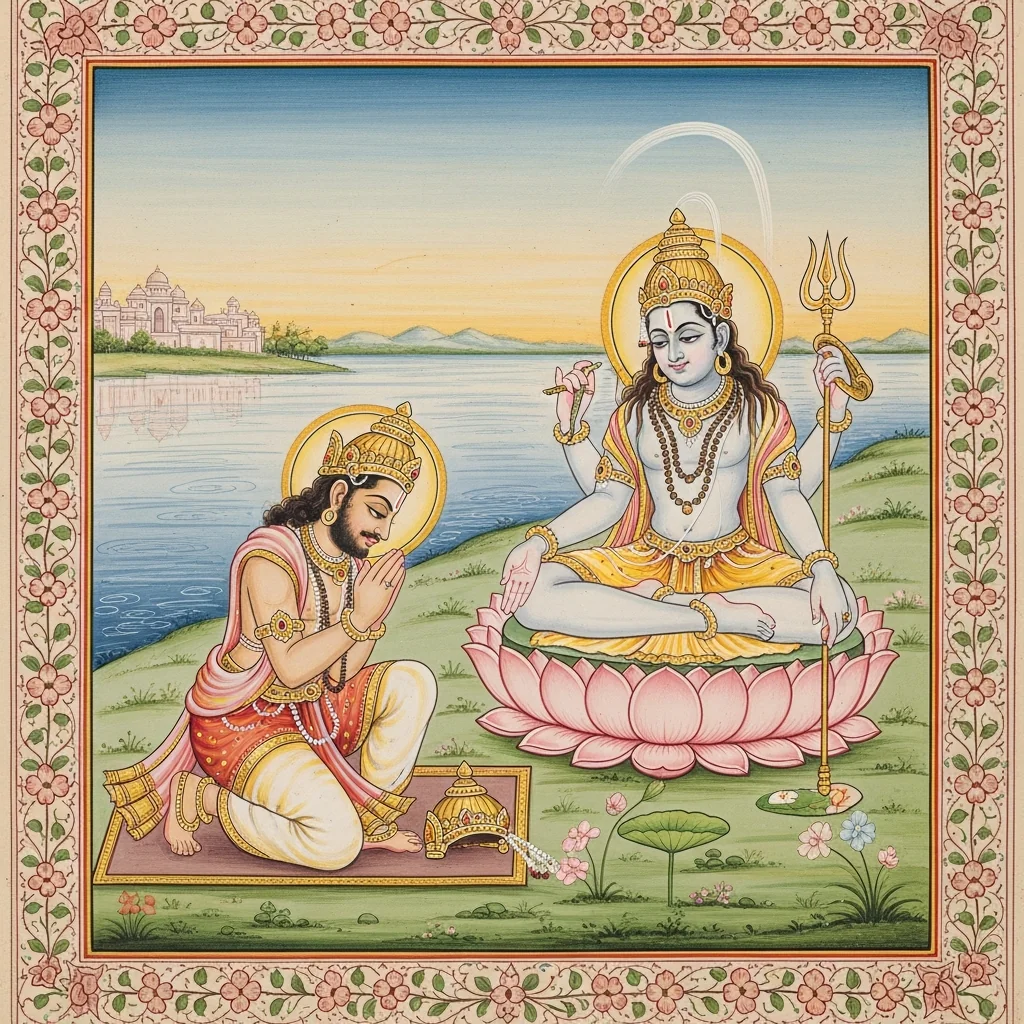
This adhyāya is a tīrtha-māhātmya discourse spoken by Sūta to the questioning ṛṣis. It begins with a ritual itinerary: after bathing at Pāpanāśa, the pilgrim should observe niyama and proceed to Sītāsaras/Sītākuṇḍa for snāna aimed at complete purification. The text further declares that the merits of the great tīrthas abide there, establishing Sītāsaras as a concentrated seat of sanctity. The narrative then addresses a theological puzzle: how Indra (Purandara) incurred brahmahatyā and how he was freed. In a war episode, the mighty rākṣasa Kapālābharaṇa, protected by boons, attacks Amarāvatī; after a prolonged battle Indra slays him with the vajra. When asked why brahmahatyā should follow from killing a rākṣasa, Sūta reveals Kapālābharaṇa’s brahmin-linked origin: he is born from the sage Śuci’s transgression with Suśīlā, wife of the rākṣasa Trivakra. Thus, because the slain one is tied to brāhmaṇa seed, the sin pursues Indra. Seeking refuge with Brahmā, Indra is instructed to pilgrimage to Sītākuṇḍa on Gandhamādana, worship Sadāśiva, and bathe in the lake; the affliction is removed and Indra is restored to his realm. The chapter concludes by grounding the tīrtha’s name and authority in Sītā’s presence and by a phalaśruti: bathing, gifting, and rites performed there grant desired aims and auspicious post-mortem states, while hearing or reciting this account bestows well-being in this world and the next.
Shlokas
Verse 1
श्रीसूत उवाच । पापनाशे नरः स्नात्वा सर्वपापनिबर्हणे । ततः सीतासरो गच्छेत्स्नातुं नियमपूर्वकम्
Śrī Sūta said: Having bathed at Pāpanāśa, the remover of all sins, one should then go to Sītā-saras and bathe there in accordance with prescribed discipline and observance.
Verse 2
यानि कानि च पुण्यानि ब्रह्मांडांतर्गतानि वै । तानि गंगादितीर्थानि स्वपापपरिशुद्धये
Whatever sacred merits and holy places exist within the whole universe—those tīrthas, Gaṅgā and the rest, are present here for the complete purification of one’s own sins.
Verse 3
सीतासरसि वर्तंते महापातकनाशने । क्षेत्राण्यपि महार्हाणि काश्यादीनि दिवानिशम्
Within Sītā-saras—the destroyer of great sins—abide, day and night, even the most exalted sacred fields such as Kāśī and others.
Verse 4
सीतासरोत्र सेवंते स्वस्वकल्मषशांतये । तस्याः सरसि संगीतगुणेनाकृष्य बालिशः
People resort to Sītā-saras to pacify their own impurities. Yet the foolish person, drawn merely by the lake’s pleasing, song-like charm, approaches it only superficially.
Verse 5
पंचाननोऽपि वसते पंचपातकनाशनः । तदेतत्तीर्थमागत्य स्नात्वा वै श्रद्धया सह । पुरंदरः पुरा विप्रा मुमुचे ब्रह्महत्यया
Even Pañcānana dwells here, as the destroyer of the five great sins. Having come to this very tīrtha and bathed with faith, Purandara (Indra) of old, O brāhmaṇas, was released from the sin of brahmin-slaying.
Verse 6
ऋषय ऊचुः । ब्रह्महत्या कथमभूद्वासवस्य पुरा मुने । सीतासरसि स्नानात्कथं मुक्तोऽभवत्तया
The sages said: How did brahmahatyā come upon Vāsava (Indra) in former times, O sage? And how was he freed from it by bathing in Sītā-saras?
Verse 7
श्रीसूत उवाच । कपालाभरणोनाम राक्षसोऽभूत्पुरा द्विजाः
Śrī Sūta said: O brāhmaṇas, in former times there was a rākṣasa named Kapālābharaṇa.
Verse 8
अवध्यः सर्वदेवानां सोऽभवद्ब्रह्मणो वरात् । शवभक्षणनामा तु तस्यासीन्मंत्रिसत्तमः
By Brahmā’s boon he became invulnerable to all the gods. And he had an excellent minister named Śavabhakṣaṇa.
Verse 9
अक्षौहिणीशतं तस्य हयेभरथसंकुलम् । अस्ति तस्य पुरं चापि वैजयंतमिति श्रुतम्
He possessed a hundred akṣauhiṇīs of forces, crowded with horses, elephants, and chariots. His city too is heard of as ‘Vaijayanta’.
Verse 10
वसत्यस्मिन्पुरे सोऽयं कपालाभरणो बली । शवभक्षं समाहूय बभाषे मंत्रिणं द्विजाः
In that city lived the mighty Kapālābharaṇa. Summoning Śavabhakṣaṇa, he spoke to his minister, O brāhmaṇas.
Verse 11
शवभक्ष महावीर्य मंत्रशास्त्रेषु कोविद । वयं देवपुरीं गत्वा विनिर्जित्य सुरान्रणे
O Śavabhakṣa, mighty in valor and skilled in the lore of mantras—let us go to the city of the Devas; having reached it, we shall defeat the Devas in battle.
Verse 12
शक्रस्य भवने रम्ये स्थास्यामस्सैनिकैः सह । रमावो नंदने तस्य रंभाद्यप्सरसां गणैः
We shall dwell, along with our troops, in the delightful palace of Śakra; and we shall revel in his Nandana-grove amid hosts of Apsarases such as Rambhā.
Verse 13
कपालाभरणस्येदं निशम्य वचनं तदा । शवभक्षोऽब्रवीद्विप्रा वचस्तत्र तथास्त्विति
Hearing these words of Kapālābharaṇa, Śavabhakṣa then replied—O Brāhmaṇas—saying, “So be it; let it be done thus.”
Verse 14
ततः कपालाभरणः पुत्रं दुर्मेधसं बली । प्रतिष्ठाप्य पुरे शूरं सेनया परिवारितः
Then the mighty Kapālābharaṇa, after installing his dull-witted son as ruler in the city, set out, surrounded by his army.
Verse 15
युयुत्सुरमरैः साकं प्रययावमरावतीम् । गजाश्वरथपादातैरुद्धतै रेणुसंचयैः
Eager to fight, he marched with the Rākṣasas toward Amarāvatī, while clouds of dust rose up, churned by elephants, horses, chariots, and foot-soldiers.
Verse 16
शोषयञ्जलधीन्सिंधूंश्चूर्णयन्पर्वतानपि । निःसाणध्वनिना विप्रा नादयन्रोदसी तथा
Drying up oceans and rivers, and even grinding mountains into dust—O Brāhmaṇas—he made both heaven and earth resound with the clamor of his marching host.
Verse 17
अश्वानां हेषितरवैर्गजानामपि बृंहितैः । रथनेमिस्वनैरुग्रैः सिंहनादैः पदातिनाम्
With the neighing of horses, the trumpeting of elephants, the fierce clatter of chariot-wheels, and the lion-like roars of the foot-soldiers—
Verse 18
श्रोत्राणि दिग्गजानां च वितन्वन्बधिराणि सः । अगमद्देवनगरीं युयुत्सुरमरैः सह
Deafening even the ears of the guardian elephants of the quarters, he reached the city of the gods, eager for battle, together with his host.
Verse 19
तत इन्द्रादयो देवाः सेनाकलकलध्वनिम् । श्रुत्वाभिनिर्य्ययुः पुर्या युद्धाभिमनसो द्विजाः
Then Indra and the other gods, hearing the tumultuous din of the army, rushed out from the city—O twice-born—intent upon battle.
Verse 20
ततो युद्धं समभवद्देवानां राक्षसैः सह । अदृष्टपूर्वं जगति तथैवाश्रुतपूर्वकम्
Then a war arose between the gods and the Rākṣasas—such as had never before been seen in the world, nor ever before heard of.
Verse 21
तत इन्द्रादयो देवा राक्षसाञ्जघ्नुराहवे । राक्षसाश्च सुराञ्जघ्नुः समरे विजिगीषवः
Then Indra and the other gods struck down the Rākṣasas in battle; and the Rākṣasas too, yearning for victory, slew the gods amid the thick of combat.
Verse 22
द्वन्द्वयुद्धं च समभूदन्योन्यं सुररक्षसाम् । कपालाभरणेनाजौ युयुधे बलवृत्रहा
And there arose single combats, one against another, between the gods and the Rākṣasas. On the battlefield the mighty slayer of Vṛtra fought with Kapālābharaṇa.
Verse 23
यमेन शवभक्षश्च वरुणेन च कौशिकः । कुबेरो रुधिराक्षेण युयुधे ब्राह्मणोत्तमाः
Śavabhakṣa fought with Yama, and Kauśika with Varuṇa. Kubera fought with Rudhirākṣa—thus, in this narration, the foremost ones engaged in battle.
Verse 24
मांसप्रियो मद्यसेवी क्रूरदृष्टिर्भयावहः । चत्वार एते विक्रांताः कपालाभरणानुजाः
Fond of flesh, drinkers of wine, fierce of gaze and fearsome—these four valiant ones were the younger brothers of Kapālābharaṇa.
Verse 25
अश्विभ्यामग्निवायुभ्यां युद्धे युयुधिरे मिथः । ततो यमो महावीर्यः कालदण्डेन वेगवान्
In battle they fought against the Aśvins, and against Agni and Vāyu. Then Yama, of great prowess, swift with his staff of Time, advanced.
Verse 26
शवभक्षं निहत्याजावनयद्यमसादनम् । तस्य चाक्षौहिणीस्त्रिंशन्निजघ्ने समरे यमः
Having slain Śavabhakṣa on the battlefield, Yama sent him to Yama’s abode. And in that fight Yama also destroyed thirty akṣauhiṇīs of his forces.
Verse 27
वरुणः कौशिकस्याजौ प्रासेन प्राहरच्छिरः । कुबेरो रुधिराक्षस्य कुन्तेनाभ्यहरच्छिरः
In battle Varuṇa struck off Kauśika’s head with a spear. Kubera, with a javelin, severed the head of Rudhirākṣa.
Verse 28
अश्विभ्यामग्निवायुभ्यां कपालाभरणानुजाः । निहताः समरे विप्राः प्रययुर्यमसादनम्
Kapālābharaṇa’s younger brothers were slain in battle by the Aśvins and by Agni and Vāyu. O brāhmaṇas, they departed to Yama’s abode.
Verse 29
अक्षौहिणीशतं चापि देवेन्द्रेण मृधे द्विजाः । यामार्द्धेन हतं युद्धे प्रययौ यमसादनम्
And in the conflict Devendra (Indra) destroyed a hundred akṣauhiṇīs. O twice-born, those slain by that mighty one in battle went to Yama’s abode.
Verse 30
ततः कपालाभरणः प्रेक्ष्य सेनां निजां हताम् । चापमादाय निशिताञ्छरांश्चापि महाजवान्
Then Kapālābharaṇa, seeing his own army slain, took up his bow and also sharp arrows—swift and impetuous in action.
Verse 31
अभ्ययात्समरे शक्रं तिष्ठतिष्ठेति चाब्रवीत् । ततः शक्रस्य शिरसि व्यधमच्छरपंचकैः
In the battle he rushed upon Śakra (Indra), crying, “Stand! Stand!” Then he struck Indra upon the head with five arrows.
Verse 32
तानप्राप्तान्प्रचिच्छेद शरैर्युद्धे स वृत्रहा । ततः शूलं समादाय कपालाभरणो मृधे
As those missiles came upon him, Vṛtrahā (Indra) cut them down in battle with his arrows. Then, in the fight, Kapālābharaṇa took up a trident.
Verse 33
देवेंद्राय प्रचिक्षेप तं शक्त्या निजघान सः । ततः कपालाभरणः शतहस्तायतां गदाम्
He hurled it at Devendra (Indra), but Indra struck it down with his spear. Then Kapālābharaṇa took up a mace that stretched to the measure of a hundred hands.
Verse 34
आयसीं पंचसाहस्रतुलाभारेणनिर्मिताम् । आददे समरे शक्रं वक्षोदेशे जघान च
He seized an iron mace fashioned with the weight of five thousand tulās, and in the battle he struck Śakra (Indra) upon the chest.
Verse 35
ततः स मूर्च्छितः शक्रो रथोपस्थ उपाविशत् । मृतसंजीविनीं विद्यां जपित्वाथ बृहस्पतिः
Then Śakra (Indra), fainting, sat down upon the chariot-seat. Thereupon Bṛhaspati, having recited the life-restoring mantra known as Mṛtasaṃjīvinī,
Verse 36
पुलोमजापतिं युद्धे समजीवयदद्भुतम् । ऐरावतं तदारुह्य कपालाभरणांतिकम्
—he wondrously revived Pulomajā’s lord (Indra) in that battle. Then, mounting Airāvata, he drew near to Kapālābharaṇa.
Verse 37
आजगाम शचीभर्ता प्रहर्तुं कुलिशेन तम् । एकप्रहारेण तदा महेंद्रः पाकशासनः
Śacī’s lord came forth to strike him with the vajra. Then Mahendra, the chastiser of Pāka, with a single blow—
Verse 38
कपालाभरणं युद्धे वज्रेण सरथाश्वकम् । सचापं सध्वजं चैव सतूणीरं सवर्मकम्
In battle, with the vajra, he shattered Kapālābharaṇa together with his chariot and horses—along with his bow and banner, his quiver, and his armor.
Verse 39
चूर्णयामास कुपितस्तिलशः कणशस्तथा । हते तस्मिन्महावीरे कपालाभरणे रणे
Enraged, he pulverized him—into fragments like sesame and into the finest particles. When that great hero Kapālābharaṇa was slain in battle,
Verse 40
सुखं सर्वस्य लोकस्य बभूव चिरदुःखिनः । राक्षसस्य वधोत्पन्ना ब्रह्महत्या पुरंदरम् । अन्वधावत्तदा भीमा नादयंती दिशो दश
Happiness arose for all the worlds that had long suffered. Yet from the slaying of that rākṣasa there sprang brahmahatyā—the sin of brahmin-slaying—which pursued Purandara (Indra), terrible and roaring, resounding through the ten directions.
Verse 41
ऋषय ऊचुः । न विप्रो राक्षसः सूत कपालाभरणो मुने । तत्कथं ब्रह्महत्येंद्रं तद्वधात्समुपाद्रवत्
The sages said: “O Sūta, this being was neither a brāhmaṇa nor a rākṣasa, O sage, though he wore a skull as an ornament. How then did the sin of brahma-slaughter rush upon Indra because of killing him?”
Verse 42
श्रीसूत उवाच । वक्ष्यामि परमं गुह्यं मुनींद्राः परमाद्भुतम्
Śrī Sūta said: “O best of sages, I shall explain a supreme secret—most wondrous indeed.”
Verse 43
शृणुत श्रद्धया यूयं समाधाय स्वमानसम् । पुरा विंध्यप्रदेशेषु त्रिवक्रो नाम राक्षसः
“Listen with faith, gathering your minds into steadiness. Long ago, in the regions of the Vindhya mountains, there lived a rākṣasa named Trivakra.”
Verse 44
तस्य भार्या गुणोपेता सौंदर्यगुणशालिनी । सुशीला नाम सुश्रोणी सर्वलक्षणलक्षिता
“He had a wife endowed with virtues, rich in beauty and good qualities—Suśīlā by name, graceful in form, marked with every auspicious sign.”
Verse 45
सा कदाचिन्मनोज्ञांगी सुवेषा चारुहासिनी । विंध्यपादवनोद्देशे विचचार विलासिनी
Once, that lady of charming limbs—well adorned and sweetly smiling—wandered playfully through a woodland tract at the foothills of the Vindhyas.
Verse 46
तस्मिन्वने शुचिर्नाम वर्ततेस्म महामुनिः । तपसमाधिसंयुक्तो वेदाध्ययनतत्परः
In that very forest dwelt a great sage named Śuci, joined to austerity and deep samādhi, and intent upon the study of the Vedas.
Verse 47
तस्याश्रमसमीपं तु सा ययौ वरवर्णिनी । तां दृष्ट्वा स मुनिर्धैर्यं मुमोचानंगपीडितः । तामासाद्य वरारोहां बभाषे मुनिसत्तमः
The fair-complexioned woman drew near to his āśrama. Seeing her, the sage—tormented by Kāma—let go of his composure. Approaching that graceful lady, the foremost of sages spoke.
Verse 48
शुचिरुवाच । ललने स्वागतं तेऽस्तु कस्य भार्या शुचिस्मिते
Śuci said: “O lovely woman, welcome to you. O pure-smiling one—whose wife are you?”
Verse 49
किमागमनकृत्यं ते वनेऽस्मिन्नतिभीषणे । श्रांतासि त्वं वरारोहे वसास्मिन्नुटजे मम
“What is your purpose in coming to this exceedingly fearful forest? You are weary, O fair lady—stay here in my hut.”
Verse 51
पुष्पावचयकामेन वनमेतत्समागता । अपुत्राहं मुने भर्त्रा प्रेरिता पुत्रमिच्छता
“Desiring to gather flowers, I have come to this forest. I am childless, O sage, and my husband—longing for a son—has sent me (here).”
Verse 52
शुचिं मुनिं समाराध्य तस्मात्पुत्रमवाप्नुहि । इति प्रतिसमादिष्टा पतिना त्वां समागता
“Worship the sage Śuci, and from him obtain a son.” Thus instructed again and again by her husband, she came to you, O muni.
Verse 53
पुत्रमुत्पादय त्वं मे कृपां कुरु मुने मयि । एवमुक्तः स तु शुचिः सुशीलां तामभाषत
“Beget a son for me; show compassion to me, O sage.” Thus addressed, Śuci spoke to that virtuous woman, Suśīlā.
Verse 54
शुचिरुवाच । त्वां दृष्ट्वा मम च प्रीतिः सुशीले विद्यतेऽधुना । मनोरथमहांभोधिं त्वमापूरय मामकम्
Śuci said: “Seeing you, O Suśīlā, affection has now arisen in me. Fill to fullness the great ocean of my intention; grant my wish.”
Verse 55
इत्युक्त्वा स मुनिस्तत्र तया रेमे दिनत्रयम् । तामुवाच मुनिः प्रीतः सुशालां सुन्दराकृतिम्
Having said this, the sage sported there with her for three days. Pleased, the sage then spoke to her—Suśālā, of beautiful form.
Verse 56
तवोदरे महावीर्यः कपालाभरणाभिधः । भविष्यति चिरं राज्यं पालयिष्यति मेदिनीम्
“In your womb there will be born a son of great valor, named Kapālābharaṇa. For a long time he will rule and protect the earth.”
Verse 57
सहस्रं वत्सरान्वत्सस्तपसा प्रीणयन्विधिम् । पुरंदरं विनान्येभ्यो देवेभ्यो नास्य वध्यता
For a thousand years he pleased the Ordainer, Brahmā, by austerity. Therefore, save for Purandara (Indra), he could not be slain by the other gods.
Verse 58
ईदृशस्ते सुतो भूयादिंद्रतुल्यपराक्रमः । इत्युक्त्वा स मुनिर्नारीं काशीं शिवपुरीं ययौ
“May such a son be yours—heroic in valor, equal to Indra.” Having said this to the woman, the sage went to Kāśī, the city of Śiva.
Verse 59
सुशीला सापि सुषुवे कपालाभरणं सुतम् । तं जघान मृधे शक्रो वज्रेण मुनिपुंगवाः
Suśīlā too gave birth to a son named Kapālābharaṇa. In battle, Śakra (Indra) struck him down with the thunderbolt, O best of sages.
Verse 60
शुचेर्बीजसमुद्भूतं तमिंद्रो न्यवधीद्यतः । ततः पुरंदरः शक्रो जगृहे ब्रह्महत्यया
Because Indra slew him—born of Śuci’s seed—therefore Purandara, Śakra, became seized by the sin of brahma-hatyā, the killing of a brāhmaṇa.
Verse 61
धावति स्म तदा शक्रः सर्वांल्लोकान्भयाकुलः । धावंतमनुधावंती ब्रह्महत्या तमन्वगात्
Then Śakra, terrified, ran through all the worlds. As he ran, brahma-hatyā chased after him and followed him closely.
Verse 62
अनुद्रुतो हि विप्रेंद्राः शक्रोऽयं ब्रह्महत्यया । पितामहसदः प्राप संतप्तहृदयो भृशम्
O best of Brahmins, Indra (Śakra), sorely driven by the sin of brahmin-slaying (brahmahatyā), came to the assembly of the Grandfather Brahmā, his heart burning with intense anguish.
Verse 63
न्यवेदयद्ब्रह्महत्यां ब्रह्मणे स पुरंदरः । भगवंल्लोकनाथेयं ब्रह्महत्याति भीषणा
That Puraṃdara (Indra) confessed his brahmin-slaying (brahmahatyā) to Brahmā, saying: “O Blessed One, O Lord of the worlds—this brahmahatyā is exceedingly dreadful.”
Verse 64
बाधते मां प्रजानाथ तस्या नाशं ब्रवीहि मे । पुरंदरेणैवमुक्तो ब्रह्मा प्राह दिवस्पतिम्
“O Lord of creatures, it torments me—tell me how it may be destroyed.” Thus addressed by Puraṃdara, Brahmā spoke to the Lord of the gods (Indra).
Verse 65
ब्रह्मोवाच । सीताकुण्डं प्रयाहींद्र गंधमादनपर्वते । सीताकुण्डस्य तीरे त्वं इष्ट्वा यागैः सदाशिवम्
Brahmā said: “O Indra, go to Sītākuṇḍa on Mount Gandhamādana. On the bank of Sītākuṇḍa, worship Sadāśiva with sacrificial rites.”
Verse 66
तस्मिन्सरसि च स्नायाः सर्वपापहरे शुभे । ततः पूतो भवेश्शक्र बह्महत्याविमोचितः
“And bathe in that auspicious lake which removes all sins. Then, O Śakra, you will become purified and freed from the taint of brahmahatyā.”
Verse 67
देवलोकं पुनर्यायाः सर्वदुःखविवर्जितः । सर्वपापहरं पुण्यं सीताकुण्डं विमुक्तिदम्
You shall return again to the world of the gods, free from all sorrow. Holy Sītākuṇḍa is meritorious, destroys every sin, and grants liberation.
Verse 69
महापातकसंघानां नाशकं परमामृतम् । सर्वदुःखप्रशमनं सर्वदारिद्र्यनाशनम्
It destroys hosts of great sins, a supreme nectar; it pacifies all sorrows and eradicates all poverty.
Verse 70
इत्युक्तः सुरराजोऽसौ प्रययौ गंधमादनम् । प्राप्य सीतासरो विप्राः स्नात्वेष्ट्वा च तदंतिके
Thus instructed, that king of the gods set out for Gandhamādana. Reaching Sītā’s lake—O Brahmins—he bathed and performed worship there upon its bank.
Verse 71
प्रययौ स्वपुरीं भूयो ब्रह्महत्याविमोचितः । एवं प्रभावं तत्तीर्थं सीतायाः कुण्डमुत्तमम्
He returned again to his own city, released from brahmahatyā. Such is the power of that sacred ford—the supreme Sītākuṇḍa.
Verse 72
राघवप्रत्ययार्थं हि प्रविश्य हुतवाहनम् । संनिधौ सर्वदेवानां मैथिली जनकात्मजा
Indeed, to grant Rāghava (Rāma) full assurance, Maithilī Sītā, daughter of Janaka, entered the sacred Fire in the presence of all the gods.
Verse 73
विनिर्गता पुनर्वह्नेः स्थिता सर्वांगशोभना । निर्ममे लोकरक्षार्थं स्वनाम्ना तीर्थमुत्तमम्
Then Sītā, having once again emerged from the Fire, stood forth radiant in every limb. For the protection and welfare of the world, she established an excellent tīrtha bearing her own name.
Verse 74
तत्र सस्नौ स्वयं सीता तेन सीतासरः स्मृतम् । तत्र यो मानवः स्नाति सर्वान्कामांल्लभेत सः
There Sītā herself bathed; therefore it is remembered as ‘Sītā-saras’—Sītā’s lake. Whoever among people bathes there attains all desired aims.
Verse 75
तस्मिन्नुपस्पृश्य नरो द्विजेंद्रा दत्त्वा च दानानि पृथग्विधानि । कृत्वा च यज्ञान्बहुदक्षिणाभिर्लोकं प्रयायात्परमेश्वरस्य
O best of the twice-born, a man who performs ablution there, gives various kinds of gifts, and conducts sacrifices with abundant dakṣiṇā attains the world of the Supreme Lord.
Verse 76
युष्माकमेवं प्रथितं मुनींद्राः सीतासरो वैभवमेतदुक्तम् । शृण्वन्पठन्वै तदिहैव भोगान्भुक्त्वा परत्रापि सुखं लभेत
O lords among sages, thus has the renowned greatness of Sītā-saras been declared to you. One who hears it or recites it enjoys prosperity here in this world, and also attains happiness in the next.
Read Skanda Purana in the Vedapath app
Scan the QR code to open this directly in the app, with audio, word-by-word meanings, and more.