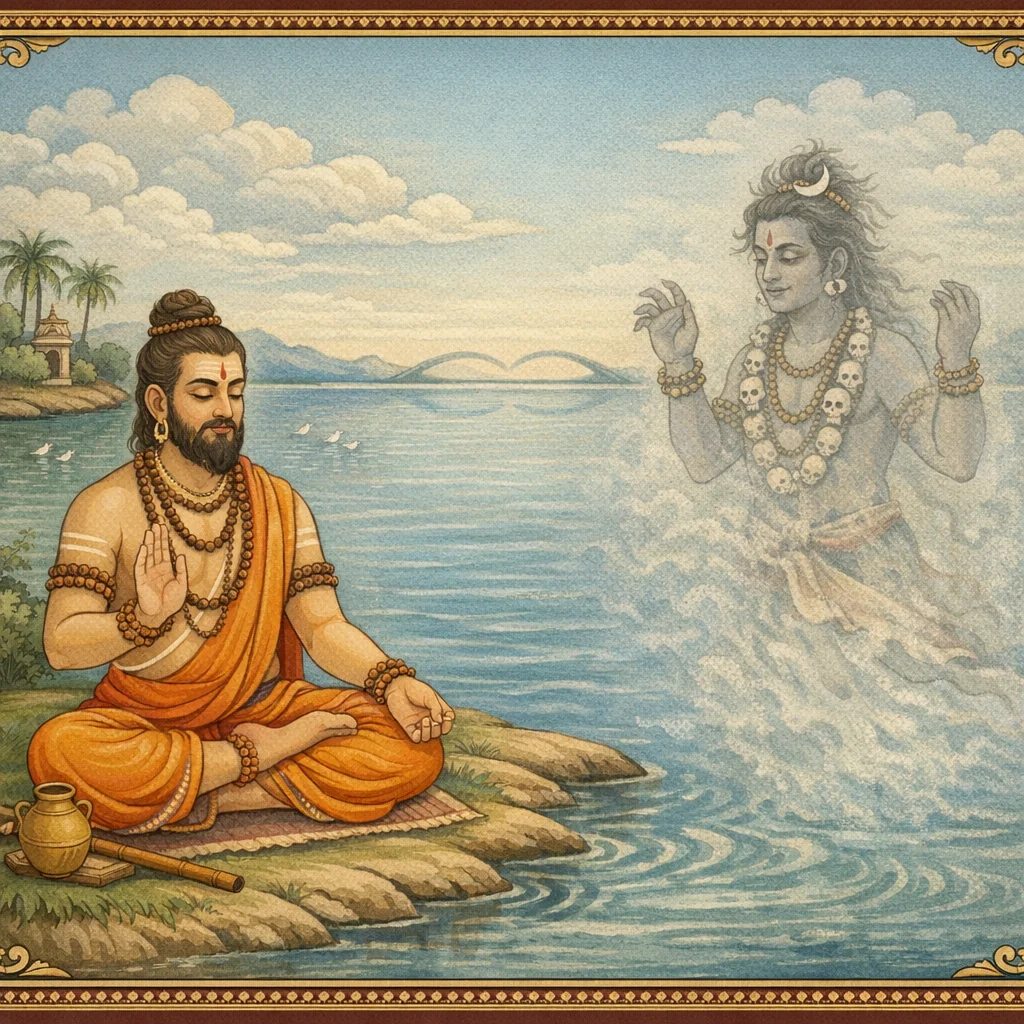
Adhyaya 36
The chapter unfolds through layered dialogue. Nārada asks Brahmā what happened next—how long the sacred site remained stable, who protected it, and under whose command it operated. Brahmā replies that from Tretā through Dvāpara until the coming of Kali-yuga, Hanumān, the son of the Wind, alone is able to guard the place, acting explicitly under Rāma’s ordinance; the people live in shared joy amid unbroken recitation of the four Vedas (Ṛg, Yajus, Sāman, Atharvan), with festivals and many kinds of yajñas flourishing in the settlements. The scene then shifts as Yudhiṣṭhira asks Vyāsa whether the site was ever shattered or conquered by hostile beings. Vyāsa describes the early Kali-yuga and lists signs of dharmic decline—falsehood, enmity toward sages, loss of filial reverence, ritual neglect, corruption, and the inversion of varṇa roles—offering a diagnostic portrait of social and moral decay. A historical episode follows: the righteous king of Kānyakubja (Āma) is introduced, and in Dharmāraṇya a Jain-leaning governance arises through the influence of the teacher Indrasūri and royal marriage alliances, pushing Vedic institutions and brāhmaṇa privileges to the margins. A delegation of brāhmaṇas petitions the king, leading to a debate with Kumārapāla (the ruling son-in-law) over ahimsā versus Veda-sanctioned ritual violence. The brāhmaṇas argue that violence prescribed by the Veda is not adharma when performed without weapons, with mantra, for sacrificial order rather than cruelty. Kumārapāla demands tangible proof that Rāma/Hanumān still guard the holy place; the community therefore resolves to undertake disciplined pilgrimage and austerity to Rāmeśvara/Setubandha to obtain Hanumān’s darśana and restore the former dharmic standing. The closing verses gesture toward Hanumān’s compassionate response, the reaffirmation of Rāma’s ordinance, and material endowments that sustain communal life.
Shlokas
Verse 1
नारद उवाच । अतः परं किमभवत्तन्मे कथय सुव्रत । पूर्वं च तदशेषेण शंस मे वदताम्बर
Nārada said: “What happened after this? Tell me, O you of excellent vows. And recount to me fully what occurred before as well, O best among speakers.”
Verse 2
स्थिरीभूतं च तत्स्थानं कियत्कालं वदस्व मे । केन वै रक्ष्यमाणं च कस्याज्ञा वर्तते प्रभो
“For how long did that place remain established? Tell me. And by whom indeed was it protected, and under whose command does it function, O Lord?”
Verse 3
ब्रह्मोवाच । त्रेतातो द्वापरांतं च यावत्कलिसमागमः । तावत्संरक्षणे चैको हनूमान्पवनात्मजः
Brahmā said: “From the Tretā age until the end of Dvāpara, up to the coming of Kali—throughout that span, the sole guardian in protection was Hanumān, the son of the Wind.”
Verse 4
समर्थो नान्यथा कोपि विना हनुमता सुत । लंका विध्वंसिता येन राक्षसाः प्रबला हताः
“No one else is capable in the same way without Hanumān, my child—he by whom Laṅkā was devastated and mighty rākṣasas were slain.”
Verse 5
स एव रक्षते तत्र रामादेशेन पुत्रक । द्विजस्याज्ञा प्रवर्तेत श्रीमातायास्तथैव च
“He alone protects that place by Rāma’s command, dear child. There the injunction of the twice-born prevails—and likewise the authority of the revered Mother as well.”
Verse 6
दिनेदिने प्रहर्षोभूज्जनानां तत्र वासिनाः । पठंति स्म द्विजास्तत्र ऋग्युजुःसामलक्षणान्
Day after day, joy arose among the people dwelling there. The twice-born recited there the Vedas—Ṛg, Yajus, and Sāman—together with their proper marks and disciplines of chanting.
Verse 7
अथर्वणमपि तत्र पठंति स्म दिवानिशम् । वेदनिर्घोषजः शब्दस्त्रैलोक्ये सचराचरे
There they also recited the Atharva(veda) day and night. The sound arising from the proclamation of the Vedas resounded throughout the three worlds—among all that moves and all that is still.
Verse 8
उत्सवास्तत्र जायंते ग्रामेग्रामे पुरेपुरे । नाना यज्ञाः प्रवर्तंते नानाधर्मसमाश्रिताः
There, festivals arise in every village and in every city. Many kinds of yajñas are set in motion, grounded in diverse forms of dharma.
Verse 9
युधिष्ठिर उवाच । कदापि तस्य स्थानस्य भंगो जातोथ वा न वा । दैत्यैर्जितं कदा स्थानमथवा दुष्टराक्षसैः
Yudhiṣṭhira said: Has there ever been any destruction of that holy place—or has there not? Was that place ever conquered by Dānavas, or by wicked Rākṣasas?
Verse 10
व्यास उवाच । साधु पृष्टं त्वया राजन्धर्मज्ञस्त्वं सदा शुचिः । आदौ कलियुगे प्राप्ते यद्दत्तं तच्छृणुष्व भोः
Vyāsa said: Well asked, O King—you are a knower of dharma and ever pure. Now hear, O noble one, what was ordained when the Kali Age first arrived.
Verse 11
लोकानां च हितार्थाय कामाय च सुखाय च । यज्ञं च कथयिष्यामि तत्सर्वं शृणु भूपते
For the welfare of people, for the fulfillment of rightful desires, and for happiness, I shall describe the yajña as well—listen to all of it, O King.
Verse 12
इदानीं च कलौ प्राप्त आमो नामा वभूव ह । कान्यकुब्जाधिपः श्रीमान्धर्मज्ञो नीतितत्परः
And when the Kali Age had arrived, there was a king named Āmo—illustrious lord of Kānyakubja, a knower of dharma and devoted to sound governance.
Verse 13
शांतो दांतः सुशीलश्च सत्यधर्मपरायणः । द्वापरांते नृपश्रेष्ठ अनागमे कलौ युगे
Calm, self-restrained, of noble conduct, and devoted to truth and dharma—O best of kings—at the end of Dvāpara, before the coming of the Kali Age.
Verse 14
भयात्कलिविशेषेण अधर्मस्य भयादिभिः । सर्वे देवाः क्षितिं त्यक्त्वा नैमिषारण्यमाश्रिताः
Out of fear—because of Kali’s particular terrors and the dread of adharma—all the devas abandoned the earth and took refuge in Naimiṣāraṇya.
Verse 15
रामोपि सेतुबंधं हि ससहायो गतो नृप
Even Rāma, together with his allies, went to Setu-bandha, O King.
Verse 16
युधिष्ठिर उवाच । कीदृशं हि कलौ प्राप्ते भयं लोके सुदुस्तरम् । यस्मिन्सुरैः परित्यक्ता रत्नगर्भा वसुन्धरा
Yudhiṣṭhira said: When Kali has arrived, what kind of fear—so hard to cross—comes upon the world, such that the jewel-bearing Earth is abandoned by the gods?
Verse 17
व्यास उवाच । शृणुष्व कलिधर्मास्त्वं भविष्यंति यथा नृप । असत्यवादिनो लोकाः साधुनिन्दापरायणाः
Vyāsa said: Listen, O King, to how the ways of Kali will be. People will become speakers of falsehood, devoted to criticizing the virtuous.
Verse 18
दस्युकर्मरताः सर्वे पितृभक्तिविवर्जिताः । स्वगोत्रदाराभिरता लौल्यध्यानपरायणाः
All will be devoted to the deeds of brigands, bereft of reverence for the ancestors; attached to women of their own clan, and wholly absorbed in thoughts driven by fickle greed.
Verse 19
ब्रह्मविद्वेषिणः सर्वे परस्परविरोधिनः । शरणागतहंतारो भविष्यंति कलौ युगे
All will become haters of Brahman and the Vedic order, mutually hostile toward one another; and in the age of Kali they will even slay those who come seeking refuge.
Verse 20
वैश्याचाररता विप्रा वेदभ्रष्टाश्च मानिनः । भविष्यंति कलौ प्राप्ते संध्यालोपकरा द्विजाः
When Kali arrives, brāhmaṇas will take delight in the conduct of traders, fall away from the Veda, become proud, and—though twice-born—neglect the Sandhyā rites.
Verse 21
शांतौ शूरा भये दीनाः श्राद्धतर्पणवर्जिताः । असुराचारनिरता विष्णुभक्तिविवर्जिताः
Brave in times of peace yet miserable in times of danger, they will abandon śrāddha and tarpaṇa; devoted to demonic ways and devoid of devotion to Viṣṇu.
Verse 22
परवित्ताभिलाषाश्च उत्कोच ग्रहणे रताः । अस्नातभोजिनो विप्राः क्षत्रिया रणवर्जिताः
They will crave others’ wealth and delight in taking bribes; brāhmaṇas will eat without bathing, and kṣatriyas will avoid the battlefield.
Verse 23
भविष्यंति कलौ प्राप्ते मलिना दुष्टवृत्तयः । मद्यपानरताः सर्वेप्यया ज्यानां हि याजकाः
When the age of Kali has arrived, people will be impure and of wicked conduct; all will delight in drinking liquor, and they will even serve as priests for those unfit for sacrifice.
Verse 24
भर्तृद्वेषकरा रामाः पितृद्वेषकराः सुताः । भ्रातृद्वेषकराः क्षुद्रा भविष्यंति कलौ युगे
In the age of Kali, women will hate their husbands; sons will hate their fathers; and petty-minded people will hate their brothers—such will they be in the time of Kali.
Verse 25
गव्यविक्रयिणस्ते वै ब्राह्मणा वित्ततत्पराः । गावो दुग्धं न दुह्यंते संप्राप्ते हि कलौ युगे
Indeed, in the age of Kali brāhmaṇas will become sellers of cattle, intent on wealth; and cows will no longer yield milk as they once did.
Verse 26
फलंते नैव वृक्षाश्च कदाचिदपि भारत । कन्याविक्रय कर्त्तारो गोजाविक्रयकारकाः
O Bhārata, at times trees will not bear fruit at all; and there will be those who sell maidens, and those who trade in the selling of cows and even children.
Verse 27
विषविक्रयकर्त्तारो रसविक्रयकारकाः । वेदविक्रयकर्त्तारो भविष्यंति कलौ युगे
In the age of Kali there will be those who sell poisons, those who trade in essences and pleasures, and even those who sell the Veda itself.
Verse 28
नारी गर्भं समाधत्ते हायनैकादशेन हि । एकादश्युपवासस्य विरताः सर्वतो जनाः
In the age of Kali, a woman will conceive even at eleven years; and everywhere people will turn away from the sacred observance of fasting on Ekādaśī.
Verse 29
न तीर्थसेवनरता भविष्यंति च वाडवाः । बह्वाहारा भविष्यंति बहुनिद्रासमाकुलाः
Women will no longer delight in serving and visiting the tīrthas, the holy places; they will become given to excessive eating and will be overwhelmed by excessive sleep.
Verse 30
जिह्मवृत्तिपराः सर्वे वेदनिंदापरायणाः । यतिनिंदापराश्चैव च्छद्मकाराः परस्परम्
All will be devoted to crooked conduct, intent on reviling the Vedas; they will also be intent on criticizing the yatis, the ascetics, and will deceive one another through hypocrisy and disguise.
Verse 31
स्पर्शदोषभयं नैव भविष्यति कलौ युगे । क्षत्रिया राज्यहीनाश्च म्लेच्छो राजा भविष्यति
In the age of Kali there will no longer be fear of impurity from improper contact; kṣatriyas will be bereft of sovereignty, and a mleccha will become king.
Verse 32
विश्वासघातिनः सर्वे गुरुद्रोहरतास्तथा । मित्रद्रोहरता राजञ्छिश्नोदरपरायणाः
All will become betrayers of trust, devoted to treachery against the guru; they will also betray friends, O King, intent only upon lust and the belly.
Verse 33
एकवर्णा भविष्यंति वर्णाश्चत्वार एव च । कलौ प्राप्ते महाराज नान्यथा वचनं मम
They will become of a single (confused) social order, though the four varṇas are spoken of; when Kali arrives, O great king, my words will not be otherwise.
Verse 34
एतच्छ्रुत्वा गुरोरेव कान्यकुब्जाधिपो बली । राज्यं प्रकुरुते तत्र आमो नाम्ना हि भूतले
Hearing this from his very guru, the mighty lord of Kānyakubja established his rule there on earth—a king named Āma.
Verse 35
सार्वभौमत्वमापन्नः प्रजापालनतत्परः । प्रजानां कलिना तत्र पापे बुद्धिरजायत
Having attained imperial sovereignty and being intent on protecting his subjects, there—through the influence of Kali—the people’s minds turned toward sin.
Verse 36
वैष्णवं धर्ममुत्सज्य वौद्धधर्ममुपागताः । प्रजास्तमनुवर्तिन्यः क्षपणैः प्रतिबोधिताः
Abandoning the Vaiṣṇava dharma, they adopted the Bauddha dharma; and the people followed him, having been instructed and persuaded by kṣapaṇas (renunciant sectarians).
Verse 37
तस्य राज्ञो महादेवी मामानाम्न्यतिविश्रुता । गर्भं दधार सा राज्ञो सर्वलक्षणसंयुता
That king’s chief queen—highly renowned, named Māmā—conceived a child for the king, she being endowed with every auspicious mark.
Verse 38
संपूर्णे दशमे मासि जाता तस्याः सुरूपिणी । दुहिता समये राज्ञ्याः पूर्णचन्द्रनिभानना
When the tenth month was fully completed, at the appointed time the queen gave birth to a beautiful daughter, her face resembling the full moon.
Verse 39
रत्नगंगेति नाम्ना सा मणिमाणिक्यभूषिता । एकदा दैवयोगेन देशांतरादुपागतः
She was named Ratnagaṅgā and adorned with jewels and gems. Once, by a turn of fate, someone arrived from another country.
Verse 40
नाम्ना चैवेंद्रसूरिर्वै देशेस्मिन्कान्यकुब्जके । षोडशाब्दा च सा कन्या नोपनीता नृपात्मजा
And in this land of Kānyakubja there was one called Indrasūri. The king’s daughter, though sixteen years of age, had not yet undergone the sacred upanayana initiation.
Verse 41
दास्यांतरेण मिलिता इन्द्रसूरिश्च जीविकः । शाबरीं मंत्रविद्यां च कथयामास भारत
O Bhārata, Indrasūri—living by his trade—met her through the agency of a maidservant, and he taught her the Śābarī mantra-lore.
Verse 42
एकचित्ताभवत्सा तु शूलिकर्मविमोहिता । ततः सा मोहमापन्ना तत्तद्वाक्यपरायणा
Deluded by that practice, she became single-minded; then she fell into infatuation, wholly devoted to his every word.
Verse 43
क्षपणैर्बोधिता वत्स जैनधर्मपरायणा । ब्रह्मावर्ताधिपतये कुंभीपालाय धीमते
O dear one, instructed by the kṣapaṇas, she became devoted to the Jaina path; and she was given to the wise Kumbhīpāla, lord of Brahmāvarta.
Verse 44
रत्नगंगां महादेवीं ददौ तामिति विक्रमी । मोहेरेकं ददौ तस्मै विवाहे दैवमोहितः
Thus the valorous king gave the noble lady Ratnagaṅgā to him in marriage; deluded by fate, he granted in that wedding his sole treasure.
Verse 45
धर्मारण्यं समागत्य राजधानी कृता तदा । देवांश्च स्थापयामास जैनधर्मप्रणीतकान्
Having come to Dharmāraṇya, he then made it his capital, and he installed deities fashioned according to the prescriptions of the Jaina doctrine.
Verse 46
सर्वे वर्णास्तथाभूता जैन धर्मसमाश्रिताः । ब्राह्मणा नैव पूज्यंते न च शांतिकपौष्टिकम्
Thus all the social orders became adherents of the Jaina path. Brahmins were no longer honored, and rites for peace and prosperity were not performed.
Verse 47
न ददाति कदा दानमेवं कालः प्रवर्तते । लब्धशासनका विप्रा लुप्तस्वाम्या अहर्निशम्
No one ever gives charity; thus the times proceed. The brāhmaṇas, though possessing learning and discipline, lived day and night bereft of patrons and protection.
Verse 48
समाकुलितचित्तास्ते नृपमामं समाययुः । कान्यकुब्जस्थितं शूरं पाखण्डैः परिवेष्टितम्
With minds cast into turmoil, they approached the king staying at Kānyakubja; though valiant, he was surrounded on every side by heretical sectarians.
Verse 49
कान्यकुब्जपुरं प्राप्य कतिभिर्वासरैर्नृप । गंगोपकण्ठे न्यवसञ्छ्रांतास्ते मोढवाडवाः
O King, after reaching the city of Kānyakubja in a few days, those weary Moḍha brāhmaṇas took lodging on the bank of the sacred Gaṅgā.
Verse 50
चारैश्च कथितास्ते च नृपस्याग्रे समागताः । प्रातराकारिता विप्रा आगता नृपसंसदि
Reported by the king’s spies, those brāhmaṇas were brought before him; summoned in the morning, they came into the royal court.
Verse 51
प्रत्युत्थानाभिवादादीन्न चक्रे सादरं नृपः । तिष्ठतो ब्राह्मणान्सर्वान्पर्यपृच्छदसौ ततः
The king did not respectfully perform the customary courtesies—rising to greet them, offering salutations, and the like. While all the brāhmaṇas remained standing, he then questioned them.
Verse 52
किमर्थमागता विप्राः किंस्वित्कार्यं ब्रुवंतु तत्
“For what purpose have you come, O brāhmaṇas? What business is it? Speak it forth.”
Verse 53
विप्रा ऊचुः । धर्मारण्यादिहायातास्त्वत्समीपं नराधिप । राजंस्तव सुतायास्तु भर्ता कुमारपालकः
The brāhmaṇas said: “O lord of men, we have come from Dharmāraṇya into your presence. O King, the husband of your daughter is Kumārapālaka.”
Verse 54
तेन प्रलुप्तं विप्राणां शासनं महदद्भुतम् । वर्तता जैनधर्मेण प्रेरितेनेंद्रसूरिणा
By him the brāhmaṇas’ long-established ordinance—great and venerable—has been violated, for he lives by the Jain dharma, urged on by Indrasūri.
Verse 55
राजोवाच । केन वै स्थापिता यूयमस्मिन्मोहेरके पुरे । एतद्धि वाडवाः सर्वं ब्रूत वृत्तं यथातथम्
The king said: “By whom were you settled in this city of Moheraka? Truly, O Vāḍavas, tell me all that has happened—exactly as it occurred.”
Verse 56
विप्रा ऊचुः । काजेशैः स्थापिताः पूर्वं धर्मराजेन धीमता । कृता चात्र शुभे स्थाने रामेण च ततः पुरी
The brāhmaṇas said: “Formerly we were established by Kājeśa, the wise Dharmarāja. Then, in this auspicious place, Rāma founded the city here.”
Verse 57
शासनं रामचंद्रस्य दृष्ट्वाऽन्यैश्चैव राजभिः । पालितं धर्मतो ह्यत्र शासनं नृपसत्तम
O best of kings, seeing the ordinance of Rāmacandra, other kings too upheld that ordinance here—faithfully, in accordance with dharma.
Verse 58
इदानीं तव जामाता विप्रान्पालयते न हि । तच्छ्रुत्वा विप्रवाक्यं तु राजा विप्रानथाब्रवीत्
“Now your son-in-law does not protect the brāhmaṇas at all.” Hearing the words spoken by the brāhmaṇas, the king then addressed the brāhmaṇas.
Verse 59
यांतु शीघ्रं हि भो विप्राः कथयंतु ममाज्ञया । राज्ञे कुमारपालाय देहि त्वं ब्राह्मणालयम्
“Go quickly, O brāhmaṇas, and on my command convey this: ‘Give the brāhmaṇa-dwelling to King Kumārapāla.’”
Verse 60
श्रुत्वा वाक्यं ततो विप्राः परं हर्षमुपागताः । जग्मुस्ततोऽतिमुदिता वाक्यं तत्र निवेदितम्
Hearing his words, the brāhmaṇas were filled with great joy. Then, exceedingly delighted, they went and delivered the message there.
Verse 61
श्वशुरस्य वचः श्रुत्वा राजा वचनमब्रवीत् । कुमारपाल उवाच । रामस्य शासनं विप्राः पालयिष्याम्यहं नहि
Having heard his father-in-law’s words, the king spoke. Kumārapāla said: “O brāhmaṇas, I will not obey Rāma’s ordinance.”
Verse 62
त्यजामि ब्राह्मणान्यज्ञे पशुहिंसापरायणान् । तस्माद्धि हिंसकानां तु न मे भक्तिर्भवेद्द्विजाः
“I renounce those brāhmaṇas who, in sacrifice, are devoted to the killing of animals. Therefore, O twice-born, I can have no reverence for those who are violent.”
Verse 63
ब्राह्मणा ऊचुः । कथं पाखंडधर्मेण लुप्तशासनको भवान् । पालयस्व नृपश्रेष्ठ मा स्म पापे मनः कृथाः
The brāhmaṇas said: “How can you, by a heretical path, become one who has cast aside the established ordinance? O best of kings, uphold it and guard it—do not set your mind upon sin.”
Verse 64
राजोवाच । अहिंसा परमो धर्मो अहिंसा च परं तपः । अहिंसा परमं ज्ञानमहिंसा परमं फलम्
The king said: “Non-violence (ahiṃsā) is the highest dharma; non-violence is the highest austerity. Non-violence is the highest knowledge; non-violence is the highest fruit.”
Verse 65
तृणेषु चैव वृक्षेषु पतंगेषु नरेषु च । कीटेषु मत्कुणाद्येषु अजाश्वेषु गजेषु च
“In grasses and in trees, in insects and in human beings; in worms and in creatures such as bugs and the like, in goats and horses, and in elephants as well—”
Verse 66
लूतासु चैव सर्पेषु महिष्यादिषु वै तथा । जंतवः सदृशा विप्राः सूक्ष्मेषु च महत्सु च
“In spiders and in serpents, and likewise in buffaloes and the rest—creatures are alike, O brāhmaṇas, whether small or great.”
Verse 67
कथं यूयं प्रवर्तध्वे विप्रा हिंसापरायणाः । तच्छ्रुत्वा वज्रतुल्यं हि वचनं च द्विजोत्तमाः
“How do you proceed, O brāhmaṇas, being intent on violence?” Hearing that thunderbolt-like statement, the best among the twice-born—
Verse 68
प्रत्यूचुर्वाडवाः सर्वे क्रोधरक्तेक्षणा दृशा
All the Vaḍavās replied, their eyes reddened with anger in their furious gaze.
Verse 69
ब्राह्मणा ऊचुः । अहिंसा परमो धर्मः सत्यमेतत्त्वयोदितम् । परं तथापि धर्मोऽस्ति शृणुष्वैकाग्रमानसः
The Brāhmaṇas said: “Non-violence is indeed the highest dharma—what you have spoken is true. Yet there is also another dharma; listen with a single-pointed mind.”
Verse 70
या वेदविहिता हिंसा सा न हिंसेति निर्णयः । शस्त्रेणाहन्यते यच्च पीडा जंतुषु जायते
“The violence enjoined by the Veda is, by settled conclusion, not regarded as ‘violence.’ But when beings are struck with weapons and pain arises in creatures—”
Verse 71
स एवाधर्म एवास्ति लोके धर्मविदां वर । वेदमंत्रैविहन्यंते विना शस्त्रेण जंतवः
“That alone is adharma in the world, O best of knowers of dharma: when creatures are slain without weapons—by Vedic mantras alone.”
Verse 72
जंतुपीडाकरा नैव सा हिंसा सुखदायिनी । परोपकारः पुण्याय पापाय परपीडनम्
“That act which causes torment to living beings is not the ‘violence’ that brings welfare. Doing good to others leads to merit; harming others leads to sin.”
Verse 73
वेदोदितां विधायापि हिंसां पापैर्न लिप्यते । विप्राणां वचनं श्रुत्वा पुनर्वचनमब्रवीत्
“Even if one carries out the violence spoken of in the Veda, one is not stained by sin.” Having heard the Brāhmaṇas’ words, he spoke again in reply.
Verse 74
राजोवाच । ब्रह्मादीनां परं क्षेत्रं धर्मारण्यमनुत्तमम् । ब्रह्मविष्णु महेशाद्या नेदानीमत्र संति ते
The King said: “Dharmāraṇya is the unsurpassed, supreme sacred field of Brahmā and the others. Yet Brahmā, Viṣṇu, Maheśa, and the rest are not present here now.”
Verse 75
न धर्मो विद्यते वात्र उक्तो रामः स मानुषः । क्व वापि लंबपुछोऽसौ यो मुक्तो रक्षणाय वः
“No dharma is found here; and that ‘Rāma’ spoken of is only a man. And where indeed is that long-tailed one who was released to protect you?”
Verse 76
शासनं चेन्न दृष्टं वो नैव तत्पालयाम्यहम् । द्विजाः कोपसमाविष्टा ददुः प्रत्युत्तरं तदा
“If you have not seen the command (authority), I will not uphold it.” Then the twice-born, seized by anger, gave their reply.
Verse 77
द्विजा ऊचुः । रे मूढ त्वं कथं वेत्थ भाषसे मदलोलुपः । स दैत्यानां विनाशाय धर्मसंरक्षणाय च
The twice-born said: “O fool—how can you know and speak so, greedy for pride? He exists for the destruction of the Daityas and for the protection of dharma as well.”
Verse 78
रामश्चतुर्भुजः साक्षान्मानुषत्वं गतो भुवि । अगतीनां च गतिदः स वै धर्मपरायणः । दयालुश्च कृपालुश्च जंतूनां परिपालकः
Rāma—verily the manifest four-armed Lord—assumed human form upon the earth. He is the refuge and true path of those without refuge, ever devoted to dharma; compassionate, merciful, and the protector of living beings.
Verse 79
राजोवाच । कुतोऽद्य वर्त्तते रामः कुतो वै वायुनंदनः । भ्रष्टाभ्रमिव ते सर्वे क्व रामो हनुमानिति
The King said: “Where is Rāma today, and where indeed is the Son of Vāyu? You all seem as though fallen from the clouds—so where are Rāma and Hanumān?”
Verse 80
परंतु रामो हनुमान्यदि वर्त्तेत सर्वतः । इदानीं विप्रसाहाय्य आगमिष्यति मे मतिः
“But if Rāma and Hanumān are truly present everywhere, then now my resolve is this: I shall proceed with the support of the brāhmaṇas.”
Verse 81
दर्शयध्वं हनूमंतं रामं वा लक्ष्मणं तथा । यद्यस्ति प्रत्ययः कश्चित्स नो विप्राः प्रदर्श्यताम्
“Show us Hanumān—or Rāma, and likewise Lakṣmaṇa. If there is any proof at all, O brāhmaṇas, let that be shown to us.”
Verse 82
ते च जातास्त्रिधा तात गोभूजाडालजा स्तथा । मांडलीयास्तथा चैते त्रिविधाश्च मनोरमाः
“And they came to be of three kinds, dear one: the Gobhūja, the Āḍālaja, and likewise the Māṃḍalīya—thus these delightful ones were threefold.”
Verse 83
पुनरागत्य स्थानेऽस्मिन्दत्ता ग्रामास्त्रयोदश । काश्यप्यां चैव गंगायां महादानानि षोडश
Returning again to this very place, thirteen villages were bestowed; and at Kāśyapī and upon the sacred Gaṅgā, sixteen great gifts (mahādānas) were performed.
Verse 84
दत्तानि विप्रमुख्येभ्यो दत्ता ग्रामाः सुशोभनाः । पुनः संकल्पिता वीर षट्पंचाशकसंख्यया
These were given to the foremost of brāhmaṇas; splendid villages were donated. And again, O hero, further grants were resolved—numbering fifty-six.
Verse 85
षट्त्रिंशच्च सहस्राणि गोभुजा जज्ञिरे वराः । सपादलक्षा वणिजो दत्ता मांडलिकाभिधाः
And thirty-six thousand excellent Gobhūjas came into being. And one-and-a-quarter lakhs of merchants were assigned as dependents, known by the name “Māṃḍalikas”.
Verse 86
तेनोक्तं वाडवाः सर्वे दर्शयध्वं हि मारुतिम् । यस्याभिज्ञानमात्रेण स्थितिं पूर्वां ददाम्यहम्
Then it was said: “All of you, O Vāḍavas, show Māruti indeed—for by the mere recognition of him, I shall restore to you the former state.”
Verse 87
विप्रवाक्यं करिष्यामि प्रत्ययो दर्श्यते यदि । ततः सर्वे भविष्यंति वेदधर्मपरायणाः
I shall do as the brāhmaṇas say, if the proof is shown. Then all of them will become devoted to Vedic dharma.
Verse 88
अन्यथा जैनधर्मेण वर्त्तयध्वं हि सर्वशः । नृपवाक्यं तु ते श्रुत्वा स्वेस्वे स्थाने समागताः
“Otherwise, in every way, conduct yourselves according to the Jaina dharma.” Hearing the king’s command, they all returned, each to his own place.
Verse 89
वाडवः खिन्नमनसः क्रोधेनांधीकृता भुवि । निश्वासान्मुंचमानास्ते हाहेति प्रवदंति च
Those vāḍavas, their minds dejected and blinded on earth by anger, kept letting out heavy sighs, crying out, “Alas! Alas!”
Verse 90
दंतान्प्राघर्षयन्सर्वान्न्यपीडंश्च करैः करान् । परस्परं भाषमाणाः कथं कुर्मो वयं त्वितः
Grinding all their teeth and clenching hand against hand, they spoke among themselves: “What shall we do now, from here?”
Verse 91
मिलित्वा वाडवाः सर्वे चक्रुस्ते मंत्रमुत्तमम् । रामवाक्यं हृदि ध्यात्वा ध्यात्वा चैवांजनीसुतम्
Gathering together, all the vāḍavas then prepared an excellent plan (mantra). Holding Rāma’s words in their hearts, they also meditated upon Añjanī’s son (Hanumān).
Verse 92
द्विजमेलापकं चक्रुर्बाला वृद्धतमा अपि । तेषां वृद्धतमो विप्रो वाक्यमूचे शुभं तदा
They convened an assembly of brāhmaṇas—young and very old alike. Then the eldest brāhmaṇa among them spoke auspicious words.
Verse 93
चतुःषष्टिश्च गोत्राणामस्माकं ये द्विसप्ततिः । स्वस्वगोत्रस्यावटंका एकग्रामाभिभाषिणः
Among us there are sixty-four gotras and seventy-two branches. Each bears the distinctive mark of its own gotra-lineage, and all speak as one community.
Verse 94
प्रयातु स्वस्ववर्गस्य एको ह्येको द्विजः सुधीः । रामेश्वरं सेतु बंधं हनूमांस्तत्र विद्यते
Let one wise brāhmaṇa from each group set out—toward Rāmeśvaram, toward Setubandha; for Hanumān is present there.
Verse 95
सर्वे प्रयांतु तत्रैव रामपार्श्वे निरामयाः । निराहारा जितक्रोधा मायया वर्जिताः पुनः
Let all go there indeed, to the side of Rāma, free from affliction—fasting, having conquered anger, and again abandoning deceit and māyā.
Verse 96
एकाग्रमानसाः सर्वे स्तुत्वा ध्यात्वा जपंतु तम् । ततो दाशरथी रामो दयां कृत्वा द्विजन्मसु
Let all, with one-pointed minds, praise Him, meditate upon Him, and repeat His Name in japa. Then Dāśarathi Rāma, showing compassion toward the twice-born…
Verse 97
शासनं च प्रदास्यति अचलं च युगेयुगे । महता तपसा तुष्टः प्रदास्यति समीहितम्
…will grant an unshakable decree, age after age. Pleased by great tapas (austerity), He will bestow what is desired.
Verse 98
यस्य वर्गस्य यो विप्रो न प्रयास्यति तत्र वै । स च वर्गात्परित्याज्यः स्थानधर्मान्न संशयः
If a brāhmaṇa does not go and stand with the community to which he belongs, then he must indeed be cast out from that community; this is the established local code (sthāna-dharma), without doubt.
Verse 99
वणिग्वृत्ते न संबंधे न विवाहे कदाचन । ग्रामवृत्ते न संबंधः सर्वस्थाने बहिष्कृताः
In mercantile dealings there should be no association with them, and never any marriage alliance. Even in village affairs there should be no relationship with them; in every place they are to be kept outside, excluded.
Verse 100
सभावाक्यं च तच्छ्रुत्वा तन्मध्ये वाडवः शुचिः । वाग्मी दक्षः सुशब्दश्च त्रिरवैः श्रावयन्द्विजान्
Having heard the words spoken in the assembly, a pure Vāḍava stood in their midst—eloquent, capable, and clear-voiced—and made the twice-born (dvijas) hear his proclamation three times.
Verse 110
व्यास उवाच । न जैनधर्मे ये लिप्ता गोभुजा वणिगुत्तमाः । वृत्तिभंगभयात्तत्र मौनमेव समाचरन्
Vyāsa said: Those excellent merchants—the ‘gobhujas’—who were not devoted to the Jain dharma practiced only silence there, out of fear that their livelihood would be ruined.
Verse 120
शासनं भवतामस्तु रामदत्तं न संशयः । त्रयीविद्यास्तु विख्याताः सर्वे वाडवपुंगवाः
Let governance and protection be yours, granted by Rāmadatta—without doubt. All those foremost among the Vāḍavas are renowned as knowers of the threefold Vedic lore (trayī).
Verse 130
विप्रसंघविनाशाय दक्षिणद्वारसंस्थितः । सिंदूरपुष्पमालाभिः पूजितो गणनायकः
Stationed at the southern gate for the destruction of the brāhmaṇa community, the leader of the gaṇas was worshipped with vermilion and garlands of flowers.
Verse 140
त्यक्तस्वकीयवचना वृत्तिहीना भविष्यथ । ततस्तन्मध्यतः कश्चिच्चातुर्विद्य उवाच ह
“Abandoning your own word, you will become bereft of livelihood.” Then, from among them, a certain master of the fourfold learning spoke.
Verse 150
देशाद्देशांतरं गत्वा वनाच्चैव वनांतरम् । तीर्थेतीर्थे कृतश्राद्धाः सुसंत सत्यव्रतपरायणाः । ते गता दूरमध्वानं हनुमद्दर्शनार्थिनः
Going from region to region, and from forest to forest, they performed śrāddha at each and every tīrtha. Peaceful and devoted to vows of truth, they traveled a long road, seeking the vision of Hanumān.
Verse 160
येन वै दुःखिता विप्रास्तेनाहं दुःखितः कपे
O monkey, by whatever cause the brāhmaṇas have been made to suffer—by that very cause I too am afflicted.
Verse 170
अथवा गम्यतां विप्राश्चिरं जीव सुखी भव । वृद्धस्य वाक्यं तच्छ्रुत्वा वाडवाश्चैकमानसाः
“Or else, brāhmaṇas, proceed on your way; live long—be happy.” Hearing that statement of the elder, the Vāḍavas too became of one mind (united in intent).
Verse 180
चतुश्चत्वारिंशदधिकचतुःशतमितात्मनाम् । ग्रामास्त्रयोदशार्चार्थं सीतापुरसमन्विताः
There were four hundred and forty self-controlled, devoted souls; and thirteen villages, together with Sītāpura, were assigned for worship and offerings.
Verse 190
आंजनेयो यदास्माकं न दास्यति समीहितम् । अनाहारव्रतेनैव प्राणांस्त्यक्ष्यामहे वयम्
If Āñjaneya (Hanumān) does not grant us what we seek, then by the vow of fasting alone we shall relinquish our very lives.
Verse 200
तर्जन्यग्रे द्विजश्रेष्ठा अगम्या मां विना परैः । सा सुवर्णमयी भाति यस्यां राज्ये विभीषणः
O best of the twice-born, at the tip of my forefinger she is unreachable to others without me. She shines as if made of gold—she in whose kingdom Vibhīṣaṇa rules.
Verse 201
स्थापितो रामदेवेन सेयं लंका महापुरी । नियमस्थैः साधुवृंदैस्तीर्थयात्राप्रसंगतः
This great city of Laṅkā was established by Lord Rāma; and in the course of pilgrimages it is visited and revered by gatherings of sādhus, steadfast in their observances.
Verse 202
आनीय गंगासलिलं रामेशमभिषिच्य च । क्षिप्ता एते महाभारा दृश्यंते सागरांतरे
Having brought the waters of the Gaṅgā and having bathed (anointed) Rāmeśa, these massive burdens were cast away—and they are seen within the ocean’s expanse.
Verse 203
निष्पापास्तेन संजाताः साधवस्ते दृढव्रताः । नूनं पुण्योदये वृद्धिः पापे हानिश्च जायते
By that sacred act, the sādhus firm in their vows became free from sin. Truly, when merit rises it increases, while sin declines and perishes.
Verse 204
स्थानभ्रष्टाः कृताः पूर्वं चातुर्विद्या द्विजातयः । जीर्णोद्धारेण रामेण स्थापिताः पुनरेव हि । पूर्वजन्मनि भो विप्रा हरिपूजा कृता मया
Formerly the twice-born, learned in the four Vedas, had been displaced from their rightful seats. But through Rāma’s restoration of what had fallen into ruin, they were established once again. O brāhmaṇas, in a former birth I performed worship of Hari.
Verse 205
सांप्रतं निश्चला भक्तिर्भवत्सेवा हि दृश्यते । तेन पुण्यप्रभावेण तुष्टो दास्यामि वो वरम्
At present, steadfast devotion and service to you are clearly seen. Pleased by the power of that merit, I shall grant you a boon.
Verse 206
धन्योहं कृतकृत्योहं सुभाग्योहं धरातले । अद्य मे सफलं जन्म जीवितं च सुजीवितम्
Blessed am I; my purpose is fulfilled; fortunate am I upon this earth. Today my birth has borne fruit, and my life has truly been well-lived.
Verse 207
यदहं ब्राह्मणानां च प्राप्तवांश्चरणांतिकम्
For I have attained the sacred presence at the feet of the brāhmaṇas…
Verse 208
व्यास उवाच । दृष्ट्वैव हनुमन्तं ते पुलकांकितविग्रहाः । सगद्गदं यथोचुस्ते वाक्यं वाक्यविशारदाः
Vyāsa said: The instant they beheld Hanumān, their bodies were marked with thrilled horripilation. Though their voices faltered with emotion, those skilled in speech addressed him with fitting words.
Verse 18000
वृत्त्यर्थं तेन दत्ता वै ह्यनर्घ्या रत्नकोटयः । तदा ते मोढ १८००० गोभूजा
For their livelihood, he indeed bestowed priceless crores of gems. Then, in a corrupted reading of the text, “eighteen thousand” is mentioned, along with gifts of cows and grants of land.