Adhyaya 35
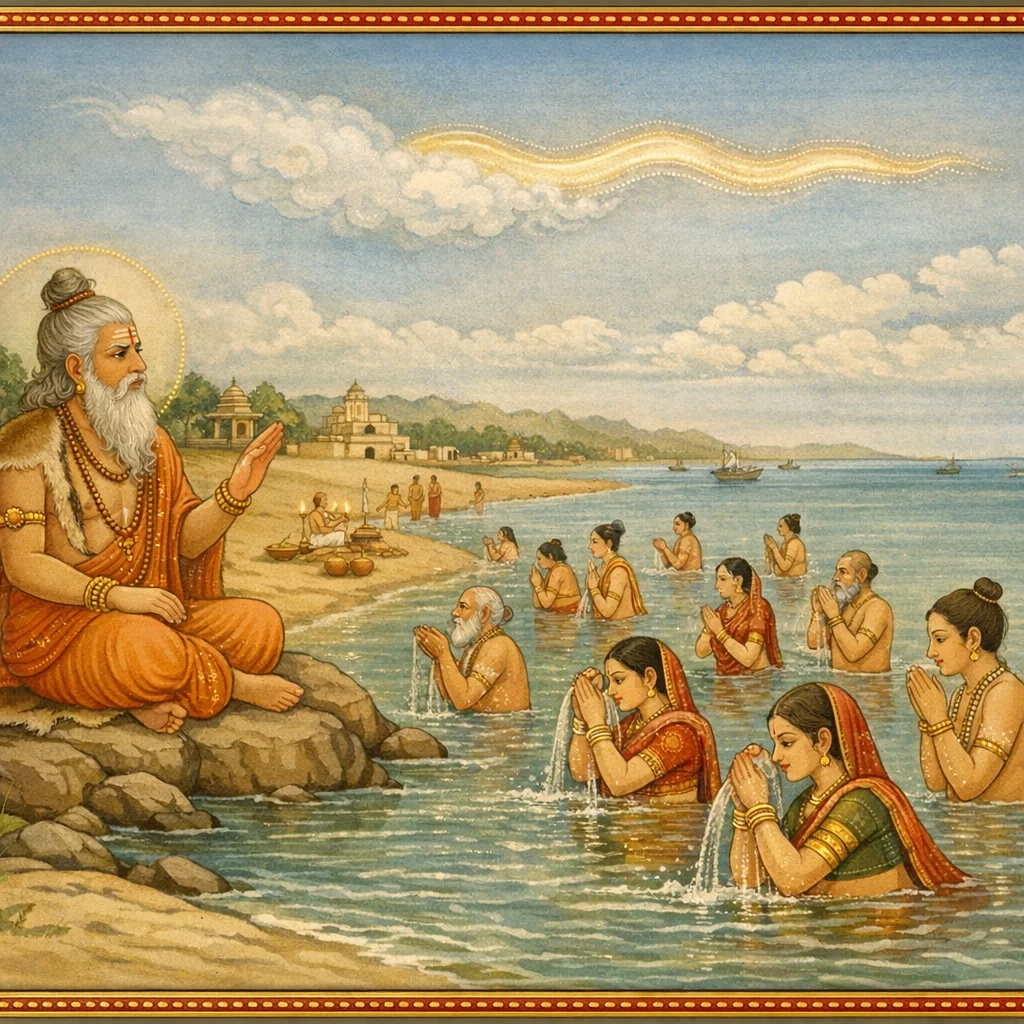
This adhyāya unfolds as a dialogue begun by Nārada and narrated by Brahmā, describing Śrī Rāma’s ritual and administrative deeds in Dharmāraṇya. After hearing extensive tīrtha-māhātmya comparisons—Prayāga/Triveṇī, Śukla-tīrtha, Kāśī, the Gaṅgā, Harikṣetra, and Dharmāraṇya—Rāma resolves to renew his pilgrimage and arrives with Sītā, Lakṣmaṇa, Bharata, and Śatrughna, seeking Vasiṣṭha’s guidance on proper procedure. Rāma asks which practice in the “mahākṣetra” best removes grave sins, including brahmahatyā: dāna, niyama, snāna, tapas, dhyāna, yajña, homa, or japa. Vasiṣṭha prescribes a yajña in Dharmāraṇya, praised as yielding merit that multiplies over time. Sītā advises that the officiants should be Veda-proficient brāhmaṇas long associated with Dharmāraṇya. Eighteen named ritual experts are summoned; the sacrifice is completed with the avabhṛtha bath and with honorific worship of the priests. At the close, Sītā requests that the ritual prosperity be made enduring through a settlement bearing her name; Rāma grants the brāhmaṇas a secure abode and establishes “Sītāpura,” linked with auspicious protective tutelaries (Śāntā and Sumaṅgalā). The chapter then expands into an administrative-ritual charter: many villages (in a long enumeration) are created and granted for brāhmaṇa residence; supporting communities (vaiśyas and śūdras) and material gifts—cattle, horses, textiles, gold, silver, and copper—are assigned. Rāma emphasizes dharmic governance: brāhmaṇa requests must be honored, service to them brings prosperity, and obstruction by hostile outsiders is condemned. The narrative ends with Rāma’s return to Ayodhyā amid public rejoicing, the continuation of righteous rule, and a brief note on Sītā’s pregnancy, joining ritual order with dynastic continuity.
Shlokas
Verse 1
नारद उवाच । भगवन्देवदेवेश सृष्टिसंहारकारक । गुणातीतो गुणैर्युक्तो मुक्तीनां साधनं परम्
Nārada said: “O Blessed Lord, O God of gods, author of creation and dissolution—though beyond the guṇas, you are also manifest through the guṇas; you are the supreme means to liberation.”
Verse 2
संस्थाप्य वेदभवनं विधिवद्द्विज सत्तमान् । किं चक्रे रघुनाथस्तु भूयोऽयोध्यां गतस्तदा
After duly establishing the abode of the Vedas and setting in proper order the finest of the twice-born, what did Raghunātha do next, when he again went to Ayodhyā?
Verse 3
स्वस्थाने ब्राह्मणास्तत्र कानि कर्माणि चक्रिरे । ब्रह्मोवाच । इष्टापूर्तरताः शांताः प्रतिग्रहपराङ्मुखाः
Brahmā said: “There, those brāhmaṇas remained in their proper stations and performed the rites proper to them—peaceful in conduct, devoted to iṣṭa and pūrta (sacrifices and works of public merit), and averse to accepting gifts.”
Verse 4
राज्यं चक्रुर्वनस्यास्य पुरोधा द्विजसत्तमः । उवाच रामपुरतस्तीर्थमाहात्म्यमुत्तमम्
The foremost brāhmaṇa, serving as priest (purohita), established proper order—like a kingdom—for that forest region; and from Rāmapura he proclaimed the supreme greatness of the sacred tīrtha.
Verse 5
प्रयागस्य च माहात्म्यं त्रिवेणीफलमुत्तमम् । प्रयागतीर्थमहिमा शुक्लतीर्थस्य चैव हि
He spoke of Prayāga’s greatness and the unsurpassed fruit of the Triveṇī; indeed, he also described the glory of the Prayāga tīrtha and of Śukla-tīrtha as well.
Verse 6
सिद्धक्षेत्रस्य काश्याश्च गंगाया महिमा तथा । वसिष्ठः कथया मास तीर्थान्यन्यानि नारद
He also related the greatness of Siddhakṣetra, of Kāśī, and likewise of the sacred Gaṅgā. Vasiṣṭha narrated other tīrthas too, O Nārada, over the course of a month.
Verse 7
धर्मारण्यसुवर्णाया हरिक्षेत्रस्य तस्य च । स्नानदानादिकं सर्वं वाराणस्या यवाधिकम्
In golden Dharmāraṇya and in that Harikṣetra, every act—bathing, charity, and the rest—yields merit (puṇya) exceeding that of Vārāṇasī, even if only by a single grain of yava.
Verse 8
एतच्छ्रुत्वा रामदेवः स चमत्कृतमानसः । धर्मारण्ये पुनर्यात्रां कर्त्तुकामः समभ्यगात्
Hearing this, Lord Rāma—his mind filled with wonder—approached once more, longing to undertake a fresh pilgrimage to Dharmāraṇya.
Verse 9
सीतया सह धर्मज्ञो गुरुसैन्यपुरःसरः । लक्ष्मणेन सह भ्रात्रा भरतेन सहायवान्
Rāma, knower of dharma, went with Sītā, preceded by his guru and his forces; accompanied by his brother Lakṣmaṇa, with Bharata as his support.
Verse 10
शत्रुघ्नेन परिवृतो गतो मोहेरके पुरे । तत्र गत्वा वसिष्ठं तु पृच्छतेऽसौ महामनाः
Surrounded by Śatrughna, he went to the city of Moheraka. Having arrived there, that great-souled one questioned Vasiṣṭha.
Verse 11
राम उवाच । धर्मारण्ये महाक्षेत्रे किं कर्त्तव्यं द्विजोत्तम । दानं वा नियमो वाथ स्नानं वा तप उत्तमम्
Rāma said: “O best of brāhmaṇas, in the great sacred field of Dharmāraṇya, what should be done—charity, observances, ritual bathing, or excellent austerity (tapas)?”
Verse 12
ध्यानं वाथ क्रतुं वाथ होमं वा जपमुत्तमम् । दानं वा नियमं वाथ स्नानं वा तप उत्तमम्
“Or should one practice meditation, perform a sacrifice (kratu), offer homa, or undertake excellent japa? Or is it charity, observances, ritual bathing, or the highest austerity (tapas)?”
Verse 13
येन वै क्रियमाणेन तीर्थेऽस्मिन्द्विजसत्तम । ब्रह्महत्यादिपापेभ्यो मुच्यते तद्ब्रवीहि मे
O best of Brahmins, tell me: what act, when performed at this sacred tīrtha, releases one from sins beginning with brahma-hatyā (the slaying of a Brāhmaṇa) and the like?
Verse 14
वसिष्ठ उवाच । यज्ञं कुरु महाभाग धर्मारण्ये त्वमुत्तमम् । दिनेदिने कोटिगुणं यावद्वर्षशतं भवेत्
Vasiṣṭha said: O greatly fortunate one, perform an excellent yajña here in Dharmāraṇya. Day by day its merit becomes a crore-fold, and so it continues for a hundred years.
Verse 15
तच्छ्रुत्वा चैव गुरुतो यज्ञारंभं चकार सः । तस्मिन्नवसरे सीता रामं व्यज्ञापयन्मुदा
Having heard this from his guru, he began the yajña. At that very moment, Sītā joyfully informed Rāma of what should be done.
Verse 16
स्वामिन्पूर्वं त्वया विप्रा वृता ये वेदपारगाः । ब्रह्मविष्णुमहेशेन निर्मिता ये पुरा द्विजाः
O Lord, formerly you had chosen Brahmins who were masters of the Vedas—those dvija, the twice-born, said to have been fashioned of old by Brahmā, Viṣṇu, and Maheśa.
Verse 17
कृते त्रेतायुगे चैव धर्मारण्यनिवासिनः । विप्रांस्तान्वै वृणुष्व त्वं तैरेव साधकोऽध्वरः
In the Kṛta Yuga and also in the Tretā Yuga, the Brahmins dwelling in Dharmāraṇya were renowned. Choose those very priests, for by them alone will the adhvara—the sacrifice—be properly accomplished.
Verse 18
तच्छ्रुत्वा रामदेवेन आहूता ब्राह्मणास्तदा । स्थापिताश्च यथापूर्वमस्मिन्मोहे रके पुरे
Hearing this, Lord Rāma then summoned the Brahmins, and they were seated and installed as before, in that same place and city, according to the former arrangement.
Verse 19
तैस्त्वष्टादशसंख्याकैस्त्रैविद्यैर्मेहिवाडवैः । यज्ञं चकार विधिवत्तैरेवायतबुद्धिभिः
With those eighteen in number—learned in the threefold Vedic lore—Rāma performed the sacrifice according to rule, assisted by those very men of steady and far-reaching understanding.
Verse 20
कुशिकः कौशिको वत्स उपमन्युश्च काश्यपः । कृष्णात्रेयो भरद्वाजो धारिणः शौनको वरः
Kuśika, Kauśika, Vatsa, Upamanyu, and Kāśyapa; Kṛṣṇātreya, Bharadvāja, Dhāriṇa, and the excellent Śaunaka—these were among the officiants.
Verse 21
मांडव्यो भार्गवः पैंग्यो वात्स्यो लौगाक्ष एव च । गांगायनोथ गांगेयः शुनकः शौनकस्तथा
Māṇḍavya, Bhārgava, Paiṅgya, Vātsya, and also Laugākṣa; then Gāṃgāyana, Gāṃgeya, Śunaka, and likewise Śaunaka—these too were among them.
Verse 22
ब्रह्मोवाच । एभिर्विप्रैः क्रतुं रामः समाप्य विधिवन्नृपः । चकारावभृथं रामो विप्रान्संपूज्य भक्तितः
Brahmā said: With these Brahmins, King Rāma duly completed the sacrifice; and having devoutly honored the priests, Rāma performed the avabhṛtha, the concluding ceremonial bath.
Verse 23
यज्ञांते सीतया रामो विज्ञप्तः सुविनीतया । अस्याध्वरस्य संपत्ती दक्षिणां देहि सुव्रत
At the close of the yajña, the well-mannered Sītā respectfully petitioned Rāma: “O you of noble vows, bestow the dakṣiṇā in full, together with the proper completion-gifts of this rite.”
Verse 24
मन्नाम्ना च पुरं तत्र स्थाप्यतां शीघ्रमेव च । सीताया वचनं श्रुत्वा तथा चक्रे नृपोत्तमः
“And let a city be swiftly established there, bearing my name.” Hearing Sītā’s words, the best of kings did just so.
Verse 25
तेषां च ब्राह्मणानां च स्थानमेकं सुनिर्भयम् । दत्तं रामेण सीतायाः संतोषाय महीभृता
And for those brāhmaṇas, Rāma the king granted a single abode—secure and free from fear—so as to fulfill Sītā’s wish and contentment.
Verse 26
सीतापुरमिति ख्यातं नाम चक्रे तदा किल । तस्याधिदेव्यौ वर्त्तेते शांता चैव सुमंगला
Then indeed he bestowed upon it the renowned name “Sītāpura.” And as the presiding goddesses of that place abide Śāntā and also Sumaṅgalā.
Verse 27
मोहेरकस्य पुरतो ग्रामद्वादशकं पुरः । ददौ विप्राय विदुषे समुत्थाय प्रहर्षितः
Before Moheraka, he rose up in gladness and granted twelve villages to a learned brāhmaṇa.
Verse 28
तीर्थांतरं जगामाशु काश्यपीसरितस्तटे । वाडवाः केऽपि नीतास्ते रामेण सह धर्मवित्
He swiftly went to another sacred ford on the bank of the Kāśyapī River. Some mares too were brought there, together with Rāma, the knower of dharma.
Verse 29
धर्मालये गतः सद्यो यत्र माला कमंडलुः । पुरा धर्मेण सुमहत्कृतं यत्र तपो मुने
He then went at once to Dharmālaya, where the garland and the ascetic’s water-pot (kamaṇḍalu) are revered; where, O sage, in ancient times Dharma himself performed great austerity.
Verse 30
तदारभ्य सुविख्यातं धर्मालयमिति । श्रुतम् ददौ दाशरथिस्तत्र महादानानि षोडश
From that time onward it became widely renowned as “Dharmālaya.” There, as tradition relates, the son of Daśaratha bestowed sixteen great charities (mahādānas).
Verse 31
पंचाशत्तदा ग्रामाः सीतापुरसमन्विताः । सत्यमंदिरपर्यंता रघुना थेन वै तदा
At that time, fifty villages were attached to Sītāpura—extending up to the precincts of the Satyamandira—by Raghu’s descendant, Rāma, in those days.
Verse 32
सीताया वचनात्तत्र गुरुवाक्येन चैव हि । आत्मनो वंशवृद्ध्यर्थं द्विजेभ्योऽदाद्रघूत्तमः
There, at Sītā’s request and also in obedience to the guru’s counsel, the best of the Raghus, Rāma, gave gifts to the twice-born (brāhmaṇas), seeking the increase and continuity of his lineage.
Verse 33
अष्टादशसहस्राणां द्विजानामभवत्कुलम् । वात्स्यायन उपमन्युर्जातूकर्ण्योऽथ पिंगलः
From the eighteen thousand twice-born (brāhmaṇas), distinct family lineages arose—Vātsyāyana, Upamanyu, Jātūkarṇya, and then Piṅgala.
Verse 34
भारद्वाजस्तथा वत्सः कौशिकः कुश एव च । शांडिल्यः कश्यपश्चैव गौतमश्छांधनस्तथा
Also (there were the lineages of) Bhāradvāja and Vatsa; Kauśika and Kuśa as well; Śāṇḍilya, Kaśyapa, Gautama, and likewise Chāṃdhana.
Verse 35
कृष्णात्रेयस्तथा वत्सो वसिष्ठो धारणस्तथा । भांडिलश्चैव विज्ञेयो यौवनाश्वस्ततः परम्
Likewise (there were) Kṛṣṇātreya and Vatsa; Vasiṣṭha and Dhāraṇa; Bhāṃḍila too should be recognized—and after these, Yauvanāśva.
Verse 36
कृष्णायनोपमन्यू च गार्ग्यमुद्गलमौखकाः । पुशिः पराशरश्चैव कौंडिन्यश्च ततः परम्
And (there were) Kṛṣṇāyana and Upamanyu; (the lineages of) Gārgya, Mudgala, and Maukha; Puśi, and also Parāśara—then next, Kauṇḍinya.
Verse 37
पंचपंचाशद्ग्रामाणां नामान्येवं यथाक्रमम् । सीतापुरं श्रीक्षेत्रं च मुशली मुद्गली तथा
Thus, in due order, the names of the fifty-five villages are recited: Sītāpura, Śrīkṣetra, and also Muśalī and Mudgalī.
Verse 38
ज्येष्ठला श्रेयस्थानं च दंताली वटपत्रका । राज्ञः पुरं कृष्णवाटं देहं लोहं चनस्थनम्
Jyeṣṭhalā, Śreyasthāna, Dantālī, and Vaṭapatrakā; Rājñaḥ-pura, Kṛṣṇavāṭa, Deha, Loha, and Canasthana—these are the names of sacred places.
Verse 39
कोहेचं चंदनक्षेत्रं थलं च हस्तिनापुरम् । कर्पटं कंनजह्नवी वनोडफनफावली
Koheca, Candanakṣetra, Thala, and Hastināpura; Karpaṭa, Kaṃnajahnavī, and Vanoḍaphanaphāvalī—these too are named as sacred places.
Verse 40
मोहोधं शमोहोरली गोविंदणं थलत्यजम् । चारणसिद्धं सोद्गीत्राभाज्यजं वटमालिका
Mohodha, Śamohoralī, Goviṃdaṇa, and Thalatyaja; also Cāraṇasiddha, Sodgītrābhājyaja, and Vaṭamālikā—revered names of sacred places.
Verse 41
गोधरं मारणजं चैव मात्रमध्यं च मातरम् । बलवती गंधवती ईआम्ली च राज्यजम्
Godhara, Māraṇaja, Mātramadhya, and Mātara; Balavatī, Gaṃdhavatī, Īāmlī, and Rājyaja—sacred places remembered in devotion.
Verse 42
रूपावली बहुधनं छत्रीटं वंशंजं तथा । जायासंरणं गोतिकी च चित्रलेखं तथैव च
Rūpāvalī, Bahudhana, Chatrīṭa, and likewise Vaṃśaṃja; Jāyāsaṃraṇa, Gotikī, and also Citralekha—sacred names fit for devotional recitation.
Verse 43
दुग्धावली हंसावली च वैहोलं चैल्लजं तथा । नालावली आसावली सुहाली कामतः परम्
Dugdhāvalī, Haṃsāvalī, Vaihola, Caillaja, Nālāvalī, Āsāvalī, and Suhālī—these settlements were fully established, according to what was desired.
Verse 44
रामेण पंचपंचाशद्ग्रामाणि वसनाय च । स्वयं निर्माय दत्तानि द्विजेभ्यस्तेभ्य एव च
Rāma himself created and granted fifty-five villages for residence, bestowing them upon those very twice-born (Brāhmaṇas).
Verse 45
तेषां शुश्रूषणार्थाय वैश्यान्रामो न्यवे दयत् । षट्त्रिंशच्च सहस्राणि शूद्रास्तेभ्यश्चतुर्गुणान्
For their service and support, Rāma assigned Vaiśyas; and he assigned thirty-six thousand Śūdras—four times that number.
Verse 46
तेभ्यो दत्तानि दानानि गवाश्ववसनानि च । हिरण्यं रजतं ताम्रं श्रद्धया परया मुदा
To them were given gifts—cows, horses, and garments—along with gold, silver, and copper, offered with supreme faith and gladness.
Verse 47
नारद उवाच । अष्टादशसहस्रास्ते ब्राह्मणा वेदपारगाः । कथं ते व्यभजन्ग्रामान्द्रामो त्पन्नं तथा वसु । वस्त्राद्यं भूषणाद्यं च तन्मे कथय सुव्र तम्
Nārada said: “Those eighteen thousand Brāhmaṇas were masters of the Vedas. How did they apportion the villages and the wealth that arose therefrom? And how were garments and ornaments distributed? Tell me that, O you of excellent vow.”
Verse 48
ब्रह्मोवाच । यज्ञांते दक्षिणा यावत्सर्त्विग्भिः स्वीकृता सुत । महादानादिकं सर्वं तेभ्य एव समर्पितम्
Brahmā said: “At the close of the yajña, whatever dakṣiṇā the officiating priests accepted, O son—every great gift and all else was offered to those very ones.”
Verse 49
ग्रामाः साधारणा दत्ता महास्थानानि वै तदा । ये वसंति च यत्रैव तानि तेषां भवंत्विति
Then the villages and the great seats were granted as common holdings, with the declaration: “Wherever they reside, let those places belong to them.”
Verse 50
वशिष्ठवचनात्तत्र ग्रामास्ते विप्रसात्कृताः । रघूद्वहेन धीरेण नोद्व संति यथा द्विजाः
There, by Vasiṣṭha’s counsel, those villages were placed under the Brāhmaṇas’ authority; and by the steadfast Raghūdvaha (Rāma), the twice-born were not disturbed.
Verse 51
धान्यं तेषां प्रदत्तं हि विप्राणां चामितं वसु । कृतांजलिस्ततो रामो ब्राह्मणानिदमब्रवीत्
Indeed, grain was given to them, and immeasurable wealth to the Brāhmaṇas. Then Rāma, with folded hands, spoke these words to the Brāhmaṇas.
Verse 52
यथा कृतयुगे विप्रास्त्रेतायां च यथा पुरा । तथा चाद्यैव वर्त्तव्यं मम राज्ये न संशयः
(Rāma said:) “As the Brāhmaṇas lived in the Kṛta Yuga, and as they did formerly in the Tretā Yuga, so must it be lived even today within my kingdom—of this there is no doubt.”
Verse 53
यत्किंचिद्धनधान्यं वा यानं वा वसनानि वा । मणयः कांचनादींश्च हेमादींश्च तथा वसु
Whatever wealth or grain there may be—vehicles, garments, jewels, gold and the like, and likewise treasures such as gold and other valuables—
Verse 54
ताम्राद्यं रजतादींश्च प्रार्थयध्वं ममाधुना । अधुना वा भविष्ये वाभ्यर्थनीयं यथोचितम्
Ask of me now for copper and the like, for silver and the like—whether now or in the future—whatever it is proper to request.
Verse 55
प्रेषणीयं वाचिकं मे सर्वदा द्विजसत्तमाः । यंयं कामं प्रार्थयध्वं तं तं दास्याम्यहं विभो
O best of the twice-born, my word is ever at your command. Whatever desire you ask for—each and every one—I shall grant, O Lord.
Verse 56
ततो रामः सेवकादीनादरात्प्रत्यभाषत । विप्राज्ञा नोल्लंघनीया सेव नीया प्रयत्नतः
Then Rāma, with respect, addressed his attendants and others: “A brāhmaṇa’s command must not be transgressed; it must be carried out with effort and care.”
Verse 57
यंयं कामं प्रार्थयंते कारयध्वं ततस्ततः । एवं नत्वा च विप्राणां सेवनं कुरुते तु यः
Whatever wish they request, have it carried out accordingly. And whoever, having thus bowed to the brāhmaṇas, renders them service—
Verse 58
स शूद्रः स्वर्गमाप्नोति धनवान्पुत्रवान्भवेत् । अन्यथा निर्धनत्वं हि लभते नात्र संशयः
Such a śūdra attains heaven, becomes wealthy, and is blessed with sons; otherwise, he surely meets with poverty—of this there is no doubt.
Verse 59
यवनो म्लेच्छजातीयो दैत्यो वा राक्षसोपि वा । योत्र विघ्नं करोत्येव भस्मीभवति तत्क्षणात्
Whether a Yavana, one born among the mlecchas, or even a Daitya or a Rākṣasa—whoever here creates an obstruction is reduced to ashes that very instant.
Verse 60
ब्रह्मोवाच । ततः प्रदक्षिणीकृत्य द्विजान्रामोऽतिहर्षितः । प्रस्थानाभिमुखो विप्रैराशीर्भिरभिनंदितः
Brahmā said: Then Rāma, greatly delighted, circumambulated the brāhmaṇas in pradakṣiṇā and turned toward departure, honored by the blessings of the twice-born.
Verse 61
आसीमांतमनुव्रज्य स्नेहव्याकुललोचनाः । द्विजाः सर्वे विनिर्वृत्ता धर्मारण्ये विमोहिताः
All the brāhmaṇas followed him up to the boundary, their eyes troubled with affection; and, in Dharmāraṇya, they remained overwhelmed and deeply moved.
Verse 62
एवं कृत्वा ततो रामः प्रतस्थे स्वां पुरीं प्रति । काश्यपाश्चैव गर्गाश्च कृतकृत्या दृढव्रताः
Having done so, Rāma then set out toward his own city. And the Kāśyapas and the Gargas too—steadfast in their vows—felt their purpose fulfilled.
Verse 63
गुर्वासनसमाविष्टाः सभार्या ससुहृत्सुताः । राजधानीं तदा प्राप रामोऽयोध्यां गुणान्विताम्
Seated upon the venerable royal throne, accompanied by his queen and together with friends and sons, Rāma then attained the capital—Ayodhyā—abounding in noble virtues.
Verse 64
दृष्ट्वा प्रमुदिताः सर्वे लोकाः श्रीरघुनन्दनम् । ततो रामः स धर्मात्मा प्रजापालनतत्परः
On beholding Śrī Raghunandana, all the people rejoiced. Thereafter that dharma-souled Rāma became wholly intent on protecting and nurturing his subjects.
Verse 65
सीतया सह धर्मात्मा राज्यं कुर्वंस्तदा सुधीः । जानक्या गर्भमाधत्त रविवंशोद्भवाय च
While ruling the kingdom with Sītā, that righteous and wise one—Rāma—then caused Jānakī to conceive, for the continuation of the lineage born of the Solar dynasty.