Adhyaya 33
This chapter offers a theological and ethical teaching on jīrṇoddhāra (restoration) and the proper discipline of dāna (giving) in Dharmāraṇya. Rāma, acting on Śrīmātā’s command, declares his resolve to restore the sacred site and seeks permission to distribute gifts rightly. The text insists that gifts must be given to a worthy recipient (pātra), not an unworthy one (apātra): the worthy is like a boat that carries both giver and receiver across, while the unworthy is ruinous like a lump of iron. Brāhmaṇahood is not treated as mere birth; kriyā—effective ritual action and right conduct—is presented as the decisive measure of spiritual fruit. A group of brāhmaṇas describes austere, restrained livelihoods and confesses fear of accepting royal gifts, calling royal patronage perilous. Rāma consults Vasiṣṭha and invokes the Trimūrti, who appear, approve the restoration, and praise Rāma for his earlier defense of divine order. Rāma then begins construction and endowment, donating halls, residences, storerooms, wealth, cattle, and villages to learned priests, including the establishment of Trāyīvidyā specialists. The deities bestow insignia such as the cāmara and sword and lay down continuing norms: worship of guru and kuladevatā, charity at appointed times (e.g., Ekādaśī and Saturdays), support for the vulnerable, and first offerings to Śrīmātā and associated deities for unobstructed success. The chapter concludes with expanded tīrtha infrastructure (tanks, wells, moats, gates), protective injunctions against erasing royal edicts, Hanumān’s appointment as guardian, and divine benediction.
Shlokas
Verse 1
राम उवाच । जीर्णोद्धारं करिष्यामि श्रीमातुर्वचनादहम् । आज्ञा प्रदीयतां मह्यं यथादानं ददामि वः
Rāma said: “At my revered mother’s command, I shall undertake the restoration of what has grown worn and dilapidated. Grant me your consent, so that I may bestow upon you the fitting gifts in the proper manner.”
Verse 2
पात्रे दानं प्रदातव्यं कृत्वा यज्ञवरं द्विजाः । नापात्रे दीयते किंचिद्दत्तं न तु सुखावहम्
O twice-born ones, charity should be given to a worthy recipient after performing the excellent sacrifice. Nothing should be given to the unworthy, for such a gift does not become a cause of happiness or auspicious fruit.
Verse 3
सुपात्रं नौरिव सदा तारयेदुभयोरपि । लोहपिंडोपमं ज्ञेयं कुपात्रं भञ्जनात्मकम्
A worthy recipient is like a boat, ever able to carry both—the giver and the receiver—across. But an unworthy recipient should be known as a lump of iron: destructive, bringing ruin.
Verse 4
जातिमात्रेण विप्रत्वं जायते न हि भो द्विजाः । क्रिया बलवती लोके क्रियाहीने कुतः फलम्
O twice-born, true brāhmaṇa-hood does not arise from birth alone. In this world, right conduct and sacred practice are what hold power; where practice is absent, how can there be any fruit?
Verse 5
पूज्यास्तस्मात्पूज्यतमा ब्राह्मणाः सत्यवादिनः । यज्ञकार्ये समुत्पन्ने कृपां कुर्वंतु सर्वदा
Therefore, brāhmaṇas who speak truth are to be honored—indeed, the most worthy of honor. When sacrificial duties arise, may they always show compassion and extend their support.
Verse 6
ब्रह्मोवाच । ततस्तु मिलिताः सर्वे विमृश्य च परस्परम् । केचिदूचुस्तदा रामं वयं शिलोंछजीविकाः
Brahmā said: “Then they all assembled and, after consulting one another, some said to Rāma, ‘We live by śiloñcha—gleaning what is left behind—sustaining ourselves on the barest means.’”
Verse 7
संतोषं परमास्थाय स्थिता धर्मपरायणाः । प्रतिग्रहप्रयोगेण न चास्माकं प्रयोजनम्
“Established in supreme contentment and devoted to dharma, we have no need to engage in the practice of accepting gifts.”
Verse 8
दशसूनासमश्चक्री दशचक्रिसमो ध्वजः । दशध्वजसमा वेश्या दशवेश्यासमो नृपः
“One who bears the discus (cakrī) is equal in harm to ten slaughter-houses; a banner-bearer is equal to ten such cakrī-s; a courtesan is equal to ten banner-bearers; and a king is equal to ten courtesans.”
Verse 9
राजप्रतिग्रहो घोरो राम सत्यं न संशयः । तस्माद्वयं न चेच्छामः प्रतिग्रहं भया वहम्
“Acceptance of gifts from a king is dreadful, O Rāma—this is true, without doubt. Therefore we do not desire such acceptance, for it brings fear and peril.”
Verse 10
एकाहिका द्विजाः केचित्केचित्स्वामृतवृत्तयः । कुम्भीधान्या द्विजाः केचित्केचित्षट्कर्मतत्पराः
“Some brāhmaṇas live day to day; some subsist on what comes of itself, as though ‘self-nectar’. Some brāhmaṇas store grain in jars; and some are devoted to the six traditional duties.”
Verse 11
त्रिमूर्तिस्थापिताः सर्वे पृथग्भावाः पृथग्गुणाः । केचिदेवं वदंति स्म त्रिमूर्त्याज्ञां विना वयम्
“All of us are established by the Trimūrti—each with our own distinct natures and distinct qualities. Some indeed declare: ‘Without the command of the Trimūrti, we do nothing.’”
Verse 12
प्रतिग्रहस्य स्वीकारं कथं कुर्याम ह द्विजाः । न तांबूलं स्त्रीकृतं नो ह्यद्मो दानेन भषितम्
“O twice-born ones, how could we accept gifts? We do not even partake of betel prepared by a woman, nor do we eat what is tainted by (improper) giving.”
Verse 13
रामेण ते यथान्यायं पूजिताः परया मुदा
“They were honored by Rāma in accordance with proper rule, with supreme joy.”
Verse 14
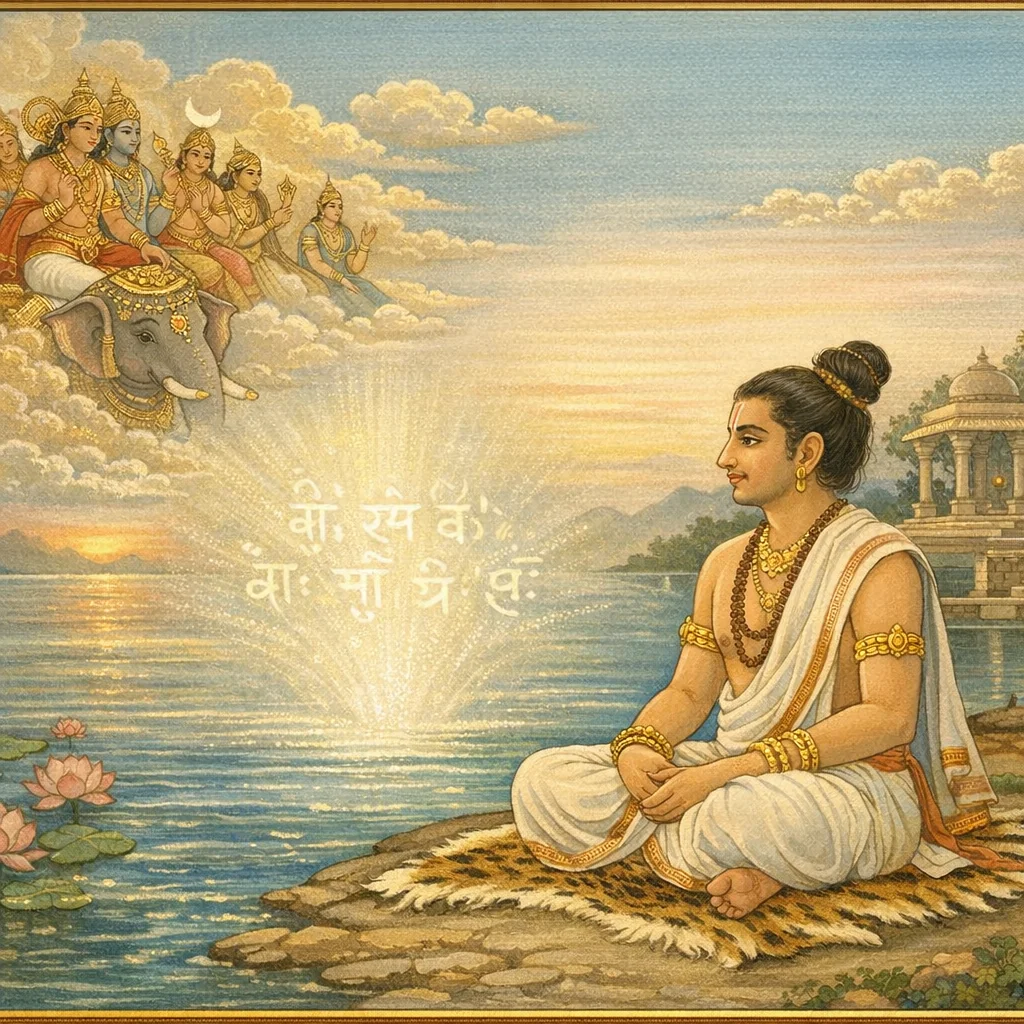
विमृश्य स तदा रामो वसिष्ठेन महात्मना । ब्रह्मविष्णुशिवादीनां सस्मार गुरुणा सह । स्मृतमात्रास्ततो देवास्तं देशं समुपागमन् । सूर्यकोटिप्रतीकाशीवमानावलिसंवृताः
“Then Rāma, having deliberated with the great-souled Vasiṣṭha, together with his guru invoked Brahmā, Viṣṇu, Śiva, and the rest. Merely remembered, those gods came to that place, encircled by radiant hosts, blazing as though with the light of ten million suns.”
Verse 15
निवेदितं तु तत्सर्वं रामेणातिसुबुद्धिना
“All of that was duly reported (and submitted) by the exceedingly wise Rāma.”
Verse 16
अधिदेव्या वचनतो जीर्णोद्धारं करोम्यहम् । धर्मारण्ये हरिक्षेत्रे धर्मकूपसमीपतः
By the command of the presiding Goddess, I shall undertake the restoration of what has fallen into ruin—here in Dharmāraṇya, in Harikṣetra, near the sacred well called Dharmakūpa.
Verse 17
ततस्ते वाडवाः सर्वे त्रिमूर्त्तीः प्रणिपत्य च । महता हर्षवृंदेन पूर्णाः प्राप्तमनोरथाः
Then all those Vāḍavas, bowing down to the Trimūrti, were filled with a great multitude of joy—having attained the fulfillment of their desired purpose.
Verse 18
अर्घ्यपाद्यादिविधिना श्रद्धया तानपूजयन् । क्षणं विश्रम्य ते देवा ब्रह्मविष्णुशिवादयः
With faith they worshiped them according to the rites beginning with arghya and pādya. Then those gods—Brahmā, Viṣṇu, Śiva, and the rest—rested there for a moment.
Verse 19
ऊचू रामं महाशक्तिं विनयात्कृतसंपुटम्
They spoke to Rāma, the great-powerful one, who stood with hands folded in humility.
Verse 20
देवा ऊचुः । देवद्रुहस्त्वया राम ये हता रावणादयः । तेन तुष्टा वयं सर्वे भानुवंशविभूषण
The gods said: “O Rāma, you have slain the enemies of the gods—Rāvaṇa and the rest. Therefore we are all pleased, O ornament of the Solar lineage.”
Verse 21
उद्धरस्व महास्थानं महतीं कीर्तिमाप्नुहि
Restore this great sacred seat, and you shall attain vast and enduring renown.
Verse 22
लब्ध्वा स तेषामाज्ञां तु प्रीतो दशरथात्मजः । जीर्णोद्धारेऽनंतगुणं फलमिच्छन्निलापतिः
Having received their command, the delighted son of Daśaratha—lord of the earth—set about restoring what had fallen into ruin, desiring the immeasurable, manifold fruit that such renewal bestows.
Verse 23
देवानां संनिधौ तेषां कार्यारंभमथाकरोत् । स्थंडिलं पूर्वतः कृत्वा महागिरि समं शुभम्
In the presence of those deities, he commenced the undertaking—first preparing to the east an auspicious raised platform, vast as a great mountain.
Verse 24
तस्योपरि बहिःशाला गृहशाला ह्यनेकशः । ब्रह्मशालाश्च बहुशो निर्ममे शोभनाकृतीः
Upon it he built many outer halls and numerous residential halls; and again and again he constructed fine Brahma-halls—structures of beautiful form.
Verse 25
निधानैश्च समायुक्ता गृहोपकरणै र्वृताः । सुवर्णकोटिसंपूर्णा रसवस्त्रादिपूरिताः
They were furnished with treasures and surrounded by household implements; filled with crores of gold, and stocked with delicacies, garments, and more.
Verse 26
धनधान्यसमृद्धाश्च सर्वधातुयुतास्तथा । एतत्सर्वं कारयित्वा ब्राह्मणेभ्यस्तदा ददौ
Abounding in wealth and grain, and furnished with every kind of metal as well—having arranged all of this, he then bestowed it upon the brāhmaṇas.
Verse 27
एकैकशो दशदश ददौ धेनूः पयस्विनीः । चत्वारिंशच्छतं प्रादाद्ग्रामाणां चतुराधिकम्
To each, he gave ten and ten milch-cows; and he granted four hundred and four villages.
Verse 28
त्रैविद्यद्विजविप्रेभ्यो रामो दशरथात्मजः । काजेशेन त्रयेणैव स्थापिता द्विजसत्तमाः
Rāma, son of Daśaratha, established the finest brāhmaṇas—Vedic scholars of the threefold knowledge—by means of a triad of endowments and provisions.
Verse 29
तस्मात्त्रयीविद्य इति ख्यातिर्लोके बभूव ह । एवंविधं द्विजेभ्यः स दत्त्वा दानं महाद्भुतम्
Therefore the name “Trayīvidya” became renowned in the world. Having given such wondrous gifts to the twice-born, he performed an astonishing act of charity.
Verse 30
आत्मानं चापि मेने स कृतकृत्यं नरेश्वरः । ब्रह्मणा स्थापिताः पूर्वं विष्णुना शंकरेण ये
And that lord among men deemed himself fulfilled in purpose, having re-established the sacred ordinances and foundations that had formerly been set in place by Brahmā, Viṣṇu, and Śaṅkara.
Verse 31
ते पूजिता राघवेण जीर्णोद्धारे कृते सति । षट्त्रिंशच्च सहस्राणि गोभुजा ये वणिग्वराः
When the restoration of what had fallen into ruin was completed, Rāghava honored those eminent merchants—enjoyers of cattle-wealth; they numbered thirty-six thousand.
Verse 32
शुश्रूषार्थं प्रदत्ता वै देवैर्हरिहरादिभिः । संतुष्टेन तु शर्वेण तेभ्यो दत्तं तु चेत नम्
Indeed, for the sake of devoted service, these honors were granted by the gods—beginning with Hari and Hara; and when Śarva (Śiva) was pleased, they were bestowed upon them as a sanctioned gift.
Verse 33
श्वेताश्वचामरौ दत्तौ खङ्गं दत्तं सुनिर्मलम् । तदा प्रबोधितास्ते च द्विजशुश्रूषणाय वै
A white horse and a pair of cāmaras (yak-tail fans) were given, and a spotless sword was bestowed. Then they too were instructed—indeed—for devoted service to the twice-born (Brahmins).
Verse 34
विवाहादौ सदा भाव्यं चामरै मंगलं वरम् । खङ्गं शुभं तदा धार्य्यं मम चिह्नं करे स्थितम्
At weddings and other auspicious beginnings, the excellent auspiciousness of the cāmaras should always be displayed. Then the auspicious sword should be borne—my emblem, stationed in the hand.
Verse 35
गुरुपूजा सदा कार्या कुलदेव्याः पुनःपुनः । वृद्ध्यागमेषु प्राप्तेषु वृद्धि दायकदक्षिणा
Worship of one’s guru should always be performed, and again and again the worship of the family-deity (Kuladevī). When occasions of increase and prosperity arrive, one should offer a dakṣiṇā that bestows further growth.
Verse 36
एकादश्यां शनेर्वारे दानं देयं द्विजन्मने । प्रदेयं बालवृद्धेभ्यो मम रामस्य शासनात्
On the eleventh lunar day (Ekādaśī), when it falls on a Saturday, charity should be given to a dvija, the twice-born. It should also be given to children and to the aged—by the command of me, Rāma.
Verse 37
मंडलेषु च ये शुद्धा वणिग्वृत्तिरताः पराः । सपादलक्षास्ते दत्ता रामशासनपालकाः
And those who were pure within their provinces—excellent persons devoted to the merchants’ vocation—one and a quarter lakhs of them were appointed as upholders of Rāma’s ordinance.
Verse 38
मांडलीकास्तु ते ज्ञेया राजानो मंडलेश्वराः । द्विज शुश्रूषणे दत्ता रामेण वणिजां वराः
They are to be known as māṇḍalīkas—kings, lords of provinces. Those best among merchants were assigned by Rāma for the devoted service of the dvijas, the twice-born.
Verse 39
चामरद्वितयं रामो दत्तवान्खड्गमेव च । कुलस्य स्वामिनं सूर्यं प्रतिष्ठाविधिपूर्वकम्
Rāma gave a pair of cāmaras (yak-tail fans) and also a sword. And, according to the proper rite of consecration, he duly installed Sūrya, the lord of the lineage.
Verse 40
ब्रह्माणं स्थापयामास चतुर्वेदसमन्वितम् । श्रीमातरं महाशक्तिं शून्यस्वामिहरिं तथा
He established Brahmā, endowed with the four Vedas; and he established also Śrīmātṛ, the auspicious Mother, the Great Power (Mahāśakti), and likewise Śūnyasvāmi-Hari.
Verse 41
विघ्नापध्वंसनार्थाय दक्षिणद्वारसंस्थितम् । गणं संस्थापयामास तथान्याश्चैव देवताः
For the destruction of obstacles, he installed a Gaṇa-deity at the southern gateway; and in the same manner he established other deities as well.
Verse 42
कारितास्तेन वीरेण प्रासादाः सप्तभूमिकाः । यत्किं चित्कुरुते कार्यं शुभं मांगल्यरूपकम्
By that heroic one, seven-storeyed mansions were caused to be built. And whatever act a person undertakes that is auspicious and of a festive, mangala nature—
Verse 43
पुत्रे जाते जातके वान्नाशने मुंडनेऽपि वा । लक्षहोमे कोटिहोमे तथा यज्ञक्रियासु च
At the birth of a son, at the jātakarma birth-rite, at the first feeding of food, and also at tonsure; in the offering of a hundred-thousand oblations, in the offering of a crore of oblations, and likewise in sacrificial rites—
Verse 44
वास्तुपूजाग्रहशांत्योः प्राप्ते चैव महोत्सवे । यत्किंचित्कुरुते दानं द्रव्यं वा धान्यमुत्तमम्
When the worship of Vāstu and the pacification of the planets are undertaken, and when a great festival has arrived—whatever charity one gives, whether wealth or excellent grain—
Verse 45
वस्त्रं वा धेनवो नाथ हेम रूप्यं तथैव च । विप्राणामथ शूद्राणां दीनानाथांधकेषु च
Or garments, or cows, O Lord; gold and silver as well—(as gifts) for Brahmins, and also for Śūdras, and for the poor, the unprotected, and the blind.
Verse 46
प्रथमं बकुलार्कस्य श्रीमातुश्चैव मानवः । भागं दद्याच्च निर्विघ्नकार्यसिद्ध्यै निरन्तरम्
First, a man should offer a portion to Bakulārka and also to Śrīmātṛ, so that the accomplishment of his undertaking may continue unbroken and free from obstacles.
Verse 47
वचनं मे समुल्लंघ्य कुरुते योऽन्यथा नरः । तस्य तत्कर्मणो विघ्नं भविष्यति न संशयः
But the man who, transgressing my instruction, acts otherwise—obstacles will arise in that very undertaking of his; of this there is no doubt.
Verse 48
एवमुक्त्वा ततो रामः प्रहृष्टेनांतरात्मना । देवानामथ वापीश्च प्राकारांस्तु सुशोभनान्
Having spoken thus, Rāma—his inner self delighted—then arranged shrines for the gods, and also wells and stepwells, and beautifully adorned enclosing walls.
Verse 49
दुर्गोपकरणैर्युक्तान्प्रतोलीश्च सुविस्तृताः । निर्ममे चैव कुंडानि सरांसि सरसीस्तथा
He also constructed wide gateways furnished with the equipment of fortifications; and he made sacred tanks, lakes, and ponds as well.
Verse 50
धर्मवापीश्च कूपांश्च तथान्यान्देवनिर्मितान् । एतत्सर्वं च विस्तार्य धर्मारण्ये मनोरमे
And in the delightful Dharmāraṇya he expanded all of this—Dharmavāpīs (righteous stepwells), wells, and other works said to be divinely made.
Verse 51
ददौ त्रैविद्यमुख्येभ्यः श्रद्धया परया पुनः । ताम्रपट्टस्थितं रामशासनं लोपयेत्तु यः
With supreme faith, he again bestowed gifts upon the foremost Brāhmaṇas learned in the three Vedas. But whoever effaces or abolishes Rāma’s decree, engraved upon a copper plate, incurs grievous sin.
Verse 52
पूर्वजास्तस्य नरके पतंत्यग्रे न संततिः । वायुपुत्रं समाहूय ततो रामोऽब्रवीद्वचः
His ancestors fall first into hell, and he is left without progeny. Then Rāma summoned the Son of Vāyu and spoke these words.
Verse 53
वायुपुत्र महावीर तव पूजा भविष्यति । अस्य क्षेत्रस्य रक्षायै त्वमत्र स्थितिमाचर
“O Son of Vāyu, great hero—your worship shall be established. For the protection of this sacred kṣetra, take up residence here and remain as its guardian.”
Verse 54
आंजनेयस्तु तद्वाक्यं प्रणम्य शिरसादधौ । जीर्णोद्धारं तदा कृत्वा कृतकृत्यो बभूव ह
Āñjaneya, bowing down, received those words upon his head. Then, having carried out the restoration of what had fallen into ruin, he became one whose duty was fulfilled.
Verse 55
श्रीमातरं तदाभ्यर्च्य प्रसन्नेनांतरात्मना । श्रीमातरं नमस्कृत्य तीर्थान्यन्यानि राघवः
Then Rāghava worshipped Śrī Mātā with an inwardly serene heart. Having bowed to Śrī Mātā, he proceeded onward to other sacred tīrthas as well.
Verse 56
तेऽपि देवाः स्वकं स्थानं ययुर्बह्मपुरोगमाः
Those gods too returned to their own abodes, with Brahmā going before them.
Verse 57
दत्त्वाशिषं तु रामाय वांछितं ते भविष्यति । रम्यं कृतं त्वया राम विप्राणां स्थापनादिकम्
Bestowing a blessing upon Rāma, they said: “Your desired aim shall come to pass. O Rāma, you have done a splendid deed—establishing the Brāhmaṇas and arranging what is needed for their support.”
Verse 58
अस्माकमपि वात्सल्यं कृतं पुण्यवता त्वया । इति स्तुवंतस्ते देवाः स्वानि स्थानानि भेजिरे
“Even toward us you have shown affectionate regard, O meritorious one.” Thus praising Rāma, those gods departed to their own abodes.